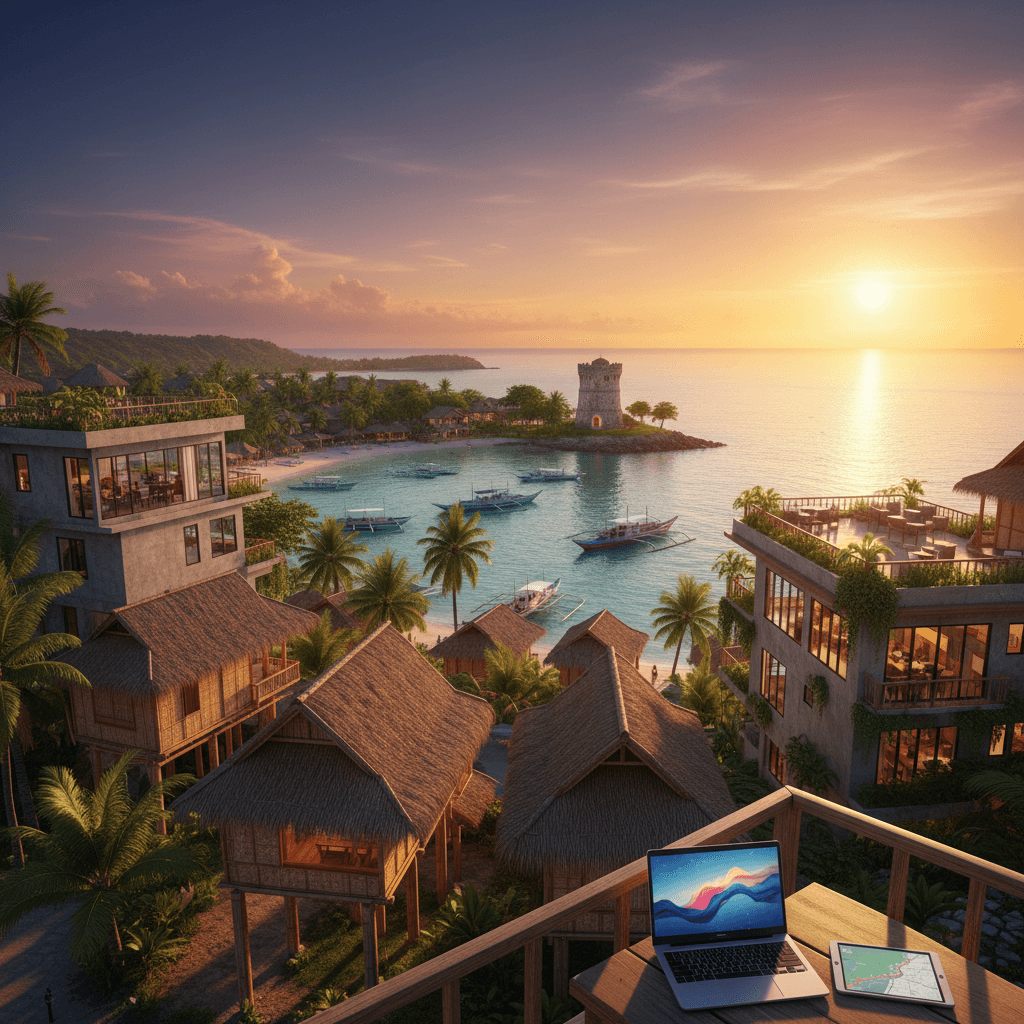
Panglao
🇵🇭 Philippines
The Island Balancing Act
Panglao isn't your typical high octane nomad hub. It occupies a specific niche in the Philippines, sitting somewhere between the raw, off grid adventure of Siargao and the developed convenience of Cebu. It’s an island where you can spend your morning diving with sea turtles at Balicasag and your afternoon taking Zoom calls with fast fiber internet. While much of the country still struggles with reliable connectivity, Panglao has quietly leveled up, making it one of the few places in the archipelago where you can actually maintain a professional career without constant anxiety over power cuts.
The vibe here is decidedly laid back but social. You’ll find a community that prioritizes the "island" part of the island life. Most nomads gravitate toward the Alona Beach area, which serves as the island’s heartbeat. It’s touristy, yes, but it’s also where the infrastructure lives. You’ll hear a mix of Cebuano, Tagalog, and English in the cafes, and the transition from work to play happens the moment you close your laptop and walk fifty meters to the sand.
The Cost of Living Breakdown
Living here is affordable, though you'll pay a premium for being near the water. On average, nomads spend about $1,289 per month to live comfortably. Here is how that usually breaks down:
- Housing: Expect to pay between 15,000 and 30,000 PHP ($260 to $520) for a decent studio or one bedroom apartment near Alona or Danao. If you’re willing to commute 15 minutes from the mainland in Tagbilaran City, those prices drop to 10,000 to 20,000 PHP.
- Food: Local street food runs about 50 to 100 PHP. A solid mid range meal at a cafe costs 200 to 400 PHP, while a high end dinner at a resort like Bluewater Panglao will be 500 PHP or more.
- Transport: A scooter rental is the standard nomad move, costing 300 to 500 PHP per day. Short trips on a habal habal (motorbike taxi) usually cost between 20 and 50 PHP.
Where to Plant Your Flag
Choosing a neighborhood depends entirely on how much "city" you need in your life. Most people landing here for the first time head straight to Alona Beach. It has the highest concentration of laptop friendly cafes, bars, and diving schools. It’s the easiest place to meet people, though the crowds can get thick during peak season.
For a more grounded experience, Tagbilaran City on the mainland is the practical choice. It lacks the beach aesthetic but offers better malls, more reliable utilities, and significantly lower rent. If you want total isolation, Anda in eastern Bohol offers stunning, quiet beaches, but the internet infrastructure hasn't caught up to Panglao yet. Loboc is the go to for those who prefer jungle rivers and paddleboarding over white sand and cocktails.
Work Culture and Connectivity
Panglao doesn't have a massive selection of dedicated coworking spaces yet, so the "work lounge" and cafe culture is king. Abraham Bohol is a popular hostel near Alona that doubles as a reliable workspace with fast WiFi. Over in Tagbilaran, Tamper Coffee & Brunch is a favorite for its reliable speeds and professional atmosphere, usually costing around 200 PHP for a day of work.
Smart and Globe are the two main mobile providers. Experienced nomads recommend a dual SIM setup to stay covered during local outages. Starlink is also becoming more common in high end resorts and some cafes, providing a much needed safety net for heavy data users. Despite the upgrades, power outages still happen occasionally, so having a charged power bank and a backup data plan is part of the daily routine.
Safety and Local Life
Panglao is exceptionally safe. It’s a small island community where people generally look out for one another. You can walk around most areas at night without a second thought, though it’s always smart to avoid unlit beach paths after dark. If you have a medical emergency, Bohol Doctors Hospital in Tagbilaran provides high quality care that rivals facilities in larger cities.
The social scene revolves around the water and the sunset. You’ll find most people at the beach bars in Alona as the sun goes down, or organizing weekend scooter trips to the Chocolate Hills and the Tarsier Sanctuary. There’s a "Bahala na" mindset here, a local philosophy of going with the flow and not stressing the small stuff. It’s an easy place to exist, provided you don't mind a little sand in your keyboard and a slower pace of life.
The Cost of Living in Panglao
Panglao strikes a balance between island affordability and the premium prices typical of a top-tier tourist destination. On average, most digital nomads find they can live comfortably here for about $1,289 per month. This covers a private apartment, eating out regularly, and keeping a scooter parked in the driveway. While it is certainly more expensive than the quiet corners of mainland Bohol, it remains significantly cheaper than Western hubs or even parts of Manila.
Monthly Budget Tiers
- Budget ($800 to $1,200): You'll likely stay in a shared guesthouse or a basic studio near Alona Beach. Most of your meals will come from street stalls or local carinderias, and you'll rely on a scooter for transport.
- Mid-Range ($1,200 to $1,800): This is the sweet spot for most. It covers a modern 1-bedroom apartment in Danao, regular visits to laptop-friendly cafes like Tamper Coffee & Brunch, and a mix of local and international dining.
- Comfortable ($2,000+): At this level, you're looking at long-term stays in high-end resorts like Bluewater Panglao, upscale seafood dinners, and frequent weekend excursions.
Housing and Neighborhoods
Where you plant your flag determines your daily overhead. Alona Beach and Danao are the primary nomad hubs. Expect to pay between 15,000 and 30,000 PHP ($260 to $520 USD) for a decent studio or 1-bedroom apartment. You're paying for the proximity to the social scene and the most reliable fiber internet on the island.
If those prices feel steep, look toward Tagbilaran City on the mainland. It is just a 15-minute drive away, but rents drop to 10,000 to 20,000 PHP ($175 to $350 USD). It feels more urban and less like a vacation, but you'll have easier access to major malls and hospitals. For those who want total isolation, Anda offers serenity and lower costs, though the infrastructure and WiFi can be temperamental.
Food and Dining
Eating in Panglao can be as cheap or as pricey as you want it to be. Street food like grilled pork skewers or local stews will cost you 50 to 100 PHP ($0.90 to $1.75). Mid-range restaurants, which are plentiful around the Alona strip, usually charge between 200 and 400 PHP ($3.50 to $7) for a solid meal. If you're heading to the upscale beach resorts for a sunset dinner, expect to pay 500 PHP ($9) or more per person.
Transport and Connectivity
The most efficient way to get around is by renting a scooter, which typically costs 300 to 500 PHP per day. Long-term rentals can usually be negotiated for much less. If you aren't comfortable riding, a habal-habal (motorbike taxi) ride usually costs 20 to 50 PHP for short trips. For longer hauls or airport runs, the Grab app is active here, and a ride to the Bohol-Panglao International Airport usually lands between 300 and 500 PHP.
For work, dedicated coworking spaces are still a bit thin on the ground. Most nomads head to "work lounges" or cafes. Abraham Bohol is a popular hostel near Alona with fast WiFi, while Tamper Coffee & Brunch in Tagbilaran is a favorite for its reliable speeds and 200 PHP day-stay vibes. For mobile data, grab a Globe or Smart SIM at the airport. A monthly unlimited data plan generally costs around 500 PHP and serves as a vital backup during the island's occasional power flickers.
Practical Spending Tips
- Download GCash or Maya. These mobile wallets are used everywhere from convenience stores to small cafes. You can link your foreign cards to top them up at any 7-Eleven.
- Shop at the Panglao Public Markets for fresh seafood and produce if you have a kitchen; it's a fraction of the price of the tourist-facing grocery stores.
- Always keep some cash on hand. While ATMs are widespread in Alona and Tagbilaran, they do occasionally run out of bills during busy holiday weekends.
The Social Hub: Alona Beach and Danao
If you are a nomad looking for the fastest internet and the easiest social life, this is your home base. Alona Beach is the island's pulse, where most travelers land when they first arrive. It is packed with cafes that have embraced the laptop culture, and you will rarely be more than a five minute walk from a beach bar or a dive shop.
Most nomads gravitate toward Abraham Bohol, a hostel that doubles as a community hub with reliable WiFi and frequent social events. For a quieter workday, Tamper Coffee and Brunch is the local favorite for its consistent speeds and great food. Expect to pay around 15,000 to 30,000 PHP for a studio or one bedroom apartment in this area. While it is the most expensive part of the island, the convenience of having everything within walking distance usually justifies the premium.
- Best for: Digital nomads and solo travelers who want networking and nightlife.
- Internet: Fiber is common here, with speeds averaging 92 Mbps.
- Pros: High walkability, plenty of coworking friendly cafes, and easy access to boat tours.
- Cons: It gets crowded during peak season and has the highest rent on the island.
The Practical Choice: Tagbilaran City
Expats and long term residents often choose to live just across the bridge on the mainland in Tagbilaran. It is not a beach town, but it is the functional heart of the region. You will find the big malls, the best hospitals like Bohol Doctors Hospital, and the main ferry terminal for weekend trips to Cebu. It feels more like a lived in Philippine city than a tourist resort.
Rentals here are significantly more affordable, often ranging from 10,000 to 20,000 PHP for decent housing. You can easily zip over to the Panglao beaches in about 15 to 20 minutes on a scooter. It is the best spot if you need to run a business or handle errands without the "tourist tax" found at the beach.
- Best for: Expats and budget conscious residents who prioritize utilities and shopping.
- Transport: Easy access to jeepneys and the airport; Grab is also available for rides.
- Pros: Lower cost of living, better grocery stores, and more reliable power.
- Cons: Lacks the tropical island aesthetic; you will need a bike to reach the sand.
The Quiet Retreat: Anda and East Bohol
Families and slow paced nomads who find Alona too chaotic should look toward Anda. Located on the eastern coast of the main island, it is a world away from the crowds. The beaches are stunning and often empty, but you sacrifice some modern comforts. The infrastructure is not as developed, so you will want a Starlink setup or a very good data plan if you are working full time.
The vibe here is focused on nature and tranquility. You will spend less on daily expenses, though your housing options are more limited to guesthouses and small villas. It is the kind of place where you get to know your neighbors and the local market vendors by name within a week.
- Best for: Families and "deep work" nomads who want peace.
- Cost: Budget around $800 to $1,200 per month for a very comfortable lifestyle.
- Pros: Serene environment, low costs, and beautiful limestone formations.
- Cons: Weak WiFi infrastructure and very limited nightlife.
The Jungle Escape: Loboc
For solo travelers who prefer the river to the ocean, Loboc offers a lush, inland alternative. It is famous for its emerald river and jungle surroundings. Living here means waking up to the sound of tropical birds rather than boat engines. Stays are generally cheap, but the lifestyle is rugged.
It is a great secondary base if you want to be close to the Chocolate Hills and the Tarsier Sanctuary. Just keep in mind that internet can be spotty, so it is better for a week long "unplugged" stint rather than a permanent workstation. Most travelers use a Globe or Smart SIM as a backup here, which costs about 500 PHP for a month of data.
- Best for: Nature lovers and solo adventurers.
- Pros: Unique riverside living and very affordable local food.
- Cons: Remote location and limited grocery options.
Connectivity Overview
Panglao has come a long way from the days of patchy island signals. While the Philippines generally has a reputation for frustrating internet, Panglao, specifically the Alona and Danao areas, has benefited from significant fiber optic upgrades. You can expect average speeds of 50-100 Mbps in tourist areas with fiber, which is more than enough for Zoom calls or uploading video content. Most modern rentals and mid-range hotels now provide fiber as a standard amenity.
That said, island life still comes with quirks. Power outages, or "brownouts," happen occasionally. Most nomads keep a power bank and a backup data plan ready. Starlink has also started popping up in more remote resorts and cafes, providing a reliable safety net if the local lines go down. For the most stable experience, look for accommodations that specifically advertise fiber internet rather than just "WiFi."
Coworking and Work Lounges
You won't find a massive selection of dedicated coworking hubs like you might in Canggu or Chiang Mai. Instead, the scene revolves around "work lounges" and laptop-friendly cafes. These spots usually offer a day pass or a consumption-based model where you pay for a few hours of high-speed access.
- Abraham Bohol (Panglao): This is the current go-to for the nomad community. It’s a hostel with a dedicated workspace, fast WiFi, and a social atmosphere that makes it easy to meet other remote workers. It’s located near Alona Beach, making it convenient for a post-work swim.
- Tamper Coffee & Brunch (Tagbilaran): If you need a serious deep-work day, head across the bridge to the mainland. For about 200 PHP a day, you get excellent speeds and a professional environment. It’s a favorite for expats who live in the city for the lower rent.
- Alona Beach Cafes: There are several spots along the main strip where you can work with a view. Always test the speed before ordering, as some places rely on LTE routers rather than fiber.
Mobile Data and SIM Cards
Don't rely solely on your accommodation's WiFi. Grab a local SIM card immediately at the airport or any 7-Eleven. The two main providers are Globe and Smart. Most nomads find that having a dual-SIM setup is the smartest move, as one network might have a "dead zone" where the other thrives.
A starter SIM costs around 300 to 500 PHP for an unlimited data promo. You can easily manage your data and top up using the GCash or Maya apps, which are the local versions of Venmo or PayPal. These apps are also widely used for paying at cafes and small shops, so it’s worth linking your foreign card to them early on.
Practical Tips for Remote Work
If you're planning a long-term stay, the neighborhood you choose will dictate your productivity. Alona and Danao are the best for infrastructure, but they come with higher price tags and more noise. If you prefer a quieter vibe, Tagbilaran City offers more reliable utilities and cheaper groceries, though you'll be a 15-minute scooter ride away from the sand.
- Backups: Buy a local 5G pocket WiFi device as a secondary failover.
- Peak Hours: Cafes around Alona get crowded and loud between 11:00 AM and 2:00 PM. Plan your focus sessions for the early morning or late evening.
- Digital Nomad Groups: Join the Bohol Digital Nomads Facebook group. It’s the best place to find out about recent speed tests at different cafes or to see if there’s a scheduled meet-up at Abraham Bohol.
- Costs: Budget around 200 to 500 PHP per day if you plan on working from cafes consistently. This usually covers your coffee and a meal alongside the WiFi access.
Personal Safety and Local Vibes
Panglao is widely regarded as one of the safest hubs for remote workers in the Philippines. Unlike the high energy of Manila or the urban sprawl of Cebu, the island maintains a laid back, provincial atmosphere where serious crime is rare. Most nomads feel perfectly comfortable walking around the main tourist areas at any hour, though it is smart to stick to well lit paths if you are heading back from Alona Beach late at night.
Petty theft is the most common concern, so don't leave your laptop or phone unattended at a beach bar while you go for a swim. Small scams are infrequent, but always agree on a price before hopping into a tricycle or habal-habal. Most travelers find the local community incredibly welcoming; the island lacks the aggressive "tourist trap" feel found in other Southeast Asian hotspots.
Healthcare Infrastructure
For minor ailments, you'll find plenty of pharmacies (locally called drugstores) scattered around Panglao and the Dauis area. They carry most standard over the counter medications, but if you have a specific prescription, it is better to stock up before arriving.
If you need more serious medical attention, you'll want to head across the bridge to Tagbilaran City. The facilities on Panglao island itself are limited to smaller clinics, but Tagbilaran has reputable institutions like Bohol Doctors Hospital. Expats and long term nomads generally recommend this facility for its modern equipment and English speaking specialists. For any dental work, there are several reliable clinics in the city that offer high quality care at a fraction of Western prices.
Emergency Contacts and Apps
The Philippines uses 911 as a universal emergency number for police, fire, and ambulance services. You can dial 911 or local equivalents (117 police, 160 for medical) for immediate assistance in the Bohol region. For day to day safety and logistics, keep these tips in mind:
- Grab: Use this app for booking rides to the airport or Tagbilaran. It provides a digital trail and fixed pricing, which adds an extra layer of security.
- GCash: This is the local "everything app." Most nomads use it to pay for medical bills, pharmacy runs, or even street food. It’s safer than carrying large amounts of cash.
- Travel Insurance: Always ensure your policy covers scooter accidents. This is the most common reason nomads end up in the hospital here.
Environmental Hazards
The biggest "danger" you’ll likely face is the tropical sun and the occasional jellyfish. Always wear SPF 50+ if you are out on a boat near Balicasag, and keep an eye out for purple flags on the beach which sometimes warn of jellyfish presence. While the tap water is generally fine for brushing your teeth, most nomads stick to bottled or filtered water for drinking to avoid "Bohol belly."
Road safety is another factor to watch. While there isn't much traffic compared to the mainland, the roads can be sandy and slippery after a rain shower. If you're renting a scooter for 300 to 500 PHP a day, wear a helmet; it's the law, and the local police do conduct checkpoints near the Panglao Public Market.
The Island Hustle
Panglao is one of the few places in the Philippines where you can actually skip the soul crushing traffic found in Manila or Cebu. The island is compact, mostly flat, and easy to navigate. Most nomads find that once they’ve settled into the Alona Beach or Danao area, their world shrinks to a two mile radius that's easily covered on foot or by a quick ride.
Scooter Rentals: The Nomad Standard
If you want true autonomy, renting a scooter is the way to go. It’s the standard choice for expats and long term travelers who want to explore the northern parts of the island or make the trek to the Chocolate Hills on the mainland. Expect to pay between 300 and 500 PHP per day. If you’re staying for a month, you can usually negotiate a long term rate closer to 5,000 or 6,000 PHP.
- License requirements: You’ll need a valid driver's license from your home country, though an International Driving Permit is technically required by law for stays over 90 days.
- Safety: Always wear a helmet. While the roads are generally good, stray dogs and occasional sand patches on the shoulder can be hazardous.
- Fuel: You’ll find official gas stations in the center of the island, but many locals sell "bottled" fuel in glass liters on the roadside for 60 to 70 PHP.
Tricycles and Habal-Habal
For those who aren't comfortable on two wheels, tricycles are the local taxi. These are motorbikes with sidecars that can fit two to three people. Short hops around Alona Beach usually cost 20 to 50 PHP, while a trip from Alona to the airport or further inland might run 150 to 200 PHP. Always agree on the price before you hop in to avoid the "tourist tax."
Habal-habal, or motorbike taxis, are faster and cheaper for solo travelers. You’ll just hop on the back of a local’s bike. It’s a bit more "authentic" and significantly more efficient when you're trying to beat the heat. A typical ride costs between 20 and 100 PHP depending on the distance.
Ride-Hailing and Public Transit
The Grab app is active on the island, primarily serving the airport and the main tourist corridors. It is the most reliable way to get a fair, fixed price without the haggling dance. If you’re heading to Tagbilaran City for a mall run or to visit the Bureau of Immigration, look for the local jeepneys. They depart regularly from the Panglao public markets and cost around 50 PHP for the 30 minute journey.
Arrival and Airport Transfers
Bohol-Panglao International Airport is located right in the middle of the island. It’s a modern facility and incredibly close to the action. You can be off the plane and sitting at a cafe in Alona Beach within 15 minutes.
- Grab/Taxi: A car to the Alona area will cost 300 to 500 PHP.
- Tricycle: These are available just outside the gates for about 200 PHP.
- Airport Shuttle: Some resorts and hostels, like Abraham Bohol, offer scheduled pickups that are often cheaper or included with your stay.
Walkability
The Alona Beach core is highly walkable. You can easily bounce between your apartment, a coworking spot, and the beach without ever needing wheels. However, once you move toward Danao or the quieter northern shores, the heat and lack of sidewalks make walking a chore. Most nomads recommend choosing a base within a 10 minute walk of the main Alona strip if you don't plan on renting a bike.
The Linguistic Landscape
You won't have much trouble getting your point across in Panglao. English proficiency is remarkably high, especially around Alona Beach and the Danao area. Most cafe staff, tour operators, and hospitality workers speak English fluently, making it one of the easiest transitions for Western nomads in Southeast Asia.
The local language is Cebuano, specifically a dialect known as Boholano. While Tagalog is the national language and understood by nearly everyone, the locals appreciate it when you attempt a few words in their specific tongue. It breaks the ice instantly at the Panglao Public Market or when chatting with a habal-habal driver.
Key Phrases for Your Toolkit
While you can get by with English alone, throwing out a few local words goes a long way. Use these to navigate daily life:
- Salamat: Thank you. It is the most used word in your vocabulary.
- Maayong buntag: Good morning. A friendly way to start the day with your guesthouse host.
- Magkano? How much? Use this when browsing local stalls or confirming a tricycle fare.
- Diretso: Straight ahead. Helpful when giving directions to a driver.
- Pila? How many or how much? (Specifically Cebuano).
Staying Connected
Communication isn't just about speaking; it's about the data. For digital nomads, the infrastructure has improved significantly. There is now reliable fiber internet in mid-range rentals and hotels around Alona. However, power outages still happen. Most seasoned nomads keep a backup power bank and a local SIM to tether during brownouts.
Grab both a Globe and a Smart SIM card. Coverage can be spotty depending on which side of the island you're on, so having both ensures you're never offline. You can pick these up at the Bohol-Panglao International Airport or at any 7-Eleven for about 300 to 500 PHP. Look for the "unlimited data" promos which are usually valid for 7 to 30 days.
Digital Communication and Apps
The local economy runs on GCash and Maya. These fintech apps are ubiquitous; you can pay for everything from a 50 PHP street food snack to a 500 PHP dinner at Tamper Coffee & Brunch. Most nomads link their foreign cards to these apps to avoid carrying thick wads of cash.
For logistics and food, download Grab. It is the go-to for booking rides to Tagbilaran City or ordering a late-night meal. For community and networking, the Bohol Digital Nomads Facebook group is the primary hub for meetups, apartment leads, and real-time advice on which cafes currently have the best WiFi.
Cultural Nuances
Communication in the Philippines is generally soft-spoken and polite. You'll encounter the "Bahala na" mindset, which translates to a relaxed, go-with-the-flow attitude. If a ferry is late or the WiFi dips for ten minutes, getting frustrated won't speed things up. Patience is your best communication tool here. Expats often mention that a smile and a calm demeanor will get you much further than being demanding or assertive.
In social settings, the Abraham Bohol hostel is a great place to meet English speakers and other travelers. Whether you're at a beach bar in Alona or a quiet cafe in Danao, the vibe is inclusive. Don't be surprised if locals strike up a conversation just to be friendly; it's part of the island's charm.
The Tropical Rhythm
Panglao lives and breathes by the sun. It is a tropical environment where the temperature stays remarkably steady, hovering around 29°C (84°F) throughout the year. While the heat is constant, the moisture is not. Life here is dictated by two primary seasons, and choosing between them depends on whether you value crystal clear dive sessions or a quieter, more affordable island experience.
The Dry Season: December to May
This is the gold standard for most nomads and travelers. From December through March, the island is at its best with bright blue skies and manageable humidity. You can expect temperatures between 28°C and 32°C. This is the window when the water around Balicasag Island is at its clearest, making it the peak time for snorkeling and diving.
The heat cranks up in April and May. These are the hottest months, often hitting 31°C or higher. While the beaches are stunning, the inland heat can be intense if you are planning scooter trips to the Chocolate Hills. Since this is peak season, expect Alona Beach to be crowded and accommodation prices to sit at their highest, often between 15,000 and 30,000 PHP for a decent studio near the water.
The Rainy Season: June to November
The rains usually arrive in June, bringing a slight dip in temperature to about 25°C to 30°C. It rarely rains all day; instead, you will get heavy, dramatic afternoon downpours followed by sunshine. Nomads who stick around during this time enjoy significantly lower rents and less crowded cafes like Tamper Coffee & Brunch.
The real caution comes in September and October. This is the heart of typhoon season. While Bohol is somewhat shielded by surrounding islands, heavy storms can cause power outages and disrupt the fast fiber internet that Alona is known for. If you are working on strict deadlines, having a backup power bank and a loaded Globe or Smart SIM is a requirement during these months.
The Sweet Spot for Nomads
If you want the best balance of weather and value, aim for the shoulder months. Late November and early June often provide great weather without the peak season price hikes. Most long term residents recommend arriving in January; the holiday crowds have thinned out, the humidity is low, and the island social scene at places like Abraham Bohol is in full swing.
- Peak Sun: December to March. Best for diving and stable outdoor work.
- Heat Peak: April and May. Expect 31°C+ days and higher electricity bills for AC.
- Rainy Window: June to November. Greener landscapes, cheaper stays, but watch for typhoons in October.
- Coolest Month: January usually sees a slight dip to 27°C, which feels refreshing in the tropics.
What to Pack
Lightweight, breathable fabrics are your best friends here. Since you will likely be hopping on a habal-habal or renting a scooter for 300 to 500 PHP a day, a light rain shell is useful even in the dry season. If you plan on working from beachside cafes, bring a privacy screen for your laptop to combat the glare of the tropical sun. Most importantly, always keep a dry bag handy for your electronics; tropical rain can start in seconds without much warning.
Managing Your Budget
Living on Panglao is a balancing act between beach resort prices and local island costs. Most nomads find that $1,289 per month covers a comfortable lifestyle, though you can scrape by on $800 if you stick to street food and shared guesthouses. If you want a high end experience at places like Bluewater Panglao, expect your monthly burn to exceed $2,000.
- Housing: A studio or 1BR apartment near Alona or Danao Beach typically runs between 15,000 and 30,000 PHP ($260 to $520 USD). For better value, look toward Tagbilaran City on the mainland where similar spots cost 10,000 to 20,000 PHP.
- Food: Local meals at the Panglao Public Markets or street stalls cost 50 to 100 PHP. Mid range dinners at beachside spots average 200 to 400 PHP, while upscale dining starts at 500 PHP.
- Transport: Renting a scooter for 300 to 500 PHP per day is the standard move for freedom. Short rides on a habal habal (motorbike taxi) or tricycle usually cost between 20 and 100 PHP depending on your haggling skills.
Connectivity and Workspace
Reliable internet used to be a headache here, but fiber upgrades and Starlink have changed the game. You can expect average speeds around 92 Mbps in developed areas. Power outages still happen occasionally, so having a charged power bank and a backup data plan is a smart move.
Dedicated coworking spaces are still rare, but the island has a solid cafe culture. Abraham Bohol near Alona Beach is a favorite for its fast WiFi and social atmosphere. Over in Tagbilaran, Tamper Coffee & Brunch is the go to spot for a "work lounge" vibe, offering reliable speeds for about 200 PHP per day. For mobile data, grab a Globe or Smart SIM at the airport or a local mall; 500 PHP usually gets you an unlimited data promo for the month.
Where to Set Up Base
Choosing a neighborhood depends on whether you value sunset cocktails or grocery store proximity. Most nomads gravitate toward Alona Beach or Danao for the social scene and walkable cafes, though it can get noisy and touristy. Tagbilaran City is the practical choice for long term stays, offering better malls and more stable utilities while remaining just 15 minutes from the beach.
For those seeking total isolation, Anda in eastern Bohol has stunning white sands and lower costs, but the infrastructure is significantly weaker. Loboc offers a jungle aesthetic by the river, perfect for a weekend reset but challenging for anyone who needs to be on Zoom calls all day.
Logistics and Local Life
Moving around the island is straightforward. The Grab app works for rides near the airport and Panglao core, while GCash and Maya are the essential fintech apps for daily payments. You can cash into these apps at any 7-Eleven. While English is spoken fluently in most cafes and shops, learning a few Cebuano phrases like "Salamat" (thanks) goes a long way with locals.
Safety is rarely a concern here. The island is much calmer than Manila, though it's still wise to avoid unlit paths around Alona at night. For healthcare, Bohol Doctors Hospital in Tagbilaran is the most reliable facility for anything more serious than a scrape. If you have an emergency, dial 911 for immediate assistance.
Climate and Timing
The weather is tropical and stays around 29°C year round. The dry season from December to May is the prime window for visiting, specifically December through March when the heat is manageable. The rainy season kicks in from June to November, with the highest risk of typhoons in September and October. Even in the wet season, rain often comes in short, heavy bursts followed by sunshine.
Need visa and immigration info for Philippines?
🇵🇭 View Philippines Country GuideEasy Landing
Settle in, no stress