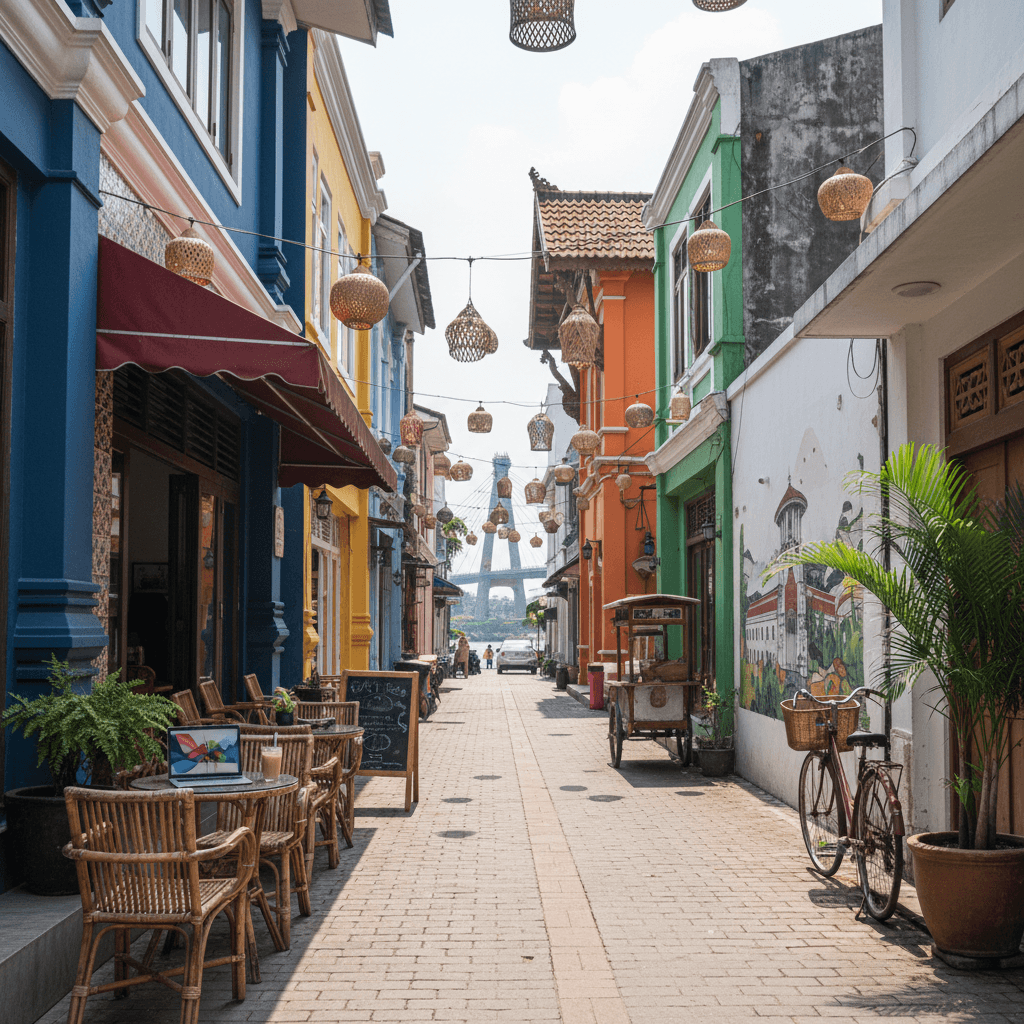
Palembang
🇮🇩 Indonesia
The Vibe: Water, History, and Slow Living
If you're looking for the neon lights of Jakarta or the spiritual retreats of Ubud, Palembang will surprise you. This is a city defined by the Musi River, a massive waterway that acts as the city's pulse. It's one of the oldest cities in Southeast Asia, once the seat of the Srivijaya Empire, but today it feels like a sprawling, laid-back riverside town that just happens to have nearly 1.9 million people living in it.
The atmosphere is unpretentious. You won't find many "digital nomad cafes" with minimalist decor and avocado toast. Instead, you'll find a deep-rooted coffee culture where locals spend hours in warungs or riverside stalls. It’s the kind of place where people are genuinely curious about why you've visited, and you'll likely be the only foreigner in the neighborhood. It’s authentic, slightly gritty around the edges, and incredibly welcoming.
Nomads who thrive here are usually those looking for a "deep dive" into Indonesian life. You trade the convenience of a developed expat bubble for a ridiculously low cost of living and a front-row seat to a culture that hasn't been polished for tourists. It’s slower, stickier, and far more rewarding if you're willing to learn a few words of Bahasa Indonesia.
What Makes It Different
Palembang doesn't try to be anything other than itself. While other cities are rushing toward modernization, life here still revolves around the water. You'll see traditional wooden boats (perahu) darting under the iconic Ampera Bridge, and the smell of frying Pempek (the city's famous fishcake) is everywhere. It’s a culinary capital; travelers often come here specifically to eat, as the food scene is considered one of the best in the country.
- The Musi River Culture: Unlike landlocked cities, the river is the main street. Taking a boat at sunset to see the stilt houses is a daily ritual rather than a tourist activity.
- Extreme Affordability: Your dollar goes further here than almost anywhere else in Southeast Asia. You can live comfortably on $600 to $800 a month without even trying to budget.
- The "Un-Touristed" Factor: You won't deal with the aggressive touts or inflated "tourist prices" common in Bali. You pay what the locals pay.
The Practical Reality
Living here requires a bit of grit. English isn't widely spoken once you leave the main hotels or malls, so you'll be using Google Translate or Grab and Gojek for almost everything. The tropical humidity is heavy, and when it rains, it really pours. You won't find a massive community of remote workers to network with, so it can feel isolating if you aren't proactive about meeting locals.
Most nomads find that Ilir Timur is the best home base. It’s the modern side of town where the infrastructure is most reliable. If you need a break from the heat, the Jakabaring Sport City area offers wide-open green spaces and a quieter, suburban feel that's rare in Indonesian urban centers. It’s a city of contrasts: ancient history on the riverbanks and modern malls just a few blocks away.
Monthly Cost of Living Breakdown
- Housing (1-Bedroom in City Center): $61 to $66
- Basic Utilities: $25
- High-Speed Fiber Internet (50 Mbps+): $21
- Street Food Meal: $1.20
- Mid-range Dinner for Two: $14
- Monthly Gym Membership: $16
- Local Transport (Monthly Pass): $18
Ultimately, Palembang is for the traveler who wants to see Indonesia without the filters. It’s about eating spicy food by the river, navigating chaotic traffic in a Gojek, and finding a rhythm in a city that moves to its own ancient, watery beat.
If you are looking for a place where your dollars, euros, or pounds stretch until they practically snap, Palembang is it. This city ranks in the top 3% of the least expensive places on the planet. It is the kind of spot where a $1,000 monthly budget does not just get you by; it puts you in the "comfortable tier" with a nice apartment and daily restaurant meals.
Most digital nomads find they can live quite well on $600 to $800 a month. If you are really pinching pennies and eating like a local, you could even survive on $400, though that usually means sacrificing some AC and sticking strictly to street food.
Housing and Utilities
Rent is the biggest shock for people coming from Western hubs or even Bali. You can snag a decent one bedroom apartment in the city center for about $65 a month. If you need more space, a three bedroom unit averages around $110. These prices are almost unheard of in other major Indonesian cities like Jakarta.
- Studio Apartment (City Center): $62 to $66 per month
- 3-Bedroom Apartment: $96 to $120 per month
- Monthly Utilities (Electricity, Water, Trash): $25 to $30
- High-Speed Internet (50 Mbps+): $21 per month
Expats often recommend looking for housing in Ilir Timur or near Jakabaring for a better balance of amenities and price. Keep in mind that electricity can fluctuate depending on how hard you run the air conditioning to beat the Sumatran heat.
The Food Scene
Palembang is a food obsessed city, and eating out is often cheaper than cooking at home. A bowl of the local specialty, Pempek, or a plate of street food will set you back about $1.20. Even a combo meal at a place like McDonald's is only $3.
- Local Street Food Meal: $1.25
- Dinner for two (Mid-range restaurant): $14.00
- Cappuccino at a specialty cafe: $1.70
- Domestic Beer (0.5L): $2.15 to $3.50
- Upscale Fine Dining (Per person): $20.00 to $40.00
Groceries are equally affordable. A liter of milk is about $1.30, and local produce is incredibly cheap at the traditional markets. If you are craving imported cheeses or specific Western snacks, expect to pay a premium at the higher end supermarkets.
Transportation and Lifestyle
Getting around is best handled via apps. Gojek and Grab are the lifeblood of the city. A quick 8km taxi ride costs roughly $4.30, while a motorcycle taxi (Ojek) is usually half that. If you prefer the bus, a single ticket is a mere $0.45.
Maintaining your lifestyle is easy on the wallet too. A monthly gym membership averages $16, and a haircut is usually under $2. If you need to see a doctor for a routine checkup, expect to pay around $16.50 for the visit. It is a very low pressure environment for your bank account, allowing you to focus more on your work and less on the cost of your next meal.
Best for Digital Nomads: Ilir Timur
If you're coming to Palembang to work, Ilir Timur is where you want to be. It's the most modern part of the city and feels like the bridge between traditional Sumatra and the 21st century. You'll find the highest concentration of air-conditioned cafes with decent Wi-Fi here, which is vital since dedicated coworking spaces are still a bit of a rarity in town.
The vibe is younger and more energetic than the rest of the city. You'll run into local university students and young professionals at spots like Kopi Kenangan or the various independent roasteries popping up along the main roads. It's also the easiest place to get by with English, as many of the younger residents are keen to practice. Rent for a decent studio or a room in a modern guesthouse usually lands between $65 and $150 per month, depending on how many amenities you need.
- Vibe: Modern, social, and convenient.
- Connectivity: Best access to Biznet fiber lines and stable mobile data.
- Food: A mix of traditional Pempek stalls and Western-style bistros.
Best for Families: Jakabaring
Located on the south side of the river in Seberang Ulu, Jakabaring is a breath of fresh air for those traveling with kids. This area was heavily developed for the Southeast Asian Games, meaning the streets are wider, the air feels a bit clearer, and there's actual green space. It’s a planned neighborhood that feels more suburban and organized than the hectic city center.
Families often choose this area because of the Jakabaring Sport City complex. It’s a massive area where you can actually go for a run, let the kids cycle, or walk without dodging constant motorbike traffic. While it's a bit further from the main business hub, the peace and quiet make up for the commute. You can find larger houses or 3-bedroom apartments here for around $100 to $120 a month, which is incredible value for the space you get.
- Vibe: Quiet, spacious, and active.
- Pros: Excellent sports facilities and less noise pollution.
- Cons: You'll rely heavily on Grab or Gojek to get to the "action" across the river.
Best for Solo Travelers: Sekanak Village (7 Ilir)
If you're in Palembang to soak up the history rather than stare at a laptop all day, Sekanak is your spot. This is one of the oldest parts of the city, located right along the Musi River. It’s a traditional "kampung" or village that has been brightened up with colorful murals, making it a favorite for photographers and backpackers.
Staying here puts you in the heart of the river culture. You can walk to the Ampera Bridge and the Benteng Kuto Besak fort in minutes. It's very affordable, even by local standards, with small local guesthouses costing as little as $10 a night. It’s also the best place to find authentic street food like Mie Celor for about $1.20. You won't find many expats here, but the locals are incredibly welcoming and will likely invite you for coffee within ten minutes of arriving.
- Vibe: Authentic, historic, and very local.
- Top Tip: Use the small river boats (getek) to explore the floating markets nearby.
- Budget: Extremely low; your daily spend here will rarely cross $15.
Best for Convenience: Seberang Ilir (Downtown)
For those who want to be in the middle of everything, the downtown area of Seberang Ilir is the logical choice. This is the city's economic engine, packed with banks, government offices, and the largest shopping malls like Palembang Icon. If you have errands to run, visas to sort, or just want to be within walking distance of a major supermarket, stay here.
It’s a bit more "concrete jungle" than the other neighborhoods, but the convenience is hard to beat. You’re never more than a few minutes away from a 24-hour convenience store or a pharmacy. Prices for mid-range hotels and apartments are slightly higher here, often hovering around $200 to $300 for a more "executive" style setup, but you save money on transport because everything is right outside your door.
- Vibe: Fast-paced and functional.
- Best for: Short-term stays or those who need to be near the big malls.
- Transport: Hub for all major bus routes and the LRT station.
Connectivity & Speeds
If you're coming from Bali or Jakarta, you'll notice the pace of life slows down in Palembang, but the internet is surprisingly reliable. Most nomads stick to Biznet, which is the gold standard for fiber in Sumatra. You can get a solid 65 Mbps connection for about IDR 175,000 ($11) a month, which is more than enough for Zoom calls and uploading video. If you need serious bandwidth, their top tier 400 Mbps plan runs around IDR 700,000 ($44).
Mobile data is your best backup. Telkomsel has the best coverage across South Sumatra, even when you're heading out to the river. You can grab a SIM card at any Indomaret or Alfamart convenience store for a couple of dollars. A 10GB data package usually costs between $2 and $5, so it's worth keeping a local SIM in your phone even if your apartment has Wi-Fi.
Coworking Spaces
Palembang hasn't quite seen the explosion of dedicated coworking hubs like Ubud, but it's catching up. Most of the professional workspaces are tucked away in Ilir Timur. These spaces are often shared with local startups, giving you a chance to meet Indonesian entrepreneurs rather than just other travelers.
The Cafe Office Culture
Since dedicated coworking spaces are still limited, the local cafe culture does the heavy lifting. You'll find the best "laptop-friendly" spots in the Seberang Ilir area. Most owners don't mind if you stay for a few hours as long as you're ordering coffee or snacks. A cappuccino usually costs around $1.70, making it a very cheap office for the day.
Common Grounds is a reliable spot with fast Wi-Fi and plenty of power outlets. If you want something more local, head to the cafes along Jalan Sumpah Pemuda. This street is a hub for the younger demographic and has several spots with outdoor seating and decent connectivity. Just remember to bring a universal adapter, as Indonesian sockets are the two-pin European style (Type C and F).
Practical Tips for Remote Workers
The tropical heat is no joke here. When scouting a place to work, prioritize "Full AC" over the view. Many local cafes are "semi-outdoor," which sounds nice until the humidity hits at 2:00 PM. Expats usually recommend working from home or a mall-based cafe during the peak afternoon heat and saving the riverside spots for sunset.
Power outages happen occasionally during heavy rainstorms. It's a good idea to keep your laptop charged and have your Grab or Gojek app ready to hotspot if the building's Wi-Fi drops. Most nomads find that a combination of a Biznet home connection and a Telkomsel backup is the most stable setup for long-term stays.
Staying Safe in the Musi River City
Palembang is one of those places where you should remain vigilant. With a high crime index around 74, it falls into a category that requires extra caution. Most expats and nomads find the locals to be hospitable, often going out of their way to help if you look lost. While it's generally possible to walk around during the day, you should stick to well lit areas at night, especially in the older parts of Seberang Ilir.
The most common issues you'll run into are petty crimes like pickpocketing in crowded spots. Keep your phone and wallet secure when you're exploring the 16 Ilir Market or hanging out near the Ampera Bridge. Violent crime is quite rare, but like any major city, it pays to stay aware of your surroundings and avoid flashing expensive jewelry or large stacks of cash.
Traffic is probably your biggest safety concern. The roads can get chaotic, and pedestrian infrastructure isn't always a priority. If you aren't used to Indonesian traffic patterns, don't try to drive yourself. Stick to Gojek or Grab. These apps are reliable, and they have built in emergency features and GPS tracking that add an extra layer of security to your trips.
- Current Risk Level: High
- Common Issues: Petty theft in markets, traffic accidents, and occasional flooding during monsoon season.
- Solo Female Travel: Generally safe, though you may receive curious stares. Standard precautions apply.
Healthcare and Medical Services
If you get sick, you're in better hands than you might expect for South Sumatra. The city has been positioning itself as a hub for health tourism lately. RSUD Siti Fatimah is the standout facility here. It's a provincial hospital with modern equipment and a dedicated wing for international standard care. You'll find English speaking specialists there who are used to dealing with foreign patients.
For minor issues or routine checkups, private clinics are scattered throughout the Ilir Timur district. A standard doctor's visit will usually set you back about $16.50, which is a steal compared to Western prices. Pharmacies, or "Apotek," are everywhere. Look for Kimia Farma or K-24; they are reputable chains where you can find most common medications over the counter.
Health Essentials for Nomads:
- Drinking Water: Never drink the tap water. Stick to bottled water like Aqua or Vit, which costs about $0.40 per bottle.
- Vaccinations: Ensure your routine shots are up to date. Most long term travelers also opt for Hepatitis A and Typhoid coverage.
- Air Quality: Keep an eye on the AQI during the dry season (June to September), as regional agricultural burning can sometimes cause haze.
- Insurance: Always carry digital and physical copies of your nomad insurance. Most private hospitals expect payment upfront or a guarantee of coverage.
Hospital stays and complex procedures are significantly cheaper than in the US or Europe, but for anything extremely serious, many expats still choose to fly to Jakarta or Singapore. For day to day living, however, Palembang's medical infrastructure is more than enough to keep you patched up and healthy.
The Pulse of Palembang: Apps and Ojek
In Palembang, the digital economy has completely overtaken traditional transit. If you aren't using Gojek or Grab, you're essentially doing it the hard way. These apps are your lifeline for everything from quick grocery runs to getting across town in a tropical downpour. Most nomads find that GoRide (motorcycle taxis) is the fastest way to slice through the city's notorious peak-hour congestion, especially around the Ampera Bridge area. A typical cross-town trip on a bike will rarely set you back more than $1 or $2.
For those days when the heat is unbearable or you're traveling with gear, GrabCar is the way to go. It's incredibly cheap by Western standards; an 8km ride usually costs around $4.33. The cars are generally clean and air-conditioned, which is a massive relief during the humid afternoons. Just keep in mind that traffic in the city center can crawl, so always buffer your travel time by at least 20 minutes if you have a meeting.
The LRT: A Modern Alternative
Palembang actually boasts Indonesia's first Light Rail Transit (LRT) system, which connects the Sultan Mahmud Badaruddin II International Airport directly to Jakabaring Sport City. It's a clean, efficient, and very cheap way to get a bird's eye view of the city. A single ticket costs about $0.45, making it the most budget-friendly way to get from the airport to the city center without dealing with taxi touts. While it doesn't cover every neighborhood yet, it's a reliable spine for the city's infrastructure.
River Life: Crossing the Musi
Since the city is split by the massive Musi River, the water is a legitimate highway. You'll see locals using small motorboats called Ketek to hop between the banks. While it's more of a local experience than a primary commuting method for expats, it's the only way to reach places like Kemaro Island or the floating restaurants. Negotiate the fare before you step onto the boat; usually, a short hop shouldn't cost more than a few thousand Rupiah.
Public Buses and Angkot
The Trans Musi bus system is the formal bus network, and while it's much better than the chaotic private buses of the past, it can still be confusing for newcomers. Most expats stick to the apps for convenience, but a monthly pass is available for about $18.20 if you're on a strict budget. Then there are Angkots, the small public minivans. They follow set routes and are dirt cheap, but they don't have air conditioning and can be quite cramped. Unless you're looking for a deep-dive cultural experience, you'll likely find them less practical than a Gojek.
Walking and Personal Wheels
Palembang isn't exactly a walkable city. Sidewalks can be uneven or non-existent in certain districts, and the heat makes long treks exhausting. If you're staying long-term, some expats choose to rent a scooter for around $50 to $70 a month. Petrol is incredibly cheap at roughly $0.68 per liter. However, only take this route if you're comfortable with the "organized chaos" of Indonesian traffic. For most, the ease and safety of app-based drivers far outweigh the hassle of driving yourself.
The Local Linguistic Landscape
In Palembang, you aren't just dealing with standard Indonesian (Bahasa Indonesia). The city has its own distinct flavor called Bahasa Palembang. It's a Malay based dialect that sounds quite different from what you'll hear in Jakarta. While almost everyone is bilingual and speaks standard Indonesian for official business, the local tongue is what you'll hear at the 16 Ilir Market or from your Grab driver.
English proficiency is significantly lower here than in Bali or even Yogyakarta. In upscale hotels or malls like Palembang Icon, you'll find staff who speak decent English, but once you step into the local warungs or smaller neighborhoods like Sekanak, it drops off fast. Most nomads find that learning a few key phrases goes a long way in building rapport with the locals, who are generally thrilled when a foreigner tries to speak their language.
Essential Tools for Communication
Since you can't rely on English for daily errands, a few digital tools are non negotiable for a smooth stay. You'll want to have these apps ready on your phone before you head out to explore the Musi River area.
- Google Translate: Download the Indonesian language pack for offline use. The camera feature is a lifesaver for reading menus and signage at local eateries.
- WhatsApp: This is the primary way everyone communicates. Whether you're booking a table at a restaurant or chatting with a prospective landlord in Ilir Timur, you'll do it over WhatsApp.
- Gojek/Grab: These apps have built in translation features for their chat functions. If your driver sends a message in Indonesian, you can translate it instantly within the app.
Key Phrases to Know
While standard Indonesian works, using a bit of the local dialect (Palembangese) will earn you some "local points" and might even help you get a better price at the markets. A major tip: many words in Palembangese end in an "o" sound where standard Indonesian uses an "a".
- Apo kabar? (How are you?) - Instead of the standard Apa kabar.
- Mano? (Where?) - Instead of Mana.
- Berapo? (How much?) - Essential for the markets.
- Terima kasih (Thank you) - Standard Indonesian, but universally understood and appreciated.
- Lemak nian! (Very delicious!) - Use this after eating Pempek and watch the vendor light up.
Navigating Daily Interactions
Expats recommend keeping a "smile first" attitude. If there's a language barrier, locals will usually try their best to help you through gestures or by finding a younger person who might know a bit of English. Don't be surprised if people ask you personal questions like "Where are you going?" or "Are you married?" It's not meant to be intrusive; it's just the local way of being friendly and making conversation.
For those planning to stay longer than a month, it's worth hiring a local tutor or using an app like Duolingo for basic Indonesian. Being able to handle a $1.19 street food transaction or explain where you want to go in a taxi without a screen makes the experience much more rewarding. Most travelers find that within two weeks, they've picked up enough "market speak" to get by comfortably.
The Tropical Rhythm
Palembang sits just three degrees south of the equator, so you can expect a classic tropical rainforest climate. It's hot, humid, and frankly quite sweaty year-round. Temperatures consistently hover between 23°C (73°F) and 33°C (91°F). You won't find traditional seasons here; instead, your life will revolve around the "wet" and "dry" cycles.
The humidity is the real kicker for nomads. It often sits around 80%, which makes a 32-degree day feel significantly heavier. Most expats find themselves planning their deep-work blocks in air-conditioned cafes during the midday heat and saving their Musi River explorations for the cooler early mornings or late evenings.
The Golden Window: June to September
If you want the best possible experience, aim to arrive between June and September. This is the peak of the dry season. While "dry" is a relative term in Sumatra, you'll see significantly less rainfall and more consistent sunshine. It's the ideal time for walking tours through Sekanak Village or taking boat trips to Kemaro Island without worrying about a sudden downpour ruining your electronics.
August is often cited by travelers as the sweet spot. The skies are generally clear, and the city feels more active. This is also when you'll catch the Independence Day celebrations on August 17th, where the Musi River comes alive with traditional "bidar" boat races. It's a loud, colorful, and chaotic spectacle that shows off the city's heart.
The Rainy Season: October to April
The rains start picking up in October and usually peak around November and December. During these months, expect short, intense afternoon bursts that can turn streets into small rivers. Drainage in some parts of the city center isn't perfect, so localized flooding can occasionally mess with your Gojek or Grab commute.
Working from Palembang during the monsoon season isn't a dealbreaker, but it requires a change in strategy. You'll want to live in well-connected areas like Ilir Timur to minimize travel time. The upside? The rain brings a welcome drop in temperature, and the city's lush greenery looks incredibly vivid. Plus, there's something cozy about working from a coffee shop while a tropical storm hammers the roof.
Smart Timing for Nomads
Beyond the weather, you should keep the lunar calendar in mind. Palembang has a significant Muslim population, and Ramadan can change the city's daytime energy. Many local eateries close during the day, and the pace of life slows down even further. However, the night markets (Pasar Beduk) that pop up during this month offer some of the best food you'll ever eat.
- Peak Travel: June to August (Best weather, higher visibility for river activities)
- Shoulder Season: May and September (Good balance of prices and weather)
- Low Season: November to March (Heavy rain, but the cheapest accommodation rates)
Most long-termers recommend avoiding the very end of the dry season in late September or October if there have been forest fires in the region. Occasionally, "haze" from agricultural clearing can drift over South Sumatra, affecting air quality. It doesn't happen every year, but it's worth checking local air quality apps before you book your flight.
If you're coming for the food, any time is a good time. A bowl of Pempek tastes just as good at 35°C as it does during a December thunderstorm.
Survival Basics: Money and Safety
You'll find Palembang is one of the most budget friendly hubs in Indonesia. Most expats get by comfortably on $800 to $1,000 a month, which covers a nice apartment and eating out daily. Cash is still king in local markets, but you'll use QRIS (a universal QR code payment system) for almost everything else. Download the Dana or OVO apps and link your card; it's the standard way to pay at cafes and even some street stalls.
Safety is rarely an issue here. Locals are generally curious and welcoming toward foreigners. While you should keep an eye on your phone in crowded spots like the 16 Ilir Market, violent crime is very low. If you need medical attention, head to RSUD Siti Fatimah. It's the most modern facility in the region and has staff accustomed to helping international patients. For minor issues, look for a Kimia Farma pharmacy, they are everywhere and well stocked.
Getting Connected
If you're working remotely, don't rely solely on hotel Wi-Fi. Pick up a Telkomsel SIM card as soon as you land at Sultan Mahmud Badaruddin II International Airport. It has the best coverage across South Sumatra. A 10GB data package usually costs less than $5. For a stable home setup, Biznet is the gold standard. Their 65 Mbps plan starts at roughly $11 a month, which is plenty for Zoom calls and streaming.
Since dedicated coworking spaces are still a new concept here, nomads usually colonize the city's growing cafe scene. Ilir Timur is your best bet for work friendly spots. Look for places with "Coffee" in the name; they almost always have free Wi-Fi and power outlets. It's common to see students and professionals parked with laptops for a few hours over a $1.70 cappuccino.
Moving Around the City
Traffic in Palembang can be a headache, especially during the afternoon tropical downpours. Forget about renting a car or navigating the local bus system unless you're feeling very adventurous. Your life will revolve around two apps: Gojek and Grab.
- GoRide/GrabBike: The fastest way to cut through gridlock. A 15 minute trip usually costs around $1.
- GoCar/GrabCar: Best for rainy days or when you need air conditioning. A cross town ride rarely exceeds $5.
- LRT South Sumatra: This light rail is clean, modern, and connects the airport to the city center and Jakabaring for about $0.65.
Daily Costs at a Glance
To help you budget, here is what you can expect to pay for common items and services in the city:
Daily Expenses
- Street Food Meal (Pempek or Mie Celor): $1.20
- Mid-range Dinner for Two: $14.00
- Local Beer (0.5L): $3.00
- Monthly Gym Membership: $16.00
- Men's Haircut: $2.00
One final tip: Palembang is hot and humid year round. Most locals do their walking and socializing after the sun goes down. If you're planning to explore the riverside or the Ampera Bridge area, wait until after 5:00 PM when the temperature drops and the city really comes to life.
Need visa and immigration info for Indonesia?
🇮🇩 View Indonesia Country GuideOff the Radar
Pioneer territory