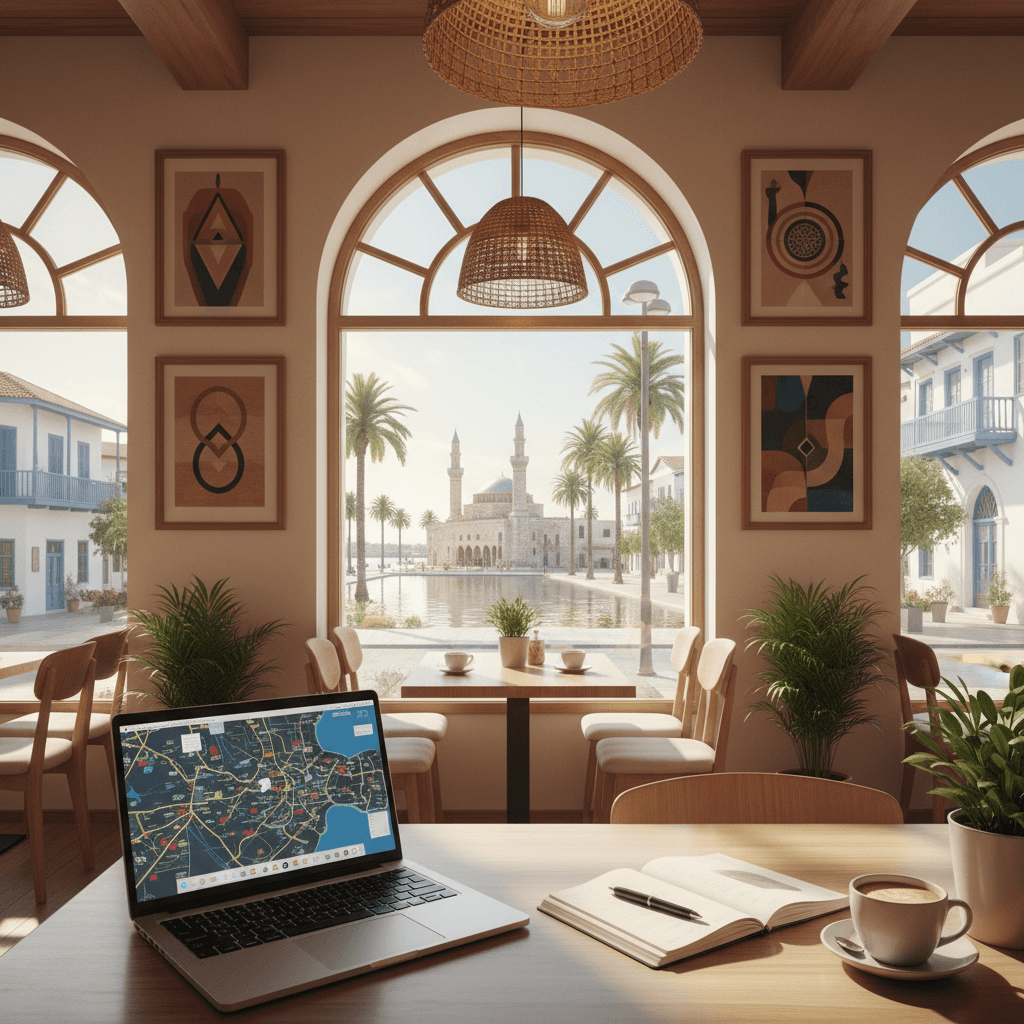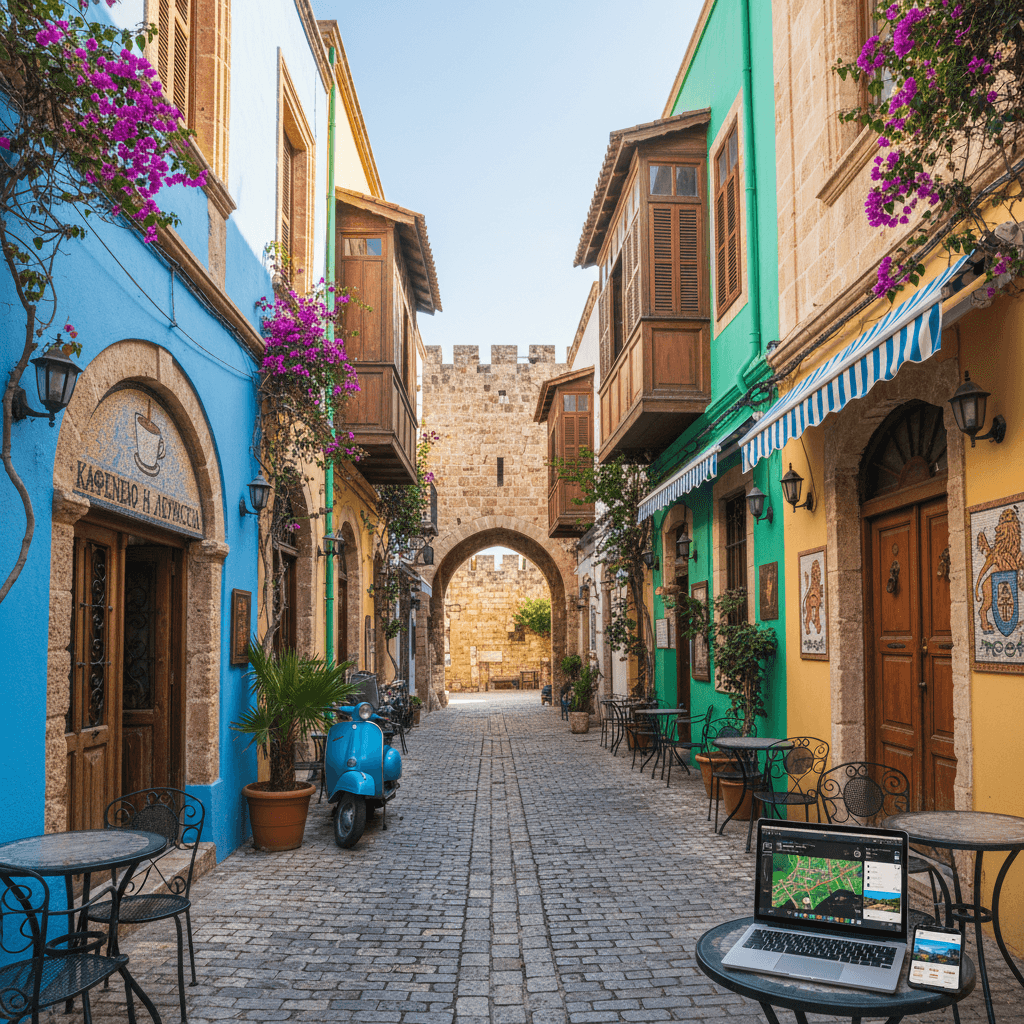
Nicosia
🇨🇾 Cyprus
Nicosia doesn't try to impress you. It's not Lisbon with its Instagram-perfect tram shots, not Chiang Mai with its nomad-optimized everything. It's a real, working capital city that happens to be split in two by a United Nations buffer zone and that, honestly, is what makes it so strange and compelling to actually live in.
Cross the Green Line checkpoint on Ledra Street and you're in a different country within minutes, the smell of strong coffee giving way to grilled corn and diesel, the soundscape shifting from Greek pop to the distant call to prayer. Most nomads do it once out of curiosity, then keep doing it because it never quite stops feeling surreal.
The pace here is slow in the best way. Afternoons go quiet during siesta, shops close and the city exhales. You'll either love that or find it maddening when you need a pharmacy at 2pm. Summers are brutally hot, 30°C plus from June through August and the heat isn't the breezy coastal kind. It sits on you. Most people who stay through July just accept that outdoor productivity is finished by noon.
That said, the rest of the year is genuinely good. April through June and September through October hit around 25°C with low rain, the café terraces on Ledra Street fill up and the city feels like it's operating at its natural rhythm. Winters are mild and rainy, cold tile floors and the smell of rain on old stone, entirely liveable.
What keeps nomads here, turns out, isn't the history or the novelty of the divided city. It's the cost. A single person can live comfortably for €1,800 to €2,200 a month, including a decent one-bedroom in the center, regular meals out and transport. That's competitive for a European capital with reliable infrastructure, English spoken almost everywhere and coworking spaces like Nomads CoWorking and AtWorks already built into the fabric of the city.
It's not a party city. Limassol does nightlife better, Paphos does beaches better. But Nicosia does something those places don't: it feels like somewhere people actually live, which, for longer stays, matters more than you'd expect.
Nicosia isn't the cheapest city in the Mediterranean, but it's honestly one of the better deals for what you get. A single person can get by on around €1,200 to €1,500 a month if they're careful, though most nomads who want a comfortable setup with decent food and a coworking space land closer to €1,800 to €2,200.
Rent is the biggest variable. Studios in neighborhoods like Strovolos or Engomi run €550 to €850 in the center and those areas are worth it if walkability matters to you, expats consistently say Engomi in particular has the best mix of modern apartments and actual greenery. Push out to Aglantzia and you're looking at €450 to €650 for something decent, the student crowd keeps prices lower there, though it's noisier and the streets smell like fried food and scooter exhaust on a Friday night.
Food costs stay reasonable if you don't eat every meal at a sit-down restaurant. Souvlaki from a street spot runs €8 to €12, a meze for two at a mid-range place is around €60 and that's a lot of food. Summers are brutally hot, so you'll likely be eating indoors anyway.
Transport is cheap. Really cheap. A monthly bus pass is €50, the Cabcy app covers taxis and airport runs and the center around Ledra Street is walkable enough that some nomads skip transport costs entirely for weeks at a time.
Coworking, turns out, is where Nicosia surprises people. Regus at Jacovides Tower starts around €300 a month, AtWorks and Nomads CoWorking come in at similar rates and the fixed broadband most apartments offer hits 60+ Mbps without trying. Mobile data with Cyta runs €10 to €30 a month for 10GB or more, it's genuinely fast.
Budget Tiers (Single Person/Month)
- Budget (€1,200 to €1,500): Aglantzia studio around €500, street food daily, public buses only
- Mid-Range (€1,800 to €2,200): Central 1BR around €650, mix of cooking and eating out, Cabcy for longer trips
- Comfortable (€2,500+): Premium Engomi apartment, coworking membership, upscale dining a few nights a week
Nicosia won't drain your savings the way Limassol does, it's a reasonable trade for a capital city with actual infrastructure.
Nicosia doesn't have one neighborhood that works for everyone, it has four that each work really well for specific types of people. Pick wrong and you'll spend your mornings on a sweaty bus, pick right and you'll wonder why you didn't move here sooner.
Digital Nomads: Engomi
Engomi is, honestly, where most nomads land after their first week of exploring. Modern apartments, walkable streets that smell like jasmine and fresh bread in the mornings and coworking spaces like AtWorks and Nomads CoWorking within easy reach. Rents run €550 to €850 for a one-bedroom, which isn't cheap, but the tradeoff is solid infrastructure and a neighborhood that doesn't feel like it's stuck in 1987.
Cafés here support working, turns out, better than most European cities twice the size. Fixed broadband averages 60+ Mbps for around €30 a month, mobile coverage is strong and you're close enough to the center that Ledra Street is a short walk when you need a change of scenery.
Expats: Strovolos
Strovolos is the default expat choice and frankly, it earns that reputation. It's safe, it's got community events and Nicosia General Hospital is right there after its 2024 upgrade. The suburban feel bothers some people, it's quieter than Engomi, but families and longer-term residents consistently say the tradeoff is worth it.
Rents here sit in the same €550 to €850 range, so you're not saving money versus Engomi, you're trading nightlife proximity for calm streets and a genuine neighborhood feel.
Families: Ayios Dometios
Traditional. Quiet. Close to the center without the center's noise. Ayios Dometios doesn't have the amenities density of Strovolos, but families who want a slower pace and lower foot traffic tend to settle in quickly. It's a place where kids can actually play outside without the soundtrack of constant traffic.
Solo Travelers and Budget Nomads: Aglantzia
Aglantzia is the student neighborhood, which means affordable rents starting around €450, lively markets and a social energy that the other areas genuinely can't match. It's noisier, no question about it, weekend nights especially. But solo travelers who want to actually meet people rather than just work in silence find it's, weirdly, the most social part of the city by a wide margin.
Connectivity in Nicosia is, honestly, better than most European capitals. Fixed broadband runs 60+ Mbps for around €30 a month and Cyta's mobile network hits up to 195 Mbps in the city, which is fast enough that you'll rarely think about it. Cafés along Ledra Street are perfectly workable for a few hours, the WiFi holds up, there's usually a seat and the smell of fresh coffee and pastry drifting from the counter makes the afternoon easier to get through.
For serious work, skip the café-hopping and get a dedicated desk. The coworking scene here is small but solid.
- Regus Nicosia Jacovides Tower: The most corporate option, starts around €300/month, reliable infrastructure, good for client calls
- Nomads CoWorking: Popular with the remote-work crowd, community feel, high-speed WiFi included
- AtWorks: Flexible plans, central location, tends to attract freelancers and small teams
- Royce Office Cyprus: More boutique, quieter atmosphere, worth a trial day before committing
Most nomads find Nomads CoWorking or AtWorks are the better fit day-to-day, Regus is there if you need the polish for a client meeting. €300/month isn't cheap for this part of the world, so factor that into your budget honestly before you arrive.
For SIMs, turns out all three carriers are genuinely good. Cyta, Vodafone and Epic (also called PrimeTel) all sell prepaid plans at the airport arrivals hall and in city shops. Expect to pay €10 to €30 a month for 10GB or more. Cyta edges out the others on raw speed inside Nicosia, so that's the default recommendation, though Vodafone's coverage is stronger if you're planning day trips to the mountains or villages.
A few practical things worth knowing:
- Backup connection: Keep a local SIM hotspot ready; café WiFi drops during lunch rush
- Power cuts: Rare but they happen in summer when the grid strains under the AC load
- VPN: Some streaming services geo-restrict content in Cyprus, a VPN sorts it immediately
The infrastructure here is, weirdly, one of Nicosia's most underrated selling points. It doesn't feel like you're making a compromise to live and work here. That matters more than people admit.
Nicosia is, honestly, one of the safer capitals in the Mediterranean. It sits comfortably ahead of most European cities you'd consider for a long stay. Petty theft happens near crowded markets and Ledra Street on busy weekends, it's not rampant but keep your bag in front of you.
The divided city adds a layer of context worth understanding. The Green Line checkpoint is fine to cross during the day, most nomads do it out of curiosity and it's genuinely interesting, but the northern side's quieter streets after dark aren't somewhere you want to be wandering alone. No dramatic no-go zones, just basic awareness.
Healthcare is where Nicosia, turns out, punches well above its weight for a city this size.
- Nicosia General Hospital: Public option in Strovolos, recently upgraded; functional and free for EU citizens with a European Health Insurance Card
- Aretaeio Hospital: Private, centrally located, English-speaking staff throughout
- Apollonion Private Hospital: The one expats in Engomi tend to use; quality is genuinely good, costs are reasonable by Western European standards
- Pharmacies: Everywhere. Seriously, you won't walk more than a few blocks without finding one and pharmacists here will actually give you real advice rather than just pointing you to a GP
- Emergency number: 112, works island-wide
Private GP visits run roughly €40-80, specialist appointments a bit more. If you're staying longer than a few months, weirdly, it can work out cheaper to just pay out of pocket for most things than to navigate the public system as a non-EU visitor. Travel insurance with medical coverage is still the smart call regardless.
Summers do create one health consideration nobody warns you about. Forty-degree days in July and August aren't just uncomfortable, the heat is physical, it sits on you and dehydration sneaks up fast if you're walking the old city's stone streets mid-afternoon. Drink more water than you think you need, schedule outdoor time before noon and don't underestimate it.
Overall though, Nicosia doesn't ask much of you on the safety front. Stay switched on, get good insurance and you're set.
Nicosia's center is, honestly, more walkable than most people expect. Ledra Street and the old walled city are easy on foot, the smell of fresh souvlaki drifting out of side streets, motorbikes weaving past at low speed. You won't need a car if you're staying centrally and working from cafés or a nearby coworking space.
Public buses cover the city reasonably well. A single ride runs €1.50 and the monthly pass is €60, which is genuinely good value if you're commuting to a fixed coworking spot in Strovolos or Engomi. The network isn't perfect though, routes thin out in the evenings and on weekends, so don't count on buses for late nights.
For rides, the Cabcy app is the local answer to Uber. It works across Nicosia, covers airport transfers and most drivers speak enough English to get by. Taxis start around €5 for short hops, which is fine for occasional use, it adds up fast if you're relying on them daily. Bikes and scooters are rentable, though summer heat makes cycling genuinely miserable from July through August, the kind of heat that turns a 10-minute ride into a sweaty ordeal.
Getting in from Larnaca Airport is straightforward. The Kapnos Shuttle runs directly to Nicosia for €8, no need to negotiate a taxi or figure out connecting buses. Most nomads use it on arrival, it's cheap and drops you centrally.
A few practical notes on getting around:
- Drive left: Cyprus follows UK road rules, turns out this catches a lot of visitors off guard at roundabouts.
- Crossing the Green Line: You can walk into North Nicosia at the Ledra Street checkpoint with your passport. It's weirdly straightforward, just bring ID.
- Parking: Available but annoying in the old city; Strovolos and Engomi are easier if you rent a car.
- Airport taxis: Fixed-rate licensed taxis from Larnaca run around €40-50 to Nicosia, confirm the rate before you get in.
Most nomads skip renting a car entirely for the first month, the bus pass and Cabcy handle daily life fine. If you're planning weekend trips to Lefkara or Omodos wine village though, renting a car makes sense, public transport doesn't reach those areas well.
Greek is the working language here, specifically the Cypriot dialect, which sounds noticeably different from standard Greek and will occasionally throw you off even if you studied the language back home. Turkish is spoken in the north. Those are your two official languages and that's the divided reality of Nicosia in a sentence.
The good news is that English gets you surprisingly far, especially in the city center, around Ledra Street and anywhere nomads tend to congregate. Most younger Cypriots are, honestly, quite comfortable in English and service staff at cafés, coworking spaces and shops usually switch without hesitation. Outside those zones, in quieter residential neighborhoods like Ayios Dometios or the outer edges of Strovolos, you'll hit more language friction, so a few basic phrases go a long way.
A short list worth memorizing before you arrive:
- Hello: Yia sou (casual), Yia sas (formal or group)
- Please: Parakalo
- Thank you: Efharisto
- How much?: Poso kani?
- Do you speak English?: Milate Anglika?
Cypriots respond warmly when you make even a small effort, it won't go unnoticed. Don't stress about pronunciation, nobody expects perfection and fumbling through a greeting tends to get a smile rather than a grimace.
Google Translate handles Greek well enough for menus, signs and the occasional landlord text message, turns out the camera translation feature is genuinely useful when you're staring at a handwritten sign outside a local market. Download the offline Greek pack before you land, because you won't always have signal when you need it.
One thing that catches people off guard: Cypriot Greek has its own vocabulary and accent that standard Greek speakers sometimes joke they can barely follow. If you're crossing into the north through one of the checkpoints, the language switches to Turkish entirely, so even your basic Greek phrases won't apply there.
Written communication in shops and official signage is usually bilingual in Greek and English, which makes day-to-day logistics manageable. Bureaucratic paperwork is another story, frankly, but that's a problem for a different section.
Nicosia runs hot. Not metaphorically, literally, the kind of July heat where the pavement radiates upward and the air feels thick enough to chew, with temperatures sitting stubbornly above 35°C for weeks at a stretch. Most nomads who arrive in August without doing their research leave early, it's that punishing.
The Mediterranean climate means four fairly distinct seasons, though "winter" is a loose term here. December through February brings the most rain, cooler evenings around 10°C and the occasional grey week that surprises people expecting year-round sunshine. Still, it's mild compared to almost anywhere in northern Europe, cold tile floors in the morning but t-shirt weather by noon.
Best Times to Visit
- April to June: Honestly the sweet spot. Temperatures hover around 22,27°C, there's still some green left in the hills, café terraces fill up without the suffocating heat and the city feels, turns out, genuinely pleasant to walk around in.
- September to October: A close second. The tourist crowds thin out, temperatures drop back to the mid-20s and the light in the old city goes golden in the late afternoon in a way that makes even the divided streets look cinematic.
- November to March: Workable for long-stay nomads chasing lower rents and quiet, but pack layers and expect some grey stretches. Nightlife and café culture don't disappear, they just move indoors.
- July to August: Avoid if you can. Locals escape to the coast or the Troodos Mountains, the city empties out in a weirdly eerie way and working productively when it's 38°C outside and your AC is fighting a losing battle gets old fast.
Rain is mostly a winter thing, concentrated between November and March, with December and January being the wettest months. Spring and autumn are dry. Summer is bone dry, which sounds appealing until you're three weeks into it.
For digital nomads planning a longer stay, April through June is the clear call. You'll get comfortable working temperatures, the city's café scene is in full swing along Ledra Street and you're not yet competing with peak-season pricing on apartments. September works almost as well, the heat breaks gradually, the city wakes back up and frankly the whole place has a better energy once August is done.
Nicosia runs on a rhythm you'll need to adjust to. Banks close at 13:30 and don't reopen, so plan your in-person errands for mornings. ATMs are everywhere and Revolut works without any fuss, which is honestly how most nomads handle day-to-day spending anyway.
Get a SIM card the moment you land. Cyta, Vodafone and Epic all have desks at Larnaca arrivals and a 10GB+ plan runs €10 to €30 a month. Cyta is, turns out, the fastest in Nicosia if signal consistency matters to you. Don't wait until you're in the city center to sort it out.
For apartments, skip the generic listings and go straight to dom.com.cy for local inventory. Strovolos and Engomi are where most expats land, walkable, well-connected and close to coworking spots. Aglantzia is cheaper and has a student energy to it, though Friday nights can get loud enough to rattle your windows.
Summers are brutally hot. We're talking 35°C in July with no real relief until sundown and the air carries a dry, gritty weight that makes afternoon work outside basically impossible. April through June and September through October are genuinely good, warm without the punishment. If you're choosing when to come, don't pick August.
A few customs worth knowing before you arrive:
- Drive left: Cyprus follows British road rules, it catches people off guard.
- Siesta hours: Shops often close between 14:00 and 17:00, especially outside the center.
- Greetings: A warm "Yia sou" goes a long way, locals notice and appreciate it.
- Checkpoints: Crossing the Green Line into the north is straightforward with an EU passport, bring ID and expect a brief stop.
- Pharmacies: Everywhere and pharmacists here are, weirdly, willing to advise on minor ailments without sending you to a doctor first.
Emergency services are on 112. Nicosia General handles public healthcare, Apollonion is the private option and the quality difference is real, most expats with insurance use Apollonion without hesitation.
Day trips are easy. Lefkara is 45 minutes south, Omodos wine village is under an hour. Rent a car for these, the bus connections aren't worth the hassle.
Need visa and immigration info for Cyprus?
🇨🇾 View Cyprus Country GuideEasy Landing
Settle in, no stress
Monthly Budget Estimates
More cities in Cyprus
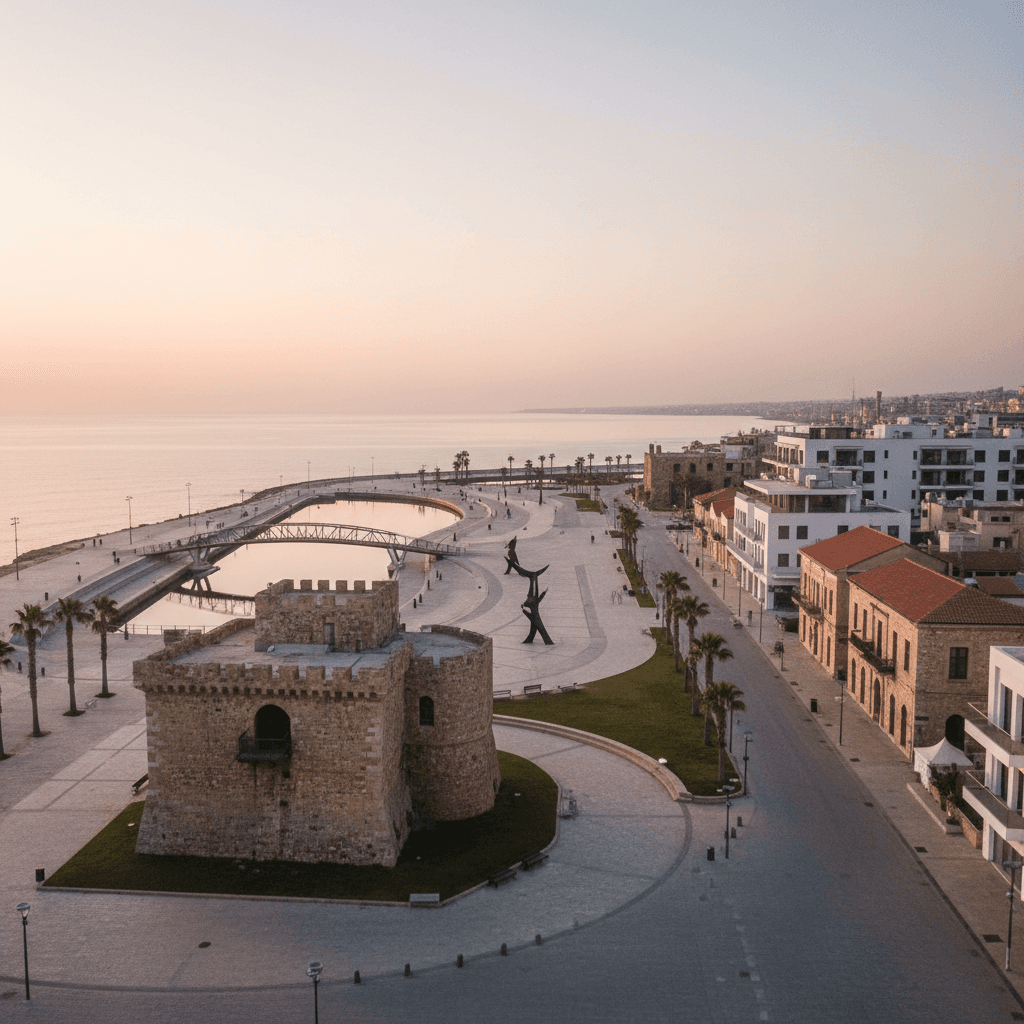
Limassol
🇨🇾 Cyprus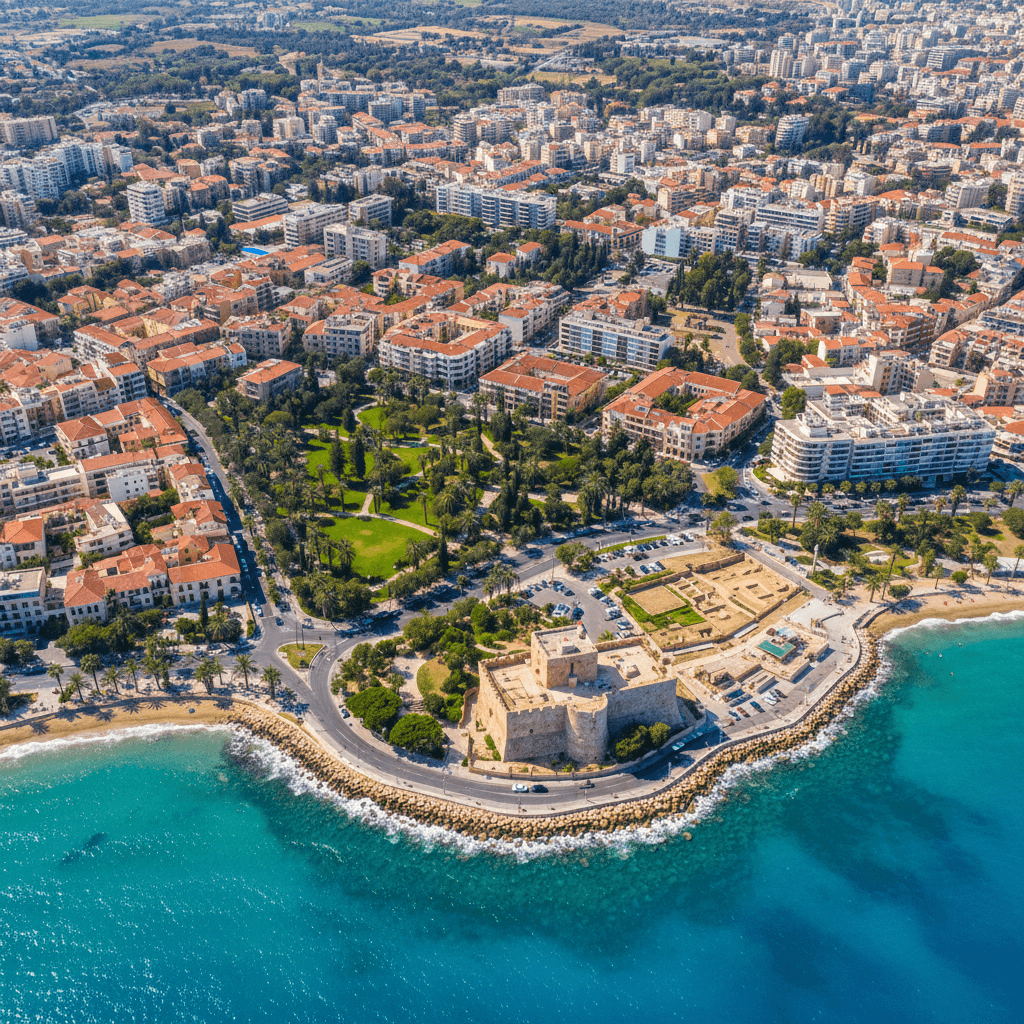
Paphos
🇨🇾 Cyprus