Nantes
🇫🇷 France
The Vibe: France’s Creative Laboratory
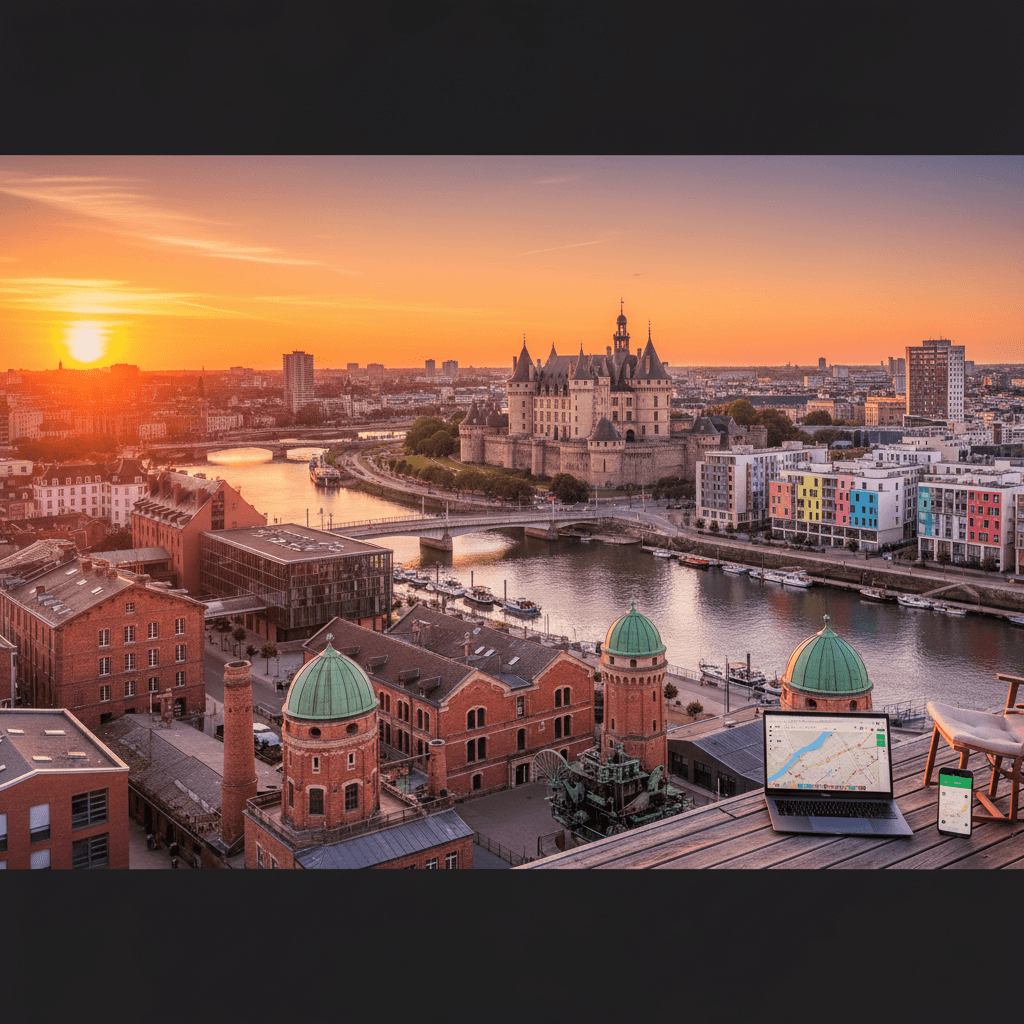
Nantes doesn't try to be Paris, and that's exactly why it's winning over the remote work crowd. Often called France’s mini Silicon Valley, it’s a city where 18th-century stone facades meet massive mechanical elephants and experimental art installations. The atmosphere is decidedly laid-back but intellectually charged, fueled by a booming startup scene and a fierce commitment to ecological living.
While the rest of the world looks toward the capital, Nantes has been quietly building a playground for the creative class. You'll feel it most on the Île de Nantes, where former shipyards have been transformed into "creative hubs" filled with designers, developers, and artists. It’s a city that rewards curiosity; one afternoon you’re touring the Château des Ducs de Bretagne, and the next you’re working from a riverside café watching a 40 foot tall mechanical machine walk past your laptop.
The emotional experience here is one of relief. There’s a distinct lack of the "hustle culture" anxiety found in larger hubs. Instead, you get a high safety index and a population that values life outside of the screen. Nomads often mention the "Green Line," a literal painted line on the sidewalk that guides you through the city's best art and landmarks, as a symbol of the local philosophy: work is important, but wandering is mandatory.
The Cost of Living
Your budget goes significantly further here than in the North of France. Most nomads find that $2,250 per month allows for a very comfortable lifestyle, including a private apartment and frequent dinners out. If you’re more budget-conscious, you can get by on $1,840 by hitting up local markets like Talensac for fresh produce instead of dining at Place Royale every night.
- Budget Tier ($1,800): Shared housing, cooking at home, and using the city's excellent bike-share programs.
- Mid-Range Tier ($2,250): A private studio in a trendy area like the Île de Nantes and regular coworking memberships.
- Comfortable Tier ($3,000+): A spacious 1BR in the historic center, upscale dining, and weekend trips into Brittany.
Where to Plant Your Roots
Choosing a neighborhood in Nantes depends entirely on the "noise level" you want for your workday. The city is highly walkable, but each pocket has a different pulse.
Île de Nantes
- Best for: Nomads and tech workers.
- The Draw: This is the heart of the city's modern identity. It’s industrial, edgy, and packed with coworking spaces and cafés.
- Rent: Studios typically go for $700 to $900 per month.
- The Trade-off: It can feel a bit "concrete" compared to the leafy parks elsewhere.
City Center (Place Royale & Graslin)
- Best for: Social butterflies and short-term travelers.
- The Draw: You’re in the middle of everything. The architecture is stunning, and the nightlife is right outside your door.
- Rent: Expect to pay a premium, often $1,000+ for central 1BRs.
- The Trade-off: It’s the loudest part of town and can get crowded during festivals.
Erdre River Area
- Best for: Slow travelers and families.
- The Draw: Incredible nature scores and scenic walking paths. It’s quiet, green, and perfect for those who prioritize morning runs over late-night bars.
- The Trade-off: You’ll rely more on the Zenbus app or trams to get into the action.
Connectivity and Logistics
Internet reliability is rarely an issue. Most central apartments and creative hubs offer speeds around 165 Mbps. If you’re working from a café, the connection is generally stable enough for video calls. For mobile data, expats recommend grabbing an eSIM via HolaFly or a local SIM to ensure you stay connected while exploring the riverside.
Getting around is seamless. The city is pioneer in eco-transport, so while ride-hailing exists, you’ll likely find yourself using the Citymapper app to navigate the tram system or simply walking. The center is compact enough that your own two feet are often the fastest way to get from a meeting to a €15 lunch special in a hidden courtyard.
The Price of the Pays de la Loire
Nantes has earned its reputation as a relief valve for those exhausted by Parisian price tags. While it's certainly more expensive than a beach town in Southeast Asia, it provides a high-quality French lifestyle for a fraction of the cost you'd find in the capital. Most digital nomads find that a monthly budget of $2,250 allows for a comfortable lifestyle, including a private studio and plenty of dinners out at Place Royale.
If you're willing to live like a local student or share a flat, you can squeeze by on roughly $1,840 per month. On the flip side, those looking for a premium experience with a large one-bedroom apartment and frequent weekend trips should budget upwards of $3,000.
Housing and Rent
Rent is your biggest variable here. While the city center is walkable and historic, it carries a premium. Many remote workers head south of the center to Île de Nantes, where the vibe is industrial-cool and the prices are more forgiving. If you're booking short-term via Airbnb, expect to pay around $800-$1000 for short-term studio, though monthly leases on the local market can be lower if you have the paperwork to back them up.
- Île de Nantes Studio: Between $700 and $900 per month. This area is a favorite for the startup crowd and offers the best bang for your buck.
- City Center (Place Royale/Graslin): Expect to pay $1,000+ for a well-furnished one-bedroom. You're paying for the architecture and the proximity to the nightlife.
- Erdre River Area: Prices vary, but it's generally more residential and calm. It's a solid choice if you want more square footage and green space for your money.
Dining and Groceries
Food is where Nantes really shines, especially if you enjoy cooking. The Marché de Talensac is a local institution where you can find fresh Atlantic seafood, local cheeses, and produce without the supermarket markup. For those who prefer eating out, a mid-range dinner will usually run you between €15 and €25.
- Cheap Eats: Street food and local boulangeries offer filling lunches for under €10.
- Mid-Range Dining: A three-course meal in a bistro usually lands around €25 to €35 excluding wine.
- Coffee: A standard espresso is usually €2 to €3, though specialty coffee shops in the creative districts might charge a bit more.
Transportation and Connectivity
Nantes is an eco-conscious city, so you won't need a car. The public transport system is affordable and efficient, and the city is flat enough that biking is often the fastest way to get around. Most expats recommend downloading the Zenbus or Citymapper apps to track trams and buses in real time.
- Monthly Transit Pass: These are relatively low-cost and cover the entire tram and bus network.
- Biking: Bike rentals are everywhere, and the city has invested heavily in dedicated lanes.
- Internet: High-speed fiber is standard. You'll often see speeds hitting 249 Mbps, making it one of the more reliable French cities for video calls and heavy uploads.
Coworking and Lifestyle
The coworking scene is growing fast, particularly on the Île de Nantes. While specific daily rates fluctuate, the city's "mini Silicon Valley" status means there are plenty of creative hubs where you can grab a desk for the day. If you prefer the cafe-office route, the French "terrasse" culture is welcoming, provided you keep the coffee flowing. For mobile data, most nomads grab an eSIM from providers like HolaFly or a local SIM from a shop near a Carrefour or Intermarché to stay connected while exploring the Erdre River.
For Digital Nomads: Île de Nantes
If you want to be where the action is without the tourist crowds, head straight for the Île de Nantes. This island in the middle of the Loire is the city's creative heart, once an industrial shipyard and now a playground for startups and artists. It's home to the famous Machines de l'Île, where a giant mechanical elephant wanders past glass-walled office spaces.
Nomads flock here for the work-life balance. You'll find plenty of riverside cafés with reliable Wi-Fi and a community that skews younger and more international. It's the most "Silicon Valley" part of town, so networking happens naturally at the local bars after five. While it still has an industrial edge in some corners, the proximity to the water and the sheer number of creative hubs make it the top choice for remote workers.
- Rent: Expect to pay between $700 and $900 for a modern studio or one-bedroom apartment.
- Vibe: Innovative, edgy, and tech-focused.
- Top Spot: Grab a coffee and open your laptop at one of the many spots near the Hangar à Bananes.
For Solo Travelers and Nightlife: City Center (Place Royale & Bouffay)
If you're in Nantes for a shorter stint or just want to be steps away from the best bars and historic landmarks, the City Center is your base. Areas around Place Royale and the medieval Bouffay district are entirely walkable. You can spend your morning at the Château des Ducs de Bretagne and your evening hopping between wine bars in timber-framed buildings.
Solo travelers love this area because it's impossible to feel lonely. The streets are always active, and the social scene is concentrated. You're also close to the Talensac Market, where you can grab cheap, high-quality local produce or a quick snack for a few euros. The downside is the noise and the slightly higher price tag for central living, but the convenience of having everything at your doorstep usually wins out.
- Rent: Centrally located studios via Airbnb or short-term platforms often go for around $731 per month, though long-term stays can be pricier.
- Vibe: Historic, social, and energetic.
- Top Spot: Meet locals at the bars surrounding the Place du Commerce.
For Expats: Quartier Graslin
Expats looking for a more polished, "classic French" experience often settle in the Graslin neighborhood. It's sophisticated, home to the stunning Théâtre Graslin and the famous La Cigale brasserie. It feels a bit more upscale than the Île de Nantes but maintains a strong connection to the city's cultural events and festivals.
The neighborhood is safe, beautiful, and perfectly positioned between the busy center and the quieter residential zones. It's a great spot if you're looking to integrate into the local French lifestyle while still having access to English-speaking circles and high-end dining. Most expats find the slightly higher cost of living here worth the architectural charm and the refined atmosphere.
- Rent: Prices here are among the city's highest, often exceeding $1,000 for a well-maintained one-bedroom.
- Vibe: Elegant, architectural, and upscale.
- Top Spot: Dinner at a bistro near the Rue Jean-Jacques Rousseau.
For Families: Erdre River Area
Families generally move north toward the Erdre River. This area trade's the city's grit for greenery, boasting a nature score of 92/100. It's significantly quieter and offers more space for the money. You'll find scenic walking paths, rowing clubs, and plenty of parks where kids can run around.
While it's further from the startup hubs, the public transport in Nantes is excellent. Using apps like Zenbus, you can get from the river to the center in about 15 to 20 minutes. It's the best choice if you want a backyard or a larger home without the price tag of a Parisian suburb. The air is cleaner, the streets are wider, and the pace of life matches the slow flow of the river.
- Rent: Larger family apartments or small houses start around $1,200 to $1,500.
- Vibe: Calm, green, and residential.
- Top Spot: Weekend picnics at the Parc de la Beaujoire.
Connectivity and Speed
Nantes has earned its reputation as France's mini Silicon Valley for good reason. The infrastructure is robust, and you won't struggle to find a stable connection whether you're working from a riverside apartment or a converted industrial warehouse. While speed tests across the city can vary, averages around 165 Mbps, though some older buildings in the historic center might dip lower. Fiber optic is the standard for most modern rentals, especially in the newer developments on the Île de Nantes.
For mobile data, you have plenty of reliable options. Most nomads pick up a local SIM from providers like Orange or Free, but eSIMs via Holafly have become the go-to for those who want to be online the second they step off the train. If you're planning a long-term stay, setting up a home internet contract is straightforward, though you'll usually need a French bank account or a fintech alternative to get through the paperwork.
Coworking Spaces and Creative Hubs
The coworking scene here is deeply tied to the city's artistic and tech-forward identity. You won't find just sterile office blocks; instead, expect creative hubs with a heavy emphasis on community. The Île de Nantes is the undisputed heart of this movement. It’s an island in the middle of the Loire that has been transformed from shipyards into a playground for startups and digital nomads.
- La Cantine: A staple for the local tech scene. It's more than just a desk; it's where the city's "French Tech" ecosystem meets. It's ideal if you're looking to network with local entrepreneurs.
- Whoork: Located near the train station, this spot is perfect for those who need a professional environment with high-end amenities and a more corporate-creative hybrid feel.
- Le Karting: Situated on the island, this space leans into the industrial aesthetic and attracts designers, architects, and freelance creatives.
The Café Office Culture
Nantes has a legendary café culture that is increasingly welcoming to laptops. Unlike Paris, where some bistros might give you the side-eye for staying too long, many spots in Nantes embrace the remote work crowd. The area around Place Royale and the Bouffay district is packed with options, though these can get loud during the lunch rush.
For a quieter session, nomads often head to the public libraries or specialized "work-friendly" cafés. ConnectPls is a frequently recommended service by the local community to ensure you have a backup hotspot if you're planning to work from the more scenic, outdoor spots along the Erdre River. If you prefer a structured environment without the coworking price tag, the city's media libraries (Médiathèques) offer free Wi-Fi and a studious atmosphere.
Practical Nomad Tips
If you're jumping between locations, keep the Zenbus or Citymapper apps handy. They are the most accurate way to track the trams and buses, ensuring you aren't late for a Zoom call because of a transit delay. Most nomads find that a mix of a central Airbnb (averaging around $731 for a studio) and a part-time coworking membership provides the best balance of focus and social life.
While English is widely understood in the tech hubs like Île de Nantes, having a few French phrases ready will go a long way when asking for the Wi-Fi password in smaller neighborhood spots. "Quelle est la clé Wi-Fi, s'il vous plaît?" is usually all you need to get started.
Peace of Mind in the City of Dukes
Nantes carries a reputation for being one of the more relaxed urban centers in France. While larger metros like Paris or Marseille often feel high-strung, the vibe here is notably calmer. You'll likely feel comfortable walking through the historic center or along the Erdre River, though it’s always smart to keep your wits about you, especially after dark or in crowded transit hubs.
Like any growing tech hub, petty theft can happen. Keep an eye on your laptop and phone when working from the outdoor terraces in Île de Nantes or the busy cafés near Place Royale. If you ever find yourself in a pinch, the universal emergency number is 112. Most locals are helpful, and the police presence is visible without being overbearing.
World-Class Medical Care
France is famous for its healthcare system, and Nantes is no exception. The city is home to several high-quality public and private hospitals that handle everything from routine check-ups to specialized care. If you're an expat settling in for the long haul, you'll eventually want to register for a Carte Vitale to access the state reimbursement system, but short-term nomads will find that out-of-pocket costs for a GP visit are quite reasonable compared to North American prices.
For minor ailments, your first stop should always be a Pharmacie. You’ll spot them by their glowing green crosses. These aren't just shops; French pharmacists are highly trained medical professionals who can give advice on minor injuries or illnesses and provide over-the-counter medications that might require a prescription elsewhere. You can find them scattered throughout the city, often conveniently located near major supermarkets like Carrefour, Intermarché, or Auchan.
Practical Health and Safety Tips
- Emergency Contacts: Dial 112 for general emergencies, 15 for medical emergencies (SAMU), and 17 for the police.
- Pharmacy Access: On Sundays and late at night, look for the "Pharmacie de Garde" (on-duty pharmacy). Locations are usually posted on the door of any closed pharmacy.
- Tap Water: The water in Nantes is perfectly safe to drink. Carry a reusable bottle to stay hydrated while exploring the creative trails of the Voyage à Nantes.
- Digital Security: When using public Wi-Fi in coworking spaces or riverside cafés, expats recommend using a VPN, as Nantes is a major target for "France’s mini Silicon Valley" startup scene.
- Street Safety: The city is highly walkable and bike-friendly. Use apps like Zenbus or Citymapper to stay on top of public transport schedules so you aren't waiting around late at night.
Overall, the biggest "danger" in Nantes is usually just the rain, which can make the cobblestone streets in the old quarter a bit slick. The local healthcare infrastructure is robust, and the general atmosphere is one of communal safety. Whether you're a solo traveler or moving with a family, you'll find the environment supportive and well-regulated.
The Logistics of Getting Around
Nantes is widely considered one of the most eco-friendly cities in France, and that reputation is reflected in how easy it is to traverse without a car. The city center is impressively compact and pedestrian-friendly. Most nomads find that if they’re staying near Place Royale or the Château des Ducs de Bretagne, their own two feet are the only transport they really need for daily errands.
When you need to cover more ground, the public transit system is efficient and affordable. The city is famous for its clean, modern trams that crisscross the Loire. You'll want to download the Zenbus or Citymapper apps immediately; they provide real-time tracking that actually works, saving you from standing around in the rain during the damper winter months.
Public Transit and Passes
The network consists of three main tram lines and an extensive bus system. If you're staying for more than a few days, skip the single-trip tickets and look into a monthly pass, which is remarkably low-cost compared to the €85+ you’d spend in Paris. Some of the most useful routes for expats include:
- Tram Line 1: This is the workhorse of the city, connecting the main train station (Gare de Nantes) to the city center and the creative hubs on the Île de Nantes.
- The Navibus: A public water bus that crosses the Erdre and Loire rivers. It’s included in your standard transit pass and offers a scenic commute that feels more like a mini-cruise than a trip to work.
- Airport Shuttle (Navette Aéroport): This runs every 20-30 minutes depending on the season and gets you from the terminal to the city center in about 25 minutes for €10.
Cycling and Micro-mobility
Nantes has leaned hard into cycling infrastructure. You’ll see bike lanes separated from traffic on almost every major boulevard. For short hops, the city’s bike-share program is everywhere, but many long-term nomads prefer renting a scooter through local apps for a bit more zip. Because the city is relatively flat, you won't break a sweat getting from a riverside cafe to a coworking space in the Île de Nantes district.
Ride-hailing apps like Uber operate here, but they can be pricey for short distances. Travelers often say it’s better to save those for late-night returns from the bars around Place du Bouffay when the trams have stopped running. If you do need a car for a weekend trip to the coast, rental agencies are clustered around the train station, though parking in the center is notoriously difficult and expensive.
Practical Navigation Tips
The city layout can be a bit confusing at first because of how the river branches. Keep these pointers in mind to avoid getting turned around:
- The Green Line: Look for the physical green line painted on the sidewalk. It’s a permanent trail that leads you to the city’s major art installations and landmarks. It’s a foolproof way to explore without constantly checking your phone.
- River Crossings: Bridges can be further apart than they look on a map. If you’re living on the Île de Nantes, double-check which bridge is closest to your destination before you head out.
- Weekend Perks: Keep an eye out for local promotions; the city occasionally offers free public transport on weekends to encourage residents to leave their cars at home.
The French Connection
In Nantes, French is the undisputed king of conversation. While it has earned a reputation as France's mini Silicon Valley, the linguistic culture remains deeply traditional. You'll find that the locals are fiercely proud of their language, and a little effort goes a long way here. Unlike the more internationalized pockets of Paris, daily life in Nantes requires at least a baseline level of French to truly feel settled.
Most nomads find that English proficiency is moderate within the creative hubs of Île de Nantes and the tourist heavy City Center. If you're working out of a startup incubator or a tech focused coworking space, you'll get by just fine with English for professional tasks. However, once you step out for a coffee near Place Royale or head to the Talensac market for groceries, the dynamic shifts. Expect to use French for most service industry interactions.
Mastering the Social Etiquette
Communication in Nantes is built on small, polite formalities. Expats often emphasize that skipping a "Bonjour" when entering a shop or a "Merci" when leaving is seen as a genuine slight. It isn't just about the words; it's about acknowledging the person behind the counter. If you start every interaction with a smile and a polite French greeting, people will usually be much more patient when you inevitably have to switch to English or use a translation app.
For those looking to integrate, language exchanges are a staple of the social scene. Many travelers recommend checking Meetup.com for weekly gatherings, which often take place in bars around the Erdre River. These events are perfect for practicing your "franglais" in a low pressure environment while meeting locals who are often eager to practice their English with native speakers.
Digital Tools and Connectivity
Since you'll likely be relying on technology to bridge the communication gap, having a solid data plan is a priority. Most nomads skip the physical SIM card hunt and opt for an eSIM through providers like HolaFly before they even land. If you prefer a local contract, you can set one up at mobile provider shops in the center, though you'll usually need an ID and a local address for a long term plan.
- Google Translate: Use the camera feature for menus at local bistros and the "conversation mode" for more complex interactions at the post office or bank.
- Zenbus: This app is a lifesaver for tracking public transport in real time, saving you from having to ask for directions in broken French.
- Citymapper: Generally more reliable than basic map apps for finding your way through the winding streets of the historic districts.
Practical Language Tips
If you're planning to stay for more than a month, consider enrolling in a short course. The city has several language schools that cater to expats, and even a few hours of instruction a week can change your experience from feeling like a tourist to feeling like a resident. Being able to navigate a conversation about rent or a utility bill without a translator will save you a lot of stress.
Don't be surprised if younger people in the tech and arts sectors speak excellent English. They're often happy to switch if they see you struggling, but they'll always appreciate that you tried the local tongue first. In Nantes, the goal isn't perfection; it's participation.
The Seasonal Vibe
Nantes enjoys a temperate oceanic climate, which is a fancy way of saying it stays pretty mild but likes to keep you on your toes with the rain. You won't often deal with bone chilling freezes or blistering heatwaves, but you will become very familiar with a light grey drizzle. Most nomads find the city is at its best when the sun finally decides to stay out, turning the riverside into a massive outdoor living room.
The winter months from December to February are the toughest sell. Temperatures hover around 8°C, and the dampness can make it feel closer to 6°C. It is quiet, grey, and definitely the "indoor work" season. If you are here during this stretch, you will be spending most of your time in the heated coworking hubs of Île de Nantes or grabbing a coffee near Place Royale to escape the mist.
When to Visit
If you want the quintessential Nantes experience, aim for May through September. This is when the city truly wakes up. The parks along the Erdre River turn a brilliant green, and the creative energy of the city moves outdoors. You will see people working on laptops on café terraces and locals gathering for spontaneous picnics after work.
- Spring (April to June): This is the sweet spot. The rain begins to let up, temperatures climb into the comfortable 18°C to 22°C range, and the tourist crowds haven't quite arrived. It is perfect for walking the city center without breaking a sweat.
- Summer (July and August): Expect warm, pleasant days. While other parts of France can get stifling, Nantes usually stays manageable. This is also peak festival season, so expect the city to feel much more social and lively.
- Autumn (October and November): The leaves along the Loire are beautiful, but the rain starts to pick up significantly. It is a moody, atmospheric time that suits the city's artsy reputation, but make sure your rental has good heating and fast Wi-Fi.
Strategic Planning for Nomads
Most expats recommend arriving in late August. You get the tail end of the summer weather, but more importantly, you align with the "Rentrée" in September. This is when the local startup scene kicks back into gear, new nomad meetups are scheduled, and it is much easier to find short term apartment openings before the university crowd settles in.
If you are on a budget, late September and October can be a smart play. The weather is still decent enough for riverside strolls, but the peak summer pricing for Airbnbs usually starts to dip. You can often snag a studio for around $731 a month during these shoulder months, whereas July might see those prices spike.
What to Pack
The local "uniform" is all about layers. Even in the height of summer, the breeze off the Atlantic can make the evenings surprisingly cool. Travelers often say the most important thing you can bring isn't a heavy coat, but a high quality, lightweight waterproof shell. Umbrellas are often useless against the wind here; a good hood is your best friend. In the summer, keep it casual; Nantes has a relaxed, creative vibe, so you won't need anything too formal unless you are heading to a high end spot near Place Royale.
Connectivity and Tech Setup
Nantes isn't just an artsy riverside escape; it's a legitimate tech hub. Most nomads find the internet speeds around 165 Mbps. Whether you're working from a flat in the center or a cafe on the river, the connection is rarely an issue. For mobile data, pick up a local SIM from providers like Orange or Free. If you want to avoid the paperwork, an eSIM from HolaFly is a popular shortcut, though you'll need your ID for any local registration.
The coworking scene is concentrated on the Île de Nantes. This area feels like a creative laboratory where old industrial warehouses have been turned into startup hubs. You'll find plenty of desk space and a community that's more collaborative than competitive. If you prefer a more casual vibe, the city's cafe culture is very welcoming to laptops, provided you keep the coffee flowing.
Budgeting for the Breton Lifestyle
While Paris eats through a bank account in weeks, Nantes is far more forgiving. A comfortable monthly budget for a nomad usually sits around $2,250. If you're savvy with local markets and shared housing, you can get by on $1,840 without feeling like you're missing out.
Cost Breakdown
- Studio Apartment: Central spots via Airbnb or local rentals average $731 per month.
- Mid-range Meal: Expect to pay between €15 and €25 at spots around Place Royale.
- Grocery Run: Fresh hauls from Talensac Market are surprisingly affordable and much better quality than the supermarket chains.
- Public Transport: Monthly passes are low cost, and the Zenbus or Citymapper apps make the network easy to use.
Where to Plant Your Flag
Choosing a neighborhood changes your entire experience here. Most remote workers gravitate toward Île de Nantes because of the riverside views and the abundance of creative spaces. It has a modern, slightly industrial edge that feels fresh compared to the older parts of town.
If you want the classic French experience, the City Center (Place Royale) is where you'll find the history, the nightlife, and the higher rent prices. It's walkable and puts you right in the middle of every festival. For those who need quiet, the Erdre River area is the go-to. It's lush and calm, though you'll spend more time on the tram getting into the action.
Getting Around and Staying Safe
You don't need a car here. The city is designed for walking and cycling, and the tram system is one of the best in France. For quick trips, bike and scooter rentals are everywhere. If you're arriving at the airport, public shuttles and taxis are straightforward and won't break the bank.
Safety is a major draw for expats. The city feels secure at almost any hour, with a high safety index that beats out most major European capitals. For healthcare, pharmacies are easy to spot near major supermarkets like Carrefour or Auchan. If things go wrong, dial 112 for emergencies.
Language and Social Life
You'll want to learn the basics. While English is common in the tech circles on the Île de Nantes and around the main tourist sites, "Bonjour" and "Merci" go a long way in the local bakeries. Keep Google Translate handy for bureaucratic tasks or reading menus at the smaller bistros.
To meet people, skip the formal networking events and head to the festivals. Events like La Folle Journée or the jazz sessions at Les Rendez-vous de l’Erdre are where the locals actually hang out. For a more direct approach, check Meetup.com for language exchanges and sports clubs. The nomad community is growing, but it's still small enough that you'll see the same faces at the best coffee shops, making it easy to build a circle quickly.
Need visa and immigration info for France?
🇫🇷 View France Country GuideNomad Haven
Your home away from home