Muntinlupa (Alabang)
🇵🇭 Philippines
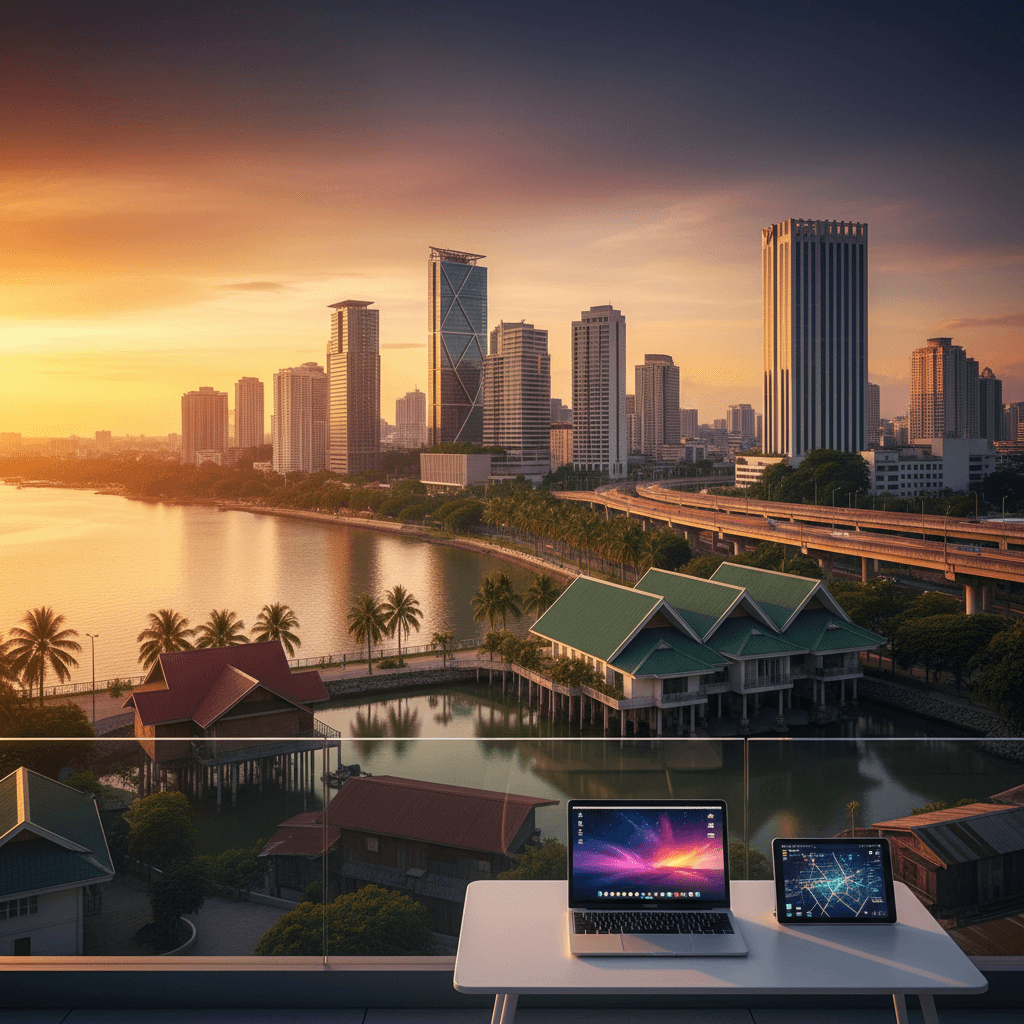
If you're looking for the high-octane chaos of Manila or the barefoot beach life of Siargao, Alabang will surprise you. Located at the southern edge of Metro Manila in Muntinlupa, this district feels more like a polished, suburban sanctuary than a typical Southeast Asian capital. It is where the Philippine elite and a growing community of expats retreat to escape the smog and noise of the inner city, trading cramped apartments for wide, tree-lined streets and manicured parks.
The vibe here is distinctly "slow-burn urban." You get the modern conveniences of a first-world business hub, like reliable fiber internet and high-end malls, but the pace is noticeably more relaxed. Most nomads find that Alabang offers a rare middle ground: it's safe enough to walk around at night, affordable enough to live well on a mid-range budget, and just 30 to 45 minutes away from the action in Makati or BGC when you need a change of scenery.
The Neighborhood Breakdown
- Filinvest City: This is the heartbeat of the modern nomad scene. It’s a master-planned district full of glass towers, condos, and the Festival Alabang mall. It’s walkable, green, and feels like a mini-Singapore. Expect to pay ₱25,000 to ₱40,000 ($440-$700) for a decent studio here.
- Alabang Town Center (ATC) Area: This is where the old-money charm lives. ATC is an open-air mall that feels more like a Mediterranean village than a shopping center. It's the go-to spot for coffee shop working and upscale dining.
- Ayala Alabang Village: One of the most prestigious gated communities in the country. While you likely won't live inside the gates unless you're moving with a family or have a massive budget, its presence dictates the high level of security and quiet atmosphere of the surrounding area.
The Daily Grind
Working here is a bit different than in the coworking hubs of Bali. Dedicated shared offices are a little harder to find, so most nomads rely on high-speed fiber in their condos or set up shop in the dozens of cafes around Commerce Avenue. Starbucks at ATC or the local favorite Manam for a midday sisig break are staples. If you need a serious office setup, many residents take a Grab to nearby KMC Solutions or other hubs in the city, which usually cost around ₱500 ($9) for a day pass.
The emotional experience of Alabang is one of relief. You’ll notice the air is slightly clearer and the people are less rushed. Expats often mention the "perceptive security," a fancy way of saying there are guards and cameras everywhere, which makes it one of the few places in the metro where you can truly let your guard down. It’s a family-oriented culture, so don’t be surprised if your neighbors invite you to a weekend barbecue or a local festival.
What You'll Love and What You'll Hate
Nomads usually fall in love with the cost-to-quality ratio. You can eat a gourmet meal at Fiesta Market for under $15 or grab a quick local lunch for $2. The infrastructure is solid, and English is spoken fluently by almost everyone, making bureaucracy and daily errands a breeze.
On the flip side, the nightlife is quiet. If you want clubs and 2:00 AM crowds, you’ll be spending a lot of time in Grab cars heading north. The traffic on the South Luzon Expressway (SLEX) can also be a nightmare during rush hour, turning a short trip into a two-hour ordeal. It’s also not a beach town; while you’re closer to the diving spots of Batangas than people in Manila are, you still need a car and a free weekend to see the ocean.
Practical Numbers for 2025-2026
- Monthly Budget (Comfortable): ₱80,000 to ₱110,000 ($1,400-$1,900) covers a modern condo, daily dining out, and weekend trips.
- Local SIM: Grab a Globe or Smart card at the mall for ₱300; 50GB of data will run you about ₱500 ($9).
- Transport: A Grab ride around the district is usually ₱150 to ₱300 ($2.50-$5).
- Best Time to Visit: December to May is the sweet spot. The weather is dry and the "winter" months of December and January are actually quite pleasant for walking.
The Price of the Suburban Dream
Alabang is often described as the "BGC of the South," but your wallet will notice a refreshing difference. While it maintains a high standard of living with gated communities and manicured streets, it remains significantly more affordable than the central business districts of Makati or Taguig. Most nomads find they can live a high quality life here for about $1,100 to $1,800 USD per month, depending on how often they frequent the high end malls.
The local economy caters to two worlds: the budget conscious commuter and the upscale expat. You can grab a quick meal at a local carinderia for less than $2 USD, or spend $15 USD on a multi-course dinner at Alabang Town Center. This flexibility is what makes the area so attractive for those who want to save money without feeling like they are "roughing it."
Accommodation and Rent
Your biggest expense will be housing, and in Alabang, you are paying for security and peace. Most expats recommend looking for modern condos in Filinvest City or near the commercial hubs to stay within walking distance of amenities.
- Studio Apartments: Expect to pay between ₱20,000 and ₱35,000 ($350 to $610 USD) per month. These are usually found in newer developments with gym and pool access.
- One-Bedroom Condos: These range from ₱30,000 to ₱50,000 ($525 to $875 USD). Prices lean toward the higher end if you want to be right next to the mall or in a luxury tower.
- Gated Village Homes: If you are moving with a family and looking at Ayala Alabang Village, budgets typically start well above ₱100,000 ($1,750+ USD) for detached houses.
Daily Sustenance and Dining
Food costs are highly variable. If you shop at local markets and cook at home, your grocery bill will be remarkably low. However, Alabang is a "mall culture" hub, so the temptation to eat out is constant.
- Street Food and Local Bites: ₱50 to ₱100 ($0.90 to $1.75 USD) for items like sisig or grilled skewers.
- Mid-range Dining: ₱300 to ₱500 ($5 to $9 USD) at popular spots like Manam or various bistros inside the malls.
- Fine Dining: ₱800+ ($14+ USD) for upscale experiences at places like Fiesta Market or the high end steakhouses in the area.
- Monthly Groceries: A typical single nomad spends about ₱12,000 to ₱18,000 ($210 to $315 USD) on a mix of local produce and imported goods from supermarkets like Landmark or S&R.
Connectivity and Working Costs
Reliable internet is a non-negotiable for the nomadic lifestyle. While most modern condos come with fiber ready connections, you will want a solid mobile backup. Expats suggest getting both a Globe and a Smart SIM card to ensure you are never offline.
- Mobile Data: Around ₱500 ($9 USD) for a 30GB prepaid monthly plan.
- Coworking Spaces: Dedicated desks are rarer in Alabang than in Makati, but you can find spots for ₱5,000 to ₱10,000 ($90 to $175 USD) per month. Many locals prefer working from cafes like Starbucks or Coffee Bean in Filinvest, which costs about $4 USD per visit in coffee and snacks.
Transportation and Getting Around
Alabang is relatively walkable within its commercial cores, but you will need wheels for anything else. The Grab app is your best friend here, and it is very affordable compared to Western standards.
- Short Grab Rides: ₱150 to ₱300 ($2.60 to $5.25 USD) for most trips within the district.
- Public Transport: Jeepneys and local buses cost between ₱13 and ₱50 ($0.25 to $0.90 USD) per ride.
- Airport Runs: A Grab to NAIA usually costs between ₱800 and ₱1,200 ($14 to $21 USD) depending on traffic and the time of day.
Overall, Alabang offers a "soft landing" for those new to the Philippines. It provides a level of comfort and safety that is hard to match at this price point anywhere else in Metro Manila.
For Digital Nomads and Solo Travelers
If you're landing in Alabang with a laptop and a need for caffeine, the Alabang Town Center (ATC) area is your best bet. It feels less like a sterile business district and more like a walkable neighborhood. You'll find a massive concentration of cafes like Starbucks and Coffee Bean where the WiFi is decent enough for emails, though most regulars suggest carrying a Globe or Smart pocket WiFi as a backup.
Living here means being close to the action. You're looking at ₱20,000 to ₱35,000 for a decent studio. The biggest draw for solo travelers is the proximity to the P2P bus terminal, which gets you to Makati or BGC in about 30 to 45 minutes. It's the perfect middle ground for someone who wants lower rent than central Manila but still needs to head into the city for networking events or coworking hubs like KMC Solutions.
- Rent: ₱20,000 to ₱35,000 ($350 to $610) for a studio
- Vibe: Walkable, commercial, easy access to transport
- Best for: Short-term stays and those without a car
For Expats and Long-Term Residents
Filinvest City is where the modern infrastructure really shines. It's a master-planned district that feels more like Singapore than Manila. The streets are wide, the landscaping is manicured, and the condos are sleek. Expats often choose this area because it balances work and life perfectly, with Festival Alabang providing everything from groceries to high-end dining at Fiesta Market.
The security here is top-notch, which is a major selling point for those new to the Philippines. You'll see people jogging in the evenings, which isn't always a given in Metro Manila. Expect to pay between ₱30,000 and ₱50,000 for a one-bedroom apartment in a modern high-rise. While it gets crowded on weekends when people from nearby provinces visit the malls, the weekdays are surprisingly quiet and professional.
- Rent: ₱30,000 to ₱50,000 ($525 to $875) for a 1BR condo
- Vibe: Modern, organized, and very secure
- Top Spot: Asian Hospital is right in the neighborhood for world-class healthcare
For Families and Privacy Seekers
If you have a larger budget and want a true suburban lifestyle, Ayala Alabang Village is the gold standard. It's one of the most prestigious gated communities in the country. It's massive, green, and incredibly quiet. Families love it because kids can actually ride bikes on the street, and the "perceptive security" systems make it one of the safest spots in the region.
The downside is that you are almost entirely car-dependent here. There aren't many jeepneys or buses inside the village gates, so you'll be using Grab or a private vehicle for every errand. Rents here reflect the exclusivity, often starting well above ₱100,000 for a house, though some smaller townhomes can be found nearby for less. It's a tight-knit community where neighbors actually know each other, often connecting through local Facebook groups or the village sports club.
- Rent: ₱100,000+ ($1,750+) for houses; luxury prices apply
- Vibe: Elite, quiet, and family-oriented
- Pros: Low crime, private parks, and excellent local schools
For Budget-Conscious Travelers
Just on the fringes of the main commercial zones, you'll find smaller residential pockets that offer a more "local" feel without sacrificing safety. Areas near West Service Road provide much cheaper rentals, often 30% lower than Filinvest prices. You'll rely more on jeepneys and trikes here, which cost about ₱13 to ₱50 per ride.
Dining in these areas is where you'll save the most. Local carinderias serve up sisig or adobo for under ₱100. It's a bit more chaotic and the internet can be spotty, but for a nomad on a grind, it's a great way to keep monthly expenses under ₱40,000 while still being a ten-minute ride away from the high-end comforts of Alabang Town Center.
- Rent: ₱15,000 to ₱25,000 ($260 to $440) for basic units
- Food: ₱50 to ₱150 per meal at local spots
- Cons: More noise and less reliable fiber internet
Connectivity and Speed
If you're coming from the chaotic WiFi scene of the Philippine islands, Alabang will feel like a breath of fresh air. This is a corporate and residential powerhouse, so fiber optic connections are the standard rather than the exception. Most modern condos in Filinvest City or Alabang Town Center come equipped with 50 to 100 Mbps lines that handle Zoom calls and heavy uploads without breaking a sweat.
That said, don't rely solely on your Airbnb host's word. Even in a high end suburb, the occasional "maintenance day" can catch you off guard. Local nomads always keep a backup. Grab a local SIM for about ₱300 and load it with a data promo. Globe and Smart are the two big players here. It's smart to test both in your specific apartment since signal strength varies block by block. Expect to pay around ₱500 for 30GB of prepaid data, which is more than enough to bridge any service gaps.
Coworking Spaces
Alabang is more of a "work from home" or "work from a cafe" kind of place compared to the dense coworking hubs of Makati or BGC. While the local options are a bit leaner, you aren't stranded. Most serious remote workers head toward the business clusters in Filinvest or take a quick 30 minute Grab ride into Manila for the heavy hitters.
- KMC Solutions: This is the gold standard for many expats in the area. They have a sleek presence in One Griffinstone. It's professional, the coffee is decent, and the community is a mix of tech startups and corporate nomads.
- The Loft: A solid mid range option if you need a dedicated desk or a private office for a few days. It's less "social club" and more "get things done."
- Acceler8: While you'll have to venture slightly further toward the city center for this one, it's the go to for those who want a community vibe and networking events.
Prices for a day pass usually float between ₱200 and ₱500. If you're staying for a month, expect to budget anywhere from ₱5,000 to ₱15,000 depending on whether you want a hot desk or a fixed spot. Most places are open during standard business hours, but some offer 24/7 access for monthly members, which is a lifesaver if you're working on US or European time zones.
The Cafe Culture
If you prefer the hum of a coffee shop over the silence of an office, Alabang excels. The Alabang Town Center (ATC) and Westgate Center areas are packed with spots where nobody will blink if you sit with a laptop for four hours.
- Starbucks (ATC): It's predictable, the AC is freezing, and the WiFi is generally reliable for basic tasks.
- Exchange Alley Coffee House: Expats often congregate at Exchange Alley Coffee House in Molito. The coffee is excellent, and it transitions into a great spot for a post work drink.
- Coffee Project: Known for being one of the most "Instagrammable" spots, it also has plenty of power outlets and comfortable seating for long sessions.
Pro tip: Always carry a light jacket or hoodie. The air conditioning in Alabang's malls and cafes is legendary for being set to "arctic" levels. You'll see locals working in sweaters while it's 33°C outside. It's just part of the local work culture.
Digital Nomad Logistics
For payments and logistics, download GCash or Maya as soon as you get your local SIM. These mobile wallets are used for everything from paying for your latte to settling your utility bills. If you're moving money from abroad, Wise works seamlessly with local banks like BPI, which has plenty of branches and ATMs around the Filinvest area. Most nomads find that having a mix of a digital wallet and a local bank card makes life in Alabang much smoother.
A Bubble of Security
Alabang is often described by expats as a "bubble," and for good reason. While parts of Metro Manila can feel frantic or gritty, the Alabang district, particularly the master-planned areas of Filinvest City and the gated enclaves like Ayala Alabang Village, feels remarkably orderly. It is widely considered one of the safest urban pockets in the Philippines. You will see private security guards at almost every street corner, mall entrance, and residential gate, which might feel intense at first, but it contributes to a very low rate of opportunistic crime.
Most nomads feel perfectly comfortable walking around the Alabang Town Center or Filinvest areas after dark. The streets are well lit and the "perceptive security" systems mentioned by locals mean that help is usually just a whistle away. That said, the standard rules for any major city still apply. If you venture into the unlit outskirts or the more crowded public transport terminals near the city limits, keep your phone tucked away and stay aware of your surroundings. Most petty theft happens in these high traffic, less regulated transit hubs.
World Class Medical Care
If you get sick in the Philippines, Alabang is exactly where you want to be. The crown jewel of the local healthcare system is Asian Hospital and Medical Center. It is a top tier, Joint Commission International (JCI) accredited facility located right in Filinvest City. Expats consistently praise it for having Western standards of care, English speaking staff, and modern diagnostic equipment. You won't have to trek into central Manila for specialized treatment or emergencies.
For routine issues, there are several other reliable options:
- Healthway Medical: Great for quick outpatient checkups, blood tests, or physicals without the hospital price tag.
- Mercury Drug and Watsons: These pharmacies are everywhere. You will find them in every mall and on most major street corners. They are well stocked with international brands, though you should bring a physical prescription for anything beyond basic painkillers.
Emergency Essentials
The national emergency number is 911, which has become much more reliable in recent years. However, for the fastest response in Alabang, most residents keep the direct number for Asian Hospital or their specific village security office on speed dial. If you are staying in a condo, the front desk is usually your first point of contact for any medical emergency; they can coordinate with an ambulance much faster than a cold call to a national line.
Healthcare costs are significantly lower than in the US or Europe, but they can still add up if you end up in a private room at Asian Hospital. Most nomads find that a standard international insurance policy like SafetyWing or Genki works well here, as long as it covers private hospital stays. For minor visits, expect to pay around ₱800 to ₱1,500 for a consultation with a specialist, which is roughly $14 to $26 out of pocket.
Staying Healthy in the Heat
The biggest health risk for most newcomers isn't tropical disease, but the humidity and the water. Dehydration hits fast when it is 33°C outside. Stick to bottled or filtered water; even locals generally avoid drinking straight from the tap. You will find 5 gallon blue jugs of purified water delivered to most condos for about ₱50. Also, while Alabang is a "green" suburb, mosquitoes are still active, especially during the rainy season from June to November. A bit of repellent goes a long way in preventing Dengue, which occasionally pops up in the region.
Getting Around Alabang
Alabang is a rare breed in Metro Manila. It's built on a grid that actually makes sense, particularly within the Filinvest City and Alabang Town Center hubs. While much of the Philippines requires a "go with the flow" attitude toward transport, Alabang is surprisingly organized. You'll find wider sidewalks and better traffic management than in Makati or Quezon City, making it one of the few places in the metro where you won't feel like you're constantly fighting for your life as a pedestrian.
Ride-Hailing and Apps
For most nomads, Grab is the gold standard. It's ubiquitous here, and you'll rarely wait more than five to ten minutes for a car. A short trip within the commercial district usually costs between ₱150 and ₱250. If you're heading to the airport (NAIA), expect to pay around ₱800 to ₱1,200 depending on the time of day. It takes about an hour via the Skyway if traffic is behaving.
If you're comfortable on two wheels, Move It or JoyRide are the local answers to motorcycle taxis. They're significantly cheaper, often costing around ₱50 to ₱100 for local hops, and they're the only way to beat the heavy congestion during the 5:00 PM rush. Expats often suggest using these for quick errands when you don't want to deal with parking.
Public Transit and Jeepneys
The local experience involves the iconic jeepney. These run fixed routes along Alabang-Zapote Road and through the main intersections. A ride is incredibly cheap, usually starting at ₱13. It's not the most comfortable way to travel in the heat, but it's the most authentic. Just tap your coin on the ceiling or say "Para po" when you want to hop off.
For trips into Manila's business districts like BGC or Makati, look for the P2P (Point-to-Point) buses. These leave from Alabang Town Center or Starmall. They're air-conditioned, have reliable schedules, and cost about ₱100 to ₱150. It's a much more dignified way to commute than the standard public buses, and many nomads use the hour-long ride to get some light work done on their laptops.
Walkability and Micro-Mobility
Inside Filinvest City, you can actually walk. The area is designed with "green belts" and shaded pathways that connect the major condos to the malls. It's a stark contrast to the rest of the country where sidewalks often disappear into thin air. However, once you leave these planned commercial zones or enter gated communities like Ayala Alabang Village, you'll find things get spread out quickly.
- Walking: High in Filinvest City and around Alabang Town Center.
- Biking: Becoming more popular; some areas have dedicated lanes, but watch out for cars.
- E-Scooters: You'll see locals using personal scooters to bridge the gap between their condo and the office.
Driving and Car Rentals
Unless you're planning to stay for six months or more, don't bother buying a car. The traffic can be soul-crushing during peak hours, and parking fees at malls add up fast. If you need a vehicle for a weekend trip to Tagaytay or the beaches of Batangas, most travelers recommend using apps like Lalamove for transport or hiring a private driver for the day, which typically costs around ₱3,000 to ₱4,000 including gas.
Navigating the Gates
One quirk of Alabang is the "village" system. Many of the best residential spots are behind strictly monitored gates. If you're visiting a friend or staying in an Airbnb in a place like Ayala Alabang Village, you won't be able to just walk in. You'll need a QR code or a pre-approved pass from your host. Taxis and Grab cars are allowed in, but they'll usually have to surrender a driver's license at the gatehouse, so don't be alarmed when the driver stops to chat with security.
The Language Barrier (Or Lack Thereof)
If you're worried about the language gap in Alabang, take a breath. You're moving to one of the most English-proficient pockets of Southeast Asia. Because Alabang is a major corporate hub and home to several international call centers, English isn't just a secondary language; it's the primary medium for business, education, and government. Most nomads find they can navigate an entire year here without ever needing a translator app for basic survival.
You'll notice that almost everyone, from the baristas at Alabang Town Center to the security guards in Ayala Alabang Village, speaks English fluently. Street signs, menus, and official documents are almost always in English. While the local language is Tagalog (or Filipino), the "Taglish" hybrid is the standard way of speaking in the South, blending local dialect with English phrases in a way that's easy to follow.
Key Phrases to Know
Even though you can get by with English, locals genuinely appreciate it when you make an effort. It breaks the ice and often earns you a "local price" or a warmer smile at the market. Here are the basics you'll actually use:
- Salamat: Thank you. It's the most important word in your vocabulary.
- Magkano?: How much? Use this when browsing the Fiesta Market or haggling for a tricycle ride.
- Para po: "Stop here." You'll need this to tell a jeepney or bus driver you've reached your destination.
- Po: This is a particle used to show respect. Add it to the end of almost any sentence when speaking to elders or service staff (e.g., "Salamat po").
- Bayad po: "Here is my payment." Use this when passing your fare forward in a crowded jeepney.
Communication Tools and Apps
Reliable communication in Alabang depends on your digital setup. Don't rely on your home country's roaming plan, as it'll be sluggish and expensive. Expats recommend getting a local SIM immediately upon arrival at NAIA or any mall in Filinvest City.
- The Big Two: Globe and Smart are the main providers. Grab a prepaid SIM for about ₱40. Current promos offer up to 48GB for ₱499.
- GCash: This is the unofficial national currency of the Philippines. It's a mobile wallet app used for everything from paying for street food to settling your electric bill. You'll need a local number to set it up.
- Viber and WhatsApp: While WhatsApp is used, Viber is surprisingly popular for official communication with landlords, real estate agents, and local businesses in the Alabang area.
- Google Translate: It's great for the voice-to-text feature if you find yourself in a more rural area outside Muntinlupa, though the Tagalog translation isn't always perfect with slang.
The Social Nuances
Communication in the Philippines is heavily focused on politeness and "saving face." You'll rarely hear a direct "no" from a local; instead, they might say "maybe" or "we'll see" to avoid being rude. If a contractor or delivery driver seems vague about a timeline, it's usually a sign they're trying to be polite rather than being difficult.
Nomads often find that the social scene in Alabang is quieter than the high energy of BGC or Makati. To find your tribe, join Facebook groups like "Expats in Alabang" or "Muntinlupa Community." Most meetups are organized through these digital circles rather than spontaneous bar chats. If you're looking for a work-friendly environment where people are open to a quick chat, the cafes around Filinvest City are your best bet for meeting fellow remote workers.
The Tropical Rhythm
Living in Alabang means embracing a tropical climate where the heat is a constant companion. Temperatures generally hover between 25°C and 33°C (77°F to 91°F) throughout the year. Because Alabang is less congested than central Manila, you'll often catch a breeze in the greener parts of Filinvest City or the wide streets of Ayala Alabang, making the humidity slightly more bearable than in the concrete canyons of Makati.
The year is split into two main seasons: the dry and the wet. For nomads planning a stint here, timing your arrival can be the difference between daily outdoor coffee sessions at Alabang Town Center and being stuck indoors watching monsoon rains flood the streets.
The Golden Window: December to May
This is the peak season for a reason. From December to February, the Philippines enjoys what locals call the "cool" months. While 28°C might not sound chilly, the lower humidity and crisp evening air make it the most comfortable time to explore. Expats often spend their weekends at the Molito Lifestyle Center during these months, taking advantage of the rare opportunity to sit outside without breaking a sweat.
As March rolls in, the heat intensifies. April and May are the height of the Filipino summer. It gets hot, often climbing past 34°C, but it's also the driest time of year. If you plan on taking day trips to Tagaytay to see the volcano or heading down to the beaches of Batangas, this is your best bet for clear skies and smooth travel.
- January to February: The sweet spot. Mildest temperatures and very little rain.
- March to May: Intense heat. Great for pool days and travel, but you'll want a condo with strong air conditioning.
- Average Highs: Expect 30°C to 33°C during the day.
The Rainy Season: June to November
The rains usually arrive in June and stay through November. This isn't just a light afternoon sprinkle; the Philippines is hit by multiple typhoons every year. July, August, and September are typically the wettest months. While Alabang's infrastructure is better than many parts of Metro Manila, heavy rains can still cause significant traffic delays on the SLEX and Skyway, making trips to the airport or Makati unpredictable.
Most nomads find that work productivity actually goes up during these months because there's less temptation to leave the laptop. Just ensure your apartment has a backup power source or a reliable mobile hotspot like Globe or Smart, as heavy storms can occasionally cause flickers in the local grid.
- June to August: Frequent afternoon thunderstorms and the start of typhoon season.
- September to October: Peak typhoon risk. Expect grey skies and occasional heavy flooding in low-lying areas outside the main business districts.
- November: The rain starts to taper off, and the festive Christmas season begins to take over the malls.
When to Visit
If you have the flexibility, aim to arrive in late November or early December. You'll beat the worst of the summer heat, miss the peak typhoon season, and get to experience the world-famous Filipino Christmas spirit, which starts as early as September in the malls. The weather is perfect for walking between the cafes in Filinvest and the residential pockets of Ayala Alabang without needing a change of clothes by lunchtime.
Avoid July and August if you can't stand the rain. While the cost of living remains low and the malls provide plenty of shelter, the grey skies and humidity can be a bit of a dampener for those who moved to Southeast Asia for the sun.
Connectivity and Tech Setup
Staying online in Alabang is generally straightforward if you stick to the business districts. Most modern condos in Filinvest City or near Alabang Town Center come with fiber connections reaching 50 to 100 Mbps. However, the local grid can be temperamental during the rainy season, so a backup is mandatory.
- SIM Cards: Grab both Globe and Smart SIMs at the mall for about ₱300. Use Smart for raw speed in the city and Globe for better coverage if you head out toward Tagaytay. You can load 5GB of data for roughly ₱40 using their respective apps.
- Coworking: Dedicated nomad hubs are actually a bit scarce right in Alabang. Many residents commute to KMC Solutions or The Loft in BGC for a full office setup, which costs between ₱5,000 and ₱15,000 monthly. Locally, you'll see people camping out at the Starbucks in Alabang Town Center or Single Origin in Westgate Center for shorter sessions.
Money and Budgeting
Alabang is significantly cheaper than Makati or BGC, but it’s more expensive than provincial beach towns. You can live a very comfortable life here for ₱60,000 to ₱100,000 ($1,050 to $1,750) per month. If you're on a tighter budget, ₱40,000 ($700) covers the basics if you eat at local carinderias and skip the upscale malls.
For banking, download GCash immediately. It’s the primary way to pay for everything from street food to utility bills. Most expats use Wise to transfer funds into a local BPI or BDO account to avoid the ₱250 fee many ATMs charge for international cards.
Getting Around
The district is split between highly walkable commercial zones and sprawling, car-dependent gated communities. If you live in Ayala Alabang Village, you'll feel stranded without a vehicle or a frequent budget for Grab rides.
- Grab: This is your best friend. A ride to the airport (NAIA) usually takes about an hour and costs between ₱800 and ₱1,200 depending on the traffic on the Skyway.
- Jeepneys: These follow set routes for about ₱13 to ₱50. They're great for short hops but can be confusing for newcomers; just ask the driver if they're passing your destination before you hop on.
- Walking: Stick to Filinvest City if you want to get your steps in. It’s one of the few areas with decent sidewalks and actual greenery.
Health and Safety
Safety is one of the main reasons people choose Alabang over central Manila. The gated villages have private security and very low crime rates. It feels much more like a sleepy American suburb than a chaotic Southeast Asian capital. For healthcare, Asian Hospital and Medical Center is right in the heart of Filinvest. It’s world class, and most doctors there speak perfect English, making it a favorite for the expat community.
Visa and Logistics
The Philippines launched a Digital Nomad Visa in June 2025, allowing up to one year stays with possible renewal. Until then, most travelers arrive on a 30 day visa free entry and extend it at the Bureau of Immigration. There’s an office in Muntinlupa, so you won't have to trek all the way to the main office in Intramuros.
When searching for a place to live, skip the generic hotel sites after your first week. Use Lamudi or Zipmatch to find long term condo rentals. A modern studio usually goes for ₱20,000 to ₱35,000 a month. Always ask if the building has a "back up generator" because power outages, though infrequent, do happen during typhoon season between June and November.
Need visa and immigration info for Philippines?
🇵🇭 View Philippines Country GuideEasy Landing
Settle in, no stress