Mui Ne
🇻🇳 Vietnam
The Vibe: Where Wind, Sand, and Slow Living Meet
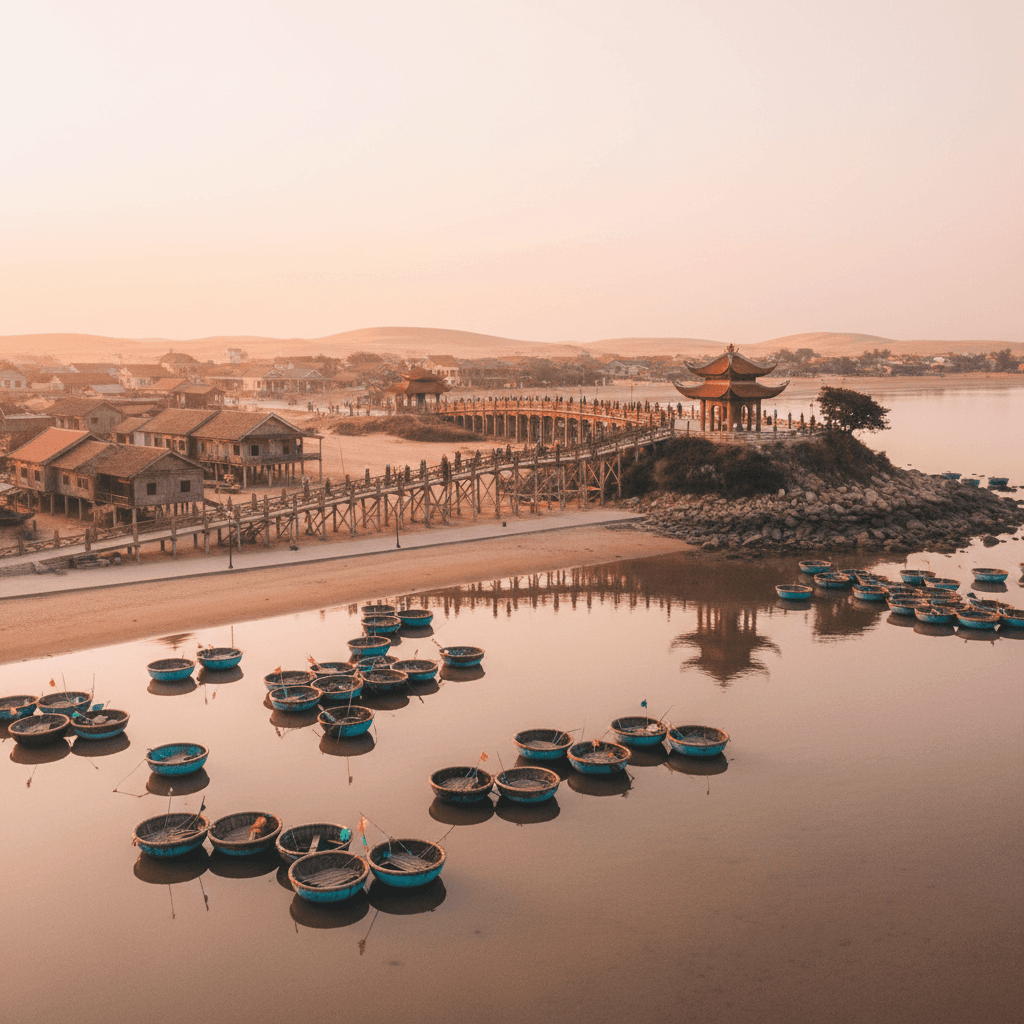
Mui Ne is a strange, beautiful outlier on the Vietnamese coast. It doesn't have the frantic energy of Ho Chi Minh City or the polished, digital nomad "hub" feel of Da Nang. Instead, it feels like a dusty, sun-drenched playground where the desert meets the ocean. It’s the kind of place where you’ll see a local fisherman pulling in a basket boat at sunrise, and two hours later, watch a professional kitesurfer catch air over the same patch of water.
The town’s personality is defined by its geography. Because it sits in a unique microclimate, it's one of the driest spots in Southeast Asia. This creates a landscape of massive red and white sand dunes that make you feel like you've been dropped into the Sahara. For nomads, this means fewer rainy days ruining your "office with a view" and more consistent wind for afternoon sports. It caters to a specific crowd: people who want to work hard in the morning and spend their afternoons getting beat up by the waves or riding motorbikes through the dunes.
Life here follows the rhythm of the wind. When the "season" hits from October to March, the town fills with a rugged, athletic expat crowd, mostly from Europe and Russia. The atmosphere is unpretentious and incredibly affordable. You aren't here for high-end coworking infrastructure; you're here because you want a $350 beachfront apartment and a community that cares more about your kite-loop than your LinkedIn profile.
The Reality of the Nomad Lifestyle
Most nomads find that Mui Ne requires a bit of an adjustment. The town is essentially one long, 10-kilometer road hugging the coast. There is no "downtown" in the traditional sense. You'll spend most of your time in Ham Tien, the main tourist strip where the cafes and bars are clustered. If you want something quieter and more "local," you head east to Mui Ne Village, where the smell of drying fish sauce (nuoc mam) is a constant reminder of the town’s roots.
The social scene is intimate. Unlike the anonymity of a big city, you’ll start recognizing faces at Joe’s Cafe or Pogo Beach Club within three days. It’s a welcoming environment, but it can feel small if you stay too long without a hobby. Travelers often say that if you don't kitesurf or ride a motorbike, you might run out of things to do after a week. But if you're looking to save money while living a healthy, outdoorsy lifestyle, it’s hard to beat.
Cost of Living Breakdown
Your money goes incredibly far here. It is easily one of the most budget-friendly coastal spots in Asia.
- Housing: A basic studio near the beach runs about $200 to $250. If you want a modern 1BR in a serviced apartment or a resort-style complex, expect to pay $350 to $500.
- Food and Drink: Street food like Banh Mi or Com Tam costs around $1.50 to $2.50. A solid dinner at a mid-range spot for two people usually lands around $22. Local beers are a steal at $0.70, while a good cappuccino is about $1.20.
- Connectivity and Transport: A high-speed home internet connection is roughly $10 a month, and a 4G SIM card with plenty of data is about $6. Since there’s no real public transit, you’ll need a motorbike rental, which costs between $120 and $150 per month.
- Total Monthly Budget: A "scrappy" nomad can live well on $550, while $900 a month buys a very comfortable, high-end lifestyle with frequent dining out and weekend trips.
What Makes It Different?
Mui Ne isn't trying to be the next Bali. It’s a bit rough around the edges, the traffic can be chaotic, and the language barrier is real once you step off the main road. But there is a raw, honest energy here. It’s the feeling of riding your scooter past a 1,000-year-old Cham tower on your way to a Zoom call, or the way the entire town smells like salt and woodsmoke at sunset. It’s a place for nomads who prefer a surfboard or a kite to a networking event.
The Bottom Line on Budgets
Mui Ne is one of those rare spots where your dollar stretches so far it almost feels like a glitch in the system. It is significantly cheaper than hotspots like Da Nang or Ho Chi Minh City, making it a favorite for nomads who want to pad their savings without living like a hermit. You can comfortably get by on $600 to $750 a month if you're smart about your choices, though high-end spenders will find plenty of ways to drop $900 or more on luxury villas and daily seafood feasts.
Monthly Rent and Housing
Your biggest variable is going to be how close you want to be to the kiteboarding action in Ham Tien. Most long-termers look for "Guest Houses" or small apartments tucked into the side alleys off the main road. Prices usually break down like this:
- Budget Studio: Expect to pay between $190 and $250. These are usually clean, basic rooms with a small kitchenette and decent AC.
- Mid-Range Apartment: For $250 to $350, you'll get a more modern setup, often with better furniture and perhaps a balcony.
- Luxury or Beachfront: If you want a private villa or a high-end resort suite, prices start at $350 and can easily climb past $600 depending on the amenities.
Food and Drink
Eating out is often cheaper than cooking for yourself here. The street food culture is massive, and you can grab a local meal for less than the price of a coffee back home. If you're a fan of fresh seafood, the Bo Ke area is lined with restaurants where you can pick your dinner straight from the tank.
- Street Food Meal: A bowl of Pho or a Banh Mi usually costs around $2.40.
- Mid-Range Dinner: A sit-down meal for two at a place like Dong Vui Food Court will run you about $22.00.
- Local Beer: A 0.5L bottle of Saigon or Larue is a steal at roughly $0.68.
- Caffeine Fix: A solid cappuccino in a nomad-friendly cafe costs about $1.16, while a local iced coffee (Ca Phe Sua Da) is even cheaper.
Connectivity and Utilities
Don't let the sleepy village vibe fool you; the internet is surprisingly punchy. Most apartments include basic WiFi, but serious remote workers often install their own line for peace of mind. Mobile data is so cheap it's almost worth having two SIM cards just for the backup.
- Home Fiber Internet: A dedicated 50+ Mbps line costs around $9.10 per month.
- Mobile Data: A prepaid SIM from Viettel with a massive data bucket is about $6.00.
- Electricity and Water: For a single person, expect to pay around $29.30. Keep in mind that heavy AC usage in the summer months can easily double this.
Transportation and Lifestyle
Since there is no real public transit system, you'll need two wheels to get around. Most nomads rent a semi-automatic or automatic scooter monthly to save on the daily rates. If you aren't comfortable riding, Grab (the local version of Uber) is available, though it's mostly bikes rather than cars in this area.
- Motorbike Rental: Expect to pay around $120 to $150 per month.
- Gym Membership: A local pass costs about $15.60, though many of the larger resorts offer day passes for their fancier facilities.
- Massage and Wellness: A standard one-hour massage at a local spa usually falls between $10 and $15.
When you add it all up, a "Budget Tier" lifestyle sits around $491 to $550. This covers a basic room, plenty of local food, and a motorbike. If you want a more "Comfortable Tier" lifestyle with better housing and frequent Western meals, plan for $900 or more. Most expats find that $700 is the sweet spot for a high quality of life without feeling like they're pinching pennies.
For Social Nomads: Ham Tien (Rang Beach)
If you want to be where the action is, Ham Tien is your best bet. It's the central strip where most of the town's life happens. You'll find the highest concentration of cafes, bars, and international restaurants here. Most digital nomads gravitate to this area because it's the only neighborhood that feels truly walkable. You can grab a coffee at Joe's Cafe, get some work done, and then walk straight to the beach for a sunset kitesurfing session.
The vibe is energetic but still maintains that coastal chill. While it's the most "touristy" part of town, it's also where you'll find the best internet speeds and the most English speaking locals. Just be prepared for a bit more noise from the main road and slightly higher prices than the rest of the region.
- Best for: Networking, nightlife, and those who don't want to rely on a motorbike every single day.
- Average Rent: $250 to $400 for a decent studio or guesthouse.
- The Draw: Proximity to kitesurfing schools and the most reliable WiFi in town.
For Budget Travelers and Culture Seekers: Mui Ne Village
Located at the eastern end of the bay, the original fishing village is a world away from the resort strip. This is where you'll find the authentic heart of the area. It's famous for the morning fish market where hundreds of colorful round boats bring in the daily catch. Living here means waking up to the smell of the ocean and the sound of local life rather than tourist music.
Expect a steeper learning curve here. You'll need a few Vietnamese phrases to get by at the local markets, and you won't find many dedicated workspace cafes. However, the cost of living drops significantly. You can find incredible street food for around $2.40 and get a much deeper look into how people actually live in Binh Thuan province.
- Best for: Long term travelers on a budget and anyone wanting an "authentic" Vietnamese experience.
- Average Rent: $190 to $250 for simple local housing.
- The Draw: Spectacular seafood and the famous red sand dunes are right in your backyard.
For Families and Peace Seekers: Cua Dai & An Bang Areas
If you find the main strip too chaotic, these quieter pockets offer a middle ground. They are much more residential and offer a slower pace that suits families or couples who work from home and value quiet evenings. The beaches here are often less crowded, giving you more space to breathe.
You'll definitely need a motorbike if you stay here, as the main clusters of shops and clinics are a bit of a trek. It's the kind of place where you can rent a small villa with a garden rather than just a room in a guesthouse. While there are fewer bars, the sense of community among the long term expats is very strong.
- Best for: Families, slow travelers, and those who prioritize a good night's sleep over being near a bar.
- Average Rent: $350 to $600 for larger houses or quiet villas.
- The Draw: Wide open spaces and a much more relaxed, neighborhood feel.
For Long Term Expats: Phan Thiet City
Technically a short 15 minute drive from the Mui Ne coast, Phan Thiet is the proper city. Most nomads don't live here, but many serious expats do. It's where you go when you need things Mui Ne can't provide, like Binh Thuan General Hospital or larger supermarkets like Lotte Mart. Living here feels like living in a real Vietnamese city rather than a holiday destination.
The healthcare options are far superior, with facilities like An Phuoc Hospital offering modern equipment. If you're planning to stay for six months or a year, the stability of the city infrastructure is a major plus. You lose the "beach at your doorstep" lifestyle, but you gain access to better gyms, shopping, and professional services.
- Best for: Expats with families, people with specific medical needs, and those who want city amenities.
- Average Rent: $300 to $500 for modern apartments.
- The Draw: Access to the best healthcare and shopping in the province.
Connectivity and Speeds
You won't find the lightning fast fiber speeds of Seoul here, but Mui Ne's internet is surprisingly resilient for a kiteboarding town. Most guesthouses and mid range hotels provide fiber optic connections that clock in between 50 Mbps and 150 Mbps. It's plenty for Zoom calls and uploading video content, provided you aren't sharing the bandwidth with thirty other guests streaming Netflix.
A dedicated fiber line for a long term apartment usually costs around $9 to $12 per month. If the house WiFi is spotty, mobile data is your best friend. Vietnam has some of the cheapest data in Southeast Asia. You can pick up a Viettel or Vinaphone SIM card for about $6 that gives you massive daily data allowances. The 4G signal is strong throughout the Ham Tien strip, though it can get a bit shaky once you head out toward the Red Sand Dunes.
The Coworking Scene
If you're looking for a corporate style coworking space with ergonomic chairs and glass walled meeting rooms, you're in the wrong town. Mui Ne is much more "laptop on a bamboo table" than "Silicon Valley." The community is small and tight knit, and most people prefer the flexibility of the local cafe culture over a monthly desk subscription.
- The Ground Floor: While there aren't many standalone coworking hubs, several boutique hotels and hostels have started carving out dedicated "work zones" with better desks and extra power strips to cater to the growing nomad crowd.
- Impact of the New Highway: Since the new expressway from Ho Chi Minh City opened, more professionals are heading up for "workations," so expect more dedicated spaces to pop up over the 2025 to 2026 period.
Best Cafes for Deep Work
Most nomads in Mui Ne treat the town's cafes as their de facto offices. The general etiquette is to buy a coffee or a fresh coconut every two or three hours, and most owners are happy to let you linger. Prices for a decent caffeine fix usually range from $1.20 to $3.00.
- Joe's Cafe: A long standing staple on the main strip. It has a relaxed garden vibe, plenty of shade, and reliable WiFi. It's a bit of a social hub, so it's better for light admin work than deep focus.
- Chameleon Beach Bar: If you want the "working from the beach" aesthetic, this is the spot. It's quieter during the day and offers a great breeze. Just watch out for the glare on your screen.
- Katie's Coffee House: Known for having some of the most consistent WiFi in the Ham Tien area. The seating is comfortable, and the atmosphere is conducive to getting through a heavy inbox.
- The Source: Popular with the kitesurfing crowd, this spot has a great view and a high energy vibe. It's perfect for afternoon sessions before hitting the water.
Practical Tips for Remote Workers
Power outages aren't a daily occurrence, but they do happen, especially during the rainy season or when the grid is under heavy load. It's a smart move to keep your laptop and a power bank fully charged. If the power goes out, your mobile hotspot will usually still work, so you won't be completely cut off from your team.
The heat is the other factor to consider. Working from an open air cafe is great until 1:00 PM when the temperature spikes. Most nomads plan their day by doing deep work in an air conditioned room or cafe during the midday heat and moving to the beachside spots in the late afternoon. If you need total silence for calls, look for a "homestay" with a private desk, as the street noise from motorbikes on the main road can be distracting.
Staying Safe on the Coast
Mui Ne is remarkably laid back, even by Southeast Asian standards. You won't find the aggressive scams common in Hanoi or the snatch-and-grab phone thefts of Ho Chi Minh City. Most nomads feel comfortable walking home after a few beers at Dragon Beach or Joe’s Cafe. That said, the town's safety profile has its own local quirks you need to watch out for.
The biggest risk here is the road. The main strip, Nguyen Dinh Chieu, is narrow and shared by heavy sleeper buses, speeding trucks, and tourists on scooters. Local police are known to set up frequent checkpoints, specifically targeting foreigners between Ham Tien and the White Sand Dunes. If you don't have a valid Vietnamese license or an International Driving Permit (IDP) with the correct motorcycle endorsement, expect to pay an "on the spot" fine of 500,000 to 1,000,000 VND ($20 to $40), or worse, have your bike impounded.
Solo female travelers generally report feeling very safe. The community is tight-knit, and locals are protective of their reputation as a friendly destination. Just stick to the main lit areas at night. If you're heading back to a remote villa in the Mui Ne Village area, use the Grab app to call a car or bike rather than walking through unlit backroads.
Healthcare and Medical Emergencies
For minor issues like "Phan Thiet belly," ear infections from kitesurfing, or basic prescriptions, you don't need to leave town. Pharmacies are everywhere, and most stay open until 9:00 PM or 10:00 PM. You'll find that many pharmacists speak enough English to help with common ailments, and prices for antibiotics or rehydration salts are negligible.
For actual medical consultations, nomads usually head to one of these spots:
- Vita Clinic & Pharmacy: This is the go-to for most expats. It's located right in Ham Tien and has English and Russian-speaking doctors. They handle everything from blood tests to stitches and are open 24/7 for emergencies.
- Dr. Dong Polyclinic: A reliable private option with a laboratory on-site. It's great for quick consultations if you want to avoid the wait times at public facilities.
- An Phuoc Hospital: Located about 20 minutes away in Phan Thiet. This is a private hospital with more modern diagnostic equipment than the clinics in the tourist strip.
If you face a major medical emergency or require surgery, the local consensus is to stabilize and get to Ho Chi Minh City. The 4-hour drive (or shorter trip via the new expressway) leads to world-class facilities like FV Hospital or Family Medical Practice. Always ensure your travel insurance covers "emergency medical evacuation" to HCMC or Bangkok, just in case.
Water and Food Safety
Don't drink the tap water. Even locals boil it or buy the massive 20-liter blue jugs for about 15,000 to 20,000 VND ($0.60 to $0.80). Ice in restaurants is generally safe as it's typically produced in commercial factories using purified water. When it comes to food, the high turnover at seafood spots along the Bo Ke embankment means the fish is usually fresh off the boat. If a place is packed with locals, it's a safe bet for your stomach.
Emergency Contacts
- Police: 113
- Fire: 114
- Ambulance: 115
- Vita Clinic (Emergency): +84 252 3741 668
The Motorbike Life
In Mui Ne, your independence is tied directly to two wheels. The town is essentially one long, ten mile stretch of road hugging the coast, which makes it incredibly easy to navigate but too spread out for walking. Most nomads rent a scooter immediately upon arrival. You can expect to pay between $120 and $150 per month for a reliable Honda Air Blade or Vision. If you are just visiting for a few days, daily rates usually hover around $5 to $7.
The main road, Nguyen Dinh Chieu, is where most of the action happens. It is paved and generally well maintained, but you need to keep your wits about you. While it is not as chaotic as Saigon, you will still deal with sand on the road, wandering livestock, and the occasional tour bus that claims both lanes. Local police are known to set up checkpoints, especially near the White Sand Dunes, specifically looking for foreigners without a valid International Driving Permit (IDP). If you get pulled over without one, expect a fine of about $40 or more, and in some cases, they may impound the bike.
Ride-Hailing and Taxis
If you aren't comfortable driving yourself, the Grab app is your best friend. It works reliably here, though you will find more GrabBikes (motorbike taxis) than cars. A quick trip between Ham Tien and the fishing village usually costs less than $2. For longer hauls or if you have luggage, traditional taxi companies like Mai Linh (the green cars) and Vinasun are everywhere. They are metered and professional, though slightly more expensive than Grab.
Local Buses
For the budget conscious, there are local buses that run back and forth between Phan Thiet and Mui Ne. They run roughly every 20 to 30 minutes during daylight hours. A ticket costs about $0.60 (15,000 VND). It is a slow way to get around, but it is a great way to see the coastline without worrying about traffic. Just wave them down from the side of the road; there aren't many official marked stops.
Getting to and from Mui Ne
Since Mui Ne does not have its own airport, most travelers arrive via Ho Chi Minh City or Da Lat. Since the opening of the new expressway, the drive from Saigon has been cut down to about 2.5 to 3 hours. You have three main options for this journey:
- Private Car: The most comfortable way to travel. A private transfer from Tan Son Nhat Airport costs roughly $70 to $90. Many nomads split this cost with others found through local Facebook groups.
- Sleeper Bus: Companies like Phuong Trang (Futa Bus) or Hanh Cafe run multiple times a day. Tickets are around $8 to $12. They are affordable, but the "beds" are designed for smaller frames, so taller travelers might find them cramped.
- The Train: You can take the train from Saigon to Phan Thiet Station. It is a scenic 4 hour ride. A soft seat costs about $9. From the station, you will need to take a 20 minute taxi or the local bus into Mui Ne proper.
Pro Tips for the Road
Always wear a helmet. Not only is it the law, but the wind can kick up significant sand and dust that makes vision difficult. Many expats recommend buying your own high quality helmet at a shop in Phan Thiet rather than relying on the "plastic shells" provided by rental shops. Also, keep a lightweight raincoat under your seat. During the wet season, downpours happen fast and heavy, often leaving the main road with temporary deep puddles.
The Language Barrier
Vietnamese is the official language here, and it's notoriously difficult for Westerners to pick up. It's a tonal language, meaning the same syllable can have six different meanings depending on your pitch. Most nomads find that while they can learn basic greetings like Xin chào (hello) or Cảm ơn (thank you), carrying on a full conversation requires serious study.
In the main tourist strip of Ham Tien, you'll get by fine with English. Most restaurant staff, kite surfing instructors, and hotel employees speak enough to handle daily transactions. However, once you venture into the local markets or the authentic fishing village of Mui Ne, English proficiency drops off fast. Expect to use a lot of hand gestures and smiles when ordering your morning Bánh mì.
Mui Ne also has a unique linguistic quirk: a massive Russian presence. Because it's been a premier destination for Russian tourists for decades, you'll see Cyrillic signage everywhere. Many shopkeepers actually speak better Russian than English, so don't be surprised if someone greets you with Privyet before Hello.
Digital Tools & Translation
You shouldn't try to navigate Mui Ne without Google Translate downloaded for offline use. The camera translation feature is a lifesaver for deciphering menus at local Quán (eateries) that don't have English translations. For voice translation, it's usually accurate enough to negotiate a motorbike repair or explain a specific food allergy.
For texting with landlords or local friends, Zalo is the undisputed king of communication in Vietnam. It's the local equivalent of WhatsApp or WeChat. Most business owners prefer Zalo for bookings or inquiries, and it has a built-in translation tool that makes chatting with your landlord much smoother.
Staying Connected
Reliable mobile data is the backbone of life here. You can pick up a SIM card at the airport in Ho Chi Minh City before you head down, or at small phone shops along Nguyen Dinh Chieu street. Viettel is generally considered the best provider for Mui Ne because it has the strongest coverage in more remote dune areas.
- Viettel: Best overall coverage and speeds, especially if you plan to explore the outskirts.
- Vinaphone: Great secondary option with competitive data packages.
- Cost: Expect to pay around $6 to $10 per month for a plan with 4GB to 6GB of data per day.
Cultural Nuances in Communication
Communication in Vietnam isn't just about the words you use; it's about "saving face." Locals are incredibly polite and will often nod or say yes even if they don't fully understand you, simply to avoid an awkward or confrontational interaction. If you're giving directions or asking for a specific service, it's smart to ask for a confirmation or use a photo to ensure you're both on the same page.
Expats recommend keeping your tone calm and friendly. Raising your voice or showing outward frustration is seen as a major loss of face and will usually result in the person you're talking to shutting down entirely. A little patience goes a long way when you're negotiating a monthly rent or a scooter rental price.
Key Phrases for Nomads
While you can survive with English and an app, learning these few basics will earn you a lot of respect from the locals:
- Bao nhiêu? (Bow nyew): How much?
- Tính tiền: (Tin tyen): The bill, please.
- Không cay: (Khong ky): Not spicy.
- Một, Hai, Ba, Yo!: (Mot, Hai, Ba, Yo!): One, two, three, cheers! (You'll hear this at every seafood joint).
Best Months for Work and Play
Mui Ne is famous for its microclimate. While the rest of Southern Vietnam deals with heavy monsoon rains, this stretch of coast stays relatively dry thanks to its unique sand dunes. If you're coming here to kitesurf or sail, you'll want to aim for the high season between November and March. This is when the "Phan Thiet wind" kicks in, providing consistent gusts that attract pros from all over the world.
For digital nomads who aren't chasing the wind, the shoulder season from April to June is often the sweet spot. The town is quieter, accommodation prices drop, and the weather is hot but manageable. You'll get plenty of sunshine for those midday beach breaks without the peak season crowds clogging up the cafes in Ham Tien.
The Two Seasons
Mui Ne doesn't have four seasons; it has a Dry Season and a Rainy Season. Here is what to expect during your stay:
- Dry Season (November to April): This is the most popular time to visit. Humidity is lower, and the skies are a constant bright blue. Temperatures usually hover around 27°C to 31°C (80°F to 88°F). It's the best time for outdoor activities, but keep in mind that the wind can be quite intense on the main beach, blowing sand into your laptop if you're working too close to the shore.
- Rainy Season (May to October): Don't let the name scare you off. Unlike Northern Vietnam, "rainy" here usually means a quick, heavy downpour in the late afternoon followed by clear skies. August and September see the most rainfall, but even then, it rarely ruins a whole day of work. The landscape turns a lush green, and the dust from the red sand dunes settles down.
Temperature and Humidity Breakdown
Mui Ne is tropical year round, so you can leave your heavy sweaters at home. However, the heat can be draining if you aren't prepared.
- Hottest Months: May and June are the real scorchers. Temperatures can climb to 35°C (95°F). If you're sensitive to heat, make sure your rental has a high quality air conditioning unit rather than just a ceiling fan.
- Coolest Months: December and January are the mildest. It drops to about 22°C (72°F) at night, which feels surprisingly chilly to locals. You might actually want a light hoodie for those early morning motorbike rides to the White Sand Dunes.
- Humidity: It stays between 75% and 80% most of the year. It's sticky, but the constant sea breeze in Mui Ne makes it feel much more comfortable than the stagnant heat of Ho Chi Minh City.
The Nomad Perspective: When to Book
Most long term travelers recommend arriving in late October. This allows you to snag a good monthly rate on a bungalow or apartment before the January rush. If you stay through Tet (Vietnamese New Year), which usually falls in late January or February, be prepared for many local businesses to close for a week and prices for transport to double.
If you're on a tight budget, June to August is the time to negotiate. Since it's the off season for international kitesurfers, you can often find mid range resorts offering deep discounts for monthly stays, sometimes as low as $300 to $400 for a room that would usually cost double in January.
What to Pack
Since the weather is predictable, your packing list can stay simple. Focus on breathable fabrics and sun protection. Travelers often underestimate the intensity of the sun reflected off the sand dunes.
- Sun protection: High SPF sunscreen and a polarized pair of sunglasses are non negotiable. The glare off the water and the white dunes is intense.
- Light layers: Linen shirts or moisture wicking gym gear will keep you cool while working in non air conditioned cafes.
- Windbreaker: If you're visiting during the windy season (Nov-March), a light windbreaker is helpful for evening motorbike rides.
- Waterproof bag: A small dry bag is a lifesaver for your laptop and phone if you get caught in a sudden July afternoon rainstorm.
Connectivity and Tech Setup
Internet reliability is surprisingly good for a town that feels this remote. Most guesthouses and rentals provide fiber optic connections that average between 50 and 150 Mbps. You'll pay about $9 to $12 per month if you're setting up your own router, but most nomads just rely on the free Wi-Fi in cafes and hotels.
For mobile data, grab a Viettel or Vinaphone SIM card at the airport or a local shop. A monthly plan with unlimited data usually costs around $6. It's a lifesaver for those moments when the power flickers during a coastal storm, as 4G coverage remains stable throughout Ham Tien and Mui Ne Village.
Don't expect corporate coworking hubs here. You won't find many dedicated offices with ergonomic chairs. Instead, the community gravitates toward local cafes that are used to people staying for hours with a laptop. If you need a more formal environment, many of the mid-range resorts along the beach offer day passes for their business centers or quiet lounge areas.
Health and Safety
Mui Ne is safe, even for solo travelers. Violent crime is almost unheard of, though petty theft like phone snatching can happen if you're careless near the main road. The biggest danger is actually the traffic. The coastal road is narrow and shared by massive tour buses and erratic scooters. If you aren't experienced on a bike, don't make Mui Ne your practice ground.
For medical needs, you have a few solid options for minor issues:
- Vita Clinic & Pharmacy: This is the go-to for expats. They have English and Russian speaking doctors and are open 24/7 for emergencies.
- Dr. Dong Polyclinic: A reliable private clinic with an on-site pharmacy and lab for blood work or quick diagnostics.
- Binh Thuan General Hospital: Located in nearby Phan Thiet, this is the largest facility in the area for more serious concerns.
For anything major or surgical, most expats catch a private car to Ho Chi Minh City. It's about a 3 to 4 hour drive now that the new highway is open, and the hospitals there meet international standards.
Getting Around
Public transit is basically non-existent, unless you count the local bus that runs between Phan Thiet and the sand dunes for about $0.35 a ride. Most people rent a scooter for the month. Expect to pay between $120 and $150 per month for a decent Honda Airblade.
If you aren't comfortable driving, download the Grab app. While there aren't many Grab cars, the GrabBike service is very active and cheap for short hops. For longer trips to the train station or the dunes, local taxis like Mai Linh are everywhere. Just make sure they turn the meter on before you pull away.
Money and Budgeting
Cash is still king in the local markets and smaller family-run restaurants. ATMs are clustered in the Ham Tien tourist strip, but they often have low withdrawal limits and high fees. Try to use the MB Bank or ACB machines as they tend to be more friendly to international cards.
Your monthly budget will likely fall into one of these brackets:
- Budget ($500 - $550): You're staying in a local guesthouse, eating mostly street food like Banh Mi or Com Tam for $2, and sticking to local beer.
- Mid-Range ($600 - $750): This covers a nice studio apartment, a monthly motorbike rental, and dining at places like Joe's Cafe or the seafood stalls at the Bo Ke.
- Comfortable ($900+): You'll have a high-end villa or resort room, eat at upscale spots like Sandals, and frequent the kitesurfing schools.
Practical Essentials
The sun here is brutal, especially with the reflection off the sand dunes. Buy high-SPF sunscreen in Ho Chi Minh City before you arrive, as the selection in Mui Ne is limited and often overpriced. Also, keep a light rain jacket in your bike seat; when the afternoon tropical rain hits, it hits hard and fast.
Need visa and immigration info for Vietnam?
🇻🇳 View Vietnam Country GuideEasy Landing
Settle in, no stress
Monthly Budget Estimates
More cities in Vietnam
Ho Chi Minh City
🇻🇳 Vietnam
Ha Long City
🇻🇳 Vietnam
Vung Tau
🇻🇳 Vietnam