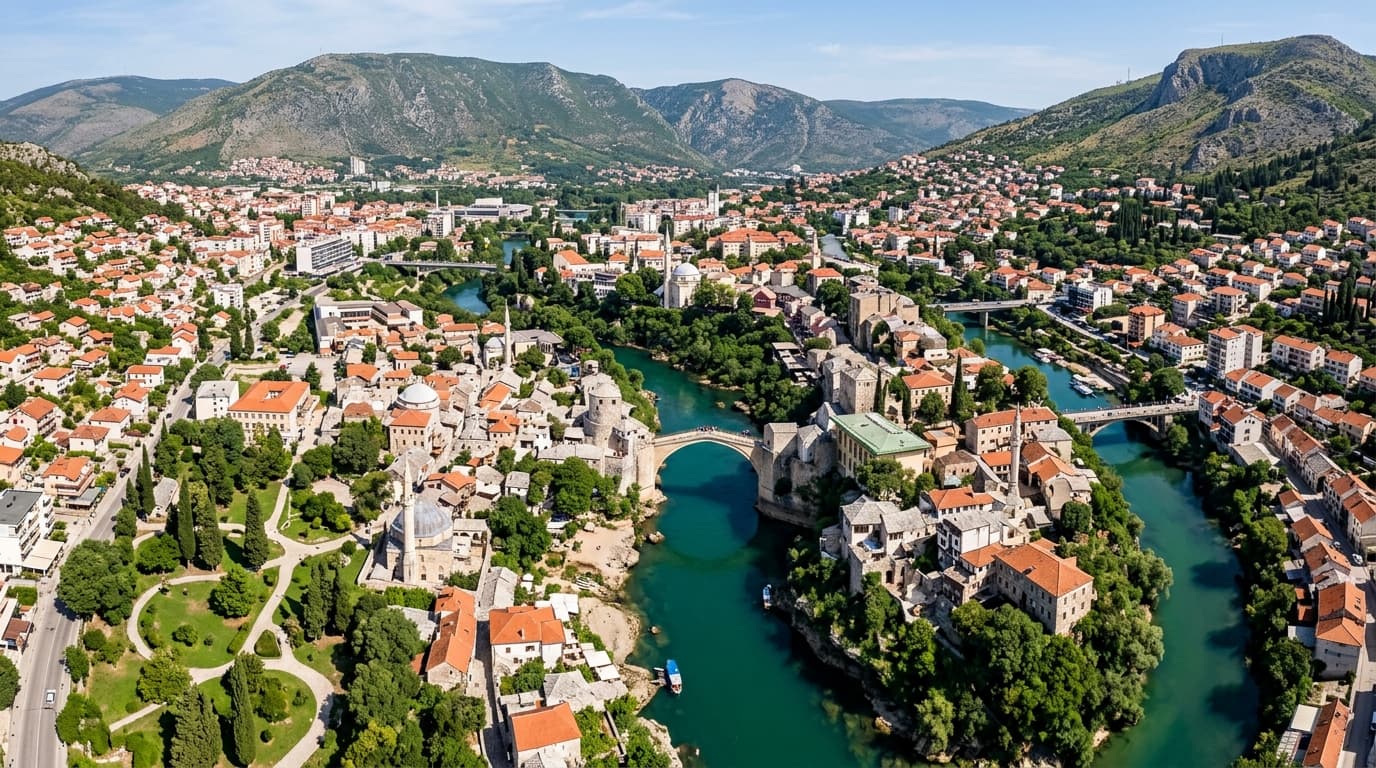
Mostar
🇧🇦 Bosnia and Herzegovina
Mostar is compact, walkable and easy on the wallet, which is why a lot of nomads end up staying longer than they planned. The city sits on the Neretva River, built around Stari Most, with Ottoman stone lanes, Austro-Hungarian facades and those blunt Yugoslav blocks that remind you this isn’t a polished postcard set. It feels lived-in, a little worn around the edges and very human.
The daily rhythm is slow. Mornings are quiet, then Old Town fills up with day-trippers by late morning and the clatter of cups gets louder as the cafes wake up. By evening, the crowds thin out again and the city settles into what it does best, coffee, long lunches and a walk along the river while the call to prayer carries over rooftops and church bells answer back from another part of town.
Mostar isn’t for people who need constant stimulation. Nightlife is limited, summer can feel brutally hot and some streets go very still after dark. But if you like a place where you can cross town in 15 to 25 minutes, sit in the same cafe for a few hours and not burn through your budget, it makes a lot of sense.
What to expect
- Internet: 4G is solid in town and cafe Wi-Fi is usually good enough for calls.
- Coworking: Code Hub Mostar is the main dedicated space and it’s where most remote workers end up.
- Cost: A solo nomad can live here for about $600 to $1,000 a month, depending on rent and habits.
- Feel: Friendly locals, strong cafe culture and a pace that can feel almost sleepy outside peak season.
For a low-key base, stay near Mepas Mall and Zrinjevac Park or just outside Old Town if you want to walk in without sleeping above the souvenir stalls. Hill neighborhoods like Brankovac and Mazoljice are quieter and often better value, though you’ll deal with steep streets, a few calf-burning climbs and the occasional early-morning prayer call echoing off the walls.
Mostar works best for slower travelers, remote workers and anyone who wants good value without giving up atmosphere. It’s not flashy. It’s stone, shade, strong coffee and a river that keeps pulling you back toward it.
Mostar is one of those places where your budget stretches a lot further than it does in Western Europe, but the trade-off is simple: you’re paying for a slower, smaller city. A solo nomad can usually live here for about $600 to $1,000 a month including rent, depending on how central you want to be and how often you eat out.
The city is compact, so you won’t burn money on transport. Most places are a 15 to 25 minute walk away, though summer heat on the pavement can be unforgiving and hill neighborhoods will leave you sweating before lunch. Cafes are cheap, the internet is decent and if you keep your expectations realistic, Mostar can feel very livable for a long stay.
Typical monthly costs
- 1-bedroom in the city center: often around $260 to $450, depending on condition and location.
- 1-bedroom outside the center: about $230 to $350, sometimes less with a direct landlord.
- Street food or bakery snack: $2 to $4.
- Local restaurant meal with a soft drink: $7 to $11.
- Nicer dinner with wine: $15 to $25 per person.
- Taxi inside town: around $2.50 for a short ride.
- Airport taxi: roughly $13 to $16.
Food is still cheap by most nomad standards. Coffee usually runs about 1.5 to 2 BAM, which is roughly $0.80 to $1.10 and you’ll see plenty of easy lunch options around Old Town, Mepas Mall and the cafe strips near the center. Grocery bills stay manageable if you cook, though the touristy restaurants near Stari Most are pricier and not the best daily habit.
For work, Mostar has enough internet to get by without drama. 4G is solid in town, cafe Wi-Fi is generally fine and Code Hub Mostar is the main coworking option if you want a proper desk, quieter air and less background espresso machine noise.
Budget tiers
- Budget: $700 to $900, usually a room or basic flat, cooking most meals and working from cafes.
- Mid-range: $900 to $1,300, with a central apartment, a mix of eating out and cooking, plus occasional coworking.
- Comfortable: $1,300+, for a newer apartment, regular dining out and more weekend trips.
Mostar isn’t expensive, but it isn’t slick either. If you want constant nightlife, you’ll get bored fast. If you want coffee, old stone streets, a quiet apartment and a monthly bill that doesn’t sting, it works very well.
Mostar is small enough that your address shapes your day less than in bigger Balkan cities. You can cross most of town in 15 to 25 minutes, so the real choice is between Old Town atmosphere, flat and practical living near Mepas Mall or quieter hill neighborhoods with better space for the money.
Solo travelers
Solo travelers usually do best just outside Stari Grad, near the Old Bridge but not on the busiest stone lanes. You’ll still get the cafés, late dinners and river views, but you won’t be sleeping above souvenir shops and tour groups blasting through by noon.
- Old Town, Stari Grad: Best for a short stay, photos and being in the middle of everything. Loud in the day, crowded in summer and full of slippery cobblestones.
- Brankovac: Quieter, more local and often cheaper, though you’ll be walking uphill and hearing early-morning calls to prayer carry across the rooftops.
Nomads
For remote workers, the smartest base is around Mepas Mall and Zrinjevac Park. It’s flatter, easier for groceries and close to Code Hub Mostar, the city’s main coworking space. You’ll get a more normal daily rhythm here, with bakeries, supermarkets and cafes that smell like strong coffee and cigarette smoke.
- Mepas Mall area: Best for longer stays, quick shopping and easy access to coworking. Less charming, but practical.
- Zrinjevac Park: Good for walks, families and anyone who wants a calmer central spot without the tourist crush.
Nomads who want more space sometimes pick Mazoljice or higher parts of Brankovac. Rent can be better, but the hills get old fast, especially when it’s hot and you’re carrying groceries uphill in August humidity.
Families
Families tend to prefer the flatter central areas near Mepas Mall, where daily life is easier and you’re not dragging strollers over old stone steps. The fresh market nearby is a real plus if you’re cooking and the park gives kids room to run without the noise of Old Town.
- Mepas Mall and nearby streets: Best for supermarkets, pharmacies and easier access to everything.
- Quieter parts of Brankovac: More residential and roomy, though not ideal if you hate hills or rely on taxis for every errand.
Expats
Expats who plan to stay a while often split the difference, choosing a place close to the center but not inside the tourist core. That usually means Mepas Mall, Zrinjevac or the residential streets west and north of Old Town. You’ll hear church bells, traffic and, depending on the block, the steady echo of prayer from nearby mosques.
If you want the easiest everyday life, skip the prettiest postcard streets and pick the place with the best grocery run, least stairs and strongest heating. Mostar looks tiny on a map, but a bad hill can make it feel much bigger.
Internet and coworking
Mostar’s internet is better than plenty of people expect from a smaller Balkan city. In the center, 4G is usually solid enough for calls, uploads and normal remote work and cafe Wi-Fi is generally fine if you’re not trying to livestream all day.
The city’s pace helps too. You can walk from the Old Town to Mepas Mall in about 20 to 25 minutes, so most nomads end up splitting the day between a cafe, a flat and the occasional coworking desk instead of burning time in traffic. The downside is that a quiet city can still be a noisy one, with call to prayer, traffic and the clatter of cups carrying through open windows early in the morning.
Code Hub Mostar
Code Hub Mostar is the main dedicated coworking space in town and the only one most remote workers bother with. It sits centrally on Kardinala Stepinca, has proper desks, meeting space and a terrace and it’s usually the best bet if you need a predictable setup for a full workday.
The vibe is practical rather than polished. You’re more likely to hear keyboard tapping, quiet calls and the hum of air-conditioning than startup chatter, which is exactly what most people want here. Pricing tends to be lower than Western European coworking spaces, but you’ll want to message them directly for current day-pass and monthly rates because they do change.
Cafe work habits
Mostar runs on coffee, so working from cafes is normal. A cappuccino usually costs about $1.40 to $2.00 and if you’re polite and order another drink every couple of hours, nobody minds you sitting with a laptop for a while.
The best spots are usually around the center and near Mepas Mall, where you’ve got flatter streets, easier grocery runs and fewer tour groups than in Old Town. Skip the most obvious riverfront places if you need silence, they get crowded and the chairs aren’t made for long sessions anyway.
SIM cards and data
- Mobile data: 4G is usually good enough for maps, video calls and file sharing, with typical city speeds in the moderate range for a regional city.
- Reliability: Fine for most remote work, though storms and peak hours can slow things down a bit.
- Best use: Keep a local SIM as backup if you’re planning to work from apartments or cafes outside the center.
For most nomads, the setup is simple: a local SIM for backup, cafe Wi-Fi for light work and Code Hub when a deadline needs a proper desk. It’s not a hyper-connected tech city, but it’s stable enough that internet stress usually isn’t part of the story.
Mostar feels calm and manageable, but don’t mistake that for risk-free. The Old Town gets slippery after rain, the hills can be punishing and the summer heat sits on the city like a wet towel. Traffic is usually light, yet drivers can be impatient around narrow streets and pedestrian crossings, so keep your head up near the bridge and on the roads around Mepas Mall.
Petty theft isn’t a huge issue, but common-sense habits still matter. Keep phones zipped away in crowded café terraces and around tour groups in Stari Grad, especially at peak day-trip hours when the clink of cups, scooter noise and souvenir crowds all blur together. Most nomads say Mostar feels safe for daytime walking and solo evenings, though the quiet can be disorienting if you’re used to a bigger city.
What to watch for
- Call to prayer noise: Some neighborhoods wake early. If you’re a light sleeper, avoid staying right next to a mosque.
- Slippery stone streets: Old Town’s cobbles get slick after rain and the river air can make the stones feel damp even on clear mornings.
- Heat and sun: July and August can be brutal. Carry water, shade yourself and don’t underestimate afternoon fatigue.
- Hills: Mazoljice and Brankovac are quiet, but the climbs are real. A short taxi ride can save your knees.
For healthcare, Mostar has basic clinics and pharmacies that cover routine needs well enough for short stays. For anything serious, people usually head to larger hospitals or plan treatment in Sarajevo or Croatia. Carry travel insurance, bring prescription meds in original packaging and keep digital copies of your documents in case you need them fast.
Pharmacies are easy to find and staff are generally used to helping with minor issues like stomach bugs, allergies and cold meds. For language, don’t expect every receptionist or pharmacist to speak strong English, especially away from the center, so having medication names written down helps. Many expats and nomads also keep a translator app ready because health visits can get patchy if you rely on gestures alone.
Practical health basics
- Emergency number: 112 for urgent help.
- Pharmacies: Plenty in central Mostar, especially around the broader downtown area.
- Water: Tap water is generally considered fine, though many locals still buy bottled water for convenience.
- Insurance: Don’t skip it. Private care is still the safer bet for visitors.
If you’re staying longer, pick accommodation with good insulation or air-conditioning if you can. Some apartments have thin walls, hard tile floors and early-morning noise that carries through the building, so sleep quality can swing a lot by address. For day-to-day life, Mostar is easy. For medical backup, it’s a city where you want a plan before you actually need one.
Mostar is easy to move around because it’s small, flat in the parts you’ll actually use and built for walking. From Mepas Mall to Stari Most, you can usually get across town in 15 to 25 minutes on foot, with the caveat that hills, slick stone lanes and summer heat can make a simple errand feel longer than it should.
The city runs on a slower rhythm. People linger over coffee, shop late and drift out for an evening stroll once the day-trippers thin out, so you don’t need to plan your day around traffic the way you would in a bigger Balkan city.
Walking is the default
For most nomads, walking is the best way to get around Mostar. Old Town is compact and the areas around Zrinjevac Park and Mepas Mall are close enough to the center that you rarely need transport for daily life.
That said, don’t underestimate the hills. Mazoljice and Brankovac can be quiet and good value, but the climbs are real, especially in summer when the heat sticks to your skin and the concrete seems to radiate it back at you.
Taxis and local rides
Taxis inside town are cheap and handy when you’re tired, carrying groceries or heading uphill. A short ride can run around $2.50, which makes them an easy fallback after dinner or in the rain, when the Old Town stones get slippery and the streets smell faintly of damp dust and exhaust.
The airport taxi is another story. The ride into town is usually about $13 to $16, so don’t expect the same bargain you get for local hops.
Where most people base themselves
- Old Town / Stari Grad: Best for short stays, views and being steps from the bridge, but it’s crowded by late morning and can feel touristy and noisy.
- Mepas Mall and Zrinjevac: Practical, flatter and better for groceries, cafes and everyday errands.
- Mazoljice and Brankovac: Quieter and more residential, with larger apartments, though you’ll walk uphill or take taxis more often.
Internet and coworking
Mobile internet in Mostar is decent enough for regular remote work and 4G usually does the job for calls and uploads. Cafes are hit or miss, though, so if you need a reliable desk, Code Hub Mostar is the main coworking option and the one most nomads point to first.
Most people mix it up, working from cafes in the morning, then switching to coworking when they need a longer stretch of quiet. That works well here, because the city is small enough that a change of scene never feels like a commute.
Mostar feels easy to talk your way through. Bosnian, Croatian and Serbian are all widely understood and in day-to-day life the differences matter less than they do on paper. People switch between them freely and most locals won’t blink if you use the wrong version of a word.
For travelers, English gets you pretty far in cafés, hotels, coworking spaces and around Old Town. Younger people usually speak it better, especially in service jobs, though fluency drops fast once you’re dealing with older residents, taxi drivers or neighborhood shops. A few basic phrases in Bosnian go a long way and locals usually warm up when you try.
The biggest friction isn’t language, it’s pace. Service can be slow, not rude, just unhurried and a direct request gets better results than hovering by the counter. Most people are friendly, but they won’t always guess what you need, so say it plainly and repeat if necessary.
Useful basics:
- Dobar dan: Hello or good day.
- Hvala: Thank you.
- Molim: Please or you’re welcome.
- Koliko košta? How much does it cost?
- Gdje je ...? Where is ...?
Mostar’s communication style is also shaped by the city’s rhythm. Mornings are quiet, with coffee cups clinking and shop shutters rolling up, then Old Town gets louder as tour groups arrive. By evening, the sound mix shifts back to voices on terraces, the Neretva moving below and, depending on where you’re staying, calls to prayer carrying across the hills.
For remote workers, the practical side is straightforward. Solid 4G is common in town and cafés usually have usable wifi, though speeds can dip when places fill up. Code Hub Mostar is the main coworking option and it’s the safest bet if you’ve got calls, deadlines or just don’t want to fight with a café soundtrack of espresso machines and stray conversation.
A few real-world tips help. Install WhatsApp before you arrive, because locals use it constantly for apartments, rides and casual arrangements. Google Maps works well enough for finding places, but addresses can be vague, so don’t be surprised if someone gives directions by landmark, stairwell or the nearest bakery instead of a clean street number.
Mostar has a sharp split between seasons and that matters more here than in bigger Bosnian cities. Summer can be punishing, with dry heat bouncing off stone streets and the Neretva feeling like the only relief in town. Winter is quieter, colder than people expect and a lot less romantic once the wind starts cutting through Old Town.
The sweet spot is usually April to June and September to mid-October. Spring brings long café hours, mild evenings and enough sun to sit outside without melting. Fall is even better if you like calmer streets, softer light and fewer day-trippers crowding the bridge.
July and August are the hardest months. Old Town fills up by late morning, tour buses thicken the air with diesel and the heat can feel stuck to the cobblestones. If you’re staying then, plan your errands early, work from cafés or Code Hub Mostar during the hottest hours and save your walking for after sunset, when the city finally exhales.
Rain isn’t usually a big reason to skip Mostar, but winter mornings can be raw and damp. The old stone gets slick, rooms near the river can feel chilly and many places heat unevenly, so bring layers if you’re coming between November and February. Mosques and church bells can also make the mornings feel louder than the city map suggests, especially if you’re sleeping near the center.
Best months at a glance
- April to June: Warm days, cool nights and the best balance of comfort and walkability.
- July to August: Hot, crowded and the most expensive time for short stays.
- September to mid-October: Probably the best overall window, with pleasant weather and fewer tour groups.
- November to February: Quiet and cheaper, but colder, darker and less lively.
If you’re working remotely, spring and fall are the easiest months for a long stay. You can bounce between cafés, groceries at Mepas Mall and afternoon walks without feeling drained by the weather. In summer, Mostar still works, but it’s more of an early-morning, late-evening city, with long breaks in between.
For short visits, aim for weekdays and avoid the hottest part of the day in Old Town. For slower stays, September is the clear favorite, because the city feels lived-in again, not just performed for visitors.
Mostar is easy to live in without a car. The center is compact, sidewalks are manageable and you can usually get from the Old Bridge to Mepas Mall in 15 to 25 minutes on foot. That said, the city has hills, cobblestones and a few punishing stretches in summer heat, so pack decent shoes and don’t assume every errand is flat or quick.
The rhythm here is slow and very cafe-driven. People linger over coffee, lunch runs late and evenings often start with a stroll along the Neretva rather than a big night out. You’ll hear calls to prayer echoing off apartment blocks, church bells answering back, and, if your window faces a busy road, the steady buzz of scooters and traffic. If you’re a light sleeper, stay a few streets off the mosques around Old Town.
- Best area for most nomads: The blocks around Mepas Mall and Zrinjevac Park are practical, flatter and closer to supermarkets, fresh produce and coworking.
- Best area for atmosphere: Old Town is lovely for a short stay, but midday crowds and souvenir traffic get old fast.
- Best area for quiet: Mazoljice and parts of Brankovac feel more residential, though you’ll be climbing hills and probably taking taxis home at night.
Money goes further here than in most of Europe. A solo nomad can usually live on about $900 to $1,300 a month with a decent apartment, regular cafe work and some meals out. Simple food is cheap, bakery snacks run about $2 to $4 and a proper local meal is often $7 to $11. Tourist-facing restaurants near the bridge charge more and they’re not always better.
Internet is good enough for remote work, but don’t expect miracles everywhere. Mostar has solid 4G and stable broadband in many cafes and work spaces and Code Hub Mostar is the main coworking option if you want a proper desk, quieter calls and less espresso-machine chaos. For SIMs, get a local prepaid plan soon after arrival, because mobile data is usually reliable and handy for backup.
Taxis are cheap inside town, usually around $2 to $3 for short rides, so don’t be stubborn if you’re carrying groceries uphill in July. The airport taxi is much pricier, so book a transfer or agree on the fare first. Summer is brutally hot, winters can feel damp and raw and Mostar gets very quiet outside peak season, which some people love and others absolutely hate.
Frequently asked questions
How much does it cost to live in Mostar as a digital nomad?
Is the internet good enough to work remotely in Mostar?
Where is the best area to stay in Mostar for remote workers?
Is Mostar walkable for everyday life?
What is the main coworking space in Mostar?
Is Mostar safe for solo travelers and digital nomads?
Need visa and immigration info for Bosnia and Herzegovina?
🇧🇦 View Bosnia and Herzegovina Country GuideHidden Gem
Worth the effort