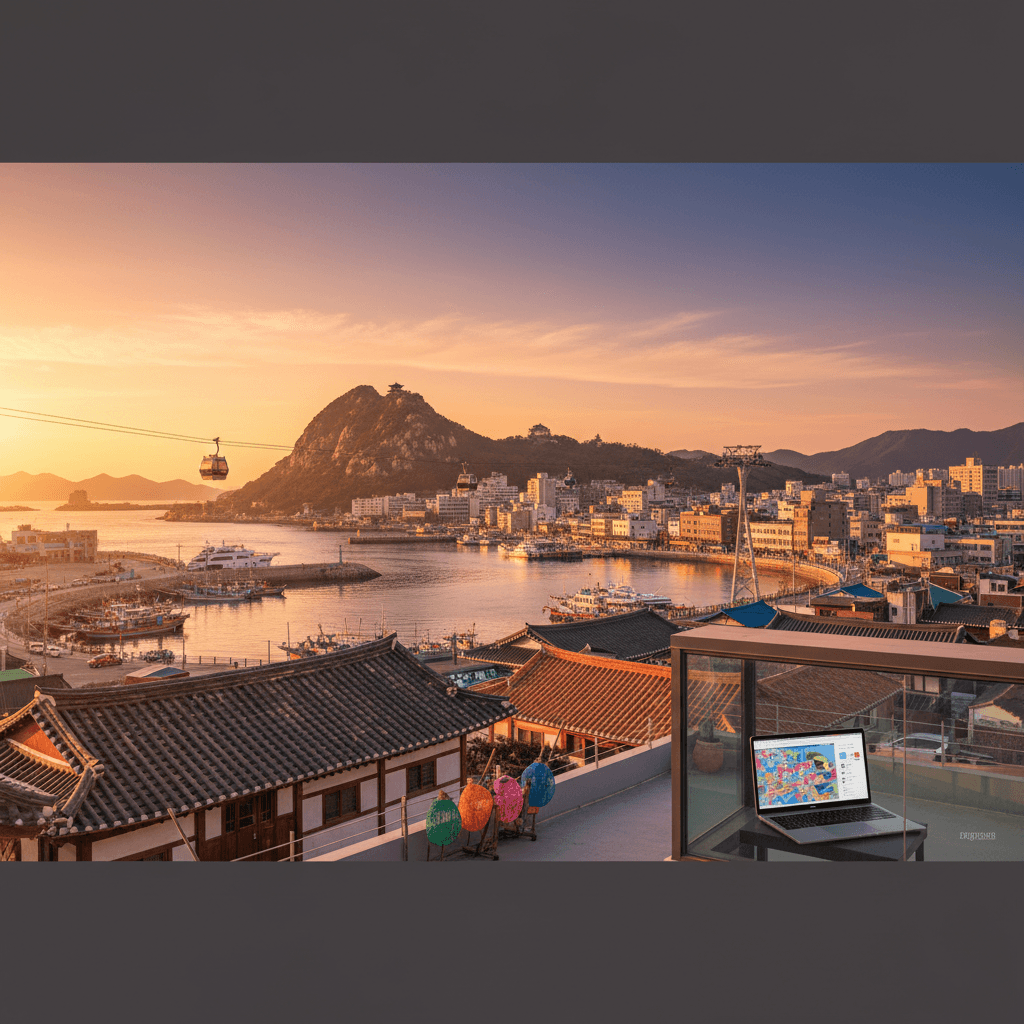
Mokpo
🇰🇷 South Korea
The Port City That Slows You Down
If Seoul is a high speed rail line, Mokpo is the scenic ferry route. This southern port city doesn't try to dazzle you with skyscrapers or neon-soaked nightlife. Instead, it pulls you in with a gritty, salt of the earth charm and a pace of life that actually lets you breathe. Located at the southwestern tip of the Korean peninsula, Mokpo serves as the gateway to the Dadohaehaesang National Park, but for the digital nomad, it’s a sanctuary of affordability and authentic maritime culture.
The vibe here is nostalgic. You'll spend your mornings walking through narrow alleys lined with colonial era architecture and your afternoons watching fishing boats dock at the harbor. It’s a place where the air smells like the sea and the locals are more likely to offer you a plate of fermented skate than a venti latte. Most nomads find the city’s unpolished edges refreshing, though you’ll need a translation app and a sense of adventure to navigate the lack of English signage.
While you won't find a dedicated nomad "hub" or a street full of Western style bars, the emotional payoff is a sense of belonging to a real community. It’s the kind of city where you can hike Yudal Mountain for a sunset view of the archipelago and then head down to Mokpo Central Market for ₩10,000 raw fish without seeing another tourist for hours. It’s quiet, it’s affordable, and it’s unapologetically Korean.
The Cost of Living Breakdown
Living here is significantly cheaper than in the capital. You can easily maintain a comfortable lifestyle on $2,000 to $3,000 a month, and those on a tighter budget can get by on roughly $1,500 if they stick to local housing and street food.
- Studio Rent: ₩400,000 to ₩700,000 ($300 to $525) is standard for a decent spot in the downtown area. Use the Zigbang or Dabang apps to see what's available, though you'll likely need a local friend to help with the lease.
- Daily Meals: A hearty bowl of seafood stew or a local BBQ dinner usually runs between ₩8,000 and ₩20,000 ($6 to $15).
- Coffee & Workspace: Since coworking spaces are almost non existent here, expect to spend about ₩5,000 ($4) for a seat at a cafe like Cafe Layered or the local Starbucks.
- Transport: The city is very walkable, but a T-money card for buses costs about ₩1,500 per ride. Taxis via Kakao T are affordable for short hops across town.
Where to Plant Your Laptop
Mokpo doesn't have the distinct international neighborhoods of Seoul, but different pockets cater to different energy levels. Most expats and long term travelers gravitate toward the Harbor District near Mokpo Station. It’s the most connected part of the city, putting you within walking distance of the ferry terminal and the best seafood markets. It can get a bit loud on weekends, but the convenience is hard to beat.
For a more residential feel, look at the area around Samhakdo or the base of Yudal Mountain. These neighborhoods are quieter and offer better views, though you'll be doing a lot more uphill walking. If you're looking for modern apartments and a slightly more "new city" feel, the outskirts like Sangmu-dong offer better amenities but lack the historic soul of the waterfront.
The Connectivity Reality
Don't let the small town feel fool you; the internet is world class. You'll get the same 160 Mbps speeds and 5G coverage found in the rest of South Korea. Working from cafes is the norm. Places like Gatbawi or the harbor front cafes provide reliable WiFi and a quiet enough environment for Zoom calls. Just remember that the "digital nomad" concept is still relatively new here. You won't find many networking events, but you will find plenty of locals curious about your work and willing to share their table.
To stay connected on the go, grab a prepaid SIM at the airport or use an eSIM from Holafly. If you're planning to stay long term on the new Hallyu Digital Nomad Visa, which requires an annual income of approximately double South Korea's GNI per capita (check latest official requirements), you'll eventually want a local number through Kimbap Mobile to access government apps and delivery services.
The Bottom Line on Budgets
Living in Mokpo feels like a financial breath of fresh air compared to the steep prices of Seoul or Busan. Most nomads find they can maintain a high quality of life here for about 50% to 70% less than they would in the capital. It is a city where your money stretches far, especially if you lean into the local lifestyle of seafood markets and neighborhood cafes.
For a budget tier experience, expect to spend between $1,200 and $1,800 per month. This usually involves a shared living space or a very modest studio and a diet heavy on street food and local markets. A mid range lifestyle sits comfortably between $2,000 and $3,000, allowing for a private solo studio, frequent dining out at local BBQ spots, and plenty of weekend trips to the surrounding islands. If you want a top tier experience with a luxury one bedroom apartment and high end dining at places like Gatbawi Restaurant, you should budget $3,500 or more.
Monthly Cost Breakdown
- Housing: A standard studio or one bedroom downtown typically runs between ₩700,000 and ₩1,000,000 ($525 to $750). If you look toward the outskirts like Samhakdo, prices can drop as low as ₩400,000 ($300). Expats recommend using apps like Zigbang or Dabang to scout listings, though you might need a Korean speaking friend to help with the fine print.
- Food and Dining: You can grab a quick meal of hoe (raw fish) or street snacks at the Mokpo Fish Market for ₩5,000 to ₩8,000 ($4 to $6). A hearty local BBQ dinner usually costs around ₩20,000 ($15) per person. For those who prefer cooking, groceries are affordable, and high speed broadband for your home will only set you back about $20 a month.
- Transportation: Mokpo is remarkably walkable, but the bus system is efficient and cheap at ₩2,500 per ride. Most nomads spend about $75 a month on their T-money card, which works nationwide. Taxis are also plentiful; a short hop across town via Kakao T usually costs under $10.
- Workspace: Dedicated coworking spaces are rare in Mokpo. Most remote workers set up shop in cafes like Starbucks Mokpo or local favorites like Cafe Layered. You can usually work for several hours for the price of a ₩5,000 ($4) coffee. If you absolutely need a formal office, you will likely have to commute to Gwangju, where desks go for about $75 to $150 a month.
Smart Spending Tips
To keep costs down, travelers often suggest getting a prepaid tourist SIM from providers like KT or SK Telecom right at the airport. These usually cost around ₩30,000 ($22) for 10GB of data. For longer stays, look into Kimbap Mobile once you have your residence verified. It is a much cheaper way to stay connected than using international roaming.
When it comes to entertainment, nature is your best friend. Hiking Yudal Mountain or exploring the historic harbor costs nothing. If you are planning island hops, the ferry to Hongdo is one of the bigger expenses at about ₩50,000 ($38) for a round trip, so it is best to save those for special weekend excursions. Most local social life revolves around low key bars and seafood joints where the bill is rarely a shock.
For Digital Nomads: Downtown (Sangmu-dong and Gangdong)
If you need to be within walking distance of a caffeine fix and a reliable WiFi signal, Downtown is your best bet. This area centers around the old city heart and the modern Sangmu-dong district. It isn't a polished tech hub like Seoul's Gangnam, but it's where you'll find the highest density of work-friendly cafes like Cafe Layered or the reliable Starbucks Mokpo near the station.
- The Vibe: Urban, slightly gritty in parts, but incredibly convenient. You're steps away from the ferry terminal and the best seafood markets.
- Living Costs: Expect to pay between ₩400,000 and ₩700,000 ($300 to $525) for a decent studio.
- Why it works: Most nomads find the proximity to the KTX train station vital for weekend escapes to Seoul or Gwangju. The Mokpo Central Market is right here, making it easy to grab a ₩10,000 bowl of hoe-deopbap (raw fish bibimbap) between Zoom calls.
For Expats and Long-Termers: Harbor District (Mokpo Station Area)
Expats who've settled in Mokpo often gravitate toward the Harbor District. It strikes a balance between the city's maritime history and modern amenities. It's the most international part of town, though "international" in Mokpo is a relative term. You'll find a few more English signs here and a small, tight-knit community of foreign teachers and professionals.
- The Vibe: Historic and active. It feels like a living port city with a nostalgic 1980s Korean aesthetic.
- Living Costs: Mid-range apartments typically run ₩700,000 to ₩1,000,000 ($525 to $750).
- Why it works: It's the most walkable part of the city. You can handle your banking at KB Kookmin, shop at Olive Young, and grab a beer at a local hof without needing a car or a long bus ride.
For Families: Samhakdo and Yudal Mountain
If you're traveling with kids or just want some breathing room, the foothills of Yudal Mountain or the Samhakdo park area are the way to go. These neighborhoods trade convenience for greenery and quiet nights. The streets are wider, the air feels cleaner, and you're surrounded by public parks and the Mokpo National Museum.
- The Vibe: Residential, peaceful, and scenic. It's where you go to escape the industrial noise of the shipyards.
- Living Costs: Larger family-sized apartments start around ₩1,200,000 ($900), though bargains exist in older buildings.
- Why it works: You have immediate access to hiking trails and the Mokpo Marine Cable Car. The downside is the hills; travelers often say their calves get a serious workout just going to the grocery store.
For Solo Travelers and Nature Lovers: Songo Island Outskirts
For those who want to feel like they've actually left the mainland, the outskirts near Songo Island provide a coastal retreat. It's less of a neighborhood and more of a collection of relaxed seaside stays and newer developments. It's the best place to catch those famous Mokpo sunsets over the Yellow Sea.
- The Vibe: Slow-paced and isolated. It feels like a vacation spot rather than a city center.
- Living Costs: Short-term rentals via Airbnb are common here, usually ranging from $40 to $80 per night.
- Why it works: It's perfect for a "deep work" retreat. You'll need the Kakao T app to get around because buses are infrequent, but the peace and quiet are unmatched. Just don't expect many people to speak English at the local corner store.
Connectivity and Speed
South Korea is famous for having the fastest internet on the planet, and Mokpo doesn't skip a beat just because it's further south. You can expect average speeds around 160 Mbps, and 5G coverage is remarkably consistent even when you're tucked away in a seafood joint near the harbor. Most rentals and Airbnbs come with high speed fiber as a standard, so video calls with clients in different time zones won't be an issue.
For mobile data, don't wait until you get to Mokpo to figure out your SIM situation. Pick up a KT or SK Telecom prepaid SIM at Incheon Airport, or grab an eSIM from Holafly or RapideSIM before you land. If you're planning a longer stay on a digital nomad visa, Kimbap Mobile is a favorite among expats for getting a verified local number, which you'll need for everything from food delivery apps to booking train tickets on Kakao T.
The Coworking Scene
If you're looking for a traditional WeWork style office with networking events and free beer, you won't find it here. Mokpo is still catching up to the dedicated coworking trend. The nearest official hubs are in Gwangju, about an hour away by bus, where desks go for ₩100,000 to ₩300,000 per month. Most nomads in Mokpo embrace the "cafe office" lifestyle instead.
The local work culture is very cafe centric. It's perfectly normal to park yourself at a table for a few hours with a laptop, provided you buy a drink. Starbucks near Mokpo Station is the reliable fallback for ergonomic chairs and plenty of outlets, but the local spots offer much better views. The various coffee shops lining the Peace Square (Pyeonghwa Gwangju) waterfront are popular for their reliable WiFi and relaxed atmosphere. Expect to pay about ₩5,000 ($4) for a solid Americano that buys you a few hours of productivity.
Best Spots to Log On
- Peace Square Waterfront: This area is packed with spacious cafes that have floor to ceiling windows. It's the best place to work if you want to see the sunset over the sea while clearing your inbox.
- Mokpo Station Area: Ideal for a quick work session before catching a KTX train. The cafes here are used to travelers and usually have fast, password free WiFi.
- Yudal Mountain Foothills: You'll find smaller, quieter tea houses and coffee shops here. They're less "office-like" but perfect for deep work or creative writing away from the city noise.
Data and Logistics
- WiFi Availability: Almost every public space, from the ferry terminal to small bakeries, has free public WiFi. Look for "Public WiFi Free" in your settings.
- Power Outlets: Korean cafes are generally generous with plugs, but it's smart to carry a Type C or Type F adapter. Look for long communal tables, as these almost always have built in charging strips.
- Costs: A month of home broadband typically runs around ₩25,000 ($20), though this is usually bundled into your rent or utility bill.
- Translation Apps: Since English isn't widely spoken in smaller Mokpo cafes, keep Papago or Naver Dictionary open on your phone. They're much more accurate for Korean than Google Translate.
While the lack of a formal coworking community might feel isolating at first, the city's infrastructure makes it incredibly easy to stay productive. Most nomads find that the trade off, a lower cost of living and a peaceful seaside backdrop, is well worth the lack of a dedicated office desk.
Personal Safety and Local Vibes
Mokpo is exceptionally safe, even by South Korea's high standards. You can comfortably walk home from a late night seafood dinner at the Mokpo Fish Market without a second thought. Street crime is almost non-existent here, and locals are generally helpful, if a bit shy due to the language barrier. Most expats say the biggest "danger" is simply tripping on the uneven pavement near the older harbor docks.
The city doesn't have "no-go" zones, but the atmosphere changes near the ferry terminals late at night. While it isn't dangerous, the Harbor District can get a little gritty with the maritime crowd. If you're solo, stick to the well-lit main drags like Sangmu-dong where the nightlife is more predictable. For immediate help, the police emergency number is 112. They’re responsive, though you’ll likely need a translation app like Papago to communicate effectively.
Healthcare Infrastructure
If you get sick, you're in good hands. South Korea’s medical system is world-class, and Mokpo follows suit. Mokpo Korea Hospital (Hankook Hospital) is the heavy hitter in town. It provides high-quality care and has the most modern equipment in the region. Expect to pay around ₩30,000 to ₩50,000 ($22-38) for a standard consultation without local insurance.
English proficiency among medical staff in Mokpo is lower than in Seoul. While younger doctors often speak some English, the administrative staff and nurses might not. It’s a good idea to bring a Korean-speaking friend or have your translation app ready. For minor ailments like a cold or a headache, look for the "Yak" (Pharmacy) signs. Pharmacies are everywhere, and pharmacists can often recommend over-the-counter fixes for a few dollars.
Insurance and Practicalities
If you're staying long-term on a Digital Nomad Visa (the Hallyu visa), you'll eventually be required to join the National Health Insurance (NHI) system after six months. This is a game-changer, as it covers about 70% to 80% of medical costs. Until then, or if you're on a shorter stay, private travel insurance is a must. Most nomads here use providers like SafetyWing or World Nomads, which are easily accepted at private clinics.
- Emergency Services: Dial 119 for an ambulance or fire. It's a free service and very efficient.
- Pharmacies: Look for the Olive Young stores for basic health supplies, or local pharmacies for prescription meds.
- Dental Care: Mokpo has plenty of private dental clinics that are surprisingly affordable. A professional cleaning usually costs under ₩60,000 ($45).
- Water Safety: Tap water is technically safe to drink, but most locals and expats prefer using a filter or buying bottled water for the taste.
Digital Nomad Wellness
Staying healthy in Mokpo is easy if you embrace the local lifestyle. The air quality is generally better than in the northern industrial hubs, though "yellow dust" from the Gobi Desert can be an issue in the spring. Download the AirVisual app to check daily levels. For physical activity, skip the gym and head to Yudal Mountain. The trails are well-maintained and provide a better workout than any treadmill, plus the views of the archipelago are the best mental health boost in the city.
Navigating the Port City
Mokpo is a city built for walking, especially if you're basing yourself around the historic downtown or the harbor. It doesn't have the overwhelming sprawl of Seoul, which makes it much easier to get your bearings within a few days. While the pace is slower here, the infrastructure is still world class South Korean standard, meaning everything is punctual, clean, and surprisingly affordable.
Public Transit and the T-Money Card
Your first order of business is picking up a T-money card at any GS25 or CU convenience store. You can't really survive here without one. You'll use it for the local buses, which are the backbone of Mokpo's transit system. A single ride costs about ₩1,700 ($1.30), and transfers are generally free if you tap off and back on within 30 minutes.
The bus network is extensive, but the signage isn't always nomad friendly. Most buses only display stops in Korean. Expats living here swear by the KakaoBus or Naver Maps apps. Avoid Google Maps entirely; it's notoriously unreliable for transit routes in Korea due to local security regulations. Naver Maps will give you real time data on exactly when your bus is pulling up to the curb.
Taxis and Ride-Hailing
If you're running late or just don't want to deal with bus routes, taxis are everywhere. You can hail them on the street, but the pros use Kakao T. It’s the local equivalent of Uber. You don't even need to add a credit card if you choose the "pay to driver" option in the app, which allows you to pay with your T-money card or cash at the end of the trip.
- Base fare: Starts around ₩3,800 ($2.85).
- Short cross-town trips: Usually cost under ₩10,000 ($7.50).
- Late night: Prices jump slightly after midnight, but it’s still very reasonable compared to Western cities.
Two Wheels and Walking
Mokpo is trying to become more bike friendly, but it's a work in progress. The city has a municipal bike sharing program, though the registration process can be a headache for short term visitors without a local phone number. If you're staying near Yudal Mountain, be prepared for some serious incline. The views are worth it, but your calves will feel it the next day.
The downtown area near Mokpo Station is almost entirely walkable. You can hit the local markets, the ferry terminal, and dozens of cafes without ever needing a vehicle. If you're heading out to the newer districts like Namak, you'll definitely want to hop on a bus or grab a cab.
Getting Out of Town
Mokpo is a major gateway for island hopping. The Mokpo Ferry Terminal is the starting point for trips to places like Jeju or the remote Hongdo Islands. A round trip to some of the closer islands will set you back about ₩50,000 ($38). For longer distances, the KTX high speed train connects Mokpo Station to Seoul in about two and a half hours, with tickets costing roughly ₩50,000. It's incredibly efficient and much more comfortable than flying.
If you're heading to the Mokpo Airport (MPK) area, which is actually closer to Yeongam, a taxi from the city center takes about 30 minutes and costs around ₩10,000 ($7.50). Most nomads find that between the KTX and the local buses, there’s rarely a need to ever rent a car here.
The Reality of Staying Connected
If you're coming from Seoul or Busan, the first thing you'll notice in Mokpo is that the English safety net gets a lot thinner. While Korea's capital feels like it's catered to an international crowd, Mokpo is a working port city where Korean is the only game in town. You won't find many English menus outside of the big chains, and most shopkeepers in the Mokpo Central Market or near Yudal Mountain will likely greet you with a friendly but confused look if you lead with English.
That said, the locals are incredibly patient. Digital nomads here find that a mix of polite gestures and the right apps makes life perfectly manageable. Most travelers recommend learning the Korean alphabet, Hangul, before you arrive. It takes about an afternoon to learn, and being able to read signs for "Pharmacy" or "Bus Terminal" saves you a massive amount of stress. You'll also want to master the basics: Annyeonghaseyo (hello) and Gamsahamnida (thank you) go a long way in breaking the ice.
The Tech You Need
To survive and thrive here, your smartphone is your best friend. Don't rely on Google Translate; it often struggles with Korean grammar and nuance. Instead, download Papago. It's the gold standard for translation in Korea, offering voice to voice features and an image translator that's a lifesaver for reading seafood menus or utility bills. For looking up specific words or slang, Naver Dictionary is the tool most expats swear by.
- Papago: Best for real time conversation and scanning menus.
- Naver Maps: Essential for navigation, as Google Maps is notoriously unreliable in Korea.
- KakaoTalk: The primary way everyone communicates. You'll need this to talk to landlords or new friends.
Digital Communication and Infrastructure
While the spoken language might be a hurdle, the digital language is world class. You'll find 161 Mbps WiFi speeds in almost every corner of the city. Most cafes, even the smaller ones near the Harbor District, have their WiFi passwords printed on the receipt or taped to the water station. If you're looking for a place to settle in for a few hours, look for the phrase Wi-fi eodi isseoyo? (Where is the WiFi?).
For mobile data, don't wait until you're in Mokpo to figure out your SIM card. Pick up a prepaid card from KT or SK Telecom at the airport when you land. A 10GB starter pack usually runs around ₩30,000. If you're staying long term on a digital nomad visa, you'll eventually want to switch to a service like Kimbap Mobile, which helps foreigners set up a verified phone number. This is vital because, in Korea, your phone number is your digital ID for everything from food delivery apps to online shopping.
Social Etiquette and Soft Skills
Communication in Mokpo is as much about what you do as what you say. It's a traditional city, so small gestures of respect are noticed. Use two hands when giving or receiving anything, like your credit card at a convenience store or a drink at a bar. A small bow when greeting someone older than you is standard practice. Expats often mention that while the language barrier is real, the "Mokpo kindness" is just as real. If you're struggling with a bus route or a menu, a local will often step in to help, even if they don't speak a word of English.
If you're feeling isolated, the expat community is small but tight knit. Most social life for foreigners happens on Facebook Groups like Korea Digital Nomads or through WhatsApp chats. Since there aren't many dedicated coworking spots, you'll likely meet other remote workers at Starbucks or local favorites like Coffee Frame. Just look for the person with the laptop and the oversized iced americano; that's the universal sign for a nomad in Mokpo.
The Sweet Spots: Spring and Autumn
If you're planning your stint in Mokpo, aim for the shoulders. April and May are legendary for a reason. The cherry blossoms around the base of Yudal Mountain turn the city soft pink, and the air stays a crisp 15°C to 22°C. It's the perfect window for hiking the ridge lines or working from a seaside cafe balcony without breaking a sweat.
September and October offer a different kind of magic. The humidity of the Pacific summer finally breaks, replaced by clear blue skies and temperatures averaging 18°C to 24°C. This is prime time for the Mokpo Autumn Festival. Expats usually find this the most productive time of year because the "monsoon brain fog" lifts, making it easier to focus on deep work before heading out for some seasonal blue crab.
Survival Guide: The Humid Summer
July and August in Mokpo aren't for the faint of heart. Since it's a port city, the humidity clings to everything. Temperatures frequently hit 32°C, but the "real feel" is much higher. This is also when the East Asian Monsoon hits. Expect heavy, sudden downpours that can last for days, often accompanied by the occasional typhoon warning in late August.
Most nomads during this stretch migrate indoors to air-conditioned havens like Starbucks Mokpo or the larger cafes near the Peace Square. If you're here in the summer, do what the locals do: stay inside during the peak afternoon heat and wait for the sun to dip. The evening sea breeze makes the waterfront much more bearable after 7:00 PM.
The Winter Chill
Winter in Mokpo (December through February) is cold but manageable compared to the bone-chilling winds of Seoul. Temperatures hover between -2°C and 7°C. You'll see some snow, but it rarely shuts the city down. It’s a quiet, introspective time in the city. Since the tourist crowds vanish, you can find great deals on short-term rentals, though you'll want to ensure your apartment has a solid Ondol (floor heating) system, as electricity bills for space heaters can get pricey.
Seasonal Planning at a Glance
- Peak Bloom (April): Best for photography and outdoor meetings. Expect ₩20,000 hike in daily accommodation prices if you book last minute.
- Monsoon Season (Late June to July): High rainfall. Invest in a sturdy umbrella from a CU or GS25 convenience store for about ₩8,000.
- Crab Season (October): The best time for foodies to visit the Mokpo Central Market.
- Deep Freeze (January): Quietest time for focused work. Cafes are empty, and the city feels like your own private retreat.
What to Pack
If you're arriving in the spring or fall, layers are your best friend. A light windbreaker is essential for the ferry rides to Wando or Hongdo, where the ocean breeze can be surprisingly sharp. For summer, pack moisture-wicking fabrics; cotton will just stay damp in the 85% humidity. If you're staying through winter, a heavy "long padding" coat is the unofficial national uniform for a reason. You can pick one up at the local Lotte Mart if you don't want to lug one in your suitcase.
Keep an eye on the AirVisual app or Naver Weather. Like much of the peninsula, Mokpo can get "yellow dust" or fine dust particles blowing in during the spring. Most locals wear KF94 masks on high-pollution days, which you can find at any pharmacy or Olive Young for about ₩1,500 each.
Getting Connected
Staying online in Mokpo is effortless thanks to Korea's world class infrastructure. You'll find speeds averaging 161 Mbps even in smaller coastal cities. If you're landing at Incheon first, pick up a prepaid SIM from KT or SK Telecom at the airport. For those already in town, CU or GS25 convenience stores sell basic SIMs, but nomads staying long term usually prefer Kimbap Mobile once they have their registration numbers. Expect to pay around ₩30,000 for a 10GB starter pack.
Coworking spaces are almost non existent here, so you'll be joining the local "coffice" culture. Starbucks Mokpo is a reliable standby, but local spots like Cafe Layered or the quiet cafes near Gatbawi Rock offer better views. Most places expect you to buy a drink every few hours, which usually costs about ₩5,000. If you absolutely need a dedicated office, you'll have to hop a one hour bus to Gwangju, where monthly desks run about ₩150,000.
Money and Logistics
Mokpo is significantly cheaper than Seoul, with a mid range lifestyle costing between $2,000 and $3,000 a month. Most expats recommend using the Zigbang or Dabang apps to find housing, though you might need a Korean speaking friend to help with the fine print. For short stays, Airbnb is your best bet in the Sangmu-dong area.
- Daily Meals: Budget ₩8,000 for market stalls or ₩25,000 for a nice BBQ dinner.
- Transport: A T-money card is mandatory. It works on all buses and even in taxis.
- Apps: Download Kakao T for hailing rides and Papago for translations. Google Maps is notoriously bad in Korea; use Naver Maps instead.
Health and Safety
The city is incredibly safe, even late at night. You can leave your laptop on a cafe table to use the restroom without a second thought. If you get sick, Mokpo Asan Hospital is the primary facility in the region. English isn't guaranteed among the staff, so have Papago ready on your phone. For minor issues, look for the Olive Young pharmacies scattered around the Mokpo Station area. In a true emergency, dial 119 for an ambulance or 112 for police.
Navigating the Language
English levels are much lower here than in Busan or Seoul. You'll get by in hotels and major tourist spots, but the local seafood markets require some pointing and smiling. Learning "Gamsahamnida" (thank you) and "Annyeonghaseyo" (hello) goes a long way with the older residents. Most nomads find that the locals are patient and helpful, often using their own phones to translate if they see you struggling.
Best Times to Visit
The sweet spots are April to May and September to October. Spring brings cherry blossoms and mild 20°C days, while autumn offers crisp air and stunning foliage on Yudal Mountain. Avoid July and August if you can; the humidity is intense, and the rainy season can turn a coastal walk into a soggy mess very quickly. Winters are chilly but generally hover around 0°C to 5°C, making it much milder than the freezing winds of Seoul.
Cultural Etiquette
Mokpo is a bit more traditional than the capital. Always remove your shoes when entering a home or certain traditional restaurants. Tipping isn't practiced and can actually cause confusion if you leave money behind. When paying for things or receiving a business card, use both hands as a sign of respect. It's a small gesture that locals really appreciate from visitors.
Need visa and immigration info for South Korea?
🇰🇷 View South Korea Country GuideHidden Gem
Worth the effort