Máncora
🇵🇪 Peru
The Vibe: Surf, Sun, and Slow Living
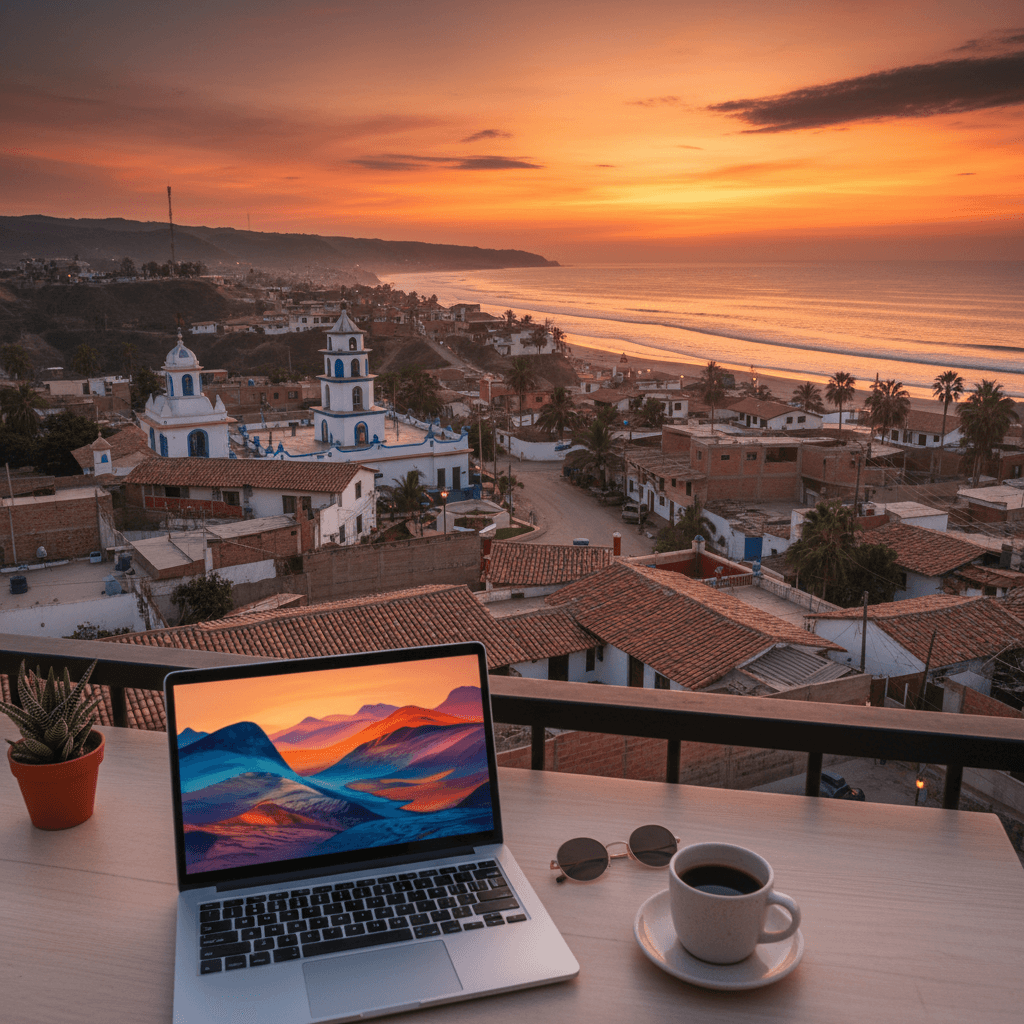
Máncora isn’t your typical polished digital nomad hub. It’s a dusty, sun-drenched beach town where the pavement ends and the Pacific takes over. The atmosphere is unapologetically bohemian, defined by a rhythm of morning surf sessions, afternoon ceviche, and evening pisco sours at sunset. It’s a place where you’ll see people walking barefoot to get coffee and where the local mototaxis provide a constant, buzzing soundtrack to the day.
What sets Máncora apart is the lack of pretense. Unlike the high-rise energy of Lima or the spiritual intensity of Cusco, this is a place to exhale. Nomads here trade dedicated office desks for beachfront cafes like those along Avenida Piura, working with their toes in the sand. It’s a tight-knit community where you’ll quickly recognize the same faces at the waves or the local markets, making it incredibly easy to find your tribe within a few days of arriving.
Cost of Living
One of the biggest draws for the remote work crowd is how far your budget stretches here. You can live a comfortable, beachside lifestyle for a fraction of the cost of Mediterranean or Caribbean destinations. Most nomads find they can live well on $1,800 to $2,100 USD per month as of 2026, though budget-conscious travelers can certainly get by on less.
- Housing: A beachfront studio or 1BR typically runs between S/800 and S/1,500 ($210 to $400 USD). If you move inland toward the quieter outskirts, prices drop to S/500 to S/900 ($130 to $240 USD).
- Dining: Street food like fresh ceviche or empanadas costs S/5 to S/10 ($1 to $3 USD). A solid meal at a mid-range spot like Punta Sal costs around S/25, while high-end seafood dinners usually start at S/50 ($13 USD).
- Transport: Mototaxi rides anywhere in town are standard at S/2 to S/5 ($0.50 to $1.30 USD).
Where to Base Yourself
Máncora is compact, but your choice of location changes your daily experience significantly. There aren't formal neighborhoods, so you'll choose based on your proximity to the water and the noise levels you're willing to tolerate.
Playa Máncora (Beachfront)
- The Draw: You are steps from the surf and the best cafes. It’s the heart of the social scene.
- The Trade-off: It’s the priciest area and the nightlife can be loud until the early hours.
- Monthly Rent: S/1,000+ ($265+ USD).
Avenida Piura (Central Town)
- The Draw: Extremely convenient for groceries, pharmacies, and the most affordable local eateries.
- The Trade-off: It lacks the ocean breeze and feels more like a busy transit hub than a tropical escape.
- Monthly Rent: S/600 to S/900 ($160 to $240 USD).
Connectivity and Productivity
Internet in Máncora is a bit of a mixed bag. While you won’t find sleek, air-conditioned coworking spaces with ergonomic chairs, the WiFi in most modern accommodations and beachfront cafes has improved, typically hitting speeds of 20 to 50Mbps. However, outages do happen. Expats recommend having a backup plan, usually a local SIM card from Claro or Movistar. You can grab an eSIM via Holafly for about $74.90 per month for unlimited data to stay connected during power flickers.
Most people work from cafes on the main strip. These spots are nomad-friendly, and it’s common to see laptops out for hours. The trade-off for the view is the occasional glare on your screen and the distraction of the ocean calling your name every time a good set of waves rolls in.
Practicalities: Safety and Logistics
The town is generally safe, and the locals are used to travelers. Common sense is your best friend here. Stick to well-lit areas like Avenida Piura at night and avoid walking alone on isolated stretches of the beach after dark. For healthcare, there are basic clinics and pharmacies in town, but for anything serious, you’ll need to head to Piura, which is about three hours away by bus.
Getting here usually involves flying into Talara Airport and taking a 45-minute taxi for about S/50 to S/80 ($13 to $21 USD). Once you’re in town, everything is walkable or a quick mototaxi ride away. If you want to explore nearby spots like the Poza de Barro hot springs or go whale watching in Los Organos, you can easily rent a scooter for about S/20 to S/50 ($5 to $13 USD) per day.
The best time to visit is between June and October. The weather stays between 24°C and 32°C (75°F to 90°F) year-round, but the rainy season from January to April can bring heavy humidity and storms that make working from the beach a challenge. If you want the perfect balance of sun and surf, stick to the dry season.
The Price of Paradise
Living in Máncora feels like a cheat code for your bank account. It is one of the most affordable coastal escapes in South America, where your biggest expense will likely be the beachfront premium rather than the actual cost of living. Most nomads find they can live well on $1,800 to $2,100 USD per month as of 2026, though budget-conscious travelers can get by on less.
This covers a private one-bedroom apartment, daily meals out, and plenty of pisco sours at sunset. If you are on a tighter budget, you can easily get by by sticking to inland housing and local cevicherías.
Monthly Budget Breakdown
- Housing (Studio/1BR): S/800 to S/1,500 ($210 to $400 USD) for beachfront; S/500 to S/900 ($130 to $240 USD) for inland spots.
- Daily Meals: S/5 to S/10 for street food; S/20 to S/40 for mid-range spots on Avenida Piura.
- Transport: S/2 to S/5 per mototaxi ride; S/20 to S/50 for daily bike rentals.
- Connectivity: S/50 for a local monthly data plan with Claro or Movistar.
Where to Plant Your Roots
Máncora is small enough that you can walk almost everywhere, but where you choose to sleep changes the vibe of your stay. Most travelers gravitate toward two main areas depending on their noise tolerance and work schedule.
Playa Máncora (Beachfront)
- Rent: S/1,000+ per month.
- The Vibe: This is the heart of the action. You'll be steps from the surf breaks and the best cafes.
- Pros: No commute to the waves; fast access to nomad-friendly spots.
- Cons: It gets loud. Between the beach bars and the weekend crowds, it's not the place for light sleepers.
Avenida Piura and Central Town
- Rent: S/600 to S/900 per month.
- The Vibe: Gritty, functional, and very convenient. This is where the locals live and shop.
- Pros: Best access to pharmacies, markets, and the cheapest "menú" lunches.
- Cons: Dusty and lacks the ocean breeze; you'll hear more mototaxis than waves.
Dining and Socializing
The food scene is a major draw. You can grab a fresh ceviche at Punta Sal for about S/25 or hit the street stalls for S/5 empanadas. Upscale dinner spots and beach clubs will run you S/50 or more, but even then, it rarely feels like a splurge. For groceries, nomads usually head to the central market or small kiosks on the main road. Cash is still king here; while some restaurants take cards, you'll want to keep soles on hand for mototaxis and market stalls. Use the Banco de la Nación ATM for the best rates, and consider a Wise card to avoid heavy transaction fees.
The Connectivity Trade-off
While the cost of living is low, you pay for it in infrastructure. There aren't any formal coworking spaces in town yet. Most nomads turn beachfront cafes into their offices for the price of a S/10 coffee. WiFi speeds generally hover between 20 and 50Mbps, which is plenty for Zoom calls, but the town's power grid can be temperamental during the rainy season from January to April. Experienced expats recommend grabbing a Holafly eSIM or a local Claro SIM card as a backup hotspot to stay online when the cafe router gives up.
Beachfront (Playa Máncora): For Surf-Obsessed Nomads
If you're coming to Máncora to catch waves between Zoom calls, the beachfront is where you'll want to plant your flag. This isn't a traditional neighborhood but rather a stretch of golden sand lined with hostels, boutique hotels, and open-air cafes. It's the pulse of the town, where the transition from work to play happens in a matter of seconds.
Most nomads gravitate here for the proximity to the surf break and the reliable Wi-Fi in spots like Punta Sal. You'll find a community of like-minded travelers who value a sunset pisco sour as much as a productive morning. The main downside is the noise; the beach bars don't quiet down until late, and the energy is high-octane 24/7.
- Rent: Expect to pay S/1,000 to S/1,500 per month for a decent room or studio with a view.
- Food: Mid-range seafood spots dominate here, with meals averaging S/25 to S/50.
- Vibe: High energy, social, and steps from the Pacific.
Avenida Piura & Central Town: For Budget-Conscious Expats
Expats and long-termers who want their soles to last longer than a month usually move a few blocks inland toward the main road, Avenida Piura. This area serves as the town's spine, housing the pharmacies, markets, and the most affordable eateries. It lacks the ocean breeze of the coast, but it makes up for it in convenience and cost savings.
Living here means you're closer to the local life and the best "menu del día" deals. It's busier and less scenic than the sand, but it's the most practical base for those staying three months or more. You'll still be within a five-minute walk of the beach, but you'll avoid the "tourist tax" on everyday items like groceries and water.
- Rent: Budget around S/500 to S/900 for a simple apartment.
- Food: Street food like ceviche or empanadas costs S/5 to S/10, while local "menus" are about S/15.
- Vibe: Practical, central, and authentic.
Inland & Outskirts: For Families and Peace-Seekers
If the thumping bass of a beach party sounds like a nightmare, head toward the outskirts or the areas leading to the Poza de Barro hot springs. This is where families and slow-traveling couples find their sanctuary. The landscape turns more desert-chic, with quiet villas and plenty of space to breathe away from the backpacker crowds.
The trade-off is the distance. You'll rely on mototaxis for almost everything, which cost about S/2 to S/5 per trip. Wi-Fi can be hit-or-miss in these more secluded pockets, so most digital nomads here invest in a Claro or Movistar eSIM to stay connected. It's the best spot for those who prioritize a good night's sleep over being in the thick of the action.
- Rent: Larger homes or quiet villas range from S/1,200 to S/2,000.
- Food: Mostly home-cooked or short trips into town for dining.
- Vibe: Serene, spacious, and family-friendly.
The Solo Traveler Perspective
Solo travelers usually find their groove in the northern end of the beach. It's a bit more relaxed than the central party zone but still keeps you within striking distance of the social hubs. Travelers often recommend staying in a "coliving-light" setup, where you can rent a private room in a larger guest house. This provides a built-in community for weekend trips to Los Organos to see turtles or whales without the commitment of a long-term lease.
- Transport: Highly walkable; you won't need anything but your feet and the occasional S/3 mototaxi.
- Social: Easy to meet people at sunset beach parties or via the Digital Nomads Peru Facebook group.
- Safety: Generally very safe, though locals suggest sticking to well-lit areas like Avenida Piura after dark.
The Connectivity Reality
Máncora is a bohemian surf town first and a digital hub second. While you won't find the fiber optic speeds of Lima here, the internet situation has improved significantly. Most beachfront cafes and central accommodations offer speeds between 20Mbps and 50Mbps. This is plenty for video calls and standard workflows, but it can get spotty during heavy afternoon usage or the occasional coastal power flicker.
The biggest hurdle for remote workers is the lack of dedicated coworking spaces. There isn't a traditional "WeWork" style office in town. Instead, the nomad community has claimed the beachfront cafes along Avenida Piura as their unofficial offices. Most of these spots are happy to let you linger for the cost of a few coffees or a S/25 ceviche. If your work requires total silence or a second monitor, you'll definitely want to prioritize a rental with a private desk and verified speed tests.
Best Cafes for Deep Work
Since you'll likely be cafe-hopping, it helps to know which spots are friendly to the laptop crowd. Most nomads gravitate toward the beachfront for the breeze and the view, though the central town spots often have more stable power connections.
- Beachfront Cafes: These are the gold standard for "work-play" balance. You can catch a session on the waves, grab a S/10 coffee, and knock out emails while watching the tide. The WiFi is usually free for customers, though some spots might ask for a small daily fee of around S/20 if you're staying for several hours.
- Avenida Piura: This is the main artery of town. The cafes here are less scenic but often have more reliable routers. It's the best area to head to if the beachfront signal starts to dip during the high heat of the afternoon.
- Inland Stays: If you're staying near the Poza de Barro hot springs or further out, don't count on the WiFi. Signal strength drops off quickly as you move away from the coast, so these areas are better suited for "off-grid" days.
Data and Backup Plans
A local SIM card isn't just a convenience; it's a requirement for survival here. When the town WiFi gets moody, you'll need a reliable hotspot. Claro and Movistar are the two main providers with the best coverage in the Piura region. You can pick up a physical SIM at small shops in the center for about S/30, or set up an eSIM through Holafly before you arrive if you prefer to hit the ground running.
Holafly offers eSIMs with unlimited data starting at $36.90 for 7 days, $61.90 for 20 days, and $74.90 for 30 days. Most seasoned nomads recommend Claro for Máncora specifically, as their signal tends to penetrate the thicker walls of local hostels and concrete builds more effectively than others. Always keep your devices charged; while rare, the northern coast can experience brief power outages during the rainy season from January to April.
Nomad Logistics and Setup
If you're planning a stay longer than a week, skip the standard booking sites and check local Facebook groups like Digital Nomads Peru. You can often find apartments or studio rentals for S/800 to S/1,500 per month that include "dedicated" WiFi. Just be sure to ask for a screenshot of a speed test before you commit.
- Hardware: Bring a high-quality surge protector. The coastal grid can be unpredictable, and you don't want a spike frying your laptop.
- Privacy: If you handle sensitive client calls, be aware that Máncora is a social town. The sound of mototaxis (S/2 to S/5 per ride) and crashing waves is the constant soundtrack of the beach.
- Community: The best way to find the "secret" high-speed spots is to head to a sunset beach party. The nomad community is tight-knit, and word travels fast when a new cafe installs a better router.
Staying Safe in the Surf
Máncora feels more like a tight-knit village than a tourist trap. Because the community is small and everyone knows everyone, there is a natural layer of security that you won't find in Lima. Most nomads feel perfectly comfortable walking between the beach and Avenida Piura during the day, and the local vibe is generally welcoming and protective of the town's reputation.
That said, the "bohemian" lifestyle comes with a few common-sense caveats. While violent crime is rare, petty theft can happen if you leave your laptop unattended at a beach bar while you go for a quick dip. Expats recommend staying in well-lit areas after the sun goes down. The main drag, Avenida Piura, stays active late into the night, but the unlit stretches of beach and the isolated outskirts toward the hot springs can get sketchy after dark. Stick to the mototaxis if you are heading home late; a S/2 to S/5 ride is a small price for peace of mind.
Solo travelers often find that the best way to stay safe is to plug into the local scene early. Whether it is joining a surf school or hanging out at nomad-heavy spots like Punta Sal, having a "crew" makes you less of a target. If you ever run into trouble, the local police can be reached at 105, though you will likely find the locals more immediate and helpful in a pinch.
Healthcare and Medical Basics
Healthcare in Máncora is best described as "basic but functional." For minor ailments, stomach bugs, or surf cuts, you will find several well-stocked pharmacies along the main street, such as Farmacia Máncora. These shops are the go-to for most expats for everything from antibiotics to high-grade sunscreen.
If you need more than a bandage or a pill, there are small medical clinics in town that can handle routine issues. However, for anything serious or for specialized care, you are going to have to travel. The nearest major hospitals are in Piura, which is about 190km away. That is a three-hour bus or private car ride, so it is not a trip you want to make in an emergency. Because of this gap in infrastructure, carrying solid travel insurance is non-negotiable for long-term stays.
- Medical Emergencies: Dial 106 for an ambulance (SAMU medical emergencies).
- Pharmacies: Open late, located mostly on Avenida Piura.
- Water Safety: Never drink the tap water. Stick to bottled or filtered water, which is available at every bodega for a few soles.
- Sun Protection: The equatorial sun is brutal. High-SPF zinc is a nomad staple here, as even a "cloudy" day can result in a nasty burn.
Practical Emergency Contacts
It is smart to keep a few local numbers saved in your phone before you arrive. While the town is small, knowing who to call saves a lot of stress when the "Máncora tummy" hits or you lose your wallet.
- National Police: 105
- Red Cross/Ambulance: 106
- Tourist Police: Often found patrolling the beach area near the main hotels.
- Digital Groups: Join the Digital Nomads Peru Facebook group for real-time advice on which local doctors are currently recommended by the expat community.
Walking and the Beach Life
Máncora is incredibly compact, meaning your own two feet are your primary mode of transport. The main hub is centered around a 2 to 3 kilometer stretch of beach and Avenida Piura, the town's main artery. Most nomads find they rarely need a vehicle if they're staying beachfront or in the central town area. You can easily stroll from a morning surf session to a beachfront cafe for a few hours of work without ever breaking a sweat over logistics.
The Iconic Mototaxi
When the midday sun gets too intense or you're hauling groceries back to your rental, mototaxis are the local lifeline. These three-wheeled rickshaws are everywhere, and you'll never wait more than a minute to hail one. They don't have meters, so you'll want to agree on the price before hopping in.
- Short hops within town: S/2 to S/3 (roughly $0.50 to $0.80 USD).
- Longer trips to the outskirts: S/5 (around $1.30 USD).
- Evening rides: Prices might nudge up slightly after dark, but it's still the most affordable way to get around safely.
Digital Tools and Rentals
Don't expect to rely on Uber or Bolt here. While the inDrive app technically operates in the region, coverage is spotty at best and most locals don't use it. If you want more independence, many nomads rent wheels for the week to explore nearby breaks or quieter stretches of sand like Las Pocitas.
- Bicycle rentals: Expect to pay S/20 to S/30 per day. It's a great way to reach the inland areas or the Poza de Barro hot springs.
- Scooter rentals: These typically run between S/40 and S/50 ($11 to $13 USD) per day. They're perfect if you're staying in the quieter inland neighborhoods and need to commute to the beach daily.
Regional Connections
Máncora serves as a great base for exploring the northern coast, and getting to neighboring towns is straightforward using colectivos (shared taxis or vans). These depart when full from various points along Avenida Piura. A ride to Los Organos to see the turtles or go whale watching usually costs about S/5 to S/10.
Getting to and from the Airport
Most travelers arrive via Talara Airport (TYL), which is about 45 to 60 minutes south of town. You have two main options for the transit:
- Private Taxi: A direct car will cost between S/50 and S/80 ($13 to $21 USD). It is the most comfortable choice after a long flight.
- Colectivo: If you're traveling light and on a budget, a shared van costs around S/10 ($2.60 USD), though it may take longer as it waits for passengers.
For longer hauls, like heading down to Lima or over to Piura, the bus terminal in the center of town hosts several reliable companies. Expats often recommend the luxury night buses if you're making the long trek south, as they offer fully reclining seats that make the journey much more bearable.
The Spanish Standard
In Máncora, Spanish is the heartbeat of the town. While the beachfront has a cosmopolitan energy, the linguistic reality is quite local. You'll find that English proficiency is generally low once you step away from the most popular surf hostels and upscale seafood spots on Avenida Piura. Most nomads find that while they can get by with "Spanglish" and hand gestures for a weekend, staying long-term requires at least a basic grasp of Spanish to negotiate rent or talk to mototaxi drivers.
Expats recommend learning the local rhythm of speech. Northern Peruvians are incredibly welcoming, but they speak quickly. Don't be surprised if you hear "habla" as a common greeting instead of a formal "hola." It's a casual, coastal way of saying "what's up."
Essential Phrasebook for the Beach
You don't need to be fluent to survive, but having these phrases in your back pocket will make your daily life significantly smoother, especially when the WiFi drops and you can't reach for a translator app.
- ¿Cuál es la contraseña del WiFi? (What is the WiFi password?): You'll use this at every cafe from Punta Sal to the smallest beach shack.
- ¿Cuánto cuesta el pasaje a...? (How much is the fare to...?): Use this before hopping into a mototaxi to avoid the "gringo tax."
- Un ceviche simple, por favor. (A simple ceviche, please.): The local staple.
- La cuenta, por favor. (The bill, please.): Standard for finishing up a work session at a cafe.
- Buenas. (Short for good morning/afternoon): The most common way to greet anyone you pass on the street or in a shop.
Staying Connected
Communication isn't just about what you say; it's about your data signal. Since dedicated coworking spaces are non-existent here, your phone is your lifeline. Travelers often say that relying on hotel WiFi alone is a mistake. The infrastructure can be spotty during the rainy season from January to April.
- Local SIM Cards: Claro and Movistar are the big players. You can grab a starter SIM for about S/30 at the small kiosks in the town center. Monthly data plans usually run around S/50.
- eSIM Options: If you want to hit the ground running, Holafly offers eSIMs with unlimited data starting at $36.90 for 7 days, $61.90 for 20 days, and $74.90 for 30 days. It's more expensive than a local card but saves you the hassle of the central shops.
- Signal Strength: Claro tends to have better coverage near the beach, while Movistar is reliable in the central town area.
Digital Tools and Translation
Because English isn't widely spoken by the locals who run the markets and transport, most nomads keep Google Translate downloaded for offline use. It's particularly helpful for reading menus or translating signs at the medical clinics on the main street. For navigating the town, inDrive is the go-to app for transport, though its coverage is hit-or-miss compared to larger cities like Lima. Most of your communication for apartment rentals will happen through WhatsApp or local Facebook groups like Digital Nomads Peru, where the community is active and helpful.
Social Etiquette
Communication in Máncora is heavily influenced by the "mañana" culture. Things move slowly, and being overly assertive or impatient is usually met with confusion rather than better service. A polite "buenas" when entering a shop and a 10% tip at restaurants go a long way in building rapport with the locals. If you're heading out to the surf, remember that "surf etiquette" is its own language here; respect the locals' priority on the waves to keep the vibe friendly.
The Sweet Spot: When to Book Your Stay
Máncora is one of those rare spots where the sun feels like a permanent resident. Because it sits so close to the equator, you're looking at a tropical climate that stays warm year round, with averages hovering between 24°C and 32°C (75°F to 90°F). However, there's a distinct difference between "sunny and breezy" and "humid and rainy" that can make or break your productivity if you're working from a beachfront cafe.
The absolute best window for nomads is the dry season, which runs from May to November. During these months, the air is crisp, the rain is almost non-existent, and the heat isn't suffocating. It's the prime time for surfing, with the most consistent swells hitting the coast between June and October. If you value a stable routine and want to avoid the tropical downpours that can occasionally knock out local power or Wi-Fi, aim for this period.
The Low Season and the Rain
Things shift between January and April. This is technically summer, and while it brings the highest temperatures (often peaking at 32°C/90°F), it also brings the rainy season. Travelers often find the humidity a bit intense during these months. Heavy tropical storms are most frequent from January to March, which can turn the dusty streets of central Máncora into a bit of a muddy mess.
While the ocean is at its warmest during the southern summer, the rains can make outdoor laptop sessions difficult. If you're sensitive to heat or need to move around town frequently without getting caught in a deluge, you might find this time of year frustrating. That said, if you don't mind the occasional afternoon storm and want the warmest water for swimming, it's a viable time to visit for a lower price.
Timing Your Budget and Social Life
Beyond the weather, the "best" time to visit also depends on your tolerance for crowds and your monthly budget. Máncora is a massive draw for domestic tourists from Lima, especially during peak holiday windows. Expect prices for short-term rentals to spike and the main beach to get significantly louder during these times:
- New Year’s Eve: The town transforms into one giant beach party. Accommodations often double in price and book out months in advance.
- Semana Santa (Easter week): A major travel week for Peruvians; expect crowded restaurants and a very lively Avenida Piura.
- July (Fiestas Patrias): National holidays bring a surge of visitors, making the central areas much busier than usual.
For a balanced experience, most long-term nomads recommend arriving in September or October. The weather is nearly perfect, the peak tourist crowds have thinned out, and you'll have better leverage when negotiating a monthly rate for a beachfront apartment or a room near the surf breaks. You'll get the best of the "eternal spring" vibe without the holiday price hikes.
Living Costs and Budgeting
Máncora is one of the more affordable coastal stretches in Peru, making it a hit for nomads who want to stretch their budget without sacrificing beachfront views. Most people living here find that $1,800 to $2,100 USD per month covers a comfortable mid-range lifestyle as of 2026, including a private apartment and plenty of seafood dinners.
- Budget (Under $1,200 USD): Stick to inland rooms or shared houses, eat at local cevicherias for S/5 to S/10, and walk instead of taking mototaxis.
- Mid-Range ($1,200 to $1,800 USD): Covers a one bedroom apartment near the center, regular dining on Avenida Piura, and daily surf rentals.
- Comfortable ($1,800+ USD): This gets you a high end beachfront villa, upscale meals at spots like Punta Sal where plates run S/50+, and weekend trips to nearby beaches.
Cash is still king here. While some restaurants take cards, you will need soles for mototaxis and street food. Use the Banco de la Nación ATM for the best rates with cards like Wise or Revolut.
Choosing Your Base
The town is small enough that you can walk almost anywhere in 20 minutes, but where you sleep changes the vibe significantly. Most nomads gravitate toward Playa Máncora (Beachfront) if they want to roll out of bed and into the surf. It is the most social area, though the weekend nightlife can get loud. Expect to pay S/1,000 to S/1,500 per month for a decent spot here.
For a more local feel and lower rent, look around Avenida Piura or the central town area. You will be closer to the markets and cheaper S/20 menus del día. If you need absolute silence for deep work, families and long termers often head to the Inland Outskirts near the Poza de Barro hot springs. It is peaceful and cheap, but the WiFi can be spotty and you will spend S/5 on a mototaxi every time you want to see the ocean.
Internet and Productive Spaces
There are no formal coworking spaces in Máncora yet. You will be relying on your accommodation or the local cafe scene. Speeds usually hover between 20 and 50Mbps, which is plenty for Zoom calls, but the town's infrastructure can be temperamental during storms.
Digital nomads usually set up shop in beachfront cafes along Avenida Piura. Most owners are cool with you working for a few hours if you buy a coffee or lunch. For a backup, grab a local SIM card from Claro or Movistar at a kiosk in town. A data plan costs about S/50 per month. If you prefer an eSIM, Holafly works well here and saves you the trip to a physical store.
Getting Around and Staying Safe
Máncora is highly walkable, especially along the beach. When your legs give out, flag down a mototaxi. A ride within town should only cost S/2 to S/5. There is no Uber here, but the inDrive app works occasionally for longer hauls. If you want more freedom, you can rent a bike or scooter for S/20 to S/50 a day to explore the coast.
The town feels safe and has a tight knit community where people look out for one another. That said, don't walk alone on unlit sections of the beach at night. For healthcare, there are basic pharmacies like Farmacia Máncora on the main street for minor issues. For anything serious, you will have to take a three hour bus or taxi to the hospitals in Piura.
Weather and Timing
The weather is tropical and warm year round, usually staying between 24°C and 32°C. The sweet spot for visiting is the dry season from May to November. The sun is consistent, the air is less humid, and the surf is at its best. Try to avoid January through March if you hate humidity; this is the rainy season, and the heavy downpours can sometimes knock out the internet for hours at a time.
Need visa and immigration info for Peru?
🇵🇪 View Peru Country GuideHidden Gem
Worth the effort