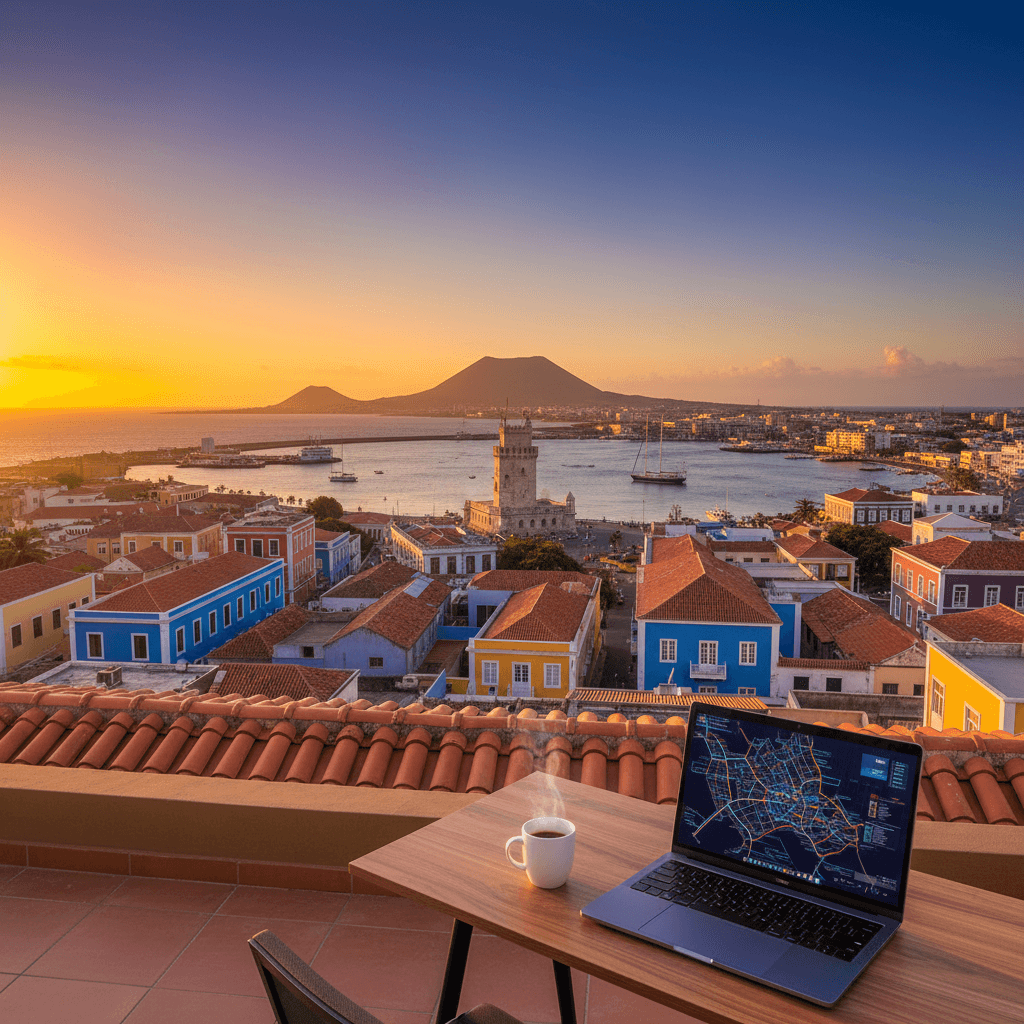
Mindelo
🇨🇻 Cape Verde
Mindelo isn't your typical beach town. While most travelers head to the flat, sandy expanses of Sal, the digital nomad crowd is increasingly gravitating toward the cobblestone streets of São Vicente. This is the island's beating heart, a place where the air smells like salt and woodsmoke, and the sound of a 12 string guitar is never more than a block away. It feels like a crossroads of three continents, blending the pastel colonial charm of Portugal, the rhythmic energy of Brazil, and the raw, volcanic soul of West Africa.
The vibe here is deeply tied to the concept of morabeza, a local term for the unique Cape Verdean hospitality. It's a slow burn city. You won't find a high pressure tech scene here. Instead, you'll find nomads who value community over hustle. Life revolves around the harbor, where the iconic Monte Cara mountain watches over the bay like a sleeping giant. It's the kind of place where you go out for a coffee at Praça Nova and end up staying for a three hour lunch of cachupa stew because the conversation was too good to leave.
The Financial Reality
Living in Mindelo is remarkably affordable compared to European or American hubs. Most nomads find they can live comfortably on a mid range budget of $1,800 to $2,500 per month, though you can certainly scrape by on $1,200 if you stick to local markets and modest rentals. The biggest perk for remote workers is the 0% income tax policy for those on the Remote Working Visa, which keeps more of your paycheck in your pocket.
- Studio/1BR Rent: Central apartments or spots near the beach typically run between $500 and $800, though modern Airbnbs can hit $1,200.
- Daily Meals: Expect to pay $2 to $4 for street food, $10 to $15 for a nice seafood dinner at Casa da Capoeira, and about $25 for high end fusion.
- Coworking: A monthly desk at Coworking Mindelo or Prime Coworking costs between $150 and $250.
- Transport: Taxis are the standard for quick trips at $3 to $5, while local aluguers (shared vans) are a steal at under $1.
Where to Plant Your Flag
Choosing a neighborhood in Mindelo is mostly about how close you want to be to the nightly live music. The Historic Center is the obvious choice for most. It's walkable, vibrant, and puts you steps away from the best cafes and the Pont d’Agua music scene. The trade off is that it can get noisy on weekends when the morna singers are in full swing.
For a slightly more residential feel with better views, expats often look toward Praça do Palmajero. It has a great community vibe and plenty of restaurants, though traffic can be a bit more noticeable. If you're planning a longer stay and want more modern amenities, Palmarejo Baixo is the go to. It's quieter and closer to the water, offering a more relaxed pace that's perfect for families or those who need a bit of distance from the city center's energy.
The Nomad Experience
Working from Mindelo requires a bit of a shift in mindset. The internet averages around 24 Mbps. It's reliable enough for Zoom calls, especially through mobile networks like CV Telecom or Unitel, but it's wise to have a backup hotspot. Most nomads congregate at Coworking Mindelo, which has become the de facto social hub for the community. It's not just about the WiFi; it's where you'll find out about the next hike up Monte Verde or the best weekend ferry to Santo Antão.
You'll likely face a few minor frustrations, like occasional power blips or the lack of upscale shopping malls, but that's part of the trade off for living in a place this authentic. The weather is almost always on your side, with temperatures hovering between 24°C and 30°C year round. Even during the short rainy season from August to October, the showers are usually brief, leaving the air fresh and the volcanic hills surprisingly green. If you're looking for a destination that feels like a genuine discovery rather than a pre packaged nomad colony, Mindelo hits the mark.
The Cost of Living in Mindelo
Mindelo is widely considered the cultural heartbeat of Cabo Verde, but for digital nomads, its biggest draw might be the price tag. You can live a high-quality life here for a fraction of what you would spend in Lisbon or the Canary Islands. While the island of São Vicente feels more authentic and less "resort-heavy" than Sal or Boa Vista, your money also goes significantly further in the local markets and jazz bars of the historic center.
Most nomads find that a monthly budget of $1,800 to $2,500 allows for a very comfortable mid-range lifestyle. This includes a modern apartment, daily meals out, and a dedicated desk at a coworking space. If you are on a tighter budget, it is entirely possible to get by on $1,200 to $1,500 by eating local xachupa and sticking to long-term apartment rentals found through Facebook groups rather than Airbnb.
Housing and Neighborhoods
Rent is your biggest variable. In the Historic Center, you are paying for the atmosphere. You will be steps away from the music venues and cafes, but the buildings are often older. Expats who want modern amenities and sea views usually head to Praça do Palmajero or Palmarejo Baixo. These areas are quieter and feel more residential, though they require a short taxi or bus ride to get into the thick of the nightlife.
- Historic Center: Studio and 1-bedroom apartments typically range from $500 to $900. It is walkable and vibrant, though it can get noisy on weekends.
- Palmarejo Baixo: Modern 1-bedroom apartments typically cost $500 to $800. This area is better for long-stayers who want a beach-adjacent, relaxed vibe.
- Comfort Tier: High-end Airbnbs or serviced apartments with backup generators and reliable water tanks can reach $1,200 per month.
Daily Expenses and Dining
Eating out is a highlight of the Mindelo experience. You can grab a hearty bowl of cachupa, the national corn and bean stew, for about $2 to $4 at a local street stall. If you prefer a sit-down meal with live morna music, expect to pay $10 to $15 for fresh seafood at spots like Casa da Capoeira. A high-end fusion dinner with wine will rarely top $30.
Transportation is cheap and straightforward. The local aluguers (shared minibuses) cost less than $1 per trip. Taxis are the standard for getting around at night, with most short trips within the city costing between $3 and $5. While there is no Uber, apps like inDriver are starting to gain traction, and many nomads simply rent a scooter for about $10 a day to explore the island's hidden coves.
Coworking and Connectivity
Internet reliability has improved drastically, with average speeds around 24 Mbps. However, power outages do happen, so most serious remote workers gravitate toward established hubs. Coworking Mindelo is the local favorite, offering day passes for $10 and monthly memberships between $150 and $250. It provides high-speed fiber, a kitchen, and a built-in community of creators.
For mobile data, pick up a SIM card from CV Telecom or Unitel at the airport. You can get a generous 50GB data package for roughly $20, which serves as an excellent hotspot backup. Many cafes in the center are nomad-friendly, provided you order more than just one espresso.
The Nomad Visa Edge
One of the most significant financial perks of choosing Mindelo is the Remote Working Visa. The application costs about $65 and grants you a 6-month stay (renewable) with a minimum income requirement of roughly $1,500 for individuals. The best part is the tax policy; remote workers under this program currently pay 0% income tax in Cabo Verde, making it one of the most tax-efficient bases in the Atlantic for those earning in USD or Euros.
Best For Nomads and Solo Travelers: The Historic Center
If you want to be in the thick of Mindelo's rhythmic heart, the Historic Center is where you'll likely land. This is the cultural engine of the island, where pastel-colored colonial buildings house live music venues that spill morna and funaná into the streets every evening. Most nomads choose this area because it's entirely walkable; you can grab a $3 morning coffee and be at your desk in minutes without ever needing a taxi.
The social scene here revolves around Coworking Mindelo and Prime Coworking. These spots aren't just for the 24 Mbps fiber; they're the primary hubs for meeting other remote workers. You'll pay around $150 to $250 for a monthly pass. For dinner, you can find a bowl of cachupa for $2 to $4 at a local hole-in-the-wall or head to Pont d'Agua for a more polished evening by the water.
- Rent: Expect to pay $500 to $800 for a mid-range apartment. Older buildings are cheaper but might lack modern amenities.
- Vibe: High energy, artistic, and social. It can be noisy at night, so light sleepers should look for units a few blocks back from the main plazas.
- Connectivity: Excellent. Most cafes have decent WiFi, and you're close to CV Telecom shops to top up your SIM card.
Best For Expats and Long-Term Residents: Praça do Palmajero
Expats who have spent more than a few months in Mindelo often migrate toward Praça do Palmajero. It strikes a balance between the city's energy and a slightly more residential feel. You still get the sea views and a solid selection of restaurants, but the pace is a notch slower than the center. It feels more like a neighborhood and less like a tourist hub.
This area is popular for those who want a modern lifestyle. You'll find newer apartment blocks with better elevators and more reliable backup generators, which come in handy during the occasional power dip. Taxis to the center are easy to find and only cost about $3 to $5, making it easy to commute if you prefer the coworking spaces downtown.
- Rent: Slightly higher than the center, often ranging from $700 to $1,000 for modern one-bedroom units.
- Atmosphere: Lively but professional. It’s a great spot for those who want to integrate into the local professional community.
- Food: Home to several mid-range eateries like Casa da Capoeira, where a fresh seafood dinner runs about $12.
Best For Families and Slow-Paced Living: Palmarejo Baixo
For families or digital nomads who prioritize quiet mornings and beach access over nightlife, Palmarejo Baixo is the top recommendation. It’s a more relaxed district characterized by modern apartment complexes and proximity to the water. While it's further from the historic core, the trade-off is more space and a significantly quieter environment for those focused on deep work.
Parents often prefer this area because it feels secure and has easier access to outdoor spaces. You'll likely want to use aluguers (shared minibuses) for $0.50 a ride or rent a scooter for about $10 a day to get around, as it’s not as walkable for daily errands as the center. Shopping for groceries is easier here if you have a vehicle, as the streets are wider and less congested.
- Rent: $800 to $1,200 for larger, "comfortable tier" apartments with three bedrooms or modern finishes.
- Daily Life: Very laid-back. There are fewer bars, meaning you'll get a better night's sleep, but you'll have to travel for the famous Mindelo nightlife.
- Work: Most residents here rely on high-quality home setups or use Prime Coworking’s partner locations in the vicinity.
A Note on Choosing Your Base
Most travelers recommend starting with a short-term Airbnb in the Historic Center to get your bearings. Once you've spent a week walking the streets and visiting the different coworking hubs, you'll know if you crave the music of the center or the quiet of the outskirts. Regardless of where you stay, the Remote Working Visa makes the transition easy for anyone earning at least $21,000 annually, giving you six months to explore every corner of São Vicente.
Connectivity and the Nomad Scene
Mindelo is carving out a reputation as the remote work capital of Cabo Verde. While the rest of the archipelago is known for all inclusive resorts, São Vicente feels more like a community. You aren't just a tourist here; you're part of a creative hub where the internet is surprisingly punchy for a mid Atlantic island.
Most nomads find the local fiber and 4G networks reliable enough for video calls and heavy uploads. Expect average speeds around 24 Mbps. While the infrastructure is solid, the occasional power flicker can happen. If your work is time sensitive, it's smart to have a backup plan, though most dedicated workspaces have sorted their own contingencies.
Top Coworking Spaces
The coworking scene is concentrated in the historic center and the newer Palmarejo areas. These spots are where the community actually happens, hosting workshops and social mixers that help you bypass the usual solo traveler isolation.
- Nomadico Coworking Mindelo: This is the primary hub. It is centrally located with high speed WiFi, a shared kitchen, and a constant rotation of nomad events. A day pass runs about $10, while monthly memberships range from $150 to $250.
- Prime Coworking: A great choice if you want flexibility. They have locations across the historic center and Palmajero, and they partner directly with the national Remote Work Program.
- GoHub: If you plan on island hopping, GoHub is the way to go. They have a presence on multiple islands and focus heavily on community building through workshops.
The Cafe Culture
If you prefer a more relaxed "laptop and latte" vibe, Mindelo's cafe culture is welcoming. Many spots in the historic center have decent WiFi, though it's polite to check before you settle in for a four hour session. Pont d'Agua is a favorite for its atmosphere, and you'll often find others working there during the day before the live morna music starts in the evening. Just keep in mind that English proficiency isn't universal, so having a few Portuguese or Creole phrases ready will make your life easier.
Mobile Data and SIM Cards
Don't rely solely on cafe WiFi. Getting a local SIM is cheap and fast. You can pick one up at the airport or at shops in town for about $10. The two main providers are CV Telecom and Unitel. Most expats recommend grabbing 10GB to 50GB of data for roughly $10 to $20. The 4G coverage is impressive even when you're out exploring the coastal roads, so you can stay connected while taking a break at Lajinhas Beach.
Digital Nomad Visa Basics
Cabo Verde makes it easy to stay long term with their Remote Working Visa. It costs about $65 and is valid for 6 months. You'll need to show an average income of around $1,500 monthly (or $21,000 annually). The best part is the tax situation; remote workers on this program generally don't pay local income tax, which keeps your cost of living significantly lower than in Europe or North America.
Practical Tech Tips
- Power: Cape Verde uses Type C and F plugs (standard European). Bring a small power bank if you plan to work from the beach.
- Banking: Use Wise or Revolut for better exchange rates, but keep cash on hand. Local vinti4 ATMs are everywhere, but they can occasionally run out of bills on weekends.
- Hardware: There aren't many high end tech repair shops on the island. If your laptop dies, getting parts shipped in can be a headache, so bring a reliable machine and a spare charger.
Personal Safety in Mindelo
Mindelo is widely considered one of the safest hubs in West Africa for remote workers. The island vibe is relaxed, and the local community is generally welcoming toward foreigners. Unlike the larger capital of Praia, Mindelo feels more like a tight knit town where people look out for one another. Most nomads feel perfectly comfortable walking through the historic center or along the waterfront during the day.
That said, you should still use the same common sense you would in any port city. While violent crime is rare, petty theft like pocket picking can happen in crowded areas or near the harbor. Expats generally recommend staying in well lit areas after dark, especially if you are solo. If you are heading home late from a morna set at Pont d'Agua, a $3 to $5 taxi ride is a cheap and easy way to ensure you get back to your apartment without any stress.
There are no specific "no go" zones in Mindelo, but the port area can get a bit rowdy when large ships are in. If you are staying in the Historic Center, keep an eye on your belongings in the busier squares. Most travelers report feeling very secure, often citing the island's "Morabeza" (the local spirit of hospitality) as a reason they feel more at home here than in other nomad hubs.
Healthcare Facilities and Services
Healthcare in Mindelo is functional for routine issues but basic by European or American standards. For minor ailments, rashes, or stomach bugs, the city has a good network of pharmacies that are well stocked and affordable. You can find most over the counter medications without much trouble, and pharmacists often speak enough English or French to help you out.
For more serious medical needs, the primary facility is Hospital Baptista de Sousa in Mindelo handles emergencies and basic procedures, but for anything complex or specialized, most expats and high end travelers opt for medical evacuation to Lisbon or the Canary Islands. This is why having robust travel insurance with evacuation coverage is non negotiable when staying in Cabo Verde.
- Emergency Police: Dial 132
- Ambulance: Dial 121
- Standard Consultation: Expect to pay around $20 to $40 at private clinics.
Health Tips for Nomads
The most common health complaints from nomads in Mindelo usually involve the sun or the water. The tropical heat is deceptive because of the constant trade winds, so dehydration and sunburn happen fast. While the water quality is better than in many neighboring countries, most long termers stick to bottled or filtered water for drinking to avoid any "traveler's tummy" issues.
Mosquito borne illnesses aren't a major concern on São Vicente compared to other tropical destinations, as the island is quite dry. However, if you plan on island hopping to the greener valleys of Santo Antão during the rainy season from August to October, bringing a good repellent is a smart move. No specific vaccinations are mandatory for entry, but staying up to date on your standard shots like Hepatitis A and Typhoid is always recommended by the local expat community.
The Rhythm of the Island
Mindelo is one of those rare places where you can ditch the stress of a commute. The city center is incredibly compact and walkable, meaning your morning walk from a colonial era apartment to Coworking Mindelo usually involves more stops for coffee and greetings than actual transit time. Most nomads find they can handle 90% of their daily life on foot, especially if they stay near the historic center or Praça do Palmajero.
Shared Rides and Local Routes
When you need to venture further out to places like Lajinhas Beach or the outskirts of town, aluguers are the local lifeline. These shared minibuses or open-backed trucks are the most authentic way to get around. They don't run on a strict clock; they leave when they're full. You can expect to pay between $0.50 and $1.00 per ride. It's affordable, social, and gives you a real taste of the island's pace.
- Aluguers: Look for the minibuses at designated stops or flag them down on main roads. Just ask the driver if they're heading toward your destination before hopping in.
- Taxis: Plentiful and easy to spot. A short trip across town usually costs between $3 and $5. If you're coming from Cesária Évora Airport, expect to pay around $10 to $15 for the transfer.
- Ride-hailing: You won't find Uber here. While apps like Bolt or inDriver occasionally pop up in conversation, they aren't reliable yet. Stick to the local taxi stands or save a few drivers' numbers in WhatsApp.
Two Wheels and Open Roads
For total independence, renting a scooter or a bike is a popular move for weekend explorers. Local shops and some hotels rent them out for roughly $5 to $10 a day. It's the best way to scout out hiking spots near Monte Cara without relying on a driver. Just stay mindful of the cobblestone streets in the old town; they can be slippery when dusty or after a rare rain shower.
Island Hopping
Mindelo serves as the gateway to the rest of the archipelago. If you're looking for a change of scenery, the ferry to Santo Antão is a must do. It's a quick trip that opens up world class hiking. For longer distances to Sal or Praia, domestic flights are your only real option. These can be pricey if booked last minute, so nomads usually plan these transitions a few weeks out to keep costs down.
Transport Budget Breakdown
- Budget Tier: $50 per month. This covers daily aluguers and plenty of walking.
- Mid-Range Tier: $100 per month. A mix of shared transport and several private taxis per week.
- Comfortable Tier: $200 per month. Frequent taxi use, airport shuttles, and occasional scooter rentals for weekend trips.
The general rule in Mindelo is to slow down. Whether you're waiting for an aluguer to fill up or walking through the colorful streets of the center, the journey is rarely just about the destination. Most expats recommend embracing the lack of a frantic transit system; it's part of the charm that makes this island a top pick for those trying to escape the grind.
The Language Landscape
In Mindelo, your ears will catch a rhythmic, melodic blend of sounds that reflect the island's unique history. Portuguese is the official language used in government, schools, and formal business. However, the heartbeat of the city is Cabo-Verdean Creole (Kriolu). This is what you'll hear in the markets, at the music bars along the port, and during late night dinners. It's a soulful language rooted in Portuguese but heavily influenced by West African structures.
While English proficiency isn't widespread among the general population, it's growing rapidly within the nomad and expat circles. You'll find that staff at Coworking Mindelo or Prime Coworking speak English quite well. In the more tourist-heavy spots and newer cafes, younger locals often have a functional grasp of English, but don't expect it to be the default once you step away from the digital hubs.
Communication Tips for Nomads
Most nomads find that a little effort goes a long way here. Learning a few phrases in Creole will immediately change the energy of your interactions. It's the difference between being a temporary visitor and a welcomed guest in the community. If you speak some Spanish or Italian, you'll likely find Portuguese relatively easy to read, though the spoken accent in Mindelo can be a bit thick at first.
- Greeting: Use "Bom dia" for good morning or a casual "Oba" to say hello in Creole.
- Checking in: Ask "Kebu?" (informal "how are you?") or "Bu sta?" to see how someone is doing.
- Gratitude: A simple "Obrigado" (masculine) or "Obrigada" (feminine) works perfectly, though locals often use "Valeu" in casual settings.
Expats recommend keeping Google Translate downloaded for offline use, especially the Portuguese pack. It’s incredibly helpful when you're trying to decipher menus at local spots like Casa da Capoeira or negotiating a ride with an aluguer driver who might not speak a word of English.
Staying Connected
Communication isn't just about what you say, it's about your data. Reliable internet is the backbone of the nomad experience in Mindelo, and surprisingly, the mobile networks are often more dependable than the fixed line WiFi in older apartments. Most remote workers pick up a local SIM card immediately upon arrival at the airport or at a shop in the historic center.
- Main Providers: CV Telecom and Unitel are the two primary choices. Coverage is generally excellent across Mindelo.
- Costs: Expect to pay around $10 to $20 for a data package ranging from 10GB to 50GB.
- Speeds: You'll typically see 4G or 5G speeds that are fast enough for video calls and heavy uploads.
If you're planning to work from your rental in the historic center, travelers often suggest asking the host for a speed test before booking. While the average speed in the city is about 24 Mbps, older buildings with thick stone walls can sometimes have spotty signals. Having a local SIM as a backup hotspot is a standard move for anyone with tight deadlines.
Social Etiquette
Communication in Mindelo is as much about body language and presence as it is about words. The pace of life is intentionally slow. When you enter a shop or a cafe, it's polite to greet people generally before diving into your order. Handshakes are the standard greeting for new acquaintances. If you're invited to a local home or a community event at GoHub, remember that the culture is deeply rooted in respect and hospitality. Tipping isn't mandatory but leaving 5% to 10% at restaurants is a common way for expats to show appreciation for good service.
The Sweet Spot: December to May
If you want the quintessential Mindelo experience, aim for the window between December and May. This is when the trade winds kick in, keeping the tropical heat manageable and the skies a clear, reliable blue. Temperatures usually hover between 25°C and 27°C (77°F to 81°F), which is perfect for working from the terrace at Coworking Mindelo or taking a midday dip at Lajinhas Beach.
The wind is a major factor here. It’s a dream for kitesurfers and windsurfers, but it also means you won't feel that oppressive humidity found in other tropical hubs. Evenings during these months can feel surprisingly brisk, so most nomads recommend packing a light sweater for those late night morna sessions in the historic center.
The Low Season: Humidity and Rain
The vibe shifts from August through October. This is technically the rainy season, though in São Vicente, "rainy" is a relative term. You might see short, intense tropical bursts rather than days of grey drizzle. However, the humidity spikes significantly during this time, and temperatures often climb toward 30°C (86°F).
Expats generally find this the least comfortable time for productivity unless they have a solid AC setup. On the plus side, the island turns a rare, vivid green, and you'll find much better deals on long term apartment rentals in neighborhoods like Palmarejo Baixo. If you can handle the sweat, it’s the quietest time to experience the city without the usual tourist crowds.
Monthly Climate Breakdown
- January to May: Peak season. Dry, sunny, and windy. Highs of 25-27°C. Ideal for hiking Monte Cara.
- June and July: The transition months. It gets warmer, reaching 29°C, but the heavy rains haven't arrived yet.
- August to October: The hot zone. Highs of 30°C with the highest rainfall and humidity levels.
- November and December: The cooling period. The dust from the Sahara (the Harmattan) can occasionally haze the sky, but the heat drops back to a comfortable 26°C.
Timing Your Trip for Culture
Beyond the thermometer, the best time to visit is often dictated by the calendar. If you can swing it, be in town for February. The Mindelo Carnival is legendary, often compared to a mini Rio de Janeiro. The city explodes with parades, elaborate costumes, and non stop music. Just be aware that accommodation prices in the historic center can double, and you'll need to book your Airbnb months in advance.
For music lovers, the Baia das Gatas festival in August is a major draw, featuring massive beach concerts. While it falls during the humid season, the energy in the city is unmatched. If you prefer a quieter pace for deep work, avoid these festival windows and stick to the shoulder months of November or May, when the weather is stable and the city returns to its usual, relaxed rhythm.
Money and Costs
Mindelo is surprisingly affordable for the level of lifestyle it provides. You can live comfortably here for around $1,800 to $2,500 per month, though budget-conscious nomads can easily scrape by on $1,200 if they stick to local apartments and street food. Cape Verde is also a tax-free haven for remote workers, which helps the bottom line.
- Housing: A modern studio or 1BR in the center usually runs between $500 and $800. If you want something upscale with sea views in Palmarejo Baixo, expect to pay $800 to $1,200.
- Food: A bowl of cachupa stew at a local spot costs about $2 to $4. A mid-range dinner at Casa da Capoeira will be around $15, while high-end fusion meals top out at $30.
- Transport: Shared minibuses (aluguers) are just $0.50 per ride. Taxis across town rarely exceed $5.
Where to Set Up Base
Most nomads gravitate toward the Historic Center. It is the heart of the music scene and puts you within walking distance of the best cafes and coworking spots. It can get noisy at night when the live morna bands start up, but the convenience is hard to beat.
For a quieter, more residential feel, look at Palmarejo Baixo. It is further from the late-night action but offers modern apartment blocks and easy beach access. Praça do Palmajero is another solid choice for expats who want a mix of sea views and a local community vibe without the intense tourist foot traffic of the center.
Internet and Coworking
The internet in Mindelo is better than you might expect for a mid-Atlantic island. Speeds average around 24 Mbps. While power outages happen occasionally, most dedicated workspaces have backups. You should grab a local SIM card from CV Telecom or Unitel as soon as you land; $20 will get you up to 50GB of data as a safety net.
- Coworking Mindelo: The top pick for most. It has a kitchen, great WiFi, and a day pass costs about $10.
- Prime Coworking: Great if you want flexibility, as they have multiple locations across the city.
- GoHub: Perfect for those who plan on island-hopping, as they have a presence across the archipelago.
Getting Around
Mindelo is a walkable city, especially if you stay central. For longer trips, skip the search for Uber or Lyft; they don't exist here. Use Bolt or inDriver if you want an app, but most people just hail a taxi or hop in an aluguer. If you want more freedom, you can rent a mistake for about $10 a day to explore the coastline.
Health and Safety
Mindelo is generally very safe. Violent crime is rare, though you should keep an eye on your belongings in the port area and stick to lit streets after dark. Healthcare is basic. Hospital Dr. Agostinho Neto handles emergencies, but for anything serious, nomads usually fly to Europe. Make sure your insurance covers medical evacuation. For local needs, pharmacies are well-stocked and very affordable.
The Remote Work Visa
The Cabo Verde Remote Working Program is one of the easiest to get. It costs about $65, lasts for 6 months, and requires a minimum monthly income of around $1,500 or annual $18,000-$21,000; check official site. You can apply online and usually get an answer quickly, making it a great "plan B" for those tired of the 90-day Schengen shuffle.
Weather and Timing
The weather is tropical and dry for most of the year. December to May is the sweet spot, with temperatures hovering around 26°C and plenty of sun. The rainy season hits between August and October. It doesn't rain constantly, but the humidity spikes and the heat can feel a bit more oppressive.
Need visa and immigration info for Cape Verde?
🇨🇻 View Cape Verde Country GuideHidden Gem
Worth the effort