Mendoza
🇦🇷 Argentina
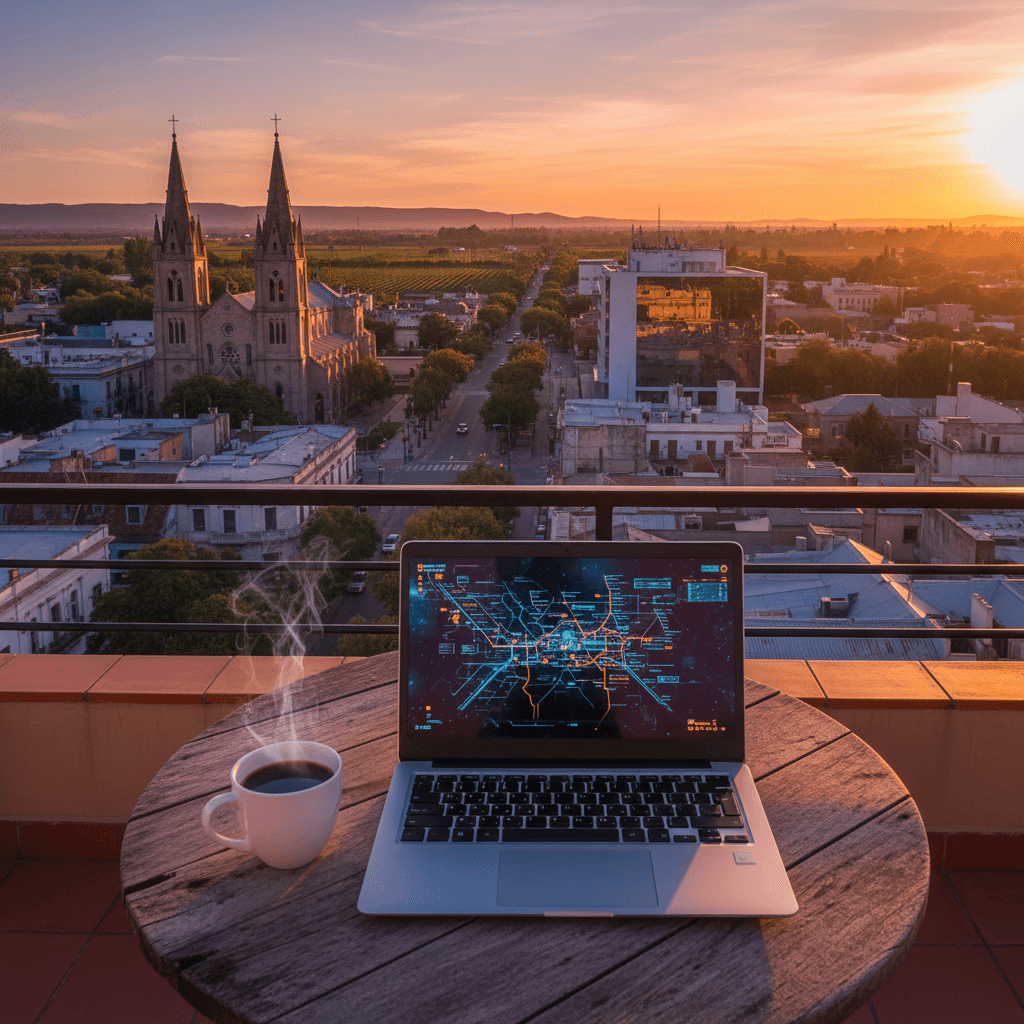
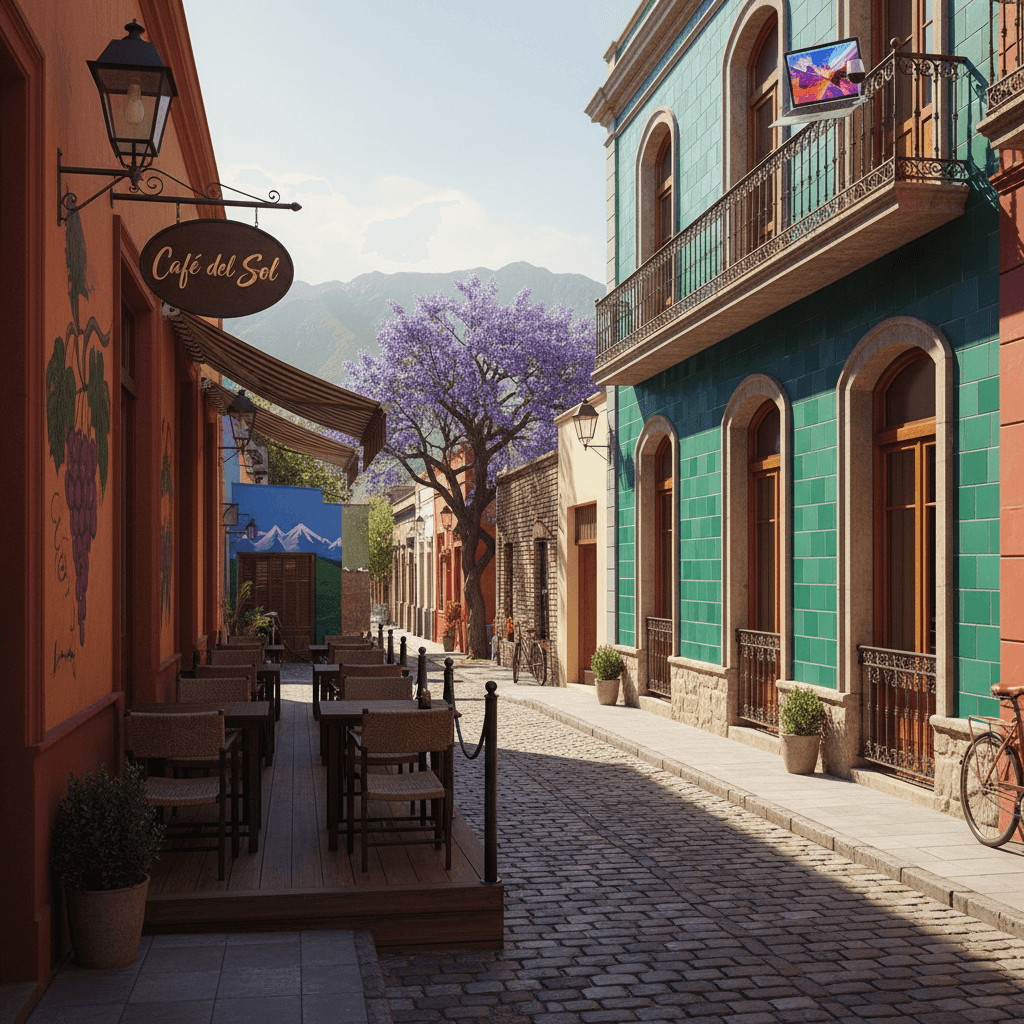
Mendoza doesn't demand your attention with the frantic energy of Buenos Aires or the grit of other South American hubs. Instead, it invites you to slow down to the rhythm of a long lunch. It’s a city of 300 sunny days a year, where the air is dry, the streets are wide, and the massive Andean peaks provide a constant, jagged reminder of where you are. For nomads, it’s the ultimate "Goldilocks" destination: small enough to feel like a local within a week, but sophisticated enough to offer world-class dining and reliable workspaces.
The vibe here is defined by the siesta and the acequias. You’ll notice deep concrete irrigation ditches lining every street, feeding the lush canopy of trees that keeps the city cool. Between 1:00 PM and 5:00 PM, the city takes a collective breath. Shops close, the streets quiet down, and locals head home. It’s a perfect window to knock out deep work at a spot like WHALE Coworking before the city wakes back up for a late, wine-fueled dinner.
The Nomad Experience
Living here feels like being part of an agricultural success story that decided to get fancy. You’ll spend your weekdays biking through the grid-like Centro and your weekends lost in the vineyards of Luján de Cuyo or Maipú. Most nomads find the community smaller and more intimate than the coast. You won’t find thousands of remote workers, but the ones you do meet are usually here for the same things: high-altitude Malbec, mountain trekking, and a cost of living that remains incredibly friendly to USD and Euro earners.
- The Draw: A high quality of life for under $2,000 USD a month, incredible proximity to the Andes, and a culture that prioritizes leisure.
- The Trade-off: Internet speeds aren't always top-tier compared to global hubs, and the "go-with-the-flow" attitude can be frustrating if you’re used to lightning-fast service.
- The Connection: People meet over asados and wine tastings rather than tech networking events. It's a social scene built on shared experiences rather than professional climbing.
Monthly Budget Breakdown
While inflation in Argentina is a moving target, your foreign currency goes a long way. Most travelers report that a budget of $1,200 to $1,800 USD provides a very comfortable, mid-range lifestyle including a nice apartment and frequent dining out.
- Housing: A modern one-bedroom in the city center or near the park typically runs between $300 and $500 USD. Upscale spots with Andean views can hit $600 USD or more.
- Dining: You can grab a quick street empanada for about $2 USD, but a full mid-range dinner with wine usually lands around $15 USD. A high-end, multi-course pairing at a vineyard will start around $30 USD.
- Workspace: A monthly desk at a dedicated coworking space like Campus Olegario or Leónidas will cost you roughly $80 to $150 USD depending on perks and exchange.
- Transport: Local buses are a steal at roughly $0.50 USD per ride. For convenience, Uber is active and a cross-town trip rarely exceeds $5 USD.
The Neighborhood Pulse
Where you park your laptop matters. The city is organized around Plaza Independencia, and your proximity to green space will define your daily mood.
Centro is the heart of the action. It’s walkable, packed with cafes like Mokka and Kato, and keeps you close to the coworking hubs. It’s busier, but you’ll never need a car. If you prefer a quieter, more residential feel, the area around Parque San Martín is the expat favorite. It’s one of the most impressive urban parks in South America, offering a massive escape for runners and sunset watchers.
For those who want to wake up surrounded by vines, San Rafael or the outskirts offer a more rural, retreat-style existence. It’s peaceful, but you’ll sacrifice the walking-distance convenience of the city’s coffee shops and bars. Most nomads suggest starting in the Centro to get your bearings before committing to the quieter life in the valley.
The Price of Paradise
Living in Mendoza is a masterclass in stretching your dollar without sacrificing the finer things in life. While Argentina's economy is famous for its volatility, the city remains remarkably affordable for those earning in foreign currency. Most nomads find they can live a very comfortable, wine-soaked lifestyle for anywhere between $1,200 and $2,000 USD per month.
The local currency, the Argentine Peso (ARS), fluctuates often. Locals and savvy expats usually track the unofficial "Blue Dollar" rate to get the most value. For your planning, check current blue dollar rate around 1,500 ARS to $1 USD, but always check current market before you land.
Housing and Rent
Your biggest expense will be your monthly stay, but even at the top end, it's a bargain compared to North America or Europe. Rent prices vary based on how close you are to the leafy streets of the city center or the sprawling gates of Parque San Martin.
- Budget Tier: Expect to pay around $300 to $450 USD (approx. 420,000 to 630,000 ARS) for a simple studio in the city center or a modest apartment on the outskirts.
- Mid-Range: A well-located one-bedroom in the Centro or near the park usually runs about $400 USD (400,000 ARS). These often come fully furnished with decent WiFi.
- Comfortable Tier: If you want an upscale apartment with mountain views or a balcony overlooking the plazas, budget $600 USD (600,000 ARS) or more.
Eating and Drinking
This is where Mendoza truly shines. You can eat like royalty on a modest budget. A quick empanada or street food snack will only set you back about $2 USD. If you are heading out for a casual dinner at a mid-range spot, expect to pay between $10 and $15 USD, including a glass of local Malbec.
For the full Mendoza experience, a high-end multi-course wine pairing at a vineyard usually starts around $30 USD. Considering the quality of the world-class viticulture here, it is easily one of the best value-for-money dining experiences on the planet.
Transport and Connectivity
Getting around is cheap and easy. The city is highly walkable, but for longer hauls, public buses are the way to go at just $0.50 USD per ride. If you prefer door-to-door service, Uber and local ride-hailing apps are active, with most cross-town trips costing around $5 USD. For those weekend trips into the Andes, a car rental will run you about $20 USD per day.
Staying connected is equally affordable. If you are working remotely, a desk at a popular spot like WHALE Coworking or Campus Olegario is a smart investment.
- Coworking Day Pass: $5 to $10 USD (5,000 to 10,000 ARS).
- Monthly Coworking Membership: $50 to $100 USD depending on the level of access and amenities.
- Mobile Data: A local SIM or an eSIM from providers like Holafly is inexpensive, though most nomads rely on the strong WiFi found in cafes like Mokka or Watson tienda de café.
The Bottom Line
Mendoza offers a high-quality lifestyle that feels much more expensive than the receipts suggest. Expats recommend keeping a mix of cash and digital payment methods, as some smaller shops still prefer pesos. If you budget $1,500 USD a month, you'll likely find yourself living quite well, with plenty left over for weekend mountain treks and vineyard tours.
For Solo Nomads: Centro (City Center)
If you want to be in the thick of it, Centro is your best bet. This area is built on a grid around Plaza Independencia, making it nearly impossible to get lost. Most nomads gravitate here because the walkability is unbeatable; you can hop between WHALE Coworking and León Café Bar without ever needing a taxi.
The vibe is energetic but distinctly Mendocino, meaning everything still slows down for a siesta in the afternoon. You will find the highest concentration of fellow remote workers in the cafes along Avenida Arístides Villanueva, which is also the city's nightlife pulse. It is the most convenient spot for a short to medium stay, though the constant activity means it is not the quietest corner of town.
- Monthly Rent: $200 to $300 USD for a studio or one bedroom.
- Atmosphere: Social, fast paced for Mendoza, and very walkable.
- Best for: Networking, quick access to coworking, and solo travelers who want to meet people.
For Long Term Expats: Quinta Sección
Bordering the massive Parque General San Martín, the Quinta Sección is where many expats eventually settle down. It offers a sophisticated balance of residential quiet and proximity to the high end dining of Avenida Belgrano. You get the benefit of being close to the city center while having the park as your backyard for morning runs or sunset picnics.
Living here feels more permanent and less transient than Centro. The streets are lined with the city's signature irrigation canals and lush trees, providing much needed shade during the hot summer months. It is slightly more expensive, but the quality of life and the peace and quiet are usually worth the premium for those planning to stay six months or longer.
- Monthly Rent: $400 to $600 USD for a comfortable apartment with modern amenities.
- Atmosphere: Leafy, upscale, and serene.
- Best for: Remote workers who prioritize fitness and a quiet home office environment.
For Families: Chacras de Coria
Located about 20 minutes south of the city center, Chacras de Coria feels like a rustic village tucked inside a vineyard. It is a favorite for families because of the larger houses, private gardens, and slower pace. The area has its own central plaza, great schools, and a tight knit community feel that's harder to find in the city apartment blocks.
You will likely need to rely on apps like Uber or a rental car to get into the city, but many families find they rarely want to leave the neighborhood. It is home to some of the region's best boutique wineries and artisanal markets, making it a dream for those who want the authentic wine country lifestyle without being totally isolated.
- Monthly Rent: $600 to $900 USD for a multi bedroom house or quinta.
- Atmosphere: Rustic, family oriented, and heavily influenced by wine culture.
- Best for: Families and anyone looking for a backyard and more space.
For Peace Seekers: San Rafael
If the city feels too crowded, San Rafael is an emerging alternative located further south in the province. It is much smaller than the capital, but it is gaining traction with nomads who want lower costs and immediate access to the Atuel Canyon. It is a place where you can find a house right next to a vineyard for a fraction of what you would pay in Buenos Aires or even central Mendoza.
The community is smaller, so you might find yourself relying more on digital groups than physical coworking hubs. However, the trade off is a level of tranquility that is hard to match. It is perfect for a deep work retreat where your only distractions are the mountains and the local Malbec.
- Monthly Rent: $150 to $250 USD for basic but charming local housing.
- Atmosphere: Quiet, rural, and incredibly affordable.
- Best for: Budget conscious travelers and those looking to escape the nomad bubble.
Connectivity & Reliability
While Mendoza isn't a high speed tech hub like Buenos Aires, it offers a solid foundation for most remote roles. You'll find speeds that comfortably handle Zoom calls and streaming, though it's wise to have a backup plan for the occasional neighborhood flicker. Most nomads find that fiber optic is becoming the standard in modern apartment rentals and coworking spaces.
For mobile data, don't rely solely on public Wi-Fi. It's best to grab an eSIM via Holafly or Airalo before you land to stay connected on WhatsApp, which is how everything from dinner reservations to wine tours is coordinated here. If you prefer a local physical SIM, head to a Claro or Personal store in the city center with your passport. Expect to pay around $10 to $15 for a generous monthly data package.
Top Coworking Spaces
The community here is smaller and more intimate than in the capital, which makes it easier to actually meet people. Most spaces offer a mix of daily passes and monthly memberships.
- WHALE Coworking: This is the undisputed favorite for the nomad crowd. It has a modern aesthetic, reliable backup power, and a social atmosphere that makes networking feel natural. Day passes run about $5 to $10, while a monthly spot costs roughly $50 to $100 depending on the current exchange rate.
- Campus Olegario: A great choice if you want to rub shoulders with local entrepreneurs and startups. It feels more like a tech incubator and hosts frequent networking events.
- Leónidas Cowork: A quieter, more professional environment located conveniently near the main plazas. It's ideal if you have a week of heavy deep work and need zero distractions.
The Cafe Office Culture
Mendocinos love their coffee, and the city is packed with spots where nobody will glare at you for opening a laptop. The "merienda" (afternoon snack) culture means cafes stay lively well into the evening.
- León Café Bar: A staple for those who want a bright, airy space with plenty of power outlets. The Wi-Fi is consistently strong enough for most tasks.
- Mokka Coffee Store: Located near the park, it's a perfect spot to work for a few hours before heading out for a walk. Their espresso is some of the best in the city.
- Watson Tienda de Café: This spot has a more "neighborhood" feel. It's often filled with students and locals, making it a great place to soak in the local vibe while clearing your inbox.
- Kato Coffee & Bar: A versatile choice that transitions from a focused workspace in the morning to a relaxed wine bar in the evening.
Practical Tips for Remote Workers
Keep in mind the local schedule. Mendoza still honors the siesta; many smaller shops and even some cafes might close between 1:00 PM and 5:00 PM. Coworking spaces usually stay open straight through, but if you're planning to work from a local cafe, check their mid-day hours first.
If you're heading out to the vineyards in Luján de Cuyo or Valle de Uco for the weekend, don't expect the same internet quality. Rural connectivity can be spotty, so treat your vineyard stays as a time to unplug rather than a time for high stakes presentations.
Safety in the City of Sun and Wine
Mendoza feels significantly more relaxed than the frantic energy of Buenos Aires. Most nomads find it to be a safe, welcoming environment where the biggest worry is usually a late-night wine headache rather than street crime. The city layout is a predictable grid, making it hard to get truly lost, and the constant presence of people in the central plazas creates a natural sense of security.
While the vibe is laid-back, you shouldn't let your guard completely down. Petty theft like phone snatching or bag dipping can happen, particularly in crowded areas or if you leave your tech unattended at a sidewalk cafe. Locals recommend keeping your phone in your pocket while walking and using your bag as a footrest under the table when dining outdoors. Stick to the well-lit areas around Plaza Independencia and the surrounding four satellite plazas after dark. Travelers often say that staying within the Centro or near Parque San Martin is the safest bet for nighttime walks.
- Emergency Contacts: Dial 911 for general emergencies, 107 for an ambulance, or 100 for the police.
- Solo Travel: It is generally safe for solo travelers. Walking home from the bars on Avenida Arístides Villanueva is common, but taking an Uber or Cabify late at night is a cheap way to add an extra layer of precaution.
- Common Scams: Be wary of the "mustard scam" where someone spills something on you and offers to help clean it up while an accomplice grabs your wallet. It's rare in Mendoza but worth knowing.
Healthcare Infrastructure
Argentina is known for having some of the best medical training in Latin America, and Mendoza is no exception. You'll find high-quality private clinics and pharmacies on almost every other block in the city center. Public healthcare is available and free for emergencies, even for foreigners, but the wait times can be grueling. Most expats and digital nomads opt for private care, which is incredibly affordable if you are earning in USD or Euros.
Pharmacies (Farmacias) are a great first stop for minor ailments. Many pharmacists can provide basic medical advice and sell medications over the counter that might require a prescription elsewhere. Look for the Farmacia del Puente or Farmacity locations for 24 hour service.
Recommended Facilities and Insurance
For anything more serious than a cold, head to a private hospital. The staff in these facilities are more likely to speak some English, though having a translation app ready is always a smart move. Prices for a private consultation typically range from $20 to $40 USD without insurance.
- Clinica de Cuyo: Centrally located and well-regarded for emergency services and diagnostic testing.
- Health Insurance: While you can pay out of pocket, most nomads use SafetyWing or World Nomads. If you're staying long-term, look into local providers like OSDE or Swiss Medical, which offer tiered plans that cover everything from dental to surgery.
One specific health tip for Mendoza: the altitude and dry climate. The city sits at about 2,500 feet, but if you head into the Andes for a vineyard tour or a hike, you'll climb much higher very quickly. Drink twice as much water as you think you need. The "Zonda" wind, a hot, dry wind from the mountains, can also cause headaches and respiratory irritation for some people when it blows through the valley.
Navigating the Grid
Mendoza is famously easy to navigate thanks to its smart, Spanish colonial grid system. The city center, or Centro, is incredibly walkable. You can cross the main hub of Plaza Independencia and reach the surrounding four smaller plazas on foot without breaking a sweat. Most nomads find they rarely need a motorized vehicle for daily errands, as the wide, tree lined sidewalks are designed for strolling.
For longer distances within the city, the public bus system is the most budget friendly option. Rides typically cost around ARS 500, which is roughly $0.50 USD. To use the buses, you will need a SUBE card, the same rechargeable smart card used in Buenos Aires. You can pick these up at local kiosks throughout the city. While the buses are reliable, they can get crowded during the afternoon siesta hours when everyone is heading home or back to work.
Ride Hailing and Taxis
When you are heading out for dinner or carrying groceries, ride hailing apps are the way to go. Uber is active in Mendoza and is generally preferred by expats for the transparent pricing and safety features. A typical trip across town will set you back about ARS 5,000, or $5 USD. It is a reliable way to get around after dark when you might not want to wait at a bus stop.
Traditional taxis are also plentiful. You can hail them on the street or find them at designated stands near major hotels and plazas. If you are taking a taxi from the airport (MDZ) to the city center, expect to pay around ARS 20,000, which is approximately $20 USD. Always ensure the meter is running or agree on the price before the driver pulls away.
Exploring the Wine Regions
Getting to the vineyards in Maipú, Luján de Cuyo, or the Uco Valley requires a bit more planning. For the closer regions like Maipú, many travelers take the expanding Metrotranvía light rail system. Once you arrive at the end of the line, you can rent a bicycle for the day to hop between tasting rooms. This is a classic Mendoza experience, though you should stay mindful of the sun and your wine intake.
For the more distant Uco Valley, which is about 90 minutes away, renting a car is the best move for flexibility. Using a service like Discover Cars is common for nomads who want to explore the Andean foothills. Daily rentals usually start around ARS 20,000 or $20 USD. If you prefer not to drive, hiring a private driver (remis) for the day is a popular luxury. It allows you to enjoy the Malbec without worrying about the drive back, though it will be your most expensive transport cost.
Cycling and Walking Tours
Mendoza is a bike friendly city, especially around Parque San Martin. The park is massive, and renting a bike or a scooter is the most efficient way to see the rose gardens and the lake. There are several rental shops near the park entrance that offer hourly or daily rates.
If you are new in town, look for the free walking tours organized by Vivi MZA. These tours depart regularly from the city center and are a great way to get your bearings while meeting other travelers. They cover the history of the irrigation canals that keep the city green and help you identify the best local spots that might not show up on a standard map.
The Mendocino Accent and Local Lingo
In Mendoza, you will encounter the distinct Rioplatense Spanish common across Argentina, but with a softer, more provincial melody compared to the sharp, Italian-influenced cadence of Buenos Aires. Locals, known as Mendocinos, are famous for their hospitality and a slightly slower pace of speech that aligns with the city's siesta culture. You will quickly notice the use of vos instead of tú and the characteristic sh sound for double Ls and Ys.
To fit in at the wine bars along Avenida Arístides Villanueva, learn a few localisms. While che is the universal Argentinian "hey," Mendocinos often use toponear when talking about bumping into someone. If you hear someone call a friend boludo, it is usually a term of endearment, though you should save that for people you know well. Most nomads find that even a basic "hola" and "gracias" goes a long way, as locals appreciate the effort to bridge the gap.
English Proficiency and Work Communication
English is widely spoken in the high-end tourism sector, particularly in the vineyards of Luján de Cuyo and the Uco Valley. In the city center, staff at popular nomad hubs like WHALE Coworking or Mokka Coffee Store usually speak enough English to help you get settled. However, once you step away from the tourist track and into local grocery stores or smaller cafes, English proficiency drops significantly.
For professional work, you will have no trouble in coworking spaces where the community is international. Outside of those bubbles, expect to use a translation app for bureaucratic tasks or deep conversations. Expats recommend downloading the Spanish offline dictionary on Google Translate, as cell service can be spotty when you are trekking near the Andes or visiting remote bodegas.
Digital Communication and Essential Apps
WhatsApp is the lifeblood of communication in Mendoza. You will use it for everything: booking a table at Azafrán, scheduling a tour, or even chatting with your landlord. Most business is done via voice notes rather than long emails. If you need to make a doctor's appointment or ask about a gym membership, look for the WhatsApp icon on their social media pages first.
- WhatsApp: The primary tool for social and business life.
- Uber and Cabify: Reliable for getting around without needing to explain directions in Spanish.
- Instagram: Most restaurants and bars keep their menus and hours updated here rather than on a traditional website.
- Google Translate: Use the camera feature for menus and the voice feature for quick interactions.
Cultural Nuances in Conversation
Mendocinos value personal connection. Small talk is not just a formality; it is a way to build trust. When you walk into a cafe like Kato Coffee & Bar, a quick greeting to the barista is expected. Conversations often revolve around food, family, and of course, wine. Avoid diving straight into business or "shop talk" without a few minutes of social pleasantries first.
The siesta is a real factor here, typically occurring between 1:00 PM and 5:00 PM. During these hours, many shops close and the streets go quiet. Do not expect quick replies to messages or emails during this window. It is the perfect time to practice the local habit of slowing down and enjoying a long lunch before the city wakes back up for the evening.
Language Learning Resources
If you are staying for a few months, enrolling in a local class is a great way to meet people. Several language schools in the Centro area offer intensive courses. For a more casual approach, look for "Mate Club" events or language exchanges often advertised on nomad Facebook groups or at Campus Olegario. These meetups are usually free or the price of a coffee, and they provide a low-pressure environment to practice your Spanish while helping locals with their English.
Sun, Soil, and the Seasons
Mendoza is famous for its 300 sunny days a year, making it a reliable bet for nomads who hate having their weekend plans ruined by rain. The climate is arid and desert like, so you can expect low humidity and crisp mountain air. While the sun is a constant, the temperature swings wildly between the seasons, meaning your experience will change significantly depending on when you drop your bags.
Summer (December to February)
Summer is hot, dry, and intense. Temperatures often climb above 30°C (86°F), and the sun at this altitude doesn't play around. Most locals embrace the siesta lifestyle during these months, disappearing from the streets between 1:00 PM and 5:00 PM to escape the heat.
- The Vibe: High energy, outdoor dining, and late night drinks.
- Pros: Perfect for cooling off in the thermal baths at Cacheuta or heading into the higher Andes where the air is thinner and cooler.
- Cons: The heat can be draining if your apartment doesn't have reliable AC. This is also the season for occasional, violent thunderstorms that roll off the mountains.
Autumn (March to May): The Sweet Spot
Ask any expat or long term traveler, and they'll tell you autumn is the absolute best time to be here. The city's famous tree lined boulevards turn shades of gold and ochre, and the weather settles into a comfortable 15°C to 25°C (59°F to 77°F) range.
This is also harvest season. The Fiesta Nacional de la Vendimia in early March is a massive deal, bringing parades, performances, and plenty of wine tasting to the streets. If you want to see the vineyards at their most beautiful, aim for April. Just keep in mind that prices for short term rentals usually spike during the festival weeks.
Winter (June to August)
Winter in Mendoza is quiet and cold, but rarely miserable. Daytime temperatures usually hover around 10°C to 15°C (50°F to 59°F), though it can drop below freezing at night. It almost never snows in the city center, but the Andes will be capped in white, providing a stunning backdrop for your morning commute to WHALE Coworking.
- The Vibe: Cozy, slow, and focused on red wine and hearty stews.
- Pros: Los Penitentes offers adventure activities like hiking and mountain biking as a day trip, and accommodation prices in the city are often at their lowest.
- Cons: Some vineyard tours might feel a bit sparse since the vines are dormant, and older apartments in the Centro can be drafty.
Spring (September to November)
Spring is the runner up for the best time to visit. The jasmine starts blooming, the outdoor cafes on Avenida Arístides Villanueva fill up again, and the mercury sits happily between 18°C and 26°C (64°F to 79°F). It is a fantastic window for hikers who want to tackle the trails around Aconcagua Provincial Park before the summer heat becomes too punishing. Most nomads find the shoulder seasons of October and November offer the best balance of affordable rent and perfect "work from the patio" weather.
The Zonda Factor
One local quirk you need to know about is the Viento Zonda. This is a hot, dry wind that blows down from the Andes. It can happen at any time but is most common between May and November. When the Zonda hits, the temperature can jump 10 degrees in an hour, the sky turns a dusty orange, and the air gets incredibly dry. Locals often complain of headaches or lethargy during a Zonda, and schools sometimes close. It usually only lasts a day, but it's a reminder that the mountains dictate the rules here.
Connectivity and Tech Setup
Internet in Mendoza is generally reliable enough for video calls and streaming, though it doesn't always hit the blazing speeds you might find in Buenos Aires. Most nomads find that WHALE Coworking is the gold standard for a stable environment and a professional community. If you prefer a more local vibe, Campus Olegario and Leónidas Cowork are excellent alternatives with solid desk setups.
For those who like to work from cafes, the city center is packed with options. León Café Bar and Mokka Coffee Store are popular for their reliable WiFi and strong espresso. Watson tienda de café is another local favorite where you can grab a table for a few hours without being rushed.
Staying connected on the go is easy with an eSIM from providers like Holafly or Airalo. If you want a local physical SIM, you can pick one up at any Claro or Personal store in the city center. Just remember that WhatsApp is the primary way everyone communicates here, from booking wine tours to messaging your landlord.
Money and Budgeting
Argentina's economy is famously volatile, so it's smart to keep an eye on the current exchange rates. Even with inflation, Mendoza remains very affordable for those earning in USD or Euros. Most nomads live comfortably on less than $2,000 USD per month, though you can get by on much less if you're budget-conscious.
- Budget Tier: Expect to spend around $800 to $1,200 monthly. This covers a studio apartment for about $200 to $300 and plenty of street food like empanadas for $2 each.
- Mid-Range: A budget of $1,200 to $2,000 allows for a nicer one-bedroom near the park for $400 and regular dinners at mid-range restaurants for about $15.
- Comfortable: At $2,000+, you can snag an upscale apartment with mountain views for $600 and indulge in high-end wine pairings that cost $30 or more.
Coworking costs are also reasonable, with day passes ranging from $5 to $10 and monthly memberships sitting between $50 and $100 depending on the amenities you need.
Safety and Health
Mendoza is widely considered one of the safer cities in Argentina. You'll feel comfortable walking through the main plazas like Plaza Independencia during the day. Like any city, it's best to stay aware of your surroundings at night and avoid poorly lit or isolated streets. Stick to the well-trafficked areas in Centro and near Parque San Martin.
Healthcare is high quality, with several reputable hospitals and 24-hour pharmacies available. If you have an emergency, dial 107 for an ambulance or 100 for the police. Most expats recommend having travel insurance that covers private clinics to ensure the fastest service.
Getting Around
The city center is built on a very walkable grid, so your own two feet are often the best way to get around. For longer distances, the public bus system is incredibly cheap at roughly $0.50 per ride. You can also use Uber, which is widely available and usually costs around $5 for a cross-town trip.
If you're heading to the airport (MDZ), a taxi will set you back about $20. For those planning to explore the deeper wine regions or the foothills of the Andes, renting a car through Discover Cars for about $20 a day is the most flexible option. To get a feel for the layout when you first arrive, look for the Vivi MZA free walking tours that depart from the central plazas.
Local Etiquette
Mendoza runs on a slower clock. The siesta is a real thing here; many shops close in the afternoon between 1:00 PM and 5:00 PM, so plan your errands for the morning. Dinner starts late, rarely before 9:00 PM. When meeting locals, a single kiss on the right cheek is the standard greeting for everyone, regardless of gender. Being a few minutes late to social gatherings is expected, so don't worry if you aren't exactly on time.
Need visa and immigration info for Argentina?
🇦🇷 View Argentina Country GuideEasy Landing
Settle in, no stress
Monthly Budget Estimates
More cities in Argentina
San Martín de los Andes
🇦🇷 Argentina
Villa La Angostura
🇦🇷 Argentina
La Plata
🇦🇷 Argentina