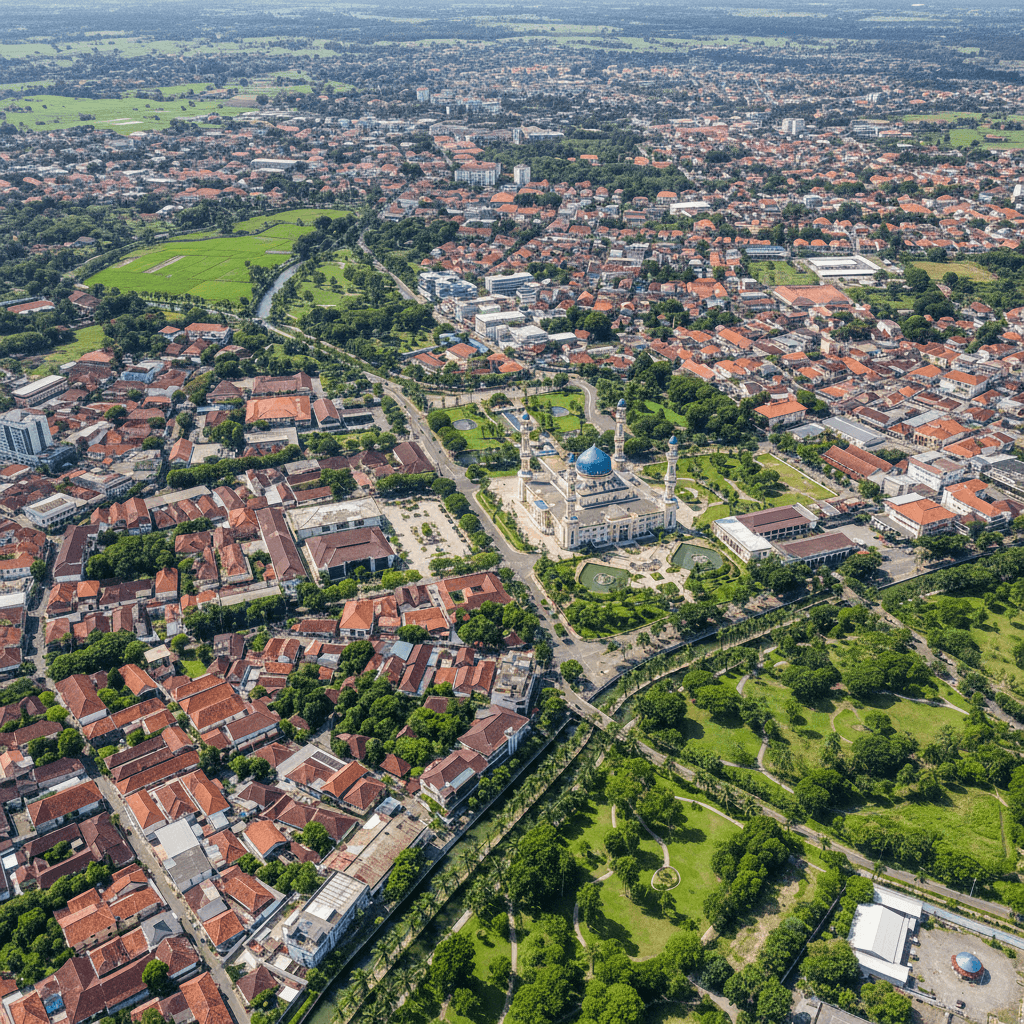
Mataram
🇮🇩 Indonesia
The Authentic Alternative to Bali
If you are tired of the polished, over-produced tourist trap that parts of Bali have become, Mataram is the palate cleanser you need. It is the capital of Lombok, but it feels more like a sprawling university town than a frantic administrative hub. Life here moves at a slower pace, dictated by the calls to prayer and the rhythm of local markets rather than the demands of a high-season crowd. It is a place where people still look you in the eye and offer a genuine smile without expecting a tip in return.
The vibe is unapologetically local. You won't find a beach club on every corner; instead, you'll find students gathered over $1 plates of spicy Ayam Taliwang in the Cakranegara district. For digital nomads, it is a city of high productivity and low distractions. It offers a rare chance to actually live in Indonesia, not just visit it. While the infrastructure is still catching up, the trade-off is a cost of living that makes your budget stretch further than almost anywhere else in Southeast Asia.
The Cost of Living Breakdown
Mataram is remarkably affordable, even by Indonesian standards. Most nomads find they can live comfortably on $900 to $1,225 per month, depending on how many Western comforts they crave. If you are on a strict budget, you can get by on roughly $600 a month by sticking to local guesthouses and street food.
- Budget Tier: Approximately $600 per month. This covers a basic room for $200 to $300, local meals for $180, and a scooter rental for about $50.
- Mid-range Tier: Around $900 per month. Expect to pay $300 to $450 for a nicer apartment, a mix of local and Western food for $250, and transport via apps like Gojek.
- Comfortable Tier: Roughly $1,225 per month. This allows for a premium rental at $450 to $600, frequent dining out, and a dedicated desk at a coworking space.
Where to Plant Your Flag
Choosing a neighborhood in Mataram depends on whether you want to be in the thick of the action or near the water. Each area has a distinct personality that dictates your daily routine.
City Center
- Best For: Solo nomads and those who want convenience.
- The Draw: You are walking distance to the best cafes, traditional markets, and the most reliable internet in the city.
- The Downside: It can get noisy with traffic and the general hum of urban life.
Senggigi
- Best For: Expats and families who want a resort feel.
- The Draw: It is about 20 minutes from the center and offers sunset views, beaches, and a higher concentration of Western restaurants.
- The Downside: It feels less "real" than Mataram and is generally more expensive.
Cakranegara
- Best For: Foodies and culture seekers.
- The Draw: This is the heart of the Sasak and Balinese-Lombok culture. The street food here is unbeatable.
- The Downside: There are fewer dedicated workspaces, so you will likely be working from your accommodation.
Work, Safety, and Survival
Internet in Mataram is a bit of a mixed bag. While most cafes offer 10 to 20 Mbps, serious remote workers head to Library Cowork Mataram or Begibung Coffee for more stability. A monthly pass at a coworking space usually runs around 2,000,000 IDR, which is about $125. For your phone, grab a Telkomsel SIM card at the airport for about $3; it has the most reliable coverage across Lombok.
Safety is rarely a concern here. Local residents are incredibly welcoming, and the crime rate is low. That said, the city isn't very well lit at night, so it is better to use Gojek or Grab rather than walking long distances after dark. If you need medical help, the hospitals in Mataram can handle the basics, but for anything major, expats usually recommend a short flight over to Bali.
The real charm of Mataram is the lack of pretension. You'll spend your mornings working in a quiet cafe, your afternoons exploring the sprawling Kebon Roek market, and your evenings joining a local football game or chatting with neighbors. It is a city that requires a bit more effort than the typical nomad hub, but the reward is a sense of belonging that is hard to find elsewhere.
The Price of Authenticity
If you are coming from Bali, Mataram will feel like a massive discount on your lifestyle. It is one of those rare places where you can live well on a shoestring without feeling like you are compromising. Most nomads find they spend around $402 per month on basic living expenses, though your final bill depends on how much you crave Western comforts versus local Sasak life.
The city operates on a tiered system of affordability. If you are sticking to a budget of $600, you will be living like a local, staying in a simple studio and eating at warungs. Moving up to $900 allows for a mid-range lifestyle with a mix of local eats and the occasional trendy cafe. For $1,225, you are living at the top of the market, likely in a larger home in an area like Senggigi with plenty of international dining and higher-end transport options.
Breaking Down the Monthly Budget
- Budget Tier: Total $600. This covers $200 to $300 for rent, $180 for local food, and $50 for a scooter rental.
- Mid-range Tier: Total $900. This includes $300 to $450 for a nicer apartment, $200 to $250 for a mix of food, and $80 for ride-hailing apps and fuel.
- Comfortable Tier: Total $1,225. You will spend $450 to $600 on a premium villa or house, $250 or more on dining, and $100 plus for transport and coworking memberships.
Housing and Neighborhoods
Rent is significantly cheaper than in Kuta or Bali. A 1-bedroom in the city center typically runs about $80 to $150, while larger spots on the outskirts average $114. Expats often recommend looking for housing via Facebook groups like Lombok Housing or checking Travelio if you want something move-in ready.
Mataram City Center
- Rent: $70 to $300
- Best for: Solo nomads who want to be near markets and cheap cafes.
- The Vibe: Authentic and urban, though it can feel a bit loud.
Senggigi
- Rent: $300 to $600
- Best for: Families and expats who want beach access and safety.
- The Vibe: More tourist-oriented and less "real" than the city center, but very comfortable.
Food and Daily Costs
Eating out is where you will save the most. Street food is incredibly cheap, often around $1.06 for a full meal. If you head to Cakranegara for the famous Ayam Taliwang, you will pay a bit more for the experience, but a mid-range dinner for two still only averages about $10.80. Even at higher-end local spots, it is hard to break the bank.
Grocery shopping at local markets is the way to go for fresh produce, but for Western imports, you will need to head to larger supermarkets in the city. Expect to pay a premium for anything imported, especially cheese or wine, which are heavily taxed.
Work and Connectivity
For those working remotely, a coworking space is a smart investment. Monthly memberships at spots like Library Cowork Mataram or Begibung Coffee range from $60 to $125. If you prefer working from cafes, a day pass usually costs between 100,000 and 200,000 IDR, which is roughly $6 to $13.
Internet speeds in cafes hover around 10 to 20 Mbps. It is enough for most tasks, but travelers often say it can be patchy outside of dedicated workspaces. Grab a Telkomsel SIM card for about 50,000 IDR for 3GB to ensure you have a backup for those times the cafe WiFi fails you.
Getting Around
Transport is a minor expense here. A monthly budget of $27 usually covers the basics if you are using ride-hailing apps. Gojek and Grab are active in Mataram, and most trips across town cost under 50,000 IDR. If you prefer independence, renting a scooter for 80,000 to 100,000 IDR per day is the standard for getting to nearby beaches or exploring the island.
For Digital Nomads: Mataram City Center
If you're in Lombok to actually get work done while staying tethered to local life, the city center is your best bet. It feels like a genuine university town rather than a tourist trap. You'll find the most reliable infrastructure here, specifically at spots like Library Cowork Mataram or Begibung Coffee, where the WiFi hits 10 to 20 Mbps. It's the most affordable pocket of the city, with studio rentals often landing between $80 and $150 a month.
- The Vibe: Authentic, productive, and budget friendly.
- Monthly Cost: Around $600 for a full budget lifestyle.
- The Trade-off: It's an urban environment, so expect some noise and traffic. Ride-hailing apps like Gojek and Grab are your lifeline here, though they can be a bit glitchy during peak hours.
For Expats and Long-Termers: Senggigi
Just a short drive north of the city, Senggigi is where most Westerners settle down. It trades the grit of the city for coastal views and a more established social scene. It's the go-to for those who want a "soft landing" in Indonesia. You'll find more English speakers, Western style grocery stores, and a steady supply of beachfront bars for sunset drinks.
- The Vibe: Relaxed coastal living with an established expat community.
- Housing: Expect to pay $300 to $450 for decent mid-range villas or apartments.
- Social Life: Check out the Lombok Digital Nomads Facebook group to find meetups that usually happen in this area.
For Families: Green Valley and Senggigi Suburbs
Families usually gravitate toward the outskirts of Senggigi or the quieter residential pockets like Green Valley. These areas are widely considered the safest parts of the region with very low crime rates. The pace is slow, the air is clearer than in the city center, and there's more space for kids to run around. It feels less like a transit hub and more like a neighborhood.
- Safety: Highly rated for families; just stick to well lit areas at night.
- Healthcare: You're close enough to the main hospitals in Mataram for basics, though most expats fly to Bali for major procedures.
- Cost: A comfortable family lifestyle usually starts around $1,225 a month.
For Solo Travelers and Culture Seekers: Cakranegara
If you want to be in the thick of Sasak culture and don't mind a bit of chaos, "Cakra" is the place. This is the commercial heart of the island where the best local food happens. You're within walking distance of massive markets and the best Ayam Taliwang (spicy grilled chicken) on the island. It's energetic and loud, perfect for those who want to skip the nomad bubble entirely.
- Food Scene: Incredible street food for $1.00 a plate and mid-range dinners for two at around $10.00.
- Connectivity: Fewer dedicated workspaces than the center, so you'll be relying on mobile data from Telkomsel, which costs about $3.00 for a 3GB starter pack.
- Transport: Very walkable, but a scooter rental for $5.00 to $6.00 a day is the best way to explore the surrounding temples.
For Surf-Centric Nomads: Kuta Lombok
While technically a separate hub south of Mataram, many nomads split their time between the capital and Kuta. It's the undisputed king of the island's coworking scene and surf culture. It's farther from the administrative perks of Mataram, but it offers the most modern "nomad" amenities on the island.
- Coworking: Day passes at local spots run between $6 and $13.
- The Draw: World class waves and a highly concentrated international community.
- Note: It's about a $10 to $15 car ride from the airport or Mataram city.
Connectivity and Speed
Mataram isn't Bali, and that's exactly why people come here. While you won't find 500 Mbps fiber optics on every corner, the internet situation is reliable enough for most remote work. Average speeds at nomad friendly cafes and coworking spots hover between 10 and 20 Mbps. It's plenty for Zoom calls and Slack, though you might feel the lag if you're uploading massive 4K video files all day.
The game changer recently has been the emergence of Starlink in the region, which is starting to pop up in more professional spaces. For your day to day backup, grab a local SIM card immediately. Telkomsel is the gold standard for coverage across Lombok. You can pick one up at the airport or any small cell shop in town for about 50,000 IDR ($3), which usually includes a 3GB starter pack. If your phone supports it, Smartfren offers decent eSIM options too.
Top Coworking Spots
The coworking scene in Mataram is intimate and local. You won't find massive corporate chains, but you will find community. Library Cowork Mataram is the most consistent choice for dedicated desk space. It's quiet, air conditioned, and designed for actual focus rather than just looking at the view.
If you prefer a more social, "laptop cafe" environment, Begibung Coffee is the go to spot. It has a great local energy and enough power outlets to keep you juiced up through a long afternoon. Most nomads find that rotating between these spots and their home setup keeps the "university town" cabin fever at bay.
Coworking Costs
- Day Pass: Expect to pay between 100,000 and 200,000 IDR ($6 to $13).
- Weekly Rate: Most spaces offer a bundle for 400,000 to 750,000 IDR.
- Monthly Membership: Around 1,000,000 to 2,000,000 IDR ($60 to $125), which is a steal compared to nearby Canggu or Ubud.
The Laptop Cafe Scene
Mataram has a thriving cafe culture thanks to the local student population. This means plenty of places are used to people lingering over a coffee with a laptop. The vibe is generally welcoming, though it's polite to order a fresh drink or a snack every couple of hours. Just be aware that while the city center cafes have decent WiFi, the signal can get patchy as you head toward the outskirts or into Cakranegara.
One thing travelers often mention is the "patchy internet" trap. A cafe might have great speeds one day and then drop to a crawl the next if the local provider has a hiccup. Always have your Telkomsel hotspot ready to go as a failover. If you need 100% uptime for a high stakes meeting, stick to the dedicated coworking spaces rather than rolling the dice at a neighborhood warung.
Digital Nomad Community
Because Mataram is more of a "real" city than a tourist bubble, the nomad community is smaller and more tight knit. You won't find a networking event every night, but the people you do meet are usually here for the long haul. Most expats and nomads coordinate through the Lombok Digital Nomads Facebook group or use the Nomax app to see who is in town. If you're feeling isolated, a quick trip down to Kuta Lombok or over to Senggigi will put you back in the thick of the expat social scene.
Safety on the Ground
Mataram is generally much quieter and safer than the high traffic areas of Bali or Jakarta. Most nomads find the city has a low crime rate, and solo travelers frequently rate the safety here around an 8 out of 10. You'll find the locals are incredibly welcoming, though the city's university town vibe means it gets very dark and quiet after 10:00 PM.
While violent crime is rare, petty theft can happen if you're careless. Expats recommend avoiding unlit side streets at night and keeping a firm grip on your phone when riding on the back of a Gojek or scooter. Unlike the more touristy Kuta Lombok, Mataram feels like a real city where people are going about their daily lives, so dressing modestly helps you blend in and shows respect for the local Sasak culture.
- Emergency Police: Dial 110
- Ambulance Services: Dial 118
- Solo Travel Safety: High, but stick to well lit areas after dark
Healthcare and Medical Facilities
For minor ailments, stomach issues, or routine checkups, Mataram has the best medical facilities on the island. You'll find several decent clinics and public hospitals in the city center that can handle basic emergencies and diagnostic tests. Pharmacies, known locally as Apotek, are everywhere and carry most standard medications over the counter.
However, the healthcare system has its limits. If you're facing a serious medical emergency or require specialized surgery, most travelers and expats opt for a quick 40 minute flight to Bali or even Singapore. It's a standard practice for the nomad community here to maintain international health insurance that specifically covers medical evacuation.
The infamous "Lombok Belly" is less common here than in the heavy tourist zones, but you should still stick to bottled or filtered water. Most cafes like Begibung Coffee use ice made from purified water, but it never hurts to double check at smaller street stalls.
Staying Healthy and Prepared
The tropical heat is often the biggest health hurdle. With temperatures averaging 29°C (84°F) and high humidity, dehydration kicks in fast. If you're planning on trekking Mount Rinjani or spending long days working from cafes, keep a supply of oral rehydration salts from a local Apotek.
Mosquito borne illnesses like Dengue are a factor during the rainy season from November to March. Use repellent if you're hanging out in garden cafes or near standing water. While Mataram isn't a high risk malaria zone, it's always smart to have a consultation with a travel clinic before you arrive.
- Local Pharmacies: Look for "Apotek" signs, many are open 24/7
- Water Safety: Never drink tap water; use a refillable bottle with a filter
- Insurance Requirement: Ensure your policy covers "Medical Evacuation" to Bali
Natural Disaster Awareness
Lombok sits on the Ring of Fire, so tremors are a reality of life here. Most modern buildings in Mataram are built with this in mind, but it's wise to familiarize yourself with the "Drop, Cover, and Hold" protocol. Download a weather and earthquake alert app to stay informed about any seismic activity in the region.
Getting the Lay of the Land
Mataram isn't the kind of place where you'll find a sprawling subway system or a grid of light rails. It is a classic Indonesian provincial capital where the rhythm of the road is dictated by scooters and local micro-buses. While the city center is surprisingly walkable for short errands, the heat and humidity usually mean you'll want some wheels for anything beyond a few blocks.
Most digital nomads and long term residents find that having a dedicated scooter is the only way to truly feel settled. It gives you the freedom to zip between a morning session at Begibung Coffee and a late lunch in Cakranegara without waiting on a driver. If you aren't comfortable on two wheels, you'll be leaning heavily on apps, which are affordable but come with their own set of quirks in this part of Lombok.
Ride-Hailing and Taxis
The big players here are Gojek and Grab. They are the lifeline for most expats, especially for food delivery and quick hops across town. A typical trip within the city usually stays under 50,000 IDR, which is roughly $3. It's incredibly cheap, but keep in mind that drivers can sometimes be thin on the ground during heavy tropical downpours or peak Friday prayer times.
For a more formal experience, Bluebird Taxis are the gold standard. They use meters, so you don't have to worry about haggling over the fare before you get in. They are particularly useful for airport runs. A trip from Lombok International Airport to the city center, covering about 26km, typically costs between 150,000 and 200,000 IDR. If you're arriving late at night, a pre-booked Bluebird is often the most stress free way to reach your accommodation.
The Scooter Life
If you're staying for a month or more, renting a scooter is the most economical move. You can find daily rentals for 80,000 to 100,000 IDR, but you can usually negotiate a much better monthly rate if you're sticking around. Expect to pay about $50 a month for a basic automatic scooter, plus a few dollars here and there for gas.
- Fuel: Look for the official Pertamina stations for the best prices, though you'll see locals selling gasoline in glass bottles (Pertalite) on most street corners.
- Safety: Always wear a helmet. While the traffic in Mataram is slower than in Jakarta or Denpasar, the intersections can be chaotic.
- Licensing: Technically, you need an International Driving Permit. While enforcement is hit or miss, it's better to have your paperwork in order to avoid fines.
Public Transport and Walking
Mataram has a network of public buses that are incredibly cheap, with tickets costing around $0.60. They are great for the experience and for saving pennies, but they don't always run on a strict schedule. They're more of a "wait and see" mode of transport rather than something you'd rely on for a timed meeting.
As for walking, the city center is manageable if you're just heading to a nearby cafe. However, the sidewalks can be uneven or blocked by parked scooters and street food stalls. Most travelers say that while they enjoy a stroll through the local markets, they prefer a Gojek for anything more than a ten minute walk. If you do walk, try to do it early in the morning or after the sun starts to dip to avoid the midday 29°C heat.
Transport Costs at a Glance
- Monthly Scooter Rental: Approximately $50
- Short Ride-Hailing Trip: Under $3
- Airport Transfer: $10 to $13
- Public Bus Ticket: $0.60
Whether you're commuting to a coworking space or heading out to Senggigi for a weekend beach break, the transport here is remarkably cheap. The trade off is a bit of inconsistency with the apps, but once you've got a local SIM card and a bit of patience, you'll find that getting around this university town is part of its charm.
The Linguistic Landscape
In Mataram, you're stepping into a space where the local identity is much stronger than in the international hubs of Bali. While Indonesian (Bahasa Indonesia) is the official language used in schools, government, and media, the heartbeat of the city is Sasak. This is the indigenous language of Lombok, and you'll hear it constantly in the local markets of Cakranegara or when chatting with vendors at Pasar Kebon Roek.
Most nomads find that English works well enough in upscale hotels, medical clinics, and tourist-heavy spots like Senggigi. However, once you settle into the daily rhythm of Mataram proper, English proficiency drops significantly. University students are often eager to practice their English with you, but your gojek driver or the person selling you Ayam Taliwang will likely speak very little. This isn't a barrier so much as an invitation to engage more deeply with the community.
Communication Tools and Connectivity
Because of the language gap, the Google Translate app is your best friend. Download the Indonesian pack for offline use so you can translate menus or signs when your data dips. For daily logistics, WhatsApp is the undisputed king. Everyone from your landlord to the local scooter rental shop uses it for everything. If you're looking for a place to stay on Facebook "Lombok Housing" groups, don't expect an email; just send a WhatsApp message.
To stay connected, you'll need a local SIM card. Telkomsel is the gold standard for coverage, especially if you plan on taking weekend trips to Mount Rinjani or the Gili Islands. You can grab a SIM at the airport for around 50,000 IDR (about $3) for a 3GB starter pack, but you must register it with your passport. If you prefer the convenience of an eSIM, Smartfren is a solid alternative that works well within city limits.
Essential Phrasebook
Learning even five words of Indonesian will change your experience entirely. It shows respect and usually results in a "local price" rather than a "tourist price." Here are the phrases expats recommend mastering first:
- Terima kasih: Thank you. (You'll say this fifty times a day).
- Berapa harganya?: How much is this? (Use this at the markets in Cakranegara).
- Sama-sama: You're welcome.
- Di mana toilet?: Where is the toilet?
- Pedas?: Is it spicy? (Crucial in Lombok, where the food is famously hot).
- Tidak: No. (Useful for politely declining street offers).
Cultural Nuances in Talk
Communication in Mataram is rarely direct. It's a polite, "saving face" culture where people prefer to be indirect rather than confrontational. If you're negotiating a monthly rate at a guesthouse, keep your tone light and friendly. A smile goes a lot further than a firm demand here.
During Ramadan, the city's communication style shifts. Mataram is a deeply religious Muslim city, and you'll hear the call to prayer from local mosques throughout the day and night. During this month, it's respectful to be more discreet with loud conversations in public and to avoid eating or drinking openly during daylight hours. Travelers often say that showing this small bit of respect opens doors to much deeper conversations with the locals once the sun goes down and the evening feasts begin.
The Sweet Spot: April to October
If you want those postcard-perfect blue skies and manageable humidity, aim for the dry season between April and October. This is when Mataram really shines for digital nomads who want to explore the island on a scooter without getting soaked. The air is slightly crisper, and temperatures hover around a comfortable 29°C (84°F).
July and August are the peak months. You'll find the most consistent weather then, but it's also when the crowds at nearby Senggigi and the Gili Islands are at their thickest. For a better balance of quiet streets and clear skies, many nomads prefer the shoulder months of May, June, and September. You'll get all the sun you need for a weekend trip to Kuta Lombok but won't have to fight for a seat at Begibung Coffee.
The Monsoon Shift: November to March
The rainy season kicks in around November and lasts through March, with the heaviest downpours usually hitting in January and February. It doesn't typically rain all day; instead, you'll get intense, tropical bursts in the afternoon that turn the streets into temporary rivers. It’s the perfect excuse to hunker down at Library Cowork Mataram and get some deep work done.
While the rain can mess with your travel plans, there are perks to visiting during the wet season. The island turns a deep, lush green, and the dust of the city center settles. However, be aware that the humidity can feel heavy. If you're sensitive to heat, you'll definitely want to budget for a room with strong AC during these months, as the "real feel" temperature can get pretty steamy.
Planning Around the Calendar
Beyond the thermometer, Mataram’s vibe changes significantly during Ramadan. As the capital of "The Island of a Thousand Mosques," Mataram takes the holy month seriously. Many local warungs close during the day, and the pace of the city slows down even more than usual. It’s a fascinating time for cultural immersion, but if you rely on street food for lunch, you'll need to plan ahead or stick to the more tourist-centric cafes.
- Best for Surfing: May to September (Dry season swells on the south coast).
- Best for Trekking Rinjani: April to October (The park often closes during the height of the rainy season for safety).
- Best for Budget: November to March (Prices for mid-range accommodation often drop, though food stays cheap year-round).
What to Pack
Since Mataram is a university town and more traditional than Bali, modest dress is the way to go regardless of the weather. Lightweight, breathable fabrics like linen or moisture-wicking cotton are lifesavers in the 80%+ humidity. If you're visiting in the rainy season, don't bother with a heavy raincoat; a cheap plastic poncho from a local Alfamart is what the locals use, and it'll keep you much cooler while you're navigating the city on a Gojek bike.
Mataram Essentials
Living in Mataram feels like finding a loophole in the digital nomad system. It’s the capital of Lombok, but it lacks the frantic energy of Jakarta or the over-polished tourist feel of Bali. You’re getting a genuine university-town atmosphere where the cost of living is remarkably low, though you’ll need to pack a little patience for the local infrastructure.
Most nomads find they can live comfortably on about $900 a month, while those on a strict budget can make $600 work by sticking to local warungs and basic housing. If you want a more "westernized" lifestyle with frequent air conditioning and upscale meals, budget closer to $1,225. Rent is the big saver here; a decent spot in the city center usually runs between $200 and $300, though high-end apartments can hit $600.
Where to Set Up Base
Choosing a neighborhood depends on how much "local" you want in your daily life. Mataram is the hub for authenticity, while neighboring areas offer different perks:
- City Center (Mataram): This is the heart of the action. It's affordable and full of local markets, but it comes with urban noise and traffic. Best for those who want to be near the best cafes and deep-dive into Sasak culture.
- Senggigi: About 20 minutes away, this is the expat stronghold. It’s safer for families and has better beach access, though it feels less like "real" Indonesia.
- Cakranegara: The place to be if you’re a foodie. It’s famous for Ayam Taliwang and traditional markets, though dedicated workspaces are harder to find here.
- Kuta Lombok: While it’s a long trek from Mataram, many nomads split their time here for the surf and more established coworking communities.
Internet and Productive Spaces
Internet isn’t always a given. While Starlink is starting to show up, most cafes offer speeds between 10 and 20 Mbps. For serious work, head to Library Cowork Mataram or Begibung Coffee. A day pass at a coworking space usually costs between 100,000 and 200,000 IDR, while a monthly membership sits around 2,000,000 IDR (roughly $125).
For your phone, grab a Telkomsel SIM card at the airport or a local shop. It has the most reliable coverage across the island. Expect to pay about 50,000 IDR for an initial 3GB data package. If your phone supports it, Smartfren offers a decent eSIM option.
Getting Around and Staying Safe
Public transport is limited to cheap buses ($0.60 per ticket), but most people rely on apps. Gojek and Grab are your best friends for quick trips, usually costing under 50,000 IDR. If you’re brave enough for the traffic, you can rent a scooter for 80,000 to 100,000 IDR per day.
Mataram is generally safe, even for solo travelers, but use common sense. Stick to well-lit areas at night and keep an eye on your belongings in crowded markets. For healthcare, local clinics handle the basics, but for anything serious, most expats fly to Bali. Make sure your international insurance is active before you arrive.
Cultural Nuances
Lombok is more conservative than Bali. Most locals are Muslim, so it's respectful to dress modestly, especially when away from the beach. During Ramadan, many local eateries close during the day, so plan your meals accordingly. While Bahasa Indonesia and Sasak are the primary languages, you'll get by with basic English in most spots. Learning a few phrases like "Berapa harganya?" (How much?) and "Terima kasih" (Thank you) goes a long way with the locals.
Weather Windows
The dry season runs from April to October, with July and August offering the most pleasant 29°C (84°F) days. The rainy season peaks in January and February. It’s humid year-round, so look for accommodation with good ventilation or AC if you aren't used to the tropics.
Need visa and immigration info for Indonesia?
🇮🇩 View Indonesia Country GuideOff the Radar
Pioneer territory