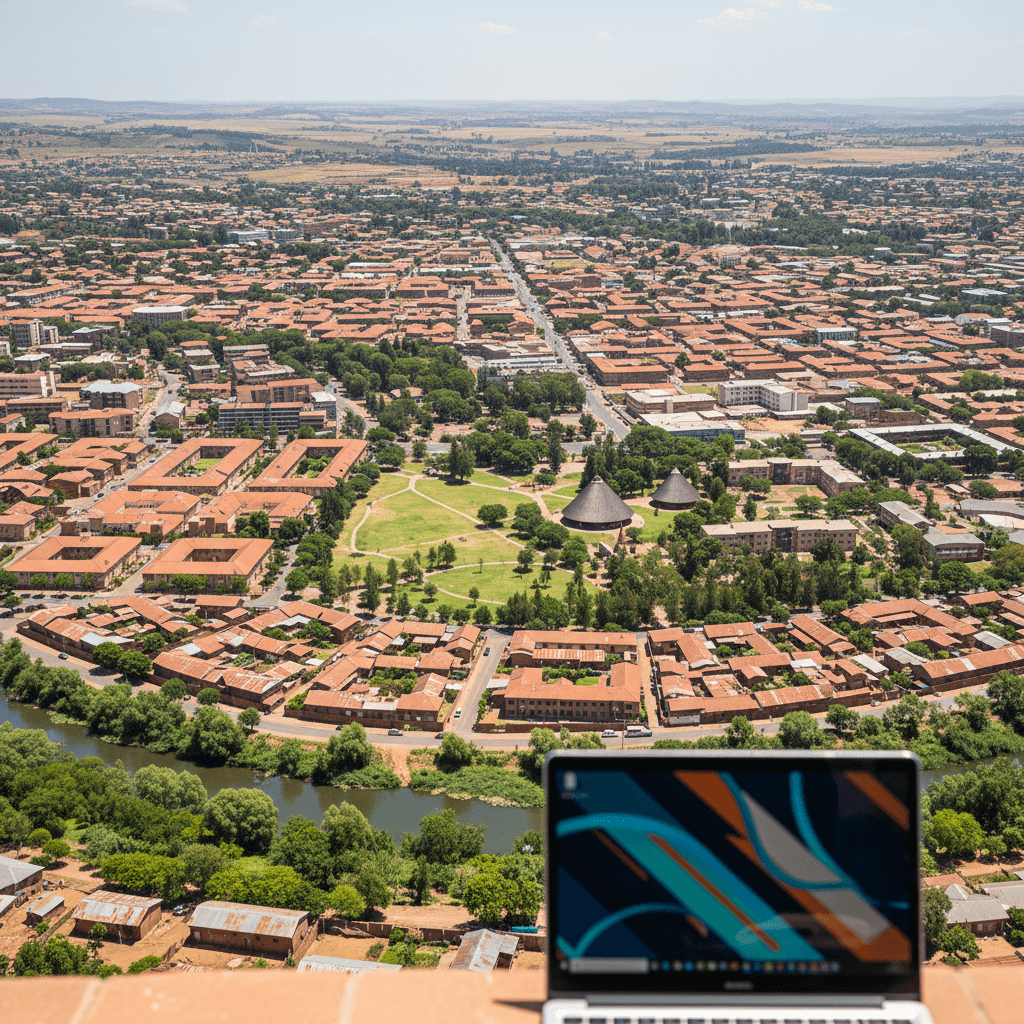
Maseru
🇱🇸 Lesotho
Maseru feels calm at first, then you notice the practical stuff: the altitude sits around 1,600m, the air is dry and clear and the city moves at a slower, slightly stubborn pace. It’s a capital, but not a frantic one and that’s the point, honestly, if you want mountain views, Basotho culture and easy access to South Africa without the usual big-city noise.
Don’t expect a slick digital nomad scene. Internet is, honestly, patchy, with average speeds around 5 Mbps and the community is small enough that you’ll keep seeing the same faces at hotel cafes, mall food courts and the few places with dependable WiFi. Still, that slower rhythm can be nice, especially if you’re the type who likes working with a coffee, distant minibus honks and a cold breeze coming off the hills.
Monthly costs stay fairly low by regional standards, though food and utilities can creep up fast if you lean on imported goods and hotel workspaces. A solo nomad can live here on roughly $650 a month, with budget setups around $500, a comfortable life closer to $1,200 and rent changing a lot depending on whether you want the center or a quieter suburb.
Best Areas to Base Yourself
- City Centre: Best for quick errands, transport and short walks during the day, but it gets noisy and crowded at night.
- Maseru West, White City, Lower Thetsane: Popular with expats because the housing feels safer and more modern, though rents are higher and some streets go quiet fast after dark.
- New Europa, Moshoeshoe II: Handy for families and longer stays, with decent access to services, though safety can be uneven once the sun drops.
The city’s mood changes after dark. Daytime feels manageable, even easy in the center, but locals and expats alike will tell you not to wander unlit streets, because theft and rough patches are real and there’s a reason people take cabs home instead of walking. The upside is that most of the main areas feel fine in daylight, especially if you stay alert and keep valuables out of sight.
Food is straightforward and affordable. A fast meal runs about $8, lunch menus sit near $12 and dinner for two at a nicer spot can reach $29, with places like the Maseru Club Grounds giving you a decent sit-down option without the fuss. The whole place has this mix of exhaust, grilled meat, rain on tin roofs and hotel perfume, which sounds odd, but it’s very Maseru.
If you want a city that’s polished, this isn’t it. If you want lower costs, mountain air and a base that feels more lived-in than curated, Maseru has a strangely appealing, slightly rough-edged charm that grows on you.
Maseru’s cheap, but it isn’t dirt-cheap once you add rent, transport and the kind of internet that makes you stare at a loading bar. A solo nomad can live here on about $650 a month with rent included, though your real number swings hard depending on where you sleep and how often you eat out. Honestly, the city rewards people who keep things simple.
Here’s the rough monthly split most people end up with: food around $310, transport about $42 and utilities plus internet near $157. Street noise, barking dogs and minibuses hooting through the center can make central living feel busy, so some nomads pay extra just to get a quieter night. That tradeoff makes sense, because quiet isn’t free.
Typical Monthly Budgets
- Budget: Around $500, with an outskirts studio near $70, street food at about $8 a day and a minibus pass around $30.
- Mid-range: About $800, with a city-center 1BR near $130, mid-range meals around $12 and taxis or rideshares around $50.
- Comfortable: Around $1,200, with an upscale apartment near $230, dining out around $200 and private transfers when you don’t feel like waiting around.
Housing and Food
- City-centre studio: About $131, handy if you want cafés, shops and transport within walking distance.
- Outskirts studio: About $66, cheaper, quieter and a little more practical if you don’t mind riding in.
- Lunch menu: Around $12.
- Fast food: About $8.
- Dinner for two: Roughly $29, which, surprisingly, doesn’t feel outrageous once you’ve had a long week.
For location, Maseru West, White City and Lower Thetsane are the usual expat picks, since they feel calmer and a bit more secure, though rents climb there. City Centre is better if you want to walk to errands in daylight, then duck back inside before dark, because the streets get noticeably less friendly at night. New Europa and Moshoeshoe II can work too, but check the exact block.
Internet is the annoying part. Average speeds sit around 5 Mbps and even with 4G in the center, it’s inconsistent, so if you work on heavy uploads or long video calls, plan your day around the network, not the other way around. Vodacom usually has the best coverage, SIMs are cheap and a 50 Mbps plan can run about $33, which sounds fine until you realize real-world speeds don’t always match the sticker. Still, that’s the deal.
Getting around is cheap and a bit scrappy. Minibus taxis cost about $0.75 a ride, taxis for an 8 km hop run near $6 and monthly public transport can sit around $30, so most people mix cabs with minibuses and just accept the waiting. PickMeUp is the app locals mention most and for late runs, regular taxi operators are easier than hoping for a perfect pickup.
Maseru doesn’t have many neighborhoods that feel truly different, but the right pick changes your week a lot. Pick wrong and you’ll spend too much time in taxis, listening to honking minibuses and staring at weak WiFi bars.
For nomads
City Centre is the easiest base if you want errands, banks, supermarkets and taxis close by. It’s walkable in daylight, though the nights can feel noisy and a bit grim, with street noise, exhaust and people lingering outside shops.
- Rent: About $131 for a 1BR, less in the outer streets
- Internet: Okay by Maseru standards, still slow, honestly
- Best for: Short stays, quick admin, easy transport
If you need a work routine, start here, then use AVANI Lesotho Hotel & Casino or Lancer’s Inn for WiFi when your apartment connection crawls. There isn’t a proper coworking scene, which, surprisingly, makes the good cafe tables feel more valuable than they should.
For expats
Maseru West, including White City and Lower Thetsane, is where many expats end up. It’s quieter, more secure and better for modern housing, though rent jumps up and you still shouldn’t wander off alone after dark.
- Rent: Higher than the center, but better housing stock
- Safety: Better than most central streets, still don’t get careless
- Best for: Longer leases, embassy access, family-style compounds
New Europa and Moshoeshoe II are decent too, especially if you want service access without living right in the middle of things. The tradeoff is simple, convenience goes up, but nighttime safety gets shakier and frankly, isolated walks are a bad idea here.
For families
Families usually prefer the western side or the better parts of New Europa because the housing is newer and daily logistics are less annoying. You’ll still rely on cars or taxis for most trips, because walking with kids in traffic feels stressful fast.
- Good fit: Maseru West, Lower Thetsane, parts of New Europa
- Medical access: Better reach to private clinics and pharmacies
- Tradeoff: More space, higher rent, fewer walkable services
For solo travelers
The City Centre is easiest if you’re just passing through, especially for hotels, food and minibus access, but don’t overestimate the evening vibe, it gets quiet in a slightly awkward way. Stick to lit streets, grab a cab after dark and use places near the malls or hotel bars if you want company.
Skip isolated corners. Maseru’s calm can fool you.
Maseru’s internet is fine for email, docs and light calls, then it starts testing your patience. Internet speeds have improved significantly. Vodacom averages 42.5 Mbps, Econet offers fiber up to 150 Mbps, and 5G is now available in Maseru with speeds up to 700 Mbps. However, speeds can still be inconsistent depending on location and provider, so don’t expect smooth video meetings unless you’ve got backup data and a forgiving boss.
Not fast. Not stable. If you’re coming from Cape Town, Joburg or anywhere with solid fiber, the drop feels real and honestly you’ll notice it most when a cloud upload stalls while traffic hammers past outside.
Where people actually work
There aren’t any true coworking spaces in Maseru, so most nomads end up in hotel lounges, cafes or their apartment with a Vodacom SIM as a lifeline. The most practical spots are AVANI Lesotho Hotel & Casino, Lancer’s Inn and Hokahanya Inn, all of which usually have free WiFi and a business-friendly setup, though speeds can still wobble when a few people jump on.
- AVANI Lesotho Hotel & Casino: Best for reliable seating, backup power and a quieter workday.
- Lancer’s Inn: Handy if you want a calmer hotel setting and easier calls.
- Hokahanya Inn: Good for laptop work, decent WiFi and less chaos than a mall cafe.
The cafe scene is still growing, which, surprisingly, helps, because you’re not fighting a crowd for sockets. You’ll hear teaspoons clinking, generators humming now and then and the odd burst of laughter from the next table, so it feels lived-in rather than polished.
SIMs and backup internet
- Best network: Vodacom has the strongest coverage overall.
- Starter data: About $3 for 2GB.
- Where to buy: Maseru Mall or Pioneer Mall, passport in hand.
That SIM is your real safety net. Turnout can be weirdly inconsistent in different parts of town, so most remote workers keep a mobile hotspot ready and don’t rely on one cafe all day, because one weak router can ruin a whole afternoon.
How nomads usually handle it
Plan calls early, download files before you leave home and pick housing in Maseru West or the city center if you care about decent mobile reception. Vodacom offers fixed plans at 10-30 Mbps, while Econet fiber reaches up to 150 Mbps. 5G is now available in Maseru. Pricing varies by provider and plan, with mobile data starting around $3 for 2GB.
Short answer, Maseru works if you’re flexible. It’s fine for writing, admin, research and client messages, but if your job depends on heavy uploads or constant Zoom marathons, you’ll want a backup SIM, a hotel nearby and a low tolerance for frustration.
Maseru feels calm in daylight, then gets oddly quiet after dark. The center is fine for errands and short walks, but the streetlights are patchy, dogs bark late and you really don’t want to be the person wandering around alone with a phone out.
Stay in the light. That’s the rule. Locals and expats usually stick to Maseru West, White City or the better parts of Lower Thetsane, because they’re calmer and a bit more predictable, while isolated streets and empty shortcuts are where trouble starts, honestly, fast.
The city does have a decent everyday rhythm, but property crime and petty theft are real enough that you should keep bags zipped, avoid flashing cash and take cabs after sunset. Police emergency is 112 and that number should already be in your phone.
Where to stay safer
- City Centre: Handy in the day, noisy at night, best if you want shops and transport close by.
- Maseru West / White City / Lower Thetsane: Better for expats, quieter and generally the safer bet for long stays.
- New Europa / Moshoeshoe II: Fine near services, though some streets feel sketchier after dark.
Healthcare is split between decent private care and public hospitals that can be rough. Queen Mamohato Memorial Hospital in Ts’epong is the modern option, while Maseru District Hospital has a much shakier reputation and frankly, if you can avoid needing the public system, do.
Update phone number to: '+26622313260' (or alternatively list as '+266 2231 3260' with proper spacing)
- Emergency: 112 for police.
- Private care: Maseru Private Hospital, Thetsane West, +26622313260.
- Backup option: Queen Mamohato Memorial Hospital, Ts’epong.
For anything serious, go private first if you can, because waiting around in a public ward here can be grim, with cold tile floors, stale disinfectant and a lot of wasted time. If you’re carrying prescription meds, bring enough for your trip and keep the packaging with you, since replacements can be annoying to source.
Travelers often say the city feels safe enough when you behave normally, which, surprisingly, means being cautious, not fearless. Use a taxi at night, don’t cut through empty lots and keep your healthcare plan boring and sorted before you arrive.
Maseru is cheap to move around, but it can test your patience. Minibus taxis are the default, they cost about $0.75 a ride and a monthly pass runs around $30, yet they’re crowded, noisy and they leave when they feel like it, not when you’re ready.
If you want less chaos, use taxis or the PickMeUp app, which, surprisingly, works better than you’d expect in a city this small. Urban Taxis & Tours runs 24/7 and a typical 8km trip is around $6, while airport runs to Moshoeshoe I usually land in the $10 to $15 range and take 20 to 30 minutes depending on traffic.
What works best
- Minibus taxis: Cheapest option, but you’ll share space with bags, shouting and the smell of fuel and dust.
- Private taxis: Better at night, easier for airport runs and honestly the safer bet if you’re carrying gear.
- PickMeUp app: Handy when you don’t want to wave down a cab, though coverage can be patchy outside the center.
Walking is fine in the city center during the day, then it gets awkward fast. Streets are only moderately walkable, sidewalks come and go and after dark the advice is simple, get a cab, because isolated stretches and dark corners aren’t worth the gamble.
Biking sounds nice on paper, but Maseru’s traffic, uneven roads and lack of rental bikes make it a headache. The hills are gentle enough, weirdly, but the heat, wind and impatient drivers can turn a short ride into a sweaty mess.
Where people stay based
- City Centre: Best for quick access to shops, banks and transport, though it gets loud and crowded at night.
- Maseru West: Quieter, safer-feeling and popular with expats, but rents are higher and you shouldn’t wander alone in the quiet stretches.
- White City and Lower Thetsane: Good for housing and services, with a more settled feel than the center.
For longer stays, most nomads either live near the center for convenience or in Maseru West for peace of mind. Honestly, that tradeoff makes sense, because the city isn’t built for random long walks, it’s built around short hops, taxis and doing your errands in one go before the sun drops.
Maseru runs on Sesotho first, English second and that’s the rhythm you’ll hear in shops, taxis and offices. In the city center, most people switch into English without much trouble, though once you get into smaller stores, roadside stalls or a fast-moving minibus queue, Sesotho usually takes over and English drops out fast.
For day-to-day life, that means you can get by in English, but you’ll move smoother if you learn a few basics. Lumela gets you in the door, Ke a leboha goes a long way and Ntshwarele is handy when you’re squeezing past someone in a crowded shop or asking a driver to stop.
What works in practice
- English: Fine for hotels, banks, most offices and expat circles.
- Sesotho: Better for taxis, markets, rentals and casual conversations.
- Translation apps: Google Translate helps, especially for quick phrases and signs.
Honestly, Maseru’s language barrier isn’t about vocabulary so much as pace and context. People speak quickly, switch between languages mid-sentence and assume you know what’s going on, so if you look confused, just ask them to slow down, then ask again if needed.
That can feel awkward at first, but locals are usually patient and a bad accent won’t bother anyone nearly as much as not greeting people properly. Say hello before you launch into a question, keep your tone polite and you’ll get better service almost everywhere, which, surprisingly, matters more here than sounding fluent.
Useful communication habits
- Greet first: Don’t jump straight into your request.
- Keep it polite: Respectful language goes further than blunt efficiency.
- Use your phone: Show addresses, names and taxi destinations in writing.
Internet can be patchy, so don’t count on live translation in the middle of a conversation unless you’re near a strong signal. In cafés, hotel lobbies and places like AVANI Lesotho Hotel & Casino or Lancer’s Inn, WiFi is usually usable, but outside those spots, honestly, you’ll want your key phrases memorized.
The local pace is calm, the accents are soft and the street noise, honking, shoe scuffs, vendor calls, the low rumble of minibuses, tells you where you are before anyone speaks. Learn a little Sesotho and Maseru gets easier fast.
Maseru has a weirdly split weather personality. Summer, roughly November to early April, is warm and wet, with afternoon rain drumming on tin roofs, damp pavements and that humid, dusty smell that hangs around after a storm. Winters are dry, bright and properly cold at night, so if you hate shivering on tile floors, plan carefully.
Best time to visit: May to September, hands down. Days are cool and clear, nights get sharp and you can actually sit outside without sweating through your shirt or getting trapped in a thunderstorm, though the mornings can bite. July can dip to around 1°C overnight, so bring layers, not just a light jacket.
For nomads, shoulder season usually works best, honestly. Late April through September gives you the cleanest air, easier road trips and better hiking weather around the Highlands, while January and February bring heavier rain, slippery roads and the kind of cloud cover that turns the whole city grey.
Month-by-month feel
- January to March: Warm, wet and a bit sticky, with highs around 27°C and frequent downpours.
- April to May: Settles down fast, cooler evenings, easier working weather and fewer weather delays.
- June to August: Dry, crisp and sunny, but nights are cold enough to make you notice the altitude.
- September to October: Pleasant and bright, then the heat starts creeping back in before the rains return.
Pack for both. Seriously. You’ll want a warm layer, a waterproof shell, closed shoes for muddy streets and sunscreen because the altitude means the sun feels harsh even when the air’s cool. Wind can be gritty too, especially out on the edges of town and it gets under your collar fast.
Most comfortable for remote work: May, June, September and early October. Internet has improved with 5G and fiber now available, though speeds vary by location and provider, but at least the weather won’t add another headache and you won’t be cursing power cuts while rain hammers the windows. If you’re coming for day trips, winter’s dry air makes Thaba-Bosiu and the Maletsunyane route far easier to enjoy.
Skip the heavy-rain peak if you can. Roads get messy, sidewalks splash and walking around Maseru West or the city centre in a storm turns into a damp, slow slog, which, surprisingly, matters more than people expect when you’re trying to get work done.
Maseru feels calm on the surface, then the traffic starts honking around the city centre and you remember you’re in a capital, not a retreat. The air is dry and high at 1,600m, so mornings can feel crisp, afternoons get dusty and nights cool off fast.
For a solo nomad, the math is pretty kind here. Budget around $650 a month if you live simply, eat local and use minibuses, though a more comfortable setup with a central flat and regular taxis pushes you closer to $800 or more, honestly and rent swings a lot depending on the neighborhood.
Where to stay
- City Centre: Best if you want to walk to banks, shops and transport, but it gets noisy and crowded after dark.
- Maseru West, White City, Lower Thetsane: Safer, quieter and popular with expats, though the nicer housing costs more.
- New Europa, Moshoeshoe II: Handy for services and family life, but night-time safety varies street by street.
Internet is the part that annoys people most. Average speeds hover around 5 Mbps, which, surprisingly, is enough for email and light calls but can make video work and uploads painfully slow, so most nomads end up using Vodacom SIMs, hotel WiFi or a café like AVANI Lesotho Hotel and Casino when they need something steadier.
Food and transport are cheap enough to keep daily life easy. A local minibus ride costs about $0.75, a taxi across town might run $6 and lunch at a mid-range spot is usually around $12, while dinner for two can land near $29 if you go somewhere nicer.
- SIM cards: Buy Vodacom or Econet at Maseru Mall or Pioneer Mall with your passport.
- Banking: Standard Lesotho Bank ATMs are the safest fallback, fintech options are limited.
- Getting around: PickMeUp helps for taxis and Urban Taxis & Tours is useful late at night.
Safety is decent in the right areas, but don’t get lazy. Use cabs after dark, skip isolated walks and keep your phone tucked away, because petty crime and bad street lighting are both real problems and frankly the quiet streets feel too empty once the sun drops.
Locals appreciate modest dress and a polite greeting, so a quick “Lumela” goes a long way. If you’re staying longer than a tourist visit, sort your work permit within 30 days and for weekends, day trips to Thaba-Bosiu or Maletsunyane Falls are the move, not hanging around malls all day.
Frequently asked questions
Is Maseru a good city for digital nomads?
How much does it cost to live in Maseru as a solo nomad?
How fast is the internet in Maseru?
Where do digital nomads usually stay in Maseru?
Are there coworking spaces in Maseru?
Is Maseru safe for solo travelers at night?
Which hospital should I use in Maseru if I need care?
Need visa and immigration info for Lesotho?
🇱🇸 View Lesotho Country GuideOff the Radar
Pioneer territory