Mary
🇹🇲 Turkmenistan
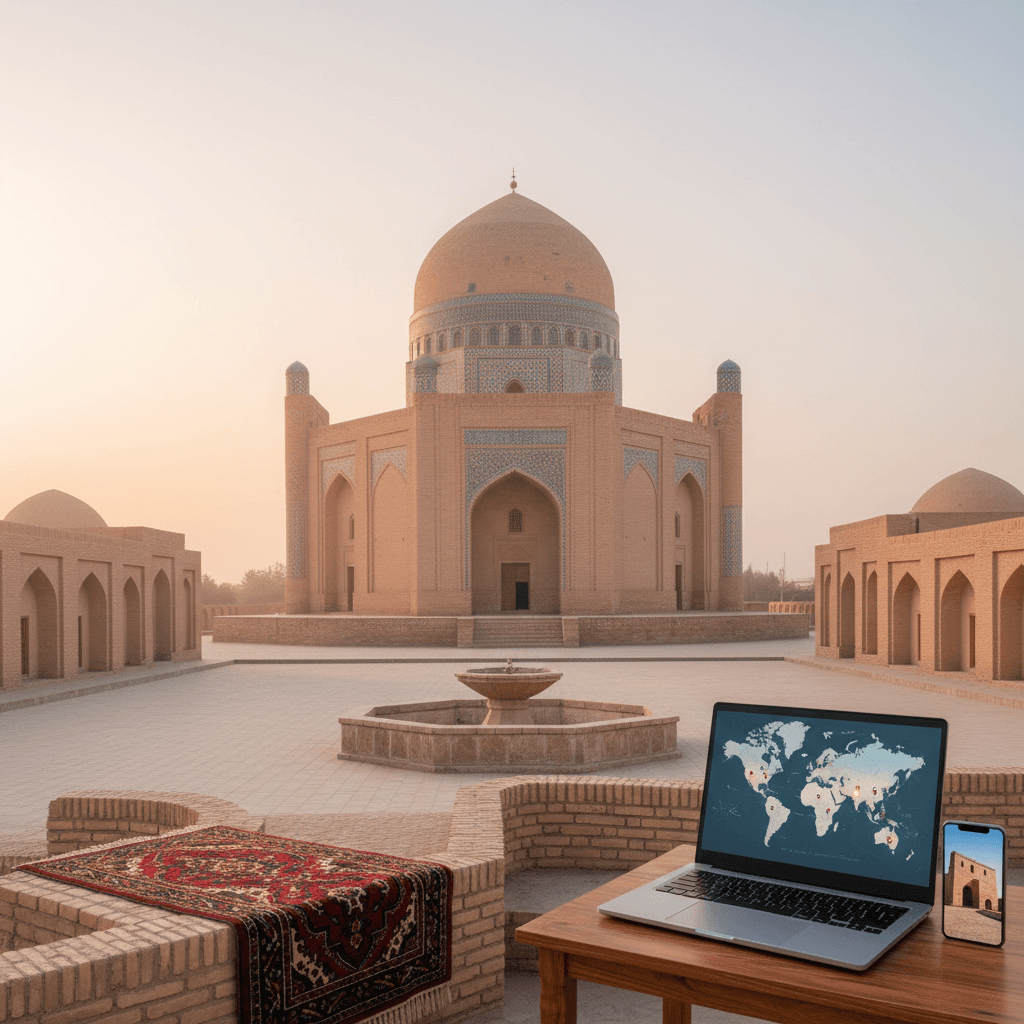
Mary is a place that feels suspended between two worlds. On one hand, it is a clean, quiet provincial capital with wide, marble-clad boulevards and the slow pace of a desert oasis. On the other, it sits in the shadow of Ancient Merv, a site that was once the largest city in the world before the Mongols leveled it in 1221. For a nomad, the vibe here is less about "hustle" and more about total immersion in a landscape that feels fundamentally different from the rest of Central Asia.
The Living Museum
Living here feels like being an observer in a very orderly, very silent movie. You won't find the chaotic energy of Istanbul or the tech-forward pulse of Almaty. Instead, Mary offers a sense of profound isolation. The streets are impeccably groomed, the white marble buildings gleam under a relentless sun, and the local population is reserved but deeply hospitable once the ice is broken. It is a city of echoes, where the modern infrastructure feels like a thin veil over thousands of years of Silk Road history.
The emotional experience is one of solitude. If you are the type of remote worker who needs a high-energy social scene or a different craft beer bar for every night of the week, Mary will be a shock to the system. But if you find inspiration in vast horizons, archaeological mysteries, and a place where the 21st century feels like an optional suggestion, this city hits a very specific, contemplative note.
The Reality of the "Nomad" Life Here
We have to be realistic about the logistics. Turkmenistan is one of the most closed countries on earth, and Mary is not a place where you just show up with a laptop and find a seat at a cafe. The "vibe" is heavily dictated by state regulations. Most expats and long-term visitors are here on specific work contracts or as part of archaeological teams, as the Letter of Invitation (LOI) system makes independent, long-term stays nearly impossible for the average freelancer.
You won't find a dedicated coworking space with ergonomic chairs and high-speed fiber. Instead, your "office" will likely be a desk in a Soviet-style hotel or a corner of a quiet restaurant like Gunesh. The internet is heavily censored and notoriously slow; you will spend as much time managing your connection as you do your inbox. It is a destination for the "deep work" phase of a project, where the lack of digital distractions becomes a feature rather than a bug.
- The Pace: Very slow. Business happens in the morning, and the city retreats indoors during the peak afternoon heat.
- The Aesthetic: A surreal mix of ancient mud-brick ruins and futuristic, sterile white marble.
- The Social Scene: Centered around private homes or a few key hotel bars where the small expat community gathers.
- The Language: Turkmen is the soul of the city, though Russian remains the lingua franca for most business and administrative tasks.
Why Mary Stands Out
What makes Mary different from a hub like Tbilisi or Chiang Mai is the total absence of "nomad infrastructure." There are no digital nomad meetups, no "top 10 cafes for laptops" lists, and no English menus in most spots. You are forced to engage with the city on its own terms. Travelers often say that the most rewarding part of being here is the hospitality at the Gala restaurant or the quiet walks through the Mary Museum, where the scale of history puts your modern stresses into perspective.
It is a city for the pioneer, the historian, or the writer who wants to disappear. You don't come to Mary to network; you come here to see what remains of an empire and to experience a way of life that hasn't been homogenized by global tourism. It is raw, it is challenging, and for the right person, it is incredibly quiet and beautiful.
The Reality of Life in Mary
Living in Mary isn't like living in a standard nomad hub. Because of the strict visa regulations that require a guide for almost all foreign visitors, you won't find a traditional expat community or a list of prices on a nomad database. Most people who stay here longer than a day trip are doing so as part of a specialized tour or a government sanctioned project. This means your daily expenses are often bundled into a pre-arranged package, which can range from $150 to $250 per day including your mandatory guide, transport, and lodging.
If you manage to break down the local costs, Turkmenistan operates on a dual economy. There is an official exchange rate and a black market rate that fluctuates wildly. Using the unofficial rate makes the city significantly more affordable, but it's a gray area travelers have to navigate carefully. Expect to pay for everything in cash, specifically crisp, new US dollar bills, as international credit cards are rarely accepted outside of high end hotels like the Mary Hotel.
Accommodation and Monthly Costs
Since you can't easily rent an apartment on a standard lease as a foreigner, your housing options are limited to hotels. These prices are fixed for foreigners and are much higher than what locals pay. You aren't going to find a studio on Airbnb here; instead, you'll be negotiating long stay rates directly with hotel management.
- Mid-range Hotel Room: $60 to $80 per night for foreigners.
- Luxury Hotel (Mary Hotel): $100 to $140 per night.
- Local Apartment (Theoretical): While locals might pay $200 to $400 a month, foreigners shouldn't expect to access these prices without official residency permits.
Food and Daily Expenses
Eating out in Mary is one of the few areas where you can feel the local price point if you step away from the hotel dining rooms. Local bazaars, like the Gök Bazar, are where you'll get the real taste of the city for very little money. A heavy meal of shashlik (skewered meat) and fresh bread will only set you back a few dollars if you're paying in manat at the unofficial rate.
- Basic Lunch: $3 to $6 at a local cafe.
- Dinner at a "Nice" Place: $12 to $20 including drinks.
- Coffee: $2 to $4, though high quality espresso is hard to find.
- Loaf of Fresh Bread: Less than $0.50 at the market.
The Connectivity Tax
The biggest "cost" in Mary isn't financial; it's the cost of staying connected. Internet is heavily censored and notoriously slow. You'll likely need to pay for a high end roaming plan or a local SIM card with a government monitored data package. Even then, you'll spend a significant amount of time and potentially money on various VPN services to access basic sites like Instagram or Gmail. Most nomads find the digital infrastructure here too unreliable for high stakes remote work, making the "cost" of a lost work day your biggest potential expense.
Transportation
Getting around Mary is cheap. The city is relatively compact, but the heat often makes walking a chore. Local taxis are the way to go. You can flag down almost any car, and as long as you agree on a price beforehand, it's an efficient way to move. A ride across town rarely exceeds $2 to $5 for a foreigner, though you'll certainly pay a premium compared to the few cents locals pay for shared rides.
The Central District (Galkynysh Street Area)
For most nomads visiting Mary, the area surrounding Galkynysh Street is the only logical place to set up shop. This is the heart of the modern city, where you will find the most reliable infrastructure, such as it is. Living here puts you within walking distance of the Mary Museum and the few cafes that offer something resembling a stable connection. It feels more like a provincial capital than a metropolis, but the wide, paved boulevards make it easy to get around on foot.
Most remote workers stay at the Hotel Mary or the Margush Hotel because these spots are the primary hubs for satellite internet. You won't find dedicated coworking spaces in Mary, so your "office" will likely be a hotel lobby or a desk in your room. Prices for a decent room in this central sliver of the city usually hover around $70 to $90 per night for foreigners, though long term stays can sometimes be negotiated if you have a local guide helping with the paperwork.
- Best for: Digital nomads and short term visitors
- Vibe: Orderly, quiet, and surprisingly green
- Connectivity: The most stable in the region, though still heavily filtered
The Neighborhoods Near the Green Bazaar
Expats who are in Mary for work, often in the energy or archaeology sectors, tend to gravitate toward the residential pockets near the Green Bazaar (Taze Bazar). This area feels much more authentic and less "monumental" than the marble clad center. It is where you will find the best fresh produce, local bread, and a sense of daily life. Renting a private apartment here is rare for foreigners due to strict registration laws, but those on official contracts often end up in low rise Soviet era blocks that have been renovated inside.
Living near the bazaar means you are close to the best food in town. You can grab a hearty meal of shashlik or somsa for about $4 to $6. It is a lively area during the day, though it goes completely silent after dark. If you managed to secure an apartment here, expect to pay around $400 to $600 a month, though prices are highly variable and almost always quoted in USD for expats.
- Best for: Long term expats and researchers
- Monthly Rent: $400+
- Pros: Best access to local food and lower daily costs
Merv Road (The Archaeological Fringe)
Solo travelers and history buffs often prefer staying as close to the eastern edge of the city as possible, heading toward the ruins of Ancient Merv. There are fewer formal "neighborhoods" here and more dusty, suburban fringes. It is not a place for someone who needs to be on Zoom calls all day, but it is perfect for those who want to be the first ones at the archaeological park when the gates open at 9:00 AM.
Transport from this side of town into the center is cheap if you use the local marshrutkas (minibuses), which cost just a few manat. However, most solo travelers find it easier to hire a private driver for the day, which usually costs around $30 to $50 depending on your haggling skills. It is a rugged choice, but it puts you closer to the history that brings people to Mary in the first place.
- Best for: Solo travelers and history enthusiasts
- Transport: $1 to $2 for local taxis; $30+ for full day guides
- Atmosphere: Rural, quiet, and dusty
The Southern Residential Zones
Families or those looking for a quieter, more suburban experience usually look toward the southern sectors of the city. These areas are dominated by schools and small parks. It is much more "local" than the Galkynysh area, and you will see children playing outside and neighbors chatting on stoops. There is virtually no English spoken here, so you will need at least a few phrases of Russian or Turkmen to get by at the corner store.
The pace of life here is slow. While there are no Western style malls, the local shops are well stocked with basics. For a family, the main draw is the safety and the lack of traffic compared to the city center. Just keep in mind that the further you get from the main hotels, the more difficult it becomes to find a signal that can handle anything more than a text message.
- Best for: Families or those seeking total immersion
- Language: Russian and Turkmen are essential
- Walking Score: High, with many small local parks nearby
Connectivity Challenges
Working from Mary is a test of patience and preparation. You won't find the fiber optic speeds you're used to in Tbilisi or Almaty here. Most nomads rely on TMCELL (Altyn Asyr), the primary state provider. You can pick up a SIM card at the local telecommunications office on Mollanepes Street, but bring your passport and plenty of patience for the paperwork. Expect 4G speeds to be inconsistent, often hovering around 2 to 5 Mbps on a good day.
The biggest hurdle isn't just the speed; it's the censorship. Turkmenistan has one of the most restricted internet environments globally. Major social media platforms, messaging apps like WhatsApp, and many Western news sites are blocked. Most expats find that having multiple reputable VPNs installed before entering the country is the only way to stay productive. Even then, the state frequently throttles or blocks VPN protocols, so don't count on being able to hop on a Zoom call without some lag.
Coworking and Workspaces
There are no dedicated coworking spaces in Mary. The concept of a shared office with hot desks and ergonomic chairs hasn't reached this part of the Karakum Desert yet. If you need a professional environment, your best bet is to book a room at the Mary Hotel or the Margush Hotel. These upscale establishments usually have business centers or quiet lobby areas where the Wi-Fi is slightly more reliable than the city average.
For a more casual setup, a few local spots offer a decent atmosphere for an hour or two of offline work:
- Altyn Jam: Known for its central location, it is okay for light tasks, though the noise levels can pick up during lunch hours.
- The Mary Regional Library: If you just need a quiet desk and don't require a high speed connection, the library offers a peaceful environment, though power outlets are scarce.
Practical Tips for Remote Work
Since you are required to be on a guided tour for most of your stay, your "office" will likely be your hotel room or the back of a Land Cruiser. Most travelers recommend doing your heavy lifting, like uploading large files or video calls, during layovers in Istanbul or Ashgabat, where the infrastructure is slightly more robust.
If you're planning to stay for more than a few days, consider these local realities:
- Power Stability: While Mary is a major energy hub, occasional surges can happen. A good surge protector is a smart addition to your kit.
- Data Costs: Mobile data is relatively affordable, but the "unlimited" plans often have hidden caps that will throttle your speed to a crawl after a few gigabytes.
- Offline Backups: Download every map, document, and entertainment file you think you might need before you cross the border.
Most expats living in the region for gas and oil projects suggest tethering to a mobile hotspot rather than relying on hotel Wi-Fi, which is often shared by dozens of guests and can be incredibly sluggish. If you're staying at the Mary Hotel, ask for a room near the router or on a lower floor to maximize your signal strength.
Staying Safe and Secure
Mary is generally a very safe city when it comes to street crime. You won't find the typical pickpocketing or scams common in larger regional hubs. The local culture is deeply hospitable, and as a foreigner, you're more likely to be met with curiosity than any kind of hostility. Most expats feel perfectly comfortable walking the central streets near the Mary Museum or the Mary Hotel after dark.
The real safety considerations here are more about bureaucracy and local regulations. Since you're required to have a guide for most of your stay, you'll have a constant buffer between you and any potential misunderstandings. It's smart to keep your passport and Letter of Invitation (LOI) copies on you at all times. Police checkpoints are common on the roads leading out toward the Merv ruins, but they're mostly a routine formality for checking documents.
Avoid taking photos of government buildings, military sites, or even the airport. The authorities are quite strict about this, and it can lead to uncomfortable questioning or having your phone searched. Stick to photographing the historical sites and public parks where it's clearly permitted. If you're ever unsure, just ask your guide; they're your best resource for staying on the right side of local law.
Healthcare Essentials
Medical facilities in Mary are functional for basic needs but don't expect the high tech standards you might find in Ashgabat or abroad. Local hospitals like the Hospital of Internal Diseases in Mary are the primary spots for most health concerns. These facilities are clean and relatively modern, but English speaking staff are rare. You'll definitely want your guide or a translator with you to explain symptoms and understand prescriptions.
For anything serious, most expats and long term travelers head straight back to Ashgabat or even evacuate to Istanbul or Dubai. It's not that the doctors aren't capable, but the specialized equipment and specific medications can be hard to find in the provinces. Always ensure your travel insurance includes medical evacuation coverage; it's a non negotiable for living in this part of Central Asia.
- Emergency Number: Dial 103 for an ambulance, though response times can be slow.
- Pharmacies: Look for the "Dermanhana" signs. Most are stocked with Russian or Turkish imports.
- Payment: Expect to pay in cash (Manat) for any medical services upfront.
Health Precautions and Tips
The climate in Mary is harsh and dry. Dehydration is a legitimate health risk during the summer months when temperatures regularly climb above 40°C (104°F). Locals drink plenty of green tea to stay hydrated, but you should stick to bottled water. Never drink the tap water here; even for brushing your teeth, many expats prefer using filtered or bottled water to avoid stomach upsets.
Dust storms can also kick up in the desert surrounding the city, which can be tough on your respiratory system. if you have asthma or sensitive eyes, bring your own supply of inhalers and eye drops, as specific brands are rarely available in local pharmacies. It's also wise to pack a basic first aid kit with broad spectrum antibiotics and rehydration salts before you arrive in the country.
Dust and heat aside, the biggest health hurdle for most is the change in diet. The local food is heavy on mutton and oil. If your stomach is sensitive, take it slow with the street food and give your system a few days to adjust to the richness of the local plov and shurpa.
The Reality of Local Transit
Moving around Mary isn't like navigating a typical nomad hub with apps and real-time tracking. Since you're required to be on a guided tour for most of your stay, your primary mode of transport will likely be a private 4x4 or a minivan arranged by your tour operator. This is actually a blessing because the roads leading out to the ancient Merv ruins can be punishing on smaller vehicles. If you're staying within the modern city limits, you'll find the grid layout easy enough to understand, but don't expect to wander far without your escort nearby.
For those short hops between your hotel and a local restaurant, official and unofficial taxis are the lifeline of the city. There isn't a western style rideshare app like Uber or Bolt here. Instead, locals often stand by the side of the road and wave down passing cars. If you're doing this solo, you'll need a few phrases of Turkmen or Russian and a handful of Manat. Most short trips within the city center shouldn't cost more than 5 to 10 TMT, but always agree on the price before you close the door.
Public Buses and Marshrutkas
Mary has a network of green public buses that service the main thoroughfares. They're incredibly cheap, usually costing less than 1 TMT per ride, but they aren't designed with the English speaking expat in mind. Destinations are often listed in Turkmen on the front. If you're feeling adventurous, look for the marshrutkas (minibuses). These follow set routes and are much faster than the larger buses, though they can get cramped during the peak heat of the afternoon.
- Standard Bus Fare: Approximately 0.50 to 1 TMT.
- Local Taxi Trip: Expect to pay 5 to 15 TMT depending on distance.
- Private Driver for Merv: Usually bundled into tour packages, ranging from $50 to $100 USD per day including the guide.
Walking and Bikeability
The city center of Mary is surprisingly walkable, especially around the areas near the Mary Museum and the main administrative buildings. The sidewalks are wide, though the sun is your biggest enemy here. Between May and September, walking during the day is a recipe for heatstroke. You won't find a bike sharing culture here, and cycling isn't particularly common for foreigners due to the intense dust and traffic patterns that can feel a bit unpredictable.
Getting to and From Mary
Most travelers arrive via Turkmenistan Airlines at the Mary International Airport (MYP), which is a quick 15 minute drive from the city center. There are regular flights from Ashgabat that take about 40 minutes. Alternatively, the train station in Mary is a major stop on the line between Ashgabat and Turkmenabat. Taking the overnight train is a classic experience, costing around 25 to 40 TMT for a sleeper berth, but you'll need to book these tickets well in advance through your agency as they sell out fast.
Practical Transport Tips
- Carry Small Cash: Drivers rarely have change for large 50 or 100 TMT notes. Keep a pocket full of 1, 5, and 10 TMT bills.
- Download Offline Maps: Don't count on having a data connection to find your way. Download the Mary area on Google Maps or Maps.me before you arrive.
- Identify Landmarks: Since street names can change or be confusing, learn to navigate by landmarks like the Gurbanguly Hajji Mosque or the Margush Hotel.
- Negotiate Early: If you're using a taxi that isn't pre-arranged by your hotel, the "foreigner tax" might be applied. Politely firming up the price before the car moves is standard practice.
The Linguistic Landscape
In Mary, your primary tool for communication is going to be Turkmen. It is the official language and what you will hear in the local markets and on the streets. While it uses a Latin based alphabet now, many older signs and documents still linger in Cyrillic. Most expats find that learning a few basic Turkmen greetings goes a long way in building rapport with the locals, who are generally surprised and pleased when a visitor makes the effort.
Russian remains the lingua franca for business and more complex interactions. Because Turkmenistan was part of the Soviet Union, almost everyone over the age of thirty is fluent in Russian, and younger generations in urban centers like Mary still study it. If you have a background in Russian, you will find navigating the city significantly easier. It is the language used for most official forms, restaurant menus, and technical discussions.
English Proficiency and Barriers
English is not widely spoken in Mary. You might find a few students who speak basic English, but do not count on it for daily life. Outside of the small circle of government sanctioned tour guides, you will likely hit a wall if you rely solely on English. This is a city where a translation app with offline capabilities is a requirement, not a suggestion.
Since you are required to have a government approved guide for most of your stay, they will act as your primary translator. Most nomads find that they become quite dependent on their guides for everything from ordering specific dietary meals to negotiating at the Gok Bazar. If you are trying to handle things on your own during your limited free time, stick to simple gestures and have your destination written down in Turkmen or Russian script.
Digital Communication and Connectivity
Staying connected in Mary is one of the biggest hurdles for any remote worker. The state owned telecommunications provider, TM CELL (Altyn Asyr), is the only game in town for mobile SIM cards. You will need your passport and visa to register a card, and the process can be bureaucratic. Expect to pay around 10 to 20 TMT for a basic SIM, but data packages are notoriously expensive and slow by international standards.
- Internet Speeds: Average mobile speeds often hover around 2 to 5 Mbps; barely enough for emails and basic browsing.
- Social Media: Major platforms like WhatsApp, Instagram, and Facebook are blocked. You will need a reliable VPN, though even these are frequently throttled or shut down by the government.
- Local Apps: Many locals use IMO for messaging, as it tends to be more stable under local network conditions than other western apps.
Practical Tips for Navigating the City
When you are out and about, carry a physical business card from your hotel. If you get lost or need a taxi, showing the address in Turkmen script is the most efficient way to get back. Most taxi drivers do not use GPS apps or digital maps; they navigate by local landmarks like the Mary Museum or the Gurbanguly Hajji Mosque.
If you need to conduct any banking or official business, try to go in the morning and bring a local speaker with you. Most administrative offices in Mary do not have English speaking staff, and the nuances of local regulations are difficult to navigate without a fluent intermediary. Digital nomads often find that "analog" communication, like pointing and writing down numbers, is the most reliable way to get things done in the markets.
The Climate Reality
Mary sits in the heart of the Karakum Desert, so you should expect a climate defined by extremes. If you are planning a stint here, your primary adversary will be the heat. From June through August, temperatures frequently soar above 40°C (104°F). During these months, the air is bone dry and the sun is punishing. Most expats find that outdoor activity is impossible between 11:00 AM and 5:00 PM. If you are here during the summer, you will spend most of your time hopping between air conditioned interiors.
Winters are surprisingly biting. Because there are no mountain ranges to block the arctic winds coming down from Siberia, temperatures in January can drop well below freezing, often hitting -5°C (23°F) or lower. While it does not snow often, the damp cold feels much sharper than the numbers suggest. Most Soviet era apartments in Mary have central heating that kicks in on a fixed government schedule, so you might find yourself either shivering in early November or sweltering in late March when the heaters are still blasting.
The Sweet Spots: Spring and Autumn
The windows for comfortable living are relatively narrow. Most travelers and long term residents agree that April to May and September to October are the only times the weather is truly pleasant. During these months, daytime temperatures hover between 20°C and 28°C (68°F to 82°F). These are the periods when the desert actually feels habitable and you can explore the ruins of Ancient Merv without risking heatstroke.
- Spring (April - May): This is the greenest the desert ever gets. You will see wildflowers blooming and the dust levels are generally lower. It is the peak season for tourism, so expect more company at the archaeological sites.
- Autumn (September - October): This is harvest season. The local markets, or bazaars, are overflowing with Turkmenistan’s famous melons and grapes. The evenings are crisp and perfect for walking around the city center.
Dust and Air Quality
One thing nobody tells you about Mary is the dust. Being surrounded by the Karakum means that wind storms are a regular occurrence. Even on a clear day, a fine layer of silt tends to settle on everything. If you have asthma or respiratory sensitivities, the late spring wind storms can be a challenge. Most locals suggest keeping your windows shut during high wind alerts and investing in a decent air purifier if you plan on staying for more than a few weeks.
Packing for the Extremes
Your wardrobe needs to be functional rather than fashionable. For the summer, stick to loose, breathable linens and cottons. Even though it is hot, Turkmenistan is a conservative country; wearing short shorts or tank tops will draw unwanted attention. Aim for "desert chic" that covers your shoulders and knees. For the winter, a heavy down jacket is a necessity, as the wind cuts right through lighter wool coats.
Practical Considerations for Digital Nomads
Since you are likely tied to a strict visa and guide requirement, timing your visit is about more than just personal comfort. During the high season (Spring and Autumn), the best guides and the few decent hotels in Mary, like the Hotel Mary or the Margush, book up well in advance. If you are looking for lower rates and do not mind the cold, November is a smart shoulder month where you can still get things done without the summer heat or the peak season crowds.
- Hottest Month: July (Average high of 45°C/113°F)
- Coldest Month: January (Average low of -6°C/21°F)
- Rainiest Period: March and April (though "rainy" is a relative term in the desert)
Visa and Entry Realities
Living in Mary as a digital nomad is a unique challenge because Turkmenistan does not offer a standard remote work visa. You cannot simply show up and rent an apartment on a tourist visa. Most expats here are on work contracts with energy companies or international NGOs. If you are visiting to scout the area, check current e-visa requirements; LOI may no longer be needed but guides recommended. This means your "practical" life is often managed by your host or employer, rather than through independent apps or platforms.
Connectivity and the Great Firewall
Internet in Mary is notoriously slow and heavily censored. Most nomads find that standard social media platforms and messaging apps are blocked. You will need a high quality VPN installed before you cross the border, though even those are frequently throttled. Expect speeds to hover around 2 to 5 Mbps on a good day. The local provider is Altyn Asyr, and you can pick up a SIM card at their office on Mollanepes Street. Bring your passport and plenty of patience for the registration process.
Money and Local Costs
Turkmenistan operates on a dual exchange rate system. The official bank rate is fixed, but the "black market" or unofficial street rate is where you will get the most value for your USD or EUR. Carry crisp, new $100 bills as they fetch the best rates. Credit cards are almost useless in Mary; this is a cash only economy. Most expats find that a decent meal at a local spot like the Gunesh Restaurant costs about $5 to $8 at the unofficial rate, while a high end dinner at the Mary Hotel might run you $20.
Getting Around the City
Mary is relatively compact, but the desert heat makes walking long distances difficult for much of the year. The city uses a system of shared "gypsy" taxis. You simply stand on the side of the road and wave. If the driver is going your way, you hop in. A short trip across town usually costs about 5 to 10 Manat. There are no ride sharing apps like Uber or Bolt here. For longer trips to the ruins of Ancient Merv, you will need to negotiate a private hire for the day, which typically costs around $40 to $50 including the wait time.
Language and Local Etiquette
Russian is the lingua franca for business and logistics, though Turkmen is the official language. Very few people in Mary speak English outside of the high end hotels or the archaeological community. Learning the Cyrillic alphabet is a lifesaver for reading signs and menus. When it comes to photos, be extremely careful. Do not take pictures of government buildings, military personnel, or the airport. Local police are vigilant, and "forbidden" photography can lead to uncomfortable questioning or fines.
Daily Essentials
For groceries and household goods, the Mary Central Bazaar is your best bet. It is a massive, covered market where you can find everything from fresh pomegranate to imported Turkish snacks. If you need a pharmacy, look for the "Dermanhana" signs. Most basic medications are available, but they are often brands from Russia or India. If you have specific prescriptions, bring a full supply with you. Healthcare for expats usually happens at the newer Diagnostic Center, but for anything serious, most people fly to Istanbul or Dubai.
Climate Control
The weather in Mary is extreme. From June to August, temperatures regularly soar above 45 degrees Celsius (113 Fahrenheit). During these months, the city goes quiet in the afternoon, and life only begins after the sun sets. If you are planning a stay, aim for April, May, or October. The winters are surprisingly cold and biting, so don't assume your desert wardrobe will suffice year round.
Need visa and immigration info for Turkmenistan?
🇹🇲 View Turkmenistan Country GuideWild Card
Expect the unexpected