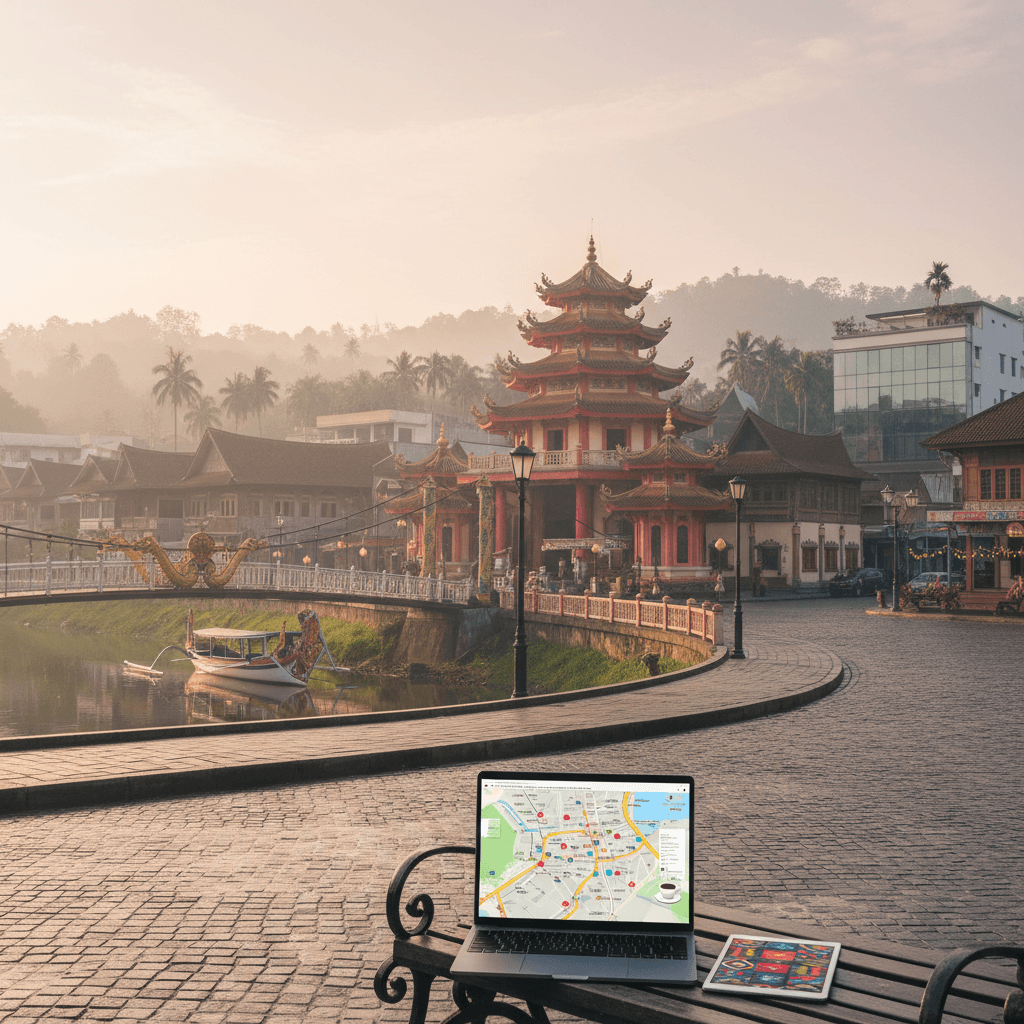
Manado
🇮🇩 Indonesia
The Coastal Slow-Down
Manado isn't your typical Indonesian digital nomad hub. It lacks the curated aesthetic of Bali and the frantic energy of Jakarta. Instead, you get a city that feels like a giant seaside village where the pace of life is dictated by the tides and Sunday church bells. As a predominantly Christian city in North Sulawesi, the vibe here is exceptionally relaxed and welcoming. You'll find yourself trading late-night clubbing for sunset Bintang beers and some of the best scuba diving on the planet.
Most nomads come here for the water but stay for the low cost of living. It's a place where you can live comfortably on a fraction of what you'd spend elsewhere, though you have to be okay with a bit of "roughing it" when it comes to infrastructure. Power outages happen, and the expat scene is small enough that you'll likely know everyone's name within a week. It's the perfect spot if you're looking to disconnect from the "hustle" and reconnect with nature.
Cost of Living Breakdown
Your dollar goes incredibly far here. A single person can get by on $400 to $550 a month if they're eating local, while $1,200 buys a very comfortable mid-range lifestyle with a nice apartment and regular diving trips.
- Budget ($400 to $550): Best for those sharing housing for around $100, eating $2 street food meals, and using public mikrolets.
- Mid-range ($800 to $1,200): Includes a 1BR in the city center for $300, frequent cafe meals, and regular Grab rides.
- Comfortable ($1,500+): Covers a private villa for $500 or more, upscale dining, and a dedicated scooter or car rental.
Where to Plant Your Flag
Choosing a neighborhood in Manado depends on whether you want convenience or quiet. The city is spread out, and traffic can be a headache, so pick your base wisely.
CitraLand
- Best For: Families and nomads who want modern comforts.
- The Vibe: A clean, gated community with green spaces and its own water park.
- Pros: Safe, quiet, and has a bypass road to skip some traffic.
- Cons: It's a 20 minute drive to the city center.
City Center & Boulevard
- Best For: Solo travelers who want to be near the action.
- The Vibe: Urban, loud, and right on the water near Mega Mas and Mantos malls.
- Pros: Everything is walkable, from gyms to cinemas.
- Cons: Constant traffic and noise.
Internet & Working Remotely
Don't expect lightning speeds, but the internet is reliable enough for Zoom calls. Most broadband sits between 20 and 50 Mbps. For a dedicated workspace, Sarang Inovasi is the go-to spot. They charge about $3 for a four-hour session or $45 for a full month. If you prefer a cafe vibe, Ocean Internet Cafe is a cheap local favorite at roughly $0.30 per hour. Grab a Telkomsel SIM card as soon as you land, data packages are cheap, usually under $10 for plenty of gigs.
Getting Around & Safety
Manado is one of the safest cities in Indonesia. You can walk around most areas at night without a second thought, though common sense applies. For transport, download Grab or Gojek. A blue Blue Bird taxi is your most reliable metered option, while a trip from the airport usually costs about $6 to $8. If you're brave enough to handle the traffic, you can rent a scooter for about $15 a day, but most expats prefer long-term car rentals like a Toyota Avanza for around $300 a month.
Food, Social Life, and Weather
The food is a highlight if you like spice. Head to Tuna House at Mega Mas for incredibly fresh fish or Pasar 45 for cheap night market eats. For a social drink, O'Reillys or Altitude Nightclub are the main haunts. Since the nomad community is small, keep an eye on the Manado Expats Facebook group to find out where people are meeting up.
The weather is tropical and humid, averaging 25 to 27°C. The dry season from May to October is the prime time to visit. Avoid January if you can, it's the wettest month with over 20 days of rain, which can make the already tricky infrastructure even more frustrating. Pack a light raincoat and plenty of patience for the occasional tropical downpour.
The Bottom Line
Manado is a breath of fresh air for nomads who find Bali too crowded or expensive. It is one of the most affordable coastal hubs in Indonesia, where your dollar stretches significantly further than in Jakarta or Canggu. For most remote workers, a monthly budget between $800 and $1,200 covers a comfortable lifestyle with a nice apartment, frequent meals out, and plenty of weekend diving trips.
While the low costs are a major draw, you're trading off some modern conveniences. Infrastructure can be spotty, and the expat scene is intimate rather than sprawling. You'll save money here, but you should also invest in a good power bank and a backup data plan for the occasional neighborhood power outage.
Monthly Budget Tiers
- Budget ($400 to $550): This level is for those living like locals. You'll likely stay in a shared house or a simple studio outside the center for around $100, eat mostly at street stalls, and use public mikrolets to get around.
- Mid-Range ($800 to $1,200): The sweet spot for most digital nomads. This covers a modern 1BR apartment in the city center for $250 to $350, regular cafe working sessions, ride-hailing apps, and mid-range dining.
- Comfortable ($1,500+): At this price point, you're looking at a villa in CitraLand for $500 or more, upscale seafood dinners, a private scooter or car rental, and weekly diving excursions to Bunaken.
Housing and Neighborhoods
Where you park your laptop depends on your tolerance for traffic. The Boulevard area in the city center is the most convenient for solo travelers. You're within walking distance of malls like Mega Mas and Mantos, but you'll deal with urban noise and higher rent. Expect to pay about $300 for a decent spot here.
Expats with families or those staying long-term often head to CitraLand. It's a modern, green estate with its own water park and shops. It feels safer and quieter, though you're looking at a 20 minute drive to reach the heart of the city. If you want a middle ground, Batukota offers a more local feel with better greenery, though the utilities can be more basic.
Food and Daily Expenses
Eating is a highlight of Manado life, and it's incredibly cheap if you like spice. A meal at a local night market like Pasar 45 will only set you back $2 to $3. For fresh fish, nomads head to Tuna House at Mega Mas, where a solid meal costs around $10.
- Street Food Meal: $2 to $3
- Mid-range Dinner: $10 to $12 per person
- Upscale Dining: $20+ per person
- Monthly Utilities: $100 to $150
- Coworking (Sarang Inovasi): $3 for 4 hours or $45 monthly
Connectivity and Transport
Internet isn't lightning fast, but it's reliable enough for Zoom calls. Most broadband connections via Telkom hit 20 to 50 Mbps. A local SIM card from Telkomsel is a must, and it's cheap at roughly $1 for the card plus a few dollars for a data package. For a dedicated workspace, Sarang Inovasi is the go-to spot, offering meeting rooms and a community vibe for about $50,000 IDR a day.
Getting around is best done via Grab or Blue Bird taxis. A scooter rental costs about $15 a day, but the traffic can be aggressive, so many nomads prefer the safety of a car. If you're staying for several months, renting a car like an Avanza for $300 a month is a common move for those who want to explore the volcanic highlands or distant beaches on their own schedule.
For Digital Nomads
If you're coming to Manado to work, you'll likely want to base yourself in the City Center or along the Boulevard. This is the heartbeat of the city, stretching along the waterfront where the malls like Mega Mas and Manado Town Square (Mantos) are located. It's the only part of town where you can realistically walk between your apartment, a cafe, and a grocery store without needing a ride-hailing app for every single move.
Most nomads gravitate toward this area for the reliable 4G/5G signals and proximity to Sarang Inovasi, the city's primary coworking hub. While the traffic can be loud and the air a bit humid, having Tuna House and various seafront bars within reach makes the urban friction worth it. You'll pay around $250 to $350 for a decent studio here, but you'll save a fortune on transport.
- Rent: $250 to $350 per month for a central studio.
- Vibe: Fast paced for Manado, convenient, and social.
- Top Spot: Ocean Internet Cafe for quick tasks or Sarang Inovasi for deep work.
For Families
CitraLand is the gold standard for anyone moving with kids or looking for a quiet, suburban life. Located about 15 to 20 minutes south of the city center, it feels like a different world. It's a gated community known for the massive Jesus Blessing Statue and its own water park. The streets are clean, wide, and safe for walking, which is a rare luxury in North Sulawesi.
Expats with families choose this area because it offers modern housing estates with actual yards. You're close to the bypass road, making it easier to escape to the highlands of Tomohon on weekends. The downside is the commute; if you have meetings in the center, the 20 minute drive can easily double during peak morning hours when everyone is heading toward the harbor.
- Rent: $400 to $600 for a multi bedroom house.
- Vibe: Quiet, secure, and green.
- Top Spot: The local parks and the CitraLand Water Park for weekend afternoons.
For Long Term Expats
If you're planning to stay for a year or more and want a balance between local life and modern comfort, look at Batukota or Winangun. These neighborhoods sit on the hills overlooking the city. They offer cooler temperatures than the humid waterfront and much more "breathing room" than the cramped city center. The infrastructure is still developing, so you might deal with the occasional power flicker, but the community feel is strong.
Living here usually requires a scooter or a car, as public mikrolets can be unpredictable on the hill routes. It's a favorite for those who want to be midway between the diving docks and the inland nature trails. Prices are lower than the Boulevard, with comfortable houses often going for $150 to $250 if you're willing to negotiate a long term lease.
- Rent: $150 to $300 for a local style house or villa.
- Vibe: Residential, breezy, and authentic.
- Top Spot: Small local warungs serving spicy Minahasan breakfast.
For Solo Travelers and Short Stays
If you're just passing through for a few weeks of diving in Bunaken, staying near the Airport or the northern edge of the city can be practical. It's significantly quieter than the center and puts you closer to the golf courses and some of the more secluded resorts. However, you'll be 20 to 30 kilometers from the main social scene, so it can feel a bit isolating if you don't have your own wheels.
Most solo travelers prefer to stick to the Boulevard area for the ease of meeting people at places like O'Reillys Irish Pub or the night markets at Pasar 45. It's the safest bet for finding English speakers and organized tour groups. Since street crime is remarkably low, you can comfortably explore the waterfront area on foot even after the sun goes down.
- Rent: $20 to $35 per night for mid range hotels or guesthouses.
- Vibe: Practical and transitional.
- Top Spot: The night markets for cheap, $2 seafood meals.
Connectivity Reality Check
Working from Manado requires a bit more strategy than working from Bali or Jakarta. While the city is modernizing fast, the infrastructure still reflects its laid back island roots. You can expect broadband speeds between 20 and 50 Mbps through providers like Telkom or Speedy, which is plenty for Zoom calls and standard uploads. However, the biggest hurdle isn't the speed; it's the stability. Power outages happen, and when the grid goes down, your home fiber goes with it.
Most seasoned nomads here rely on a two pronged approach. First, get a local SIM card immediately. Telkomsel is the gold standard for coverage in North Sulawesi, though Indosat is a solid backup. You can grab a prepaid SIM for about $1 USD and load it with data for peanuts. Having a mobile hotspot ready to go will save your life during a tropical thunderstorm when the electricity decides to take a nap.
Coworking in Manado
If you need a professional environment to escape the humidity, Sarang Inovasi is the primary hub for the city's small but growing digital community. It's more than just a desk; it's where you'll find the local tech scene and occasional networking events. The pricing is very accessible for those on a budget:
- Daily Pass (4 hours): Around Rp50,000 ($3 USD)
- Monthly Membership: Approximately Rp750,000 ($45 USD)
- Amenities: Meeting rooms, reliable backup power, and a community of local entrepreneurs.
The Cafe Office Scene
Since dedicated coworking spaces are limited, many nomads treat the city's cafes as their secondary offices. The Boulevard area and the big malls like Manado Town Square (Mantos) or Mega Mas are your best bets. These spots usually have strong AC and decent WiFi, provided you're buying coffee.
- Starbucks (Mantos/Mega Mas): The predictable choice. It has the most reliable backup generators and consistent speeds.
- Black Cup: A favorite for locals and expats who want a more "Manado" feel with good coffee and enough table space for a laptop.
- Tuna House Mega Mas: Great for a "work lunch" with a view of the water, though the midday sun can make screens hard to see on the terrace.
Practical Tips for Remote Workers
Don't expect every small "warung" or street side eatery to have WiFi. In Manado, the internet is still seen as a utility for malls and dedicated workspaces rather than a universal right in every cafe. If you're planning to stay long term, look for housing in CitraLand or the Boulevard area, as these neighborhoods generally get priority for infrastructure repairs.
Digital nomads often recommend bringing a high quality power bank and perhaps a portable travel router. If you're heading out to Bunaken for a few days of diving, don't count on getting much work done. The signal on the islands is spotty at best, and data speeds drop significantly once you leave the mainland. Treat your island time as a true digital detox and get your heavy lifting done while you're back in the city center.
A Safe Haven in North Sulawesi
Manado is frequently cited as one of the safest urban centers in Indonesia. The city benefits from a tight knit, community oriented culture where locals take pride in looking out for their neighbors. For digital nomads, this means a significantly lower risk of the petty street crimes often found in Bali or Jakarta. You can generally walk through the Boulevard area or CitraLand in the evening without looking over your shoulder.
While the atmosphere is relaxed, common sense still applies. Most expats suggest avoiding unlit, isolated outskirts late at night, but there aren't any specific "no-go" zones to worry about. The biggest safety concern for most isn't crime, it's the infrastructure. Sidewalks can be uneven or non-existent outside the center, and traffic is often heavy and chaotic. If you're renting a scooter via Pelago, wear a helmet and stay alert for sudden stops by mikrolets (local minibuses).
The local police can be reached at 110, though English proficiency among officers is often limited. Most travelers find that the "strong community watch" mentioned by long term residents is their best security. If you run into trouble, ducking into a local shop or cafe usually results in immediate help from friendly bystanders.
Healthcare Standards and Facilities
Healthcare in Manado is reliable for routine issues, minor infections, or dental work, but it lacks the specialized depth of larger hubs. For everyday needs, Siloam Hospitals is the go-to for the expat community. It's a private facility with modern equipment and some English speaking staff. RSUD Dr. Sam Ratulangi is another primary option for general medical services and emergency care.
If you have a chronic condition or require complex surgery, you should know that local facilities have limits. For anything life threatening or highly specialized, expats and wealthy locals often fly to Jakarta or Singapore. Because of this, high quality travel insurance with medical evacuation coverage is a must for anyone staying longer than a week.
- Siloam Hospitals: Best for private care and diagnostics.
- RSUD Dr. Sam Ratulangi: The main public referral hospital.
- Ambulance: Dial 118 for emergencies.
- Pharmacies: Look for Kimia Farma or Apotek signs; they are well stocked for basic medications.
Staying Healthy on the Ground
The tropical heat and humidity can be intense, especially during the peak months of May to October. Dehydration is a common pitfall for new arrivals. Don't drink the tap water; stick to bottled water or large Aqua gallons which cost about $1.50 for 19 liters. Most nomads find that using Grab to order heavy water jugs to their apartment is the easiest way to stay hydrated.
Food safety is generally high, though your stomach might need a few days to adjust to the local spice levels. Manado cuisine is famously hot. If you're sensitive, ask for "tidak pedas" (not spicy), though even then, expect a little kick. Pharmacies are easy to find in malls like Mega Mas or Mantos, where you can pick up rehydration salts or over the counter meds for the occasional bout of "traveler's belly."
Finally, since Manado is a gateway for world class diving in Bunaken, be aware of decompression sickness risks. While there is a hyperbaric chamber in the city, it is always wise to check its operational status with your dive resort before heading out. Most divers keep a local SIM from Telkomsel handy to ensure they have a signal even on the smaller islands.
Getting Around Manado
Manado isn’t exactly a city built for pedestrians. Outside of the immediate Boulevard area, you will find narrow sidewalks, uneven pavement, and a tropical humidity that makes a ten minute walk feel like a marathon. Most nomads quickly learn that survival here depends on two apps: Grab and Gojek. These are your lifelines for getting across town without breaking a sweat or your budget.
Ride-Hailing and Taxis
Grab is the dominant force in North Sulawesi. You can summon a car or a motorbike (ojek) in minutes from almost anywhere in the city. A typical ride across the center usually costs less than $2 USD. If you are heading to the airport, expect to pay between Rp100,000 and Rp130,000 ($6 to $8 USD) for the 17 minute drive. For those who prefer traditional meters, Blue Bird taxis are the gold standard for reliability and air conditioning, though they are slightly pricier than the apps.
Public Transport: The Mikrolet
If you want the authentic local experience, hop on a mikrolet. These are bright blue public minivans that zip through the streets with music often blaring from custom speakers. They follow set routes but don't have fixed stops; you just wave one down and tap on the roof when you want to get off. A single trip costs less than $1 USD. It is cheap and efficient, though the lack of AC and cramped seating means it is better for short hops than long commutes.
Driving and Rentals
For total independence, many long term expats rent a scooter. You can find local deals for around Rp250,000 ($15 USD) per day, though monthly rates are significantly lower if you negotiate in person at the local markets or through services like Pelago. If you have a family or need to haul diving gear, renting a car like a Toyota Avanza is common. Expect to pay roughly Rp5,000,000 ($300 USD) per month for a self drive rental.
- Grab/Gojek: Best for daily convenience and food delivery.
- Blue Bird: Preferred for airport runs and professional service.
- Mikrolets: The cheapest way to navigate the city like a local.
- Scooter Rental: Ideal for exploring the coast, provided you have an international driving permit.
Traffic and Navigation
Traffic in Manado can be surprisingly heavy, especially during the afternoon rush around Mega Mas and Mantos malls. The city layout is somewhat linear along the coast, so bottlenecks are frequent. If you are staying in CitraLand, use the bypass road to avoid the city center congestion when heading toward the airport or the highlands of Tomohon. Most travelers find that Google Maps is fairly accurate for navigation, though it sometimes struggles with the smallest back alleys in older neighborhoods.
Inter-Island Travel
Since you are likely here for the water, you will spend time at the Manado Harbor. Public boats to Bunaken National Park depart daily, usually in the early afternoon, and cost a pittance. For more flexibility, private boat charters are available for around $30 to $50 USD depending on your negotiation skills. If you are heading further afield to the Lembeh Strait for world class muck diving, it is a two hour car ride across the peninsula to Bitung.
The Local Lingo
In Manado, you'll mostly hear Bahasa Indonesia used for official business and Manado Malay (locally called Bahasa Manado) spoken on the streets. While the national language is the standard, the local dialect is heavily influenced by Dutch and Portuguese colonial history. It's faster, more rhythmic, and drops many of the formal prefixes found in Javanese Indonesian.
Most nomads find that English proficiency is quite low compared to Bali or Jakarta. While staff at high end hotels and dive resorts in Bunaken speak it well, your average mikrolet driver or street food vendor at Pasar 45 likely won't. You'll need a translation app to get by for anything beyond basic transactions.
Essential Phrases for Your Toolkit
Locals are incredibly friendly and will appreciate even a clumsy attempt at the language. Start with these basics to break the ice:
- Selamat pagi: Good morning
- Terima kasih: Thank you (often shortened to "Makasih")
- Berapa harganya?: How much is this?
- Minta tolong: Please help me / a polite way to ask for a favor
- Pedas?: Is it spicy? (A vital question in North Sulawesi)
Communication Tools & Connectivity
Since English isn't a given, the Google Translate app with the Indonesian offline pack is your best friend. The camera translation feature is particularly handy for reading menus at local spots like Tuna House or Raja Sate. For messaging, WhatsApp is the undisputed king. Whether you're booking a scooter via Pelago or talking to a landlord on Rumah123, everyone uses it.
For data, expats recommend grabbing a Telkomsel SIM card immediately upon arrival. It has the most reliable coverage in North Sulawesi, especially if you plan on taking boat trips to the islands. You can pick one up at the airport or any small kiosk for about $1 USD, then top up with credit (pulsa) as needed. Expect to pay around $20 to $35 USD a month for a solid data plan.
Digital Nomad Workflow
If you're working remotely, don't rely solely on your accommodation's WiFi. Power outages happen, and when they do, your phone's hotspot is your backup. Most nomads head to Sarang Inovasi for a stable environment. It's the primary coworking hub in town, costing about Rp50,000 ($3 USD) for a four hour session or Rp750,000 ($45 USD) for a full month.
When you're out and about, the mall culture is your secondary office. Malls like Manado Town Square (Mantos) and Mega Mas have plenty of cafes with decent speeds. Just keep in mind that the local "jam karet" (rubber time) mentality applies to tech support too; if the internet goes down in a cafe, it might stay down for the afternoon.
Social Etiquette
Communication in Manado is deeply tied to the community's Christian majority culture. Sundays are quiet, and you'll often see people dressed up for church. Being polite and keeping a level head is the way to go; raising your voice or showing extreme frustration is generally looked down upon. If you're looking for the expat community, skip the apps and join the Manado Expats Facebook group or hang out at O'Reillys Irish Pub to meet the diving crowd.
The Tropical Rhythm
Manado sits just a few degrees north of the equator, which means you can ditch the sweaters and prepare for a consistent tropical heat. The temperature hover around 25°C to 27°C (77°F to 81°F) year-round, but the humidity is the real factor that dictates your daily schedule. Most nomads find that the midday sun is best spent in an air-conditioned cafe like Ocean Internet Cafe or the malls at the Boulevard, saving outdoor exploration for the early mornings or breezy evenings.
The city operates on two main seasons: the wet and the dry. While you can visit any time, the rain here isn't just a light drizzle. When it pours, the streets can flood quickly and the infrastructure often struggles to keep up. If you are planning a stint here, your timing will likely depend on whether you are coming for the diving or the budget-friendly city life.
The Golden Window: May to October
This is the dry season and the undisputed best time to be in North Sulawesi. July and August are the driest months, seeing only about 11 rainy days on average. For digital nomads, this is the peak season for a reason. The skies are clear, the seas are calm, and the visibility at Bunaken National Park is at its absolute best.
- Diving Conditions: Crystal clear water and minimal currents make this the prime time for underwater photography in the Lembeh Strait.
- Outdoor Life: This is the best time to explore the Tomohon highlands or hike the volcanic landscapes without getting caught in a mudslide.
- Social Scene: You'll find more expats and travelers gathered at spots like Tuna House Mega Mas or O’Reillys during these months.
The Wet Season: November to March
If you choose to stay during the monsoon, be prepared for heavy downpours. January is the wettest month of the year, often seeing around 28 rainy days. While the rain usually comes in short, intense bursts, it can lead to power outages. Experienced nomads recommend staying in modern developments like CitraLand during this time, as they often have better drainage and more reliable backup generators.
The upside to the wet season is the cost. While Manado is already affordable, you can often negotiate even better long-term rates on housing through sites like Rumah123 or by talking to local agents. Just keep in mind that boat trips to the islands might be cancelled on short notice if the swells get too high.
Seasonal Planning at a Glance
- Best Weather: May to October. Hot, dry, and perfect for island hopping.
- Most Affordable: January to March. Expect lower demand for rentals but significantly more rain.
- Hottest Month: May, with averages hitting 27°C.
- Coolest Month: January, though "cool" is relative at 25°C.
Practical Considerations for Your Stay
Regardless of when you arrive, keep an eye on the local calendar. Manado is a Christian-majority city, so Sundays are very quiet with many businesses closing as families head to church. December is also a massive month for celebrations, which can make the city feel festive but also a bit more chaotic than usual.
If you are arrive during the rainy months, make sure your tech setup is protected. Power surges are common during storms, so a good surge protector and a Telkomsel SIM for a mobile hotspot are essential backups when the Speedy/Telkom broadband fluctuates. Most travelers find that despite the rain, the lush green scenery and the spicy seafood at Pasar 45 make the tropical humidity well worth the effort.
The Nomad Reality
Manado isn't Bali, and that’s exactly why people come here. It’s a coastal stronghold where the pace of life slows to a crawl, dictated more by the tides of Bunaken than the grind of a corporate clock. You’ll find a predominantly Christian culture that's incredibly welcoming, though the infrastructure can be a bit temperamental. Most nomads find the trade-off worth it for the world-class diving and the fact that $1,000 a month makes you feel like royalty.
Expats recommend bringing a high-quality power bank and perhaps a backup mobile hotspot. While the city is modernizing, occasional power outages are part of the charm, or the frustration, depending on your deadline. If you can handle a few technical hiccups, the reward is a stress-free lifestyle surrounded by volcanic peaks and some of the best seafood in Indonesia.
Cost of Living Breakdown
Your budget goes a long way here. A single person can get by on $400 to $550 if they’re living like a local, while $1,200 covers a high-end lifestyle with plenty of weekend trips.
Budget Tier ($400-$550/month)
- Housing: Shared local housing or modest studios for $100.
- Food: Sticking to street food at Pasar 45 for $2 per meal.
- Transport: Using public mikrolets for less than $1.
Mid-Range Tier ($800-$1,200/month)
- Housing: A 1BR apartment in the city center for $300.
- Food: Mix of home cooking and mid-range dinners like Tuna House for $10.
- Transport: Regular use of Grab and Blue Bird taxis.
Comfortable Tier ($1,500+/month)
- Housing: A private villa or high-end estate in CitraLand for $500+.
- Food: Frequent upscale dining and imported goods.
- Transport: Full-time scooter or car rental at $300 per month.
Where to Plant Your Flag
Choosing a neighborhood depends on how much you value peace over proximity to a mall. The city is spread out, and traffic can get surprisingly heavy during peak hours.
CitraLand
- Best For: Families and nomads who want Western-style suburbs.
- Pros: Gated safety, green spaces, and a water park.
- Cons: It’s a 20-minute drive to the city center.
The Boulevard (City Center)
- Best For: Solo travelers who want to be near the action.
- Pros: Walking distance to Mega Mas and Manado Town Square (Mantos).
- Cons: Noisy, high traffic, and constant urban bustle.
Batukota & Winangun
- Best For: Long-term expats seeking a middle ground.
- Pros: Cooler air and more trees than the coast.
- Cons: Infrastructure like water and internet can be more basic.
Internet and Productive Spaces
Reliable WiFi is getting easier to find. Most broadband connections via Telkom provide 20 to 50 Mbps, which is enough for Zoom calls. For a dedicated workspace, Sarang Inovasi is the go-to spot. It costs about $3 for a four-hour session or $45 for a full month. If you prefer the cafe vibe, Ocean Internet Cafe is a classic local haunt, charging only about $0.30 per hour.
For mobile data, grab a Telkomsel SIM card at the airport or any supermarket. A prepaid setup costs about $1, and you can top it up easily through the app or local kiosks. Coverage is generally excellent until you head out into the deep jungle or far-flung islands.
Getting Around
Don’t expect to walk much. The tropical heat and lack of sidewalks make Grab your best friend. A car from the airport to the center usually costs between $6 and $8. If you’re feeling adventurous, the blue mikrolets are the local way to travel for pennies, but they don't have air conditioning. For freedom, you can rent an Avanza for roughly $300 a month or a scooter for about $15 a day, though local traffic requires some serious nerves.
Safety and Health
Travelers often say they feel safer in Manado than in many Western cities. Street crime is rare, and the community is tight-knit. For medical needs, Siloam Hospital offers professional care and is the standard choice for expats. If anything truly serious happens, you'll likely want to catch a flight to Jakarta or Singapore. In an emergency, dial 110 for police or 118 for an ambulance.
Practical Logistics
- Banking: Use Wise for transfers and BCA or BNI ATMs for cash.
- Language: English isn't widely spoken. Download Google Translate and learn "Terima kasih" (thank you).
- Weather: The dry season runs from May to October. Avoid January if you hate the rain, as it’s the wettest month.
- Customs: Always take your shoes off before entering someone’s home. Sundays are for church; expect many businesses to be quiet or closed until the afternoon.
Need visa and immigration info for Indonesia?
🇮🇩 View Indonesia Country GuideHidden Gem
Worth the effort