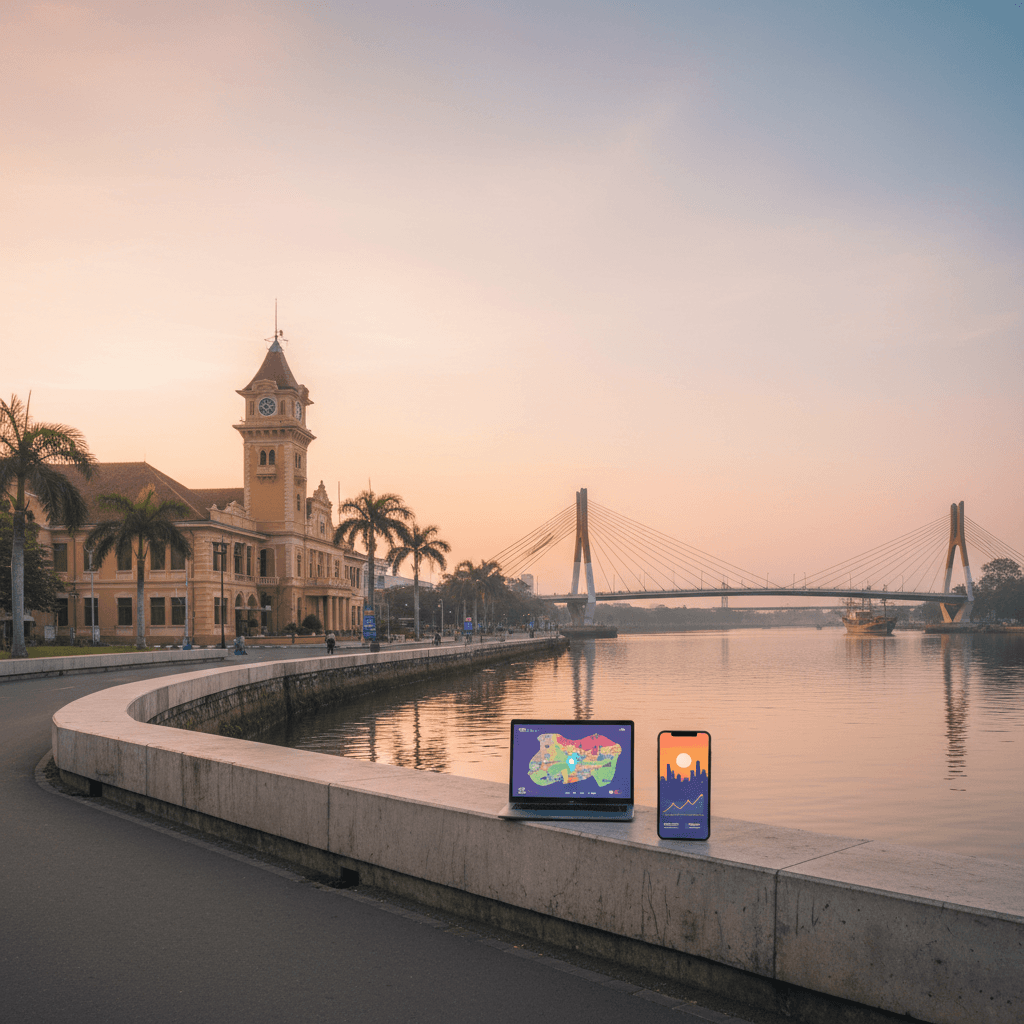
Makassar
🇮🇩 Indonesia
The Vibe
If Bali is Indonesia’s polished showroom, Makassar is its raw, high energy engine room. It is a city that doesn't try too hard to please tourists, which is exactly why nomads are starting to trickle in. You’ll feel the seafaring Bugis heritage everywhere, from the massive schooners at the docks to the smokey, salt air of the seafood markets. It is a place of intense contrasts; you might spend your morning on a high speed fiber connection in a sleek mall and your afternoon dodging scooters to find the best bowl of Coto Makassar in a back alley.
The pace is frantic in the center but surprisingly chill once you hit the waterfront. Most expats find the locals incredibly friendly, often stopping you for a chat just to practice their English. The downside? The heat is relentless, and the traffic congestion can be a nightmare during rush hour. It is a city for those who want an authentic Indonesian urban experience without the "nomad bubble" prices of Canggu or Ubud.
Living Costs
Your money goes incredibly far here. A single nomad can live quite well on $900 to $1,200 USD per month, though you can scrape by on $500 if you’re willing to live like a local. If you want the high life with a luxury apartment, daily AC, and upscale dining, expect to spend $1,500 or more.
- Budget ($500 to $800): Shared housing, street food meals for $1 to $2, and getting around via pete-pete minibuses.
- Mid-range ($900 to $1,200): A private 1BR in a central area, a mix of local cafes and mid-tier restaurants, and regular use of Grab or Go-Jek.
- Comfortable ($1,500+): Modern apartments in Tanjung Bunga, frequenting spots like Sunachi Harbour, and a dedicated scooter rental for $50 a month.
Where to Plant Roots
Choosing a neighborhood determines your quality of life here. Panakkukang is the go-to for solo nomads because it is walkable by Indonesian standards, packed with malls, and has a high concentration of cafes. The energy is high, but so is the traffic.
For a more manicured experience, Tanjung Bunga is the choice for families and those with a higher budget. It is secure and close to Siloam International Hospital, though you’ll pay $400 to $700 for a decent place. If you want history and sunset views, Losari Beach is the heart of the tourist action, though the noise from the waterfront can be a bit much if you’re trying to take Zoom calls.
Tamalanrea offers a quieter, greener alternative near the universities. It is affordable and popular with educators, but the commute into the city center can be a grind. If you’re a frequent flyer, Biringkanaya puts you right by the airport in a rapidly developing area, though it lacks the character of the older districts.
Work and Connection
The coffee shop culture is the backbone of the local remote work scene. While home fiber can reach 100 Mbps, public WiFi in cafes usually hovers around 15 to 21 Mbps. Kommy Space is the standout for dedicated work, offering AC, a kitchen, and even showers for a monthly fee of $50 to $100.
For mobile data, grab a Telkomsel or Indosat tourist pack at the airport. You’ll get about 20GB for $5 to $10. Most nomads use the GoPay or OVO apps for everything from paying for lattes to settling utility bills in their apartments.
The Practicalities
Navigating the city is an adventure. The pete-pete minibuses are iconic and cheap at $0.30 a ride, but most expats stick to Grab or Go-Jek. A typical cross-town trip costs between $1 and $3. If you’re brave enough to ride a scooter, rentals are affordable, but the traffic flow follows its own set of unwritten rules.
Healthcare is reliable if you stick to Siloam International Hospital for anything serious. For daily needs, pharmacies are on every corner. Safety has improved significantly lately, with local police reporting higher resolution rates for petty crimes. Just keep your wits about you in crowded markets and avoid poorly lit areas late at night.
The weather is a major factor. From November to March, the rains are heavy, with January often seeing 22 days of downpours. The sweet spot is August to October, when the skies are clear and the seafood sunsets at Losari Beach are at their peak. Just remember to dress modestly and always use your right hand for transactions to respect local Bugis customs.
The Price of Authenticity
Makassar is where you go when you're tired of the Bali bubble but still want your dollar to stretch. It's a gritty, coastal city that rewards those who don't mind a bit of traffic in exchange for some of the best seafood in Southeast Asia. Most nomads find they can live a high quality life here for about half the cost of Canggu or Ubud.
A monthly budget of $900 to $1,200 USD puts you in a comfortable mid range bracket. This covers a modern one bedroom apartment in a central area, daily meals out, and regular ride hailing trips. If you're on a tighter budget, you can get by on $500 to $800 USD by opting for shared housing and sticking to the legendary local street food scene.
Breaking Down the Monthly Spend
- Budget ($500 to $800 USD): Best for those happy with shared housing, eating $1 to $2 USD Coto Makassar bowls, and using pete pete minibuses.
- Mid range ($900 to $1,200 USD): Includes a private apartment in Panakkukang, a mix of local cafes and air conditioned malls, and daily Grab or Go Jek rides.
- Comfortable ($1,500+ USD): This gets you a luxury unit in Tanjung Bunga, high end seafood dinners at Sunachi Harbour, and perhaps a private scooter rental.
Where to Plant Your Flag
Choosing a neighborhood in Makassar is usually a trade off between modern convenience and commute times. Most expats and digital nomads gravitate toward three specific hubs.
Panakkukang
This is the heart of the city's urban energy. It's walkable compared to other districts because of the massive mall clusters. It's popular with solo nomads who want to be near coworking spaces and gyms.
- Rent: $300 to $500 USD for a central 1BR apartment.
- Pros: High density of cafes, easy access to groceries, and vibrant nightlife.
- Cons: The traffic congestion here is notorious during rush hour.
Tanjung Bunga
If you have a higher budget or are traveling with family, this is the spot. It feels more like a resort suburb with better security and proximity to Siloam Hospital.
- Rent: $400 to $700 USD for modern units.
- Pros: Cleaner air, gated communities, and close to the beach.
- Cons: You'll feel isolated without a dedicated scooter or car.
Tamalanrea
Located near the universities, this area is greener and significantly quieter. It's a favorite for educators and long term expats who want a local feel without the downtown price tag.
- Rent: $250 to $400 USD for modest houses or apartments.
- Pros: Very affordable and a relaxed, academic atmosphere.
- Cons: It's a long haul to the city center or the waterfront.
Connectivity and Workspace
Internet speeds in Makassar are surprisingly reliable if you know where to go. While cafe WiFi usually hovers around 15 to 21 Mbps, fiber connections in modern apartment buildings can easily hit 100 Mbps. For a dedicated desk, Kommy Space is the local favorite. It offers air conditioning, a kitchen, and even showers for around $50 to $100 USD per month.
For mobile data, travelers recommend picking up a Telkomsel or Indosat SIM card at the airport. You'll pay roughly $5 to $10 USD for a 20GB tourist pack that stays steady even in the more remote parts of the city.
Getting Around and Staying Safe
Public transport is dominated by pete pete minibuses which cost about $0.30 USD per ride, but they can be confusing for newcomers. Most nomads stick to Grab or Go Jek. A typical cross city trip costs between $1 and $3 USD. If you're brave enough to handle the local driving style, a monthly scooter rental will run you about $50 USD.
Safety shouldn't be a major concern as long as you use common sense. Crime rates have dropped recently, and the city feels welcoming to foreigners. For any health issues, Siloam International Hospital is the gold standard for care, featuring modern equipment and English speaking staff. For minor ailments, local pharmacies are everywhere; just look for the Kimia Farma sign.
The Social and Food Scene
You don't come to Makassar to diet. Expats recommend starting your food journey at Aroma Coto Gagak for a bowl of beef soup or Konro Karebosi for grilled ribs. A mid range dinner for two usually falls between $10 and $20 USD. When you need a break from work, the Losari Beach waterfront is the place to be at sunset. It's loud and crowded, but it's the soul of the city. For a quieter drink, head to the Breeze Rooftop Bar to catch the ocean breeze away from the street level heat.
For Digital Nomads: Panakkukang
If you need to be within walking distance of a decent flat white and a reliable mall, Panakkukang is the spot. It is the city's commercial heart, packed with retail hubs like Mall Panakkukang where you can find stable AC and international food chains when you're tired of local fare. Most nomads find the urban energy here helpful for staying productive, though you will definitely deal with some traffic noise.
- Rent: $300 to $500 USD for a managed apartment.
- Vibe: Fast paced, walkable, and convenient.
- Coworking: Kommy Space is the local favorite, offering showers and a kitchen for about $50 to $100 USD a month.
- The Downside: The air quality can dip, and the congestion is real during rush hour.
For Families and Long-Term Expats: Tanjung Bunga
Expats moving with kids usually head straight for Tanjung Bunga. It feels more like a planned resort community than a chaotic Indonesian city. It is closer to Siloam International Hospital and offers gated security, which provides peace of mind for those new to the region. You are also near Trans Studio Mall, which is a lifesaver for weekend family outings.
- Rent: $400 to $700 USD for modern villas or upscale condos.
- Vibe: Quiet, secure, and breezy.
- Healthcare: Home to the city's most modern medical facilities.
- The Downside: You are further from the historic center, and rent is the highest in the city.
For Solo Travelers and History Buffs: Losari Beach
If you are only in town for a few weeks, stay near the waterfront. Losari Beach is where the city comes alive at sunset. It is the best place to find Coto Makassar for $1 or $2 USD at a street stall while watching the schooners come in. You can walk to Fort Rotterdam or take a quick boat to the nearby islands from here.
- Rent: $350 to $550 USD for hotel apartments or guesthouses.
- Vibe: Social, touristy, and heavy on the seafood.
- Top Eats: Try the grilled fish at Aroma Coto Gagak or the ribs at Konro Karebosi.
- The Downside: It gets loud at night with local crowds and motorbikes.
For Educators and Budget Seekers: Tamalanrea
Located near the major universities, Tamalanrea is a greener, more academic pocket of Makassar. It attracts researchers and English teachers who want a local experience without the downtown price tag. The area feels more residential and less paved over than Panakkukang.
- Rent: $250 to $400 USD for simple, functional housing.
- Vibe: Youthful, affordable, and leafy.
- Connectivity: Fiber internet is common in the newer developments, hitting speeds of 100 Mbps.
- The Downside: It is a long commute to the beach or the major malls.
Practical Logistics
Getting between these neighborhoods is easiest via Go-Jek or Grab. A typical cross-town trip costs between $1 and $3 USD. If you are feeling adventurous, the pete-pete minibuses cost about $0.30 USD, but you will need some basic Indonesian to navigate the routes. For internet, grab a Telkomsel tourist SIM at the airport for around $10 USD to ensure you have 20GB of data the moment you land.
The weather is consistently hot, usually around 32°C (90°F), so prioritize an apartment with a high quality AC unit. Most expats suggest avoiding a move in January, as the heavy rains can turn the streets into small rivers. Aim for August through October for the best experience.
Connectivity and Speed
You won't find Bali levels of infrastructure here, but Makassar is catching up fast. Most modern apartments in areas like Tanjung Bunga or Panakkukang offer fiber optic connections that can reach 100 Mbps. If you're working from a local cafe or a budget guesthouse, expect speeds to hover between 15 and 21 Mbps. It's enough for Zoom calls, though you might want a backup for heavy uploads.
Mobile data is your best friend here. Grab a Telkomsel or Indosat SIM card as soon as you land. A tourist pack with 20GB of data usually costs between $5 and $10 USD. Coverage is solid across the city, though it can get spotty if you head out on a boat to the nearby islands. Most nomads use their phone as a hotspot when the cafe WiFi gets sluggish during peak afternoon hours.
Top Coworking Spaces
The coworking scene is still intimate, which makes it easy to actually meet people. Kommy Space is the current go-to for the digital crowd. It's got the holy trinity for productivity: reliable AC, ergonomic seating, and a kitchen. They even have showers if the Sulawesi heat gets to be too much. Monthly memberships generally run between $50 and $100 USD.
For a more casual vibe, the city has a massive cafe culture. You'll see locals and expats alike parked with laptops for hours. Just look for places with plenty of power outlets. Some popular spots for a work session include:
- Panakkukang Mall area: Packed with modern coffee shops that have stable WiFi and strong espresso.
- CPI (Center Point of Indonesia): Great for sunset views after you close your laptop, though it can get crowded on weekends.
- Losari Beachfront: Best for morning sessions before the humidity and tourist noise kick in.
Digital Nomad Logistics
If you're planning to stay long term, look for housing on Rumah123 or Flatio. Most nomads find that renting a 1BR in a managed building is the easiest way to guarantee a stable internet line. Prices for these "work-ready" spots usually land between $300 and $700 USD depending on how close you are to the water.
Digital payments are the norm in tech friendly spaces. Download GoPay or OVO. You can link these to your ride hailing apps like Go-Jek or Grab, making it seamless to hop between your apartment and your favorite workspace for about $1 to $3 USD per trip. Most coworking spaces and upscale cafes will take international credit cards, but keep some cash for the smaller street food stalls when you need a $2 bowl of Coto Makassar between meetings.
Remote Work Reality Check
Makassar is an authentic port city, not a curated nomad hub. This means you'll deal with occasional power flickers during heavy rain and the constant hum of traffic. Most expats recommend bringing a good pair of noise canceling headphones. The upside is the lack of "nomad fatigue" found in more crowded destinations. You're more likely to be invited for coffee by a curious local than to be surrounded by hundreds of other influencers. It's a place where you can actually get work done during the day and enjoy a $15 high end seafood dinner by the ocean at night.
Safety Overview
Makassar is generally a safe place for nomads and travelers, especially compared to larger Indonesian hubs like Jakarta. While it has a reputation for being a bit gritty, local police reports show a significant drop in crime recently, with a 96% resolution rate for reported incidents. You'll find the locals are incredibly welcoming, though you should still use common sense in crowded markets or isolated areas after dark.
The biggest safety concern isn't crime, it's the traffic. The streets can be chaotic, and pedestrian infrastructure is hit or miss. If you're walking around Losari Beach or Panakkukang, keep an eye on the motorbikes that sometimes hop onto the sidewalk. Most expats suggest sticking to ride-hailing apps like Grab or Go-Jek at night rather than walking long distances through unlit backstreets.
Healthcare Standards
If you get sick, you won't be stranded. The city has a solid network of clinics and pharmacies (known locally as apotek) for minor issues. For anything serious, Siloam International Hospital is the gold standard. It's modern, equipped with the latest tech, and is the go-to for the expat community because many of the doctors speak English.
Pharmacies are everywhere, and you can even order basic medications through the Halodoc app, which is a lifesaver if you're stuck in your apartment with a stomach bug. For emergencies, the local number to dial is 112.
Staying Healthy
The heat and humidity are the real hurdles here. Temperatures regularly hit 33°C (92°F), so dehydration is a frequent issue for newcomers. Stick to bottled or filtered water; the tap water in Makassar is a no-go for drinking. Most nomads buy the large 19-liter gallon jugs for their apartments, which only cost about $1 to $2 for a refill.
While the seafood is world-class, make sure you're eating at places with high turnover. Busy spots like Aroma Coto Gagak are usually a safe bet because the food is always fresh. If you have a sensitive stomach, ease into the spicy sambals slowly.
Key Contacts & Resources
- General Emergencies: Dial 112 for police or ambulance services.
- Best Hospital: Siloam International Hospital (Tanjung Bunga area).
- Health Apps: Use Halodoc for tele-consultations and medicine delivery.
- Travel Insurance: Most nomads here use SafetyWing or World Nomads, as they cover the specific types of motorbike accidents common in Indonesia.
Digital Nomad Precautions
Keep your tech gear out of sight when you're riding in a pete-pete or walking near the waterfront. While snatch-and-grab thefts aren't rampant, they do happen. It's also smart to use a VPN when hopping on the public WiFi at cafes like Kommy Space. Most apartments in areas like Tanjung Bunga offer gated security, which provides an extra layer of peace of mind if you're carrying expensive camera gear or laptops.
The Daily Commute
Navigating Makassar is an exercise in patience and local savvy. While the city is not as sprawling as Jakarta, the traffic congestion in areas like Panakkukang can get intense during rush hour. Most nomads quickly learn that the sidewalk infrastructure is hit or miss; it's great for a sunset stroll along Losari Beach, but you won't want to walk long distances between neighborhoods in the midday heat.
For most trips, the digital nomad's best friend is a pair of apps: Grab and Gojek. These services are incredibly reliable here. A quick motorbike taxi (ojek) across town usually costs between $1 and $2 USD, while a car with air conditioning might run you $3 to $5 USD depending on the rain and traffic. If you're coming from Sultan Hasanuddin International Airport, expect a 25 to 40 minute ride to the city center, costing roughly $5 to $10 USD.
Public Transport and Local Flavor
If you want to travel like a local and save some cash, look for the pete-pete. These are small, blue minibuses that follow set routes throughout the city. They don't have a formal schedule, but they're everywhere. You just hail one from the side of the road and pay about $0.30 USD in cash when you hop out. It's a bit cramped and there's no AC, but it's an authentic way to see the city's outskirts.
For a more modern public option, the Trans Mamminasata bus system is the way to go. These buses are cleaner and more comfortable than the pete-pete. To ride, you'll need an E-Money card or a local banking app that supports QRIS payments. It's a solid choice for reaching the university areas or the malls without dealing with the humidity on a bike.
Two Wheels or Four?
Expats who plan to stay for more than a month often look into scooter rentals. It gives you the freedom to bypass the gridlock that traps cars in the city center. You can usually find a decent scooter for around $50 USD per month. Just be aware that the driving style here is assertive; it's a "go with the flow" environment where the right of way is more of a suggestion than a rule. Most long term residents recommend sticking to ride-hailing until you're comfortable with the local rhythm.
- Grab/Gojek: Best for daily errands and avoiding the sun. Prices range from $1 to $3 USD per trip.
- Pete-pete: The cheapest way to get around at $0.30 USD per ride. Cash only.
- Trans Mamminasata: Modern bus fleet requiring QRIS or electronic payment cards.
- Scooter Rental: Roughly $50 USD monthly. Best for those comfortable with chaotic traffic.
For day trips to places like Gowa Fort or the highlands, hiring a private driver for the day is a common move. It usually costs between $30 and $50 USD including fuel. This is often easier than trying to coordinate multiple transfers or navigating rural roads on your own.
The Linguistic Landscape
In Makassar, you'll find that language is more than just a tool for trade; it's a bridge to the legendary hospitality of South Sulawesi. While Bahasa Indonesia is the official language used in government, media, and business, the city's soul speaks Bugis and Makassarese. Most locals are bilingual, switching between their ethnic tongue and the national language with ease.
English proficiency is relatively low compared to Bali or Jakarta. You'll have no trouble in high end hotels like the The Rinra or malls like Panakkukang Square, but the vibe changes once you hit the local markets or hop on a pete-pete. Most nomads find that learning a few dozen Indonesian phrases makes a massive difference in how they're treated and the prices they're quoted.
Digital Communication and Connectivity
Staying connected is straightforward if you plan ahead. Expats recommend picking up a Telkomsel or Indosat SIM card immediately upon arrival. You can grab a tourist pack at the airport for $5 to $15 USD, which usually nets you about 20GB of data. If you're staying long term, registering your phone's IMEI is a necessary hurdle to keep using local SIMs after 90 days.
For remote work, fiber internet in modern apartments like those in Tanjung Bunga is reliable, often hitting speeds over 100 Mbps. If you're working from cafes, expect speeds closer to 15 to 21 Mbps. Kommy Space is the go to for a professional setup, offering desks for around $50 to $100 USD per month with the added bonus of air conditioning and kitchen access.
Navigating Daily Interactions
South Sulawesians are famously friendly and will often approach you just to practice their English. Don't be surprised if "Hello Mister" follows you down Losari Beach. While Google Translate is your best friend for complex needs, the English-Makassar Translator app is a fun way to impress locals with a few words in the regional dialect.
- Terima kasih: Thank you (The most important phrase you'll use).
- Berapa harganya?: How much is this? (Use this at the markets).
- Bisa kurang?: Can you go lower? (For friendly haggling).
- Permisi: Excuse me (Essential for navigating crowded spaces).
Social Apps and Digital Tools
Communication isn't just verbal here; it's digital. WhatsApp is the undisputed king for everything from booking a haircut to chatting with your landlord. You'll also want Go-Jek and Grab installed on your phone. These aren't just for rides; they're the primary way nomads order food and handle small deliveries across the city.
If you're looking to meet other expats or find community events, keep an eye on Facebook Groups and InterNations. While the nomad scene is smaller than in other Indonesian hubs, it's tight knit. Most social coordination happens in these digital spaces before moving to rooftop spots like Breeze for sunset drinks.
Cultural Etiquette in Speech
The way you communicate is just as important as the words you use. Makassar follows traditional Indonesian norms where being soft spoken and polite is preferred over being direct or loud. Always use your right hand when handing over money or a business card, as the left is considered impolite. A small nod and a smile go a long way when your vocabulary fails you.
The Tropical Reality
Makassar sits right on the coast, which means you're dealing with a classic equatorial climate. It stays hot year round, with daytime highs hovering between 30°C and 33°C (86°F to 92°F). Nights offer a slight reprieve, dropping to around 22°C (72°F), but the humidity is a constant companion. If you aren't a fan of sweating through your shirt by noon, you'll want to prioritize an apartment with strong AC in neighborhoods like Tanjung Bunga.
The city operates on two distinct settings: bone dry or soaking wet. Most nomads find the heat manageable when the air is dry, but the monsoon season can be a grind for anyone trying to get around on a scooter or via pete-pete minibuses.
Dry Season: The Sweet Spot (May to October)
This is when Makassar really shines. The skies stay clear, the sunsets over Losari Beach are world class, and the humidity takes a back seat. August is statistically the driest month, making it the perfect time for day trips to Gowa Fort or exploring the seafaring history at Fort Rotterdam without getting caught in a downpour.
- August to October: This is the absolute best window to visit. The air is slightly fresher, and outdoor dining at places like Aroma Coto Gagak becomes much more enjoyable.
- Outdoor Life: You'll see the waterfront come alive in the evenings. It's the best time for digital nomads to work from breezy rooftop spots like Breeze Rooftop Bar.
- Travel Logistics: Since the roads in Makassar are prone to congestion, the dry season makes ride-hailing via Go-Jek or Grab much more reliable. You won't be stuck waiting an hour for a car because of a flash flood.
Rainy Season: What to Expect (November to March)
When the rain hits Makassar, it doesn't mess around. January is the peak of the wet season, often seeing over 22 days of rain and upwards of 400mm of precipitation. Expats recommend staying in Panakkukang during these months because the malls are walkable and you can find everything you need without stepping into a puddle.
- January and February: These are generally considered the worst months to arrive. Heavy rain can lead to localized flooding and even worse traffic than usual.
- Infrastructure Challenges: Inconsistent drainage means some streets turn into rivers quickly. If you're here during this time, stick to high-end apartments or hotels with reliable backup generators, as storms can occasionally mess with the local grid.
- The Silver Lining: The rain keeps the dust and pollution down. Plus, the surrounding countryside becomes incredibly lush if you're planning to head toward the mountains.
Packing and Preparation
Regardless of when you arrive, modesty is key in South Sulawesi. Even when it's 33°C, travelers usually opt for light, breathable fabrics like linen or moisture-wicking tech gear rather than short-shorts. If you're visiting during the wet season, a high-quality poncho is a better investment than an umbrella, which will just flip inside out during a coastal squall.
Keep an eye on the local lunar calendar as well. While the weather is the main driver for most travelers, visiting during Ramadan can change the city's pace significantly, with many local eateries closing during the day and a massive surge in social activity and food markets after sunset.
The Lowdown on Makassar
If you are looking for an authentic Indonesian experience without the Bali price tag or the crowds, Makassar hits the sweet spot. It is a rugged, maritime city where Bugis seafaring history meets a growing urban energy. You will find a coastal vibe that is far more relaxed than Jakarta, though the traffic and humidity can still test your patience. Most nomads appreciate the low costs and the incredible seafood, even if they have to deal with some inconsistent infrastructure and tropical heat.
Budgeting for Your Stay
Makassar is remarkably affordable. Your money goes significantly further here than in Indonesia's more famous hubs. A single nomad can live comfortably on $1,200 USD a month, while those on a tighter budget can get by on $500 to $800 USD by sticking to shared housing and local canteens.
- Budget ($500 to $800): Focuses on shared housing, pete pete minibuses, and street food like Coto Makassar for $1 to $2 per bowl.
- Mid range ($900 to $1,200): Covers a private one bedroom apartment in a central area, mixed dining, and regular use of Grab or Go Jek.
- Comfortable ($1,500+): Includes luxury apartments in Tanjung Bunga, upscale dining at Sunachi Harbour, and a private scooter or car service.
Where to Set Up Base
Choosing a neighborhood depends on whether you value modern convenience or local charm. Traffic is a major factor here, so living near where you plan to work or socialize is a smart move.
Tanjung Bunga
This is the upscale choice for expats and families. It is secure and resort like, located near Siloam Hospital and major malls. Expect higher rents between $400 and $700 USD, but you get better peace and quiet.
Panakkukang
This is the heart of the city for solo nomads. It is vibrant and relatively walkable compared to other districts, with plenty of malls and cafes. Rent usually falls between $300 and $500 USD, but be prepared for heavy congestion during rush hour.
Tamalanrea
Located near the universities, this area is greener and more affordable, with rents starting around $250 USD. It is great for a quiet, budget friendly stay, but the commute to the city center can be a grind.
Internet and Working
WiFi in local cafes usually clocks in between 15 and 21 Mbps. If you need serious speed, fiber connections in modern apartments can hit 100+ Mbps. Kommy Space is the go to hub for nomads, offering AC, a kitchen, and even showers for a monthly fee of around $50 to $100 USD. For mobile data, grab a Telkomsel or Indosat tourist pack at the airport for about $5 to $10 USD to get 20GB of data.
Getting Around
The local pete pete minibuses are the cheapest way to travel at $0.30 per ride, but they can be confusing for newcomers. Most expats rely on Go Jek or Grab, where a typical trip across town costs $1 to $3. If you are staying long term, you can rent a scooter for about $50 USD a month. For airport transfers, a Go Jek takes about 30 to 40 minutes and costs roughly $5 to $10 USD.
Health and Safety
Safety has seen a boost lately, with local police reporting high resolution rates for petty crimes. It is generally safe for foreigners, though you should avoid poorly lit, isolated areas at night. For medical needs, Siloam International Hospital is the most modern facility in the city. If you have an emergency, dial 112.
Food and Social Life
The food scene is a major highlight. You have to try the local staples like Coto Makassar at Aroma Coto Gagak or the ribs at Konro Karebosi. For a night out, the Breeze Rooftop Bar or the waterfront at Losari Beach are the main social magnets. While the nomad community is smaller than in Ubud, you can find your crowd through Facebook groups or by hanging out at the malls and beach clubs.
Weather and Timing
It is tropical and hot, usually hovering between 30 and 33 degrees Celsius. The rainy season hits hard from November to March, with January being particularly wet. The best window to visit is August through October, when the weather is driest and outdoor activities are more manageable.
Quick Practicalities
- Money: ATMs are everywhere. Use GoPay or OVO for digital payments, as they are accepted almost everywhere from malls to small shops.
- Language: Indonesian and Bugis are the primary tongues. English is common in hotels but rare on the street. Download Google Translate and learn "Terima kasih" (thank you).
- Etiquette: Dress modestly when away from the beach. Always remove your shoes before entering someone's home.
- Apps: Use Rumah123 for apartment hunting and Grab for almost everything else.
Need visa and immigration info for Indonesia?
🇮🇩 View Indonesia Country GuideWild Card
Expect the unexpected