Lombok (Kuta)
🇮🇩 Indonesia
The Vibe: Bali’s Wild, Younger Sibling
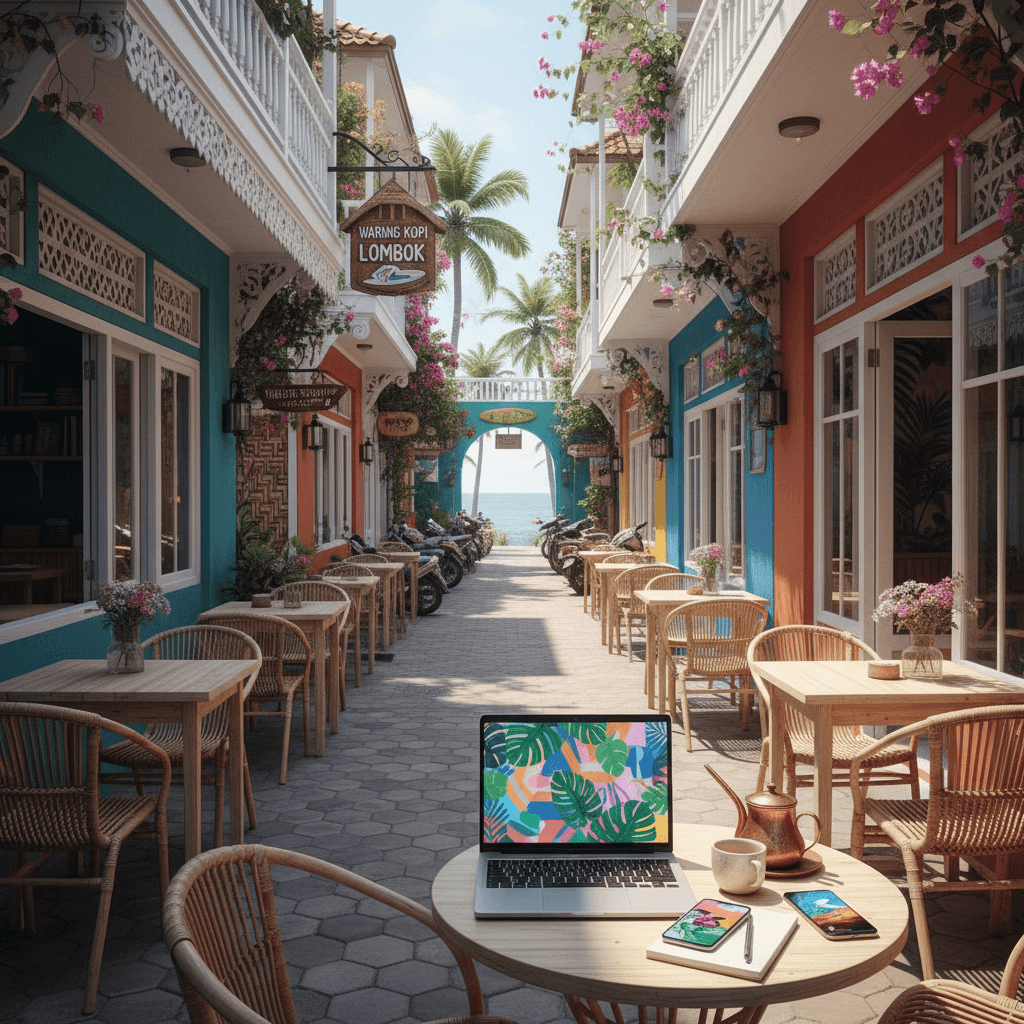
Kuta Lombok is what people mean when they talk about "the way Bali used to be." It’s a dusty, sun-drenched coastal town where the roar of motorbikes is usually drowned out by the sound of breaking waves. While Bali has leaned into high-end luxury and heavy traffic, Kuta maintains a raw, unpolished energy that appeals to nomads who prefer salt in their hair over a manicured beach club scene.
The rhythm here is dictated by the tides. You’ll see expats and digital nomads checking surf reports over their morning coffee at Kenza Cafe before heading to a deep-work session. It’s a place where the community is tight-knit; you’ll likely run into the same people at the coworking space, the gym, and a local beach bar all in the same day. It’s laid-back, authentic, and feels like a genuine frontier for the 2025-2026 nomad season.
Cost of Living
Your money goes significantly further here than in Canggu or Uluwatu. Most nomads find they can live a very comfortable lifestyle for around $1,100 USD per month without much effort. If you’re on a budget, sticking to local warungs and shared housing can drop that closer to $700 USD.
- Budget ($600 to $900): Local guesthouses, street food like Ayam Taliwang for IDR 20k, and a DIY approach to travel.
- Mid-range ($900 to $1,100): A private studio, daily cafe meals, a monthly coworking membership, and a reliable scooter.
- Comfortable ($1,200+): A luxury villa with a pool, high-end Western dining, and frequent weekend trips to the Secret Gilis.
Where to Set Up Base
- Kuta Town (Pujut): The heart of the action. You’re steps away from Milk Espresso and the main social hubs. It’s the best spot for solo travelers who want to meet people, though it can get a bit noisy when the local bars ramp up.
- Selong Belanak: About 30 minutes west. It’s quieter, more scenic, and popular with families or those who want a "retreat" vibe. The WiFi can be patchier here, so most remote workers stick to Kuta for daily tasks.
- Gerupuk: The ultimate surfer’s enclave. It’s remote and basic, but if your day revolves around the reef breaks, this is where you’ll find your tribe.
Connectivity and Productivity
The days of "Lombok internet" being an oxymoron are over. While the occasional power flicker still happens, most professional spaces have adapted. South Lombok Cowork is the current gold standard, offering fiber speeds up to 1,200 Mbps and a dedicated AC room for those humid afternoons. A monthly pass will run you about IDR 1.2M (roughly $75 USD).
For a more creative, hotel-integrated vibe, KARIA uses Starlink to keep things stable. If you prefer the "cafe hopping" style of work, Bush Radio and The Spot are nomad favorites. Just make sure you have a Telkomsel SIM as a backup; a 4GB starter pack is about IDR 150k and coverage is solid throughout the main town.
Getting Around
You’ll need a scooter. Public transport is virtually non-existent, and while Gojek and Grab work in the center of Kuta, they become unreliable once you head toward the more remote beaches. Expect to pay IDR 50k to 70k per day for a scooter rental. The roads are generally in good shape, but keep an eye out for wandering livestock and the occasional pothole on the way to Tanjung Aan.
Safety and Health
Kuta is generally safe, but don’t get too complacent. Scooter theft can happen, so always lock your bike. If you have a medical hiccup, Kuta Emergency Clinic is open 24/7 for minor issues. For anything serious, you’ll be heading to Siloam Hospital in Mataram, which is about 90 minutes away but offers high-standard care with English-speaking staff.
The Social Landscape
Lombok is predominantly Muslim, which gives it a different cultural feel than Hindu Bali. You’ll hear the call to prayer throughout the day, and it’s respectful to dress modestly when you’re away from the beach. The "Lombok Digital Nomads" Facebook group is the best way to find meetups, but honestly, just showing up at Tanjung Aan for sunset is usually enough to find a group of people to grab a Bintang with.
The Price of Paradise
Kuta Lombok remains one of the few places in Southeast Asia where you can still live a high quality life without the Bali price tag. For 2025 and 2026, it sits in that sweet spot of being developed enough for reliable work but rugged enough to keep costs down. Most nomads find they can live here for about 30% to 40% less than they would in Canggu or Uluwatu.
Your biggest variable will be housing. A standard studio or a comfortable one bedroom apartment in areas like Pujut or near the main drag usually runs between IDR 3 million and 7 million (USD 190 to 450) per month. If you're looking for a private villa with a pool, expect to pay USD 1,200 or more. Expats recommend negotiating long term stays directly with owners or through Facebook groups like Lombok Housing rather than relying solely on booking apps.
Monthly Budget Tiers
How much you spend depends on your appetite for Western comforts. Here is how the monthly totals usually break down:
- The Budget Nomad (USD 600 to 900): You're eating at local warungs, renting a room in a shared guest house, and driving a basic scooter. You'll skip the dedicated coworking desks and work from cafes instead.
- The Mid Range Resident (USD 900 to 1,100): This covers a private one bedroom, a mix of local and Western dining at spots like Kenza Cafe, a monthly coworking membership, and the occasional car hire for longer trips.
- The Comfortable Expat (USD 1,200+): You're likely in a modern villa, eating out at upscale restaurants most nights, and paying for day passes at beach clubs or surf lessons.
Daily Sustenance
Eating is where Kuta really shines for the budget conscious. A plate of Nasi Campur or Ayam Taliwang at a local warung will cost you IDR 15,000 to 30,000 (USD 1 to 2). If you're craving a flat white and an avocado toast at a place like Milk Espresso, you'll pay closer to IDR 50,000 to 100,000 (USD 3 to 6). A high end dinner with drinks at a beachfront spot will easily clear IDR 200,000 (USD 13).
The Cost of Staying Connected
Reliable internet used to be a headache here, but the arrival of Starlink and better fiber infrastructure has changed the game. If your accommodation's WiFi is patchy, a membership at South Lombok Cowork is a smart investment. They offer 1,200 Mbps fiber for about IDR 1.2 million (USD 77) per month. Other nomads prefer The Spot, which offers half day passes for IDR 125,000.
For mobile data, Telkomsel is the gold standard for coverage. You can grab a starter SIM for IDR 150,000 with a decent data package. Topping up is easy and cheap through local shops or the MyTelkomsel app. Many digital nomads also use GoPay or QRIS for daily transactions, as digital payments are now widely accepted in Kuta's main cafes and shops.
Transport and Logistics
A scooter is non negotiable if you want to explore. Rental prices along Jl. Raya Kuta are steady at IDR 50,000 to 70,000 per day, but you can often get a monthly rate for around USD 50 to 100. Fuel is incredibly cheap, usually costing just a few dollars to fill the tank. If you aren't comfortable on a bike, the Gojek and Grab apps work well in the town center, with motorbike trips costing IDR 20,000 to 60,000. Just keep in mind that drivers can be harder to find once you head out toward remote spots like Gerupuk or Selong Belanak.
The Pulse of Kuta Town (Pujut)
Best for: Digital nomads, solo travelers, and social butterflies.
If you want to be where the action is, Kuta Town is your base. This is the island's hub for coworking and networking. Most nomads gravitate here because it's the only area where you can reliably find high speed internet, with spots like South Lombok Cowork offering 1,200 Mbps fiber and Bush Radio providing that perfect laptop friendly atmosphere. You'll find a tight knit community of remote workers who swap tips over flat whites at Milk Espresso.
- Rent: Expect to pay between IDR 3 million and 7 million ($190 to $450) for a decent studio or a private room in a modern guesthouse.
- Vibe: High energy, surf centric, and walkable in the center.
- Pros: Best WiFi in Lombok, dozens of cafes, and easy access to Kuta Emergency Clinic if you get a case of "Bali belly."
- Cons: It can get noisy near the main strip, especially on weekend nights when the beach bars crank up the music.
The Quiet Luxury of Selong Belanak
Best for: Families, retirees, and slow travelers.
About 30 minutes west of Kuta, Selong Belanak feels like a different world. It's famous for its wide, shallow bay and white sand, making it the safest spot for kids or beginners to learn to surf. Expats who want a quieter life often settle in the hills here, where luxury villas offer sweeping ocean views. It's much more peaceful than Kuta, though you'll sacrifice some convenience.
- Rent: Upscale villas often start at $1,200 per month and climb significantly higher for premium builds.
- Vibe: Serene, upscale, and naturally beautiful.
- Pros: Stunning scenery, less traffic, and a very family friendly beach.
- Cons: WiFi can be patchy unless your villa has Starlink; you'll also need a scooter or a private driver for every grocery run.
The Surfer's Edge: Gerupuk and Are Guling
Best for: Hardcore surfers and budget adventurers.
If your day revolves entirely around the swell, Gerupuk is the place to be. Located east of Kuta, this fishing village is the gateway to five different surf breaks. It's rugged and basic, but it’s where you’ll find the most authentic local connection. Are Guling is similar, offering a raw, "old school" Indonesia feel that many travelers say reminds them of Bali twenty years ago.
- Rent: Budget rooms and local homestays can be found for IDR 3 million or less if you negotiate in person.
- Vibe: Rustic, salt stained, and very laid back.
- Pros: Immediate access to some of the best waves in Indonesia and very low cost of living.
- Cons: Infrastructure is minimal; power outages are more frequent here, and you'll find very few Western style amenities.
Strategic Living Tips
Most expats recommend starting with a week in Kuta Town to get your bearings before committing to a long term rental. Use the Lombok Housing Facebook group to find leads, but always inspect the property in person to check the water pressure and mobile signal. Telkomsel is the gold standard for data here; a starter SIM costs about IDR 150k and will often work as a hotspot when the cafe WiFi fails. For getting around, a scooter rental is nearly mandatory at IDR 50k to 70k per day, as Gojek and Grab are mostly limited to the central Kuta area and can be hard to find after dark.
Connectivity on the Island
Kuta Lombok has come a long way from the days of spotty 3G and frequent blackouts. While it still feels like Bali's rugged younger sibling, the infrastructure has matured significantly. Most nomads find that speeds average between 30 to 75 Mbps in the main town area, which is plenty for Zoom calls or uploading content. Many high end villas and dedicated workspaces have now integrated Starlink as a backup, making the "island life" excuse for missing a deadline much harder to use.
Power outages do happen, though they're usually brief. Expats recommend keeping a portable power bank charged and having a local SIM card ready for tethering. It's a small trade off for the ability to surf world class breaks between meetings.
Top Coworking Spaces
The coworking scene in Kuta is intimate and community focused. You won't find the massive, corporate style hubs of Canggu here. Instead, these spaces act as the social glue for the local nomad community.
- South Lombok Cowork: This is the heavy hitter in town. It boasts a 1,200 Mbps fiber connection that's easily the most reliable on the island. The space has air conditioning, a solid restaurant, and a professional vibe. Prices sit at around IDR 200k for a day pass, IDR 400k for a week, or IDR 1.2M (USD 75) for a monthly membership.
- KARIA (at TIKA Lombok): This spot is perfect if you're looking for a creative, boutique atmosphere. It's integrated into a hotel, stays open 24/7 for members, and uses Starlink to ensure you're never offline. It's a favorite for those working late night US or European shifts.
- The Spot: Located in a beautiful eco lodging setting, this is a more relaxed choice. It offers speeds around 40 Mbps and a half day pass for IDR 125k. It's great for deep work sessions when you want to escape the main road noise.
Laptop Friendly Cafes
If you prefer the hum of a coffee machine over a dedicated office, Kuta has plenty of "work friendly" cafes. Most owners are happy to let you linger for a few hours if you're ordering food and drinks.
- Bush Radio: This place feels like an industrial loft and is arguably the most popular laptop hangout. The WiFi is snappy, there are plenty of power outlets, and the coffee is some of the best in town.
- Milk Espresso: A classic Kuta staple. It gets busy during the lunch rush, but the morning vibe is perfect for clearing your inbox.
- Kenza Cafe: While more of a dining destination, the breezy layout and reliable internet make it a solid afternoon workstation.
Mobile Data and SIM Cards
Don't rely solely on cafe WiFi. Grab a Telkomsel SIM card as soon as you arrive, as they have the most consistent coverage across the south coast. You can pick up a starter pack at the airport or any small cell shop in town for about IDR 150k, which usually includes around 4GB of data. Top ups are incredibly cheap through the MyTelkomsel app; you can often get 20GB to 50GB for under USD 10.
Travelers often say that having a local SIM is a lifesaver when exploring more remote spots like Selong Belanak or Gerupuk, where cafe WiFi can be non existent. Just remember that your phone must be IMEI registered if you're staying in Indonesia for more than 90 days, otherwise your local signal will be cut off.
Summary of Costs
- Daily Coworking Pass: IDR 100k to 150k (USD 6 to 9)
- Monthly Coworking Membership: IDR 1.2M (USD 75)
- Local SIM (Large Data Bundle): IDR 150k to 250k (USD 9 to 16)
- Coffee at a Work Cafe: IDR 35k to 50k (USD 2 to 3)
Staying Safe on the Island
Kuta Lombok is generally a safe, welcoming environment for the nomad community. While it doesn't have the high-intensity hustle of Bali, you'll still want to keep your wits about you. Petty theft is the most common issue, particularly scooter-related crimes. Most expats recommend never leaving your phone or bag in the front cubby of your motorbike, as "snatch and grabs" can happen on quieter stretches of road.
When you're out at night, stick to the main strips like Jl. Raya Kuta. Some of the roads leading toward Selong Belanak or Gerupuk lack streetlights and can be isolated. If you're heading home late from a beach party at Ombak Bar, it's better to ride with a friend or call a Grab car if you aren't confident on your bike. Most travelers find the local Sasak people incredibly friendly, but it's always smart to respect local customs by dressing modestly when you aren't on the sand, especially since Lombok is more conservative than its neighboring islands.
- Scooter Safety: Always wear a helmet. The roads are improving, but gravel and wandering livestock are frequent hazards.
- Valuables: Use the safe in your villa or guesthouse. Don't leave laptops visible in your car or on your bike seat while you're surfing.
- Night Travel: Avoid solo rides on unlit rural backroads after 10:00 PM.
Healthcare and Clinics
For minor ailments like "Bali Belly," skin infections, or small scooter scrapes, you don't need to leave town. The Kuta Emergency Clinic on the main road is open 24/7 and is the go-to spot for nomads. It's clean, the staff often speaks decent English, and they're used to handling traveler insurance claims. You can reach them at +62 370 6506240.
If you're facing something more serious that requires imaging or surgery, you'll need to head to Mataram, which is about a 60 to 90 minute drive. Siloam Hospital Mataram is the gold standard for international-level care in the region. They have Western-trained specialists and modern equipment. Most long-term expats keep a digital copy of their insurance card and blood type handy, just in case a trip to the capital is necessary.
Pharmacies and Supplies
Pharmacies, known locally as Apotek, are scattered throughout Kuta. You'll find most basic medications, rehydration salts, and high-quality sunblock without much trouble. For specific prescriptions, it's better to stock up in Mataram or bring them from home, as smaller shops in Kuta might have limited inventory of specialized drugs.
- Kuta Emergency Clinic: Best for immediate, non-life-threatening care and stitches.
- Siloam Hospital Mataram: The primary choice for emergencies, X-rays, and specialist consultations.
- Medical Costs: A standard clinic visit usually runs between IDR 300,000 and 800,000 depending on treatment.
Emergency Contacts
It’s a good idea to save these numbers before you land. While the general emergency number in Indonesia is 112, calling the clinic directly is usually faster in Kuta. Most coworking spaces like South Lombok Cowork also keep a list of trusted local drivers who can help in a pinch if you can't find a ride-hailing app active during the late hours.
- General Emergency: 112
- Kuta Emergency Clinic: +62 370 6506240
- Ambulance: 118
The Scooter is King
In Kuta Lombok, your autonomy depends almost entirely on two wheels. While the main town center is compact enough to navigate on foot, the best surf breaks and coworking hubs are spread out. Most nomads rent a scooter immediately upon arrival. You can find rentals along Jl. Raya Kuta for IDR 75,000 to 150,000 per day. If you are staying for a month, negotiate that down to around IDR 1 million to 1.2 million.
The roads have improved significantly over the last few years, but they remain narrow and occasionally shared with livestock. Always wear a helmet and keep a close eye on your bike; opportunistic theft happens, so use the handlebar lock. If you aren't comfortable riding yourself, local "ojek" riders are usually hanging around street corners ready to give you a lift for a few dollars.
Ride-Hailing and Apps
The digital transport scene in Kuta is a bit of a mixed bag. Gojek and Grab do operate here, but they aren't nearly as ubiquitous as they are in Bali. You'll have the best luck in the core Kuta area during daylight hours. A motorbike trip via the app usually costs between IDR 20,000 and 60,000, while a car might run you IDR 60,000 to 150,000 for short hops.
- Reliability: High in central Kuta during the day; very low in remote spots like Gerupuk or after dark.
- Local Friction: Be aware that "no-go zones" for apps still exist in certain neighborhoods to protect local taxi drivers. Look for signs or ask your accommodation provider where it is safe to book a pickup.
- Payment: Link your GoPay or credit card to the app to avoid fumbling for change, though many drivers still prefer cash.
Airport Transfers
Lombok International Airport is about 20 to 30 minutes away from Kuta. You have three main options when you land. The most seamless is a pre-arranged pick-up from your hotel or villa, which typically costs IDR 150,000 to 200,000. You can also use the Grab lounge at the airport, which provides a fixed-price, reliable service. Avoid the unofficial touts in the arrivals hall; they often overcharge and can be quite persistent.
Outlying Areas and Day Trips
Public transport is virtually non-existent for travelers. There are some Bemo (minibuses), but they follow erratic schedules and mostly serve locals heading to Mataram. For day trips to Tanjung Aan or the Selong Belanak viewpoints, a scooter is still the most efficient choice. If you are traveling in a group or have surfboards to haul, renting a private car with a driver for the day is the standard move. This usually costs around IDR 600,000 and includes fuel, giving you eight hours of flexibility to scout different breaks or cafes.
Walking in Kuta
You can walk between the main strip of cafes like Milk Espresso and Kenza quite easily. However, the tropical heat and lack of consistent sidewalks make walking long distances a sweaty chore. Outside the immediate town grid, the infrastructure disappears, and you'll find yourself walking on the shoulder of the road. Most expats recommend saving your steps for the beach and using a bike for everything else.
The Linguistic Landscape
In the heart of Kuta, you'll find a linguistic blend that mirrors its surf-haven status. While Indonesian (Bahasa Indonesia) is the national tongue, the local Sasak people have their own distinct language. In the main tourist strip of Pujut and along Jl. Raya Kuta, English is the unofficial second language. Most cafe owners, surf instructors, and coworking staff speak it fluently, so you won't struggle to order a flat white at Milk Espresso or negotiate a monthly desk rate.
Step outside the nomad bubble into the local warungs or traditional villages like Sade, and English proficiency drops quickly. While you can get by with smiles and gestures, learning a few phrases goes a long way. Locals genuinely appreciate the effort, and it often leads to better prices at the market or a more personal connection with your villa host.
Key Phrases to Know
Indonesian is surprisingly approachable because it uses the Latin alphabet and has no complex tenses. Sasak is tougher, but even a couple of words will earn you major respect from the community. Use these to break the ice:
- Terima kasih (Indonesian): Thank you.
- Tampiasih (Sasak): Thank you.
- Berapa harganya? (Indonesian): How much is this?
- Sama-sama (Indonesian): You're welcome.
- Matur Tampiasih (Sasak): Thank you very much (more formal).
- Bagus (Indonesian): Good or cool.
Digital Tools for Communication
Don't rely solely on your linguistic skills. The local infrastructure is built around specific apps that make daily life much smoother. Most nomads recommend having these ready on your phone before you land:
- Google Translate: Download the Indonesian pack for offline use. The camera feature is a lifesaver for reading menus in smaller villages or understanding signs at the local pharmacy.
- WhatsApp: This is the primary way to communicate with everyone from your scooter rental guy to the staff at South Lombok Cowork. Almost no one uses standard SMS or calls.
- Gojek/Grab: While the chat feature has an auto-translate function, knowing basic Indonesian directions like kiri (left), kanan (right), and lurus (straight) helps when your driver is looking for your villa.
Navigating Cultural Nuances
Communication in Lombok is about more than just words; it's about tone. The culture is generally indirect and polite. Raising your voice or showing outward frustration is considered a loss of face and rarely gets results. If you're dealing with a power outage or a slow internet connection, staying calm and friendly will get you much further than being demanding.
During Ramadan, be mindful that many locals will be fasting. Communication might be a bit slower during the heat of the afternoon, and it's polite to avoid eating or drinking conspicuously in front of staff in smaller, local establishments. A little bit of cultural awareness makes the transition to island life much smoother for everyone involved.
Connectivity and Data
Staying connected is the baseline for any nomad. While Starlink is becoming more common in places like KARIA, you'll want a local SIM for backup. Telkomsel is the gold standard here for coverage, especially if you plan on exploring Selong Belanak or Gerupuk. Expect to pay around IDR 150,000 for a starter pack with 4GB of data, and top-ups are incredibly cheap through the MyTelkomsel app or local kiosks.
The Seasonal Split
Lombok follows a classic tropical cycle, but because it sits further east than Bali, it tends to be slightly drier and more rugged. You'll experience two distinct phases here. The dry season runs from April to October, while the wet season takes over from November to March. Temperatures stay fairly consistent year round, hovering between 28°C and 33°C during the day, though the humidity levels make those numbers feel very different depending on the month.
Most nomads prefer the dry months for the reliable sunshine and easier scooter commutes. August is statistically the driest month, making it prime time for beach days at Tanjung Aan or watching the sunset from the Merese Hills. During this window, you can expect crisp blue skies and cooler evenings where temperatures dip to a comfortable 20°C to 23°C, perfect for a late dinner at Kenza Cafe without needing a fan pointed directly at your face.
The Monsoon Reality
When the rain hits, it hits hard. January is usually the peak of the wet season, often seeing up to 20 days of rain throughout the month. This isn't just a light drizzle; these are heavy afternoon downpours that can turn dirt roads into mud tracks in minutes. If you're staying in more remote spots like Are Guling or Gerupuk, the rain can make getting into Kuta town a bit of a mission.
Expats who stick around for the wet season enjoy the lower prices and the fact that the island turns a deep, lush green. However, you should be prepared for more frequent power flickers and potential internet hiccups during storms. It's the best time to hunker down at South Lombok Cowork or KARIA, where backup systems and Starlink connections keep you online while the rain hammers the roof.
Best Times for Specific Goals
- For Surfers: The dry season (May to September) brings the big, consistent swells to the south coast reefs. Beginners might actually prefer the "shoulder" months of October and November when the waves are a bit more manageable.
- For Budget Seekers: Aim for November or February. You'll find the best leverage for negotiating long term villa rentals, often knocking 20% to 30% off the peak season rates.
- For Socializing: The peak months of July, August, and December see the highest concentration of travelers and digital nomads, meaning the beach bars and coworking events are at their liveliest.
What to Pack
Since you'll likely be on a scooter, a high quality poncho is a non negotiable if you're visiting between November and April. The local ones sold at the markets for IDR 50,000 work in a pinch, but they won't last a week of heavy use. For the dry season, prioritize breathable fabrics. Even though it's a surf town, remember to bring modest clothing for trips outside the main tourist hubs or when visiting local villages like Sade, out of respect for the local Sasak culture.
Most travelers find that May and June offer the perfect sweet spot. The landscape is still green from the recent rains, the dust hasn't quite kicked up yet, and the crowds are thin enough that you can still snag the best seat at Milk Espresso without a wait. It's the ideal window for productivity before the mid year vacation rush begins.
The Daily Reality
Kuta Lombok is where Bali’s surf culture was twenty years ago, but with 2025 infrastructure. It’s a place where your morning meeting happens at a cafe overlooking the Indian Ocean and your afternoon break is a quick ride to Tanjung Aan. The vibe is laid back, centered around the tides, and far less chaotic than Canggu. Most nomads find the community tight knit, though you’ll need to be okay with the occasional power flicker or patchy signal if you venture too far from the main strip.
Cost of Living
Your money goes significantly further here than in neighboring islands. A monthly budget usually falls into one of these three brackets:
- Budget (USD 600 to 900): You’re eating at local warungs like Ayam Taliwang, renting a basic room in Pujut, and skipping the dedicated coworking desk for cafe WiFi.
- Mid range (USD 900 to 1,100): This covers a private 1BR apartment, a mix of Western cafes like Kenza and local spots, a monthly coworking membership, and a reliable scooter.
- Comfortable (USD 1,200+): You’ll be in a private villa, dining at upscale spots, and likely using a car for longer trips or rainy days.
Expect to pay between IDR 3 million and 7 million for monthly rent in the Kuta area. A scooter rental, which is your lifeline here, typically costs IDR 50k to 70k per day, though you can negotiate much better rates for monthly stays.
Where to Set Up Camp
Kuta Town / Pujut is the heartbeat for anyone working remotely. It’s where you’ll find the best internet, peaking at 75 Mbps, and the most social interaction. It can get a bit noisy near the main bars at night, but the convenience of having Milk Espresso or Bush Radio within walking distance is hard to beat.
Selong Belanak is the choice for a slower pace or if you’re traveling with family. It’s stunning and peaceful, but the WiFi is noticeably slower and you’ll be driving 20 minutes just to find a pharmacy or a variety of restaurants. Gerupuk is the surfer’s haunt; it’s rugged and affordable, but the infrastructure is still catching up.
Internet and Coworking
The days of 3G being your only option are over. Fiber is standard in the center, and many spaces have integrated Starlink as a backup.
- South Lombok Cowork: The heavy hitter for productivity. It offers 1,200 Mbps fiber, crisp AC, and a professional environment. Rates are roughly IDR 100k for a day or IDR 1.2M for a month.
- KARIA (TIKA Lombok): A creative hub that’s open 24/7 for members. It’s integrated into a hotel and has a very modern, design forward feel.
- The Spot: Good for a half day session at IDR 125k. It’s eco friendly and sits at a comfortable 40 Mbps.
For mobile data, grab a Telkomsel SIM at the airport or a local shop. IDR 150k usually gets you a 4GB starter pack, and top ups are cheap via the MyTelkomsel app.
Getting Around
Public transport is almost non existent. While Gojek and Grab operate in the core Kuta area, they become unreliable after dark or if you’re heading to remote beaches. Most expats recommend renting a scooter immediately. If you aren't comfortable on two wheels, Grab Car is available for airport transfers, costing between IDR 150k and 200k for the 20 to 40 minute drive.
Health and Safety
Kuta is generally safe, but petty scooter theft happens. Don't leave your phone in the dashboard cubby of your bike. For medical needs, the Kuta Emergency Clinic is open 24/7 and handles most minor issues. For anything serious, you’ll need to make the trip to Siloam Hospital in Mataram, which has English speaking staff and modern equipment.
Local Customs
Lombok is more conservative than Bali. While bikinis are fine on the beach, you should cover your shoulders and knees when walking through villages or visiting local markets. During Ramadan, be mindful that many local eateries may close during the day, and the mosques will be more active than usual. A little Bahasa goes a long way; try using Tampiasih (thank you in the local Sasak language) to see some real smiles.
Need visa and immigration info for Indonesia?
🇮🇩 View Indonesia Country GuideHidden Gem
Worth the effort
Monthly Budget Estimates
More cities in Indonesia
Ubud
🇮🇩 Indonesia
Balikpapan
🇮🇩 Indonesia
Yogyakarta
🇮🇩 Indonesia