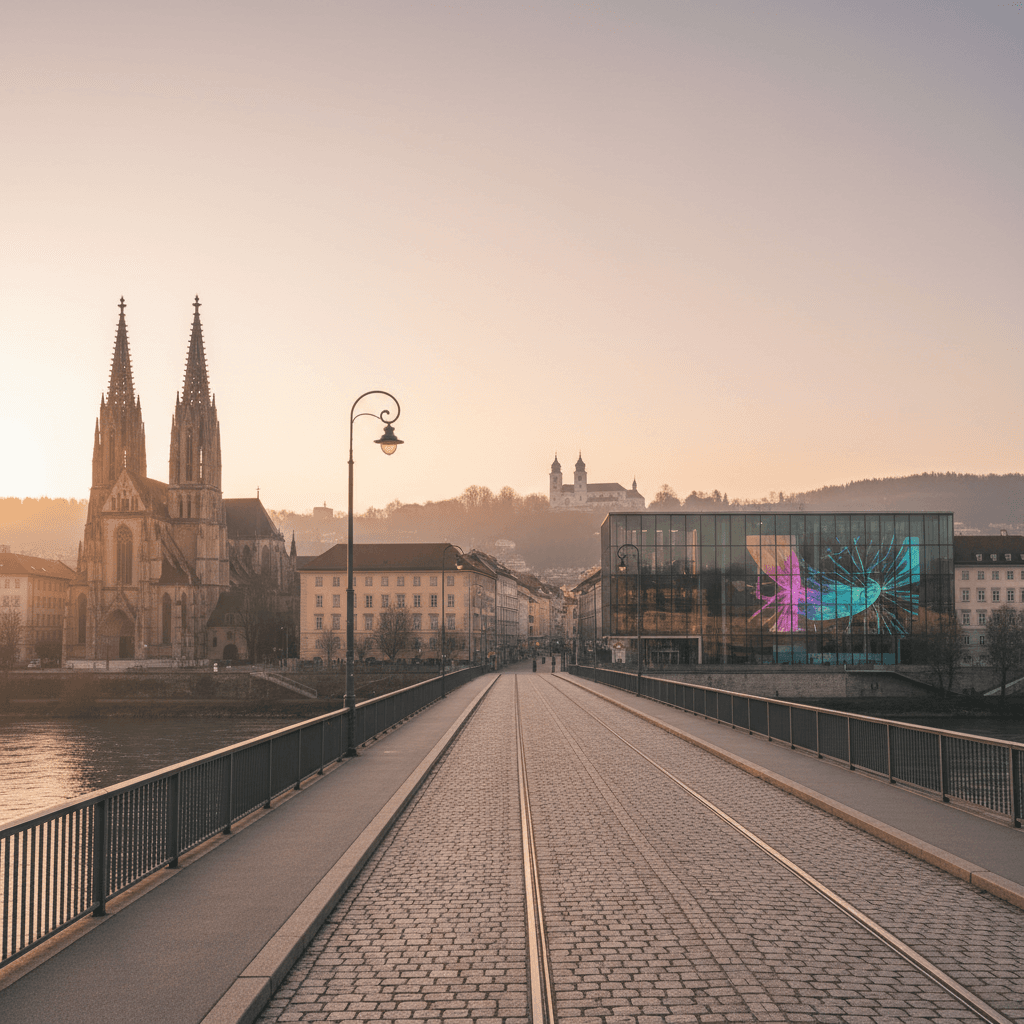
Linz
🇦🇹 Austria
Industrial Grit Meets Tech Innovation
If you're expecting the Mozart-themed kitsch of Salzburg or the imperial grandeur of Vienna, Linz will surprise you. It's a city that has successfully shed its heavy industrial skin to become a sleek, tech-forward hub. While the Danube still flows past the old factories, those spaces now house some of Europe's most creative digital labs. It’s a place where the air feels productive but never frantic. You’ll find yourself working in a glass-walled library one hour and drinking a beer in a 13th-century square the next.
The vibe here is deeply grounded. Linz doesn't try too hard to impress tourists, which is exactly why nomads are starting to gravitate toward it. It feels like a "real" city where things actually work. You get the high-functioning infrastructure of Northern Europe without the cold, clinical feel. Locals are welcoming once you break the ice, and there’s a shared pride in the city's transformation from a steel-producing powerhouse into a UNESCO City of Media Arts.
The Nomad Lifestyle Experience
Living in Linz means trading the chaos of a massive nomad hub like Lisbon for a compact, walkable life where your commute is rarely longer than fifteen minutes. Most nomads find the city strikes a perfect balance between work and play. During the day, the focus is on deep work, supported by some of the most reliable internet in the region, often reaching speeds between 46 and 114 Mbps. When the sun goes down, the social life revolves around the riverside or the creative quarters rather than overcrowded tourist bars.
The emotional experience of being here is one of quiet competence. You’re surrounded by innovation, from the glowing facade of the Ars Electronica Center to the startups inside Factory300. However, it isn't a massive expat bubble. You’ll need to be proactive about joining tech meetups or hanging out at spots like Kaffee Institut to build a social circle. It’s a city for the "grown-up" nomad who values high safety, clean air, and a functional environment over a 24/7 party scene.
What You'll Spend
Austria isn't a budget destination, but Linz offers significantly better value than Vienna. You should budget approximately $2,510 USD per month for a comfortable mid-range lifestyle. Here is how that typically breaks down for a solo nomad:
- Studio or 1BR Apartment: Expect to pay between €1,000 and €1,300 for a modern place in a central neighborhood like Urfahr.
- Monthly Food Budget: Around €450 covers a mix of groceries and dining out. A standard lunch at a local spot runs about €15.
- Coworking & Connectivity: A full membership at Factory300 is roughly €123 per month for flexible access, while a local SIM with plenty of data costs about €10 to €20.
- Transportation: A monthly pass for the incredibly efficient tram and bus network is just €50.
The Best Bases for Productivity
Choosing where to stay depends on whether you want the historical heart of the city or the modern tech district. Most nomads prefer these three areas:
- Urfahr: Located just across the river from the center, this is the go-to for expats. It’s quieter, greener, and puts you right next to the Ars Electronica Center and the university.
- Hauptplatz & City Center: Ideal if you want to be in the middle of the action. You'll have cafes, shops, and the best tram connections right at your doorstep, though it can get a bit noisy during summer festivals.
- The Port & Factory300 Area: This is the industrial-chic heart of the city. It’s perfect for those who want to be steps away from their coworking desk and the "Grand Garage" maker space.
The Reality Check
While the quality of life is undeniably high, Linz has its hurdles. The most significant is the visa situation for non-EU citizens. There is currently no dedicated digital nomad visa, meaning most long-term travelers are limited to the 90-day Schengen stay. Additionally, while English is widely spoken in professional and tech circles, you'll find that daily life, like reading apartment contracts or navigating government offices, is much smoother if you know a little German. If you can handle the high cost of entry and the smaller social scene, Linz offers a level of focus and efficiency that few other European cities can match.
The Price of Productivity
Living in Linz isn't exactly a budget backpacker's dream, but most nomads find the value for money is exceptional. You're paying for a high standard of living, reliable infrastructure, and a city that actually works. A typical monthly budget for a nomad here sits around $2,510 USD. While that's cheaper than Vienna, it's still a significant step up from hubs in Southeast Asia or the Balkans.
The good news is that your money goes toward quality. Public transport is world class, the tap water is better than most bottled brands, and the city feels incredibly safe at any hour. If you're coming here to buckle down and get work done, the investment pays off in focus and efficiency.
Monthly Budget Breakdown
Depending on your lifestyle, your costs will vary quite a bit. Here is how the monthly spending usually shakes out for different tiers:
Budget Tier
- Total: Approximately €1,800
- Studio Rent: €800 to €1,000 in areas like Bindermichl.
- Food: €300, mostly cooking at home with occasional €8 street food like Leberkäse or sausages.
- Transport: €50 for a standard monthly pass.
- Work: €150 for occasional day passes at local hubs.
Mid-Range Tier
- Total: Approximately €2,500
- 1BR Apartment: €1,000 to €1,300 in Urfahr near the tech scene.
- Food: €450, allowing for daily cafe visits and mid-range dinners costing about €15 per meal.
- Transport: €50 for public transit.
- Work: €250 for a dedicated desk at Factory300.
Comfortable Tier
- Total: €3,500+
- Prime Apartment: €1,300+ in the historic Hauptplatz area.
- Food: €600+, including upscale dining at €30 per plate and nights out.
- Transport: €100, mixing transit with bikes and the occasional Uber.
- Work: €400 for full premium coworking memberships and 24/7 access.
Daily Expenses and Small Wins
Day to day life has a few fixed costs you'll want to track. A simple meal out usually lands around €15, while a dinner for two at a nice spot will set you back about €65. For coffee lovers, the cafe culture is strong; expect to pay €4 to €5 for a well crafted latte at Kaffee Institut.
Utilities for a standard apartment average around €253 per month, so make sure to clarify if your rental price is "warm" (all inclusive) or "cold" (rent only). Most nomads prefer using Flatio or Willhaben to find rentals that avoid the heavy paperwork of traditional Austrian leases.
Connectivity and Tech Costs
Staying connected is relatively affordable. You can grab a local SIM from A1 or Magenta for €10 to €20 per month with unlimited data, or use an eSIM app if you're only staying for a few weeks. Coworking is where you might spend more; Factory300 is the gold standard for tech workers at €123 per month for flexible access, but you can also find quiet, free spots at the Wissensturm Library if you're watching your euros.
Banking is straightforward if you use Wise or Revolut to handle the Euro conversion. While cards are accepted almost everywhere, keeping a bit of cash is smart for smaller bakeries or traditional taverns where "Nur Cash" signs still occasionally pop up.
For Tech Nomads: Urfahr and the Innovation Districts
If you're in Linz to get work done, Urfahr is the place to be. Located just across the Danube from the city center, it strikes a balance between quiet residential streets and heavy hitting tech hubs. It's home to Factory300, a sleek coworking space where memberships start at around €123 per month for flexible access, and the Grand Garage, which is a maker's paradise if your work involves hardware or creative tech.
Most nomads find the vibe here perfect for deep work. It's modern, walkable, and lacks the tourist distractions of the old town. You'll likely pay a premium for the convenience; a modern studio or one bedroom apartment here typically ranges from €1,000 to €1,300. When you need a break, the Ars Electronica Center is right there, and the riverbanks provide plenty of space for a midday run or bike ride.
For Solo Travelers: Altstadt and Hauptplatz
Solo travelers who want to be in the thick of things should stick to the area around the Hauptplatz. This is the city's historic heart, where everything is within a five minute walk. You're surrounded by the best cafe culture in the city, including Kaffee Institut, which is a favorite for its fast WiFi and cozy atmosphere. Living here means you don't need a car or even a bike; the tram lines converge right at your doorstep.
The trade off is the noise and the price. While it's incredibly safe, the central area can get loud during the summer festivals. You can expect to pay around €1,300+ for a comfortable, central apartment. For food, you're spoiled for choice with street food options starting at €5 to €8, though a sit down dinner will usually set you back at least €15. It's the easiest place to meet people, even if the expat scene is smaller than what you'd find in Vienna.
For Long-Term Expats: Bindermichl
Expats looking for a more "local" feel often gravitate toward Bindermichl. It’s a bit further out from the tech hubs but offers a much more relaxed pace of life. The architecture is a mix of mid century and modern, and it feels like a real neighborhood rather than a transient spot. Rent is slightly more manageable here, often falling between €800 and €1,000 for a standard apartment.
Public transport is so reliable that living outside the center isn't a hurdle. A monthly transit pass costs about €50 and will get you anywhere in the city quickly. You won't find many coworking spaces in Bindermichl, so most residents here either work from home or commute ten minutes into the center. It's a great choice if you want to save a bit on rent while still having access to high quality infrastructure and green spaces.
For Families and Quiet Seekers: The Green Belts
While Linz doesn't have one specific "family district," the outskirts near the Pöstlingberg or the southern residential zones offer the best quality of life for those with kids. These areas are incredibly safe and offer easy access to the Austrian countryside for weekend trips. You'll find plenty of pharmacies and high quality healthcare facilities nearby, which is a major draw for expat parents.
- Rent for 3BR: Expect to pay around €1,565 for a larger family home.
- Groceries: A monthly budget of €450 to €600 covers high quality local produce and essentials.
- Education and Play: The Wissensturm Library is a fantastic resource for quiet study areas and community events.
Most families use apps like Willhaben or Immowelt to find long term rentals, though Flatio is the go to for shorter, nomad friendly stays. While German is the primary language, you'll find English proficiency is very high in these professional neighborhoods, making the transition much easier for international families.
Connectivity and Speed
You won't have to worry about dropping off a Zoom call in Linz. The city is a tech hub at heart, and the infrastructure reflects that. Most apartments and cafes offer reliable fiber or high speed cable connections, with average speeds around 75-110 Mbps depending on provider. If you're staying in a modern district like Urfahr, you might even see those numbers climb higher.
For mobile data, the local networks are rock solid. Most nomads skip the physical SIM card hassle and grab an eSIM through an app like Airalo or Holafly before they land. If you prefer a local provider for better rates on long term stays, A1 and Magenta are the heavy hitters. You can usually snag an unlimited data plan for between €10 and €20 per month, which is a steal compared to North American or UK prices.
Top Coworking Spaces
Linz has a "get things done" energy that makes it easy to stay productivity. While it's not overflowing with dozens of spaces like Lisbon, the ones available are top tier and focused on innovation. These spots aren't just desks; they're gateways into the local tech scene.
- Factory300: Located in the impressive Peter Behrens Haus, this is the crown jewel for digital nomads. It's sleek, professional, and full of entrepreneurs. A monthly membership at Factory300 starts at around €123 per month for flexible access, with higher-tier options available.
- Grand Garage: This is a unique "makerspace" meets coworking hub. It's perfect if your work involves hardware, 3D printing, or if you just want a more industrial, creative vibe. Day passes are affordable at roughly €20, giving you plenty of flexibility if you only need a desk once or twice a week.
Work-Friendly Cafes and Quiet Zones
If you prefer the hum of a coffee machine to a structured office, Linz has a strong cafe culture that's becoming increasingly laptop-friendly. Just remember the local etiquette: buy a coffee or a snack every couple of hours if you're taking up a table.
- Kaffee Institut: This is a favorite for the remote crowd. It's cozy, the WiFi is snappy, and the coffee is some of the best in the city. It’s a great spot to knock out a morning of emails before exploring the nearby Hauptplatz.
- Wissensturm Library: For those days when you need absolute silence for a deep work session, head to this "Tower of Knowledge" near the train station. It offers free, quiet study spaces. It's one of the best free resources for nomads in Upper Austria.
- Die Bruecke: A solid alternative in the Urfahr district. It's less "corporate" than the coworking spaces and offers a relaxed environment for casual afternoon work.
Practical Tips for Remote Workers
Public WiFi is available in many public squares and on some transit lines, but it can be spotty for actual work. Stick to your mobile hotspot or a dedicated workspace for anything involving video calls. Most nomads find that the city center is so compact you can easily bounce between a morning session at Factory300 and a late afternoon coffee at a cafe without needing a taxi.
One thing to keep in mind is the local pace. While the internet is fast, the lifestyle is balanced. Many cafes might close earlier than you'd expect on Sundays, so always check the hours on Google Maps before you trek across town with your laptop bag. If you're looking for community, keep an eye on the event boards at the coworking hubs; the expat circle is small but very welcoming to newcomers who show up to tech meetups.
A Safe Haven for Productivity
Linz is remarkably safe, even by high Austrian standards. Most nomads find the city has a relaxed, orderly atmosphere where you can walk home from a late-night session at Factory300 without a second thought. Crime rates are very low, mirroring the peaceful environments found in Salzburg or Graz. You won't find any specific neighborhoods that locals warn you to avoid, though the area around the main train station can feel a bit more transient at night, just like any major European transit hub.
The city's safety extends to its infrastructure. The air quality is consistently good, and the tap water is some of the best in Europe. You can drink straight from the faucet without worry. For solo travelers, the Hauptplatz area is particularly comfortable, as it remains well-lit and active throughout the evening with people visiting cafes and cultural spots.
World-Class Healthcare Access
If you get sick, you're in good hands. Linz is a regional medical hub with several large hospitals and specialized clinics. The healthcare system is high-quality and generally affordable for out-of-pocket visits compared to US prices. Expats recommend having travel insurance or a private plan like SafetyWing or World Nomads, as Austria doesn't have a specific digital nomad visa that grants access to the public state system for short-term stays.
For minor issues, look for an Apotheke (pharmacy). They are easy to find throughout the city center and Urfahr. Pharmacists here are highly trained, often speak excellent English, and can provide advice for common ailments. Keep in mind that pharmacies follow strict opening hours, though they operate a rotating night-shift system for emergencies. You can check the sign in any pharmacy window to see which nearby location is open after hours.
Emergency Basics
- General Emergency: Dial 112. This is the standard EU number and operators usually speak English.
- Ambulance: Dial 144 for medical-specific emergencies.
- Police: Dial 133 for non-medical safety issues.
- Hospitals: The Kepler University Hospital is one of the largest and most modern facilities in the city if you need urgent care.
Most nomads feel that the peace of mind Linz provides is a huge boost to their focus. You aren't constantly looking over your shoulder or worrying about pickpockets in crowded areas. It is the kind of place where you can leave your laptop on the table for a moment at Kaffee Institut to grab a refill without much anxiety, though standard common sense still applies.
Health and Wellness Tips
Staying healthy in Linz is easy thanks to the city's walkability. You'll likely hit your 10,000 steps just by exploring the Donau (Danube) riverbanks or walking between coworking spaces. If you need a gym, many nomads use local spots like HappyFit or John Harris Fitness, which offer modern equipment and sometimes short-term passes. For a mental break, the green spaces around Pöstlingberg provide fresh air and a steep hike that locals swear by for clearing the head after a long work week.
The Pulse of the City: Trams and Buses
Linz is remarkably compact for Austria's third-largest city, which makes its public transit system feel incredibly efficient. The Linz AG Linien network consists of four tram lines and dozens of bus routes that cover every corner of the metropolitan area. Most nomads find the trams particularly useful, as they run frequently and slice right through the heart of the city, connecting the main train station (Hauptbahnhof) to the Hauptplatz and across the Danube to Urfahr.
The pricing is straightforward, and you won't need to break the bank to stay mobile. A standard Tageskarte (day pass) is usually the best bet for a day of exploring, but if you're staying for a month, the Monatsticket at around €50 is the gold standard for value. You can buy tickets at orange vending machines located at most stops or via the LinzMobil app, which is the easiest way to track arrivals in real time.
Pedal Power and Walking
If you prefer to move under your own steam, Linz is a dream. The city center is highly walkable, and you can get from the tech hub at Factory300 to the riverside in about fifteen minutes on foot. For longer distances, the city's bike infrastructure is top tier, with dedicated lanes that feel safe even for those who aren't confident cyclists.
- Nextbike: This is the primary bike-sharing service in town. You'll see their stations scattered everywhere. You just scan a QR code, ride to your destination, and park it at another station.
- Donauradweg: This famous Danube cycle path runs right through the city. Expats recommend using it for a scenic ride toward the industrial murals at Mural Harbor or just for a morning workout.
- Terrain: While the city center is flat, keep in mind that neighborhoods like Pöstlingberg are quite steep. If you're heading up there, take the historic mountain tram instead of trying to bike it.
Arriving and Departing
Getting into the city from Linz Airport (LNZ) is painless. You can hop on a shuttle bus or take a short train ride that gets you to the central station in about 20 to 30 minutes. Tickets usually cost between €3 and €10 depending on the specific service you choose. If you're coming from Vienna or Salzburg, the ÖBB trains are world-class. The high-speed Railjet can whisk you from Vienna to Linz in just over an hour, making it a very viable day trip.
Ride-Hailing and Taxis
While you won't need a car within the city limits, ride-hailing apps are available when you're carrying groceries or heading home late at night. Both Uber and Bolt operate in Linz, though they aren't as omnipresent as they are in larger capitals. Local taxi ranks are common near the Hauptbahnhof and the Landstraße shopping district. Most drivers speak excellent English and accept cards, but it's always smart to have a few Euros in your pocket just in case.
Practical Transit Tips
- Validation: If you buy a paper ticket from a machine, make sure to check if it needs to be stamped before you board. Most mobile tickets are validated automatically at the time of purchase.
- Punctuality: Austrians take schedules seriously. If the sign says the bus leaves at 08:12, it will likely be pulling away at exactly 08:12.
- Night Moves: On weekends, the city operates Nachtlinie (night lines) that run after midnight, which is a life saver if you're out enjoying the bars near the old town.
The Linguistic Landscape
While German is the official language of Linz, don't let that intimidate you. In this tech forward city, English proficiency is remarkably high, especially among the younger crowd and the professionals you'll meet at Factory300 or Grand Garage. You can comfortably order your coffee at Kaffee Institut or ask for directions in English without much friction. Most nomads find that while the local dialect, Upper Austrian, has a distinct twang, people will quickly switch to standard German or English once they realize you're a visitor.
That said, learning a few "bread and butter" German phrases goes a long way with the locals. It shows respect for the culture and can turn a polite interaction into a friendly one. If you're staying for more than a month, consider a casual language exchange or a short course. It's the best way to break out of the expat bubble and understand the city's "innovative but traditional" soul.
Navigating Daily Life
When it comes to getting things done, you'll encounter German most often on official signage and transport kiosks. Most nomads rely on Google Translate's camera feature for menus or formal documents, but the public transit system is fairly intuitive. You'll want to memorize a few key transit terms to make buying tickets at the kiosks easier:
- Tageskarte: A day pass, perfect for exploring the city center.
- Woche: A weekly pass if you're here for a short stint.
- Monat: The monthly pass, which costs about €50 and is the gold standard for long term stays.
- Hauptplatz: The main square, which serves as the central hub for almost everything.
In retail and grocery stores, a simple "Guten Tag" (Good day) or "Hallo" followed by "Sprechen Sie Englisch?" (Do you speak English?) is the standard polite approach. You'll find that in Urfahr or the City Center, the answer is almost always a yes.
Digital Communication and Connectivity
Staying connected is rarely an issue here. Linz boasts reliable internet speeds ranging from 46 to 114 Mbps, making it a dream for video calls and heavy uploads. Most cafes are work friendly, but if you need a rock solid connection for a big project, the Wissensturm Library offers quiet study workspaces.
For your phone, skip the expensive roaming charges. Expats recommend grabbing a local SIM or using an eSIM app before you land. If you prefer a physical store, head to an A1 or Magenta outlet. You can usually snag an unlimited data plan for between €10 and €20 per month. It's a small price to pay for having maps and translation tools at your fingertips while you're wandering the Danube banks.
Social Etiquette and Integration
Communication in Linz is direct and punctual. If you're meeting a local contact or a fellow nomad for a coffee, being five minutes late is noticed. In social settings, the vibe is relaxed but respectful. While the expat scene is smaller than Vienna's, it's tight knit. You'll find that people are happy to help you practice your German, provided you're willing to make the effort. Most travelers say that while the initial shell can be hard to crack, once you've made a friend in Linz, you've made a friend for life.
If you're looking to connect with the community, keep an eye on tech meetups or cultural festivals. These are the primary social hubs where English is the lingua franca and the "innovative vibe" of the city really shines through. You won't find a dedicated digital nomad visa here yet, so most non EU nomads operate on the 90 day Schengen limit, which means you'll want to hit the ground running with your social networking as soon as you arrive.
When to Pack Your Bags
Linz follows a classic temperate central European rhythm. You'll get four distinct seasons, each shifting the city's personality from an industrial tech hub to a riverside retreat. Most nomads find that June through September is the sweet spot for a visit. During these months, temperatures hover comfortably between 20°C and 25°C, making it perfect for working from a cafe terrace or taking your laptop to the banks of the Danube.
Summer is also when the city's innovative spirit really shows off. You'll catch major events like the Ars Electronica Festival, where the intersection of tech and art takes over the streets. The days are long, the air is clear, and the humidity rarely gets oppressive. If you enjoy hiking or weekend trips to the nearby Alps, this is your window.
The shoulder seasons of late spring and early autumn are great for those who prefer a quieter vibe. Just be ready for rain. May and October are notoriously wet, so a solid waterproof jacket is a requirement. While the rain might keep you indoors, the city's infrastructure is built for it. You can easily hop on a tram or retreat to Factory300 without getting soaked.
Surviving the Winter Chill
Winters in Linz, specifically from December through February, can be a bit of a grind if you aren't a fan of the cold. Temperatures often sit between 0°C and 5°C, and gray, overcast skies are the norm. It’s the least popular time for nomads unless you're here for the Christmas markets or plan on using Linz as a base for skiing trips to Salzburg or Innsbruck.
Expats often mention that the city feels much smaller in the winter. The outdoor cafe culture disappears, and the social scene moves entirely indoors to cozy spots like Kaffee Institut. If you decide to stay during the colder months, make sure your apartment has high quality heating, as utility costs can jump to around €250 per month during a deep freeze.
The Best Time for Your Budget
While Linz isn't as seasonal with its pricing as a Mediterranean beach town, you'll still see some fluctuations. Tracking your expenses is easier when you know what to expect:
- Peak Season (June to August): Expect the highest demand for short term rentals on platforms like Flatio. You should book at least two months in advance to secure a spot in Urfahr or the City Center.
- Off-Peak (November to March): You might find slightly better deals on mid range housing, though heating costs usually offset any rent savings. This is a great time for deep work and productivity.
- Festival Windows: During major tech and culture festivals, hotel prices spike and coworking daily passes at Grand Garage can fill up quickly.
Ultimately, if you want the full experience, aim for a late May arrival. You'll beat the heat, catch the start of the outdoor event season, and have plenty of time to explore the city before the winter gloom sets in.
Getting Connected and Setting Up
As soon as you land, your first priority is data. While Austria has great infrastructure, you'll want a local SIM or a reliable eSIM to avoid roaming fees. Most nomads in Linz opt for A1 or Magenta. You can grab a prepaid SIM for roughly €10 to €20 which usually covers unlimited data for a month. If you prefer the digital route, download an eSIM app before you arrive; it works seamlessly the moment you cross the border.
For housing, the market isn't as saturated as Vienna, but finding a short term spot still requires a strategy. Expats often recommend Flatio for mid term stays because it bypasses the heavy paperwork of traditional leases. If you're looking for something more permanent, Willhaben is the local go to for apartment listings, though you'll likely need a bit of German to navigate the interface.
Money and Budgeting
Linz isn't a budget destination, but it's great value if you're looking for high productivity and safety. You'll want to budget around $2,510 USD per month for a comfortable lifestyle. While cards are accepted almost everywhere, it's smart to keep a few Euros for smaller bakeries or traditional stalls. For banking, Revolut and Wise are the standard choices here to keep exchange fees low.
- Studio Rent: Expect to pay €800 to €1,000 in areas like Urfahr or Bindermichl.
- Daily Meals: A simple lunch at a cafe runs about €15, while street food like a Leberkassemmel costs between €5 and €8.
- Coworking: A hot desk at Factory300 or Grand Garage averages €250 per month.
Navigation and Transport
The city is impressively compact. You can walk most of the center, but the tram system is the real hero here. A Tageskarte (day pass) is perfect for exploring, but if you're staying a month, the €50 monthly pass is a no brainer. It covers all trams and buses within the city limits.
For those who prefer two wheels, Nextbike rentals are scattered throughout the city. It's a bike friendly town with dedicated lanes that make commuting from Urfahr to the Hauptplatz a breeze. If you're coming from the airport, the shuttle or train takes about 20 to 30 minutes and costs under €10. Uber and Bolt operate here too, though they aren't always necessary given how reliable the public transit is.
Language and Local Customs
You'll find that English proficiency is quite high, especially in the tech hubs and coworking spaces. However, locals appreciate it when you try a few German words. Learning terms like Woche (week) or Monat (month) helps when dealing with transport passes or rentals. Punctuality is a big deal here; if you're meeting a local for coffee at 2:00 PM, try to be there at 1:55 PM.
Safety and Health
Linz is exceptionally safe, even late at night. There aren't really any "no go" zones to worry about. If you need medical help, the healthcare system is top tier. Pharmacies are easy to find, and for any major issues, the city has several high quality hospitals. In any emergency, dial 112, which is the standard across the EU.
The Visa Reality
This is the one hurdle for non EU nomads. Austria doesn't currently offer a specific digital nomad visa. Most travelers from the US, Canada, or Australia rely on the 90 day Schengen allowance. If you're planning to stay longer, you'll need to look into more traditional residency permits, which often require a local contract or specific investment. Most nomads treat Linz as a high intensity three month "sprint" location rather than a long term base.
Need visa and immigration info for Austria?
🇦🇹 View Austria Country GuideHidden Gem
Worth the effort