Lille
🇫🇷 France
Flemish Charm Meets French Flair
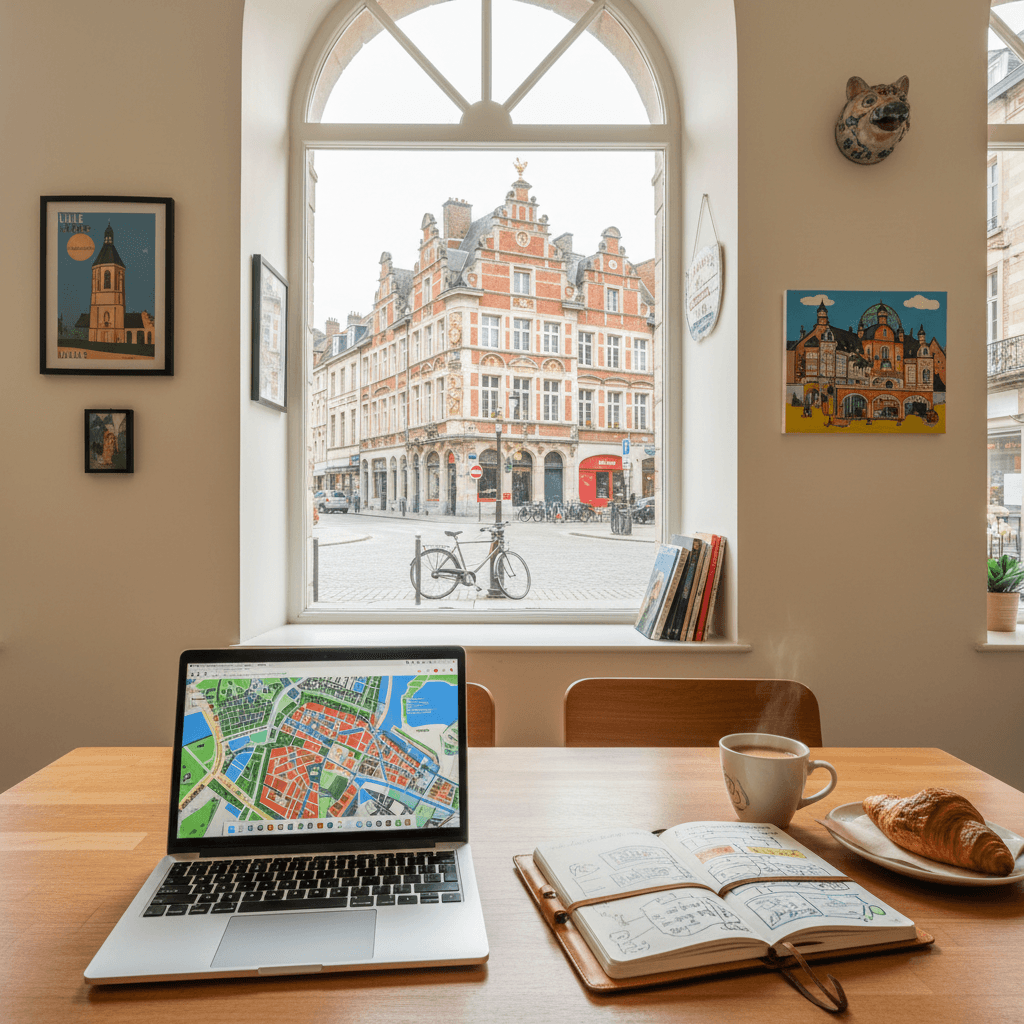
Lille feels like a secret that Paris forgot to tell you. While the capital is busy being a museum of itself, Lille is alive, unpretentious, and surprisingly intimate. It sits at the crossroads of London, Paris, and Brussels, yet it retains a distinct northern soul. You'll notice it the moment you step into the Vieux-Lille (Old Town). The architecture isn't the Haussmann white you might expect; it's a warm palette of red brick and golden sandstone, accented by buildings illuminated in blue and yellow hues at night. It feels more like a cozy Flemish village than a major French hub.
The pace here is what draws nomads in. Everything is famously "ten minutes away." You can finish a deep-work session in a 17th-century square, grab a local Merveilleux pastry, and be sitting in the grass at Parc de la Citadelle before your coffee gets cold. It’s a city that rewards curiosity over checklists. You’ll spend your mornings dodging cyclists on cobblestone lanes and your evenings tucked into a "estaminet," a traditional northern tavern where the beer list is longer than the food menu.
The Cost of Living
Lille is significantly more affordable than Paris or London, making it a strategic base for those who want proximity to Europe’s major capitals without the soul-crushing rent. For a solo nomad, a mid-range lifestyle typically lands between €2,500 and €3,500 per month. If you’re on a tighter budget, you can make it work for €1,500 to €2,000 by utilizing shared housing and the city’s excellent street food scene.
- Studio/1BR Apartment (Central): Expect to pay €800 to €1,200 per month.
- Studio/1BR Apartment (Outskirts): Prices drop to €600 to €900.
- Coworking Desk: Monthly passes range from €150 to €250.
- Dining: A casual street food lunch costs €5 to €10, while a mid-range bistro dinner runs €15 to €25.
- Monthly Transport: An Ilévia pass for unlimited bus and tram travel is roughly €50 to €70.
Where to Set Up Shop
Most nomads gravitate toward Vieux-Lille. It’s the postcard-perfect version of the city, packed with independent boutiques and high-end bistros. It’s highly walkable, though you’ll pay a premium for the convenience and the view. If you prefer a younger, more social atmosphere, look near The People hostel in Central Lille. This area is a magnet for expats and remote workers, offering frequent social events and dedicated workspaces that make it easy to build a community quickly.
For those who need more green space, the area around Parc de la Citadelle is the local favorite. It’s quieter and feels more like a residential neighborhood, complete with a zoo and plenty of running paths. It's a bit further from the late-night bars, but the fresh air and exercise options make it a top choice for long-term stays.
Connectivity and Productivity
You won't struggle with the internet here. Fiber is standard, and the cafe culture is welcoming to laptops, provided you aren't camping out during the busy lunch rush. For a dedicated desk, local coworking spaces are plentiful and often half the price of those in Paris. The People hostel is a reliable fallback for a few hours of work, but for long-term productivity, many nomads opt for local hubs that offer a more professional vibe for around €200 a month.
Getting around is effortless. The city center is small enough to navigate entirely on foot, but the V'Lille bike-share system is excellent for longer hauls at just €3 a day. If you need to head further out, the Ilévia app is the go-to for managing tram and bus rides. When the itch for a big-city weekend hits, you're only a 60-minute train ride from Brussels or Paris, making Lille the ultimate launchpad for exploring Northern Europe.
The Social Pulse
Lille is a young city with a massive student and expat population, so the social scene is surprisingly robust. It’s not just about the bars; it’s about the "braderie" spirit, a sense of conviviality that peaks during the massive annual flea market but lingers year-round in the squares. For a quirky night out, nomads often recommend Le Kremlin, a Soviet-themed bar known for its massive vodka selection and eccentric decor. While French is the primary language, you'll find that English proficiency is high among the younger crowd and in the tech-heavy coworking spaces. A simple "Bonjour" goes a long way, but you won't need to be fluent to find your footing here.
The Bottom Line
Lille is the smart alternative for those who want French flair without the eye watering price tag of Paris. It feels like a northern European crossroads where Flemish brickwork meets a relaxed, French pace of life. Most nomads find they can live quite well here for about €2,500 to €3,500 per month, which covers a private apartment, plenty of dining out, and a dedicated desk at a coworking space.
You'll save the most on transit and housing. Because the city is so compact, you'll rarely need a car or even a daily bus pass. Everything is roughly ten minutes away on foot or by bike. If you're on a tighter budget, €1,500 to €2,000 is doable if you opt for a shared living situation or stay slightly outside the historic core.
Monthly Budget Tiers
- The Budget Nomad (€1,500 to €2,000): Focuses on shared apartments or long stays at spots like The People hostel. You'll stick to street food like €7 kebabs or savory waffles and use the V'Lille bike share to get around.
- The Mid-Range Professional (€2,500 to €3,500): This covers a private one bedroom in Vieux-Lille or near the center, a full time coworking membership, and dinners at local bistros where a meal runs €20 to €25.
- The High End Resident (€4,000+): For those who want a premium loft in the old town, frequent upscale dining at spots like Le Kremlin, and the convenience of Uber or Bolt for late night trips.
Housing and Neighborhoods
Finding a spot in Vieux-Lille (Old Town) is the goal for most solo travelers. It is the most picturesque part of the city, filled with boutiques and illuminated squares. Expect to pay between €800 and €1,200 for a central studio or small one bedroom apartment. It gets busy on weekends, but the convenience is hard to beat.
If you prefer a more social, expat heavy vibe, look near the central district around The People hostel. It is a hub for younger nomads and offers built in networking. For those who need green space and a quieter atmosphere, the area near Parc de la Citadelle is popular. You'll get more square footage for your money here, with rents typically ranging from €600 to €900, though you'll be a longer walk from the nightlife.
Working and Connectivity
WiFi is rarely an issue in Lille. The city is well connected, and cafe culture is welcoming to those with laptops. If you need a professional setup, coworking spaces like B'CoWorker or the desks at The People hostel cost between €250 to €350 per month. That is nearly half of what you would pay for a similar desk in Paris.
For mobile data, most expats recommend skipping the hassle of local contracts and using an eSIM like Holafly. If you do want a local SIM, carriers like Orange or Free provide reliable 5G coverage across the city center. You can manage almost all your logistics through apps; Ilévia handles the public transport network, and V'Lille is the go to for bike rentals at about €3 per day.
Food and Daily Expenses
Lille's food scene is a highlight, blending heavy northern comfort food with modern French bistronomy. A casual lunch will set you back about €15, while a three course dinner for two at a mid range spot usually lands around €60. Groceries are affordable if you shop at local markets or supermarkets like Carrefour and Monoprix.
- Street food/Quick lunch: €5 to €10
- Mid-range dinner: €20 to €30
- Beer or glass of wine: €5 to €8
- Monthly transport pass: €50 to €70
- V'Lille bike rental: €1.50 per trip or €3 per day
Healthcare is high quality, following the standard French system. Pharmacies are everywhere and stock familiar brands like La Roche-Posay and CeraVe. If you have an emergency, dial 112 or 15 for an ambulance. Most nomads feel very safe here, even at night, though it's always wise to keep an eye on your belongings in crowded squares.
Vieux-Lille: The Nomad Choice
If you want the quintessential northern French experience, Vieux-Lille is where you'll end up. This is the historic heart of the city, characterized by cobbled lanes and Flemish architecture that glows in blue and yellow hues once the sun sets. It is remarkably walkable, meaning you can ditch the car and reach most bistros or boutiques within ten minutes.
Nomads flock here because the atmosphere strikes a balance between a relaxed pace and a social buzz. You'll find plenty of cafes with reliable WiFi, though many remote workers prefer the dedicated setup at The People hostel nearby, which offers specific workspaces and frequent social events. Living here puts you in the middle of the action, but keep in mind that the evenings can get loud and the prices are the highest in the city. Expect to pay between €800 and €1,200 for a central studio or a one bedroom apartment.
Central Lille: The Expat Hub
For those planning a longer stay, the area around the city center and the Gare de Lille Flandres is a strategic move. It is less "fairytale" than the old town but significantly more practical. You are steps away from the major transport links, including the TGV that gets you to Paris or Brussels in just one hour. Expats often recommend this area for its proximity to professional coworking spaces where memberships run between €150 and €250 per month, a steal compared to the €300 plus rates you would find in Paris.
- Daily Life: Use the Ilévia app for buses and trams, or grab a V'Lille bike for about €3 a day.
- Dining: Mid-range meals at local bistros usually cost between €15 and €25.
- Groceries: Access to larger supermarkets makes this area more budget friendly than the boutique heavy old town.
Parc de la Citadelle: The Family Retreat
Families and those who need a break from the urban stone usually settle near the Parc de la Citadelle. This is the city's green lung, featuring a massive star shaped fortification, a zoo, and wide paths perfect for morning runs or pushing a stroller. While it is slightly further from the late night bar scene, it offers a much quieter environment and fresher air.
Housing here tends to be more spacious, making it easier to find multi bedroom apartments that fit a family budget. You are still close enough to the center to enjoy the culture, but you'll have a backyard of woods and waterways to retreat to. It is the best spot for those who prioritize exercise and a lower stress daily life over being next door to a nightclub.
Solo Travelers and Social Seekers
If you are arriving alone and want an immediate social circle, look for spots near the République area or near the university districts. The crowd here is younger, and the nightlife is centered around quirky spots like Le Kremlin, a vodka bar known for its unique decor. Solo travelers often find that Lille's small scale makes it easy to meet people; the social scene is active but not overwhelming like a massive capital city.
- Safety: Lille is generally safe, and there are no specific "no-go" zones frequently cited by travelers.
- Budgeting: A solo nomad can live comfortably on €2,500 to €3,500 a month, including a private apartment and frequent dining out.
- Health: If you need supplies, local pharmacies are top tier and stock brands like Caudalie and La Roche-Posay.
Practical Neighborhood Stats
- Vieux-Lille Rent: €800 to €1,200 for 1BR.
- Outskirts Rent: €600 to €900 for 1BR.
- Coworking: €150 to €250 per month.
- Transport: Monthly passes cost roughly €50 to €70.
Connectivity and Speed
Lille is a sleeper hit for digital work. You aren't going to struggle with patchy connections here like you might in rural France. Most apartments and cafes offer high-speed fiber that handles video calls without a hiccup. If you're staying in Vieux-Lille, the thick stone walls of older buildings can sometimes interfere with cellular signals, so always double-check the router placement before committing to a month-long rental.
For data on the go, most travelers skip the physical SIM card hunt and set up an eSIM. Holafly is the go-to for many nomads because it hooks into local French networks immediately. If you prefer a local physical SIM, you can find providers like Orange or Free Mobile in the city center. Just keep in mind that French data plans are remarkably cheap compared to North America or the UK, often giving you more gigabytes than you could possibly use in a month.
Coworking Spaces
The coworking scene in Lille is professional but way more affordable than Paris. You can expect to pay between €250 to €350 per month for a hot desk, which is a steal considering the capital usually demands €300 or more. These spaces are great for networking with local French entrepreneurs and the international crowd that drifts through from nearby Brussels and London.
- The People: This is a hybrid hostel and workspace located in the heart of the city. It's a favorite for nomads who want a social atmosphere. It's perfect if you're new to town and want to meet people over a coffee or a beer right after your final meeting of the day.
- Now Connected: A popular local chain known for its high-end design and reliable infrastructure. It’s a solid choice if you need a quiet environment for deep work rather than a social club.
- La Grappe: Located near the train stations, this spot is ideal for those who might be taking day trips to Paris or Brussels but need a home base with fast internet and meeting rooms.
Cafe Culture and Laptop Spots
Lille has a strong cafe culture, but it’s polite to follow the local etiquette. Most bistros in the Old Town are happy to let you work for an hour or two during the mid-morning or mid-afternoon lulls. However, they usually expect you to pack up the laptop during the lunch rush from 12:00 PM to 2:00 PM when tables are reserved for diners. If you're looking for a place to park for four hours, stick to the modern coffee shops or the public libraries.
The area around Parc de la Citadelle offers a few spots with outdoor seating where you can catch some sun while clearing your inbox. If you need a change of scenery, the Médiathèque Jean Lévy is a massive public library with free WiFi and plenty of desk space, though you'll need to keep the noise down. It's a great alternative when you want a focused environment without the "cafe tax" of buying multiple espressos.
Practical Tips for Remote Workers
Power outlets in France use the standard European Type E plug, so bring an adapter if you're coming from outside the EU. Most modern coworking spaces have plenty of outlets, but older cafes in Vieux-Lille can be stingy with them. It’s a good idea to carry a small power bank or ensure your laptop is fully charged before heading out to a bistro.
For those who need to jump on calls, be aware that the French value their quiet time in public spaces. Taking a loud Zoom call in a crowded cafe is generally frowned upon. If you have a day full of meetings, your best bet is to book a phone booth at a coworking space or stay in your apartment. Most nomads find that a mid-range budget of €2,500 to €3,500 allows for a comfortable lifestyle that includes a dedicated coworking membership and a central apartment where the WiFi is actually reliable.
Staying Safe in the Capital of Flanders
Lille is one of those rare European cities where you can actually let your guard down. Most nomads describe the atmosphere as low stress and incredibly walkable. Unlike the sprawling chaos of Paris, Lille feels like a collection of neighborhoods where everyone eventually crosses paths. You won't find any "no-go" zones here, though like any urban center, it's smart to keep your wits about you after dark near the Gare de Lille Flandres or the Gare de Lille Europe where crowds get thick.
The city center and Vieux-Lille are particularly safe for solo travelers and night owls. The streets are well illuminated and the heavy presence of students and young professionals keeps the squares lively until the early hours. If you're walking back to your apartment in the Citadelle area or near The People hostel, you’ll likely find the streets quiet but peaceful. Pickpocketing is a minor risk in crowded markets or on the Ilévia metro, so just keep your phone and wallet tucked away in a zipped bag.
Healthcare Infrastructure
France has one of the best healthcare systems in the world, and Lille is no exception. If you're an EU citizen, your EHIC or GHIC card will cover most costs. For everyone else, you’ll want a solid private insurance policy. The quality of care at local hospitals is excellent; the staff are highly trained, though English proficiency varies. In an emergency, you've got three main numbers to remember:
- 112: The general EU emergency line.
- 15: The SAMU for serious medical emergencies and ambulances.
- 18: The fire department (Sapeurs-Pompiers), who also handle medical rescues.
For non-emergencies, you can book doctor appointments through the Doctolib app. It’s the gold standard in France and allows you to filter for practitioners who speak English, which saves a lot of miming in the exam room. Most consultations cost around €25 to €30 for a general practitioner, and you'll usually get a prescription to take to one of the many green-crossed pharmacies dotted around the city.
The Pharmacy Culture
French pharmacies are a nomad favorite for more than just medicine. They are the best place to stock up on high end skincare that usually costs double back home. You’ll find shelves stocked with brands like Caudalie, CeraVe, and La Roche-Posay. Pharmacists in France are highly qualified and can often give medical advice for minor ailments like coughs, skin rashes, or allergies, saving you a trip to the doctor.
If you need a pharmacy late at night or on a Sunday, look for the pharmacie de garde. There is always at least one open in the city on a rotation. You can usually find the address of the nearest open one posted on the door of any closed pharmacy or by checking local listings online.
Daily Wellness and Environment
Lille’s air quality is generally good, especially compared to the more industrial parts of Northern France. If you need a mental health break, the Parc de la Citadelle is the city's green lung. It’s the go-to spot for joggers and nomads looking to clear their heads after a long day of coworking. The tap water is perfectly safe to drink, so bring a reusable bottle to save money and reduce plastic waste while you're out exploring the cobbled lanes.
The Walkable Heart of Flanders
Lille is one of those rare cities where your feet are your best asset. The city center is incredibly compact, and most nomads find they can get almost anywhere worth going in about ten minutes. The Vieux-Lille district is a maze of cobblestones and Flemish architecture that demands to be explored on foot, though you should keep an eye out for the occasional uneven stone if you are wearing thin soles.
The layout is intuitive. If you are based near the Grand Place or the Place du Théâtre, you are within walking distance of the best bistros, boutiques, and coworking spots. Even the Parc de la Citadelle, the city's massive green lung and home to the local zoo, is just a short stroll from the historic center. It is the kind of city where you can leave your apartment without a plan and stumble upon a great cafe or a lively square before you have even checked your map.
Mastering the Ilévia Network
When the northern weather turns damp or you need to head further out, the Ilévia public transport system is reliable and straightforward. The network consists of two automated metro lines, two tram lines, and an extensive bus fleet. The metro is particularly handy because it is driverless and runs frequently, connecting the city center to the Gare Lille Flandres and Gare Lille Europe train stations.
- Single Trip: Approximately €1.70 (though prices fluctuate slightly with inflation).
- Day Pass: Around €5.00 for unlimited travel.
- Monthly Pass: Expect to pay between €50 and €70 depending on your age and residency status.
Expats recommend downloading the Ilévia app immediately. It handles route planning and real-time updates, which is helpful when bus schedules shift during local festivals or strikes. You can buy tickets at machines in any metro station, but make sure to validate your ticket every time you board to avoid a hefty fine from the roaming inspectors.
Two Wheels and the V'Lille System
Lille is a very bike-friendly city, and the V'Lille bike-sharing scheme is everywhere. You will see the red and black docking stations scattered throughout every neighborhood. It is an affordable way to get around if you don't want to commit to buying your own bike. A 24-hour pass costs around €2, with the first 30 minutes of every ride being free. It is perfect for quick hops between the old town and the newer parts of the city.
For those who prefer electric power, free-floating scooters are often available, though the city regulates where they can be parked. If you are heading out for a night of vodka tasting at Le Kremlin, remember that Uber and Bolt both operate here. Rides are usually easy to find, even late on a weekend, and a trip across the central area rarely exceeds €10 to €15.
Regional and International Connections
One of the biggest perks of living in Lille is its position as a European crossroads. You are effectively in the middle of a golden triangle between London, Paris, and Brussels. The TGV and Eurostar trains make day trips incredibly easy. You can be in Paris or Brussels in about one hour, making Lille a strategic base for nomads who want to see more of Europe without the high cost of living found in major capitals.
If you are flying in, Lille Airport (LIL) is the primary gateway. It is a smaller, low-stress airport located about 10 kilometers south of the city. A dedicated shuttle bus leaves from the Euralille shopping center area near the train stations. The ride takes about 20 to 30 minutes and costs roughly €8. While it doesn't have the massive terminal count of Charles de Gaulle, it is much faster to navigate for domestic flights or hops to nearby European sun destinations.
The Language Balance
Lille sits at a fascinating cultural crossroads, blending French flair with a distinct Flemish influence. While French is the undisputed primary language, the city feels more approachable for English speakers than many other French hubs. Because Lille is home to a massive student population and sits just an hour from London and Brussels via the Eurostar, you'll find that English proficiency is quite high among the younger crowd and in the service industry.
In the Vieux-Lille district, shopkeepers and bistro staff are accustomed to international visitors. Most nomads find they can get by with English for basic transactions, but the social dynamic changes once you step outside the tourist bubbles. If you're heading to local markets or smaller neighborhoods like Wazemmes, having a few French phrases in your back pocket is more than just polite; it's necessary for a smooth experience.
Navigating Daily Life
Most expats recommend leading with a "Bonjour" regardless of your fluency level. It's the universal "unlock" code for any interaction in France. If you dive straight into English without a greeting, you might find the service turns frosty. Once you've acknowledged the local language, most locals will happily switch to English if they're able. For digital nomads working out of spots like The People hostel or local coworking spaces, English is often the unofficial second language of the workspace.
For more complex tasks, like discussing a lease for an apartment or visiting a doctor, you'll want a translation app handy. DeepL is generally more accurate for French nuances than other standard translators. If you're staying long term, nomads often suggest joining local language exchange meetups. These are frequent in the city center and are a great way to trade your English skills for some French practice over a local craft beer.
Digital Communication and Connectivity
Staying connected is rarely an issue here. Fiber internet is standard in most central apartments and coworking offices. If you're working from cafes, you'll find reliable WiFi is the norm rather than the exception. To keep your phone active without hunting for a physical store, many travelers opt for an eSIM. Holafly is a popular choice for immediate data, though if you're staying more than a month, a local SIM from a provider like Free Mobile or Orange will be significantly cheaper.
To navigate the city's logistics, make sure you download the Ilévia app. It's the local lifeline for bus and tram schedules and is much more reliable than general map apps for real time updates. For rideshares, Uber and Bolt both operate widely across the metropolitan area, and the apps function exactly as they do elsewhere in Europe.
Essential Phrases for Your Toolkit
- Bonjour: Hello (Use this every time you enter a shop or restaurant).
- Merci / Merci beaucoup: Thank you / Thank you very much.
- S'il vous plaît: Please.
- Où est...?: Where is...? (Useful for finding the Parc de la Citadelle or the nearest pharmacy).
- Je ne parle pas beaucoup français: I don't speak much French.
- L'addition, s'il vous plaît: The bill, please.
While you don't need to be fluent to enjoy the blue and yellow illuminated streets of the old town, showing a little effort goes a long way. The locals are generally proud of their northern hospitality, which tends to be warmer and more relaxed than the reputation often associated with Paris.
The Seasonal Vibe
Lille is defined by its temperate oceanic climate, which basically means you should always have a light raincoat or a sturdy umbrella tucked in your bag. The city doesn't really do extreme weather; instead, it leans into a soft, damp charm that makes the Flemish brickwork in Vieux Lille glow. You'll find the most energy in the streets from May to September, when the terrace culture truly takes over and the sun stays out late enough for long sessions at spots like Le Kremlin.
Winters here are grey and chilly but rarely brutal. From December through February, temperatures usually hover between 3°C and 8°C. It’s the kind of cold that gets into your bones because of the humidity, so a good wool coat is non-negotiable. While it’s the least popular time for fair-weather travelers, nomads who stick around enjoy the lack of crowds and the cozy atmosphere of the local bistros.
When to Plan Your Stay
If you want the absolute best of Lille, aim for May, June, or September. During these months, the thermometer sits comfortably between 15°C and 22°C. It’s perfect for walking the cobbled lanes of the old town or taking your laptop to the Parc de la Citadelle for a work session in the grass. The air feels fresh, the zoo is lively, and the student population keeps the social scene humming before the summer break.
July and August are the warmest months, peaking around 25°C. It’s rarely "hot" by Mediterranean standards, but the city can feel a bit quieter as locals head to the coast. If you’re looking for a lively social calendar, avoid January and February. These are the wettest, darkest months, and while the rent might be slightly easier to negotiate, the constant drizzle can be a drag if you rely on walking everywhere.
The Braderie de Lille Factor
There is one weekend that overrides all weather talk: the first weekend of September. This is the Braderie de Lille, Europe’s largest flea market. The city transforms into a massive open-air party with millions of visitors. If you’re a nomad who loves a crowd and a plate of moules-frites, it’s an unmissable experience. However, if you value peace or need to find an affordable Airbnb, avoid arriving during this specific window. Prices for central stays in Vieux Lille can triple, and the city becomes a labyrinth of stalls and street food vendors.
Packing and Practicalities
Most expats recommend the "onion method" for dressing here. Layers are your best friend because a morning that starts at 10°C can easily jump to 20°C by lunch if the clouds break. Even in the height of summer, evenings can turn brisk quickly. Since Lille is incredibly walkable, your footwear choice matters more than your outfit. Those picturesque cobblestones in the old town are unforgiving on flimsy shoes or heels.
- Spring (March to May): Unpredictable showers. Bring a waterproof shell and comfortable boots.
- Summer (June to August): Light clothes, but keep a sweater handy for the 15°C evenings.
- Autumn (September to November): The rain picks up in October. This is prime "cafe office" season, so have a good bag to keep your gear dry.
- Winter (December to February): Damp and overcast. Focus on high-quality knitwear and a windproof jacket.
Lille’s charm isn't dependent on a tan. The city was built for grey skies, and the golden interior lights of the cafes and boutiques make the rainy season feel more like a scene from a movie than a weather inconvenience. If you can handle a bit of drizzle, you'll find this city welcoming year-round.
Survival Basics
Lille is the kind of place where you can walk across the city center in twenty minutes, yet still find a new favorite bistro every night. It feels more like a collection of villages than a major European hub, blending Flemish brickwork with a very French social scene. Most nomads find the pace here far more manageable than Paris, with the added bonus of being an hour away from both London and Brussels by train.
Cost of Living
Your budget in Lille goes significantly further than in the capital, though it's not exactly a bargain basement destination. For a solo nomad, expect to fall into one of these monthly spending tiers:
- Budget (€1,500 to €2,000): You're likely sharing a flat or staying in a hostel, relying on €7 street food like local waffles or kebabs, and using the Ilévia public transport network.
- Mid-range (€2,500 to €3,500): This covers a private one bedroom apartment, a dedicated desk at a coworking space, and regular dinners at mid-range bistros where meals average €20.
- Comfortable (€4,000+): You'll be living in the heart of Vieux-Lille, dining at spots like Le Kremlin for vodka tastings, and using Ubers to get around when it rains.
Where to Set Up Base
The neighborhood you pick defines your experience. Vieux-Lille is the postcard version of the city with its cobbled lanes and boutiques. It's the most expensive area, with studios running between €800 and €1,200, but you're steps away from the best nightlife. If you want a more international, younger vibe, look near The People hostel in Central Lille. It's a magnet for expats and provides built-in social events. Families or those who need quiet usually head toward the Parc de la Citadelle, which trades proximity to bars for green space and a zoo.
Work and Connectivity
Internet is rarely an issue here. Fiber is standard in most apartments, and the cafe culture is welcoming to laptop users. For a more professional setup, coworking desks cost between €150 and €250 per month. The People hostel is a popular hybrid spot for working and meeting others. To stay connected on the move, travelers recommend grabbing a Holafly eSIM or a local SIM to avoid roaming charges. If you need a break from your screen, the local libraries are quiet, free, and have reliable WiFi.
Getting Around
You probably won't need a car. The city center is highly walkable, and for everything else, the V'Lille bike share program is your best friend at roughly €3 for a day pass. When the northern weather turns damp, the trams and buses are efficient; a single ride is about €1.50. If you're arriving at Lille Airport (LIL), the shuttle bus takes about 20 minutes to reach the center and costs €8.
Health and Safety
Lille is generally safe, even late at night. There aren't any specific "no go" zones, though like any city, stay alert around the main train stations after dark. The healthcare system is top tier. If you need a pharmacy, look for the green crosses; they stock French skincare staples like La Roche-Posay and Caudalie. In a serious pinch, dial 112 for general emergencies or 15 for an ambulance.
Practical Logistics
- Currency: Euro. Use Wise or Revolut to avoid shitty exchange rates at local banks.
- Language: French is king. You'll get by with English in Vieux-Lille, but learning "Bonjour" and "Merci" is a requirement for basic respect. Use DeepL for more complex translations.
- Weather: It's temperate but unpredictable. The best months are May, June, and September when it stays between 15°C and 22°C. Winters are grey and damp, so bring a solid raincoat.
- Visas: France doesn't have a specific digital nomad visa. Most remote workers use the Self-Employed route or a Visitor visa, though be careful as the Visitor visa rules have tightened around active remote work.
- Etiquette: Always greet shopkeepers when you enter. Tipping isn't mandatory, but leaving 5% to 10% for great service at a bistro is a nice gesture.
Need visa and immigration info for France?
🇫🇷 View France Country GuideEasy Landing
Settle in, no stress
Monthly Budget Estimates
More cities in France
Rennes
🇫🇷 France
Nice
🇫🇷 France
Bordeaux
🇫🇷 France