Le Morne
🇲🇺 Mauritius
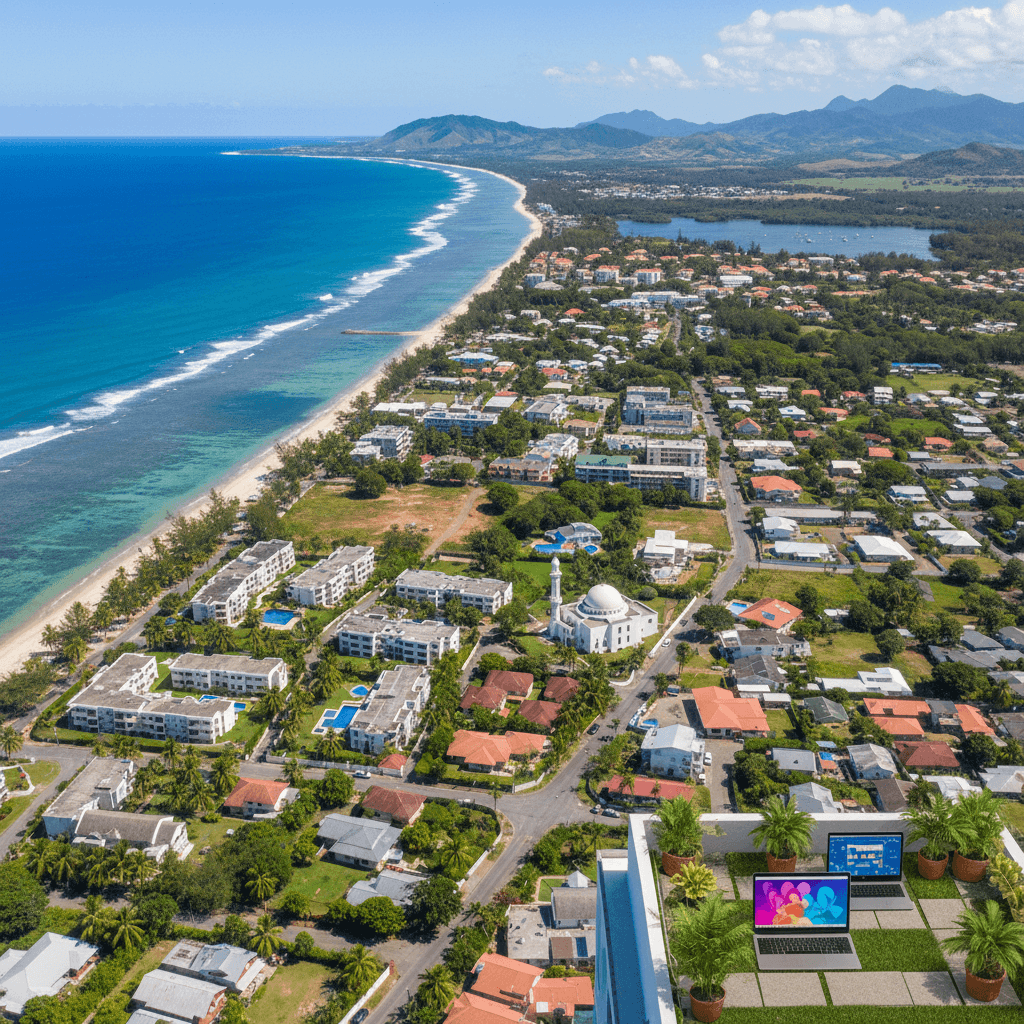
Le Morne sits at the southwestern tip of Mauritius, where a 556-meter basalt mountain drops almost straight into a turquoise lagoon. It's quiet here. Genuinely quiet, not "quiet for a tourist area" quiet.
The mountain, Le Morne Brabant, is a UNESCO World Heritage Site and its history is heavy. Enslaved people once took refuge in its caves and according to the legend that defines this place, many leaped to their deaths from its cliffs rather than face recapture when abolition came. That story doesn't just sit in a museum somewhere, it's woven into how locals talk about the mountain, how they look at it. You feel it.
The vibe is, honestly, unlike anywhere else on the island. There's no strip of bars, no hawkers, no tuk-tuks honking at you. What you get instead is the smell of salt air and grilling fish drifting from a handful of beach shacks, the sound of kite lines snapping in the wind and a lagoon so flat and clear it plays tricks on your eyes, including the famous underwater waterfall illusion visible from above.
Most travelers who end up here are either serious kitesurfers chasing the consistent southerly winds or people who've deliberately opted out of the busier north coast scene around Grand Baie. Expats often describe it as the version of Mauritius that doesn't feel performed for tourists, which is accurate, though it comes with real trade-offs.
Dining options outside the hotels are thin on the ground, the area's isolated from the rest of the island without a car and if you're craving nightlife or a coworking community, you won't find it here. Those things don't exist in Le Morne, full stop.
What does exist is a pace of life that's almost aggressively slow. Fishermen pull boats up the beach in the late afternoon, the mountain turns orange at dusk, the lagoon shifts through five different shades of blue depending on the light. It's the kind of place where you stop checking your phone not because you're trying to, but because there's genuinely something better to look at.
Le Morne rewards people who want stillness. It'll frustrate everyone else.
Le Morne isn't cheap. That's the honest upfront answer before you start daydreaming about beachside laptop sessions and fresh seafood every night. Budget realistically and it's genuinely affordable, underestimate it and you'll burn through savings faster than expected.
Accommodation
Rent is, honestly, the biggest variable. A basic studio inland runs around $300 to $500 a month, but anything with a lagoon view or direct beach access jumps quickly to $800 to $1,500 a month for a one-bedroom. Premium villas with pools sit at $3,000 and above, those are mostly for people who aren't really watching the numbers. Most nomads staying longer than a month find that Flic en Flac or Tamarin, both about 20 minutes north, offer better value with more local infrastructure and rents that are noticeably softer.
Food
Eating local keeps costs low, a plate of dholl puri or fresh grilled fish from a roadside spot costs roughly $3 to $6. Mid-range restaurants land between $8 and $16 per meal, the beachfront places like The Beach and Umami push toward $20 to $50 once you add drinks. Cook at home even half the time and your food budget stays manageable, dining out exclusively at resort-adjacent spots will wreck it.
Transport
Public buses cost almost nothing, $0.40 to $1 per journey, but they stop running around 6:30pm in rural areas like Le Morne and the routes are limited. Frankly, you'll want a rental car here, the peninsula isn't walkable for errands and taxis add up fast if you're relying on them daily. Budget around $400 to $600 a month for a basic car rental, it changes how freely you can move around the island.
Monthly Budget Tiers
- Budget ($1,200 to $1,600): Basic studio, street food and home cooking, buses where possible, day passes at Regus in Ebene for coworking
- Mid-range ($2,000 to $3,000): One-bedroom apartment, mixed dining, occasional taxis, coworking membership
- Comfortable ($3,500 to $5,000+): Beachfront one or two-bedroom, car rental, regular restaurant meals, resort amenities
A realistic mid-range month in Le Morne, turns out, lands closer to $2,500 once you factor in transport and the inevitable splurge dinners. It's not Bali pricing, but the tradeoff is a lagoon that looks like someone photoshopped it.
```Le Morne is small. There's no sprawling grid of neighborhoods to decode, no metro map to memorize. What you get is a tight peninsula at the southwestern tip of the island, a handful of nearby towns and some very different vibes depending on which direction you drive.
Digital Nomads
Staying on the peninsula itself is, honestly, a trade-off most nomads underestimate before they arrive. The lagoon is right there, the mountain looms overhead and the air smells like salt and sun-warmed rock. But there's no coworking space, café WiFi is patchy at best and if your connection drops during a client call, your options are limited to hotel lobbies and hoping Emba Filao's router is having a good day.
Most remote workers who want Le Morne's scenery without the isolation end up basing themselves in Tamarin, about 15 minutes north, it's quieter than Flic en Flac, has a small but functional café scene and you can still reach the peninsula in under 20 minutes when the surf conditions look good.
Expats and Long-Term Stays
Expats, turns out, rarely live in Le Morne itself. Rents on the beachfront run USD $800 to $1,500 a month for a basic one-bedroom and you're paying almost entirely for the view. Flic en Flac, 20 minutes up the west coast, gives you restaurants, a casino, a real supermarket and a proper expat community for USD $400 to $1,200 a month. That's where most long-termers land, they day-trip to Le Morne rather than live there.
If budget matters more than beach proximity, the Central Plateau towns like Curepipe drop rents to USD $300 to $800 a month, the climate is cooler and less humid and you're 45 minutes from everything without the tourist markup baked into every grocery run.
Families
Families tend to do well in Tamarin or the quieter pockets of Flic en Flac. The lagoon at Le Morne is shallow and calm enough for kids, the pace is slow, there's no aggressive nightlife bleeding into the streets at 2am. Schools and medical facilities are thin on the ground here though, most families with school-age children position themselves closer to the central island and drive to the coast on weekends.
Solo Travelers
Solo travelers who want a social scene should skip Le Morne as a base entirely. It's beautiful, it's peaceful, it's weirdly isolating after about four days. Grand Baie in the north is where the energy is, more restaurants, coworking spaces, other travelers to actually talk to. Come to Le Morne for a few days, don't try to build a social life here.
Le Morne itself has no dedicated coworking spaces. None. If you're planning to base yourself here and work remotely, that's the reality you're working with and it shapes everything about your daily routine.
Most nomads end up working from their hotel lobby, a villa with decent WiFi or a beachfront café like Emba Filao, which is, honestly, more pleasant than it sounds when the alternative is a fluorescent-lit office park. The trade-off is that you're dependent on whatever connection your accommodation provides, so testing speeds on arrival isn't optional, it's the first thing you do.
Mauritius runs on 4G with decent coverage across tourist areas and fiber is available in hotels and villas if you specifically ask for it before booking. Average speeds hover around 5 to 6 Mbps in residential settings, faster in premium properties. Video calls work fine, large file uploads are another story.
For a proper coworking setup, you're looking at a 30 to 45 minute drive. The main options on the island are:
- Regus, Ebene Cybercity: Around $58/month for unlimited access, meeting rooms, business lounge, reliable fiber. The most professional setup on the island.
- The Hive: Multiple locations, good community vibe, solid WiFi, popular with local entrepreneurs and expats.
- Les Aubineaux, Central Plateau: A colonial house setting, weirdly charming, tea included, slower pace than Ebene.
For SIM cards, the My.T 5G Tourist SIM costs around €30 for unlimited data over 30 days, available at the airport or My.T stores. Local starter packs run from €2 and include 2 to 3GB of daily data, which is frankly enough for most use cases if you're not streaming constantly.
Bring a European-compatible power strip (230V, 50Hz) because outlets in older properties are scarce and pack wired headphones for calls. Background noise at beach cafés, the wind off the lagoon, chairs scraping on concrete, doesn't mix well with client meetings.
Le Morne works for remote work if your schedule is flexible and your bandwidth needs are moderate. Deadline-heavy, always-on roles are a tougher fit.
Le Morne is, honestly, one of the safer corners of Mauritius. Petty theft exists, particularly on beaches where unattended bags disappear faster than you'd expect, but violent crime targeting tourists is rare. Don't leave valuables visible in rental cars either, that's the most common complaint you'll hear from expats who've been here a while.
The ocean is a bigger risk than the streets. The lagoon looks calm, it isn't always. Strong currents run along the peninsula's southern tip and the kitesurfing zone gets chaotic when winds pick up, so swimmers should stick to clearly marked areas and ask locals before entering unfamiliar water. Lifeguards aren't a given at every beach here.
At night, Le Morne stays quiet. There's no real nightlife to wander into trouble around, which is either a comfort or a frustration depending on why you're here. Stick to lit paths if you're walking after dark and use a taxi rather than walking long distances along the coastal road.
Medical Care
This is where things get more complicated. Le Morne has no hospital and no clinic of its own, the nearest public hospital is District Hospital Souillac, roughly 20 to 25 minutes east by car. For anything serious, most expats and travelers head to private facilities in Curepipe or the surrounding districts, which are faster and frankly more comfortable than the public system.
Public healthcare in Mauritius is free for residents, turns out it's also accessible to tourists in emergencies, but wait times at public facilities can be long and resources are stretched. Private consultations run roughly $30 to $60 USD per visit, medications are cheap and widely available at pharmacies. Bring enough of any prescription medication to last your stay because sourcing specific brands locally can be hit or miss.
Travel Insurance
- Water sports coverage: Standard policies often exclude kitesurfing and diving; check the fine print before you arrive
- Medical evacuation: Worth including given the distance from specialist care
- Recommended providers: SafetyWing and World Nomads both cover Mauritius, SafetyWing is cheaper, World Nomads covers more activities
Pharmacies in the area stock basics reliably, the nearest is in Case Noyale a few minutes north. For anything beyond paracetamol and antihistamines, head toward Rivière Noire or Tamarin.
Le Morne isn't easy to get around without a car. That's the honest truth. The peninsula sits at the southwestern tip of the island, far from most services and public buses run infrequently out here, which means you're either renting wheels or you're stuck.
Car Rental
Most nomads and longer-stay travelers rent a car, it's genuinely the only way to move freely. Expect to pay around $30,$50 USD per day for a small automatic, with better rates if you book weekly or monthly. Driving is on the left, roads are generally decent, though the coastal routes can get narrow and potholed fast once you're off the main highway.
Public Buses
Buses are, honestly, functional but slow and not designed with Le Morne in mind. The network covers the west coast corridor, connecting through Tamarin and Flic en Flac toward Port Louis, with fares sitting at MUR 20,50 (roughly $0.40,$1 USD) per journey. Services run roughly 6:30am to 6:30pm in rural areas, so late evenings leave you stranded, plan accordingly. For short hops to a nearby village or a market run, they work fine, don't expect them to replace a car for day-to-day life here.
Taxis
Taxis exist and they're easy enough to flag or arrange through your accommodation, turns out most hotels keep a list of reliable drivers. Fares aren't metered, so agree on a price before you get in, arguing about it afterward will get you nowhere. A ride to Tamarin runs roughly MUR 400,600, Port Louis is significantly more. For occasional airport runs or one-off trips, fine. As a daily transport solution, the costs stack up fast.
Getting Around on Foot and by Bike
Within Le Morne itself, walking and cycling are genuinely pleasant options, the peninsula is small and flat along the coast. Some accommodations offer bike rentals, weirdly underused given how good the beach road is for it. The mountain trails require proper footwear and a guide, don't attempt Le Morne Brabant solo without local knowledge.
Day Trips
With a car, you're 20 minutes from Tamarin, 30 from Flic en Flac and about an hour from Grand Baie in the north. The southwest coastal road is frankly one of the most scenic drives on the island, the lagoon stays visible almost the whole way and the smell of salt air through an open window makes the commute feel less like a commute.
```Mauritius is, honestly, one of the more linguistically layered places you'll visit. The official languages are English and French, but neither is what you'll actually hear on the street. Mauritian Creole, called Kreol Morisyen, is the mother tongue for most of the population, a fast, melodic blend of French, African languages and a handful of other influences that sounds familiar until it doesn't.
In Le Morne specifically, French is your most useful tool. Most locals in the village, at restaurants and at guesthouses will default to French before English, so even a handful of phrases goes a long way. Hotel staff and resort workers are typically fluent in English, that's less true at the small roadside snack shops or with fishing community locals.
Don't panic if you speak neither. Mauritians are, turns out, remarkably patient with visitors who make an effort. A "bonjour" and a smile will open more doors than you'd expect and most younger residents have solid English from school. Still, pulling out Google Translate at a local eatery isn't unusual, nobody takes offense.
A few phrases worth knowing:
- Bonjour / Bonsoir: Good morning / Good evening, used constantly
- Merci: Thank you, always appreciated
- Combien ça coûte?: How much does it cost?
- Enn ti kado: Kreol for "a small gift," meaning a discount; locals use this when bargaining
- Kouma ou rele?: What's your name? A small gesture that locals genuinely warm to
WhatsApp is weirdly universal here, it's how locals communicate, how guesthouses confirm bookings and frankly how you'll sort out most practical arrangements. Get a local SIM on arrival and use it. The My.T tourist SIM runs around €15 for 200GB over 30 days, available at the airport and it's the easiest option for short stays.
Written communication at shops and menus leans French, though English translations are common in tourist-facing spots. Road signs are in English. Government signage mixes both. It's a system that works fine once you stop expecting consistency, because there isn't any.
Le Morne sits on Mauritius's southwest tip and the weather here doesn't quite follow the same rules as the rest of the island. The mountain creates its own microclimate, which means you'll get stronger winds, more dramatic skies and occasionally rougher conditions than you'd find up north in Grand Baie.
There are two seasons. The dry season runs from May through November and this is, honestly, when Le Morne is at its best. Temperatures hover between 17°C and 25°C, the trade winds blow consistently and the lagoon turns that impossible shade of turquoise that makes every photo look fake. Kitesurfers come specifically for this window, because the wind is predictable and strong, sometimes uncomfortably so if you're just trying to read on the beach.
The wet season runs December through April. Hot, humid and punctuated by sudden downpours that smell like warm earth and salt, the kind that arrive fast and leave just as quickly. January and February are cyclone months, which sounds dramatic but usually means a few days of grey skies and choppy water rather than anything catastrophic. Still, it's a real risk, resorts discount heavily during this period for a reason.
March is, turns out, the cheapest month to visit by a significant margin. Accommodation prices drop sharply, the crowds thin out and you'll often have the lagoon almost to yourself. The trade-off is unpredictable weather and the occasional cancelled water sports session.
Most travelers say July through September is the sweet spot. Dry, breezy and busy enough to feel alive without being overrun. Expect to pay peak prices for accommodation and book kitesurfing lessons weeks in advance.
- Best for kitesurfing: May to November, peak winds July to September
- Best for budget travelers: March, with the lowest rates on the island
- Best overall conditions: July to September, dry and consistently breezy
- Avoid if possible: January to February, cyclone season brings real uncertainty
- Shoulder season: April and November offer good value with mostly stable weather
One thing worth knowing: the southwest gets more wind than anywhere else in Mauritius, that's by design if you're a kiter, annoying if you're not. Pack a light layer even in summer, evenings on the peninsula get cool fast.
```Le Morne runs on a different clock than the rest of Mauritius. Slower, quieter and honestly a little isolated if you're used to having everything within walking distance. That's not a complaint, just something to factor in before you book.
Getting around without a car is genuinely frustrating. Buses connect Le Morne to the west coast towns, but service thins out after 6:30pm and the stops aren't always obvious. Most travelers who stay longer than a week end up renting a car, it makes the whole southwest peninsula feel accessible rather than marooned. Budget around $30 to $50 USD per day for a rental or look for weekly rates that bring it down considerably.
Money & Payments
- Currency: Mauritian Rupee (MUR). ATMs are scarce in Le Morne itself, stock up cash in Flic en Flac or Black River before arriving.
- Cards: Accepted at hotels and larger restaurants, but local spots and market vendors are cash only.
- Tipping: Not mandatory, but 10% is appreciated at sit-down restaurants.
SIM Cards & Connectivity
Pick up a My.T 5G Tourist SIM at the airport for around €30, which includes unlimited data for 30 days and it works across the island including Le Morne's more remote stretches. 4G coverage is solid outdoors, weirdly patchy inside some of the older guesthouses though.
Weather & Timing
The southwest catches more wind and rain than the north, which is exactly why kitesurfers love it. Cyclone season runs roughly November through April, most years it's fine, but a bad week can mean grounded flights and closed beaches. May through October is the sweet spot: dry, breezy and busy. March is the cheapest month to visit, accommodation drops dramatically.
Cultural Etiquette
Le Morne Brabant isn't just a pretty backdrop, it carries serious historical weight as a symbol of resistance for enslaved people. Treat it accordingly. Hiking it without a registered guide is technically prohibited and frankly the trails are unmarked enough that you'd want one anyway.
Dress modestly when you're away from the beach, cover up before walking into the village. Locals are warm, they appreciate the small effort.
Need visa and immigration info for Mauritius?
🇲🇺 View Mauritius Country GuideWild Card
Expect the unexpected
Monthly Budget Estimates
More cities in Mauritius
Port Louis
🇲🇺 Mauritius
Saint-Denis
🇲🇺 Mauritius
Grand Baie
🇲🇺 Mauritius