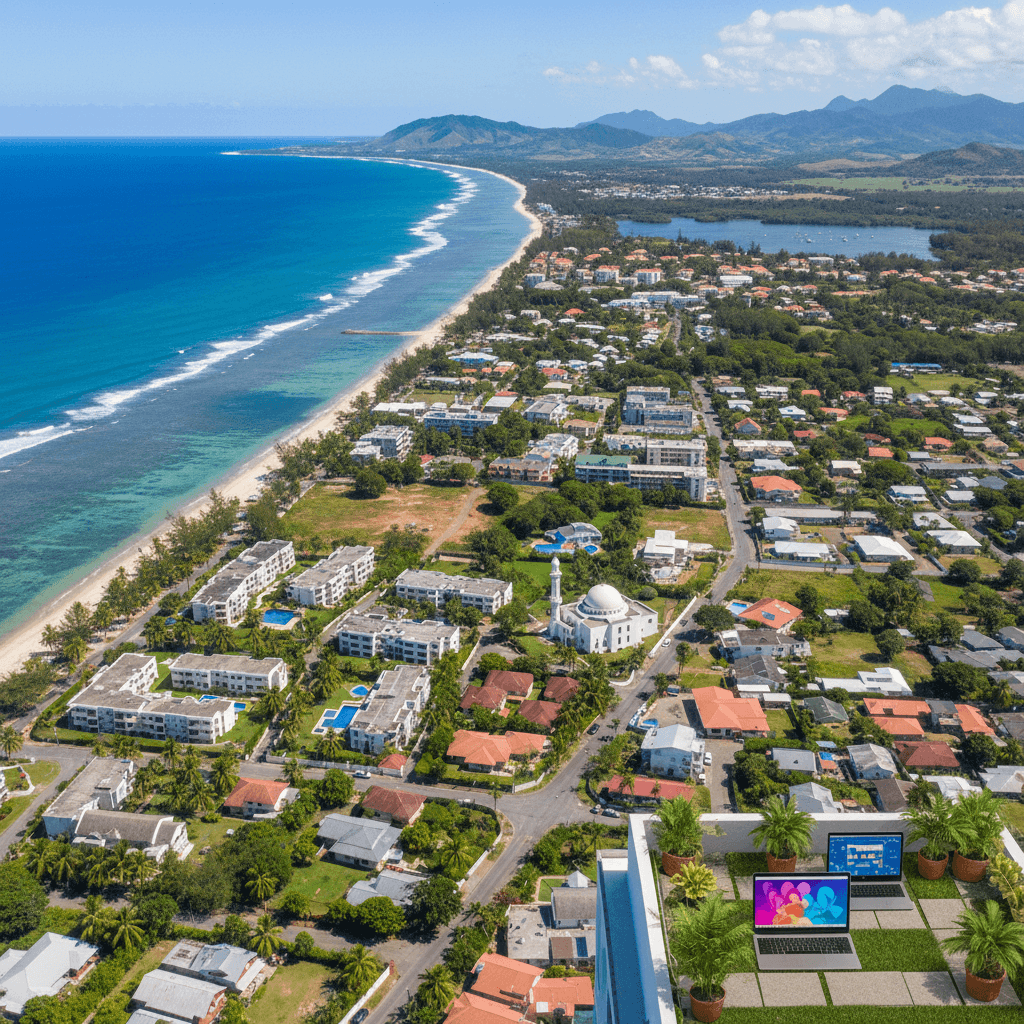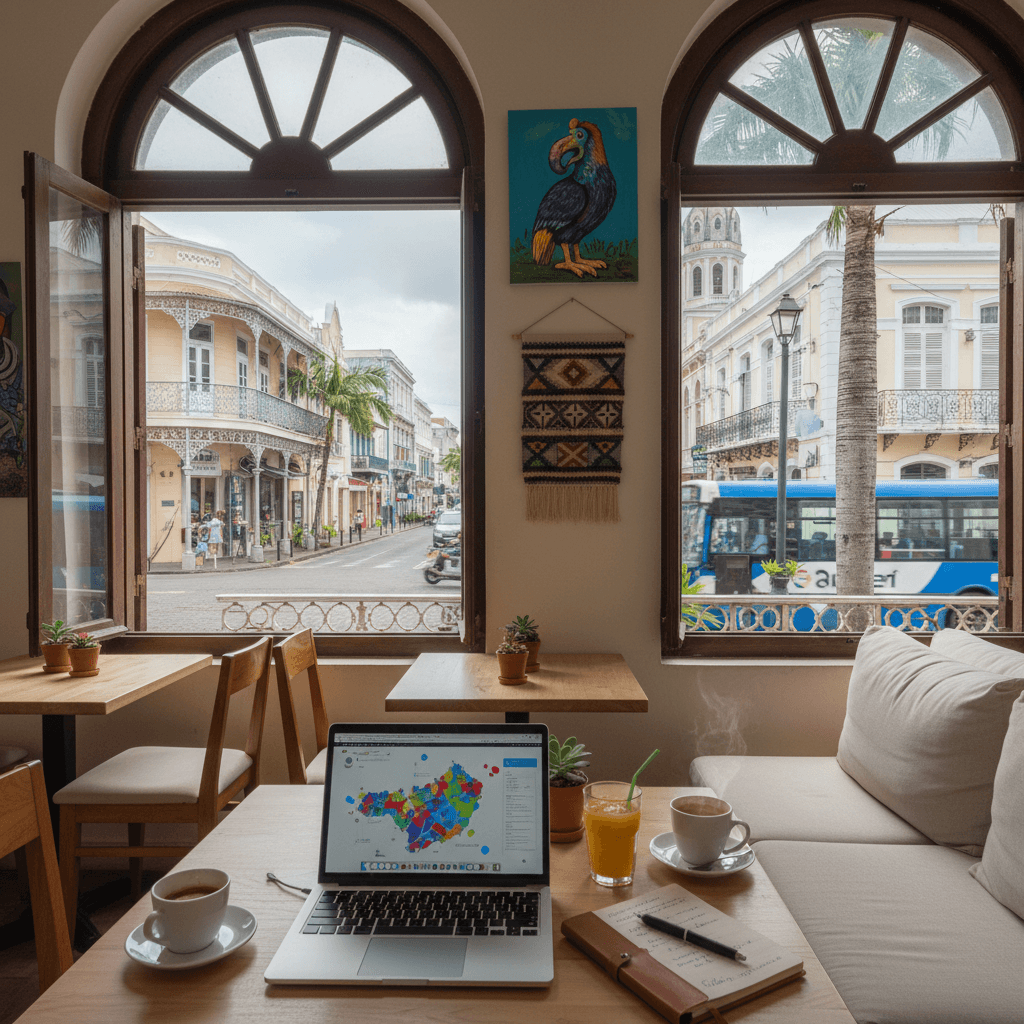
Saint-Denis
🇲🇺 Mauritius
First, a quick fix, Saint-Denis isn’t really a Mauritius city, it’s the capital of Réunion. If you’re planning life on Mauritius, you’re probably looking at Grand Baie, Tamarin, Port Louis, Moka, Flic en Flac or Curepipe instead and that mix tells you a lot about the island, which, surprisingly, isn’t one single nomad scene but a few very different pockets.
Mauritius feels calm on the surface, then the details kick in, the honking scooters in Port Louis, salt air on the west coast, rain hammering tin roofs in the central hills. It’s safe, polished in places and very livable if you’ve got a car, but don’t expect an easy pedestrian lifestyle, honestly, you’ll be driving more than you think.
Grand Baie is the easiest landing spot for most nomads, with cafés, beaches and the biggest expat crowd, though it can feel a bit touristy and pricey.
- Best for: New arrivals, remote workers, families
- Rent: Around $800 to $1,200 for a decent one-bedroom
- Vibe: Social, beachy, a little polished
Tamarin has a softer rhythm, more creative, less glossy, with shared villas and a surf-town feel that suits people who want quieter mornings and long coffee breaks. Port Louis is the practical choice, buses, banks, offices and coworking, but the traffic and midday heat can be maddening and the city gets sticky fast.
- Tamarin: Better for budget-minded nomads, nature lovers
- Port Louis: Better for business errands and fast internet
- Flic en Flac: Laid-back, beach-first, fewer proper workspaces
Internet is, honestly, one of Mauritius’s biggest wins. Fiber is common in urban areas, mobile data works well and spaces like The Hive in Grand Baie, The Yard in Tamarin and La Turbine in Moka give you a real desk, AC and fewer distractions than a windy café with loud cutlery and espresso steam.
Budget-wise, a solo nomad can scrape by on about $600 a month, but most people spend closer to $800 to $1,200 once rent, food and transport are in the mix and that’s before a car. The island looks small on a map, then turns out to be annoyingly spread out, so plan for petrol, buses that stop early and the occasional taxi negotiation.
What sticks with you is the contrast, polished malls beside roadside dholl puri stalls, jasmine near exhaust fumes, bright blue water, then a sleepy inland town where everything closes early. Mauritius isn’t frantic, it isn’t cheap and it definitely isn’t a one-size-fits-all nomad base, but if you pick the right area, it’s easy to settle into a steady, sunlit routine.
First, a reality check, Saint-Denis isn’t a city in Mauritius. It’s the capital of Réunion, which trips people up all the time, so if you’re budgeting for Mauritius, use the island’s real hubs like Grand Baie, Port Louis, Tamarin, Moka, Flic en Flac and Curepipe.
Money goes further here than in much of Europe, though island pricing can still sting. A solo nomad can live on $440 to $600 in a stripped-back setup, while a more comfortable monthly budget usually lands around $800 to $1,200 if you want a proper apartment, café lunches and the odd coworking pass. Private villas, regular dining out and a car push you closer to $1,600 or more and honestly, that happens fast.
Housing is the biggest swing factor. In Grand Baie, a studio or one-bedroom in the center can run roughly $405 to $881 a month, while cheaper places outside the center can drop to $253 to $678; Tamarin and Flic en Flac are often a bit gentler on the wallet, though the nicer units disappear quickly in season.
Area breakdown
- Grand Baie: pricier, social and easiest for new arrivals
- Tamarin: more relaxed, better value, popular with remote workers
- Port Louis: practical for business, less fun if you want beach time
- Moka: quieter, residential, decent for long stays
- Curepipe: cooler and calmer, but farther from the coast
Food is manageable if you eat local. Street meals usually sit around $5 to $10, a mid-range restaurant will be $15 to $25 and groceries for one person hover near $282 a month, which, surprisingly, doesn’t feel outrageous until you start buying imported cheese or decent wine.
Transport is where the island gets a little messy. Buses are cheap at about 30 to 60 MUR, taxis often aren’t metered so you’ve got to negotiate first and a rental car usually costs $30 to $50 a day, which most expats recommend if you’re based outside Port Louis because the bus network gets patchy and ends early.
Working and staying connected
- SIM cards: Emtel, MyT and Chili are easy to get, with large data bundles around €10 to €15 a month
- Coworking in Grand Baie: The Hive, about $120 to $180 monthly
- Coworking in Tamarin: The Yard in Tamarin (Black River), around $120-$250 monthly
- Coworking in Moka: La Turbine, about $120 to $200 monthly
- Coworking in Port Louis: Coworking Port Louis, about $100 to $160 monthly
Internet is solid in the main hubs, with fiber and 4G working well in most built-up areas, but don’t assume every Airbnb has decent WiFi, because some hosts oversell it and the connection can drop the moment it rains hard and the tin roof starts drumming.
Quick reality check, Saint-Denis isn’t a Mauritian neighborhood and if you landed here looking for a place to live in Mauritius, you probably want the areas below instead. The island’s livable hubs are spread out and you’ll feel that fast, especially once the humidity hits and the bus system starts doing its own thing. Not cheap. Not walkable everywhere.
For nomads
- Grand Baie: Best for community, cafés, beach access and coworking. The Hive is the cleanest bet for desks, AC and decent WiFi, though prices run higher than in most other parts of the island.
- Tamarin: Better if you want a quieter, more creative base and honestly it’s where a lot of nomads end up after getting tired of tourist noise. The Yard fits that slower west coast rhythm.
- Port Louis: Good for people who need business services, fast internet and government access, but the traffic is maddening and the city smells like exhaust, fried noodles and hot pavement by lunchtime.
Most nomads pick Grand Baie or Tamarin, then complain about rent after a month. That’s normal. If you need speed, Coworking Port Louis has the strongest connection in this list, but the tradeoff is a harder-edged, noisier daily grind.
For expats
- Moka: Best for longer stays, school runs and a more orderly setup. La Turbine gives it a professional feel and the central location makes life easier if you’re splitting time between work and errands.
- Port Louis: Best if you work in finance, law or public-facing roles. It’s practical, though the afternoon congestion and concrete heat can wear you down.
- Curepipe: Cooler, quieter and more residential, which, surprisingly, some expats prefer after trying the coast. It feels less glossy, more local.
Expats who care about routine usually like Moka or Curepipe because they’re easier to settle into, with less of that seasonal holiday-town churn. The downside is simple, you’ll miss the sea more than you expect.
For families
- Bagatelle: Convenient for shopping, medical appointments and central access, with newer housing nearby.
- Saint Pierre: Quieter, greener and a bit more village-like, which works well if you want less noise and more space.
- Helvétia: Popular with families who want modern homes, parks and easier access to schools and services.
For solo travelers
- Flic en Flac: Easygoing beach base with affordable cafés and a social scene that doesn’t try too hard.
- Grand Baie: Safest bet for meeting people quickly, though it can feel touristy fast.
- Curepipe: Better if you want quiet nights, cooler air and less pressure to “do” anything every day.
Solo travelers should skip the idea of moving around every few days, because Mauritius looks small on a map and feels bigger in real life. Pick one base, get a local SIM from MyT or Emtel and work from there, otherwise you’ll spend half your trip in taxis and the other half arguing with WiFi. That’s the real cost.
First, a reality check, Saint-Denis isn’t a Mauritius neighborhood, it’s in Réunion. If you’re building a remote-work base in Mauritius, focus on Grand Baie, Port Louis, Tamarin, Moka or Flic en Flac, because that’s where the internet, cafés and coworking actually make sense.
For day-to-day connectivity, Mauritius is decent, sometimes very good and occasionally annoying when a place promises WiFi and the router acts like it’s 2009. In urban and coastal areas, fiber is common, 4G coverage is strong and speed can hit 50 to 100 Mbps in coworking spaces, with premium setups reaching much higher, which, surprisingly, is enough for calls, uploads and full workdays without much drama.
Most nomads buy a local SIM right away. Emtel, MyT and Chili are the main names and data packages usually run about €10 to €15 a month, so don’t overthink it, just get one at the airport or in a shop and move on with your day.
Best coworking spots
- The Hive, Grand Baie: Around $120 to $180 a month, with 50 to 100 Mbps WiFi, AC, coffee and meeting rooms. It’s the easiest place to plug in if you want other remote workers around.
- The Yard - Black River, Tamarin: Day pass Rs 1,150 (~$25), monthly from ~Rs 15,000+ ($320+).
- La Turbine, Moka: About $120 to $200 a month, with events and mentorship, good if you want business contacts instead of beach chatter.
- Coworking Port Louis: Around $100 to $160 a month, often the fastest option at about 100 Mbps and best if you need city services close by.
Grand Baie is the easiest all-round choice. The cafés are busy, the air smells of sunscreen and grilled fish near the water and there’s enough expat traffic that you won’t feel isolated after week one. Tamarin is quieter and more creative, though you’ll probably need a car and Flic en Flac works if you’re happy working from café WiFi and a beach town that gets sleepy fast.
One practical warning, accommodation WiFi can be hit or miss, so ask for a speed test before you book. Honestly, that one question saves a lot of frustration, because a pretty apartment with weak internet is just a nice place to stare at a loading wheel.
First thing, Saint-Denis isn’t a Mauritius city. It’s the capital of Réunion, so if you landed here looking for Saint-Denis advice, you probably want Mauritius proper and that mix-up happens more than you’d think. Mauritius itself is generally safe, but petty theft, scammy taxi quotes and dark side streets near beaches can still ruin a good day, so keep your guard up after sunset.
Most expats and nomads stick to Grand Baie, Tamarin, Moka, Port Louis or Flic en Flac, because the clinics are better, the roads are easier to read and you’re less likely to end up in a quiet lane with no streetlights and a barking dog. The heat can be brutal, honestly and dehydration sneaks up fast, especially if you’ve been on the beach, in a car with bad AC or wandering around Port Louis in midday traffic.
Safety
- Day-to-day risk: Low in the main hubs, though you should still avoid flashing phones, carrying big cash piles or taking empty beach walks late at night.
- Transport: Taxis aren’t always metered, so agree on the fare first, because arguing after the ride is a waste of time and usually gets you nowhere.
- Roads: Driving is on the left, roundabouts can feel chaotic and local drivers move fast, with plenty of honking and last-second lane changes.
- Weather: Cyclones and heavy rain do happen and when they hit, the tin roofs rattle, drains overflow and small roads can turn messy quickly.
Healthcare
Mauritius has decent private healthcare and that’s where most long-stay visitors go if they want shorter waits and better English-speaking service. Public hospitals exist, but the pace can be slow, the queues can drag and frankly, you don’t want to test that system unless you have to.
- Private clinics: Best for routine care, stitches, scans and quick consultations in Port Louis, Moka and the north.
- Pharmacies: Easy to find in towns, with common meds available, though some brands you know at home may be missing.
- Insurance: Bring solid travel or expat cover, because private treatment can get expensive fast if you need anything beyond a basic visit.
- Emergency prep: Save your nearest clinic, a 24-hour pharmacy and your insurer’s number before you need them, turns out that’s the difference between calm and chaos.
If you’re staying in Grand Baie or Tamarin, the practical setup is better, with more doctors, pharmacies and drivers who know where the main clinics are. Keep bottled water on hand during hot spells, use mosquito repellent after rain and don’t leave passports or laptops in obvious places, because small theft is boring, common and totally avoidable.
Saint-Denis isn’t a thing in Mauritius, at least not the way people think. That name belongs to Réunion and if you’re planning time in Mauritius, you’ll want to focus on Grand Baie, Port Louis, Tamarin, Moka, Flic en Flac or Curepipe instead. Simple mistake. Common one.
Getting around Mauritius is easy enough once you accept one truth, the island runs on cars, buses and patience. Side streets can feel sleepy and empty, then all at once you get a burst of honking, scooter engines and the smell of diesel mixed with fried dholl puri. Walkable pockets exist, but outside the main hubs you’ll usually want your own wheels.
What works best
- Car rental: Around $30 to $50 a day and honestly that’s the cleanest option if you’re staying more than a week or planning beach-hopping on the west and north coasts.
- Bus: Fares usually run 30 to 60 MUR, which is cheap, but schedules can be flaky and services wind down early, so don’t bank on a late dinner return.
- Taxi: There’s no real metered system, so agree on the price before you get in, then stick to it, because arguing after the ride goes nowhere fast.
- Bike or scooter: Fine for short coastal runs in places like Grand Baie or Flic en Flac, though the heat can be brutal and the roads aren’t always forgiving.
Most nomads in Grand Baie and Tamarin rent a car, because it makes coworking, grocery runs and beach days much less annoying. Port Louis has better public transport access, but traffic during the morning and late afternoon is a mess, with buses, delivery vans and impatient drivers all fighting for the same lanes.
Neighborhood feel
- Grand Baie: Best for short hops on foot, plus easy taxi access and decent bus links.
- Tamarin: More spread out, so a car helps a lot, especially if you’re living in a villa or shared house.
- Port Louis: Handy for work and services, though parking can be a headache and the streets feel hotter, louder and tighter.
- Moka: Calm and central, good for drivers, less fun if you want to stroll everywhere.
SIM coverage is solid, so grab a local plan from Emtel, MyT or Chili and use ride-hailing or maps without much drama. Internet is, honestly, one of Mauritius’s better points, but your accommodation’s WiFi can still be weirdly bad, so check it before you book.
If you’re staying long term, get a car and stop overthinking it. If you’re here for a quick beach week, taxis plus buses can work, just leave extra time and keep some cash on you. The island moves slower than people expect and that’s part of the deal.
Saint-Denis isn’t in Mauritius, so if you’re planning a stay there, you’re probably thinking of the island itself, not that name on the map. Mauritius runs on a different set of places and the ones that matter for nomads are Grand Baie, Port Louis, Tamarin, Moka, Flic en Flac and Curepipe. Straight answer, no confusion.
Language-wise, you’ll hear a lot of English in business settings, French in daily life and Creole everywhere else, from taxi radios to shop counters to the guy calling out grilled corn near the beach. Honestly, that mix makes day-to-day life easier once you stop trying to force everything into one language, though the first week can feel weirdly chaotic if you only speak English.
Most expats recommend learning a few Creole basics, because it softens interactions fast and people appreciate the effort. Simple phrases go a long way and you’ll hear them back with a smile, often over the smell of oil, chilli and sugar cane dust drifting in from the road.
What to expect in daily communication
- English: Fine for rent, coworking, banking and most official errands.
- French: Common in media, shops and higher-end hospitality, especially in the north and west.
- Creole: The everyday language, casual, fast and full of local shorthand.
- Mobile signal: Generally solid, though indoor reception can drop in some older buildings.
People are usually polite, but they can be indirect when something’s a hassle, so don’t expect a blunt yes or no every time. Booking issues, apartment repairs and visa questions can drag and the bureaucracy is maddening when you need a clean answer by lunch.
Useful apps and habits
- WhatsApp: The main way landlords, drivers and small businesses stay in touch.
- Google Maps: Helpful, though road names can be messy and some directions feel optimistic.
- Local SIM: Pick one up early, Emtel, MyT and Chili are the usual options.
In cafés and coworking spots, you’ll get by with English, but in local markets or small family-run places, a bit of French or Creole changes the whole tone of the exchange. Speak slowly, don’t overcomplicate things and keep your messages short, because people often reply on WhatsApp between other tasks, traffic noise and whatever’s sizzling in the kitchen.
If you’re staying longer, keep your communication practical. Confirm prices in writing, double-check pickup times and ask about WiFi before you book, since a “good connection” can mean very different things depending on who’s answering.
Mauritius runs hot and humid for most of the year and the weather can flip fast, especially on the west and north coasts. Saint-Denis gets mentioned a lot in searches, but that’s Réunion, not Mauritius, so if you’re planning a trip here, aim for places like Grand Baie, Tamarin, Port Louis or Flic en Flac instead. Honestly, the island’s weather shapes everything, from your beach days to how productive you’ll feel at your desk.
The best time to visit is usually May to November, when it’s drier, cooler and easier to sleep without the fan blasting all night. Expect daytime temperatures around 20 to 26°C, breezy evenings and less sticky air, which makes walking around or hopping between cafés far more pleasant. December to April is hotter and wetter and the humidity can cling to your skin like a wet T-shirt, which, surprisingly, a lot of first-timers underestimate.
Rainy season doesn’t mean all-day washouts, though. You’ll often get sharp afternoon downpours, loud enough to drown out traffic and the shopfront chatter, then bright sun an hour later. Cyclones are rare but real, so if you’re coming in summer, keep an eye on forecasts and don’t book a tiny beachfront place with no backup plan.
Best months by traveler type
- Digital nomads: June to September, cooler, less sweaty, easier for long workdays.
- Beach travelers: October to December, warm water and calmer seas.
- Budget travelers: May, June and September, before peak holiday pricing kicks in.
- Heat-sensitive visitors: Skip January and February, the sun gets brutal.
Weather also changes by region. The west coast, including Tamarin and Flic en Flac, tends to stay sunnier and drier, while the central plateau around Moka and Curepipe feels cooler and can get misty, with damp mornings and cold tile floors in the evenings. Grand Baie is usually comfortable, but inland gusts and sudden showers can still catch you off guard, so pack a light rain jacket and decent sandals.
If you’re staying longer, the sweet spot is shoulder season, when the island feels alive but not overrun and you won’t pay peak rates for villas, cars or coworking passes. That’s the real trade-off. Less rain, fewer crowds and less of that humid, salt-and-exhaust smell that hangs over the road after a storm.
First, a quick correction, Saint-Denis isn’t a major city in Mauritius. People usually mean one of the island’s real bases, like Grand Baie, Port Louis, Tamarin, Moka, Flic en Flac or Curepipe. That mix-up happens a lot, honestly and it matters if you’re booking a place for work instead of a beach week.
Mauritius feels easy at first, then the practical bits kick in. The island has good fiber in the main towns, but outside those pockets the signal can get patchy, the bus system slows down after dark and most neighborhoods are better with a car or at least a long-term taxi plan. Humidity hangs in the air, diesel smells drift through Port Louis and rain on tin roofs can be strangely loud at night.
Money, housing and daily costs
- Budget living: about $440 to $600 a month, if you’re sharing and keeping things simple.
- Mid-range: $800 to $1,200, which, surprisingly, is where most nomads land once they stop pretending they’ll cook every meal.
- Comfortable: $1,600 to $2,000+, especially in Grand Baie or near the coast.
- Food: street food runs $5 to $10, a decent restaurant meal is $15 to $25 and groceries for one person sit around $282 monthly.
Accommodation changes fast by area. A one-bedroom in a central spot can run $405 to $881, while cheaper places outside the center drop to roughly $253 to $678, though the tradeoff is usually location, noise or both. Grand Baie is the easiest place to meet people, Tamarin feels more relaxed and creative and Port Louis makes sense if you need banks, offices and paperwork sorted without wasting a day.
Internet, transport and work setup
- SIM cards: Emtel, MyT and Chili are the main names, with big data bundles around €10 to €15 a month.
- WiFi: 50 to 100 Mbps is common in coworking spaces and premium connections can hit 500 Mbps.
- Coworking: The Hive in Grand Baie, The Yard in Tamarin, La Turbine in Moka and Coworking Port Louis are the usual picks.
- Transport: buses cost 30 to 60 MUR, taxis should be negotiated before the ride and car rental usually makes life easier.
Most expats recommend checking the exact WiFi speed before you book, because a place can look perfect and still choke on a video call at 2 p.m. The Hive is the safest bet for community, Coworking Port Louis is better if you need speed and café working in Flic en Flac is fine for a day, but it gets old fast. Skip the fantasy of walking everywhere, this island runs on short drives, loud scooters and a fair bit of patience.
Frequently asked questions
Is Saint-Denis a city in Mauritius?
Which area in Mauritius is best for digital nomads?
How much does it cost to live in Mauritius as a solo nomad?
Is the internet good in Mauritius for remote work?
Which coworking spaces are popular in Mauritius?
Is Mauritius safe for expats and digital nomads?
Do you need a car to get around Mauritius?
Need visa and immigration info for Mauritius?
🇲🇺 View Mauritius Country GuideEasy Landing
Settle in, no stress
Monthly Budget Estimates
More cities in Mauritius
Port Louis
🇲🇺 Mauritius
Le Morne
🇲🇺 Mauritius
Grand Baie
🇲🇺 Mauritius