Larnaca
🇨🇾 Cyprus
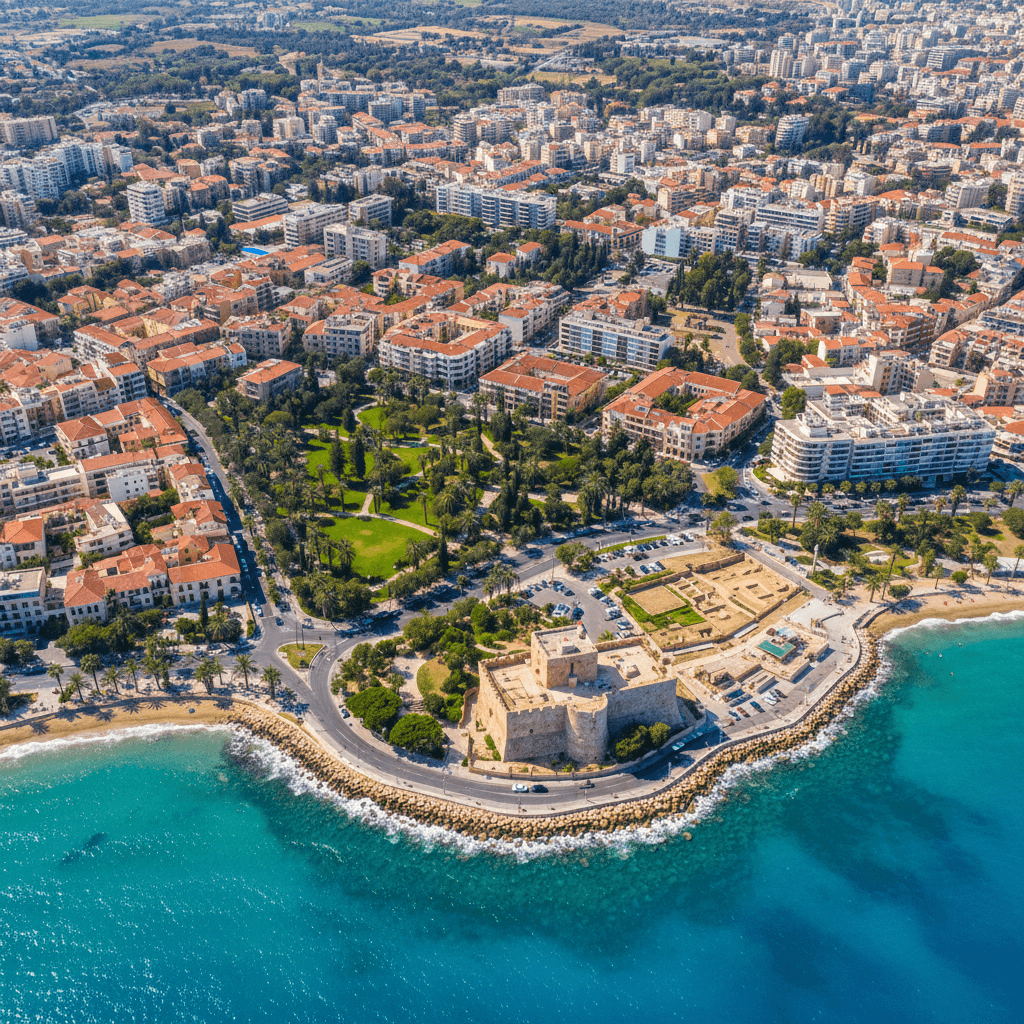
Larnaca feels slower than Limassol and less polished than Paphos and that’s part of the appeal. You get sea air, airport convenience, old stone streets and a daily rhythm that still leaves room for long coffees and late walks on Finikoudes.
It’s a practical base, honestly, especially if you want Europe nearby without paying capital-city prices, though the trade-off is a smaller coworking scene and nightlife that can feel a bit sleepy after midnight. Summers are brutal. The heat sticks to your skin, the promenade shimmers and by August even the shaded alleys feel like they’re holding their breath.
Typical monthly budget for one nomad: about €1,600 to €2,200, with a more comfortable setup pushing past €2,500 if you want a nicer apartment, coworking and the occasional Bolt ride instead of buses.
- Downtown or Finikoudes: €750 to €900 for a studio or 1BR, walkable, busy and a bit noisy at night.
- Oroklini or Pyla: €600 to €800, calmer and more suburban, with a mixed expat crowd and more space for the money.
- Faneromeni or Drosia: €700 to €850, quieter residential streets, better if you want peace over nightlife.
Food is straightforward and decent, not fancy. A gyro or souvlaki usually lands around €7 to €10, a mid-range lunch is €12 to €15 and if you’re cooking at home, groceries tend to run €200 to €300 a month, which, surprisingly, is one of the easiest ways to keep costs sane.
The vibe changes by neighborhood and that matters. Finikoudes is for people who want cafes, beach access and everything on foot; Chrysopolitissa around the marina feels newer and shinier; Oroklini and Pyla are where expats go when they want quiet evenings, bigger homes and fewer scooter engines buzzing past the window.
- Internet: Usually solid in town, with fiber and 5G doing the heavy lifting, though rural edges can be patchy.
- Coworking: Limited, with Larnaca Business Center, Regus and HQ-style options filling most of the gap.
- Getting around: Buses are cheap, Bolt is the easiest ride-hailing app and the center is genuinely walkable.
- Social life: Friendly but small, with brunch meetups, pub nights and a lot of repeat faces.
Safety’s good, the airport is nearby and English gets you far in tourist and business areas. Larnaca isn’t trying to impress you and that’s why people stick around.
Larnaca isn’t expensive by Cyprus standards, but it isn’t dirt cheap either. A single nomad usually spends about €1,600 to €2,200 a month and if you want a nicer place near the sea, coworking and the odd Bolt ride after dark, that number climbs fast.
Rent is the biggest swing. Finikoudes and downtown one-beds usually sit around €750 to €900, Oroklini and Pyla are softer at €600 to €800 and Faneromeni often lands around €700 to €850, which, surprisingly, is still decent for a quiet area with proper residential streets and less scooter noise.
Typical Monthly Costs
- Shared housing: about €500
- 1BR apartment: €600 to €900
- Street food: €7 to €10 for a gyro or souvlaki
- Mid-range meal: €12 to €15 per person
- Groceries: €200 to €300
- Transport: €40 to €125, with a monthly bus pass around €40
- Coworking: €250 to €500, depending on the desk and location
Food is manageable if you don’t eat out like a tourist every day. Tavernas do meze for €12 to €15, street grills smell like charcoal and garlic by lunch and upscale seafood along Finikoudes can push past €25 a head, so the bill can jump quickly if you’re sitting by the promenade with a wine list in hand.
Transport is fairly painless. Buses are cheap, Bolt is the main ride-hailing app and short city hops usually cost €3 to €6, though the summer heat can make even a ten-minute walk feel like you’ve been wrapped in wet towels, honestly, so plenty of people end up paying for convenience.
Budget Tiers
- Budget: €1,300 to €1,600, shared flat, buses, simple meals
- Mid-range: €1,800 to €2,200, private 1BR, cafe work, occasional Bolt
- Comfortable: €2,500+, downtown apartment, coworking, better dining, maybe a rental car
For work, the internet is fine in town and places like Larnaca Business Center or Regus/HQ can make life easier if your apartment WiFi is flaky or your upstairs neighbor starts hammering at 8 a.m. Coworking isn’t abundant, that’s the trade-off, so many nomads split time between cafes and home, with Coffee Island being a common fallback when you need free WiFi and coffee that does the job.
If you want the cheapest setup, live outside the center and keep your routine simple. If you want the easy life, pay more for Finikoudes or a newer place near the marina, because in Larnaca the comfort tax is real.
Solo travelers
Start with Finikoudes, downtown or the Old Town. It’s walkable, noisy and close to the sea, so you can grab a coffee, hear scooters buzzing past and be at the beach in five minutes, which, surprisingly, is still the main reason many nomads stay there.
Rent: €750 to €900 for a studio or 1BR. Best for: people who want cafes, bars and everything on foot. Not cheap. The tradeoff is convenience and honestly that wins if you’re only in town for a few months.
Nomads
Chrysopolitissa, near the marina, is the newer pick for people who want sea views and cleaner lines than the older center. The downside is obvious, there’s building noise, cranes, dust and the kind of half-finished glamour that makes you wonder if the sea breeze is worth the premium.
Rent: higher than average, often around €850 plus for decent places. Best for: professionals who don’t mind paying for newer buildings and waterfront access. The coworking scene, turns out, is still pretty thin, so most people end up working from home, a cafe or Larnaca Business Center.
- Finikoudes: central, social, loud
- Chrysopolitissa: modern, pricey, partly under construction
- Downtown: easy transport, good for short stays
Expats
Oroklini and Pyla make more sense if you want space, lower rents and a calmer daily rhythm. You’ll hear more birds than traffic, but you’ll also be driving or busing into town, so don’t expect the same easy promenade life and frankly that’s why some people love it.
Rent: €600 to €800 for a studio or 1BR. Best for: expats, couples and anyone who wants a suburban base without paying Finikoudes prices. Oroklini feels especially mixed and international, with a big expat crowd and a slower pace that suits long stays.
Families
Faneromeni, Drosia and Aradippou are the sensible picks for families. They’re quieter, greener and closer to schools, though Drosia can feel a bit hilly under the summer heat and the roads can get strangely empty after dark.
Rent: about €700 to €850 in Faneromeni, a touch less in outer areas. Best for: families who want peace, space and less tourist churn. You won’t get beach-front chaos here, just the smell of jasmine, parked cars and that slightly sleepy residential feel people either love or find boring.
- Faneromeni: quiet, central enough, family-friendly
- Drosia: green, residential, hilly in parts
- Aradippou: suburban, safe, practical for schools
Larnaca’s internet is better than people expect, especially if you stay in the center, Finikoudes, the Old Town or anywhere near the business strip. Fiber in town can hit 13 to 100+ Mbps, 5G is solid with Cyta, Epic and Primetel and cafes like Coffee Island are packed with laptop types tapping away over iced freddos. Still, the coworking scene is thin. Not dead. Just small.
If you need a proper desk every day, plan for it, because the best spaces are a short list and they’re not cheap. Larnaca Business Center is the name most nomads mention, with hot desks around €250 a month and private offices near €500, while Regus and HQ-style setups can run about €200 to €750 depending on size and perks. That’s the real cost.
- Best for walkable workdays: Finikoudes, Downtown, Old Town, lots of cafes, sea air and the occasional chair scrape on tiled floors.
- Best for quieter home setups: Oroklini and Pyla, cheaper rent, more space and fewer scooters buzzing past your window.
- Best if you want newer builds: Chrysopolitissa and the marina area, though construction noise can be annoying and prices are higher.
Most nomads do a hybrid setup here, part apartment, part cafe, part coworking pass, because that’s the easiest way to keep costs sane without losing your mind in the summer heat. A decent monthly budget lands around €1,800 to €2,200 for a single person if you rent a one-bedroom, eat out a few times a week and use Bolt when the sun feels like it’s pressing down on your shoulders.
- Studio or 1BR: €750 to €900 in Finikoudes or downtown, €600 to €800 in Oroklini or Pyla.
- Food: gyro or souvlaki for €7 to €10, mid-range meals €12 to €15, groceries roughly €200 to €300 a month.
- Transport: Bus pass about €50, Bolt short hops usually €3 to €6, airport bus is cheap and frequent.
SIMs are easy to sort out and honestly, you should do it fast because hotel WiFi can be hit or miss. Cyta and Epic both offer starter plans around €10 to €40 a month, eSIMs start absurdly low and the local signal is fine in town but can get weird once you head rural, so test before you commit. The internet here isn’t flashy, but it’s reliable enough for calls, uploads and a normal workday, which, surprisingly, is more than a lot of beach cities can say.
Larnaca feels calm in a way that catches people off guard. The center is generally very safe, crime is low and most nomads don’t think twice about walking around Finikoudes or the Old Town after dinner, though isolated beaches at night are a bad idea and can feel empty fast, with wind, dark water and nobody around. That said, the city isn’t fairy-tale safe and you still want the usual street smarts.
Honestly, the biggest safety issue here is more about comfort than danger. Summers are brutally hot, sidewalks bake under your shoes and if you’re tired, dehydrated or stuck waiting for a bus, even a short errand can feel miserable, especially away from the waterfront where the shade thins out. Evening taxis are easy to grab with Bolt, which, surprisingly, makes a big difference for solo travelers.
Where people usually feel fine
- Finikoudes, Downtown, Old Town: Busy, walkable, well lit and usually the easiest place to stay if you want people around.
- Oroklini and Pyla: Quiet and suburban, good for longer stays, though you’ll probably want a car or ride-hailing.
- Faneromeni and Drosia: Residential and calm, with a more local feel and less late-night noise.
Healthcare is straightforward if you know where to go. Residents can use GESY, the public system and many nomads rely on private care instead, because appointments are quicker and the service tends to feel more predictable, especially at places like St Raphael Hospital. Private insurance usually runs about €50 to €150 a month and pharmacies are everywhere, so buying basic meds or sunscreen isn’t a scavenger hunt.
There’s a pharmacy info line in Larnaca and that matters when your throat’s wrecked at 11 p.m. or you’ve picked up a beach rash, which, weirdly, happens more often than people expect. For emergencies, dial 112 and if you’re here long-term, save that number in your phone before you need it.
Practical health notes
- Emergency number: 112
- Pharmacy on-duty info line: +357 90 901 414 (regional service for current on-call pharmacies)
- Private insurance: About €50 to €150 monthly
- Common issue: Heat exhaustion in summer, especially if you’re walking too much at midday
Tap water in apartments is often avoided, so most locals and expats buy bottled water and that’s the standard move. If you’re staying near the airport or in older buildings, pack a basic first-aid kit and travel insurance, because small problems are easy to handle here, but you don’t want to be figuring it out while the AC hums and the tile floor feels cold under your feet.
Larnaca is easy to get around, but it isn’t flashy about it. The center, Finikoudes and the Old Town are genuinely walkable, so most days you’ll hear sandals on pavement, scooters buzzing past and the occasional bus braking hard by the seafront.
Walking: Best for downtown, the promenade and quick cafe hops. If you’re staying near Finikoudes or the Marina, you can skip transport most of the time, though July heat can hit like a wall and make even a short errand feel annoying.
Buses: Cheap and decent. A single ride usually runs €1.50 to €2.40 and a monthly pass is about €40, which makes sense if you’re commuting to coworking spots or bouncing between neighborhoods, though the service can feel slow when you’re waiting in the sun with traffic hissing past.
Ride-hailing: Bolt is the default pick, with short trips often landing around €3 to €6 and nTaxi also works in a pinch. Honestly, if you’re crossing town at night or carrying groceries, it’s easier than wrestling with bus timing.
Best areas for getting around
- Finikoudes, Downtown, Old Town: Best if you want to walk everywhere, with cafes, beaches and groceries close by.
- Oroklini and Pyla: More space and calmer streets, but you’ll usually need a car or taxi for regular trips into the center.
- Faneromeni and Drosia: Quiet and residential, good for everyday life, though some streets are hilly and less convenient on foot.
Bikes and scooters: Rental apps start around €10 a day, which sounds handy until you meet the heat, the patchy bike infrastructure and the weirdly stubborn drivers who seem to own every roundabout. Still, for short seaside rides they’re fine.
The airport is close and that’s a real gift. Bus line 425 gets you there for about €1.50, usually every 20 minutes, so you don’t need to burn money on a taxi unless you’ve got luggage, jet lag and zero patience left.
If you’re staying longer, think location first and budget second. Downtown is pricier but simple, suburbs are cheaper but slower and the daily tradeoff is pretty clear, either you pay for convenience or you spend more time staring at roadworks, parked cars and the Cyprus sun.
Larnaca’s language scene is easy to live with. English is widely spoken in tourist spots, cafes, agencies and most places a nomad actually needs, so you won’t spend your first week waving your hands around like a lost extra in a beach movie. Greek is still the main language and you’ll hear it everywhere, from shop counters to the bus, with the occasional bit of Turkish in the mix.
Most day-to-day exchanges are simple, honestly, but a few phrases go a long way when you’re ordering food or asking for directions. Say “Yia sou” when you walk in, “Signomi” when you’re nudging past someone and “Milate anglika?” if you want to check whether English is okay, which, surprisingly, usually gets a smile instead of annoyance.
What helps most
- English: Widely understood in central Larnaca, Finikoudes, coworking spaces, banks and airports.
- Greek basics: “Yia sou,” “Signomi,” and “Poso kani?” for “how much?” cover a lot of ground.
- Apps: Google Translate is handy for menus, rental chats and the odd bureaucracy headache.
Once you move outside the center, things shift a bit. In Oroklini, Pyla and the quieter residential pockets, you’ll still get by in English, but the pace is slower and people may answer in Greek first, then switch over if they see you’re struggling. That’s normal and frankly more relaxed than the frantic, headset-on energy you get in bigger cities.
Communication here is direct, not formal. Shop staff, drivers and neighbors tend to keep it short, warm and practical and you should too, because long explanations usually get you nowhere. If you need something repeated, say it plainly, speak a little slower and don’t be shy about using your phone, nobody cares if you translate a menu while the smell of grilled souvlaki and coffee drifts past the table.
Useful phrases
- Signomi: Excuse me or sorry.
- Milate anglika? Do you speak English?
- Poso kani? How much is it?
In practice, language barriers rarely derail a day in Larnaca, they just make small tasks a bit clunky. The real issue is less about speaking and more about remembering that some older locals prefer a greeting before business and that a friendly tone gets you farther than perfect grammar. That part matters more than pronunciation, weirdly enough.
Larnaca is best in spring and autumn, full stop. April to June and October are the sweet spots, when daytime temperatures sit around 20 to 29°C, the sea still feels inviting and you can actually walk the Finikoudes promenade without sweating through your shirt by 10 a.m.
July and August are a different story. Brutally hot, honestly, with highs pushing 32 to 39°C, hard sun off the pavement and that dry heat that sticks to your skin the second you step outside, so unless you love air-con, long lunches and very short errands, skip peak summer.
Winter is mild, but it can feel damp and a bit grey. November through February brings most of the rain and January is the month that catches people off guard, because 16 to 18°C sounds pleasant until you get a few wet days, cold tile floors and wind off the sea that makes cafés feel cozier than beaches.
Best Time To Go
- April to June: Warm days, lower rain, good beach weather and the city still feels relaxed before the summer rush.
- October: My pick for most nomads, the water’s still decent, evenings are easy and the streets aren't packed.
- July to August: Only go if you handle heat well, because midafternoon heat can make even a short walk miserable.
- November to February: Fine for long stays, cheaper and quieter, though rain can turn plans into a waiting game.
If you’re working remotely, timing matters more than people think. Spring and autumn make café hopping easy, internet is, weirdly, better to enjoy when you’re not half-melted and you’ll get more out of the beach, the old town and day trips to Ayia Napa or Nicosia without fighting the weather.
Still, winter has its own appeal if you don’t mind a slower pace. Larnaca feels lived-in then, with the smell of wet pavement after rain, quieter seafront cafés and cheaper long-stay rentals, so a lot of expats use it for a practical base rather than a holiday mood.
My take: if you want the easiest version of Larnaca, come in April, May or October. If you’re set on July or August, stay near the coast, book strong air-con and plan your life around mornings and evenings, because midday here isn’t a suggestion, it’s a warning.
Larnaca is easy to settle into, but don’t mistake easy for cheap. A single nomad usually lands somewhere around €1,600 to €2,200 a month and if you want a nicer one-bedroom near Finikoudes plus coworking, the bill climbs fast, honestly faster than most people expect.
Housing is where the budget gets bent. Finikoudes and downtown are the priciest, with studios and 1BRs around €750 to €900, while Oroklini and Pyla are calmer and a bit kinder on the wallet, often €600 to €800 and Faneromeni sits in the middle, quieter, greener, slightly smug. The center is walkable, though, so paying more there can save you on Bolt rides and sanity.
What to expect by area
- Finikoudes, Downtown, Old Town: Best for walking, cafes and beach access, but noise, scooters and higher rent come with the package.
- Oroklini, Pyla: Better value, more space and a suburban feel, though you’ll probably drive or bus into town.
- Faneromeni, Drosia: Quiet, residential and popular with expats who want fewer tourists and less late-night racket.
- Chrysopolitissa Marina: Slicker and newer, with sea views and construction dust, which, surprisingly, seem to be permanent neighbors.
Food won’t wreck you if you eat locally. Gyros and souvlaki run about €7 to €10, a decent taverna lunch is €12 to €15 and a nicer seafood dinner on the promenade can jump past €25, with the smell of grilled fish and garlic drifting straight into the street. Groceries usually land around €200 to €300 a month.
Getting around is straightforward, not glamorous. Buses cost about €1.50 to €2.40, a monthly pass is roughly €40 and Bolt is the default when the heat is brutal or you’ve stayed out too long and don’t want to sweat through your shirt on the ride home. The airport bus is cheap, frequent and weirdly reliable.
For internet, most nomads just buy a SIM from Cyta or Epic at the airport and move on. Starter packs are around €10, monthly plans can run €10 to €40 and fiber in town is usually solid enough for video calls, though café WiFi can feel patchy when everyone’s on their laptop and the espresso machine won’t shut up.
Banking is manageable if you’re patient. Major banks have English-speaking staff, Revolut works for plenty of people and apartment hunting is usually done through Facebook groups, Bazaraki.cy or local agents like Sunshadow, so check listings carefully because photos, frankly, lie all the time.
Tap water isn’t the move here, buy bottled. Say “Yia sou,” drive on the left and keep an eye on your surroundings if you’re walking isolated beaches late at night, because Larnaca feels safe overall, but empty is empty.
Frequently asked questions
How much does it cost to live in Larnaca as a digital nomad?
How much is rent in Larnaca for a one-bedroom apartment?
Is Larnaca good for remote work and coworking?
Is the internet reliable in Larnaca?
What is the best area to stay in Larnaca for a digital nomad?
How safe is Larnaca for solo travelers?
Need visa and immigration info for Cyprus?
🇨🇾 View Cyprus Country GuideEasy Landing
Settle in, no stress
Monthly Budget Estimates
More cities in Cyprus
Nicosia
🇨🇾 Cyprus
Limassol
🇨🇾 Cyprus