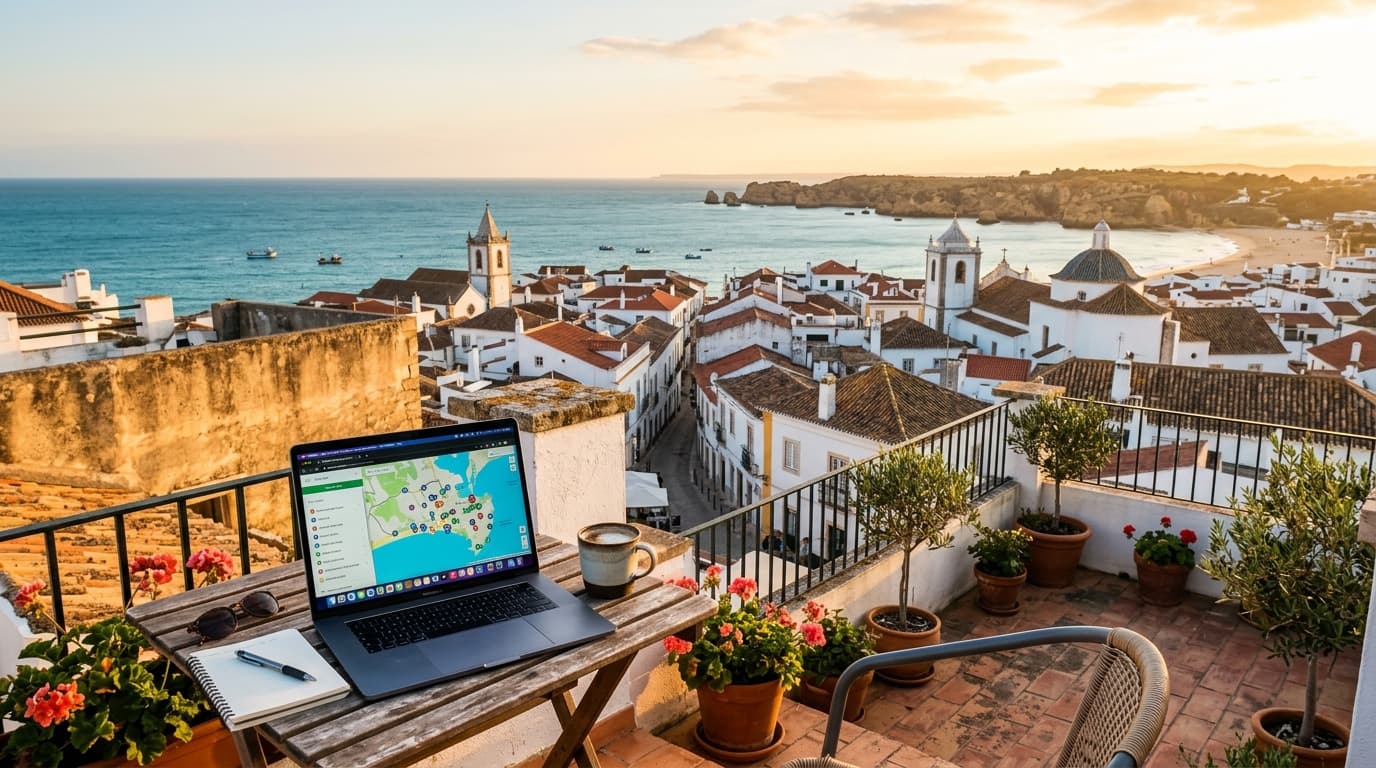
Lagos
🇵🇹 Portugal
Lagos feels small at first, then suddenly not so small once summer hits. In winter, it’s a walkable Algarve town with a sleepy rhythm, fishermen mending gear by the marina, café chairs scraping on stone pavement and locals greeting each other like they’ve all known one another for years. By June, the same streets can feel packed, noisy and a little overpriced, with scooter engines, bar music and beach traffic spilling into the old center.
That split is the whole Lagos story. Nomads come for the cliffs, coves and easy beach access and many stay because life is simple here, you can get around on foot, swim before work and still find decent internet and English-speaking service. But the tradeoff is real: high season gets crowded fast, the old town can be rowdy at night and rents have climbed enough that a lot of people end up looking just outside the center.
The town works best if you like an outdoor routine. Morning coffee, a swim at Praia Dona Ana or Porto de Mós, lunch somewhere low-key, then an evening walk along the water while the air smells of salt, sunscreen and grilled fish. It’s relaxed without feeling isolated, though Lagos can also feel repetitive if you don’t like beach days and late dinners.
Where people tend to base themselves
- Historic center: Best for walkability, restaurants and nightlife, but also the noisiest and most tourist-heavy.
- Meia Praia: More open, closer to the long beach and marina, with a calmer feel and easier parking.
- Porto de Mós: Popular with longer-stay expats who want a quieter base near the cliffs and surf.
- Outskirts and inland streets: Usually cheaper, though you’ll give up some of the easy, car-free lifestyle.
For coworking, Lagos isn’t a huge scene, but it’s workable. Spaces like 350 Nomad and Lagos Coworking draw remote workers who want a social base without getting trapped in café-hopping and monthly memberships are still far cheaper than in Lisbon even if they’re no longer bargain prices.
The bottom line is simple, Lagos is lovely if you want sun, sea and a town that still feels human-sized. It’s less appealing if you hate crowds, summer noise or paying beach-town prices for a basic apartment.
Lagos isn’t cheap and the bill jumps fast in summer. Winter feels more manageable, but once the beach crowd rolls in, rents, dinner tabs and even casual drinks creep up, especially around the old town and marina.
For a single person, a realistic monthly budget usually lands between €1,300 and €1,600 on a tight setup, €1,700 to €2,200 for a more comfortable life and more than that if you want a nice place close to the water and eat out often. The Algarve still beats Lisbon on price, but Lagos sits near the top of the Algarve range because it’s prettier, smaller and heavily tourist-driven.
Rent by area
- Historic center: Studios often run €600 to €800, while one-bed flats usually sit around €900 to €1,200. It’s walkable and lively, but you’ll hear scooter engines, bar chatter and the occasional clatter from late-night cleanup.
- Meia Praia and Porto de Mós: Studios generally go for €650 to €850 and one-beds for €900 to €1,100. These areas feel a bit calmer, with more space and easier beach access.
- Outskirts and inland streets: Studios can start around €500 and one-beds around €700. You’ll save money, but you may need a bike or car for groceries and coworking.
Long-term leases are the only sane way to keep housing costs down. Short stays on Airbnb or monthly rentals in summer can jump 30% to 60% and some owners would rather leave a flat empty than lower the price.
Everyday costs
- Utilities: Expect €120 to €150 for a small flat, more if you run air conditioning hard in August.
- Internet and mobile: Fiber internet usually costs €25 to €50 a month and mobile plans are often €15 to €30.
- Coffee and lunch: A café coffee is usually about €2.50, though a local bica can be closer to €1. A prato do dia away from tourist streets is often €8 to €12.
- Groceries: Most solo shoppers spend around €200 to €250 a month, more if they lean on imported products or ready-made meals.
- Coworking: Day passes commonly start around €15 to €20. Monthly memberships tend to run from about €130 to €210, with private offices higher.
The cheap spots are rarely on the obvious streets. Skip the menus facing the harbor and head a few blocks inland, where the espresso is better, the portions are bigger and the waiters aren’t trying to turn tables every 20 minutes.
Nomads
Most nomads end up in the historic center, Meia Praia or near the marina. The center is the easiest place to live car-free, with cafés, bakeries and coworking spots close enough to walk between while church bells, scooters and late-night chat spill into the alleys. The tradeoff is noise, especially in summer, when bars run late and the streets feel sticky with heat and sunscreen.
- Historic center: Best for walkability and old-town character, but apartments are smaller and summer noise can be relentless.
- Meia Praia: Good for beach access, newer buildings and a slightly calmer feel, with one-bed rents around €900 to €1,100 ($975 to $1,192).
- Porto de Mós: Popular with remote workers who want quieter evenings, sea air and easier parking, though you’ll likely need a bike or scooter.
If you’re working full-time, check coworking before you sign a lease. Spaces like Lagos Cowork and B.Space are where a lot of remote workers actually get things done, because apartment internet can be fine one week and patchy the next. A monthly desk usually runs about €130 to €210 ($140 to $227) and private space jumps fast.
Expats
Expats who stay year-round usually drift a little outside the center, where the pace is slower and rents make more sense. Areas just inland from the old town, plus parts of Torraltinha, tend to feel more lived-in, with local cafés, laundries and the smell of grilling fish at lunch instead of tourist menus in five languages.
- Torraltinha: A practical pick for longer stays, with more local life and easier odds of finding a year-long lease.
- Outskirts and inland streets: Usually cheaper, with studios from about €500 to €650 ($541 to $703) and fewer summer headaches.
- Near the marina: Handy if you want restaurants and services close by, but pricing is higher and the area can feel polished to a fault.
The downside of central Lagos is the seasonal swing. Winter feels calm and neighborly, then summer arrives and the town gets louder, pricier and much less forgiving if you’re trying to sleep with the windows open.
Families
Families usually do better in quieter residential pockets than in the center. Porto de Mós and the broader Meia Praia area make day-to-day life easier, with more space, better parking and less of the scooter-and-bar-noise mess that comes with old-town living.
- Porto de Mós: Best balance of beach access and day-to-day calm, especially if you’ve got kids and don’t want to fight for parking.
- Meia Praia: Good for larger apartments and easy beach time, though summer traffic can clog the approach roads.
- Residential outskirts: Often the smartest budget choice for families who want more square meters without paying marina prices.
Expect winter to be easy and summer to be hectic. Kids will love the beaches, but grocery runs, restaurant waits and parking all get uglier once the tourists land.
Solo travelers
Solo travelers who want energy should stay near the center or the marina. You’ll have the easiest access to bars, sunset viewpoints and the kind of street life that makes Lagos feel alive after dark, when the air smells like salt, fried garlic and spilled beer.
- Historic center: Best if you want a social base and don’t mind late-night noise.
- Marina area: Safer-feeling and convenient, with easier access to tours, ferries and restaurants.
- Meia Praia: Better if you want beach mornings and quieter evenings without being cut off from town.
If you’re staying short-term, skip the cheapest party listings in peak summer. They’re often loud, overheated and pricier than they look once cleaning fees and weekend rates kick in.
Lagos is easy to work in if you don’t mind a little seasonal chaos. Winter feels calm, with café chatter, sea air and the occasional scooter rattling over the cobbles. Summer is another story, with crowded streets, late-night noise and internet that can feel fine one minute and annoyingly sluggish the next in older buildings.
Most nomads cluster around the historic center, the marina, Meia Praia and Porto de Mós. The center is walkable and handy for cafés, but it can be loud. Meia Praia is better if you want more space and easier parking. Porto de Mós has a quieter feel, though you’ll usually need a bike, scooter or a longer walk to reach your laptop spot.
Where to work
- Amado Café, downtown: Good for a few hours if you’re okay with coffee traffic and background noise. Fine for emails, not ideal for deep focus.
- Workhub Lagos: One of the clearest coworking options in town, with day passes around €18 and monthly plans from roughly €210.
- Spaces in the center and marina area: Expect faster access to cafés and services, but also more summer foot traffic, street noise and the smell of grilled fish drifting in from lunch service.
For internet, Lagos is generally workable, but don’t assume every apartment has the same setup. Fiber usually runs about €25 to €50 a month, while bundled TV and mobile plans can climb closer to €80. In older flats, especially around the historic center, the weak link is often the building, not the provider.
Mobile data is handy as a backup, with typical plans around €15 to €30 per line. That said, if you’re on calls all day, book a place with a real router and ask for the speed before you sign anything. Plenty of landlords will say “good internet,” then hand you a connection that struggles once two people stream at once.
For budgets, a studio in the center can run about €600 to €800, while a one-bedroom near the marina or Meia Praia is often closer to €900 to €1,200. Add utilities of roughly €120 to €150 for a small flat, then factor in groceries around €200 to €250 and coffee at about €1 to €2.50. The cheap lunch still exists, but the tourist strips will sting.
- Tight budget: Shared or outer-area rent, minimal coworking and mostly home work, around €1,300 to €1,600 a month.
- Mid-range: Private studio or one-bedroom, regular café work and a few lunches out, around €1,700 to €2,200.
- Comfortable: Better apartment, coworking membership and frequent eating out, around €2,300 to €3,000.
If you need silence, Lagos can frustrate you in summer. If you want sea views, walkability and enough internet to keep work moving, it’s a very livable base.
Lagos feels easy most of the year, but summer changes the mood fast. The old town gets loud, scooters thread through narrow streets and the beaches fill with day-trippers, hen parties and surf crowds. In winter, it’s calmer, friendlier and easier to get a doctor’s appointment without waiting forever.
For most nomads, the main safety issue isn’t crime. It’s the usual beach-town stuff, petty theft, drunk-night noise near the center and the occasional bad idea after too many drinks on Rua da Porta de Portugal. Keep your phone zipped away in bars, don’t leave bags on beach rocks and be extra careful around scooters and rental cars on the tight roads to Praia do Camilo and Ponta da Piedade.
Neighborhood feel matters here:
- Historic center: Walkable and convenient, but loud in summer and the easiest place for pickpockets and late-night chaos.
- Meia Praia: Quieter, more open and better if you want space and easier parking.
- Porto de Mós: Popular with longer-stay expats, a little calmer and close to the cliffs.
- Outskirts and inland streets: More local, less noise, usually the best bet for sleeping at night.
Healthcare is decent for a small town, but don’t expect fast, glossy service. The local public system works, yet appointments can be slow and English isn’t guaranteed everywhere, so many expats use private clinics for routine care, prescriptions and quick diagnostics. Pharmacies are common, usually helpful and often the first stop for minor issues like stomach bugs, sunburn or a rash from the sea.
Bring insurance. A private consultation in the Algarve is usually manageable, but an unexpected scan, specialist visit or dental fix can get annoying fast. If you’re working remotely, keep your European Health Insurance Card or private policy details handy, save the nearest pharmacy and know where the closest urgent care clinic is before you need it.
Heat is the other real health headache. Summer sun can be brutal, the humidity sticks to your skin and a lot of places feel rough by mid-afternoon with AC blasting, tile floors cooling your feet and the smell of sunscreen, salt and grill smoke drifting through open windows. Stay hydrated, avoid long walks at peak heat and don’t underestimate the Atlantic, it looks calm and still pulls people out.
Practical basics:
- Emergency number: 112
- Pharmacies: Easy to find in town and usually your fastest fix for minor problems
- Private care: Better for speed, especially if you need English-speaking staff
- Summer caution: Sunburn, dehydration and scooter accidents are more common than serious crime
Lagos is small enough that you can walk most places, but the town still has a few annoying quirks. In summer, the narrow streets around the old center get clogged with rental cars, scooters and tourists dragging suitcases over cobblestones that seem designed to rattle your teeth. In winter, the place calms down fast and getting around feels easy again.
Most nomads base themselves in the historic center, Meia Praia, Porto de Mós or near the marina. The center is the most convenient for cafes, bars and coworking, but it can be noisy at night, especially if you’re near the strips that feed the party crowd. Meia Praia is flatter and more practical if you want beach access and easier parking. Porto de Mós feels more residential and a bit quieter, though you’ll trade convenience for a longer walk into town.
Walking and local transport
- Walking: Lagos is compact and many daily errands are doable on foot.
- Local buses: Cheap but not especially frequent, so don’t build your day around them.
- Taxis and rides: Easy enough to find, though surge pricing can sting on summer weekends.
For short hops, walking is usually faster than waiting for transport anyway. The downside is heat. July and August can feel brutal by midday, with sticky air, hot pavement and that salty smell drifting in from the marina.
Getting to nearby beaches
- Praia Dona Ana and Camilo: Best reached on foot or by a short ride, but parking is a mess in high season.
- Meia Praia: Easy by bike, scooter or car and better if you’re hauling beach gear.
- Porto de Mós: Straightforward by car or scooter, less so if you’re coming from the old town in the heat.
Renting a bike or e-scooter can make sense for a while, but Lagos isn’t flat everywhere and coastal winds can be gritty and tiring. If you’re staying longer, a car helps for grocery runs, sunset drives and trips west toward Sagres, though parking in the center can be a headache. Many locals just leave the car and walk.
Coworking and day-to-day movement
For remote work, the main decision is less about transport and more about where you can actually focus. Day passes at Lagos coworking spaces usually run about €15 to €20, while monthly memberships are often around €130 to €210 or more. If you’re staying in the marina or old town, you can usually walk to a desk, then grab lunch nearby without much fuss.
Airport runs are the least glamorous part. Faro is the closest major airport and usually the easiest connection point, while Lisbon is a long haul and not something you’d do casually just for a weekend. If you’re carrying luggage, booking ahead and avoiding peak afternoon arrivals will save you a lot of sweat and swearing.
Spanish gets you partway in Lagos, but Portuguese still matters. You’ll hear “bom dia” at the bakery, “obrigado” at checkout and plenty of English from café staff, surf shops and most coworking spaces. Winter feels local and slow, with neighbors chatting in the street and older residents sticking to Portuguese. Summer flips that fast. The town gets louder, service gets rushed and staff often switch between English, Portuguese and a few words of German or French depending on who’s at the table.
For day-to-day life, English is usually enough for rent searches, coworking, restaurant menus and basic errands. Still, the moment you deal with a landlord, utility provider or any public office, Portuguese helps a lot. Bureaucracy can be maddening and forms don’t get friendlier just because the town is small. A translator app like DeepL or Google Translate is handy, but it won’t save you if you need to argue about a bill or read a lease clause with tiny print and no context.
Most nomads pick up a few phrases quickly because locals appreciate the effort. Even a rough “desculpe” or “quanto custa?” goes a long way, especially in neighborhood cafés away from the marina and the old town tourist strip. People in Lagos are generally patient, though they’re less patient in August when the pavements are packed, scooters buzz past and everyone’s trying to get served at once.
Useful phrases
- Hello: Bom dia, boa tarde, boa noite
- Thanks: Obrigado if you’re male, obrigada if you’re female
- How much is it? Quanto custa?
- Do you speak English? Fala inglês?
- I need help: Preciso de ajuda
For apps, WhatsApp is the main one for landlords, drivers, cleaners and casual business contacts. Email is still used for official stuff, but replies can be slow. If you’re looking for rentals or services, expect some messages to be brief, blunt and oddly timed. That’s normal. Lagos runs on a relaxed rhythm and “I’ll call you back” can mean later today or sometime after lunch tomorrow.
If you’re staying a few months, learn enough Portuguese to handle transport, housing and basic small talk. You don’t need to be fluent, but you do need to be willing. That’s the difference between getting by and constantly feeling like the outsider at the table.
Lagos has a split personality. Winter is quiet, local and easy to live with, while summer brings packed beaches, loud bars and prices that jump fast. If you hate shoulder-to-shoulder crowds and scooter noise outside your window, skip July and August. If you want warm sea water, long evenings and a constant hum of café chatter, that’s the sweet spot.
The weather is why people come and stay. Lagos gets mild winters, bright springs and dry, hot summers, with sea breezes that help, though not always enough in July and August. The air can feel sticky by afternoon, then the evening opens up and the town smells like salt, sunscreen, grilled fish and cigarette smoke drifting from terrace bars.
Best months: April to June and September to October.
Those months usually give you the best balance, warm enough for beach days, calm enough to work and far less punishing on your wallet than peak summer. The water is still cool in spring, but the cliffs, coves and walking trails around Ponta da Piedade are at their best before the heavy crowds arrive.
July and August: hot, busy and expensive.
This is when Lagos gets noisy. Old Town streets fill with bar crawls, beach parking gets ugly and long-term rentals are harder to find unless you booked early. Many nomads either leave for a month or move inland and come back once the crowds thin out.
November to March: quieter and cheaper.
Winter isn’t gloomy, but it can feel sleepy. Some places cut hours, the sea gets rough and you’ll want a sweater at night, especially if your flat has cold tile floors and lousy insulation. Still, locals recommend it if you want to actually live in Lagos instead of just visiting it.
What each season feels like
- Spring: Best for hiking, surfing and working from cafés without the summer crush.
- Summer: Great for beach life, not great for quiet sleep or cheap rent.
- Fall: The most balanced season, with warm water, fewer tourists and easier bookings.
- Winter: Calm, friendly and more affordable, but some nomads get bored fast.
My take: plan around the shoulder seasons. Lagos is lovely in winter if you want a slower, local feel, but for most remote workers, late spring or early fall is the best tradeoff between weather, crowds and cost.
Lagos is easy to live in, but it can grate on you fast if you arrive in July expecting a sleepy beach town. Winter feels local and relaxed, with regulars in cafés, open tables on Rua 25 de Abril and a slower rhythm that actually works for remote work. Summer flips the script. The old town gets loud, prices jump and the air can feel sticky with sunscreen, grilled sardines and exhaust from scooters hunting parking.
Best areas to base yourself depend on how much noise you can tolerate. The historic center is the most walkable, with bars, restaurants and coworking close by, but you’ll hear late-night chatter and the occasional bottle smash outside. Meia Praia is better if you want wider streets, beach access and a little more breathing room. Porto de Mós is calmer again, with apartment blocks, sea views and easier access to cliff walks. Outskirts and inland streets are cheaper, though you’ll probably need a bike, scooter or more patience.
Where most nomads end up
- Historic center: Best for car-free living, cafés and social life. Worst for sleep in high season.
- Meia Praia: Good if you want beach runs, marina access and less foot traffic.
- Porto de Mós: Quieter, a bit more residential and popular with longer-stay expats.
- Outskirts: Cheaper rent, but you’ll give up convenience.
Budgeting needs a reality check. A modest setup with rent, groceries, a few café coffees and limited coworking can still land around €1,300 to €1,600 ($1,408 to $1,730) a month, while a comfortable one-bedroom plus regular dining out and coworking tends to sit closer to €1,700 to €2,200 ($1,843 to $2,386). Long-term rent for a studio often starts around €500 to €800 ($543 to $869) and a one-bedroom usually runs about €700 to €1,200 ($760 to $1,304), with summer stays costing more.
Everyday costs are manageable if you shop like a local. A coffee usually runs about €1.50 to €2.50 ($1.63 to $2.72), a prato do dia in a neighborhood spot can be €8 to €12 ($8.69 to $13.03) and utilities for a small flat often hit €120 to €150 ($130 to $163) once the AC starts working overtime. Fiber internet is usually €25 to €50 ($27 to $54) and mobile plans are commonly €15 to €30 ($16 to $33).
For coworking, Lagos is fine, not amazing. Day passes often start around €15 to €20 ($16 to $22), with monthly memberships around €130 to €210 ($141 to $228) depending on desk type and the mood of the space. If you need quiet, book a place before summer. If you don’t, expect background music, beach-club spillover and the hum of everyone trying to work around the same surf schedule.
Frequently asked questions
What are the best neighborhoods for digital nomads in Lagos, Portugal?
How much does it cost to live in Lagos as a digital nomad?
How much is rent in Lagos, Portugal?
Is Lagos, Portugal good for remote work?
How much do coworking spaces cost in Lagos?
Is internet reliable in Lagos, Portugal?
Which part of Lagos is quietest for long-term stays?
Need visa and immigration info for Portugal?
🇵🇹 View Portugal Country GuideNomad Haven
Your home away from home
Monthly Budget Estimates
More cities in Portugal
Tavira
🇵🇹 Portugal
Albufeira
🇵🇹 Portugal
Sagres
🇵🇹 Portugal