Kuching
🇲🇾 Malaysia
The Vibe: Borneo’s Low-Key Creative Capital
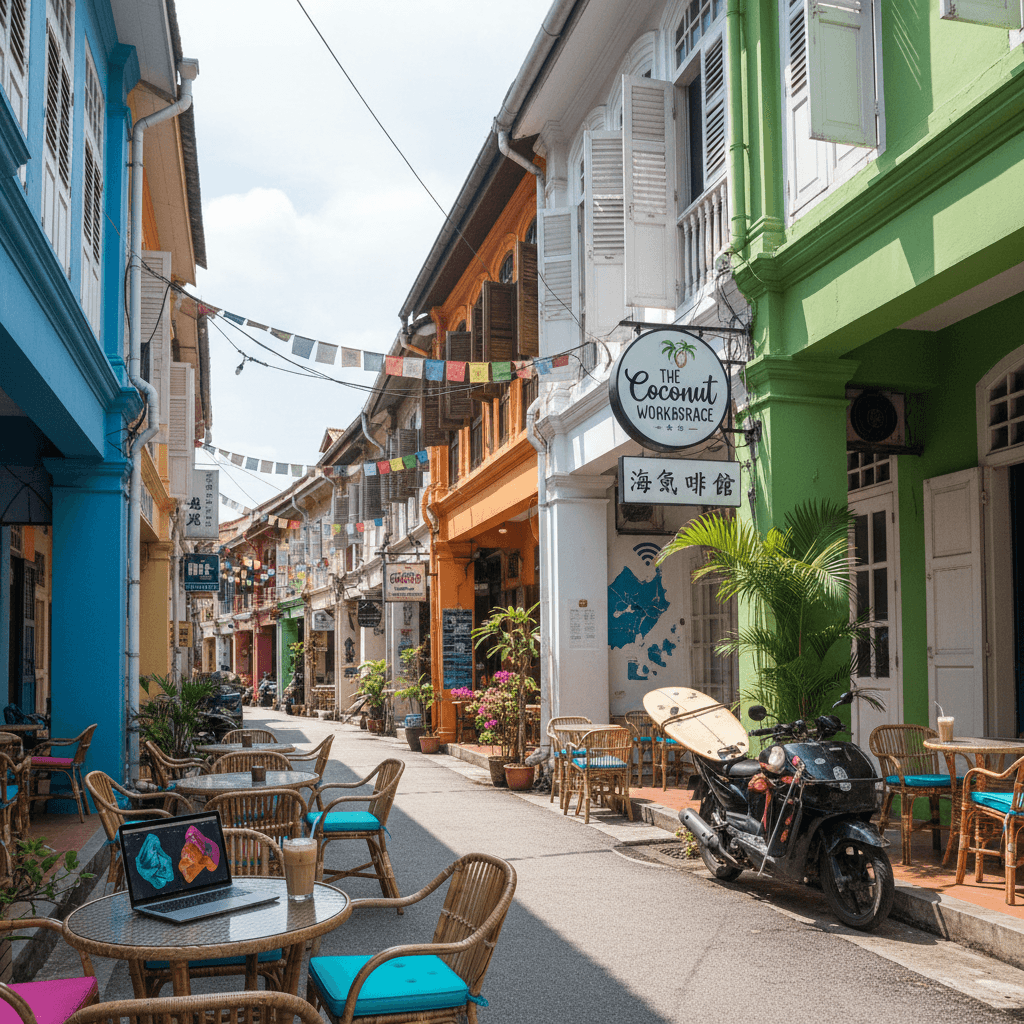
Kuching doesn't try too hard, and that's exactly why it works. While digital nomads often flock to the high-octane energy of Kuala Lumpur or the digital-nomad-saturated streets of Chiang Mai, Kuching offers a refreshing alternative. It’s a city that feels like a large, friendly town where people actually look you in the eye and say hello. There is a specific kind of peace here, a blend of indigenous Dayak heritage, deep Chinese roots, and a lingering British colonial aesthetic that feels authentic rather than curated for tourists.
The city is famously known as the "City of Cats," and you'll see that reflected in giant kitschy statues and street art. But the real soul of the place is its legendary tolerance. It is one of the few places in Malaysia where you’ll see a mosque, a Chinese temple, and a church all within a few blocks, and residents from all backgrounds sharing a table at a local laksa stall. The pace of life is intentionally slow. Most things are reachable within 30 minutes, and the "hipster" energy is rising, though it’s more about craft coffee and local art than flashy showrooms.
Nomads usually fall in love with the ultra-affordable cost of living and the ease of communication, as English is spoken fluently by almost everyone. However, it isn't perfect. If you’re looking for a wild nightlife scene or a massive community of thousands of expats, you might find it a bit quiet. It’s a place for deep work, nature trips to see orangutans on the weekend, and slow evenings by the river. It’s less of a party hub and more of a "get your life together" sanctuary.
Cost of Living: Your Budget Breakdown
Your money goes incredibly far here. A single person can live quite well on $550 to $650 USD per month, excluding rent. If you want a comfortable lifestyle with a nice apartment and regular dinners out, you’re looking at a total monthly spend of $1,000 to $1,500 USD.
- Budget Tier ($600–$800 total): Living in a shared room or a basic studio in Padungan, eating primarily at food courts for $1.20 a meal, and using local transport.
- Mid-Range Tier ($1,000–$1,500 total): Staying in a 1-bedroom apartment in the city center, mixing street food with nice cafes, and maintaining a coworking membership.
- Comfortable Tier ($1,800–$2,500 total): A luxury 2-bedroom apartment with a pool, dining at upscale restaurants like The Granary, and frequent weekend trips into the Borneo rainforest.
Where to Set Up Base
Each neighborhood has a distinct flavor, and where you land will define your Kuching experience.
- The Waterfront & City Center: The heart of the action. It's walkable and packed with history. You'll pay a bit more here, with studios ranging from $240 to $285 USD, but you're steps away from the best sunset views in the city.
- Carpenter Street: The ultimate spot for foodies and social butterflies. It's a heritage area with colonial buildings housing bars like Drunk Monkey and The Barber. It’s lively, a bit noisy, and perfectly central.
- Padungan (Chinatown): The go-to for budget seekers. You can find basic rooms for as low as $95 USD if you negotiate in person. It’s authentic, slightly gritty in a charming way, and has some of the best street food in Malaysia.
- iCom Square: This is the business engine of the city. It’s where you’ll find the best coworking spaces like iCube Innovation. It’s quieter and less "touristy," making it ideal for those who need to focus during the day.
- Viva City: If you want modern comforts, this is it. These apartments sit right above a massive mall with a 24/7 gym and a supermarket. Rents are higher, around $625 USD, and you’ll need a car or Grab to get to the historic center.
Connectivity and Workspace
Don't let the jungle surroundings fool you; the internet here is world-class. Most modern apartments offer fiber connections reaching up to 800 Mbps. Mobile data is also incredibly cheap, usually around $12 USD for a solid monthly plan, which is plenty for tethering in a pinch.
For dedicated workspaces, iCube Innovation is the heavy hitter. It’s the largest space in town with a monthly hot desk for about $36 USD. If you prefer a boutique vibe, My Placa offers a bright, cozy atmosphere and great coffee for roughly $48 USD a month. Most cafes are also very "laptop-friendly," provided you’re buying a few cups of local kopi throughout the day.
The Bottom Line: What to Budget
Kuching is one of those rare spots where your dollar stretches so far you might actually feel a little guilty. It is significantly cheaper than Kuala Lumpur or Penang, and it puts most European or North American cities to shame. A single person can live a very comfortable, mid-range lifestyle here on about $1,000 to $1,500 USD a month. If you are on a strict budget and don't mind a shared room and plenty of street food, you can even scrape by on $600 to $800 USD.
Monthly Rent by Neighborhood
Housing is where you will save the most. While many landlords prefer one year leases, the digital nomad community has had success negotiating shorter stays in newer condo developments or finding deals in older parts of town. Just keep in mind that "city center" here doesn't mean cramped or noisy; it just means you are closer to the river.
- Padungan (Chinatown): This is the spot for the budget conscious. You can find basic rooms or small apartments for as low as $95 to $150 USD (400 to 600 MYR) if you are willing to walk the streets and call numbers on "For Rent" signs.
- City Center Studio: A modern 1BR near the Waterfront will typically set you back $240 to $285 USD (1,000 to 1,180 MYR).
- Viva City & Upscale Condos: If you want a pool, a 24/7 gym, and a mall downstairs, expect to pay around $480 to $625 USD (2,000 to 2,600 MYR) for a high end 2BR unit.
- Luxury Tier: The absolute top end of the market for a massive, luxury 3BR apartment rarely exceeds $800 USD (3,250 MYR).
Eating and Drinking
Food is the national sport in Sarawak, and it is incredibly affordable. You can eat like a king at a local kopitiam (coffee shop) for less than the price of a Starbucks latte back home. Local legends like Sarawak Laksa or Kolo Mee are staples that won't break the bank.
- Street Food & Food Courts: A solid meal at a place like Chopstick Garden or a local hawker stall costs about $1.20 (5 MYR).
- Mid-range Restaurants: For a sit down dinner with a proper menu, expect to pay $2.40 to $6.00 (10 to 25 MYR) per main dish.
- Coffee Culture: A local "Kopi C" is a steal at $0.50 (2 MYR), while a flat white at a hipster cafe like My Placa will run you about $2.00 (8 MYR).
- Alcohol: This is the one expense that can creep up. Because of taxes, an imported beer can cost anywhere from $2.00 to $6.00 (8 to 25 MYR).
Connectivity and Coworking
Don't let the jungle surroundings fool you. The internet infrastructure here is world class. Most nomads find that a cheap 5G SIM card is enough for a hotspot, but the coworking scene is growing for those who need a dedicated desk.
- Home Fiber: If you get your own place, high speed fiber (up to 800 Mbps) costs roughly $36 to $43 (150 to 180 MYR) monthly.
- Mobile Data: A monthly plan with plenty of data (5 to 8GB) is around $12 (50 MYR).
- iCube Innovation: The biggest hub in town. A hot desk is $36 (150 MYR) a month, while a fixed desk is $53 (220 MYR). They even offer a free day every first Thursday of the month.
- My Placa: A smaller, more aesthetic vibe for $48 (200 MYR) a month, which includes 24/7 access if you are a monthly member.
Other Practical Costs
Getting around is mostly done via Grab (the local version of Uber), as public transport is basically non existent. A short trip across town usually costs less than $2.00. If you want to stay fit, a high end gym membership like the one at Viva City is about $48 (200 MYR) a month. Overall, most expats find that they can live a high quality life here for a fraction of what they would spend in more famous nomad hubs like Bali or Chiang Mai.
For Digital Nomads: Waterfront & iCom Square
If you're in Kuching to get work done, you'll likely gravitate toward the Waterfront or iCom Square. The Waterfront is the city's pulse, a two kilometer stretch along the Sarawak River where most of the nomad community clusters. It's walkable, packed with cafes, and offers free public WiFi if you just need to send a few emails with a view of the Astana palace. You can snag a spot at Kai Joo Apartments to be right in the thick of it.
For those who need a more "office" environment, iCom Square is the business hub. It's home to iCube Innovation, the city's largest coworking space where a hot desk goes for about 150 MYR ($36) a month. While it's quieter and less scenic than the river, the proximity to Chopstick Garden food court means you're never more than a two minute walk from a 5 MYR ($1.20) lunch. It’s a bit isolated from the nightlife, so most nomads work here during the day and Grab back to the center for dinner.
For Expats & Long-Termers: BDC & Hui Sing
Expats looking for a "real life" feel usually skip the city center hotels and head south to BDC or Hui Sing. These neighborhoods are where you'll find modern gated communities and newer apartment complexes that feel safe and quiet. You won't find many tourists here, but you will find better value for long term stays. A nice two or three bedroom apartment with a pool in these areas typically runs around 2,000 MYR ($480) per month.
The trade-off is that you'll be car-dependent. It’s about a 15 minute drive to the city center, but you're closer to The Spring and CityOne malls, which are the go-to spots for grocery shopping and Western amenities. Expats often recommend these areas because they offer a sense of stability that the more transient Waterfront lacks.
For Solo Travelers & Foodies: Carpenter Street & Padungan
Solo travelers usually find their tribe around Carpenter Street. This heritage area is a maze of colonial buildings, temples, and some of the best bars in town like The Barber and Drunk Monkey. It’s the best place to meet people, though it can get a little noisy at night. The food scene here is incredible, blending traditional Sarawakian laksa stalls with modern fusion eateries.
If you're on a tight budget, Padungan (Chinatown) is the place to hunt for deals. It’s a bit more "rough around the edges" but has an authentic local vibe that many travelers prefer. You can often negotiate rent directly with landlords here for as low as 400 to 600 MYR ($95 to $145) a month. It’s famous for its street food and the iconic giant cat statue, though some parts of the neighborhood have a slightly seedier reputation after dark.
For Families: Viva City
Families generally find the Viva City area the most convenient. The Viva City Mega Mall has modern apartments built right on top of it, meaning you can take an elevator down to a supermarket, a cinema, and a massive food court. It’s incredibly safe and includes 24/7 gym access and play areas for kids.
While a luxury three bedroom apartment here can cost up to 3,250 MYR ($800), the convenience of having everything under one roof is hard to beat. You'll miss out on the historic charm of the old town, but for anyone managing a family schedule, the modern infrastructure and security are usually worth the 10 minute commute into the city center.
- Waterfront: Best for short-term stays and walkability.
- iCom Square: Best for focused work and coworking access.
- Padungan: Best for ultra-low budgets and local food.
- Viva City: Best for modern amenities and family safety.
Connectivity and Speed
Kuching is a pleasant surprise for anyone expecting "jungle speeds." The city has better infrastructure than many of its mainland neighbors. Fiber optic connections are standard in most modern apartments and coworking hubs, often reaching 800 Mbps. You won't struggle with Zoom calls or heavy uploads here.
Mobile data is your best backup. 4G coverage is solid across the city center, averaging around 17 Mbps. A monthly prepaid SIM with 5GB to 8GB of data costs roughly 50 to 53 MYR ($12 to $13). If you are staying long term, setting up home fiber will run you between 150 and 180 MYR ($36 to $43) per month.
Top Coworking Spots
While the community is smaller than what you'll find in Bali or Chiang Mai, the spaces are professional and very affordable. Most nomads find that the lack of "digital nomad events" is offset by the quiet, productive atmosphere.
- iCube Innovation: This is the big player in town. Located in iCom Square, it is the largest and most established space. It features phone booths for private calls and several meeting rooms. A hot desk is 150 MYR ($36) a month, while a fixed desk is 220 MYR ($53). If you want to test the waters, they offer a free day every first Thursday of the month.
- My Placa: If you prefer a boutique feel with plenty of natural light, this is the spot. It's smaller and has a great coffee setup. Monthly passes are 200 MYR ($48) and grant you 24/7 access, which is a lifesaver if you are working for clients in North American or European time zones.
- TEGAS Digital Hub: Also located near iCom Square, this space attracts a lot of local startups and tech workers. It feels modern and corporate, with hot desks starting around 180 MYR ($43).
- MaGIC at Borneo744: This is a massive, government backed facility. It is incredibly cheap at 150 MYR ($36) for 24/7 access, but there is a catch. It's located on an industrial estate quite far from the city center, so you'll need a car or a Grab account to get there.
The Cafe Culture
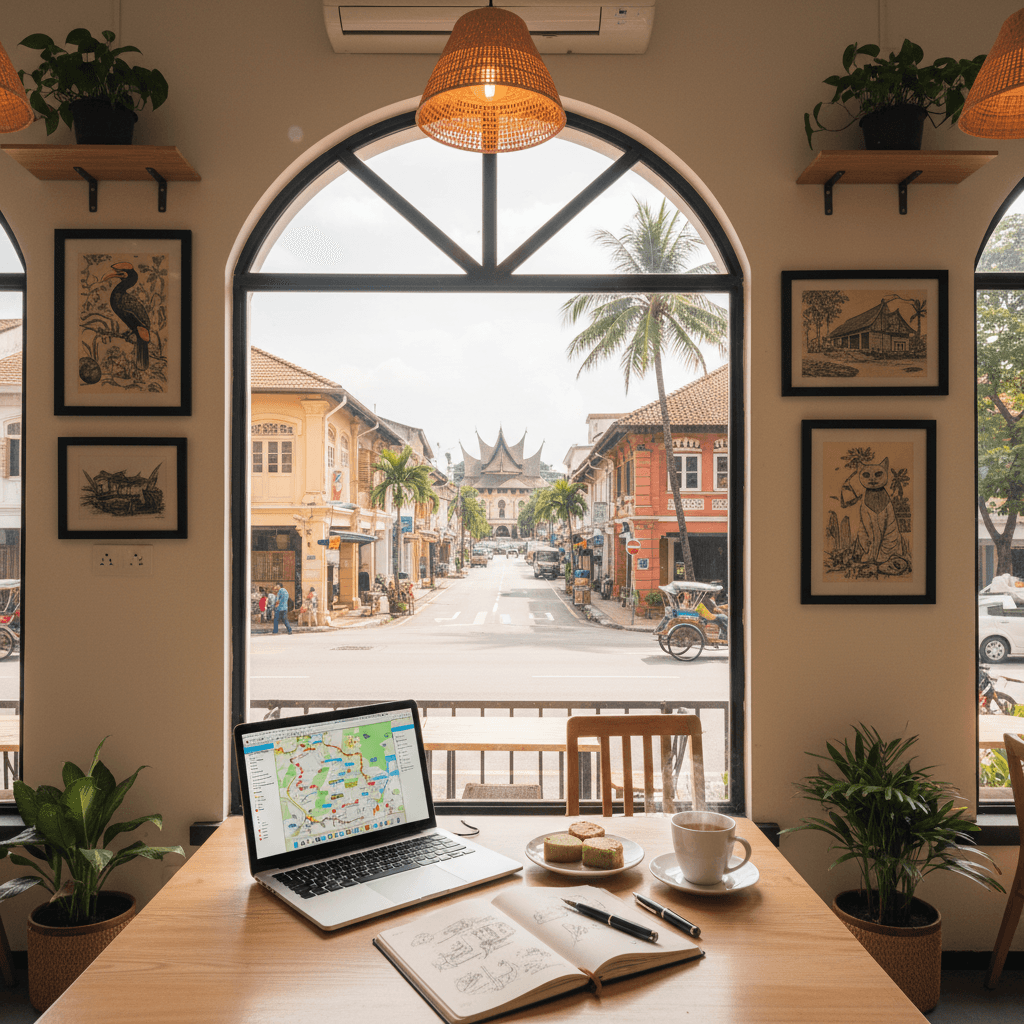
If you prefer the "laptop and a latte" lifestyle, Kuching has a growing scene of aesthetic cafes that are friendly to remote workers. Most have reliable WiFi, though many nomads prefer to tether to their own mobile data for security and speed.
- The Granary: A converted warehouse with a cool, industrial vibe. It's spacious enough that you won't feel guilty for staying a few hours.
- Commons: Located at the Old Court House, it offers a historic setting with high ceilings and plenty of power outlets. It's a favorite for afternoon sessions.
- Black Bean Coffee: Best for a quick caffeine fix in the Carpenter Street area. It's more of a local institution than a workspace, but the coffee is legendary and cheap at around 2 MYR ($0.50) for a local brew.
The general consensus among the expat community is that while the coworking spaces lack the high energy networking of larger hubs, they provide a stable, low cost environment to actually get work done. Just keep in mind that outside of My Placa and MaGIC, most spaces close by 9pm or 10pm, so late night grinders will need a good home setup.
Safety in the City of Cats
Kuching is widely considered one of the safest cities in Southeast Asia. Unlike the frantic energy of Kuala Lumpur or the tourist-heavy streets of Penang, Kuching maintains a small town atmosphere where people look out for one another. You'll notice a distinct lack of the aggressive touting or common scams found in other regional hubs. Most nomads feel perfectly comfortable walking around the Waterfront or Carpenter Street late at night.
While violent crime is extremely rare, petty theft like snatch-and-grab robberies can happen, though they aren't common. Expats generally recommend keeping your bag on the side away from the road when walking near traffic. Areas like Padungan and certain parts of the city center have a slightly seedier reputation after dark, but even these are tame by international standards. If you're staying in BDC or Hui Sing, you'll find these residential neighborhoods are very quiet and secure.
For solo female travelers, Kuching is exceptionally welcoming. The local culture is respectful and diverse, and you're unlikely to face street harassment. The biggest "danger" you'll likely face is the uneven pavement or the sudden, torrential tropical downpours that can turn streets into slip-and-slides in minutes. If you ever feel uneasy, Grab is the go-to app for safe, tracked transport at any hour.
Healthcare Infrastructure
The healthcare in Kuching is excellent, especially in the private sector. Many doctors and specialists were trained in the UK, Australia, or the US, so English proficiency is near-perfect across the board. You won't struggle to explain your symptoms here.
For minor ailments, local clinics (Klinik Kesihatan) are everywhere. A consultation usually costs between 30 to 60 MYR ($7 to $14). Pharmacies are well-stocked and can be found in every major mall like Viva City or The Spring. You can often get prescriptions filled much faster and cheaper than in Western countries.
Top Hospitals for Expats
- Normah Medical Specialist Centre: Often cited as the best private hospital in the city. It's clean, modern, and popular with the expat community for surgeries and specialist consultations.
- KPJ Kuching Specialist Hospital: A highly reliable private option located near the city center. It offers a wide range of services and efficient emergency care.
- Timberland Medical Centre: Another solid private choice known for its specialized departments and shorter wait times compared to public facilities.
Health Risks and Tips
Since Kuching is surrounded by lush jungle, mosquitoes are a reality. Dengue fever pops up occasionally, so using repellent during sunrise and sunset is a smart move, especially if you're heading out to Bako National Park or Santubong. Malaria is generally not a concern in the city itself, but it's worth checking if you plan on deep jungle trekking into the Borneo interior.
The tap water is technically treated, but almost everyone, locals and expats alike, drinks filtered or bottled water. Most long term rentals come with a water filtration system installed. If yours doesn't, a 5-gallon jug is incredibly cheap to have delivered. Also, keep an eye on the "Haze" levels during the dry season (usually June to September). Occasionally, smoke from agricultural burning in the region can affect air quality, so nomads with respiratory issues should check the Air Pollutant Index (API) regularly during those months.
Emergency Numbers
- General Emergency (Police/Ambulance): 999
- Fire Department: 994
- Tourist Police: 082-241133
Getting Around Kuching
Kuching is a compact city where everything feels like it's 20 to 30 minutes away. While it isn't a city built for walking, long-term residents and nomads find the transport system predictable and incredibly cheap. You won't find a metro or light rail here, but the digital infrastructure makes up for the lack of tracks.
Ride-Hailing: The Gold Standard
Grab is the undisputed king of transport in Kuching. It's the primary way nomads and expats get from point A to point B. The service is reliable, safe, and works exactly like Uber. Most short trips within the city center cost between 5 MYR and 10 MYR ($1.20 to $2.40). Even a longer 20 minute ride to the outskirts rarely exceeds 20 MYR ($4.80).
For those looking to save a few Ringgit, AirAsia Ride and Maxim are popular alternatives. Maxim often has the lowest rates in town, though the car quality can be more "local" compared to Grab's fleet. It's a good idea to have all three apps downloaded to compare prices during peak tropical rainstorms when rates can spike.
Walking and the Waterfront
The city center, particularly around the Waterfront and Carpenter Street, is quite walkable. The riverside esplanade is a 2km stretch of paved walkway that's perfect for a sunset stroll. However, once you leave the historical core, the sidewalks often disappear or become uneven. Combined with the 30°C+ heat and sudden downpours, walking long distances isn't practical for daily errands.
Public Buses and the Hydrogen Bus
The traditional bus system is mostly used by locals and can be confusing for newcomers due to infrequent schedules. However, Kuching is currently testing a modern Hydrogen Bus service. These buses are free to use, air-conditioned, and cover major tourist loops and city routes. You can track them in real-time using the Kuching Metro app, which is a lifesaver if you're trying to time your departure from a cafe.
River Crossings: The Penambang
One of the most authentic Kuching experiences is crossing the Sarawak River in a small wooden boat called a sampan or penambang. These boats connect the city center to the traditional Malay kampungs on the north bank. It costs about 1 MYR ($0.25) per person. It’s a quick, scenic way to reach the Astana or the Orchid Garden without taking a long detour over the bridge in a car.
Car Rentals and Scooters
If you're staying for several months or living in areas like BDC or Viva City, you might consider your own wheels. Renting a small car like a Perodua Myvi usually costs around 1,200 MYR to 1,500 MYR ($285 to $360) per month. Scooter rentals are less common than in places like Bali or Chiang Mai, but they can be found for around 35 MYR to 50 MYR ($8 to $12) per day for weekend trips to nearby national parks.
Airport Transfers
Getting from Kuching International Airport (KCH) to the city center is straightforward. A Grab will cost roughly 12 MYR to 18 MYR ($3 to $4.30) and takes about 15 to 20 minutes depending on traffic. There are also airport taxis available at a fixed rate, but they are almost always more expensive than ride-hailing apps.
- Grab Ride (City Center): 5 to 10 MYR
- Hydrogen Bus: Free
- River Sampan: 1 MYR
- Monthly Car Rental: 1,200+ MYR
- Airport to City: 12 to 18 MYR
One of the biggest surprises for newcomers is how effortless communication feels in Kuching. Unlike some Southeast Asian hubs where you'll be leaning heavily on Google Translate, Kuching is incredibly accessible for English speakers. It's a linguistic melting pot where most locals jump between three or four languages in a single conversation without blinking.
The Language Landscape
English is the unofficial glue that holds the city together. Because Sarawak has a unique history and a degree of autonomy within Malaysia, English remains a primary language for business, education, and daily life. You'll find that almost everyone, from the barista at The Granary to the Grab driver picking you up from iCom Square, speaks it fluently or at least well enough to handle complex requests.
The local "lingua franca" is Bahasa Sarawak, a distinct dialect of Malay. While it shares roots with the national language, it has its own rhythm and vocabulary. You'll also hear a lot of Mandarin and various Chinese dialects like Hokkien and Teochew, especially around Padungan and Carpenter Street. Indigenous languages like Iban and Bidayuh are also part of the daily soundscape, reflecting the city's diverse ethnic makeup.
Practical Communication Tips
- The "Lah" Factor: You'll hear the suffix "lah" added to the end of almost every sentence. It doesn't have a specific meaning, but it adds emphasis or softens a command. "Can lah" means "Yes, definitely."
- Digital Translation: While English is widespread, having Google Translate with the Malay offline pack is still useful for reading government signs or more traditional menus in smaller food courts.
- Language Apps: If you want to impress the locals, learning a few phrases in Bahasa Malaysia (the national language) goes a long way. Apps like Duolingo or Babbel are great for the basics, even if the local Sarawakian dialect differs slightly.
- Social Nuances: Kuchingites are famously polite. A simple "Terima Kasih" (Thank you) is always appreciated, even if the rest of your conversation is in English.
Staying Connected
Getting online is the first thing most nomads do after landing. The process is straightforward and cheap. You can pick up a SIM card at the airport or at any of the major malls like The Spring or Viva City.
Top Mobile Providers:
- CelcomDigi: Generally considered to have the best coverage across Sarawak, especially if you plan on heading into the rainforest or visiting Bako National Park. Expect to pay around 50 MYR ($12) for a solid monthly data plan.
- Maxis (Hotlink): Excellent speeds within the city limits and very popular with expats. Their 5G coverage is expanding rapidly in the Waterfront area.
- U Mobile: Often the cheapest option with aggressive data packages, though the signal can get spotty once you leave the urban center.
Most nomads find that a local SIM with 10GB to 20GB of data is more than enough for daily use, as high speed fiber is standard in almost all cafes and Airbnb rentals. If you're staying long term, Time or Unifi are the go to providers for home internet, with 100 Mbps plans starting around 100 MYR ($24) per month. For those working from iCube Innovation or My Placa, you'll find the speeds are more than enough for video calls and heavy uploads, often hitting 150 Mbps or higher.
The Social Connection
Since the expat community is smaller than in Kuala Lumpur, most communication happens in localized WhatsApp or Telegram groups. There isn't a massive "nomad" Facebook group yet, so your best bet is to ask the staff at coworking spaces to add you to the local community chats. This is where you'll find out about weekend trips, hiking groups, or the best places to grab Laksa Sarawak on a Tuesday morning.
If you are planning a stint in Kuching, you need to prepare for one constant: it is going to rain. This is Borneo, and the city sits right near the equator. While the rain keeps the surrounding rainforests lush and the air fresh, it also means your daily plans need to be flexible. Most nomads find that the weather dictates their workflow more than their social calendar.
The Seasons: Dry vs. Wet
Kuching does not have traditional seasons, but it does have two distinct monsoon periods. The Dry Season typically runs from April to September. This is widely considered the best time to visit. You will get more sunshine, making it the ideal window for trekking in Bako National Park or visiting the orangutans at Semenggoh. Even during the dry months, afternoon tropical downpours are common, but they usually pass within an hour.
The Wet Season kicks in from November to February. This is the peak of the Northeast Monsoon. During these months, the rain is not just a passing shower; it can be heavy, relentless, and lead to localized flooding. If you are a digital nomad who prefers hunkering down in a coworking space like iCube or My Placa, this might not bother you. However, if you want to explore the outdoors, this time of year can be frustrating. January is statistically the wettest month of the year.
Temperature and Humidity
Expect a steady heat year round. Daytime temperatures usually hover between 30°C and 33°C (86°F to 91°F). The humidity is the real kicker, often sitting above 80%. Travelers often say the humidity makes the heat feel much more intense than the thermometer suggests. Most expats recommend staying in accommodation with reliable air conditioning, as sleeping with just a fan can be a struggle for those not used to the tropics.
The Best Time for Digital Nomads
For the best balance of weather and social activity, aim for the middle of the year. Not only is the weather at its driest, but this is also when the city truly comes alive. Two major events happen during this window:
- Rainforest World Music Festival: Usually held in June at the Sarawak Cultural Village. It is a massive draw for international travelers and nomads, creating a temporary spike in the social scene that the city sometimes lacks during the rest of the year.
- Kuching Food Festival: Typically running for three weeks in August. It is a food lover's paradise where you can try everything from local Manok Pansoh (bamboo chicken) to modern fusion dishes.
The Haze Factor
One thing travelers often overlook is the "haze" season, which can occur between August and October. This is caused by agricultural burning in neighboring regions. In some years, the air quality can drop significantly, making outdoor activities unpleasant or even unhealthy. It does not happen every year, but it is something to keep an eye on if you have respiratory sensitivities.
Summary of Best Times to Visit
- Overall Peak: June to August for the best weather and major festivals.
- Budget Travelers: March and October offer a good middle ground with lower accommodation prices and manageable rain.
- What to Avoid: December and January if you hate getting wet or plan on doing a lot of hiking.
Most long term residents suggest that regardless of when you arrive, you should buy a sturdy umbrella and download the Grab app immediately. When the skies open up, walking even a few blocks becomes impossible, and a cheap Grab ride will be your best friend.
Getting Around: Grab is King
You won't find a sprawling metro system here, and the local bus network is notoriously unreliable. Most nomads rely almost exclusively on Grab, the Southeast Asian equivalent of Uber. Rides across the city center usually cost between 5 to 10 MYR ($1.20 to $2.40). If you are headed out to the airport or the BDC area, expect to pay around 15 to 20 MYR ($3.60 to $4.80). The app is efficient, safe, and works 24/7.
Walking is an option along the Waterfront and through the narrow streets of Carpenter Street, but the tropical heat and sudden downpours make long treks difficult. For crossing the Sarawak River to visit the Astana or the Orchid Garden, take the traditional penambang boats. These wooden sampans cost about 1 MYR and offer the most scenic commute in the city.
Visas and Staying Long Term
Malaysia is generally generous with tourist visas. Most Western nationalities receive a 90 day stay on arrival for free. If you want to stay longer, the DE Rantau nomad pass is the way to go. It allows digital nomads to stay for up to 12 months, provided you earn at least $24,000 USD annually. The application process is handled online through MDEC and is much smoother than traditional work permits.
Expats looking for a permanent home often look into the Sarawak-S-MM2H (Sarawak Malaysia My Second Home) program. It has lower financial requirements than the national version, though it is geared more toward retirees or those over 30 with specific family or health needs in the state.
Connectivity and Power
Internet speeds in Kuching will likely surprise you. Fiber connections are standard in modern apartments like those at Viva City or iCom Square, often reaching 800 Mbps. For mobile data, grab a SIM card from Celcom or Maxis at the airport. A monthly plan with 5 to 8GB of data costs roughly 50 MYR ($12).
Power outlets are Type G, the same three pin rectangular plug used in the UK. The voltage is 240V. If you are coming from the US or Japan, you'll need a converter for your electronics. Power outages are rare in the city center but can happen during the massive monsoon thunderstorms that hit between November and February.
Health and Safety
Kuching is widely considered one of the safest cities in Malaysia. Violent crime is extremely rare, and solo female travelers often report feeling comfortable walking around the Waterfront at night. Pickpocketing can happen in crowded markets, but even that is less common than in Kuala Lumpur or Penang.
For healthcare, private hospitals like KPJ Kuching Specialist or Borneo Medical Centre offer high quality care at a fraction of Western prices. A standard GP consultation usually costs around 50 to 100 MYR ($12 to $24). Pharmacies are everywhere and well stocked with familiar brands, though you should bring a supply of specific prescription medications just in case.
Local Etiquette and Language
English is spoken fluently by almost everyone in the service industry, and most locals are bilingual or trilingual, speaking Malay and various Chinese dialects. While the vibe is relaxed, remember that Sarawak is a conservative society. Dress modestly when visiting government buildings or religious sites.
Tipping isn't mandatory or expected, but rounding up the bill at a cafe or leaving a few Ringgit for a helpful Grab driver is always appreciated. When visiting someone's home, always remove your shoes at the door. It's a small gesture that goes a long way in showing respect for local customs.
Money and Banking
Cash is still widely used in local food courts (hawker centers) and smaller shops in Padungan. However, larger restaurants, malls, and supermarkets all accept credit cards and e-wallets like GrabPay or Touch 'n Go. ATMs are plentiful, but try to use those attached to major banks like Maybank or Public Bank to avoid high international withdrawal fees. Most nomads find that a Wise card is the most cost effective way to manage their Ringgit while living here.
Need visa and immigration info for Malaysia?
🇲🇾 View Malaysia Country GuideEasy Landing
Settle in, no stress
Monthly Budget Estimates
More cities in Malaysia
Miri
🇲🇾 Malaysia