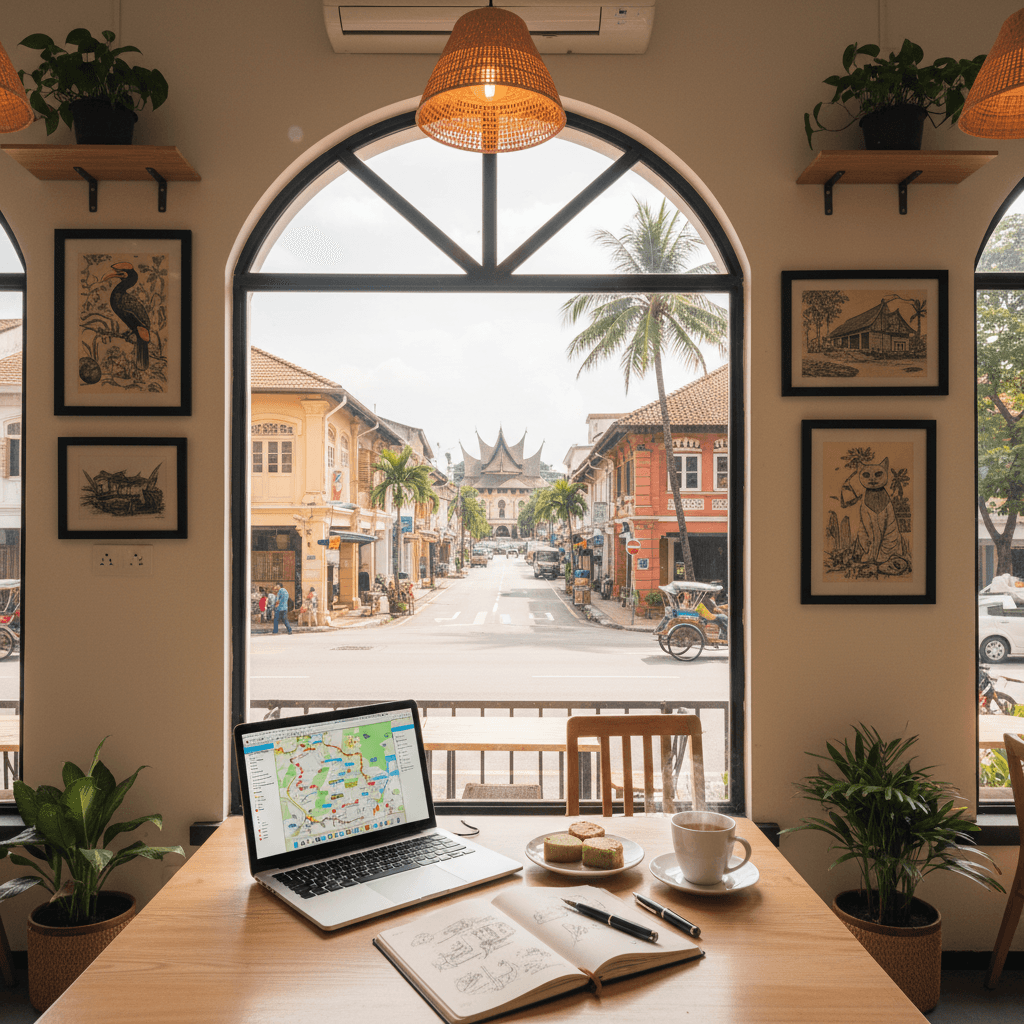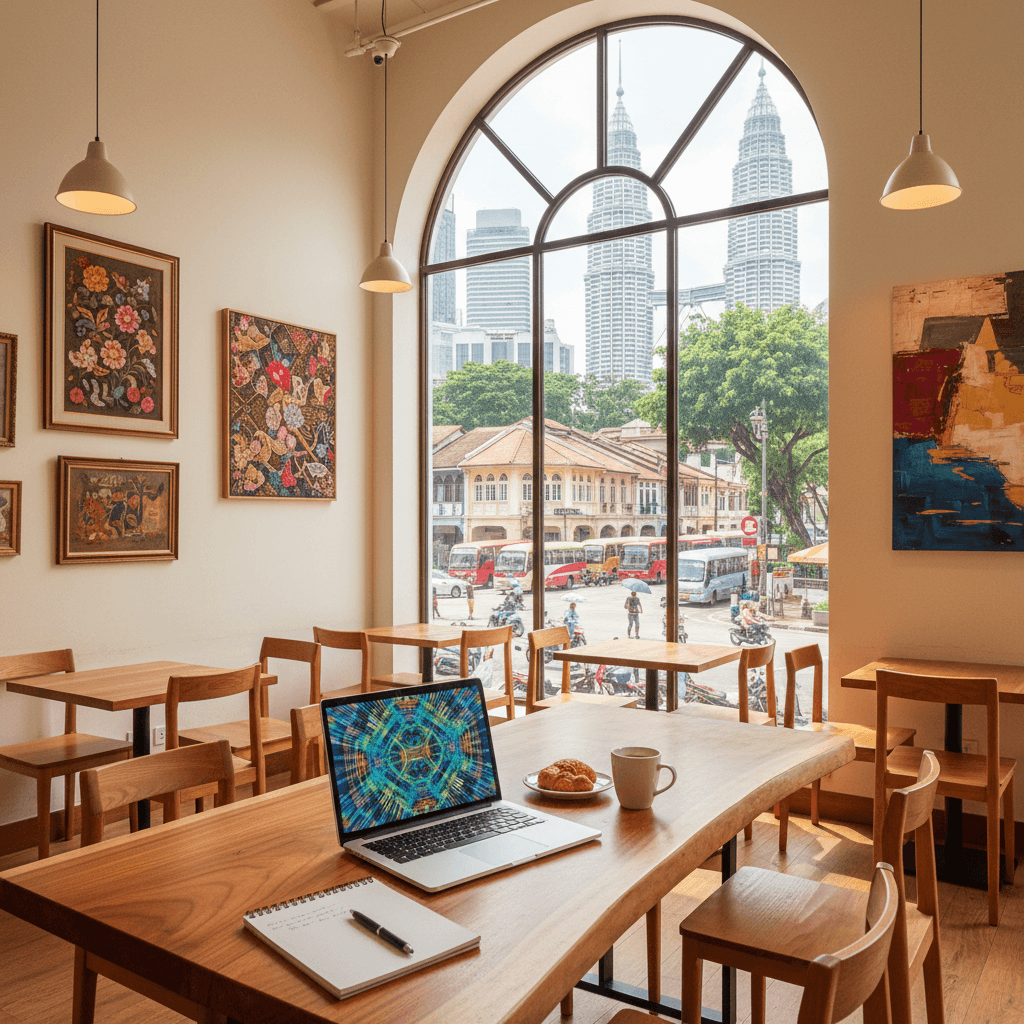
Kuala Lumpur
🇲🇾 Malaysia
The KL Contrast: Rainforests and Rooftops
Kuala Lumpur is a city that refuses to be just one thing. One minute you’re walking through a humid, prehistoric rainforest at the KL Forest Eco Park, and ten minutes later, you’re sitting in a 50th floor infinity pool overlooking a skyline of steel and glass. It doesn't have the laid-back island energy of Bali or the chaotic, neon intensity of Bangkok. Instead, KL offers a polished, functional version of Southeast Asia that feels surprisingly easy to live in.
Most nomads find the city’s greatest strength is its "plug-and-play" nature. You can land at KLIA, grab a RM40 local SIM, take a RM65 Grab ride to a luxury high-rise in Bukit Bintang, and be on a 200 Mbps Zoom call within two hours. It’s a city that respects your productivity while constantly tempting you with some of the best food on the planet.
The Daily Rhythm
Life here is dictated by the sky. The mornings are usually crisp and bright, perfect for a walk through Perdana Botanical Gardens or a quick hike up Bukit Gasing. By 3:00 PM, the heat usually peaks, often followed by a dramatic monsoon downpour that turns the streets into rivers for an hour. Locals and expats alike use this time to retreat into the city’s massive, air-conditioned malls or sleek coworking spaces like Common Grounds or WORQ.
Expats often describe the vibe as "accessible luxury." You might be living in a condo with a private gym and sauna for $700 a month, but you’re still eating $3 Nasi Lemak from a plastic chair on the sidewalk. That friction between high-end infrastructure and gritty, delicious street culture is exactly what gives KL its soul.
What to Love (and What to Tolerate)
The cultural mix is the city’s heartbeat. You’ll hear a blend of Malay, English, Cantonese, and Tamil in a single conversation. This multiculturalism makes it one of the most welcoming cities for foreigners; you rarely feel like an outsider here. Digital nomads specifically rave about the "cafe-to-coworking" ratio. If you’re tired of your desk at Colony, you can hop over to VCR or Feeka Roast & Coffee for a change of scenery and a world-class flat white.
It isn't all tropical breezes and cheap satay, though. The humidity is a physical weight you’ll feel the moment you step outside, and the traffic in areas like Mont Kiara or the City Centre can be legendary. If you aren't living near an LRT or MRT station, you'll spend a significant chunk of your life staring at the taillights of a Perodua Myvi. Most long-termers eventually learn to plan their entire lives around the train map or the mid-afternoon rain clouds.
The Financial Sweet Spot
KL occupies a rare middle ground in the nomad world. It’s significantly cheaper than Singapore or Hong Kong, yet it offers a level of comfort and "western" convenience that’s harder to find in places like Vietnam or Northern Thailand. You can live a very comfortable, mid-range life here on $1,800 a month, including a modern apartment in a neighborhood like Bangsar and eating out almost every night.
- The "Budget" Experience: Spend $1,000 a month by living in a studio outside the city center, taking the LRT, and sticking to local hawker centers.
- The "Nomad" Standard: Spend $1,600 to $2,000 a month for a 1-bedroom in a prime spot like KLCC, a dedicated desk at a coworking space, and weekend trips to Penang or Langkawi.
- The "Luxury" Life: Spend $3,000+ a month for a penthouse in Damansara Heights, daily Grab Premium rides, and dinners at high-end spots like Dewakan.
Ultimately, KL is for the nomad who wants the "big city" experience without the "big city" price tag. It’s a place where you can build a serious career during the day and lose yourself in a maze of night markets and rooftop bars by sunset. It feels like a city on the rise, and it’s hard not to get caught up in that energy.
The Bottom Line
Kuala Lumpur is one of the rare global hubs where you can live a high-end lifestyle without the high-end price tag. Most digital nomads find they can live quite comfortably on $1,600 to $2,000 per month. If you are willing to live like a local, eating at hawker stalls and staying outside the immediate city center, you could even get that number down to $1,000.
The city operates on a tiered economy. You can spend $2$ on a plate of Nasi Lemak at a street corner or $100 on a fine-dining experience in a skyscraper overlooking the Petronas Towers. Most expats find their sweet spot somewhere in the middle, mixing cheap, delicious local eats with the occasional Western comfort meal.
Monthly Rent by Neighborhood
Your biggest expense will be housing, but the quality of apartments in KL is staggering for the price. Most modern condos come with "resort-style" amenities, meaning a massive infinity pool, a gym, and 24-hour security are standard, not luxuries.
Bukit Bintang and City Center
- Studio: $800 to $1,200
- 1-Bedroom: $600 to $1,000
- 2-Bedroom: $900 to $1,500
KLCC and Mont Kiara
- Studio: $500 to $800
- 1-Bedroom: $700 to $1,200
- 2-Bedroom: $1,200 to $1,800
Bangsar and Damansara
- Studio: $350 to $600
- 1-Bedroom: $500 to $900
- 2-Bedroom: $800 to $1,300
If you are looking to save, heading just 15 minutes outside the city center by train can drop your 1-bedroom rent to as low as $350. Just keep in mind that traffic in KL can be brutal, so living near an LRT or MRT station is a smart move if you don't plan on driving.
Day-to-Day Expenses
Daily life in KL is incredibly affordable if you use local apps and services. Grab is the go-to app for almost everything, from hitching a ride to ordering dinner. A typical Grab ride across town usually costs between $2 and $5, making it tempting to skip the humid walk to the train station.
- Street food meal: $2 to $4
- Mid-range dinner for two: $25 to $40
- Monthly utilities (Power, Water, Gas): $80 to $120
- High-speed home internet: $25
- Monthly gym membership: $30 to $60
- Coworking hot desk: $80 to $150
Alcohol is one area where the budget can take a hit. Because of high taxes, a pint of beer in a bar can cost $6 to $9, which feels disproportionately expensive compared to a $3 meal. Many nomads save their drinking for "Happy Hour" or stick to the thriving cafe culture instead.
Budgeting for Different Lifestyles
The Budget Traveler: If you stick to neighborhoods like Cheras or Sentul, eat at hawker centers, and use the excellent public transport system, you can get by on $800 to $1,200. You will still have a decent room and plenty of great food, but you will be skipping the rooftop bars.
The Mid-Range Nomad: Most people in the community fall into this $1,500 to $2,100 bracket. This buys you a sleek 1-bedroom apartment in a place like Bangsar South, a dedicated desk at a coworking space like WORQ, and the freedom to eat out at nice cafes every day without checking your bank balance.
The Luxury Expat: For $3,000+, you are living the high life. Think a 3-bedroom penthouse in Mont Kiara, a private car or frequent premium Grab rides, and dinners at the city's top-tier international restaurants. In cities like New York or London, this lifestyle would easily cost three times as much.
The Pulse of the City: Bukit Bintang
If you're a solo traveler or a nomad who thrives on high energy, this is your base. It's the most walkable part of Kuala Lumpur, centered around the Pavilion KL mall and the famous Jalan Alor food street. You'll find a mix of high end hotels and older apartment blocks like Invito or Ceylonz Suites.
- The Vibe: Non stop action, neon lights, and street performers.
- Pros: You don't need a car. The MRT and Monorail connect you to the rest of the city in minutes.
- Cons: It's loud at 2:00 AM on a Tuesday, and the weekend crowds can be suffocating.
- Rent: Expect to pay between $600 and $1,000 for a modern one bedroom unit.
The Professional Hub: KLCC
Living in the shadow of the Petronas Twin Towers is the dream for many expats and digital nomads who want a sleek, corporate lifestyle. The condos here, like Star Residences or The Face, often feature infinity pools with skyline views. It's home to premium workspaces like Common Grounds and Colony, making it easy to transition from a morning gym session to a client meeting.
- The Vibe: Polished, expensive, and modern.
- Pros: World class amenities and manicured parks like KLCC Park for your morning run.
- Cons: It lacks a "local" feel and can feel a bit sterile once the offices close for the day.
- Rent: High end studios start around $700, while luxury two bedroom units often exceed $1,500.
The Expat Favorite: Bangsar & Bangsar South
Expats who have been in KL for a while usually gravitate toward Bangsar. It feels more like a neighborhood than a concrete jungle. Telawi Street is the heart of the social scene, packed with independent cafes, boutiques, and pubs. Just down the road, Bangsar South has emerged as a tech hub, housing the WORQ coworking space and plenty of mid range apartments.
- The Vibe: Leafy, upscale, and social.
- Pros: Best cafe culture in the city and close to the Mid Valley Megamall.
- Cons: Parking is a nightmare and the older bungalows in "Upper Bangsar" can be pricey to maintain.
- Rent: You can find older but spacious apartments for $500, while new builds in Bangsar South go for $800 to $1,200.
Family Comfort: Mont Kiara
If you're moving with a family or just want a quiet, gated community feel, Mont Kiara is the standard choice. It's often called an "expat bubble" because you'll find every international grocery store and school you could need within a two mile radius. It's also right next to Bukit Kiara, which is the best spot in the city for hiking and mountain biking.
- The Vibe: Suburban luxury with a heavy international presence.
- Pros: Extremely safe, clean, and full of family friendly restaurants at 163 Retail Park.
- Cons: It's not connected to the train lines, so you'll be reliant on Grab or a personal car to get anywhere else.
- Rent: Three bedroom family condos typically range from $1,200 to $1,800.
The Local Secret: Sri Hartamas & Damansara Heights
For those who want to escape the tourist traps, these areas offer a more authentic, affluent Malaysian lifestyle. Sri Hartamas is famous for its Japanese and Korean expat communities, meaning the sushi and BBQ spots here are top tier. Damansara Heights is quieter and more residential, popular with long term expats who want to be near the Perdana Botanical Gardens.
- The Vibe: Low key, sophisticated, and residential.
- Pros: Less traffic than the city center and some of the best cocktail bars in the country.
- Cons: Very low walkability; you'll need the Grab app on speed dial.
- Rent: Prices vary wildly, with studios starting at $500 and massive villas reaching $3,000 or more.
Connectivity and Speed
Kuala Lumpur is a heavy hitter for internet infrastructure in Southeast Asia. You aren't going to struggle with patchy connections here; most modern condos and serviced apartments come standard with fiber optic lines pushing 100 Mbps to 500 Mbps. Most nomads find the reliability here superior to Bali or even parts of Thailand.
For mobile data, don't overthink it. Grab a local SIM at KLIA airport as soon as you land. Maxis (Hotlink) and Celcom are the gold standards for coverage. Expect to pay around $6 to $10 for a monthly prepaid plan with more data than you'll likely use. If your phone supports it, eSIMs through apps like Airalo work fine, but a local physical SIM is usually cheaper and faster for long term stays.
The Coworking Scene
The city has moved past basic shared desks into specialized niches. Whether you want a corporate vibe near the towers or a community focused spot in the suburbs, there is a desk for you. Most spaces offer day passes if you're just passing through, but the real value is in the monthly memberships which typically range from $80 to $150.
- WORQ (Multiple Locations): This is the crowd favorite for community. Their KL Gateway and Subang branches are particularly popular. They offer 24/7 access, very fast WiFi, and a "no-snob" atmosphere where it's actually easy to meet people.
- Common Grounds (KLCC & Ampang): If you need to impress a client or just want to work in a high end environment, this is it. The KLCC branch sits right next to the Petronas Twin Towers. It's more expensive, but the amenities and networking events are top tier.
- Sandbox (Sri Petaling): Great for those staying outside the immediate city center. It's affordable at roughly RM400 per month (about $85) and features 1Gbps speeds and a very functional, focused layout.
- Colony: These spaces look more like boutique hotels than offices. If you find sterile white desks depressing, Colony’s lush interiors (at operating locations) are a massive upgrade. They offer a 100 hour plan for about $82.
- ACCEA CAFÉ: A brilliant hybrid between a cafe and an office. You pay by the hour, there are power outlets at every single seat, and they provide free drinks. It’s perfect for those days when you have a three hour gap between meetings.
Cafe Working Culture
KL has a deep seated cafe culture, but not every spot is laptop friendly. In high traffic areas like Bukit Bintang, some smaller cafes might give you the side eye if you camp out for four hours on one latte. However, the city is full of "work friendly" gems if you know where to look.
VCR in Galloway and Pudu is a nomad staple with great coffee and decent seating, though it gets loud on weekends. For a quieter vibe, head to Bangsar or Mont Kiara. These neighborhoods are packed with spacious cafes like Feeka or Bean Brothers where the staff is used to the digital nomad crowd. Always check for "plug points" before you get comfortable, as some older buildings are stingy with outlets.
Practical Tips for Working Remotely
The tropical heat is no joke. If you plan on working from a balcony or a non air conditioned cafe, you'll likely last about twenty minutes before your laptop fans start screaming. Stick to the malls or dedicated workspaces between 11:00 AM and 4:00 PM.
Power outages are rare in the city center, but the occasional monsoon storm can cause brief flickers. Most high end coworking spaces have backup generators, but it's a good idea to keep your devices charged during the rainy season. If you're doing heavy video calls, the 5G network in KL is surprisingly robust and serves as a perfect hotspot backup if your apartment WiFi ever dips.
Staying Safe in the City
Kuala Lumpur is one of the more relaxed capitals in Southeast Asia when it comes to personal safety. Most nomads find they can walk around neighborhoods like Bangsar or Mont Kiara at night without a second thought. The city has a low violent crime rate, especially in areas where expats tend to congregate.
That said, keep your wits about you in high-traffic tourist zones. Bukit Bintang and Chinatown are notorious for opportunistic snatch-and-grab thefts. Local expats often recommend wearing your bag across your shoulder and away from the roadside to discourage motorcycle-borne thieves. It's also smart to use Grab instead of flagging down street taxis, as the app tracks your journey and fixes the price, eliminating the risk of "tourist pricing" or aggressive drivers.
Solo female travelers generally report feeling comfortable here. Malaysia is a Muslim-majority country, so while KL is very liberal, dressing a bit more modestly when visiting local markets or government buildings helps you blend in and avoids unwanted attention. If you ever feel uneasy, duck into one of the many 24-hour KK Super Mart or 7-Eleven outlets that are brightly lit and always staffed.
World-Class Healthcare
Health services are a major perk of living in KL. The private healthcare system is so efficient and affordable that it has turned Malaysia into a global hub for medical tourism. You won't struggle with language barriers; almost every doctor and specialist in the private sector speaks fluent English and many were trained in the UK, Australia, or the US.
For routine issues or emergencies, expats point to Gleneagles Hospital on Jalan Ampang or Prince Court Medical Centre near KLCC. These facilities feel more like five-star hotels than hospitals. A standard consultation with a specialist usually costs between $40 and $80, and you can often get an appointment on the same day or the next. For minor ailments, look for "Klinik" signs on nearly every street corner. A visit to a local GP including medicine typically runs about $15 to $30.
While public hospitals are significantly cheaper, they are often crowded with long wait times. Most nomads opt for international health insurance to access the private system. If you need a pharmacy, Guardian and Watsons are everywhere, but for harder-to-find prescriptions, Caring Pharmacy often has a more specialized inventory.
Practical Health Tips
- Tap Water: While the water is treated, the pipes in older buildings can be questionable. Most residents use a filtration system or buy 5-gallon jugs. Stick to filtered water for drinking.
- Tropical Heat: The humidity is no joke. Heat exhaustion is common for newcomers. Carry a reusable bottle and aim for 3 liters of water a day.
- Dengue Fever: This is a real risk in Malaysia. Use mosquito repellent if you're heading to the Perdana Botanical Gardens or hiking Bukit Gasing, especially during the dawn and dusk hours.
- Air Quality: Between June and September, "the haze" caused by regional agricultural burning can occasionally spike pollution levels. It's worth downloading the AirVisual app to check the AQI before planning outdoor activities.
The Efficiency of the Rail System
Kuala Lumpur is one of the few cities in Southeast Asia where you can comfortably live without a car, provided you stay near a station. The rail network is a mix of the LRT, MRT, and Monorail. Most nomads find the MRT Putrajaya Line and the LRT Kelana Jaya Line the most useful for getting between hubs like Bangsar, KLCC, and Bukit Bintang.
Trains are clean, air conditioned, and incredibly cheap. A typical cross city trip costs between $0.50 and $1.20. If you are staying for more than a week, pick up a Touch 'n Go (TnG) card at any station or major convenience store. It costs about $2.50 for the card plus your loaded credit. You just tap in and out at the gates, which beats fumbling for coins at the kiosks every time you want to ride.
- LRT: Best for reaching Bangsar and the KLCC area.
- MRT: The newest lines with the best coverage for Bukit Bintang and the outskirts.
- Monorail: Useful for short hops within the Golden Triangle, though it gets very crowded during rush hour.
The Grab Revolution
When the tropical humidity hits or the afternoon monsoon rains start, you will likely turn to Grab. It is the local equivalent of Uber and it is the lifeblood of expat transport. Rides are surprisingly affordable; a 15 minute trip usually costs between $2 and $4. During peak hours or heavy rain, prices can double or triple, and finding a driver becomes a test of patience.
Expats recommend downloading AirAsia Move as a secondary ride hailing app. Sometimes it is cheaper than Grab, and it provides a great backup when Grab is showing high demand. Avoid the old school blue or red metered taxis unless you are using an app to book them. Drivers often refuse to use the meter with foreigners, and you will end up paying way more than the standard rate.
Walking and the "Last Mile" Problem
Kuala Lumpur is not a particularly walkable city in the traditional sense. While the city center has improved with covered walkways, like the one connecting Pavilion KL to KLCC, many neighborhoods lack consistent sidewalks. You might find a perfectly paved path suddenly ends in a ditch or a giant tree root.
The heat is the biggest barrier. Walking more than 10 minutes between 11:00 AM and 4:00 PM usually results in needing a shower immediately. To bridge the gap between the station and your apartment, look for the MRT Feeder Buses. They cost about $0.25 per ride and accept TnG cards. They are a lifesaver for those living in residential pockets of Mont Kiara or Damansara.
Airport Transfers
Getting from KLIA or KLIA2 into the city takes about an hour by road. A Grab from the airport usually costs around $15 to $20, including tolls. It is the most convenient door to door option if you have heavy luggage.
If you are in a hurry, the KLIA Ekspres train is the fastest way to reach the city center. It takes exactly 28 minutes to reach KL Sentral and costs RM55 (~$12) for a one way ticket. From KL Sentral, you can easily hop on the LRT or grab a short taxi to your final destination. Travelers often say the train is the best way to avoid the notorious Friday evening traffic jams that can turn a 1 hour drive into a 3 hour ordeal.
Driving and Scooters
Unlike Bali or Chiang Mai, very few nomads rent scooters here. The highways are fast, the traffic is aggressive, and the junctions are complex. If you are staying long term in a neighborhood like Mont Kiara, you might consider a car rental, but for most digital nomads, the combination of the rail system and Grab is more than enough to get around comfortably.
The Linguistic Landscape
You won't have much trouble getting around Kuala Lumpur if you only speak English. It's the city's unofficial second language and the primary tongue for business, tech, and nightlife. Most locals in the service industry, from Grab drivers to baristas in Bangsar, speak it fluently or at a very high level. You'll find that signage in the LRT stations and menus in Bukit Bintang are almost always bilingual.
The local dialect is called Manglish. It's a colorful, fast paced blend of English, Malay, Chinese, and Tamil. It might sound confusing at first because of the rhythmic pace and the addition of suffixes like "lah," "leh," or "meh" at the end of sentences. These particles usually indicate emphasis or a question. Don't worry about mastering it; just speaking clearly at a normal pace is usually enough to be understood everywhere.
Bahasa Malaysia Basics
While you can survive on English alone, learning a few phrases in Bahasa Malaysia (the national language) goes a long way. It shows respect for the local culture and can actually help you get better prices at the wet markets or local stalls. The grammar is surprisingly straightforward compared to European languages, as there are no conjugations or genders to worry about.
Here are the essentials that nomads and expats use daily:
- Terima Kasih: Thank you. (Response: Sama-sama)
- Satu / Dua / Tiga: One / Two / Three.
- Berapa?: How much? (Useful at the Jalan Alor night market).
- Makan / Minum: Eat / Drink.
- Pedas: Spicy. (If you can't handle heat, say "Tak pedas").
- Boleh: Can / Possible. (You'll hear this constantly; it's the ultimate "yes" in KL).
Communication Apps and Etiquette
WhatsApp is the king of communication here. Whether you're booking a hair appointment in Mont Kiara, chatting with a potential landlord, or joining a nomad meetup group, it's all done via WhatsApp. Most businesses will have a QR code on their counter or a link on their Instagram bio specifically for WhatsApp inquiries. If you're trying to reach a local business, don't bother with email; you likely won't get a response for days.
For getting around and ordering food, the Grab app is your lifeline. It has a built-in translation feature for messages, which is handy if your driver's English is limited. Lalamove is the go-to for moving larger items or getting documents delivered across the city quickly.
Social Nuances
Malaysians are generally polite and non-confrontational. You'll notice people often use "Boss" or "Uncle" and "Auntie" as terms of respect when addressing strangers, regardless of actual relation. Using "Boss" for your Grab driver or the guy running the Nasi Lemak stall is a quick way to build rapport.
In professional settings or when meeting locals for the first time, a light handshake is common, though some Muslim women may prefer a simple nod and a smile instead of physical contact. If you're invited to a local home, remember to remove your shoes at the door. It's a small gesture that carries a lot of weight in showing you've adapted to the local way of life.
The Reality of Tropical Living
Kuala Lumpur doesn't really have seasons in the traditional sense. Instead, you're looking at a year-round tropical climate where the thermometer rarely drops below 23°C (73°F) at night or climbs much higher than 33°C (91°F) during the day. It's the humidity that defines the experience here. Most nomads find they spend their days hopping between air-conditioned "ice boxes" like Pavilion Mall or Common Grounds and the heavy, humid air outside.
You'll quickly learn the "KL shuffle," which involves timing your outdoor walks for early morning or after the sun sets. By 11:00 AM, the sun is punishing. If you're planning to explore the Batu Caves or walk the KL Forest Eco Park, do it as soon as they open. Expats usually recommend keeping a light hoodie in your bag, not for the weather, but because the cinemas and malls crank the AC so high you'll actually feel cold indoors.
Navigating the Monsoons
Rain in KL isn't usually a drizzly, all-day affair. It's more of a cinematic, sky-is-falling deluge that lasts for an hour or two in the late afternoon. The city experiences two main monsoon seasons, though the lines between them have blurred lately.
- Northeast Monsoon (November to March): This is technically the "wet" season. Expect heavy thunderstorms, usually around 3:00 PM or 4:00 PM. Travelers often say this is the best time to catch up on deep work at a coworking space while the lightning puts on a show outside.
- Southwest Monsoon (May to September): This period is generally drier, but "dry" is a relative term in a rainforest. You'll still see rain, just less frequently.
One thing locals will warn you about is "the haze." Occasionally, usually between June and August, smoke from agricultural fires in neighboring regions can drift over the city. It doesn't happen every year, but when it does, the air quality can take a hit for a few weeks, making indoor gyms and cafes your best friends.
When to Book Your Stay
If you want the most reliable weather for rooftop pool sessions and outdoor markets, aim for June, July, or August. These months see the least rainfall and the most blue skies, though they are also some of the hottest. January and February are also popular, as the rains start to taper off and the city feels energized by the Chinese New Year festivities.
Keep an eye on the calendar for major holidays. During Hari Raya (Eid) and Chinese New Year, the city undergoes a "Balik Kampung" (returning to the village) exodus. While many local shops might close for a few days, the usually gridlocked streets of Bukit Bintang and Bangsar become eerily quiet. It's a fantastic time to be in the city if you hate traffic, but a bad time if you're looking for a specific local mamak stall to be open.
Packing Essentials for Nomads
Don't bother with heavy denim or polyester; you'll regret it within five minutes of leaving KL Sentral. Stick to linen, light cotton, and moisture-wicking fabrics. Most expats recommend a sturdy, compact umbrella that fits in a laptop bag, because when it rains here, a light rain jacket won't save you from the splashback on the sidewalks. If you're planning to visit mosques or government buildings, keep a sarong or lightweight long pants handy to stay respectful of local customs while staying cool.
Getting Around the City
Kuala Lumpur is one of the few cities in Southeast Asia where you can actually survive without a car. The rail system is surprisingly efficient, connecting the major hubs of KLCC, Bukit Bintang, and Bangsar. Most expats rely on the LRT and MRT lines for daily commutes to avoid the legendary afternoon traffic jams. A single trip usually costs less than $1, and you can pick up a Touch 'n Go card at any station to tap in and out easily.
When the tropical rain hits or you're heading somewhere the train doesn't reach, Grab is the go-to app. It's reliable and cheap, with most inner-city rides costing between $2 and $5. Just a heads up: during rush hour or heavy downpours, prices can double and wait times might skyrocket. If you're feeling adventurous, the GOKL City Bus is a free service that loops around the main tourist and business districts, though it gets quite crowded during peak hours.
Visas and Staying Legal
For many digital nomads, the DE Rantau Nomad Pass has been a game changer. It allows remote workers to stay for up to 12 months, with the option to renew for another year. You'll need to show proof of sufficient remote income (check official site) and work in a digital field. The processing fee is around RM1,000 (about $215), and it covers your spouse and children too.
If you aren't ready for a long term commitment, many nationalities get a 90 day visa free entry on arrival. While some people used to do "visa runs" to nearby countries, immigration has become stricter lately. It's always better to have your paperwork in order if you plan on staying more than a few months.
Staying Connected
You won't have to hunt for signals here. Malaysia's internet speeds are some of the best in the region. Most modern condos in areas like Mont Kiara or Bangsar South come with fiber connections reaching 100Mbps to 500Mbps. If you're setting up your own home office, a solid monthly plan will run you about $25 to $35.
For your phone, grab a SIM card at the airport or any 7-Eleven. Providers like Maxis (Hotlink), Celcom, and Digi have great coverage. A prepaid plan with plenty of 5G data usually costs less than $15 a month. Travelers often recommend Maxis for the most consistent speeds if you're planning to work from cafes in the suburbs.
Health and Wellness
The healthcare system in KL is top tier, especially in the private sector. Hospitals like Gleneagles or Prince Court feel more like five star hotels than medical clinics. Most doctors speak perfect English and many were trained in the UK or Australia. A standard GP visit might cost you $15 to $30, while a specialist consultation starts around $50.
Since the humidity is intense, you'll likely spend a lot of time in air conditioned gyms. High end chains like Celebrity Fitness or Fitness First are everywhere, with memberships ranging from $40 to $70 a month. For something more social, check out the bouldering gyms in 1 Utama or the hiking trails at Bukit Gasing where locals head on weekend mornings before the sun gets too hot.
Practical Essentials
- Currency: Ringgit (MYR). While cards are accepted in malls, keep cash for hawker centers and small local shops.
- Power: Type G plugs (the 3-pin UK style). Voltage is 240V.
- Water: Don't drink from the tap. Most apartments have built in filters, or you can buy 5 gallon jugs for a few dollars.
- Apps to Download: Grab (transport and food), Foodpanda (delivery), and Lalamove (moving heavy items).
- Language: Bahasa Malaysia is the national language, but English is spoken fluently by almost everyone in the city center.
Need visa and immigration info for Malaysia?
🇲🇾 View Malaysia Country GuideNomad Haven
Your home away from home
Monthly Budget Estimates
More cities in Malaysia
Miri
🇲🇾 Malaysia
Canggu (Batu Ferringhi/Penang)
🇲🇾 Malaysia
Putrajaya
🇲🇾 Malaysia