Kraków
🇵🇱 Poland
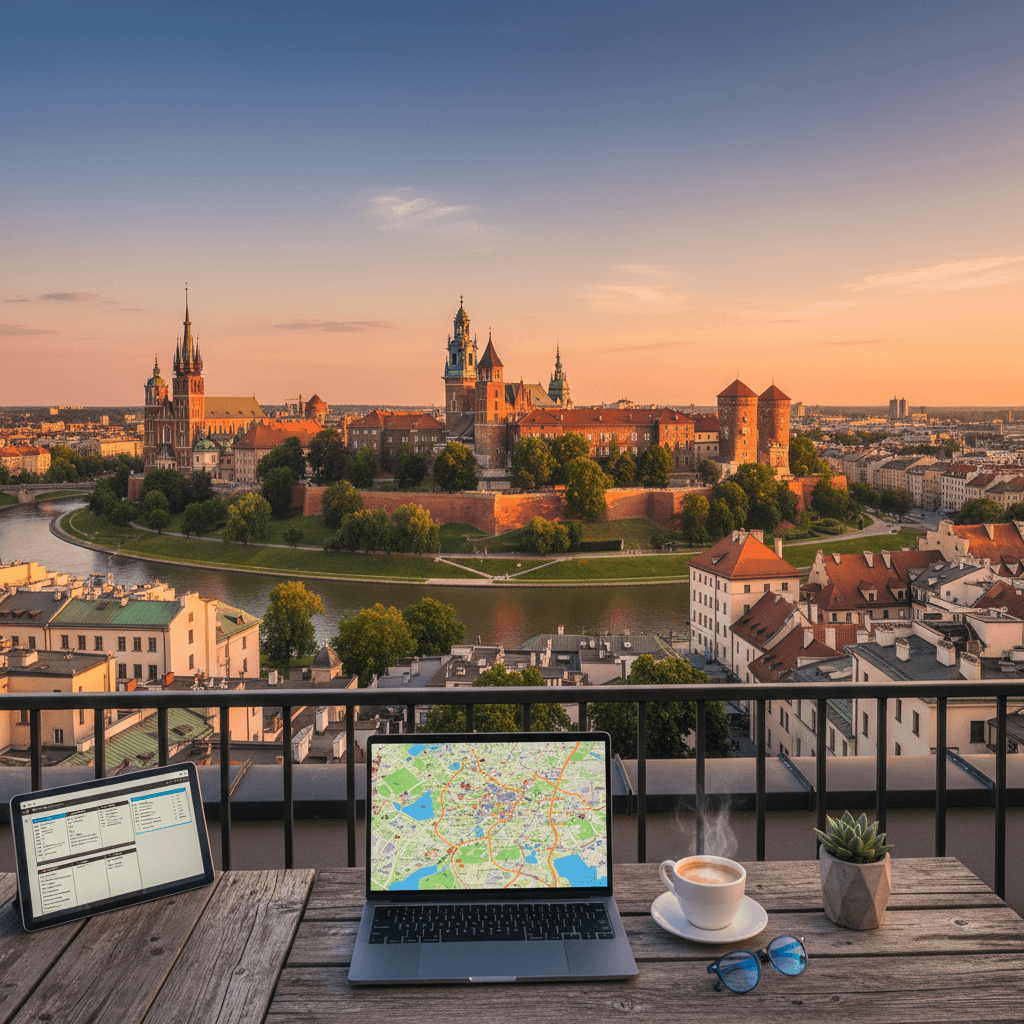
Kraków doesn't try to impress you. It just does. You walk out of your apartment in Kazimierz on a Tuesday morning, smell fresh bread drifting from a bakery on Józefa Street, hear trams clanging past the old Jewish quarter's peeling murals and realize you've stumbled into one of Europe's most liveable cities without really meaning to.
The Old Town is, honestly, medieval in the best possible sense: cobblestones, a market square that stops you mid-stride, Gothic spires that catch the afternoon light. It's also genuinely walkable in a way that most European cities aren't, you can cover the center in 20 minutes on foot and still feel like you haven't seen everything.
What separates Kraków from other Central European nomad favorites is the combination of serious affordability and a real local culture that hasn't been completely hollowed out by tourism. Mid-range living runs around $1,662 a month, including a one-bedroom in the center, coworking and regular meals out. Budget harder and you'll get by on $1,000. The city doesn't punish you for not being wealthy.
The nomad community, turns out, is tighter than you'd expect for a city this size. Kazimierz is the gravitational center of it: coworking spaces like Yolk, bohemian cafés that don't rush you out and a nightlife scene that runs genuinely late without feeling dangerous. Expats tend to cluster here, it's the neighborhood that feels most like a village inside a city.
There are real downsides. Winter is brutal and grey, January averages 0°C and the cold is the damp, bone-settling kind that makes you rethink everything. Summer weekends bring stag parties flooding in from the UK, the Main Square gets loud and weirdly chaotic after midnight. Pickpockets work the tourist crowds in Old Town, so don't get complacent.
Still, most nomads who come for a month end up staying three. The pace is slow enough to think, the city is small enough to feel like yours and the food is frankly excellent once you get past the tourist menus. Kraków rewards people who actually show up and pay attention, it doesn't perform for you.
Kraków is, honestly, one of the most affordable cities in Central Europe for remote workers. You're not roughing it either. A comfortable setup here costs a fraction of what you'd pay in Prague or Warsaw and the quality of life doesn't suffer for it.
Rent is the biggest variable. A 1-bedroom in the center runs 3,000 to 4,500 PLN per month, roughly $650 to $855. Head out to Podgórze or Grzegórzki and that drops to 2,000 to 2,600 PLN, utilities add around 350 PLN on top. Apartments fill fast, so get on Otodom.pl and the Facebook group "Krakow Apartments 4 Rent" before you arrive, not after.
Food is where this city really earns its reputation. A zapiekanka from a street stall costs 15 to 20 PLN, that's under $5, a full meal at a milk bar runs 15 to 25 PLN. Sit-down restaurants in Kazimierz are still cheap by Western standards, though the upscale spots like Bottiglieria 1881 will push 100 PLN a head. Most nomads eat well here without thinking about it.
Monthly transport is a non-issue. Monthly transport pass for zone I is 159 PLN, the network is good, the center is walkable anyway. Coworking is where costs vary more: Yolk charges 700 PLN for a hot desk, Chilli Spaces runs around 500 PLN, day passes at Yolk are 140 PLN if you're testing the waters first.
Here's what a realistic month looks like:
- Budget: ~$1,000 (shared room, street food, public transport)
- Mid-range: ~$1,662 (1BR in center, mid-range meals, coworking hot desk)
- Comfortable: $2,500+ (nice 1BR, regular restaurant meals, private office)
The mid-range figure is, turns out, what most nomads actually land on after a month or two of settling in. Budget is doable but tight, comfortable is genuinely comfortable, not just "comfortable for Southeast Asia" comfortable.
One thing people underestimate: winters push costs up. Heating bills climb, you're taking more Ubers in January because it's genuinely cold and dark by 4pm and you end up spending more in cafés just to stay warm. Factor that in.
Kraków's neighborhoods each have a distinct personality and picking the wrong one will grind on you fast. Here's where different types of travelers actually land well.
For Digital Nomads: Kazimierz
This is, honestly, the sweet spot. Kazimierz has the coworking spaces, the café culture and the kind of low-key creative energy that makes it easy to settle into a rhythm. Rents sit around 2,600 PLN a month for a decent one-bedroom, food is cheap enough that you can eat well without thinking about it and spots like Tektura or MAK Bread&Coffee are genuinely good places to work, not just Instagram backdrops.
Weekends get rowdy. Stag parties flood in from across Europe, the bars on Plac Nowy spill onto the street and the noise carries, so if you need Saturday mornings to be quiet, factor that in.
For Expats: Podgórze
Expats who've been in Kraków a year or two tend to drift south across the Vistula. Podgórze is quieter, rents drop to around 2,000 to 2,600 PLN and there's actual green space along the riverbank, which you'll start craving once the novelty of Old Town wears off. Tram connections are solid, it's not remote by any stretch, it just doesn't feel like a tourist attraction.
For Solo Travelers: Stare Miasto
The Old Town is expensive and crowded and in summer the Main Square smells like sunscreen and fried food by noon. Still, for a short stay it's unbeatable on convenience. Everything's walkable, the café density is absurd and you won't need to think about transport at all. Just don't expect quiet, it's not that kind of neighborhood.
For Families: Grzegórzki or Bronowice
These two neighborhoods don't, turns out, get much attention in travel guides, which is part of why families like them. Modern apartments, reasonable rents, good tram access into the center and none of the noise that comes with living near the tourist core. Less character, sure, but that trade-off makes sense when you've got kids and a routine to protect.
Grzegórzki sits closer in, Bronowice is a bit further west, both are calm, they're just not exciting and that's exactly the point.
Kraków's internet infrastructure is, honestly, better than most Western European cities charge you triple to access. Fixed broadband averages around 250 Mbps down and the best coworking spaces push gigabit speeds. Mobile data is solid too, with mobile data averages around 148 Mbps across the city.
For a local SIM, grab one from Orange or Play at the airport or any high street shop. Plans run 40-60 PLN for 10-20GB, you'll need your passport and it takes about ten minutes. eSIMs via Airalo work fine if you'd rather skip the queue.
Coworking Spaces
- Yolk Coworking: The standout option. Gigabit WiFi (1000/900 Mbps), hot desks at 700 PLN/month, dedicated desks at 1,000 PLN, day passes at 140 PLN. They run regular community events, there's a café built in and the crowd skews toward serious remote workers rather than weekend hobbyists.
- Chilli Spaces: More flexible, multi-location access, 500 PLN/month. Good if you want to move around the city rather than anchor to one spot.
Most nomads land at Yolk first, turns out it keeps them. The community there's genuinely active, not just a Slack channel nobody checks and the Kazimierz location puts you walking distance from good lunch spots and evening bars.
Cafés for Laptop Work
- MAK Bread&Coffee: Reliable WiFi, good coffee, not aggressively tourist-facing.
- Tektura: Indie bookshop-café hybrid in Kazimierz, the kind of place you sit down for an hour and leave three hours later.
Free public hotspots are everywhere, 1,350-plus across the city, so you're rarely completely stuck. That said, café WiFi can crawl during peak afternoon hours, it's worth having your SIM as a backup rather than assuming every flat white comes with 50 Mbps.
One thing that catches people off guard: coworking prices here are quoted net of VAT, so budget for the gross figure when you're comparing costs. Still affordable by any European standard. A hot desk at Yolk costs less than a single day-pass at a WeWork in London or Amsterdam, which frankly says everything.
Kraków is, honestly, one of the safer cities you'll find in Central Europe. Violent crime is rare. What you do need to watch for is pickpocketing around the Main Square and Old Town, especially during peak tourist hours when the cobblestones are packed and everyone's distracted by the street performers and the smell of grilled kiełbasa drifting from the market stalls.
Unlit side streets late at night are worth skipping and the stag party crowds that descend on Kazimierz on weekends can get rowdy enough to be annoying, though they're rarely dangerous. No neighborhoods are genuinely off-limits, that's not Kraków's reality.
For emergencies, dial 112 for police, ambulance or fire. It works from any phone, including ones without a SIM.
Healthcare
The city has modern hospitals and pharmacies on practically every corner, so minor illness or a twisted ankle from the uneven cobblestones won't leave you scrambling. EU citizens with an EHIC card get public healthcare covered, which is genuinely useful and not something to leave at home. Everyone else needs travel insurance and turns out, most nomads find that standard international health coverage handles the basics here without issue.
Tap water is clean and safe to drink straight from the tap, though some long-term expats boil it out of habit. That's personal preference, not necessity.
Practical Safety Tips
- Pickpockets: Keep bags zipped and phones out of back pockets in the Main Square and on crowded trams
- Late nights: Stick to lit streets in Old Town and Kazimierz after midnight, the atmosphere shifts noticeably
- Stag parties: Weirdly concentrated around Kazimierz on Friday and Saturday nights; if that energy isn't your thing, Podgórze is quieter
- Emergency number: 112 covers all services, English-speaking operators are usually available
- Pharmacies: Look for the green cross sign; staff in central areas often speak enough English to help
The cold is, frankly, the bigger health concern for most nomads. January temperatures drop to around 0°C, the damp air cuts through lighter jackets and the grey skies stretch for weeks. Pack accordingly or plan your stay around the milder months.
Overall, Kraków doesn't demand the same level of vigilance as larger European capitals. Stay aware in tourist-heavy spots, get decent insurance and you're set.
Kraków's center is, honestly, small enough to walk almost everywhere. The Old Town, Kazimierz and Podgórze are all connected on foot and most nomads find they barely touch public transport for the first few weeks because the distances just don't demand it.
When you do need a ride, trams and buses cover the city well. A monthly pass for zone I runs 159 PLN, and the network is frequent enough that you won't be standing in the cold for long. Bolt and Uber both operate here and are cheap by Western standards, so grabbing a car on a rainy night doesn't feel like a splurge.
Getting to and from the airport is straightforward, you've got a few options depending on how much you care about speed versus cost.
- SKA1 train: 20 PLN, 20 minutes, runs regularly. Fastest option by far.
- Bus: 6 PLN if you're not in a hurry and don't mind the stops.
- Bolt/Uber: 60 to 150 PLN depending on traffic, around 25 to 40 minutes. Worth it with luggage.
Skip the metered taxis outside arrivals. They're, turns out, significantly more expensive than Bolt for the same ride and the drivers know it.
Bikes and scooters are available through the Bolt app and the paths along the Vistula River are genuinely pleasant, flat and well-maintained with the smell of the river cutting through the exhaust of the Old Town streets. It's a nice way to get between Kazimierz and Podgórze without dealing with tram crowds.
One thing that catches people off guard: tram stops in the center can get weirdly packed during summer tourist season, the clatter and press of bodies at peak times is real. Off-peak, it's fine. Winters slow everything down a bit too, cobblestones get icy and walking loses its charm fast when it's 0°C and the wind is coming off the river.
Overall though, Kraków is one of the easier European cities to get around without a car, most long-term expats don't bother owning one and frankly there's no reason to.
Polish isn't easy. The consonant clusters alone can make your brain short-circuit and honestly, most travelers give up on pronunciation after day two. That's fine, because Kraków's English proficiency is genuinely good, especially among younger locals and anyone working in hospitality, coworking spaces or the tech sector.
In the Old Town and Kazimierz, you can get through almost any transaction in English without issue. Menus, signs, museum exhibits, most of it's available in English. Wander further out into residential neighborhoods like Podgórze or Grzegórzki and you'll hit more Polish-only situations, though gestures and Google Translate close the gap fast enough.
Speaking of which, Google Translate's camera mode is the tool you'll actually use daily here. Point it at a lease agreement, a pharmacy label or a milk bar menu and you'll get a workable translation in seconds, it's not perfect but it's close enough to avoid ordering something you didn't want.
A few Polish phrases go a long way, turns out locals genuinely appreciate the effort even if your pronunciation is rough:
- Cześć (cheshch): Hi, casual
- Dzień dobry (jen DOH-bry): Good morning/hello, formal
- Dziękuję (jen-KOO-yeh): Thank you
- Tak / Nie (tahk / nyeh): Yes / No
- Przepraszam (psheh-PRAH-shahm): Excuse me / sorry
Don't stress the pronunciation, just try. A stumbled Dziękuję at a café counter lands better than a flat "thanks" every time.
Communication style here is direct, sometimes weirdly blunt by Western standards. Poles aren't being rude, that's just how conversation works. Small talk with strangers isn't really a thing, don't read coldness into a short answer at a shop or tram stop.
For longer stays, picking up basic Polish pays off fast, especially if you're navigating apartment contracts, dealing with admin offices or trying to build real relationships outside the expat bubble. Duolingo won't get you far with Polish grammar, frankly, so most expats recommend a few sessions with a local tutor instead. Affordable, practical and you'll actually retain it.
Kraków has four distinct seasons and they're not all pleasant. Winters are genuinely cold, grey and occasionally miserable, with January highs hovering around 0°C and a damp chill that, honestly, gets into your bones faster than you'd expect. Snow happens, it's pretty for about a day, then it turns to slush.
Summer brings its own problems. July is, turns out, the rainiest month, with over 11 rain days and humidity that makes the Old Town feel thick and crowded all at once. Tourist numbers peak hard in June and July, so if you're trying to get a quiet table at a Kazimierz café or actually enjoy Wawel Castle without shuffling through a crowd, good luck.
The sweet spots are May to June and September to October. Highs sit around 20°C in May, the city smells like linden trees and fresh bread from the bakeries on Grodzka and the tourist crush hasn't fully arrived yet. October drops to around 14°C but stays dry enough, the light goes golden in the afternoon and Kazimierz genuinely feels like itself again once the summer crowds thin out.
Here's a quick breakdown by season:
- Spring (Apr-Jun): Best overall. Mild temps, long days, manageable crowds through May before the summer surge hits.
- Summer (Jul-Aug): Warm and lively but rainy, packed and weirdly exhausting if you're trying to work and explore simultaneously.
- Autumn (Sep-Oct): Arguably the best time for nomads. Cheaper accommodation, fewer tourists, still warm enough to sit outside.
- Winter (Nov-Mar): Cheap flights and hotels, Christmas markets in December are genuinely worth it, but you'll need a proper coat and a tolerance for short grey days.
Most nomads who've spent real time here say September is the move, it hits the balance between good weather and a city that doesn't feel like a theme park. December gets an honorable mention purely for the market on the Main Square, which is frankly one of the better ones in Central Europe.
Pack layers regardless of when you go. Weather shifts fast, a warm morning can turn into a cold wet evening with almost no warning.
Getting set up in Kraków is, honestly, pretty painless compared to most European cities. Buy a SIM card at any Orange, Play or T-Mobile shop for 40-60 PLN; you'll get 10-20GB of data and the airport has all three carriers right in arrivals. If you'd rather skip the physical card, Airalo's eSIM works fine and you can activate it before landing. Bring your passport either way, they'll ask for it.
Cards are accepted almost everywhere, ATMs are on every other corner and Revolut works seamlessly here. Don't bother exchanging cash before you arrive.
For finding an apartment, most nomads go straight to Otodom.pl or the Facebook group "Krakow Apartments 4 Rent." Kazimierz and Podgórze tend to move fast, so have your documents ready and don't expect to negotiate much on price, landlords here know what they've got. Budget for utilities separately; they'll add roughly 350 PLN on top of rent.
Public transport is, turns out, one of Kraków's best qualities. A monthly tram and bus pass for zone I costs 159 PLN, the center is walkable enough that you'll rarely need it for daily errands and Bolt covers the gaps. Getting from the airport to the city center on the SKA1 train takes 17 minutes and costs 20 PLN, skip the taxi queue entirely.
The city's weirdly safe for its size. Pickpockets do operate around the Main Square during peak tourist season, so keep your phone in a front pocket and stay aware in crowds. That's genuinely the main thing to watch for.
A few customs worth knowing before you settle in:
- Tipping: 10% at restaurants is standard, not optional
- Shoes indoors: remove them when visiting someone's home, it's expected
- Greetings: a firm handshake when meeting someone new
- Language: English is widely spoken by younger locals and anyone in hospitality; still, knowing Dziękuję (thanks) and Dzień dobry (hello) goes a long way
Winters are cold and grey, January averages 0°C and the days feel short fast. If you're sensitive to that, plan your stay for May, June, September or October when the city is at its best and the outdoor café terraces along Kazimierz actually make sense to sit at.
Need visa and immigration info for Poland?
🇵🇱 View Poland Country GuideNomad Haven
Your home away from home
Monthly Budget Estimates
More cities in Poland
Bydgoszcz
🇵🇱 Poland
Poznań
🇵🇱 Poland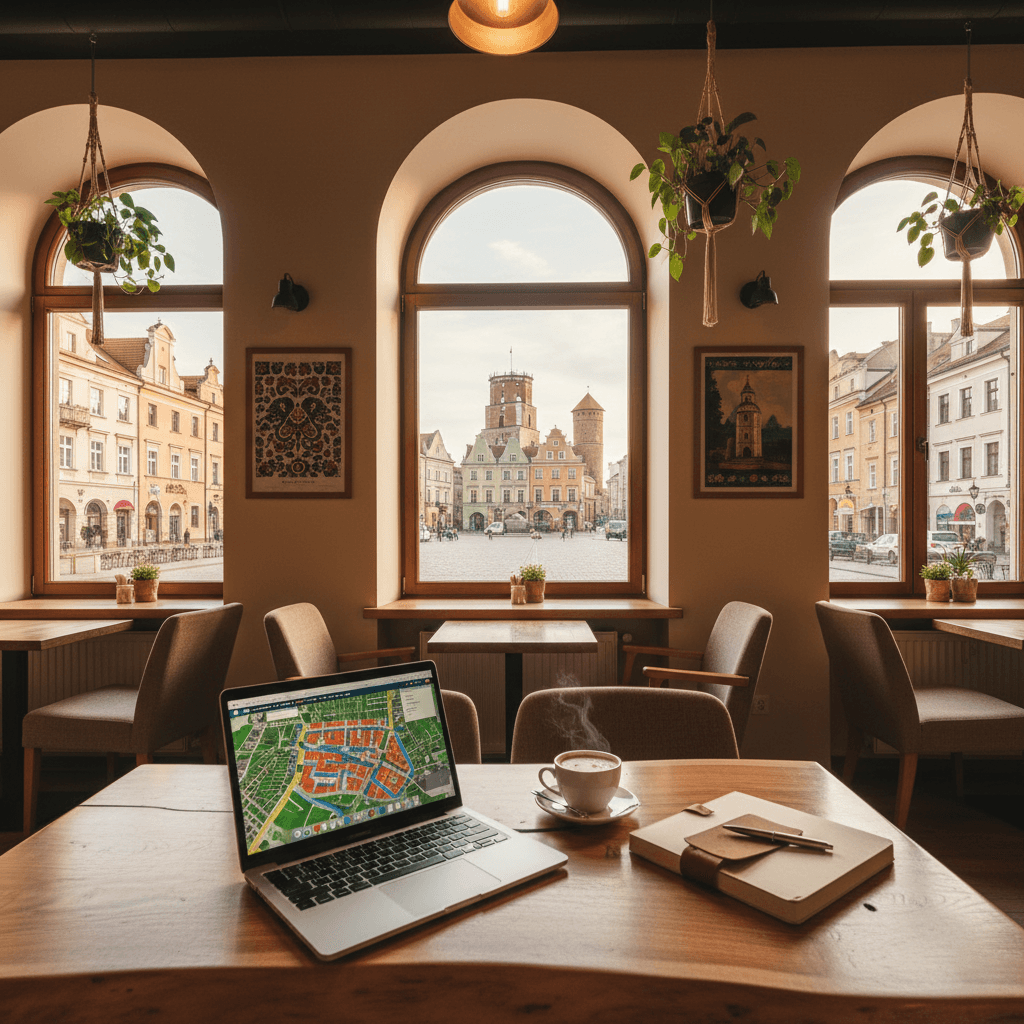
Lublin
🇵🇱 Poland