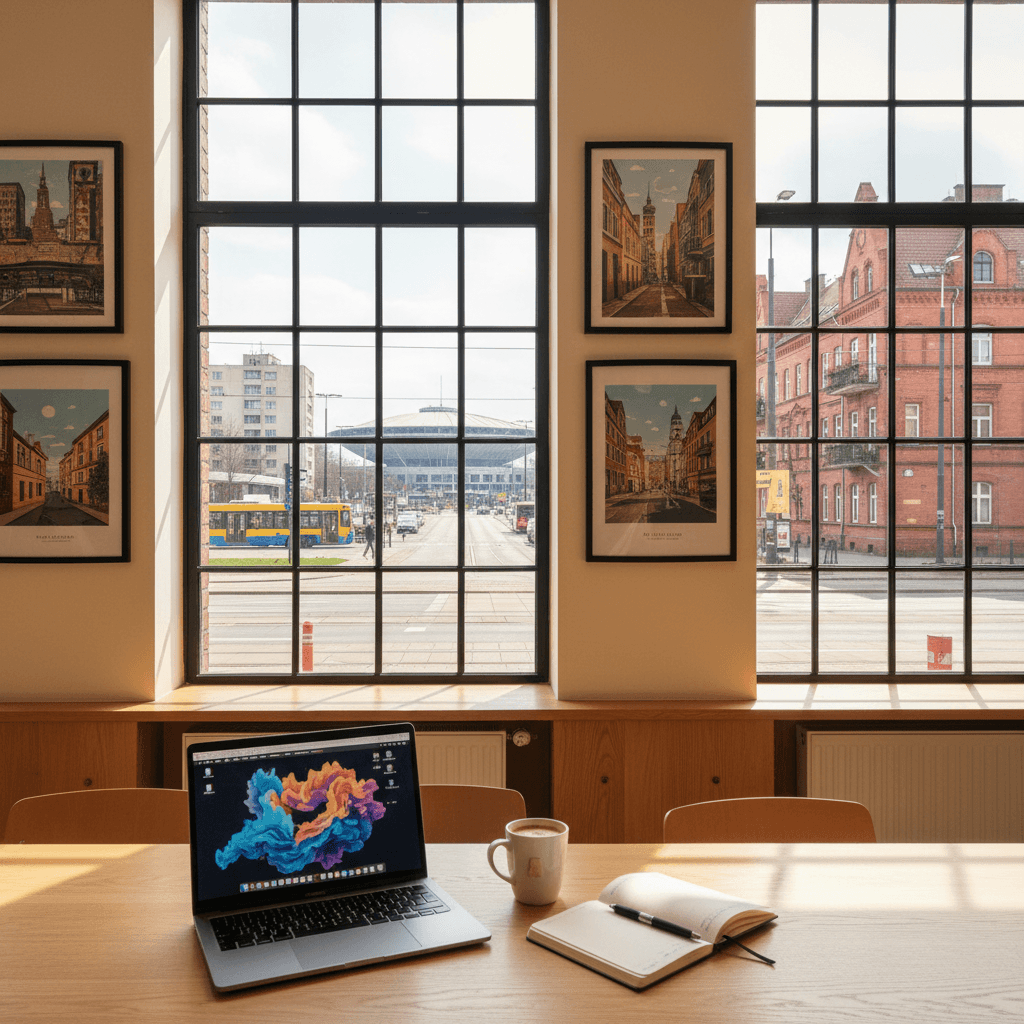
Katowice
🇵🇱 Poland
Katowice doesn’t try to charm you at first glance and honestly, that’s part of the appeal. It’s a post-industrial city that feels practical before it feels pretty, all steel, tram bells, glass offices, smoky pierogi shops and winter air that can bite your face on the platform.
For remote workers, that mix works. Internet is fast, rent is still sane by European standards and you’re not fighting the same tourist crowds you get in Kraków or Warsaw, so the city feels lived-in rather than staged. The tradeoff is visual drama, Katowice can look blunt, even a little grey, though the Silesian Museum, NOSPR and Spodek give it a sharper edge than most people expect.
This isn’t a place for postcard daydreams. It’s a place for getting things done, then grabbing a beer on Mariacka Street while the sidewalks hum with chatter and the air smells like grilled sausage, rain and exhaust.
Where people actually base themselves
- Śródmieście: Best for walkability, nightlife and daily convenience. Higher rents, more noise, but you can get coffee, groceries and a tram without thinking too hard.
- Koszutka: Good if you want culture close by, Spodek, the Silesian Museum and NOSPR are nearby and the vibe is calmer than downtown.
- Osiedle Paderewskiego-Muchowiec: Quieter, greener, more residential, with easier breathing room and less late-night noise, which, surprisingly, matters a lot in winter.
- Brynów: A solid pick for expats who want a safe, local-feeling neighborhood and don’t mind being a bit farther out.
The city is also affordable in a way that changes your habits. A monthly transport pass is around 120 PLN and coworking can be budget-friendly, with places like Regus Silesia Business Park, Spaces Matejki and Wellcome Office covering everything from daily desks to private offices.
Food is straightforward and good value, not flashy. You’ll see pierogi, żurek, kluski śląskie and kielbasa everywhere, plus plenty of cafes where people actually sit with a laptop for hours and that relaxed work culture makes the city easier to live in than its reputation suggests.
Safety is generally good, especially in central neighborhoods and the southern districts, though the weather can be rough and some outer areas are less appealing. If you want a city that feels efficient, a bit gritty and weirdly easy to settle into, Katowice makes a strong case.
Katowice is cheap enough that most nomads stop budgeting like they’re in a major Western city. A decent one-bedroom in Śródmieście or Koszutka usually lands somewhere around 1,700 to 3,500 PLN, while places outside the center can dip to 1,350 PLN, sometimes less if you’re fine with a plain block and a bit of tram noise. Not luxury. Just practical.
Food won’t wreck your month either. A fast meal runs about 35 to 40 PLN, a decent sit-down lunch is often 40 to 60 PLN and a three-course dinner for two can still come in around 150 PLN, which, honestly, feels almost old-school compared with pricier European cities. Groceries usually sit around €150 to €300 a month, depending on how much cheese, coffee and imported stuff you insist on buying.
Typical monthly costs
- Rent: 1,700 to 3,500 PLN in the center, 1,350 to 2,300 PLN outside it
- Transport pass: about 120 PLN
- Internet: 35 to 100 PLN for home broadband
- Gym: roughly 60 to 140 PLN
- Utilities: 463 to 1,700 PLN, depending on heating and apartment size
The real comfort point depends on your habits. A budget setup with a studio, tram pass and street food can work at €600 to €800, while a more relaxed life with a one-bedroom, regular café lunches and the occasional coworking desk usually pushes you toward €1,000 to €1,500. Comfortable here still isn’t outrageous, which is why people stick around.
What your money gets you
- Budget: studio outside the center, tram-first life, simple meals
- Mid-range: one-bedroom in a decent area, mixed cooking and dining out
- Comfortable: central flat, more restaurant meals, dedicated coworking
Internet is fast and that matters more than people admit. Katowice averages around 108 Mbps, so calls don’t freeze every five minutes and prepaid SIMs from Orange, Plus or T-Mobile are easy to pick up if you need backup data. The city feels work-friendly in a no-drama way, with cafés that usually let you sit for hours, the smell of espresso and baked pastry hanging in the air and enough tram access that you don’t need a car.
One small warning, the winters can make the whole city feel gray and a bit hard-edged, with cold sidewalks, wet wind and those apartment-heating bills creeping up. Still, for the money, Katowice is a strong deal, especially if you’d rather spend less on rent and more on travel, food or just breathing room.
Katowice isn’t pretty in the postcard sense and that’s fine, because the best neighborhoods here win on convenience, tram access and rent that won’t make your stomach drop. The center gets noisy, the air can smell faintly of exhaust after a wet day and winter feels grey and hard-edged, but if you pick the right area, daily life gets easy fast.
For nomads
Śródmieście is the obvious pick. You’ll be close to Galeria Katowicka, Supersam, Mariacka Street and a lot of cafes that’ll let you sit with a laptop for hours, though some corners get loud late at night and the tram noise can be relentless.
- Best for: Walkability, nightlife, coworking access
- Rent: Higher than average, but you’re paying for location
- Vibe: Fast, central, a little gritty
Koszutka works well if you want culture nearby without living right in the middle of the racket. It’s close to Spodek, NOSPR and the Silesian Museum and honestly, the tram links make it easy to bounce into town without thinking about it.
For expats
Brynów is the one locals keep recommending and for good reason, because it feels settled, safe and less chaotic than downtown. The streets are calmer, the infrastructure is solid and you’ll hear more birds and traffic hum than bar crowds, which, surprisingly, makes a big difference after a long workday.
- Best for: Longer stays, quieter routines, a local feel
- Rent: Usually better value than Śródmieście
- Downside: Less nightlife, less walking-to-everything convenience
Osiedle Paderewskiego-Muchowiec is a strong second choice if you want parks, newer housing and easier family life. It’s not the most exciting area after dark, still, the access to green space and decent services makes it one of the more livable parts of the city.
For families
Families tend to do best in Osiedle Paderewskiego-Muchowiec or Brynów, because both feel calmer and more practical than central Katowice. You’ll get easier grocery runs, less late-night noise and a bit more breathing room, which matters when you’re hauling strollers through cold wind and slushy sidewalks.
- Best for: Parks, schools, everyday convenience
- Rent: Mid-range, often more reasonable outside the center
- Watch for: Fewer restaurants and weaker nightlife
For solo travelers
If you’re here short-term, Śródmieście is still the easiest base. You’ll be able to walk to dinner, hop on a tram and get back late without much hassle, though the streets can feel a bit empty outside the main strips, especially in winter when the cold bites and everyone disappears indoors.
Skip Szopienice, Załęże, Bugucice, Dąb and Zawodzie if you want a smoother stay, because they’re generally less desirable and don’t give you much upside for the trade-off. Katowice is safe overall, but location still matters and frankly, a good tram connection beats a cheap apartment in the wrong place.
Katowice is surprisingly easy to work from, because the city has fast, cheap internet and enough quiet corners that you don’t need to fight for a desk every day. Average speeds sit around 310 Mbps, home broadband is usually 35 to 100 PLN a month and even cafes often have stable WiFi, which, surprisingly, still isn’t a given in a lot of European cities.
The coworking scene is solid, not flashy. Regus in Silesia Business Park is handy if you want a proper office setup, Spaces on Matejki suits people who like a cleaner, more corporate feel and Wellcome Office is useful if you only need a few hours here and there. Prices vary depending on the setup and location, with monthly rates often starting around 349 PLN for a dedicated desk and higher for private offices, so check what’s included before you commit.
For most nomads, the real decision is simple: pay for coworking when you need focus or work from a cafe when you want noise, people and a bit of life around you. Katowice cafes usually don’t mind laptop users and honestly, that makes a difference on dark winter afternoons when the windows fog up and the whole street smells like coffee, fried dough and exhaust.
Best areas for remote work
- Śródmieście: Best for walkability, quick lunches and easy tram access, though it gets noisy around Mariacka at night.
- Koszutka: Good if you want culture nearby, with the Silesian Museum, NOSPR and Spodek all close enough to reach without fuss.
- Brynów: Quieter and safer-feeling, with a more residential rhythm that expats often prefer for longer stays.
If you’re staying a month or more, go for Śródmieście or Brynów, then use trams to bounce around the rest of the city. The network is frequent, the monthly pass is only 120 PLN and you won’t spend half your day listening to taxi horns or trying to park near your meeting.
Prepaid SIM cards are easy to grab from Orange, Plus or T-Mobile, so you can keep a backup connection in your pocket, which matters more than people admit. Coverage is good, public WiFi is common and if your home internet drops, you’re usually back online fast, no drama, no hunting around for some miracle signal.
Katowice feels safe in the center and in the better residential districts, though you still get the usual city annoyances, late-night shouting near bars, drunks on Mariacka and the odd pocket where the mood drops fast after dark. Brynów, Koszutka, Osiedle Paderewskiego and southern Śródmieście are the areas most nomads tend to prefer, because they’re calmer, better kept and easier to live in day to day. Not perfect. Not dangerous either.
Most travelers won’t run into trouble if they keep their wits about them, use licensed taxis or ride-hailing apps and avoid dim side streets when the trams thin out. The city’s public spaces are generally well lit, but winter adds its own grit, slush, cold tile floors and that damp wind that cuts right through a cheap coat, so petty theft and careless phone use are the bigger risks than anything dramatic.
Good sense stuff
- Watch your bag: Especially on trams, in train stations and around Galeria Katowicka.
- Stick to known areas at night: Śródmieście, Koszutka, Brynów and Paderewskiego are the easy picks.
- Use a proper taxi app: It’s cleaner than haggling on the curb and honestly, less annoying.
Healthcare is solid, but private clinics are usually the smoother option if you want English-speaking staff and shorter waits. Public care exists, sure, but the paperwork can be maddening and in practice most expats just pay for private visits, which, surprisingly, are still affordable compared with Western Europe. Pharmacies are everywhere, so a sore throat or a basic prescription refill usually won’t turn into a scavenger hunt.
Emergency numbers: 112 for general emergencies, 997 for police, 999 for medical help and 998 for fire. Save them in your phone before you need them, because when something goes wrong you won’t want to be guessing while the street’s full of tram noise and car horns.
Pharmacies & clinics
- Dr Max: Handy at Libero Katowice.
- Apteka Cefarm, Arnika, Książęca: Useful backups around the city.
If you need actual treatment, private clinics in Katowice are the move. Bring your passport, keep your insurance details ready and don’t expect every receptionist to speak perfect English, though many do, especially in the city center. That’s the tradeoff, decent care without the nightmare pricing, but you’ll still wait longer if you show up with vague symptoms and no paperwork.
Katowice is easy to get around and that matters because the city isn’t built for long, scenic walks. The center is compact, trams run often and if you’re staying in Śródmieście or Koszutka, you can usually get most places without a car, which, surprisingly, is a relief in winter when the wind cuts through your coat and the sidewalks go crunchy with slush.
Trams are the main move. A single ride costs 4.55 PLN and a monthly pass is 120 PLN, so most nomads just tap into the network and stop thinking about transport after that. The system connects the key neighborhoods cleanly and honestly, that beats dealing with parking, because downtown spaces disappear fast and driving there feels more annoying than useful.
- Best for daily use: Tram lines across Śródmieście, Koszutka, Brynów and Paderewskiego
- Pass price: 120 PLN per month
- Single ride: 4.55 PLN
- Vibe: Frequent, practical, a little old-school
Walking works well in the center, especially around Mariacka Street, Galeria Katowicka and the office blocks near the station. Sidewalks can be broad and decent, then suddenly rough or half-blocked by construction, so keep an eye on your footing, because the city still has that post-industrial edge in places and it shows in the pavement.
For airport runs, Katowice International Airport in Pyrzowice sits about 40 km north of town, so don’t leave it to chance if you’ve got an early flight. Taxis are reliable, ride-hailing apps work fine and a licensed cab usually starts at 8 PLN, though the fare climbs quickly if you hit traffic or land late at night.
- Taxi start fare: 8 PLN
- Per mile: 4.43 PLN
- Airport transfer: Plan extra time, especially in bad weather
Bikes and scooters are around, but they’re more “nice to have” than a core part of city life. The roads can feel a bit patchy, the weather isn’t always kind and a cold Silesian crosswind can make a short ride feel weirdly longer than it should.
If you’re based outside the center, use transit instead of forcing everything on foot. Most expats say that’s the smart play, because Katowice rewards people who mix trams, walking and the occasional taxi and it punishes people who try to treat it like a compact tourist town.
Katowice is straightforward if you know a few words of Polish and maddeningly silent if you don't. Younger people in cafes, coworking spaces and most hotels usually switch to English fast, though older shop staff, taxi drivers and some landlords may stick to Polish, so a translation app earns its keep. The city sounds like tram bells, bus brakes and the low murmur of people on Mariacka and honestly, that mix makes day-to-day life easier than you might expect.
For simple errands, English gets you far enough. For anything messy, contracts, medical admin, utility setups, even a complaint about a bill, you'll want Polish or a local friend, because bureaucracy here can feel like a paper maze with a grumpy clerk at the center. That's the real test.
What you'll actually need
- Polish basics: hello, thank you, excuse me and numbers for prices and tram stops.
- Translation app: handy for menus, rental chats and notices plastered on apartment doors.
- English backup: fine in most coworking spaces, better in central cafes and business hotels.
Street-level communication is usually fine, but pronunciation can trip you up hard, especially with names like Śródmieście or Koszutka, which, surprisingly, locals will still help you butcher politely. Most nomads keep a few phrases ready, then switch to English when they can, because that saves time and avoids awkward smiles.
Prepaid SIM cards are easy to buy from Orange, Plus or T-Mobile Poland and data is cheap enough that remote workers rarely complain. Internet is fast, the calls don't drop much and WiFi in cafes is common, so long work sessions aren't a problem unless the coffee machine starts hissing right behind your laptop. Cafes here usually tolerate people working for a while, though you should still buy something every couple of hours.
Practical phrases and habits
- Learn: proszę, dziękuję, ile to kosztuje and gdzie jest.
- Use: cashless payment, Google Translate and offline maps for tram stops.
- Expect: a friendly effort, then a quick switch to English if someone's comfortable.
For healthcare, pharmacies and private clinics are your easiest path, because English-speaking staff are much more likely there than in public offices. Super-Pharm in Galeria Katowicka and Dr Max in Libero are practical stops and you'll hear the usual pharmacy buzz, receipt printers and that faint antiseptic smell that means business. If you need emergency help, 112 works citywide and you shouldn't hesitate, especially at night.
My take? Learn enough Polish to show respect, don't pretend you'll become fluent in a week and keep your phone charged. Katowice isn't hard to live in, but it does expect you to be a little prepared.
Katowice gets cold, properly cold. Winters are gray, damp and a little brutal, with that sharp wind that sneaks under your coat and makes tram stops feel longer than they should. Summer is the sweet spot, though and the city feels far easier then, with longer evenings, terrace drinks on Mariacka and parks that don't look half asleep.
Late spring and early autumn are the best windows, honestly, because you get milder temperatures, less slush and enough daylight to work, walk and still have a life after 5 p.m. July and August are usually the most comfortable months for most visitors, but they can still get sticky and the post-rain heat sometimes leaves the streets smelling like warm pavement and exhaust. If you hate icy sidewalks and dark afternoons, avoid January and February.
For digital nomads, the weather affects daily routine more than you'd think. Heating bills jump in winter, umbrellas become part of your bag and outdoor coffee breaks turn into indoor laptop sessions near a radiator, which, surprisingly, can be cozy if you're in a good café. The upside is that Katowice doesn't get the same tourist crush as Kraków, so even in the nicer months the city stays calm.
Best Time to Visit
- May to June: Best overall balance, mild weather, green parks and good conditions for walking, café work and day trips.
- September to early October: Still pleasant, less humid, fewer crowds and the city starts to get that crisp autumn feel.
- July to August: Warmest and liveliest, but book accommodation early if you want a central place at a fair price.
- November to March: Cheapest and quietest, though cold, gray and often a bit miserable if you spend much time outside.
If you're coming for a longer stay, choose shoulder season if you can. Prices on apartments don't swing wildly, but the city feels easier to live in when you're not scraping ice off your shoes or sweating through a tram ride home. Spring and autumn also make it simpler to enjoy the Silesian Museum area, Spodek and evening walks without feeling rushed back indoors.
Bottom line: Katowice works best in the shoulder seasons, summer is fine, winter is cheap but harsh. Cold city. Good weather matters here more than people expect.
Katowice is cheap enough that you can breathe a little, though the city still feels properly urban, with tram bells, bus brakes and the smell of fried food drifting out of Mariacka in the evening. A decent one-bedroom in the center usually runs 1,700 to 3,500 PLN and outside the core you can shave that down fast. Not bad. Not glamorous.
If you want to keep costs under control, live near a tram line and stop overpaying for a central address just to say you live downtown. A monthly transport pass is about 120 PLN, internet is usually cheap and fast and a basic grocery run tends to land far below what you'd pay in Western Europe, which, surprisingly, makes long stays a lot less stressful.
Best areas to base yourself
- Śródmieście: Best for walkability, nightlife and short commutes, but rent is higher and weekend noise can be real.
- Koszutka: Good if you want culture close by, with Spodek, NOSPR and the Silesian Museum nearby.
- Osiedle Paderewskiego-Muchowiec: Quieter, greener and easier on the nerves if you don't need bars under your window.
- Brynów: A solid expat pick, safe, practical and less chaotic than the center.
Skip the rougher corners like Szopienice, Załęże, Bugucice, Dąb and Zawodzie if you don't have a reason to be there. Katowice is generally safe, but empty side streets after dark can feel cold and a bit dead, especially in winter when the wind cuts across the pavement and your face hurts.
Remote work is easy here. Internet speeds are strong, cafes usually have WiFi and don't mind laptop people and coworking options like Regus Silesia Business Park, Spaces Matejki and Wellcome Office cover everything from day passes to private rooms, though honestly the best setup for many nomads is still a quiet apartment and a good cafe backup.
- Daily habits: Use tram day-to-day, keep a backup SIM and don't rely on one cafe all week.
- SIM cards: Orange, Plus and T-Mobile all sell prepaid data plans that are easy to set up.
- Healthcare: Private clinics are usually smoother for English speakers, public care can be slower and bureaucratic.
- Emergency: Call 112 for urgent help, 999 for medical emergencies.
For food, don't overthink it. Order pierogi, żurek, kluski śląskie and bigos, then head to Mariacka for a drink if you want company and noise instead of another quiet night alone, because Katowice can feel a little too functional if you never leave your screen.
Frequently asked questions
Is Katowice a good city for digital nomads?
How much does rent cost in Katowice?
How fast is the internet in Katowice?
Which neighborhoods are best for remote workers in Katowice?
How much does public transport cost in Katowice?
Is Katowice safe for solo travelers and expats?
Can I get English-speaking healthcare in Katowice?
Need visa and immigration info for Poland?
🇵🇱 View Poland Country GuideEasy Landing
Settle in, no stress