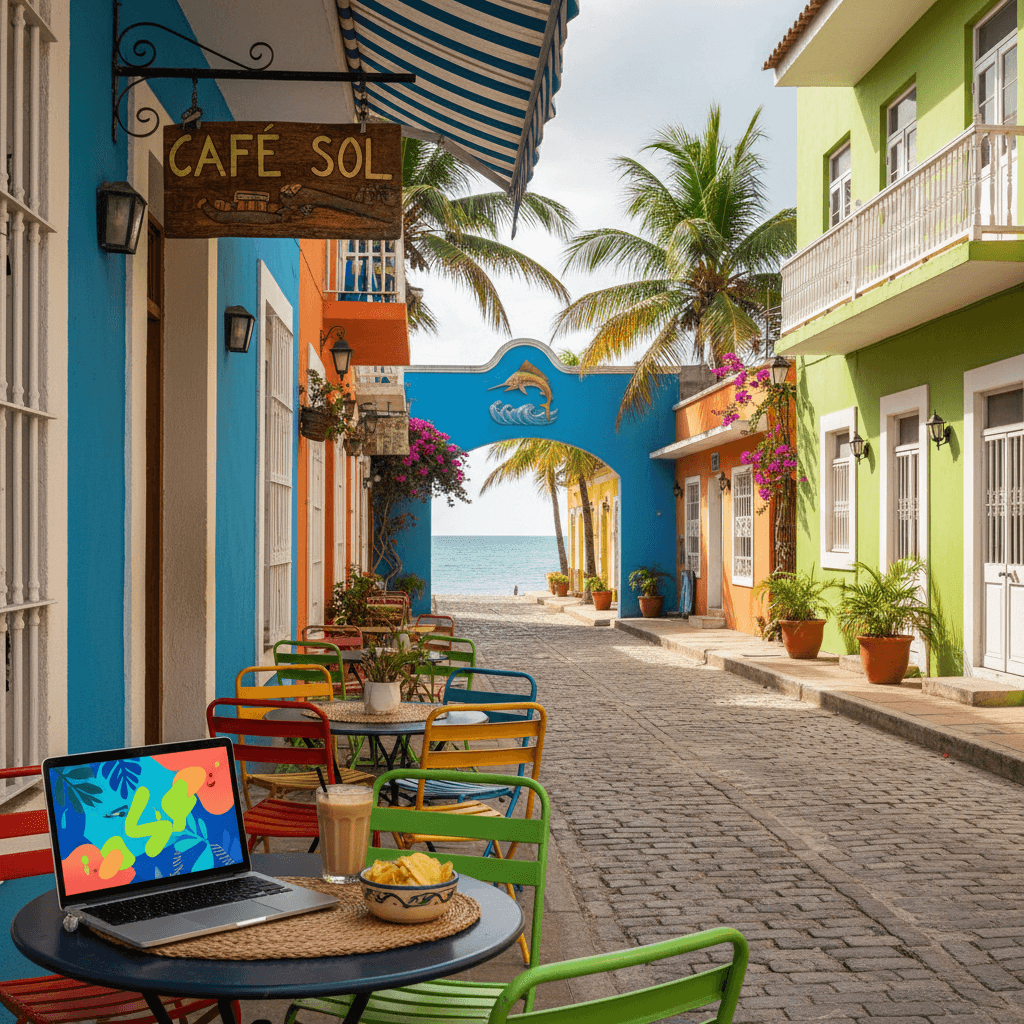
Juan Dolio
🇩🇴 Dominican Republic
Juan Dolio isn't trying to impress you. That's honestly the point. While Santo Domingo hums with traffic and ambition just 30 minutes up the highway, Juan Dolio sits quietly on the Caribbean coast, doing its own thing at its own pace and most people who end up staying longer than a week will tell you that pace gets under your skin fast.
The air smells like salt and fried plantains. Mornings are slow, warm and genuinely pleasant, the kind where you drink coffee on a balcony while fishing boats idle past and nothing feels urgent. Temps hover around 28 to 32°C year-round, the sea stays bathwater warm and the light is almost aggressively golden by late afternoon.
It's a small place. Compact, walkable along the beachfront and weirdly easy to settle into even if your Spanish is limited to "cuánto cuesta." Most of the expat and nomad crowd clusters around Guayacanes, the beachfront strip with the best rental options and the most reliable WiFi. Central Juan Dolio has more restaurants and foot traffic, it's livelier but also noisier and less charming once the novelty wears off.
The lifestyle here skews toward longer stays rather than quick visits, retirees, remote workers and people who've burned out on busier destinations and want something genuinely low-key. Budget around $2,000 to $2,500 a month for a comfortable setup including rent, food and transport. Not rock-bottom cheap, but reasonable for what you get.
The tradeoffs are real, though. Healthcare quality is inconsistent locally, you'll want private insurance and a willingness to drive to Santo Domingo for anything serious. English disappears fast outside the resort bubble, Google Translate isn't optional here. And imported goods cost noticeably more than you'd expect, turns out island logistics aren't free.
What makes Juan Dolio different from other beach destinations in the region isn't one big thing, it's the accumulation of small ones: the guaguas rattling past at 7am, the sound of reggaeton drifting from a colmado two streets over, the way locals greet you with a nod and move on without trying to sell you anything. It's not polished. It doesn't pretend to be.
That's the whole appeal, frankly.
Juan Dolio won't drain your savings the way a European beach town would, but it's not dirt cheap either. Budget realistically and you'll be fine, underestimate it and you'll feel the pinch by week three.
A studio or one-bedroom in Guayacanes, the beachfront strip most nomads and expats gravitate toward, runs $1,000 to $1,900 USD a month, which honestly feels steep until you remember you're waking up 200 meters from the Caribbean. Pull back from the coast and you can find something decent for $800 or so, though walkability drops fast out there.
Food is where Juan Dolio earns its affordability reputation. Street food runs about $10 USD a plate and a proper sit-down dinner for two at a mid-range spot like Da Oreste lands around $52. Nico's Beach will cost you more, closer to $30 per person, but the grilled fish with sea salt air drifting in makes it hard to argue with. Imported goods are the exception, they're weirdly expensive, so lean local whenever possible.
Transport is cheap. Guaguas (local minibuses) handle short hops for almost nothing, Uber and InDriver cover the 30-minute run to Santo Domingo for roughly $8 to $25 depending on the service, the airport transfer runs $50 to $85 by taxi or towncar.
Utilities are reasonable, language apps are free, a Claro or Altice prepaid SIM costs about $5 to get started with daily data plans as low as $0.90 USD. The one line item that catches people off guard is private health insurance, local public hospitals aren't where you want to be in a real emergency, so budget for it.
Monthly spend by tier:
- Budget: ~$1,500 USD (basic rental outside center, street food, local transport)
- Mid-range: $2,000 to $2,500 USD (Guayacanes rental, mix of dining out, insurance)
- Comfortable: $3,000+ USD (beachfront apartment, regular restaurants, private insurance, day trips)
Most expats land somewhere in the mid-range and feel good about it. The lifestyle-to-cost ratio is, frankly, hard to beat on a Caribbean beach, just go in with eyes open about what's actually included in that number.
Juan Dolio is compact, honestly more of a strip than a town, so "neighborhood" is a generous word. Still, where you land matters, because the difference between a beachfront rental in Guayacanes and a cheaper room on the outskirts is the difference between loving this place and resenting it.
Nomads and Remote Workers
Guayacanes is the move. It's the beachfront stretch that runs along the western edge of Juan Dolio and most Airbnbs here advertise fiber connections hitting 100+ Mbps, which, surprisingly, they mostly deliver. Rent runs $1,000 to $1,900 a month for a one-bedroom with ocean views, not cheap for the DR, but you're paying for walkability and the salt-air breeze through your window at 7am.
There's no dedicated coworking space in Juan Dolio, which is a genuine gap. Nomads work from rentals or cafe tables and if that starts to feel claustrophobic, Santo Domingo is 30 minutes away with proper coworking options around $10 to $20 a day.
Expats and Long-Term Stays
Expats, turns out, cluster in Guayacanes too, because the walkability is real and the expat community, while small, is easier to find near the beach bars and restaurants. Monthly costs land around $2,000 to $2,500 mid-range once you factor in private health insurance, groceries and the occasional ride to Santo Domingo for anything resembling specialty care.
The outskirts are cheaper, $800-ish a month, but the tradeoff is poor street lighting, limited walkability and a general sense of isolation that most long-termers find wears on them faster than they expected, the savings stop feeling worth it around month two.
Families
Central Juan Dolio suits families better than it suits nomads. It's louder, traffic cuts through constantly and you can smell the exhaust mixing with frying garlic from the street-food carts, but it's lively in a way that feels safe and human. Hotels, restaurants like Da Oreste and El Meson and basic services are all walkable.
Solo Travelers
Solo travelers can frankly land anywhere in the center or Guayacanes and be fine. Stick to lit streets after dark, don't flash expensive gear and you'll have no issues. The beach areas are genuinely low-key, the kind of place where strangers share a table without it being a whole thing.
There's no dedicated coworking space in Juan Dolio. That's the honest reality and it surprises a lot of nomads who assume a beach town with expat appeal would have at least one. It doesn't, so you'll need to work around it.
Most nomads end up working from their rental or a cafe, the rentals in Guayacanes are, honestly, the better bet because many Airbnbs advertise fiber connections hitting 100+ Mbps, which holds up well for video calls and large uploads. Cafe WiFi is patchier, some spots are fine, others will have you staring at a spinning buffer wheel while the ceiling fan clicks overhead.
If you need a proper setup with reliable power and fast internet for something important, commute to Santo Domingo. It's only about 30 minutes by car and coworking spaces there run roughly $10 to $20 per day. Annoying? A little. But most nomads who've been here a while treat Juan Dolio as a home base and Santo Domingo as their office when deadlines hit.
For mobile data, grab a Claro or Altice prepaid SIM as soon as you land. You can pick one up at the airport or at most supermarkets for around $5 to get started. The data plans are, turns out, surprisingly cheap: 3GB for 3 days runs about $1.70 USD and an unlimited daily plan is around $0.90 USD. Coverage is solid along the beachfront and in central Juan Dolio, though it thins out if you wander toward the outskirts.
A few things worth keeping in mind:
- Rentals: Guayacanes Airbnbs often explicitly list fiber speeds, filter for those
- SIM cards: Claro has slightly broader rural coverage; Altice tends to win on speed in town
- Backup plan: Download offline maps and keep a local SIM hotspot ready, power cuts happen, they're short but they happen
- Santo Domingo coworking: Worth scoping on arrival if you have consistent deadlines
Juan Dolio is, frankly, a place you come to decompress, not to grind in a glass-walled office. The internet infrastructure supports remote work well enough, it's just not built around it and adjusting your expectations to match that makes the whole experience a lot smoother.
Juan Dolio is, honestly, one of the safer spots in the Dominican Republic for tourists and expats. Petty theft happens, so don't flash expensive gear on the beach or leave bags unattended at beachside restaurants. Stick to the Guayacanes and Central Juan Dolio areas after dark, the outskirts get poorly lit fast and there's not much reason to be out there at night anyway.
For emergencies, dial 911 for police, ambulance or fire. You can also contact CESTUR, the tourist police, who are, turns out, more accustomed to dealing with foreign visitors and language gaps than regular officers. Keep both numbers saved before you need them, not after.
Healthcare is where things get more complicated. Local clinics exist but expats recommend skipping them for anything serious. The good private hospitals are in Santo Domingo, about 30 minutes away and they're genuinely solid by regional standards. Affordable too, but you'll still want private health insurance before you arrive because an uninsured emergency visit adds up fast and nobody's going to wait while you figure out payment.
Pharmacies are widespread and well-stocked for everyday needs. Antibiotics and common medications are available over the counter at prices that'll frankly surprise you compared to what you'd pay back home, though for anything complex you're better off consulting a doctor rather than self-diagnosing at the counter.
A few practical things worth keeping in mind:
- Emergency number: 911 (police, ambulance, fire)
- Tourist police (CESTUR): Separate line, English-speaking staff available
- Nearest quality hospitals: Santo Domingo, roughly 30 minutes by car
- Pharmacies: Common throughout town, many open late
- Insurance: Private coverage strongly recommended before arrival
The general vibe in Juan Dolio is relaxed and low-friction for visitors, petty crime is the main concern not violent crime. That said, common sense applies. Don't leave valuables visible in parked cars, avoid isolated stretches of beach alone at night and keep a photocopy of your passport somewhere separate from the original.
Most long-term expats say they feel comfortable here. That comfort, weirdly, comes partly from how small the place is. Everyone notices unfamiliar faces.
Juan Dolio is small enough that you won't need much. The beachfront strip in Guayacanes is walkable and most restaurants, colmados and beach access points sit within a 10-15 minute stroll of each other. That said, once you want to leave town, your options matter.
Guaguas (local minibuses) are the cheapest way to hop between Juan Dolio and nearby towns, they're cramped and loud and smell like diesel, but they cost almost nothing. For anything more comfortable, taxis are everywhere and easy to flag down, though agree on a price before you get in, because meters aren't really a thing here.
Uber and InDriver both work in the area and honestly, InDriver is often cheaper for longer runs. A ride to Las Américas International Airport (SDQ) runs roughly $8-25 USD depending on the app and time of day. If you're booking a private transfer or town car, expect $50-85 USD for the same 25-30 minute trip. Not a huge difference for the comfort, expats generally say it's worth it after a long flight.
Getting into Santo Domingo takes about 30 minutes by car and most nomads make that run at least once a week, whether for coworking spaces, errands or just the change of pace. Day-tripping to La Romana is also doable, about an hour east.
Scooter and bike rentals aren't, turns out, really a thing in Juan Dolio the way they are in other beach towns. Don't count on finding them easily. If you want that kind of freedom, your best bet is renting a car, which opens up the whole southeast coast and makes grocery runs to bigger supermarkets far less painful.
- Guagua (local bus): Cents per ride, best for short local hops
- Taxi (negotiated): Cheap locally, always confirm the price first
- Uber/InDriver to SDQ airport: $8-25 USD
- Private transfer to SDQ: $50-85 USD
- Car rental: Recommended if you're staying more than a week
One thing people underestimate: after dark, the outskirts get genuinely dark, poorly lit streets, not much foot traffic. Stick to taxis or apps at night rather than walking anywhere unfamiliar.
Spanish is the language here. Full stop. Outside the resort bubble, English gets you blank stares and that's not a criticism of locals, it's just the reality you need to prepare for before you arrive.
Dominican Spanish is, honestly, its own thing. It's fast, clipped and swallows consonants whole. Even travelers with solid textbook Spanish find themselves nodding along and understanding maybe 60% of what's said. The accent takes adjustment and locals in Juan Dolio aren't going to slow down for you, they're just having a conversation.
That said, a little effort goes a long way. Locals genuinely appreciate when you try, even badly. A "buenas" when you walk into a colmado, a "cuánto cuesta?" at the food stall, a "gracias, tranquilo" when someone's being pushy near the beach, these small things shift how people treat you. You're not a tourist anymore, you're just a person trying to get through the day.
Google Translate is, turns out, non-negotiable. Download the Spanish language pack for offline use before you land, because your data connection won't always cooperate when you need it most. The camera translation feature works well for menus and handwritten signs, which are everywhere and rarely bilingual.
A few phrases worth actually memorizing:
- "Hola / Buenas" , hello / good day (used constantly, more natural than hola in many contexts)
- "¿Cuánto cuesta?" , how much does it cost?
- "No entiendo" , I don't understand
- "¿Habla inglés?" , do you speak English?
- "Más despacio, por favor" , slower, please
- "La cuenta, por favor" , the bill, please
Staff at hotels and larger restaurants usually have workable English, Nico's Beach and Da Oreste both manage fine. But the guagua driver, the pharmacy clerk, the landlord calling about the water pump? Spanish only, no exceptions.
Expats who've been here a while almost universally say the same thing: take a few lessons before you come, it doesn't have to be fluent, it just has to be functional. Even a month of Duolingo, weirdly, makes a real difference in day-to-day life here.
Juan Dolio sits close enough to the equator that "seasons" is, honestly, a loose concept. Temperatures hold steady between 28 and 32°C year-round, the sea stays around 27 to 29°C and the humidity clings to you from the moment you step outside. You'll feel it in your clothes, your hair, your laptop bag.
The real distinction here isn't hot versus cold, it's wet versus less wet. The rainy season runs May through November, peaking hard in September and October when you can expect 150 to 160mm of rain in a single month. These aren't polite afternoon showers either, they're the kind of downpours that come in fast off the Caribbean, drum loud on tin roofs and flood the lower streets before draining just as quickly.
December through April is when Juan Dolio is genuinely at its best. Rainfall drops to 30 to 60mm per month, the skies stay clear most days and the trade winds take enough edge off the heat that sitting on a beach in January actually feels good rather than punishing. Most nomads time their stays around this window and expats who've been here a few years will tell you it's not even close.
September and October, skip them if you can. Storms stall, plans get cancelled and some days you won't leave the apartment. It's not dangerous most of the time, it's just genuinely miserable if you came for the beach.
- Best months: December, January, February, March
- Shoulder season: April, May, November (warm, occasional rain, fewer crowds)
- Avoid if possible: September and October
- Average temps: 28 to 32°C year-round
- Sea temperature: 27 to 29°C year-round
One thing that catches people off guard is how quickly the weather turns, even in the dry season. A clear morning can go grey by 2pm, drop a short burst of rain and clear again before sunset. It's not a problem, it's just the rhythm of the place, you learn to stop planning around it.
Pack light layers for air-conditioned restaurants and a rain shell you won't hate wearing. That's really all you need.
Juan Dolio runs on a slower clock than you're probably used to and the sooner you accept that, the better your stay gets. "Tranquilo" isn't just a word here, it's the operating system, arguing with it will only exhaust you.
Money & Banking
ATMs are around, but expats strongly recommend setting up Wise before you arrive to avoid brutal conversion fees at local machines. Bring some USD cash as backup, especially for your first few days when you're still figuring out which ATMs work reliably.
SIM Cards & Internet
Pick up a Claro or Altice prepaid SIM at the airport or any colmado in town, it takes about five minutes and costs roughly $5 USD to get started. Unlimited daily data runs as low as $0.90 USD, which is, honestly, one of the better mobile deals in the Caribbean. Rentals in Guayacanes often advertise 100+ Mbps fiber, though cafe WiFi is hit or miss, so don't count on it for video calls.
Getting Around
You don't need a car in the beachfront areas. Guayacanes is walkable, taxis are cheap and Uber or InDriver will get you to Las Américas airport in about 30 minutes for $8 to $25 USD depending on what you book. For Santo Domingo day trips, local guaguas are the budget move, though the rides are loud, packed and weirdly exhilarating if you're not in a hurry.
Safety
The beach areas are generally fine. Petty theft happens though, so leave the expensive camera and the stack of cash in your rental, not dangling off your shoulder at a beach bar. Avoid the unlit outskirts after dark, that's not paranoia, that's just what locals will tell you too. Emergency line is 911; CESTUR handles tourist-specific issues.
Healthcare
Get private health insurance before you come. The local pharmacies are stocked and convenient for minor stuff, but for anything serious, you're looking at a 30-minute drive to a private hospital in Santo Domingo. Public facilities here are, frankly, not where you want to be in a real emergency.
Weather Timing
December through April is the window most travelers aim for: dry, sunny, sea temps around 27°C. September and October bring heavy rain and the kind of humidity that turns out to be genuinely oppressive, not just "a bit muggy." Plan around it if you can.
Need visa and immigration info for Dominican Republic?
🇩🇴 View Dominican Republic Country GuideHidden Gem
Worth the effort