Jeonju
🇰🇷 South Korea
The Slow Living Capital
If Seoul is the high-voltage heart of South Korea, Jeonju is its soul, moving at a pace that actually lets you breathe. Most nomads arrive here looking for a break from the "pali-pali" (hurry-hurry) culture of the capital, finding instead a city that has mastered the art of the slow burn. It is one of the few places on earth where you can take a Zoom call from a 100 year old timber-framed house and then walk five minutes to a high-tech startup hub.
The vibe here is deeply academic and artistic. Because it is the birthplace of the Joseon Dynasty and a UNESCO City of Gastronomy, there is a quiet pride among locals. You will notice it in the way the street food is plated or how the elderly residents maintain the Hanok Village. It is a place that feels lived-in and authentic, rather than a museum piece, though the weekend tourist crowds in the center can get thick.
For remote workers, the draw is the balance of "first world" infrastructure and small-town costs. You get the world's fastest internet and safe, clean streets, but your monthly burn rate will be significantly lower than in Tokyo or Taipei. Expats often describe Jeonju as the "Goldilocks" city, it is large enough to have every modern convenience, like Jeonbuk National University Hospital for healthcare, but small enough that the barista at your local cafe will remember your name by Tuesday.
Where to Plant Your Flag
Jeonju is divided into distinct pockets that cater to different work styles. Choosing the right neighborhood is the difference between a touristy experience and a local one.
- Hanok Village (Wansan-gu): This is the cultural epicenter. It's stunningly beautiful with tiled roofs and stone walls, but rent is higher here, often ₩1M ($725) or more for a decent spot. It's great if you want to be steps away from the best bibimbap at Hangukjib, but be prepared for the "Disney" effect on Saturday afternoons.
- Deokjin-gu: Located near the north-west, this area is a favorite for long-termers. It is home to Deokjin Park and its massive lotus pond. It's quieter, greener, and much more affordable. You can find studios here for ₩600,000 ($435), and the bus system connects you to the center in 20 minutes.
- University Area: Near Jeonju University, the energy shifts to "budget nomad." The streets are filled with cheap ₩7,000 ($5) student meals and lively evening pubs. It's the best place to find a ₩500,000 ($360) monthly rental if you are watching your margins.
The Digital Infrastructure
You won't have to hunt for a signal here. South Korea's internet is legendary, and Jeonju is no exception, with speeds consistently hitting 100+ Mbps. If you need a professional environment, the Jeonju Global Startup Center is the go-to. They are aggressive about attracting international talent and often host networking events that help bridge the gap for English speakers.
The cafe culture is the real winner, though. In neighborhoods like Wansan-gu, you'll find "work-friendly" cafes with dedicated quiet zones and floor-to-ceiling windows. Most nomads use Kakao T to hail cheap taxis and Papago to translate menus, as English proficiency is lower here than in Seoul. Expect about 20-30% of people in tourist areas to speak English, while elsewhere, you'll be relying on your translation app and a friendly smile.
The Reality Check
Jeonju isn't a tropical party hub. The winters are biting, with temperatures dropping to -5°C (23°F) in January, which can feel isolating if you aren't used to the cold. The social scene is also more intimate; you won't find massive nomad meetups every night. Instead, social life revolves around the Nambu Market night stalls or small expat groups on Facebook.
If you can handle the language barrier and the slower social roll, the rewards are immense. You're trading the neon chaos of a mega-city for a life where you can hike a mountain in the morning, work from a ₩10,000 ($7) a day coworking cafe in the afternoon, and eat the best food in the country for the price of a Starbucks latte back home.
Living More, Spending Less
If you're looking to escape the wallet-draining prices of Seoul without sacrificing South Korea's world-class infrastructure, Jeonju is your spot. Most digital nomads find they can live a high-quality life here for about 20% to 30% less than in the capital. It's the kind of place where you can actually afford a beautiful studio and daily meals out without constantly checking your banking app.
For a comfortable, mid-range lifestyle, expect to budget between ₩2.5M and ₩4M ($1,800 to $2,900 USD) per month. This covers a modern apartment, plenty of dining out, and weekend trips. If you're on a tighter budget, you can get by on ₩1.5M to ₩2.5M ($1,100 to $1,800 USD), especially if you opt for housing near the university or on the outskirts of the city.
Where to Set Up Base
Jeonju's neighborhoods offer very different vibes depending on your work style and budget. Here's how the main areas break down:
Hanok Village (Central)
- Best for: Cultural immersion and short-term stays.
- Monthly Rent: ₩800K to ₩1.2M ($580 to $870 USD).
- The Vibe: It's beautiful and walkable with fast WiFi in every cafe, but it gets crowded with tourists on weekends. You're paying a premium for the aesthetics here.
Deokjin-gu (West)
- Best for: Long-term expats and peace seekers.
- Monthly Rent: ₩600K to ₩1M ($430 to $720 USD).
- The Vibe: Near the lake and parks, this area is quiet and residential. It's much more affordable than the center and offers a slower pace of life.
Wansan-gu (East)
- Best for: Solo nomads who want to be near the action.
- Monthly Rent: ₩600K to ₩900K ($430 to $650 USD).
- The Vibe: This is the urban heart of the city. It's noisier, but you're close to the major markets, transport hubs, and the growing startup scene.
The Daily Grind: Food and Fun
Jeonju is the food capital of Korea, and luckily, eating well doesn't have to be expensive. You can grab a legendary Jeonju bibimbap at a local spot like Hangukjib or a stall in Nambu Market for ₩7K to ₩10K ($5 to $7 USD). A mid-range dinner for two usually lands between ₩15K and ₩25K ($11 to $18 USD).
Getting around is equally cheap. The bus system is efficient and costs about ₩1.2K ($0.90 USD) per ride; just make sure you have a T-money card. Taxis are also a steal compared to Western prices, starting at around ₩3K ($2.20 USD) for short hops across town. Most nomads use the Kakao T app to hail rides, as it's much easier than waving one down in English.
Staying Connected
Internet speeds here are incredible, often averaging 100+ Mbps. You won't struggle to find a place to work. While dedicated coworking spaces like the Jeonju Global Startup Center offer great networking, many locals just work from cafes. A day pass at a work-friendly cafe usually costs the price of a coffee, around ₩10K ($7 USD), while a monthly desk in a shared office runs about ₩300K ($220 USD).
For your phone, nomads recommend getting a prepaid SIM from KT or SK Telecom for about ₩30K ($22 USD) per month for 10GB of data. If you prefer to hit the ground running, an eSIM from a provider like rapidesim.com works perfectly across the city.
Practical Perks
Healthcare is top-tier and surprisingly affordable. A visit to a clinic for something minor usually costs under ₩20K ($15 USD), and pharmacies are on almost every corner. For anything serious, Jeonbuk National University Hospital has an English desk to help you navigate the system. It's an incredibly safe city where you can walk home at 2:00 AM without a second thought, making it an easy transition for solo travelers and families alike.
For Digital Nomads: Hanok Village (Pungnam-dong)
If you want the quintessential Jeonju experience, this is where you'll land. It's a dense cluster of over 800 traditional houses that makes for an incredible office backdrop. Most nomads find the aesthetic inspiring, though you'll pay a premium for the atmosphere. Expect to spend between ₩800,000 and ₩1.2 million for a studio or a month-long stay in a guesthouse here.
The WiFi is shockingly fast even in 100 year old buildings. You'll spend your afternoons hopping between spots like the Jeonju Global Startup Center, which hosts events for remote workers, or ultra-modern cafes that rival anything in Seoul. Travelers often say the mix of ancient rooflines and 100 Mbps fiber internet is the city's biggest draw. Just be prepared for the weekend tourist crowds near the bibimbap shops.
- Vibe: Cultural immersion meets high-speed tech.
- Workspaces: Countless aesthetic cafes and the Global Startup Center.
- Cost: High for Jeonju, but still cheaper than Seoul.
For Long-Term Expats: Deokjin-gu
Expats who plan to stay for a year or more usually gravitate west toward Deokjin-gu. It's home to Jeonbuk National University, which keeps the energy young and the prices low. You can find comfortable studios here starting around ₩600,000. It's a more functional part of town with better access to supermarkets and the main hospital.
Life here centers around Deokjin Park and its massive lotus pond. It's the best spot for a morning run before logging on. While there's less English spoken here than in the tourist center, the local community is welcoming. Expats recommend using the Zigbang app to scout apartments in this area, as the turnover is high and deals move fast.
- Rent: ₩600,000 to ₩1 million for a modern 1BR.
- Best for: People who want a "real" Korean life away from the souvenir shops.
- Transport: Excellent bus connections to the rest of the city.
For Solo Travelers on a Budget: Wansan-gu (Urban Center)
If you're flying solo and want to keep costs under ₩2 million per month total, look at the urban pockets of Wansan-gu near the traditional markets. This area is gritty in a charming way, dominated by the Nambu Market where you can grab a filling meal for ₩7,000. It's a transport hub, making it easy to catch a bus to the mountains or the KTX station.
The nightlife here is low-key. Instead of massive clubs, you'll find pojangmacha (tented street bars) where locals gather for makgeolli and snacks. It's noisier than the park districts, but you're in the heart of the action. Solo travelers often find it easier to meet people in the smaller bars and markets here than in the more family-oriented suburbs.
- Food: Street stalls and cheap local diners.
- Rent: Budget-friendly options around ₩500,000.
- Pros: Very walkable and close to the best cheap eats in the city.
For Families: The Northern Outskirts
Families moving to Jeonju often look for the quiet and safety of the newer developments on the outskirts. These neighborhoods offer larger apartments and proximity to international-style amenities. While it’s a longer commute to the Hanok Village, the air is cleaner and the streets are wider. You'll find more green space and playgrounds for kids here.
The cost of living remains very manageable for a family of four, with mid-range monthly expenses usually hovering around ₩4 million. You'll definitely want to download Kakao T for taxi rides, as the outskirts are less walkable than the city center. Most families appreciate the proximity to Jeonju University, which brings a bit of campus energy and affordable dining to the area.
- Safety: Extremely high, with very low crime rates.
- Healthcare: Close to Jeonbuk National University Hospital.
- Vibe: Quiet, residential, and very safe at night.
Digital Speed in a Slow City
Jeonju is the kind of place where you can be sitting in a 600 year old wooden house while pulling 100+ Mbps on your laptop. South Korea's infrastructure is legendary, and Jeonju is no exception. You'll find 5G coverage in almost every corner of the city, and fiber optic broadband is the standard for home setups. If you're moving into a studio in Deokjin-gu or Wansan-gu, expect to pay around ₩20,000 to ₩30,000 per month for a blazing fast home connection.
For mobile data, most nomads grab a prepaid SIM from KT or SK Telecom. A 10GB plan for 30 days usually runs about ₩30,000. If you want to skip the kiosk at the airport, eSIMs from providers like RapidESIM are the go-to for immediate connectivity. Once you're settled, apps like Kakao T for taxis and Naver Maps for navigation will become your best friends, though you'll want to download Papago for real-time translations since English proficiency drops off quickly once you leave the Hanok Village.
Coworking and Community Hubs
The coworking scene here is more intimate than the massive tech hubs in Seoul. It's less about corporate networking and more about finding a quiet, productive corner. The local government is actively courting remote workers through the Jeonju Global Startup Center. They often host events or offer discounted space for nomads looking to plug into the local ecosystem.
- Jeonju Global Startup Center: This is the primary anchor for the remote work community. It’s a great spot to meet local entrepreneurs and find out about startup visas or local grants.
- Space Co-work: A reliable professional option with hot desks and private offices. Contact for current pricing.
- Hanok Village Workspaces: Several traditional guesthouses and cultural centers offer quiet daytime work areas. It’s not a traditional office, but the aesthetic is unbeatable for a focused afternoon session.
The Cafe Culture Alternative
In Jeonju, "cafe hopping" is a legitimate work strategy. The city is packed with spacious, multi-story cafes that are perfectly comfortable with you staying for three or four hours. Unlike busy spots in Europe or the US, many Korean cafes actually cater to students and workers by providing outlets at almost every table and exceptionally stable WiFi.
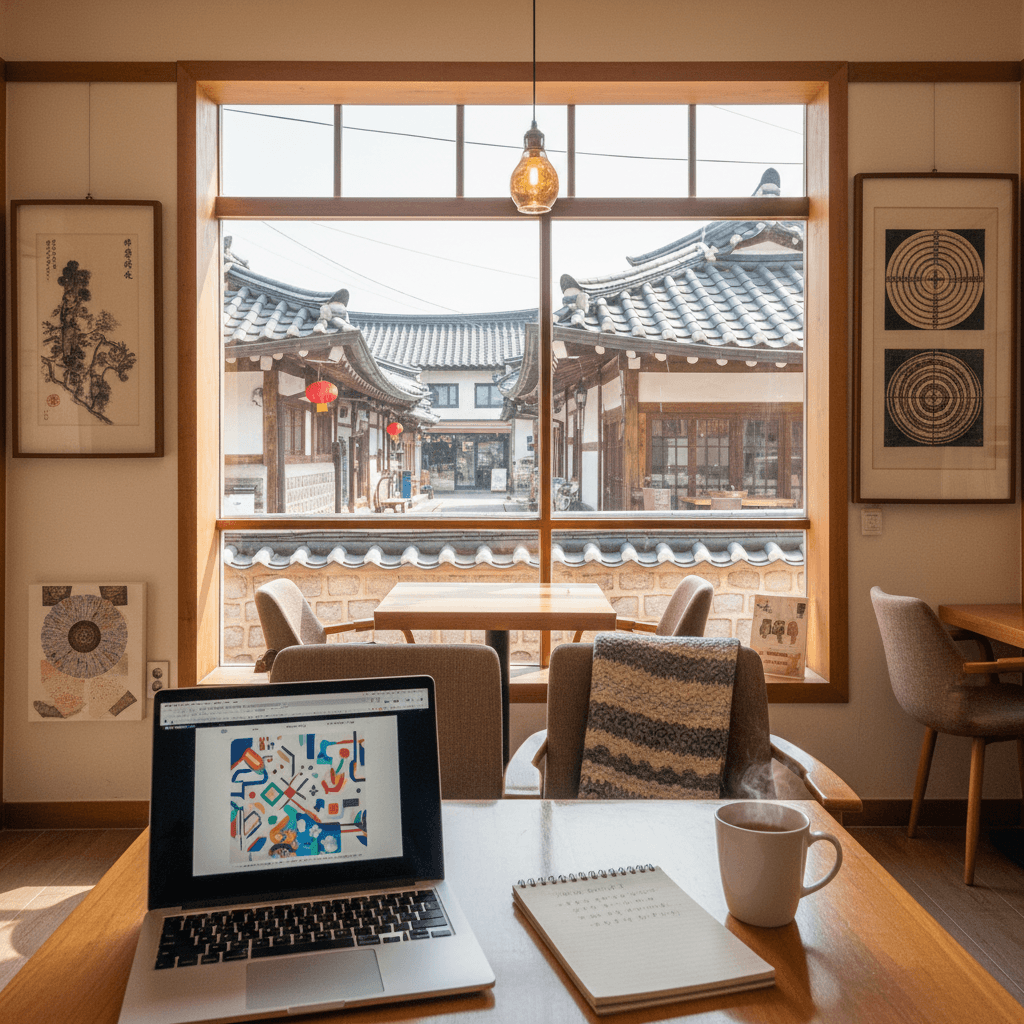
In the Hanok Village, you can work from cafes with floor-to-ceiling windows overlooking tiled rooftops. Expect to pay about ₩5,000 to ₩8,000 for a solid coffee. If you prefer a more modern, student-driven vibe, head over to the area near Jeonju University or Jeonbuk National University. The cafes there are often open late, sometimes 24/7, and are much cheaper than the tourist-heavy center.
Practical Connectivity Tips
While the internet is fast, the digital landscape in Korea is unique. Many local websites and services are optimized for desktop and might require a Korean phone number for verification. Expats recommend getting a "Post-paid" SIM card as soon as you have your residence card, as this unlocks the ability to use Kakao Pay and T-money mobile top-ups easily.
- Public WiFi: Available on almost all city buses and in public parks. It’s surprisingly reliable for checking emails on the go.
- Power Plugs: Korea uses Type C and F (European style). Most modern cafes have USB ports built into the benches, but a local power strip is a good investment for your apartment.
- Security: Public networks are generally safe, but most nomads still use a VPN to access home streaming services or sensitive work portals.
Safety in Jeonju
Jeonju is incredibly safe, even by South Korean standards. It lacks the frantic energy of Seoul, which translates to a lower-stress environment where petty crime is nearly nonexistent. You'll often see locals leave their laptops or phones on cafe tables while they step away for a few minutes; while you should always use common sense, the general level of trust here is high.
Solo travelers and nomads frequently report feeling comfortable walking alone at night, even in the quieter residential pockets of Deokjin-gu. There aren't really any "no-go" zones or dangerous neighborhoods to worry about. The biggest safety concern you'll likely face is the occasional uneven sidewalk in the Hanok Village or navigating the local bus traffic, which can be a bit aggressive during peak hours.
In case of an emergency, the numbers are straightforward. Dial 112 for the police and 119 for an ambulance or fire services. Most dispatchers in larger cities have access to translation services if your Korean is limited to a few phrases.
Healthcare and Medical Facilities
The healthcare system in Jeonju is world-class and surprisingly affordable if you're coming from North America or Europe. For anything serious, Jeonbuk National University Hospital is the primary hub. They have an International Healthcare Office with staff who speak English, making it the go-to choice for nomads who need to navigate more complex medical issues.
- General Consultation: A visit to a local clinic usually costs between ₩15,000 and ₩30,000 ($11 to $22) without local insurance.
- Pharmacies: Look for the red "Yak" (약) signs. They are everywhere. You can get basic cold meds, painkillers, or digestive aids for about ₩5,000.
- English Support: While doctors often understand medical English, the administrative staff at smaller neighborhood clinics might not. Use the Papago app to translate your symptoms before you go.
Expats living here long-term usually transition onto the National Health Insurance (NHI) once they have their residency card. If you're here on the new Digital Nomad Visa, you'll need to maintain private health insurance with coverage of at least ₩100 million (around $75,000) for emergencies and repatriation, as per the visa requirements.
Practical Wellness Tips
The air quality is generally good, but like most of Korea, Jeonju can experience "yellow dust" or high fine dust levels during the spring months of March and April. Most nomads check the AirVisual app and keep a few KF94 masks handy for high-pollution days.
Tap water is technically safe to drink, but you'll notice most locals use filtered water dispensers (called "정수기") found in almost every home and office. Most nomads just buy a large 2-liter bottle for about ₩1,000 at a GS25 or CU convenience store or use the free dispensers at their coworking space or guesthouse.
If you need a mental health break, the locals recommend heading to Deokjin Park. Walking around the lotus pond is a common "prescription" for burnout, and it's a testament to the city's slower, more intentional pace of life compared to the capital.
The Logistics of Life in Jeonju
Moving around Jeonju is a breath of fresh air if you're coming from the frantic pace of Seoul. It's a city designed for a slower rhythm, where the historical center is incredibly walkable and the public transit system is reliable without being overwhelming. You won't find a sprawling subway network here, but honestly, you don't need one. The city is compact enough that a mix of buses, bikes, and the occasional taxi will get you anywhere you need to be for a fraction of what you'd pay in a global hub.
Mastering the Bus System
Buses are the backbone of local transit. They're efficient, clean, and surprisingly punctual. A single ride costs about ₩1,650 (T-money card), and you'll want to pick up a T-money card at any convenience store like GS25 or CU as soon as you arrive. You can tap on and off just like in the bigger cities, and it works for transfers too.
Most nomads find that the bus routes are comprehensive, connecting the Wansan-gu urban core to the quieter Deokjin-gu area near the lake. If you’re living near Jeonju University, the bus is your best bet for getting to the Hanok Village for a weekend coffee. Travelers often say that Jeonju buses actually beat Seoul traffic because the roads are less congested, making your commute much more predictable.
Ride-Hailing and Taxis
When you're running late or carrying groceries, taxis are everywhere. The base fare usually starts around ₩3,300, and short trips across town rarely exceed ₩10,000. Don't bother trying to hail a cab on the street in quieter neighborhoods; instead, download Kakao T. It’s the local version of Uber and it's indispensable. You can link your card or pay the driver directly in cash or via your T-money card.
Two Wheels and Footpower
The Hanok Village is almost entirely pedestrian-friendly, and it's where you'll spend most of your time if you're looking for that "authentic" vibe. Beyond the tourist center, the city has a growing bike-share culture. You can rent city bikes for about ₩1,000 per hour using a local app. It’s a great way to explore the riverside paths or get between Nambu Market and the nearby cafes without waiting for a bus.
- T-money Card: Your universal pass for buses and taxis. Top it up at any "Mart."
- Kakao T: The must-have app for calling taxis. It works in English, though typing destinations in Korean (Hangeul) is sometimes more accurate.
- Naver Maps: Forget Google Maps here; it's notoriously inaccurate in Korea. Naver or Kakao Maps will give you real-time bus arrivals and walking directions that actually work.
Getting In and Out of Town
Jeonju doesn't have its own commercial airport, but getting here from Incheon International or Gimpo is a breeze. Most expats recommend the KTX high-speed train. It’s about a 1.5 to 2-hour ride from Seoul and costs roughly ₩34,000. If you're on a tighter budget, the premium express buses are incredibly comfortable, featuring reclining seats and USB ports for about ₩20,000.
For those planning weekend trips, Jeonju is a perfect base. You're only an hour away from the Gyeongju Historic Area by bus or a quick trip to the Boseong tea fields. The central bus terminal in Wansan-gu is the hub for these regional adventures, making it easy to see the rest of the country without owning a car.
The Language Gap
In Jeonju, you'll find a different linguistic environment than the international bubble of Seoul. Outside of the immediate Hanok Village tourist center, English proficiency drops significantly. While younger locals and university students might have a basic grasp of English, most daily interactions at local markets, pharmacies, or government offices happen entirely in Korean. Most nomads estimate that only about 20% to 30% of people in the service industry are comfortable holding a conversation in English.
This shouldn't discourage you, but it does mean you'll need to adjust your digital toolkit. The slower pace of life here actually works in your favor; locals are generally patient and appreciative when you attempt a few words of Korean. If you're staying for more than a month, learning the Hangul alphabet is a weekend project that pays off immediately, especially when reading bus signs or restaurant menus without pictures.
Essential Digital Tools
Standard translation apps like Google Translate often struggle with the nuances of Korean grammar and honorifics. Expats in Jeonju almost exclusively rely on a specific set of local apps to bridge the communication gap:
- Papago: Created by Naver, this is the gold standard for translation in Korea. Its image translation feature is surprisingly accurate for reading utility bills or complex menus at Nambu Market.
- Naver Map: Forget Google Maps here; it doesn't offer walking directions and the data is often outdated. Naver Map provides real time bus arrivals and helps you find specific building entrances.
- KakaoTalk: This isn't just a messaging app; it's the primary way you'll communicate with landlords, coworking space managers, and new friends.
Communication in the Workplace
If you're heading to the Jeonju Global Startup Center or local coworking spots, you'll find a higher concentration of English speakers. However, for administrative tasks like setting up a local SIM card or discussing a rental agreement in Deokjin-gu, expect to use a translation app. When dealing with official paperwork for the Digital Nomad Visa, many nomads recommend bringing a Korean speaking friend or using a professional service, as the nuances of twice the previous year's GNI per capita (approx. ₩85 million) income requirements and health insurance can get lost in translation.
Key Phrases for Your First Week
While you won't become fluent overnight, these few phrases will smooth over most daily interactions:
- Annyeonghaseyo: Hello (Standard polite version).
- Gamsahamnida: Thank you.
- WiFi eodi isseoyo?: Where is the WiFi? (Vital for cafe hopping in the Hanok Village).
- Igeo eolmayeyo?: How much is this? (Useful at the traditional markets).
- Yeong-eo haseyo?: Do you speak English?
Social Dynamics and Etiquette
Communication in Jeonju is as much about body language and etiquette as it is about words. A slight bow when greeting someone or receiving change with two hands goes a long way. Public spaces are generally quiet, and loud phone conversations on the bus are frowned upon. If you're looking for an English speaking community, the "Jeonju Expats" groups on social media are the best way to find meetups, though the community is smaller and more tight knit than what you'll find in Busan or Seoul. You'll likely find that the "language of food" is the easiest way to connect; sharing a table at a crowded bibimbap spot often leads to friendly, if mimed, conversations with locals.
Timing Your Stay
Jeonju doesn't do things in a rush, and neither should you. To get the most out of your stay, aim for the shoulder seasons. April and May are spectacular when the cherry blossoms frame the traditional tiled roofs of the Hanok Village. The air is crisp, temperatures hover around 15 to 20°C, and you can comfortably work from a cafe terrace without breaking a sweat.
September and October offer a similar sweet spot. The humidity of the Korean summer breaks, replaced by mild 20°C days and clear blue skies. It's the best time for weekend trips to nearby mountains or long walks through the Nambu Market. You'll avoid the heavy rains and find the city at its most photogenic.
The Seasonal Reality
If you're planning a mid-year stint, be prepared for the monsoon. July and August are notoriously humid and wet, with temperatures peaking around 26 to 30°C. While the ultra-fast 100 Mbps fiber internet makes "rotting" indoors productive, the sticky heat can make exploring the city's hilly outskirts a chore. Most nomads prefer to hunker down in air-conditioned coworking spaces or the Jeonju Global Startup Center during these months.
Winter in Jeonju is quiet, beautiful, and biting. From December through February, temperatures often dip below freezing, averaging -2 to 5°C. You'll see occasional snow dusting the Hanok Village, which is stunning for photography but less ideal if you rely on walking or city bikes. It's the "off-season" for tourists, so while rent might be slightly more negotiable, you'll need to invest in a good coat and learn to love floor heating (ondol).
What to Expect Each Month
- January to February: Cold and snowy. Average -2°C. Great for quiet work sessions and hot bowls of bibimbap, but outdoor social events are non-existent.
- March: The thaw begins. It's still chilly at 7°C, but the city starts waking up.
- April to June: Peak productivity weather. It's mild, bright, and perfect for the digital nomad lifestyle. Expect 14 to 23°C.
- July to August: The rainy season. Heavy downpours and high humidity. It's the least comfortable time for those who hate the heat.
- September to November: Crisp autumn air and falling leaves. Temperatures slide from a pleasant 22°C down to 9°C. This is when the local festival calendar usually picks up.
- December: The deep freeze returns. Average 1°C. The city slows down significantly.
Pro Tip for Long-Termers
Expats living here long-term suggest timing your move for late August. You'll arrive just as the summer heat fades, giving you a full season of perfect weather to find your bearings, set up your banking with Wise or KB Bank, and scout out the best neighborhoods like Deokjin-gu before the winter chill sets in. If you're coming for the Digital Nomad Visa, keep in mind the twice the previous year's GNI per capita (approx. ₩85 million or $65,000) income requirement, and try to land when the city is most active so you can actually network at the startup hubs.
Making it Work in Jeonju
Jeonju is the kind of place where you come for the bibimbap and stay because you realized your monthly expenses just dropped by 30 percent compared to Seoul. It feels more like a collection of villages than a frantic metropolis. You get the ultra-fast fiber optics and 5G coverage Korea is famous for, but with a backdrop of tiled roofs and mountain air rather than neon skyscrapers.
Cost of Living
Your money goes significantly further here. Most nomads find they can live comfortably on ₩2.5M to ₩4M ($1,800 to $2,900 USD) per month, which covers a nice studio, plenty of restaurant meals, and a dedicated coworking desk. If you're on a tighter budget, ₩1.5M ($1,100 USD) is doable if you cook at home and live near the university districts.
- Rent: A modern studio in Deokjin-gu averages ₩600K to ₩1M ($430 to $720 USD). In the heart of the Hanok Village, expect to pay a premium, often ₩1.2M ($870 USD) or more for the atmosphere.
- Food: Street food and market stalls like those at Nambu Market will cost you ₩5K to ₩10K ($3.60 to $7.20 USD). A mid-range dinner for two is usually around ₩40K ($29 USD).
- Transport: A monthly bus pass is roughly ₩55K ($40 USD), and short taxi rides via Kakao T rarely exceed ₩5K ($4 USD).
Where to Set Up Base
Hanok Village (Central): This is the cultural heart. It's walkable and packed with character, but it gets crowded with tourists on weekends. It's best for short-term stays where you want to be steps away from the best cafes and historic sites.
Deokjin-gu (West): This is the expat favorite. It's quieter, sits near a beautiful lake and park, and offers much more affordable modern housing. It feels like a "real" neighborhood rather than a tourist zone.
Wansan-gu (East): If you want to be near the action but find the Hanok Village too precious, this urban center is the spot. It's near major transport hubs and the Jeonju Global Startup Center, making it a practical choice for long-term remote work.
Internet and Productive Spaces
The internet speed is world-class, often hitting 100+ Mbps even in standard apartments. For a professional setup, the Jeonju Global Startup Center is a major resource for nomads, offering networking events and modern desk space. If you prefer the "cafe office" lifestyle, the Hanok Village is full of quiet corners with reliable WiFi and plenty of outlets. Most nomads recommend buying a local SIM or eSIM from KT or SK Telecom for about ₩30K ($22 USD) per month to ensure you're always connected while exploring.
Getting Around
The city center is highly walkable, but for everything else, the bus system is your best friend. Download the T-money app or grab a physical card at any convenience store; rides are only ₩1.2K. For quick trips, Kakao T is the standard ride-hailing app, though you'll need a local number or a linked card to make it seamless. Digital nomads often suggest using the city's bike-share program, which costs about ₩1K per hour and is perfect for scouting different neighborhoods.
Language and Culture
English proficiency is lower here than in Seoul. You'll find it at tourist desks and major hospitals like Jeonbuk National University Hospital, but your local grocer likely won't speak much. Download Papago for translations; it's far more accurate for Korean than other apps. Remember to remove your shoes when entering homes or traditional restaurants, and use two hands when giving or receiving items like credit cards or drinks. It's a small gesture that goes a long way with the locals.
When to Visit
The sweet spots are April to May for the cherry blossoms and September to October for the crisp autumn air and mild 20°C (68°F) temperatures. Winters are biting and dry, often dropping to -5°C (23°F), while July and August bring heavy monsoon rains and high humidity that can make walking uphill a challenge.
Need visa and immigration info for South Korea?
🇰🇷 View South Korea Country GuideEasy Landing
Settle in, no stress