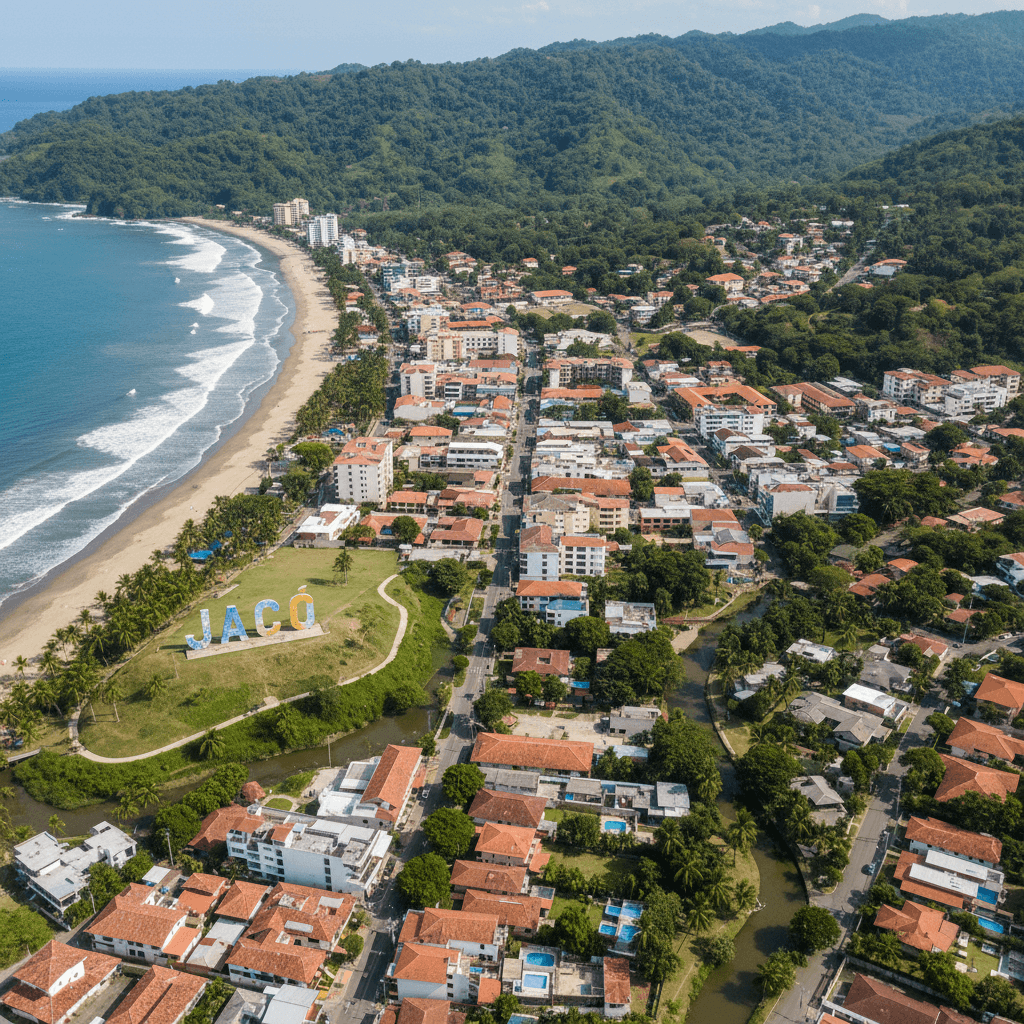
Jacó
🇨🇷 Costa Rica
The Adrenaline Capital of the Pacific
If you're looking for a quiet, meditative yoga retreat where the only sound is the rustle of palm fronds, keep driving. Jacó is loud, unapologetic, and electric. It is the closest major beach town to San José, sitting just 90 minutes from the capital, which makes it the playground of choice for both weekend warriors and high-energy digital nomads. It feels less like a sleepy tropical village and more like a neon-lit surf city carved out of the jungle.
The vibe here is a gritty, high-octane blend of world-class surfing and legendary nightlife. During the day, the town belongs to the ocean. You'll see surfers carrying boards down the main drag and nomads hunched over laptops at beachside cafes. Once the sun sets, the energy shifts toward the bars and clubs. It is one of the few places in Costa Rica where you can find genuine fine dining and a gritty dive bar on the same block. Most nomads find that Jacó doesn't try to hide its rough edges; it embraces them.
What Sets Jacó Apart
Unlike the remote dirt roads of Santa Teresa or the eco-luxury of Nosara, Jacó offers "real world" convenience. You get reliable 4G coverage, paved roads, and actual supermarkets. It is a town built for movement. Most travelers love that you don't need a car here. The core is compact and walkable, and for everything else, there is a constant stream of Ubers and bicycles.
The emotional experience of Jacó is one of constant stimulation. You're surrounded by the lush green of the mountains on one side and the dark, volcanic sands of the Pacific on the other. It is a place for the nomad who wants to work hard for four hours, surf a world-class break for two, and then grab a high-end sushi dinner before hitting a jungle party. It is convenient, fast-paced, and admittedly a bit touristy, but that infrastructure makes it one of the easiest places in Central America to actually get work done.
The Nomad Reality Check
Living here comes with a specific set of trade-offs. While the "Pura Vida" spirit exists, it’s often sidelined by the "hustle-bustle" of a town that never really sleeps. Expats often mention that the beach itself isn't the most beautiful in the country; the sand is dark and the water is better for surfing than swimming. It is a functional beach, not a postcard beach.
- The Pace: Relaxed on Tuesday mornings, chaotic on Saturday nights when the crowds from San José arrive.
- The Community: A heavy American influence means English is spoken almost everywhere, making it an easy "soft landing" for first-time nomads.
- The Infrastructure: You'll find luxury condos with AC and high-speed fiber optic internet that rival apartments in Miami or Austin.
- The Shadow Side: The party culture brings issues like petty theft, visible drug use, and a prominent "red light" scene in certain areas. It's a town where you need to keep your wits about you after dark.
Living Costs & Logistics
Jacó is not a budget destination. Because of its proximity to the airport and its popularity with North Americans, prices are inflated compared to more rural provinces. You are paying for the convenience of being able to order a craft cocktail or find a specialized gym. Most nomads recommend a monthly budget of at least $2,500 to $3,500 to live comfortably in a modern 1-bedroom apartment with reliable amenities.
If you thrive on energy, social meetups at Selina Jacó, and having every amenity within a ten-minute walk, you'll love it here. If you're looking for a silent jungle escape, you might find the constant roar of ATVs and bass from the clubs a bit much. In Jacó, you don't come to find yourself; you come to live loudly.
The Price of Pura Vida
Living the surf-and-party lifestyle in Jacó comes with a higher price tag than you might find in more remote Tico towns. Because of its proximity to San José and its popularity with American expats, the local economy leans heavily into the upscale market. You aren't just paying for the beach; you're paying for the convenience of high-speed fiber optics, fine dining, and a town where you rarely need a car.
Most nomads find that their biggest expense is housing. While you can find basic rooms for less, most remote workers opt for modern condos or studios equipped with the "nomad essentials" like strong air conditioning and dedicated desk space. Expect to pay a premium for anything within walking distance of the main surf break.
Monthly Budget Tiers
Your lifestyle in Jacó can shift dramatically depending on how often you hit the high-end cocktail bars or book weekend excursions. Here is how the monthly costs typically shake out for digital nomads:
The Budget Nomad
- Total Monthly Spend: $1,500 to $2,000
- Housing: A basic studio or a private room in a shared house, likely further from the beach.
- Food: Eating mostly at local "sodas" (traditional Costa Rican eateries) and cooking at home.
- Lifestyle: Walking everywhere, using public buses for trips, and sticking to free activities like sunset surfing.
The Mid-Range Professional
- Total Monthly Spend: $2,500 to $3,500
- Housing: A comfortable 1-bedroom apartment or upscale studio with reliable AC and a pool.
- Food: A mix of grocery shopping and dining out at mid-tier restaurants a few times a week.
- Lifestyle: A dedicated desk at a coworking space like Selina Jacó and occasional Uber rides or scooter rentals.
The Luxury Expat
- Total Monthly Spend: $4,000+
- Housing: A luxury beachfront condo or a high-end villa in the quieter outskirts.
- Food: Regular visits to Jacó's fine dining scene and frequenting upscale bars.
- Lifestyle: Full-time car or ATV rental, private surf lessons, and weekend tours like ziplining or catamaran trips.
Key Expenses and Practicalities
Rent for a modern, AC-equipped 1-bedroom usually starts around $1,000 and climbs quickly from there. If you're looking for something short-term during the peak season (December through April), prices can spike significantly, so booking a few months in advance is a smart move.
Eating out is a varied experience. A meal at a local soda will cost you about $7 to $10, while a dinner at one of the trendy spots along the strip can easily run $30 to $50 per person once you add drinks and the mandatory service charge. Groceries at supermarkets like Mas x Menos are comparable to US prices for imported goods, though buying local produce at the farmers markets will save you a decent chunk of change.
Transportation is one area where you can save. Jacó is incredibly compact. Most people get by just fine on foot or by renting a bicycle for about $10 to $15 a day. If you need to head into San José, the public bus is only a few dollars, while a private shuttle or an Uber will cost between $50 and $100 depending on the time of day and your haggling skills.
Don't forget to budget for a local SIM card. While your apartment likely has WiFi, having a backup from Kolbi or Claro is a necessity for staying connected while working from a beachside cafe. A prepaid plan with a healthy amount of data usually costs around $20 to $30 per month.
Nomads and Remote Workers
If you're in Jacó to work by day and play by night, you'll want to stay in the Central Jacó strip. This is the heart of the action where the main road runs parallel to the beach. Most nomads gravitate toward the area surrounding Selina Jacó, which serves as the de facto community hub. You'll be within a five minute walk of the sand, dozens of cafes, and the most reliable fiber optic connections in town.
Living here means you won't need a car. You can grab a morning surf, walk to a coworking space like Selina or one of the many laptop friendly cafes along the strip, and hit the bars by sunset. Expect to pay a premium for the convenience; a modern one bedroom apartment or a high end studio with reliable A/C usually starts around $1,000 to $1,500 per month. The trade off is the noise. Weekends bring a surge of visitors from San José, and the music from local clubs can carry late into the night.
- Vibe: High energy, social, and surf focused.
- Best for: Networking, nightlife, and those who want to be car free.
- Monthly Rent: $1,000+ for nomad friendly setups.
Expats and Long Term Residents
Expats who have traded the nomad life for a permanent "Pura Vida" lifestyle typically move toward the southern end of the bay or the slightly elevated outskirts. These areas offer a reprieve from the neon lights of the central strip while keeping the beach within reach. Many long termers look for gated communities or condo complexes that offer 24/7 security, which is a common priority given the town's reputation for petty theft.
The southern end is noticeably quieter and feels more like a residential neighborhood than a tourist trap. You'll find more "sodas" (traditional Costa Rican eateries) and fewer loud nightclubs. If you're staying long term, you'll likely want to budget for a scooter or a bicycle to get into the center for groceries or social events. Mid range apartments here can be found for $800 to $1,200 if you're willing to sign a longer lease.
- Vibe: Relaxed, residential, and more authentic.
- Best for: Those staying 6+ months who value sleep over parties.
- Monthly Rent: $800 to $1,300 for mid range condos.
Solo Travelers
For solo travelers, the North End of Jacó beach is the sweet spot. It's close enough to the center to feel connected but offers a slightly more bohemian and rugged atmosphere. This area is popular with the backpacker crowd and solo surfers who prefer the beach breaks at this end of the coast. It's a bit more "raw" than the manicured south, but it's where you'll find the most affordable boutique hostels and shared living spaces.
Safety is a frequent topic of conversation among solo travelers here. While the north end is great during the day, travelers often recommend taking an Uber back to your accommodation after dark rather than walking the beach or unlit side streets. Budget roughly $40 to $70 per night for a decent private room in a social guesthouse, or less if you're sticking to dorms.
- Vibe: Gritty, adventurous, and budget friendly.
- Best for: Meeting people and catching the best surf swells.
- Daily Cost: $50 to $90 including food and a bed.
Families and Luxury Seekers
Families and those with a "Comfortable" budget usually head just north of the city limits to Los Sueños or stay in the upscale gated communities on the eastern hillsides overlooking the bay. These areas provide the luxury amenities that Central Jacó often lacks, such as private pools, manicured gardens, and high end security. It's a different world from the party town below, focusing on wildlife sightings and ocean views.
If you're bringing kids, these outskirts are the way to go. You'll avoid the "party town" elements like the late night noise and the more visible drug and prostitution scenes found in the center. You will absolutely need a rental car or a golf cart to get around. Luxury villas and high end three bedroom condos in these zones easily push past $4,000 per month, but they offer the peace of mind and comfort that families require.
- Vibe: Exclusive, quiet, and manicured.
- Best for: Families, retirees, and travelers with a high budget.
- Monthly Rent: $3,500 to $5,000+ for luxury estates.
Connectivity and Speed
Reliable internet is the backbone of the Jacó nomad experience, and luckily, it's one of the town's stronger suits. Unlike the remote jungle outposts further south, Jacó benefits from its proximity to San José. You can generally expect 4G coverage to be solid throughout the town center. Most high end rentals and modern condos now offer fiber optic connections reaching speeds of 50 Mbps to 100 Mbps, which is more than enough for video calls and heavy uploads.
For a backup plan, grab a local SIM card immediately. Kölbi and Claro are the most popular providers. Kölbi often has better coverage in rural areas, but Claro is great within Jacó's town limits. Liberty is also available as a third option. You can pick these up at small shops along the main strip or at the airport. Expect to pay around $10 to $20 for a decent prepaid data package to keep you tethered if the power blinks during a tropical storm.
Top Coworking Spaces
If your rental's kitchen table isn't cutting it, Jacó has a dedicated spot where the community tends to congregate. The social energy here is high, so this space is as much about networking as it is about deep work.
- Selina Jacó: This is the undisputed hub for the nomad crowd. Located right on the beach, it offers a dedicated coworking air conditioned room with ergonomic chairs and high speed mesh WiFi. It's the best place to meet other travelers, and they often host workshops or surf camps. Expect to pay roughly $10 to $20 for a day pass, though weekly and monthly memberships are available for those staying longer.
Laptop Friendly Cafes
Jacó has a thriving cafe culture where nobody will give you the side eye for opening a laptop for an hour or two. The "work from anywhere" vibe is deeply ingrained in the local economy.
- Cafe Britt: Located in the Jacó Walk open air mall, this spot is a favorite for its consistent WiFi and excellent Costa Rican brews. It’s shaded and breezy, perfect for clearing out your inbox in the morning.
- Pura Vida Pantry: A great choice if you want healthy food options while you work. The atmosphere is relaxed, and the internet is usually stable enough for light tasks.
- Cafe Bohio: A classic central spot with plenty of tables and a steady stream of nomads. It can get a bit loud during the lunch rush, so bring your noise cancelling headphones.
Practical Tips for Remote Work
While the infrastructure is modern, Costa Rica's weather can occasionally interfere. During the green season, heavy rains can cause brief power flickers. Most nomads recommend keeping your laptop and phone fully charged and having a portable power bank on hand. If you’re booking an Airbnb, always ask the host for a screenshot of a speed test before you commit, especially if you're looking at the more "upscale outskirts" where signal can occasionally drop off behind the hills.
Most nomads find that the best workflow in Jacó involves hitting the "office" early. The town gets lively and loud by mid afternoon, and the heat is best managed in an air conditioned coworking space or by finishing early to catch the sunset surf session. If you need to take sensitive calls, stick to the dedicated coworking spaces; the beachside cafes are great for aesthetics, but the crashing waves and reggaeton from passing cars aren't great for professional meetings.
Staying Safe in the Surf and Sand
Jaco has a different edge than the sleepy surf towns further down the coast. Because it is the closest major beach to San Jose, it draws a massive weekend crowd and maintains a high-energy party scene. Most nomads find the town perfectly safe during the day, but the vibe shifts after dark. Petty theft is the most common headache, especially on the beach or in crowded bars.
Expats generally recommend keeping a close eye on your gear when you are in the water. Never leave your phone or wallet unattended on the sand while you surf; use a waterproof pouch or leave your valuables in a locker at a spot like Selina Jaco. At night, the main strip can get rowdy. Travelers often say it is best to avoid the darker side streets and stay in well-lit areas where the tourist police are active.
The town has a visible presence of "party-town" elements, including drugs and prostitution, particularly around the central nightlife hubs. While these industries generally don't bother nomads who aren't looking for them, they do contribute to a higher rate of opportunistic crime. If you are out late, use Uber rather than walking home alone, even if your rental is only a few blocks away. It is a cheap way to ensure you get door-to-door without incident.
Healthcare and Medical Services
One of the perks of Jaco is its proximity to top-tier medical care. While the town itself is great for minor issues, you are only about 90 minutes away from the world-class private hospitals in San Jose, such as CIMA or Clinica Biblica. This proximity is a major reason why many older expats and families choose Jaco over more remote locations like Nosara.
- Local Clinics: For non-emergencies, there are several private clinics in town, such as Clinica Alma or Urgent Care Jaco, where many doctors speak English.
- Pharmacies: You will find "farmacias" on almost every block. They are highly capable and can often provide consultations and certain medications without a prior doctor's visit.
- Emergency Services: Dial 911 for any immediate crisis. The Red Cross (Cruz Roja) has a station in Jaco and handles most ambulance transfers.
If you are staying on the Digital Nomad Visa, remember that proof of health insurance is a mandatory requirement. Most nomads opt for international plans like SafetyWing or Genki, which are widely accepted at private facilities. For routine checkups or dental work, you will find that out-of-pocket costs are significantly lower than in the US, often 50% to 70% cheaper for the same quality of care.
Practical Tips for a Smooth Stay
Tap water in Jaco is generally considered safe to drink, which is a huge plus for your budget and the environment. However, if you have a sensitive stomach or are staying in an older building, many expats suggest using a Lifestraw or buying large five-gallon jugs (bidones) for peace of mind.
When it comes to the ocean, the riptides can be surprisingly strong. Jaco beach is great for learning to surf, but always check the flags or ask a local instructor about the current conditions before heading out. If you see a red flag, stay in the shallows. The local lifeguard presence has improved significantly in recent years, but they can't be everywhere at once on the long crescent of sand.
The Car-Free Lifestyle
One of the biggest draws for nomads in Jacó is the sheer ease of getting around without a vehicle. The town is laid out along a main strip that runs parallel to the beach, making the core area extremely walkable. You can grab your surfboard, head to the waves, and hit a grocery store or a coworking spot all within a 15 minute stroll. Most expats choose to live in the central surf area specifically to ditch the stress of driving.
If you're staying a bit further out in the upscale outskirts or just don't feel like walking in the tropical heat, bicycles and scooters are the local favorites. You'll see rental shops every few blocks. A bike is usually enough for daily errands, while a scooter helps if you want to explore the nearby hills or neighboring beaches without committing to a full car rental.
Ride-Hailing and Taxis
Uber is active and widely used in Jacó, providing a reliable way to get home after a late night out or to haul groceries back to your condo. It's generally more affordable than the official red taxis, though both are readily available. Most short trips within the town limits will only set you back a few dollars, making it a budget-friendly way to navigate when it's raining or you're in a rush.
- Uber: Best for quick hops around town and predictable pricing.
- Official Taxis (Red Cars): Plentiful near the main shopping centers and bus stops.
- Scooter Rentals: Expect to pay around $30 to $40 per day, though you can often negotiate better weekly rates for longer stays.
Regional Travel and San José Connections
Jacó’s proximity to San José is a major selling point. The drive takes about 90 minutes, making it the closest major beach town to the capital. If you're arriving at Juan Santamaría International Airport (SJO), you have a few solid options to reach the coast.
- Shared Shuttles: Companies like Interbus or Tropical Tours offer door-to-door service from the airport for roughly $50 to $60 per person. It's a stress-free way to arrive if you don't want to navigate the bus system with luggage.
- Private Transfers: If you're traveling in a group, a private van usually costs between $120 and $150. It's faster and lets you stop for groceries or a photo op at the famous "Crocodile Bridge" on the way.
- Public Bus: For the budget-conscious, the "Transportes Jacó" bus leaves from the Terminal 7-10 in San José multiple times a day. It costs less than $10 and is surprisingly comfortable, though it takes a bit longer due to stops.
Navigating with Apps
While the town is simple to navigate, having a local SIM card makes things much easier. Expats recommend picking up a prepaid card from Kolbi or Claro right at the airport or at one of the kiosks in town. Google Maps is generally accurate for local businesses, but for driving directions outside of town, Waze is the gold standard in Costa Rica. It provides real-time updates on road conditions and the occasional traffic stop, which is common on the highway back to San José.
Most nomads find that once they've settled into a routine, their feet are their primary mode of transport. Between the compact layout and the availability of cheap ride-hailing, you won't miss having a car unless you plan on frequent long-distance surf trips to more remote breaks down the coast.
Language Barrier and English Proficiency
In Jacó, you can get by with English much easier than in the remote mountain villages or smaller Guanacaste surf breaks. Because the town is a magnet for American tourists and digital nomads, most staff at hotels, high end restaurants, and tour agencies speak great English. You'll find that the "hustle and bustle" surf culture here has created a bilingual environment where ordering a craft beer or booking a zipline tour requires zero Spanish.
However, once you step away from the main tourist strip and into local sodas (traditional Costa Rican eateries) or government offices, English proficiency drops off quickly. If you're staying for more than a few weeks, locals really appreciate the effort of a "Buenos días" or "Con gusto." It changes the vibe from being just another tourist to being a neighbor.
The "Pura Vida" Philosophy
Communication in Costa Rica isn't just about the words; it's about the attitude. You'll hear Pura Vida dozens of times a day. It literally means "pure life," but in Jacó, it's used for hello, goodbye, "it's all good," and even "don't worry about it" when the internet goes down for ten minutes. Understanding this phrase is your first step toward local integration.
Costa Ricans, or Ticos, generally prefer a polite and indirect communication style. Being overly blunt or demanding can be seen as rude. If you're dealing with a landlord or a service provider, a little small talk goes a long way before getting down to business.
Digital Communication and Connectivity
For daily life, WhatsApp is the undisputed king. You'll use it to book surf lessons, order delivery, and message your landlord. Most local businesses won't even check their email, but they'll reply to a WhatsApp message in minutes. Make sure you have it installed before you land.
- Mobile Providers: Kölbi and Claro are the most popular. Kölbi often has better coverage in more rural areas, but Claro is great within Jacó's town limits.
- Prepaid SIMs: You can pick up a SIM card at the San José airport (SJO) or at various kiosks along Pastor Díaz Avenue. Expect to pay around $10 to $20 for a decent initial data package.
- Translation Apps: Google Translate is your best friend for reading menus or signs. The camera feature is particularly handy for scanning documents at the pharmacy.
Key Phrases for Your First Week
While you can survive on English, these few phrases will make your life significantly easier at the local markets and when chatting with your Uber driver.
- ¿Cuánto cuesta?: How much does it cost? (Essential for the Friday farmers market).
- La cuenta, por favor: The bill, please.
- ¿Habla inglés?: Do you speak English? (Always better to ask first than to assume).
- Tuanis: A local slang term for "cool" or "nice." It's very common in the Jacó surf scene.
- Regáleme: Literally "gift me," but it's how locals politely ask for something. Instead of saying "I want a coffee," you'd say "Regáleme un café."
Learning Spanish in Jacó
If you want to move beyond the basics, Jacó has a few options for formal learning. Many nomads find that taking a week of intensive classes at the beginning of their stay helps with confidence. You can also find language exchange meetups at Selina Jacó, where locals and expats trade English for Spanish over drinks. It's a low pressure way to practice what you've learned while meeting the community.
The Sweet Spot: High Season (December to April)
If you're looking for wall to wall sunshine and the most reliable surf conditions, the dry season is your window. This is when Jacó truly earns its reputation as a party hub. The town is packed, the energy is high, and you won't have to worry about a sudden downpour ruining your coworking session at Selina or your sunset beer on the sand.
The trade off for perfect weather is the price tag. Expect to pay a premium for everything from luxury 1BR rentals to scooter hires during these months. Most nomads find that while the $1,000 plus price tag for high end studios is steep, the ability to walk everywhere in flip flops without an umbrella makes it worth the investment. Keep in mind that weekends in January and February get particularly crowded as residents from San José flood the town, which is only 90 minutes away.
The Green Season: May to November
Don't let the term "rainy season" scare you off. For many expats and long term nomads, this is actually the preferred time to be in town. Mornings are usually sunny and hot, with the rain typically rolling in for a few hours in the late afternoon or evening. It's the perfect excuse to hunker down and get some deep work done before heading out for a late dinner.
The landscape turns a brilliant, lush green, and the dust from the roads finally settles. You'll also find much better deals on mid range housing and boutique hotels. If you're on a tighter budget, aiming for $1,500 to $2,000 a month, this is when your dollar goes much further. The surf can get significantly bigger during these months, which is a major draw for experienced surfers, though beginners might find the swells a bit intimidating.
The "Veranillo" and Peak Rain
There is a unique weather phenomenon in July and August known as the Veranillo, or "little summer." You'll often see a break in the rain for a few weeks, offering a second mini high season. It's a fantastic time to visit if you want the lush scenery of the green season with a bit more Vitamin D.
On the flip side, October is traditionally the wettest month in Jacó. Some local businesses take their own vacations during this time, and the nightlife slows down a bit. If you're someone who needs constant social stimulation, you might find October a little too quiet. However, for the focused nomad who wants zero distractions and the lowest possible rent, it's a strategic time to hunker down.
What to Pack and Practical Tips
- Humidity is real: Your electronics are your livelihood. Most nomads recommend staying in places with AC not just for the heat, but to keep the moisture out of your laptop.
- Power surges: During the height of the rainy season, lightning storms can cause brief power flickers. A small surge protector for your gear is a smart move.
- Dress code: Jacó is incredibly casual. Even at the finer dining spots, you'll rarely need more than a clean linen shirt or a sundress.
- Transport: Since the town is so compact, you'll likely be walking or using Uber. In the rainy season, those short $3 to $5 Uber rides become a lifesaver when the clouds open up.
Ultimately, the best time for you depends on your tolerance for crowds and your budget. If you want the full "Pura Vida" experience with maximum sunshine, aim for December through March. If you prefer a chill vibe, lower costs, and don't mind a daily rain shower, the shoulder months of May, June, and November offer the best balance for a productive stay.
Connectivity and Workspace
Internet in Jacó is generally reliable, especially compared to the more remote jungle towns down the coast. Most nomads find that 4G coverage is strong throughout the town center, but it is smart to grab a local prepaid SIM card immediately upon arrival. Kolbi and Claro are the most reliable providers; you can set these up at the airport or at various shops along the main strip to ensure you have a backup for your home WiFi.
For a dedicated work environment, Selina Jacó is the go-to hub. It sits right on the beach and offers a structured coworking space with desks, ergonomic chairs, and a social atmosphere that makes it easy to meet other travelers. Day passes typically run between $10 and $20. If you prefer a more casual vibe, several cafes along the main road are nomad-friendly, though the humidity means you will likely want a spot with strong AC for long sessions.
Budgeting for the Jacó Lifestyle
Jacó is one of the more expensive beach towns in Costa Rica due to its proximity to San José and its popularity with American tourists. You should budget more here than you would for a quiet village in the Guanacaste region.
- Budget Tier ($1,500 to $2,000 per month): This covers a basic rental away from the beach, eating mostly at local "sodas" (traditional Costa Rican diners), and using public buses.
- Mid-Range Tier ($2,500 to $3,500 per month): This is the sweet spot for most nomads. It includes an upscale 1-bedroom apartment with air conditioning, regular coworking memberships, and dining out at mid-range restaurants a few times a week.
- Comfortable Tier ($4,000+ per month): For those wanting luxury condos with ocean views, frequent fine dining, and car or scooter rentals to explore the surrounding coastline.
Getting Around Town
One of Jacó's biggest perks is its compact layout. The town is highly walkable, and you won't need a car if you stay near the center. For longer trips or grocery hauls, Uber is active and affordable. If you want more freedom, many expats recommend renting a bicycle or a scooter for about $15 to $25 per day to zip between the surf breaks and the shops.
Getting here from San José is straightforward. A private shuttle or an Uber from the airport usually costs between $50 and $100 and takes about 90 minutes. If you are watching your wallet, the public bus from the Terminal 7-10 in San José is frequent and costs only a few dollars.
Safety and Local Savvy
While Jacó is generally safe for travelers, it has a reputation as a party town, which brings some specific risks. Petty theft is the most common issue, particularly on the beach. Never leave your phone or bag unattended while you go for a swim. Expats suggest staying away from the rowdier nightlife alleys late at night, as these areas can attract drug sales and opportunistic crime.
Healthcare is accessible through local pharmacies for minor issues. For anything serious, most nomads head to the private clinics or major hospitals in San José. If you are applying for the Digital Nomad Visa, remember that carrying valid health insurance is a mandatory requirement for your stay.
Language and Culture
Spanish is the primary language, but because of the high volume of expats and tourists, English is widely spoken in hotels, bars, and coworking spaces. You can get by without being fluent, but learning basic phrases will go a long way. The phrase "Pura Vida" is used for everything from "hello" and "goodbye" to "it's all good." Most people use Google Translate for more complex interactions with landlords or utility companies.
Need visa and immigration info for Costa Rica?
🇨🇷 View Costa Rica Country GuideEasy Landing
Settle in, no stress