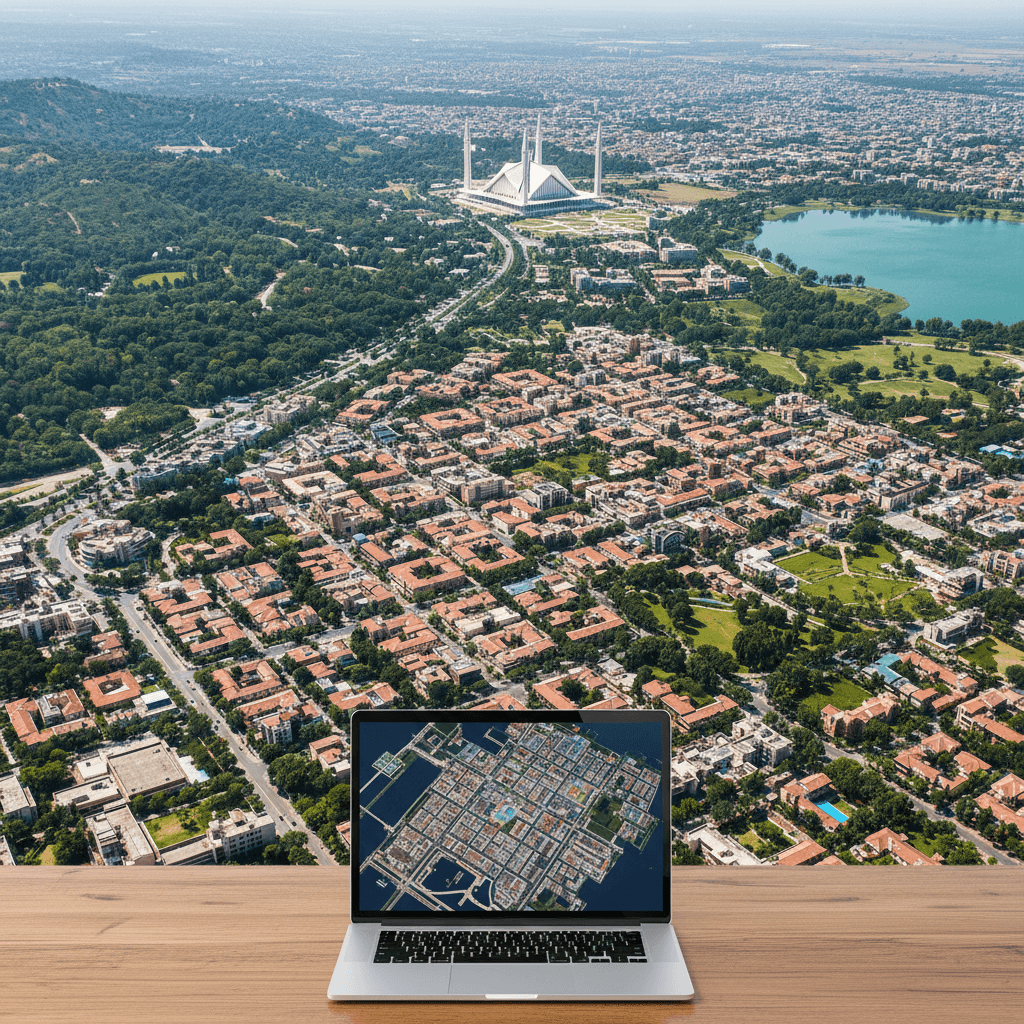
Islamabad
🇵🇰 Pakistan
Islamabad feels calm in a way most South Asian capitals don’t. The roads are wide, the trees are real and then you hear a burst of honking or a call to prayer drifting across the sectors, so the city never feels sterile, just controlled.
Safety is a big reason people stay longer than planned, especially in Gulberg or the better parts of F-7, where guards, gates and CCTV are just part of daily life. The tradeoff is obvious, though, because the city can feel a little stiff after dark and the nightlife scene is thin unless your idea of a night out is dinner, coffee, then home.
It’s also cheap in a way that changes how you live. A decent meal costs about 500 PKR, a cappuccino runs 300 to 850 PKR and a comfortable monthly setup outside the center can stay far below what you’d pay in Europe or the Gulf, frankly, even a good apartment won’t wreck your budget.
Where people usually base themselves
- F-7 Markaz: Best for convenience, cafés, restaurants and coworking, but rent is higher and the area feels busier.
- Gulberg III: Clean, gated and easy to settle into, with a more residential feel and better peace of mind.
- G-6 Commercial: Good for younger remote workers, with decent coworking options and prices that usually feel more sane.
- Centaurus, F-6: Polished and modern, though pricey and a bit soulless if you want local texture.
- E-7: Quieter and more local, with solid food spots and fewer expat comforts.
The coworking scene, turns out, is better than the city’s reputation suggests. Netsol Cowork Hub in F-7, The Garage in G-6, WorkStation in Gulberg III and Spaces by Regus in Centaurus all offer fast fiber, but outside those spaces internet can be annoyingly slow, around 4 Mbps in some areas, so don’t assume café WiFi will save your Zoom call.
Weather shapes the whole mood here. Summers are brutally hot, winters can feel sharp on cold tile floors and the monsoon brings rain on tin roofs plus that wet-jasmine smell that makes the whole city feel softer for a few hours.
Most nomads I’d send here are the ones who like order, clean streets and low costs more than chaos and constant stimulation. It’s safe, polite and easy to settle into, but if you want a wild social scene or fast internet everywhere, Islamabad will test your patience.
Islamabad looks cheap on paper and honestly, it mostly is. A solo nomad can live lean here for a few hundred dollars a month, but rent jumps fast if you want a decent one-bedroom in F-7, F-6 or around Centaurus. The city feels calm, clean and strangely spacious, though your wallet still notices every upgrade.
Rent is the big swing factor. A studio or 1BR in the center usually runs 30,000 to 120,000 PKR, while the same place outside the center often drops to 20,000 to 50,000 PKR. If you want a 3BR, expect 100,000 to 250,000 PKR in central areas and 50,000 to 120,000 PKR farther out, where you’ll trade walkability for quieter streets and fewer late-night food options.
The practical move is simple. F-7 Markaz is convenient but pricey, Gulberg Greens feels safer and more polished and G-6 Commercial gives you a better shot at value if you work remotely and don’t mind a less shiny neighborhood.
Everyday spending
- Street food meal: 250 to 500 PKR, cheap and filling.
- Inexpensive restaurant meal: about 500 PKR, which is solid if you’re tired of naan and karahi stalls.
- Mid-range dinner for two: 3,000 to 10,000 PKR, depending on whether you’re in a casual spot or somewhere with polished service and soft lighting.
- Cappuccino: 300 to 850 PKR, because cafe pricing here can be weirdly all over the place.
- Imported beer: 600 to 1,200 PKR and that’s before you deal with availability.
Transport stays manageable. A local ride is usually 50 to 100 PKR and a monthly transport pass can sit around 1,500 to 2,000 PKR, though many expats just use ride-hailing apps and pay a bit more for sanity. Internet ranges from bargain-bin home service to excellent coworking speeds, and, frankly, that difference matters if you’re on calls all day.
Monthly basics
- Internet: 3,500 to 9,000 PKR for 60+ Mbps home service.
- Mobile plan: 868 to 2,200 PKR for 10GB or more.
- Utilities: 10,000 to 35,000 PKR, higher in summer AC use.
- Budget life: $300 to $500 excluding rent.
- Mid-range life: $600 to $1,000 excluding rent.
That means Islamabad can be dirt-cheap or merely comfortable, depending on where you sleep and how often you eat out. The noise is mostly traffic, generators and the occasional call to prayer drifting over dry air, then the smell of paratha, dust and rain-soaked pavement after a storm. Not expensive. Not by global standards.
Islamabad’s neighborhoods make a bigger difference than people expect. Stay in the wrong pocket and you’ll spend half your day in traffic, hunting for coffee or waiting on a shaky connection. Pick well and the city feels calm, green and easy.
Digital Nomads
For remote work, G-6 Commercial is the sweet spot. The Garage has better community energy than most places in town and F-7 Markaz gives you more cafes, faster access to errands and a stronger after-work scene, though rents climb fast and parking can be a pain.
- Best fit: G-6 Commercial, F-7 Markaz
- Rent: About 30,000 to 120,000 PKR for a studio or 1BR, with F-7 sitting at the pricier end
- Work setup: Netsol Cowork Hub, The Garage, CareersHQ Hub, plus cafe work at places like Kapacious in F-9, which, surprisingly, can hold a decent signal for a few hours
- Watch out for: Internet that looks fine on paper and then crawls to a dead stop during peak hours, honestly, it happens
Expats
Centaurus in F-6 suits expats who want convenience without much hassle. You get polished buildings, business services, restaurants and easy access to Spaces by Regus, but it feels a bit sterile and pricey, like you’re paying for glass, security and location more than character.
Gulberg III is the quieter long-term play. The gated setup, CCTV and neat streets make daily life smoother and the area has enough infrastructure for people who don’t want to babysit every errand, though it sits a bit outside the city center and can feel bland at night.
- Best fit: Centaurus, Gulberg III
- Rent: Roughly 55,500 PKR for a 1BR in F-7, higher around Centaurus, lower in Gulberg than the premium core
- Why stay: Security, cleaner roads, better building standards, fewer daily hassles
- Trade-off: Less local texture, more cars and fewer spontaneous street-level moments
Families
Families usually settle best in Gulberg Greens. The controlled access, parks and low-stress feel matter more than being close to every cafe and the roads, weirdly, are often in better shape than in older parts of town. It’s calmer, though you’ll rely on cars for almost everything.
- Best fit: Gulberg Greens, Gulberg III
- Rent: Around 50,000 to 120,000 PKR outside the center for larger homes
- Good for: Security, space, quieter evenings, easier routines
- Downside: Less walkability, fewer late-night options and the city’s long summer heat hits hard
Solo Travelers
E-7 works well if you want a more local, lower-key base. It’s cheaper, less polished and closer to a normal Pakistani neighborhood rhythm, with the smell of grilled meat, tea and exhaust hanging in the air, though you won’t find many international comforts.
If you want more energy, stay near F-7 Markaz. It’s livelier, easier for meeting people and close to restaurants and coworking spots, but it’s noisier too, with traffic, horns and the occasional late-night stretch that feels a bit too empty for comfort.
- Best fit: E-7, F-7 Markaz
- Budget: Food can stay around 500 PKR for a cheap meal, street food even less
- Good for: Easy access to cafes, short rides, social flexibility
- Skip if: You want nightlife, because Islamabad doesn’t really do that well
Islamabad’s internet is fine for email, docs and most day-to-day work, but it can get annoying fast if you live on video calls. The city average is around 15-30 Mbps depending on provider and area, and a weak home connection can feel even worse when the power flickers and your router dies mid-meeting. In decent coworking spaces, though, you’ll usually see 100 to 250 Mbps, which is the difference between waiting around and actually getting work done.
For reliable work, pick your base carefully. F-7 Markaz is the easiest all-round option, G-6 Commercial has a younger startup feel and Gulberg III is better if you want newer buildings and less chaos outside the door. F-6 near Centaurus is polished and expensive, with the sort of polished lobby where people speak quietly and the coffee costs more than lunch.
Coworking Spaces
- Netsol Cowork Hub, F-7 Markaz: 12,000 to 45,000 PKR a month, around 100 Mbps, clean hot desks and private offices, good if you want to stay central.
- The Garage Islamabad, G-6 Commercial: 9,500 to 38,000 PKR, about 150 Mbps, more of a community vibe and the crowd skews younger.
- WorkStation Islamabad, Gulberg III: 15,000 to 55,000 PKR, around 200 Mbps, modern setup, good for longer stays.
- Spaces by Regus, Centaurus: 18,000 to 70,000 PKR, up to 250 Mbps, premium rooms, meeting spaces and business services.
- Paxico: pricing varies, reported speeds hit 1000 Mbps and the setup is aimed at people who need serious bandwidth.
Cafes can work for a few hours, weirdly enough, if you order coffee and don’t hog a table all day. Kapacious is one of the better bets for a laptop session and most decent places will give you enough WiFi for browsing, writing and calls that don’t need perfect upload speed. Turn your hotspot on anyway. Pakistan’s mobile networks can save a meeting when cafe WiFi sulks.
For SIMs, Jazz is the safest pick for most urban travel, while foreigners should expect passport checks and franchise-store activation. Jazz and Zong are the names you’ll hear most in Islamabad and topping up is easy once the card’s live. Telenor can be fine in some places, but it’s a mess for foreigners in practice, so don’t plan your workweek around it.
Most nomads like Islamabad for safety and calm, but the tradeoff is real: quieter streets, slower pace and internet that sometimes feels like it’s held together with tape. Still, if you’re near F-7, G-6 or Gulberg and you use a proper coworking space, you can get solid work done without losing your mind.
Islamabad feels safer than most Pakistani cities and that’s why a lot of expats land here first. The center districts are calm, the roads are wide and you’ll hear more birds and call to prayer than horn-blaring chaos, though the bureaucracy can still drive you nuts.
The city’s safer pockets are obvious once you spend a week here. Gated areas like Gulberg Greens and Gulberg III have 24/7 guards, CCTV and controlled access, while F-7, F-6 and Centaurus are popular because they’re busy without feeling sketchy, honestly. Skip wandering too far into unfamiliar outer areas late at night, especially if the streets go quiet and the lighting gets patchy.
There are places you shouldn’t treat casually. Former FATA areas in KPK can require police escorts, Balochistan still involves stricter permits and escorts and some northern districts have restrictions for foreigners, so check local rules before you book a side trip, because the paperwork can change fast and arguing at the border won’t help.
Where to Stay
- F-7 Markaz: Best for convenience, restaurants and coworking, but rent is higher and the area gets crowded around dinner time.
- Gulberg Greens / Gulberg III: Best safety pick, with gated compounds, cleaner streets and a calmer feel, though you’ll usually need a car.
- G-6 Commercial: Good for younger remote workers, with decent coworking options and more reasonable prices.
- Centaurus, F-6: Polished and secure, but expensive and a bit sterile if you want a more local vibe.
Healthcare is straightforward for a South Asian capital and basic care is cheap enough that a clinic visit won’t wreck your budget. Private hospitals have the best facilities, pharmacies are everywhere and you can usually get common meds without a long hunt, though the front desk paperwork can be slow and a little maddening.
For anything serious, stick to private hospitals rather than guessing your way through a small clinic. Islamabad Healthcare Regulatory Authority keeps an eye on standards and the better hospitals have modern equipment, decent English-speaking staff and cleaner wards, which, surprisingly, still matters a lot here.
Practical Health Notes
- Pharmacies: Easy to find in F-6, F-7 and Gulberg, with both local and imported medicines.
- Emergency care: Use major hospitals and local police channels if you need urgent help.
- Insurance: Bring proper travel or expat coverage, because private treatment is affordable until it suddenly isn’t.
- Heat and hygiene: Summers are brutally hot, so drink filtered water, keep meds stocked and don’t trust every roadside ice cube.
Honestly, the biggest health issue here is usually heat, dust and stomach bugs, not crime. Keep a small medical kit, save the number of a nearby private hospital and you’ll be fine most of the time, with the air smelling like rain, diesel and jasmine after a storm.
Getting around Islamabad is easy enough once you stop expecting the city to behave like Lahore or Karachi. The roads are wide, the sectors are planned and traffic usually moves, though the honking still gets under your skin, especially around Blue Area and F-7 when school runs and office hours overlap.
For daily movement, Careem and InDrive are the default choices. Most nomads use them for short hops between sectors and a ride across central Islamabad usually feels cheap by international standards, often under a few hundred rupees depending on time and demand. Taxis exist, but apps are easier, safer and less of a negotiation headache, frankly.
Metrobus is the best budget option if your route lines up with it. It runs on main corridors, costs little and beats sitting in gridlock with AC that barely works, though you’ll still need a rickshaw or ride-hailing app to cover the last mile. That last bit matters.
Best Ways to Move Around
- Ride-hailing: Careem and InDrive are the most practical for day-to-day trips.
- Metrobus: Cheap and reliable on fixed routes, but limited in coverage.
- Rickshaws: Useful for short neighborhood runs, though fares can jump if you don’t agree first.
- Driving: Fine if you’re staying long-term, but parking near restaurants and coworking spaces can be annoying.
If you’re based in F-7, G-6 or F-6, walking is possible for short distances, especially in the cooler months, when the air smells faintly of dust, pine and kebabs drifting from roadside grills. Outside those pockets, though, Islamabad turns car-dependent fast and heat or monsoon rain can make a simple ten-minute walk feel longer than it should.
For SIMs, Jazz is usually the safest bet. Foreigners need to buy and activate one at a franchise with a passport copy, then top up anywhere later, which, surprisingly, is the easy part. Data quality varies a lot, so if you need stable calls, coworking spaces like The Garage Islamabad, WorkStation in Gulberg III or Spaces by Regus in Centaurus are safer than relying on café WiFi.
One more thing, plan around the city’s rhythm. Evening traffic near Markaz areas gets sticky, bike riders weave hard through lanes and the call to prayer can cut through everything with a sound that seems to pause the whole block for a second. If you’re headed farther out, leave early and don’t assume a 15-minute ride will stay that way.
Pakistan’s capital runs on Urdu first, with English doing a lot of the heavy lifting in offices, cafés and coworking spaces. If you’re staying in F-7, F-6, Gulberg or around Centaurus, you can get by with English almost everywhere, though a few Urdu phrases make people warm up fast. Honestly, that small effort matters here.
Most locals speak quickly, with a soft mix of Urdu and English that can be hard to catch at first, especially when traffic is honking outside and a waiter’s calling orders over the hiss of tea kettles. You’ll hear “Ji” a lot, which is a polite yes and “Aap” instead of the casual “tum” when someone’s showing respect. In shops and taxis, keep your tone calm and direct, because snapping rarely helps and people remember rudeness.
What helps day to day:
- Basic Urdu: “Kitne ka hai?” for price, “Shukriya” for thanks and “Mujhe yahan jaana hai” for “I need to go here.”
- WhatsApp: It’s the default app for everything, from apartment hunting to driver coordination to coworking reception desks sending gate codes.
- Calling ahead: A lot of restaurants and service businesses answer fast by phone, then confirm details over text, which, surprisingly, saves time.
For SIM cards, foreigners usually go with Jazz or Ufone through a franchise store, passport in hand and expect a bit of paperwork. The process can feel clunky, frankly, but once it’s done, recharges are easy and most top-ups happen at kiosks, corner shops or through apps. Telenor has coverage too, though foreigner access can be messy in practice.
Work and internet:
- Coworking: Netsol Cowork Hub in F-7, The Garage in G-6 and WorkStation in Gulberg III all have staff who handle bookings in English.
- Cafés: Many places give you 2 to 3 decent hours if you buy coffee, with prices around 200 to 400 PKR.
- WiFi reality: It’s fine for email and writing, shaky for big video calls unless you’re in a proper coworking space.
People are usually polite, reserved and happy to help if you ask plainly. The city feels quieter than Lahore or Karachi, but the call to prayer, generators humming during outages and the smell of charred kebabs drifting off a street stall give it a very specific rhythm. Learn a few words, speak a little slower and don’t assume everyone’s comfortable with informal chat right away.
Islamabad has four real seasons and they don’t behave politely. Summers are brutally hot, monsoon weeks feel sticky and grey and winter mornings can be surprisingly sharp, with cold tile floors, dry air and the call to prayer floating over quiet streets before sunrise. Spring and autumn are the sweet spots, honestly, because you get clear light, manageable temperatures and enough breeze to keep the city from feeling boxed in.
Best time to visit: March to April, then October to November. That’s when most nomads stay sane and when the Margalla Hills look their best after rain, with the smell of dust, jasmine and roadside chai mixing in the air.
Season by season
- Spring: Mild, green and easy. Great for walking in F-7, E-7 and around the hill trails.
- Summer: Dry heat in early summer, then heavy humidity before the monsoon, so plan for sweating through shirt collars and long afternoons indoors.
- Monsoon: July to September brings sudden downpours, thunder and traffic chaos and honestly the roads turn slick fast.
- Winter: December to February is clear but chilly, especially early mornings and late nights, though daytime sun can still feel pleasant.
If you’re working remotely, spring and autumn are easiest on your internet routine too, because you won’t resent leaving your apartment for coffee meetings at Netsol Cowork Hub, The Garage Islamabad or WorkStation in Gulberg III. Summer power cuts and heat can make even a decent setup feel grim and the city’s average connection speeds can be frustrating if you’re relying on a weak home line.
What to pack
- Spring and autumn: Light layers, a jacket for evenings and shoes you can walk in.
- Summer: Breathable clothes, sunscreen, a water bottle and patience.
- Monsoon: A proper umbrella, quick-dry shoes and a backup plan for flooded roads.
- Winter: A warm layer, socks and something for dry skin, because the cold here feels sharper indoors than you’d expect.
My take: If you can choose, come in April or late October. You’ll get better weather, easier city movement and a nicer base for day trips, without fighting the heat that hits like a wall or the rain that can turn a simple errand into a small ordeal.
Islamabad feels calm on the surface, then the heat, the paperwork and the slow internet remind you you’re still in Pakistan. The city’s planned layout helps a lot, though and most nomads settle into a simple rhythm, cafe in the morning, coworking in the afternoon, dinner in F-7 Markaz, repeat. The air smells like dust, jasmine and barbecue smoke after dark.
Money matters are easy here. You can live cheaply if you’re local in your habits and stubborn about skipping imported stuff, but the small comforts add up fast. A cappuccino can run 300 to 850 PKR, a decent meal out about 500 PKR and if you want a comfortable month with some dining out and coworking, budget around $1,200 to $1,800 excluding rent.
Best areas to stay:
- F-7 Markaz: Best for convenience, restaurants and coworking, but rent bites harder here and the area feels busier than the rest of Islamabad.
- Gulberg Greens / Gulberg III: Safer, cleaner and very controlled, with gated access and good infrastructure, though you’ll rely on rides more because it’s less walkable.
- G-6 Commercial: A good pick for nomads, honestly, with newer coworking spaces and a younger crowd that actually works from laptops.
- E-7: Quieter and more local, so it suits longer stays if you don’t need polished expat perks every day.
Internet is the main annoyance. The city average can be painfully slow, weirdly around 4 Mbps in some places, so don’t trust random cafe WiFi for calls, pick a coworking space like The Garage Islamabad, WorkStation Islamabad or Spaces by Regus if you’ve got deadlines. Jazz is usually the safest SIM bet for foreigners and you’ll need your passport at a franchise store to activate one.
Practical tips that save headaches:
- Work setup: Book a coworking desk if you do video calls, because home WiFi can drop at the worst possible time.
- Transport: Taxis and ride-hailing are cheap, but traffic near commercial areas gets honky and messy at peak hours.
- Safety: Islamabad is among Pakistan’s safer cities, still, use common sense at night and stick to well-lit areas.
- Healthcare: Private hospitals and pharmacies are easy to find and basic care is affordable.
Summers are brutally hot, winters can be chilly enough for cold tile floors and extra blankets and the city’s quieter nightlife can feel thin after a week or two. Skip the idea that every evening needs to be a scene, then lean into long dinners, hill walks and early starts, that’s how Islamabad works best.
Need visa and immigration info for Pakistan?
🇵🇰 View Pakistan Country GuideEasy Landing
Settle in, no stress