Incheon
🇰🇷 South Korea
The Gateway City: More Than Just a Layover
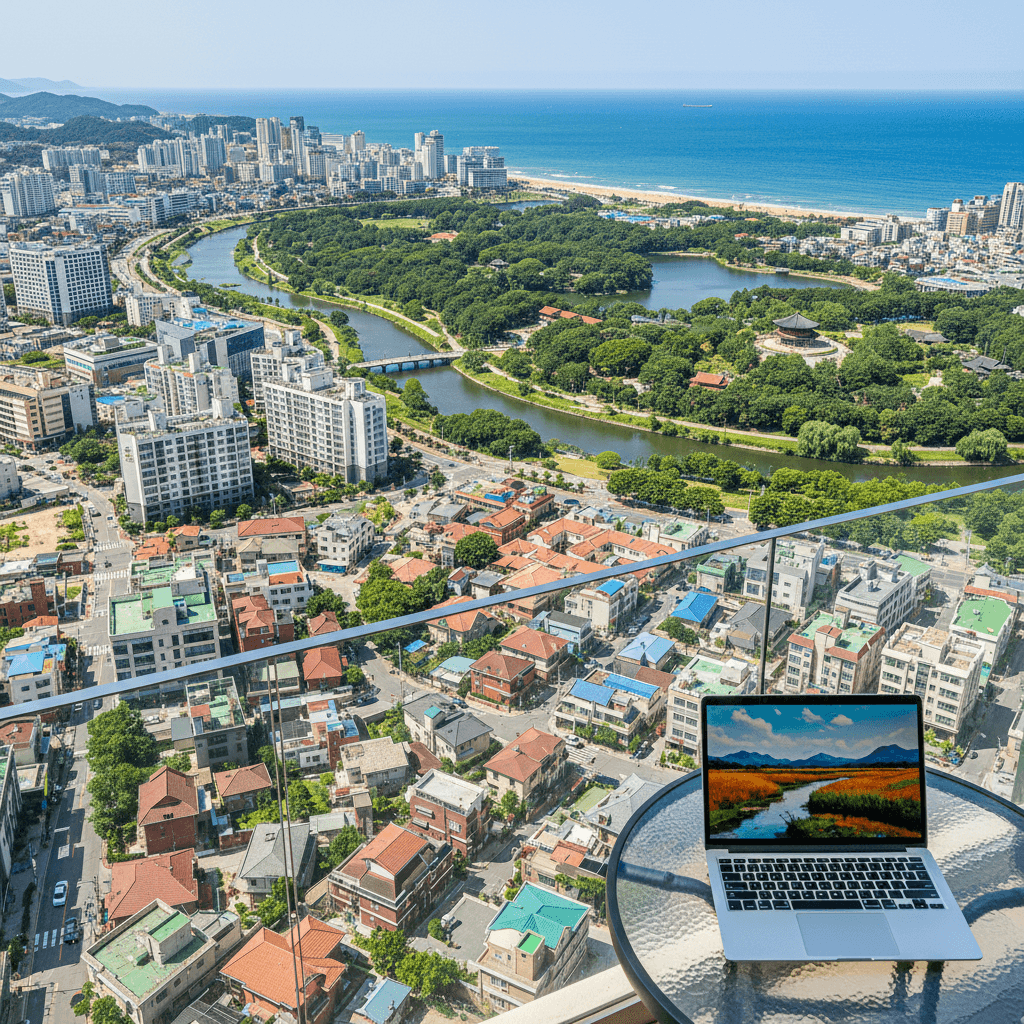
Incheon is often the first place you see when you land in South Korea, but for most nomads, it is just a blur through a train window on the way to Seoul. That is a mistake if you value space, modern infrastructure, and a significantly lower cost of living. While Seoul is a high-speed neon blur, Incheon feels like the country catching its breath. It is a massive port city with a suburban, industrial soul that manages to feel surprisingly breathable.
The vibe here is a mix of high tech and old school. You have the gleaming, futuristic skyline of Songdo on one side and the gritty, salt of the earth energy of the seafood markets and Chinatown on the other. It is quieter than the capital, making it a solid choice for those who need to actually get work done without the constant temptation of Hongdae nightlife. You are still only 40 to 60 minutes from the heart of Seoul via the AREX or the extensive subway system, giving you the best of both worlds.
The Cost of Living
Your bank account will thank you for choosing Incheon over Seoul. Generally, you can expect your daily expenses to be 20% to 30% lower. It is one of the few places in South Korea where you can maintain a high standard of living without the "capital city tax."
- Budget Tier ($1,200 to $1,800/month): This covers a modest studio, plenty of street food like kimbap or tteokbokki for $4 to $7, and relying on the excellent public transit system.
- Mid-range Tier ($2,000 to $3,000/month): This is the sweet spot. You can snag a modern apartment in a newer development, eat out at mid-range BBQ joints for $15 to $20, and keep a desk at a coworking space in Seoul for occasional networking.
- Comfortable Tier ($3,500+/month): This gets you a premium high rise in Songdo, frequent taxi rides via Kakao T, and high end dining.
The Neighborhood Breakdown
Incheon is sprawling, so where you plant your flag matters. Most nomads gravitate toward the newer developments, but the older districts have their own charm.
Songdo International City
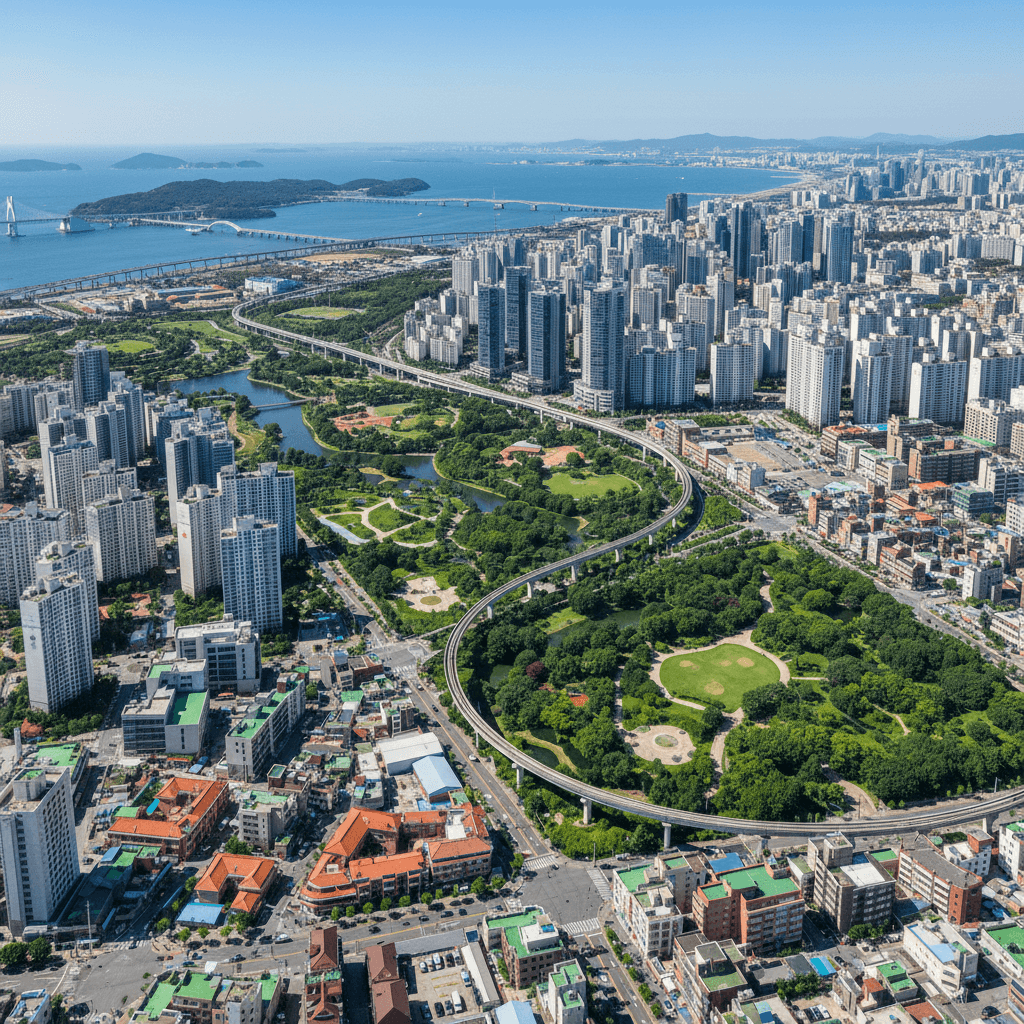
- The Vibe: A "smart city" built from scratch. It is clean, green, and incredibly walkable with a massive Central Park.
- Best For: Digital nomads who want a Western level of convenience and English friendly environments.
- Pros: Fast internet, wide sidewalks, and a very professional atmosphere.
- Cons: Can feel a bit sterile or "too perfect" for some tastes.
Chinatown and Wolmi Island
- The Vibe: Historic, colorful, and a bit touristy. It is the birthplace of Jajangmyeon (black bean noodles).
- Best For: Short term stays or those who want to be near the water and local culture.
- Pros: Amazing food and a lively weekend atmosphere.
- Cons: Not great for long term focus; can get very crowded.
Unseo (Airport Adjacent)
- The Vibe: A transit hub that has grown into a proper residential pocket.
- Best For: People who travel constantly and need to be at the terminal in ten minutes.
- Pros: Very affordable housing and great airport connections.
- Cons: Lacks the character of the inner city.
Why Nomads Stay
The internet is, quite literally, world class. You will rarely see speeds dip below 100 Mbps, and public WiFi is everywhere. While Incheon does not have the same density of dedicated coworking spaces as Seoul, the cafe culture is massive. Chains like Holly’s Coffee or Ediya are designed for people to sit with laptops for hours. Most nomads use Incheon as a peaceful home base, using Kakao T to navigate the city and Papago to bridge the language gap, as English proficiency is lower here than in the expat bubbles of Seoul.
The emotional payoff of Incheon is the lack of pressure. You get the ultra-modern Korean lifestyle, the 24/7 convenience stores, and the safety of a country where you can leave your laptop on a table while you go to the restroom, all without the crushing density of the capital.
The Price of the Port Life
Living in Incheon feels like finding a loophole in the South Korean system. While most nomads flock to Seoul and pay a premium for the privilege, basing yourself in Incheon usually saves you about 20% to 30% on your monthly overhead. It is the perfect middle ground for anyone who wants the high-tech infrastructure of Korea without the claustrophobic price tag of Gangnam.
For a solo nomad, your monthly burn rate will likely fall into one of three tiers:
- Budget: $1,200 to $1,800. This covers a modest studio, plenty of convenience store meals or street food, and relying entirely on the subway.
- Mid-range: $2,000 to $3,000. This is the sweet spot. You can afford a modern apartment in Songdo, eat out at decent restaurants daily, and keep a dedicated desk at a coworking space.
- Comfortable: $3,500+. At this level, you are living the high life in a luxury high-rise, taking taxis frequently, and dining at upscale seafood spots or international bistros.
Housing and Rent
Rent is your biggest win here. In Seoul, a tiny "officetel" (a studio apartment building) can easily clear ₩1,000,000. In Incheon, you can find similar, often newer, spaces in areas like Songdo or near the airport in Unseo for ₩500,000 to ₩800,000 ($350 to $550 USD). If you are looking for long-term rentals, local expats suggest using apps like Zigbang or Dabang to get a feel for the market, though you will usually need a local friend or agent to help navigate the contracts.
Eating and Drinking
Food costs stay consistent with the rest of the country, though Incheon's status as a port city means seafood is fresher and sometimes cheaper. Street food staples like kimbap or tteokbokki will only set you back ₩5,000 to ₩10,000 ($3.50 to $7). A standard mid-range dinner, like Korean BBQ or a hearty bowl of Jajangmyeon in Chinatown, averages ₩15,000 to ₩25,000 ($10 to $18). If you are hitting the upscale spots along the Songdo waterfront, expect to pay ₩40,000 ($28) and up.
Transport and Connectivity
Getting around is remarkably cheap. A single ride on the Incheon Subway or a local bus costs about ₩1,300 to ₩2,000 ($1 to $1.50). Most nomads just load up a T-Money card and go. If you are commuting into Seoul for meetings or nightlife, the AREX rail from the airport or the express buses are your best friends; a trip to the capital takes about 40 to 60 minutes and costs roughly ₩9,000 ($6.50).
Data is a non-negotiable expense, and Korea delivers some of the fastest speeds on the planet. Most nomads grab a Holafly eSIM for the first few days, then switch to a local provider like Kimbap Mobile (physical SIM) or another carrier once they have their paperwork in order. An unlimited data plan typically runs between ₩30,000 and ₩50,000 ($20 to $35) per month.
Coworking and Caffeine
Incheon doesn't have the dense concentration of dedicated coworking hubs you will find in Seoul, so many nomads treat the city's massive cafe culture as their office. Chains like Holly’s Coffee and Ediya are work-friendly and offer reliable, free WiFi for the price of a ₩5,000 latte. If you need a formal office setup, you might find yourself heading toward Seoul's FastFive or SPACES, where monthly hot desks go for around $200 to $300.
Songdo International City: Best for Digital Nomads
If you're looking for a futuristic, high tech base that feels like a scene from a sci-fi movie, Songdo is your spot. It's a "smart city" built from scratch on reclaimed land, designed with remote workers in mind. The neighborhood is incredibly walkable, featuring wide sidewalks and the massive Central Park, which was inspired by New York’s version but includes a canal for water taxis.
- Vibe: Ultra modern, organized, and professional. It's quieter than Seoul, which makes it great for deep work sessions.
- Rent: Expect to pay anywhere from $600 to $900 for a high end studio, about 20% cheaper than similar spots in Seoul's Gangnam district.
- Pros: Excellent English proficiency, fast public WiFi everywhere, and plenty of "work friendly" cafes like Holly’s Coffee or Angel-In-Us.
- Cons: Can feel a bit "sterile" or quiet at night; it lacks that gritty, organic energy found in older Korean neighborhoods.
Incheon Chinatown and Wolmi Island: Best for Solo Travelers
Solo travelers who want history and flavor should head toward the coast. Incheon’s Chinatown is the only official one in South Korea and serves up the best Jajangmyeon (black bean noodles) you’ll ever eat for about $6 to $8. Just a short walk away is Wolmi Island, known for its retro theme park and boardwalk views of the Yellow Sea.
- Vibe: Historic, colorful, and energetic. It’s a sensory overload of red lanterns, street food stalls, and ocean breezes.
- Rent: Budget guesthouses and older apartments can be found for $350 to $500 a month.
- Pros: Vibrant social scene, incredible food options, and easy access to the Incheon Station subway line.
- Cons: Weekends get packed with tourists; it's not the best place for a quiet coworking setup.
Yeongjong Island (Unseo): Best for Short Term Stays and Families
Located right next to Incheon International Airport, the Unseo area is much more than just a place to catch a flight. It's a planned community that feels surprisingly residential and calm. Families often prefer this area because the streets are safe, the air is fresher than the city center, and there are plenty of parks for kids to run around.
- Vibe: Suburban and convenient. It’s the ultimate "soft landing" for anyone just arriving in Korea.
- Rent: Mid range apartments and serviced suites typically go for $500 to $750.
- Pros: Direct access to the AREX train which gets you to Seoul in 40 minutes; very close to the airport for frequent flyers.
- Cons: You'll hear the occasional plane overhead, and the nightlife is pretty much non-existent compared to the mainland.
Bupyeong: Best for Expats and Social Seekers
Bupyeong is where the locals go to hang out. It’s famous for having one of the largest underground shopping malls in the world, which is a maze of fashion, tech, and food. Expats often settle here because it’s the midpoint between Incheon’s port and Seoul, offering a more "authentic" Korean urban experience without the Songdo price tag.
- Vibe: High energy, neon lights, and crowded. It’s the heart of Incheon’s nightlife and shopping.
- Rent: Very affordable, with many "officetels" (studio apartments) ranging from $400 to $600.
- Pros: Massive variety of bars and restaurants; great for meeting people; cheaper cost of living than the international districts.
- Cons: Can be overwhelming and loud; English is less common here, so you'll want the Papago app ready on your phone.
Connectivity and Speed
South Korea is famous for having some of the fastest internet on the planet, and Incheon is no exception. You can expect average speeds well over 100 Mbps, with 5G coverage that blankets almost the entire city. Most apartments and Airbnbs come with high speed broadband included in the rent, usually costing around $20 a month if you're setting up your own contract.
Public WiFi is everywhere. You'll find free, reliable signals on the subway, in public parks, and even at major bus stops. For your phone, most nomads grab a Holafly eSIM for the first few days and then switch to a local provider like Kimbap Mobile. A monthly unlimited data plan typically runs between $20 and $35. Just remember that getting a local SIM with a phone number often requires your passport and, eventually, an Alien Registration Card (ARC) if you're staying long term.
The Coworking Scene
Incheon doesn't have the same density of dedicated coworking spaces as Seoul, but the modern district of Songdo is changing that. You'll find professional setups that cater to the tech and international business crowd. If you need a formal office environment, WeWork and FastFive have massive footprints in nearby Seoul, which is a 40 to 60 minute ride on the AREX or subway. Expect to pay about $14 for a day pass or $140 to $210 for a monthly hot desk at these premium spots.
For those who prefer a more relaxed vibe, Incheon's cafe culture is the real winner. It's perfectly normal to camp out in a coffee shop for four hours with a laptop. Large chains like Holly’s Coffee, Angel-In-Us, and Ediya Coffee are designed for this, often featuring dedicated "study zones" with plenty of power outlets and 24/7 access. If you're in Songdo, the cafes overlooking Central Park offer a great view while you grind through emails.
Top Places to Work
- Songdo International Business District: This is the tech heart of the city. It's walkable, modern, and has the highest concentration of English speaking professionals and laptop friendly spaces.
- Incheon Startup Park: Located in Songdo, this hub is fantastic for networking with local entrepreneurs and occasionally offers events for remote workers.
- Holly’s Coffee (Various Locations): A reliable fallback. Most locations have fast WiFi, plenty of plugs, and won't kick you out as long as you buy a latte every few hours.
- Seoul Startup Hub: If you don't mind the commute into the capital, this spot offers free coffee and a very affordable cafeteria, making it a favorite for budget conscious nomads.
Digital Nomad Community
Because Incheon is often seen as a gateway to the country rather than a final destination, the nomad community here is smaller and more spread out than in Seoul's Hongdae or Gangnam districts. You won't find many Incheon specific meetups on platforms like Meetup.com yet. Most expats and remote workers here stay connected through the Digital Nomads Korea Discord or WhatsApp groups.
If you're looking for social interaction, your best bet is to head into Seoul for the weekend or join an expat group in Songdo. The vibe in Incheon is much more about "deep work" and focus. It's the place you go when you have a big project to finish and want to avoid the distractions of the capital while still having world class infrastructure at your fingertips.
Keeping Your Peace of Mind
Incheon is arguably one of the safest urban environments you'll ever set foot in. Like most of South Korea, violent crime is incredibly rare, and the social contract here is strong. You'll often see locals leave their $2,000 laptops unattended in a Songdo cafe while they grab a refill; while you should still use common sense, the level of petty theft is negligible compared to European or North American hubs.
Walking alone at night is perfectly fine in almost every neighborhood. The only areas that might feel a bit gritty are the industrial port zones or the older alleys near the shipping docks after dark, but even these are more "unpolished" than "dangerous." The biggest safety "threat" you'll likely face is the aggressive driving of local delivery scooters or buses, so keep your eyes peeled when crossing the street.
- Police (112): Response times are fast, and officers are generally helpful, though English skills vary.
- Tourist Helpline (1330): This is a lifesaver. It provides 24/7 translation services if you need to communicate with emergency services or a doctor.
- CCTV Coverage: It is everywhere. This acts as a massive deterrent for crime but is something to be aware of if you're privacy-conscious.
World-Class Healthcare
The healthcare system in Incheon is efficient and high-tech. If you're coming from the US or UK, the speed of service will likely shock you. Most nomads head to Incheon Gil Medical Center or Inha University Hospital. These are massive, multi-disciplinary facilities that often have international clinics with English-speaking staff.
For minor issues like a cold or a small scrape, don't bother with the hospital. Look for a local "Clinic" (Uiwon). You can usually walk in without an appointment, see a doctor in 15 minutes, and pay around $15 to $30 for the consultation. Pharmacies are marked by a large red "Yak" (약) sign. You'll find them on nearly every corner, and they're the go-to for affordable OTC meds.
Practical Health Tips
While the medical care is top-tier, there are a few local quirks to manage. Air quality can occasionally be an issue, particularly during "Yellow Dust" season in the spring. Most residents use the AirVisual app to check PM2.5 levels before heading out for a run.
- Insurance: If you're on the Digital Nomad Visa (F-1-D), you'll eventually be required to join the National Health Insurance Service (NHIS) after six months. For shorter stays, standard travel insurance like SafetyWing works fine.
- Prescriptions: Bring a copy of your scripts. While many drugs are available, some psychiatric medications or specific stimulants are strictly regulated in Korea.
- Emergency Services (119): This is the number for both fire and ambulance. Ambulances are efficient, but they'll usually take you to the nearest available ER, not necessarily the one with the best English support.
Expats often recommend Olive Young for basic first-aid supplies and skincare, but for actual medication, you must go to a dedicated pharmacy. Most pharmacists in Songdo or near the airport speak enough English to help you find what you need.
The Logistics of Getting Around
Incheon is a massive port city, but its transit system is so tightly integrated with Seoul that you'll rarely feel stranded. The backbone of the city is the Incheon Subway, which connects directly to the Seoul Metropolitan Subway. Expect to pay about ₩1,300 to ₩2,000 ($1 to $1.50 USD) per ride. It's clean, punctual, and surprisingly quiet compared to the capital's lines.
For payments, pick up a T-Money card at any convenience store like GS25 or CU as soon as you land. You'll tap this for every bus, subway, and even most taxis. You can't top these up with international credit cards at the machines yet, so keep some ₩10,000 bills handy for the recharge kiosks.
The Airport Connection (AREX)
Since Incheon is the gateway to the country, the AREX (Airport Railroad Express) is your best friend. There are two versions: the Express train, which zips from ICN to Seoul Station in 43 minutes for about ₩9,500 ($7 USD), and the All-Stop train. If you're staying in Incheon neighborhoods like Unseo or near the Incheon International Airport Cargo Terminal, the All-Stop train is much cheaper and only takes a few minutes longer.
Ride-Hailing and Taxis
Forget Uber or Lyft here. To get a ride, you need Kakao T. It’s the gold standard for ride-hailing in South Korea. You can set it to "pay to driver" if you don't have a local bank card linked yet. Taxis are relatively affordable compared to Western cities, but traffic around the port areas can get heavy during shift changes. Most drivers won't speak much English, so having your destination written in Hangul on your phone is a smart move.
Walking and Micromobility
Incheon's layout varies wildly by neighborhood. If you're based in Songdo International City, you're in a walker's paradise. The streets are wide, the sidewalks are paved for bikes, and the "smart city" design means everything is logically spaced. You'll see plenty of shared electric scooters scattered around; look for apps like Beam or Deer to grab one for short hops.
Contrast that with Chinatown or the older port districts, where the hills are steep and the alleys are narrow. In those areas, your own two feet are the only reliable way to explore the backstreet eateries and markets.
Key Transit Apps
- Naver Maps: Far superior to Google Maps in Korea. It gives real-time bus arrivals and even tells you which subway car is closest to your transfer exit.
- KakaoBus: Perfect if you're living in more residential areas where the subway doesn't reach.
- T-Money GO: Useful for checking your card balance and booking intercity "Limousine Buses" that offer plush, reclining seats for longer trips to places like Busan or Gangneung.
Pro Tips for Nomads
Expats often recommend the KAL Limousine buses for getting from the airport to specific hotels in Songdo. They cost about ₩7,000 ($5 USD) and save you the hassle of lugging suitcases through subway turnstiles. If you're planning a day trip to Wolmi Island, take the Incheon Monorail for a scenic view of the harbor that most tourists miss. It's a slow but charming way to see the industrial scale of the city from above.
The Language Barrier Reality
Incheon is a bit of a paradox when it comes to communication. Since it hosts one of the world's best airports, you'll find high English proficiency at the terminal and in the immediate transit hotels of Unseo. However, once you step into the local neighborhoods or the seafood markets of Wolmi Island, English becomes much scarcer. Unlike the expat bubbles of Seoul's Itaewon, Incheon requires a bit more effort to bridge the gap.
Most nomads find that younger Koreans in tech-heavy hubs like Songdo International City have a decent grasp of English, but daily tasks like ordering at a non-kiosk restaurant or asking for directions in Chinatown will likely involve some pantomime. Don't let that intimidate you; locals are generally patient and respectful, often going out of their way to help if you show you're trying.
Must-Have Tech for Communication
If you rely on Google Translate here, you're going to have a hard time. It often struggles with Korean grammar and context. Expats and long-term travelers almost exclusively use Papago. It's an app by Naver that handles honorifics much better and has a great image-to-text feature for reading menus or mail. For getting around, Naver Maps or KakaoMap are non-negotiable, as Google Maps is notoriously unreliable for walking directions in South Korea.
- Papago: Use this for voice translation and real-time sign reading.
- Naver Dictionary: Best for looking up specific nuances of a word.
- KakaoTalk: The primary messaging app. If you meet a local friend or need to contact a business, they'll ask for your "Kakao," not your phone number.
Survival Phrases for Nomads
Learning Hangul (the Korean alphabet) is surprisingly easy; you can learn to read it in a single afternoon. Even if you don't know what the words mean, being able to phonetically read "Cafe," "Bus," or "Pharmacy" on a storefront is a game changer. Here are the basics you'll use daily:
- Annyeonghaseyo: Hello (Standard polite version).
- Gamsahamnida: Thank you.
- Ye: Yes / Aniyo: No.
- Iguyeo: This one (Perfect for pointing at things in a market).
- Gyesanjeo juseyo: The bill, please.
- Yeongeo haseyo?: Do you speak English?
Social Etiquette and Non-Verbal Cues
Communication in Incheon is as much about what you do as what you say. Punctuality is a form of respect here; if you're meeting someone for a business chat in a Songdo cafe, being five minutes early is considered being on time. When handing over your credit card or receiving a business card, use two hands. It’s a small gesture that signals respect and is deeply ingrained in the local culture.
Tipping is not expected and can sometimes cause confusion, so there's no need to calculate percentages at the end of a meal. Also, keep your voice at a moderate level on public transport like the Incheon Subway. Loud phone conversations on the train are generally frowned upon and will earn you some stern looks from the older generation.
Connecting with Other Speakers
Because the nomad scene in Incheon is still emerging, you won't find many English-speaking meetups in the city limits. Most English speakers head 40 to 60 minutes into Seoul for networking events. However, if you're looking for community closer to home, check out Digital Nomads Korea on Discord or WhatsApp. They often have threads for people based in the Incheon/Gyeonggi area. For more formal expat connections, InterNations has a presence, though it tends to cater more to corporate professionals in the Songdo business district.
The Four Seasons of Incheon
Incheon experiences a classic temperate monsoon climate, meaning you'll get the full theatrical range of four distinct seasons. If you're coming from a tropical climate, the swing between the humid, sticky summers and the bone-chilling, dry winters can be a bit of a shock. Most nomads find that the city's coastal location makes it slightly breezier than landlocked Seoul, which is a blessing in the heat but a bit of a curse when the winter wind whips off the Yellow Sea.
Spring (April to May) is arguably the most photogenic time to be here. The temperatures hover between 10°C and 20°C (50°F to 68°F), making it perfect for working from a cafe terrace in Songdo. This is when the cherry blossoms hit their peak, usually in mid-April. It's a busy time for tourism, but the air is crisp and the city feels energized after the winter thaw.
Summer (June to August) is the season of the "Jangma" or monsoon. Expect heavy rainfall, especially in July and August. Temperatures frequently climb above 30°C (86°F) with high humidity that makes 100 Mbps internet feel like the only reason to stay indoors. If you're here during this window, you'll want to lean heavily on the "subway-to-mall" lifestyle to stay in the air conditioning.
Autumn (September to October) is the local favorite. The humidity drops, the skies turn a deep, clear blue, and the foliage in places like Incheon Grand Park is spectacular. With highs around 15°C to 24°C (59°F to 75°F), it's the best time for exploring the seafood markets or taking the ferry to nearby islands without breaking a sweat.
Winter (December to February) is harsh but dry. Temperatures often dip below freezing, sometimes hitting -10°C (14°F). While Incheon doesn't get as much snow as the mountainous regions to the east, the wind chill near the port can be brutal. On the plus side, indoor heating (Ondol floor heating) in most apartments is world-class, and it's the cheapest time to find short-term rentals.
When to Book Your Flight
If you have the flexibility to choose your arrival date, aim for the "shoulder seasons" to get the best balance of weather and cost. Travelers often say that timing your arrival with the transition of the seasons helps you settle in before the extreme weather hits.
- The Sweet Spot: Late September to October. You'll avoid the summer rains and the spring "yellow dust" (fine dust particles that can blow in from the Gobi Desert). The weather is stable, and the city is at its most walkable.
- The Budget Window: January and February. If you don't mind the cold, you'll find plenty of availability in "officetels" (studio apartments) and hotels near the airport at lower rates. Just make sure your wardrobe includes a heavy "long padding" coat, the unofficial winter uniform of Korea.
- The Festival Peak: Mid-April. It's beautiful but crowded. If you're a nomad who prefers quiet coworking spaces, you might find the parks and cafes a bit too packed for comfort during the blossom peak.
Air Quality Considerations
One specific detail nomads should monitor is the "Fine Dust" (PM2.5) levels. Like much of Northeast Asia, Incheon can have days with poor air quality, particularly in late winter and early spring. Locals use apps like AirVisual, AirMap, or MiseMise to check daily levels. On high-dust days, you'll see everyone sporting KF94 masks, which are readily available at any Olive Young or CU convenience store for about ₩1,500 ($1.10).
Summary of Best Times
- Best for weather: September, October, and May.
- Best for events: April (Cherry Blossoms) and August (Pentaport Rock Festival).
- Worst for weather: July (Heavy rain) and January (Extreme cold).
Connectivity and Tech Setup
South Korea's internet infrastructure is arguably the best on the planet, and Incheon is no exception. You can expect speeds averaging 100+ Mbps almost everywhere. While most nomads head to Seoul for dedicated coworking spaces like FastFive or WeWork, Incheon is a paradise for cafe dwellers. Large chains like Holly’s Coffee and Ediya are designed for long sessions and usually stay open late, often 24/7 in busier districts.
For your phone, don't rely on roaming. Grab a Holafly eSIM for your first few days, then look into Kimbap Mobile once you're settled. They specialize in getting foreigners set up with a local number using just a passport. This is a big deal because a local number is often the "key" to using food delivery apps and banking services here.
Navigating the City
The AREX rail is your lifeline. It connects Incheon International Airport to the city center and continues straight into Seoul in about 40 to 60 minutes. Within Incheon, the subway is clean, cheap, and easy to use with a T-Money card. Rides start around ₩1,300 ($1). For shorter trips or when you're carrying groceries, download Kakao T. It’s the local version of Uber and much more reliable than trying to hail a cab on the street.
Walking is great in planned areas like Songdo, but the port areas can get a bit industrial. If you're feeling adventurous, look for shared e-scooter apps like Beam or Swing (which now operates Deer scooters after August 2024). They're perfect for navigating the flat, wide boulevards of the newer districts.
Money and Costs
Your budget will go significantly further here than in Seoul. Many expats find they save about 20% to 30% on rent by staying in Incheon. A solo nomad can live comfortably on $2,000 to $3,000 a month, which covers a modern studio in a nice area and plenty of dining out. If you're on a tight budget, you can get by on $1,200 to $1,800 by sticking to local markets and shared housing.
- Street food (tteokbokki, kimbap): ₩5,000 to ₩10,000 ($3.50 to $7)
- Mid-range dinner: ₩15,000 to ₩25,000 ($10 to $18)
- Monthly transport pass: Around ₩55,000 ($40)
- Studio rent: ₩500,000 to ₩800,000 ($350 to $550)
Language and Culture
English levels drop off quickly once you leave the airport or the international schools in Songdo. You'll want Papago on your phone; it’s far more accurate for Korean than Google Translate. Learning the basics like Gamsahamnida (thank you) goes a long way with the locals.
Socially, Incheon is quieter than its neighbor. Most nomad meetups happen in Seoul's Hongdae or Itaewon districts. Expats recommend joining Digital Nomads Korea on Discord or WhatsApp to find out when people are heading into the city for a night out. Locally, the seafood markets and Chinatown offer a more traditional, relaxed social vibe.
Health and Safety
Safety is a non-issue. You can walk alone at 3:00 AM in almost any neighborhood without a second thought. If you do get sick, Incheon Gil Medical Center is a world-class facility with staff who often speak English. For minor issues, look for an Olive Young; they’re like a cross between a pharmacy and a beauty shop and are on nearly every corner. In an emergency, dial 119 for an ambulance or 1330 for the dedicated tourist helpline.
The Best Time to Visit
Timing is everything with Korean weather. Spring (April to May) and Autumn (September to October) are the sweet spots. You'll get mild temperatures and beautiful scenery. Avoid July and August if you can; the humidity is intense and the heavy monsoon rains can make exploring difficult. Winters are bone-chillingly cold but dry, which is fine if you don't mind bundling up for your walk to the cafe.
Need visa and immigration info for South Korea?
🇰🇷 View South Korea Country GuideEasy Landing
Settle in, no stress
Monthly Budget Estimates
More cities in South Korea
Andong
🇰🇷 South Korea
Daegu
🇰🇷 South Korea
Cheongju
🇰🇷 South Korea