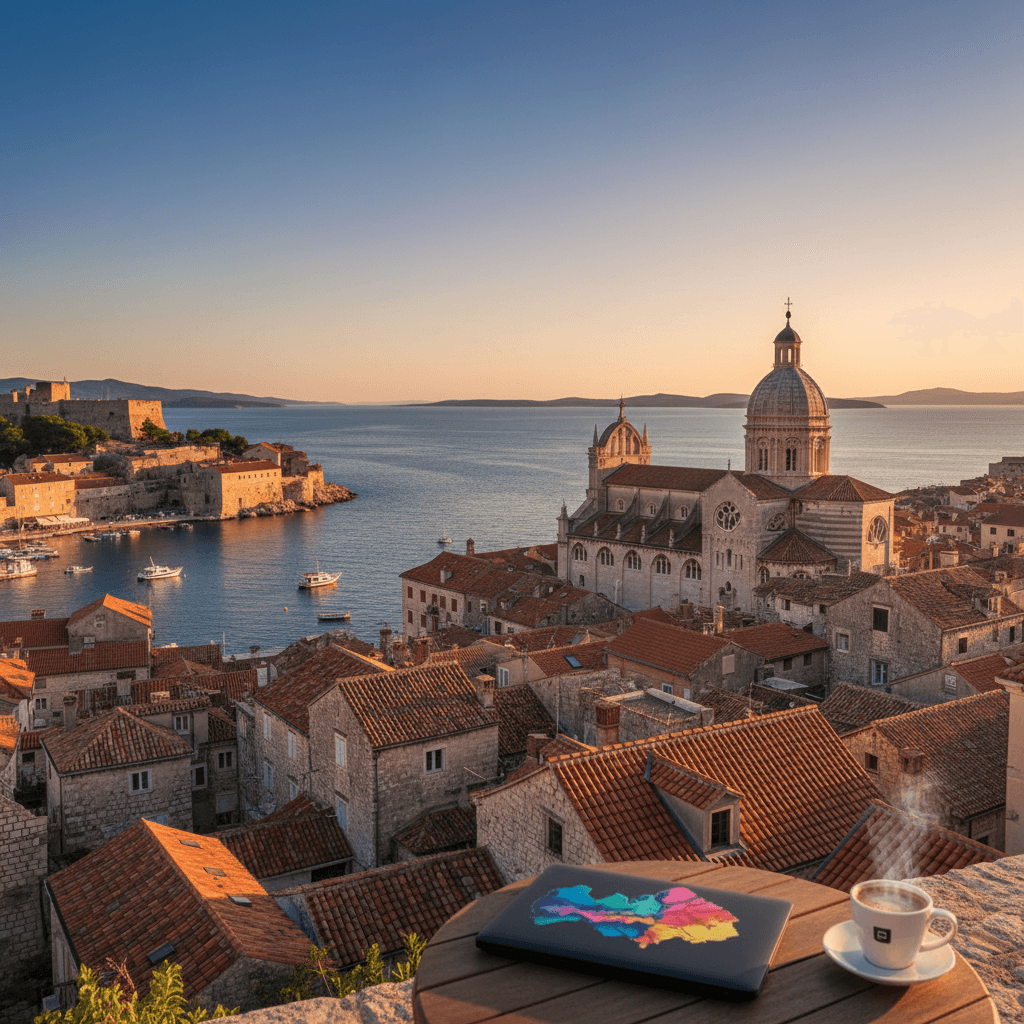
Šibenik
🇭🇷 Croatia
The Dalmatian Slow-Burn
While the crowds swarm Split and Dubrovnik, Šibenik remains the cool, understated sibling of the Adriatic coast. It is a city of stone, built entirely of white limestone that glows under the Mediterranean sun. Unlike the more frantic tourist hubs, Šibenik feels lived-in. You will hear the clinking of coffee spoons and the local dialect echoing through steep, narrow alleys that haven't changed much since the Middle Ages. It is the only city in Croatia with two UNESCO Heritage sites, yet it maintains a gritty, authentic edge that appeals to nomads who find Zadar too sleepy and Split too loud.
The vibe here is defined by the "pomalo" philosophy, a Dalmatian way of life that translates roughly to "take it easy." Productivity here isn't about the 9 to 5 grind; it is about finding a rhythm between a morning deep-work session and an afternoon boat trip to the Kornati islands. You are surrounded by water and stone, with Krka National Park just a short drive away, offering a backyard of waterfalls and hiking trails that most people only see on postcards.
Cost of Living
Your Euro goes further here than in the capital or the southern islands. While prices are creeping up, Šibenik remains accessible for mid-range budgets. Most nomads find that a comfortable life here costs significantly less than in Western Europe.
- Budget Tier: €1,200 to €1,800 per month. This covers a room in a shared apartment, plenty of €5 to €10 street food like burek or pizza slices, and using the local bus system.
- Mid-Range Tier: €2,000 to €3,000 per month. This is the sweet spot for most expats, allowing for a private 1-bedroom apartment (usually €500 to €800), regular dinners at local konobas, and weekend trips.
- Comfortable Tier: €3,500+ per month. This gets you a high-end stone house in the Old Town, frequent fine dining, and private boat rentals.
Where to Plant Your Flag
Choosing a neighborhood in Šibenik depends on how much you value silence versus convenience. The city is vertical, so be prepared for stairs regardless of where you land.
Old Town (Stari Grad)
- Best For: First-timers and solo travelers who want to be in the heart of the action.
- The Draw: You are steps away from the St. James Cathedral and the waterfront. The atmosphere is unmatched, with centuries of history outside your front door.
- The Downside: It can get loud during the summer festivals, and hauling groceries up stone steps is a genuine workout.
Coastal Suburbs (Banj Beach area)
- Best For: Long-term nomads and those who need a morning swim to function.
- The Draw: It is much quieter than the center. You get incredible views of the fortress and easy access to the city's main pebble beach.
- The Downside: You'll have fewer cafe options for working, and it feels a bit isolated in the dead of winter.
Connectivity and the Workspace
Internet in Šibenik is generally reliable, with most apartments hitting 40 to 50 Mbps. If you need a dedicated office environment, the scene is still emerging. Many nomads hop on a bus to Split to use Saltwater or The Works for a few days of intense networking. Locally, the culture revolves around "office-cafes." You won't be kicked out for sitting with a laptop for two hours, provided you keep the coffee orders coming. For mobile data, grab a SIM from Hrvatski Telekom or A1 for about €10 to €20; the 5G coverage along the coast is surprisingly strong.
Practical Realities
Getting around is simple. The city is highly walkable, though the terrain is hilly. For longer trips, the Liburnija bus lines connect you to Zadar and Split for under €10. If you are flying in, you'll land at either Split or Zadar airport, both about an hour away. Safety is a non-issue; Croatia consistently ranks as one of the safest spots in Europe for solo travelers. You can walk home at 2:00 AM through the stone corridors without a second thought. Just remember that English is widely spoken by anyone under 40, but learning a simple "Hvala" (thanks) goes a long way with the older locals at the green market.
The Dalmatian Sweet Spot
If you're looking for the Adriatic lifestyle without the eye-watering price tags of Dubrovnik or the summer chaos of Split, Šibenik is your answer. It's a city that feels authentic because it is. While nearby hubs have leaned heavily into tourism, Šibenik maintains a slower, more deliberate pace that suits remote workers who actually want to get things done between swims.
Living here means trading high-speed metropolitan stress for medieval stone alleys and views of the Kornati archipelago. Most nomads find their money goes significantly further here than in Western Europe, though you'll still feel the "coast tax" during the peak months of July and August.
Monthly Budget Breakdowns
Your total spend depends heavily on how much you prioritize a sea view and whether you're comfortable using local grocery stores over daily restaurant visits.
- Budget Nomad: €1,200 to €1,800. This covers a studio or shared apartment in a quieter neighborhood like Varoš, plenty of street food like €5 to €10 burek or pizza slices, and a focus on free outdoor activities like hiking near Krka.
- Mid-Range: €2,000 to €3,000. This is the sweet spot for most. You'll get a private 1-bedroom apartment, eat out at mid-range konobas where meals run €15 to €25, and have plenty left over for weekend boat rentals or trips to the islands.
- Comfortable: €3,500+. At this level, you're looking at a premium apartment in the Old Town or a coastal villa, frequenting upscale spots like Pelegrini, and utilizing private transport or boat charters.
Housing and Neighborhoods
Finding a long-term rental can be tricky if you only look at Airbnb. Expats recommend using njuskalo.hr to find local listings. Just keep Google Translate open, as many landlords prefer communicating in Croatian initially.
Old Town (Stari Grad)
- Best For: Solo travelers who want to be in the heart of the action.
- Rent: €700 to €900 for a decent 1-bedroom.
- Pros: You're steps away from the cathedrals, the best cafes, and the waterfront.
- Cons: It gets noisy with summer foot traffic, and those stone walls can be magnets for spotty WiFi.
Coastal Suburbs (Banj Beach area)
- Best For: Nomads who want a morning swim before their first Zoom call.
- Rent: €600 to €800.
- Pros: Incredible views, quieter nights, and easy access to the city's main beach.
- Cons: Fewer grocery options and a longer walk to the central coworking vibes.
Krka Outskirts
- Best For: Families or those with a car who value nature over nightlife.
- Rent: €500 to €700.
- Pros: More space for your money and immediate access to national park trails.
- Cons: You'll feel isolated without a vehicle; public transport is reliable but infrequent.
Staying Connected
While Šibenik doesn't have a massive dedicated coworking scene yet, the cafe culture is strong. You'll see locals lingering over a single espresso for hours, and most won't mind if you bring a laptop as long as it's not the middle of the lunch rush. For a dedicated office environment, many nomads take the short trip to Split to use Saltwater Split or The Works, which offer day passes for €15 to €20.
For your own setup, grab a local SIM from Hrvatski Telekom or A1. You can get unlimited data packages for €10 to €20 per month. Fixed broadband in apartments usually clocks in around 45 Mbps, which is plenty for video calls, though it's always smart to ask for a speed test before signing a lease.
Practical Expenses
Daily life costs are manageable if you shop like a local. Public buses are affordable at roughly €1 to €2 per ride, and the city is incredibly walkable. If you're arriving from the airport, expect to pay about €10 for a shuttle from Split or Zadar. For banking, most expats stick with Revolut or Wise to avoid local ATM fees, though cash is still king in smaller family-run taverns.
Solo Travelers: Stari Grad (Old Town)
If you want to be in the thick of it, the historic core is where you'll spend your days. It's a maze of white stone alleys and steep stairs that eventually spill out onto the waterfront. Living here means you're steps away from the Cathedral of St. James and the best espresso bars in the city. It's the most social part of Šibenik, making it easy to meet people at spots like Vintage Bar or while grabbing a slice of pizza at a local pekarna.
- The Vibe: Historic, social, and very walkable.
- Pros: You won't need a car, and the atmosphere is unmatched.
- Cons: It gets loud during the summer festival season, and those stone stairs are a workout if you're carrying groceries.
- Estimated Rent: €600 to €900 for a studio or small one bedroom.
Digital Nomads: Coastal Suburbs and Banj
For those who need a dedicated workspace and a view of the Adriatic, the areas stretching toward Banj Beach are the sweet spot. You get a bit more breathing room than the Old Town but can still walk to the center in 15 minutes. While Šibenik doesn't have a massive dedicated coworking space yet, many nomads set up shop in cafes with sea views or take a short bus ride to Split to use The Works or Saltwater when they need a community fix. The WiFi in these newer residential buildings tends to be more stable than in the ancient stone houses downtown.
- The Vibe: Relaxed coastal living with easy beach access.
- Pros: Quieter nights and better infrastructure for remote work.
- Cons: Fewer dining options right on your doorstep compared to the center.
- Monthly Budget: €2,000 to €3,000 for a mid range lifestyle including a private apartment.
Families: The Outskirts and Krka Proximity
Families often look toward the quieter residential outskirts or neighborhoods heading inland toward Krka National Park. These areas offer more modern housing with actual yards and easier parking, which is a nightmare in the center. You're closer to the hiking trails and the famous waterfalls, providing plenty of weekend activities for kids. It feels much more like a local community and less like a tourist hub.
- The Vibe: Suburban, safe, and nature focused.
- Pros: More square footage for your money and proximity to the great outdoors.
- Cons: You'll definitely want a car or a scooter to get into town for errands.
- Local Tip: Use njuskalo.hr with a browser translator to find long term rentals that aren't listed on tourist sites.
Expats: Varoš and Baldekin
The Varoš neighborhood (not to be confused with the one in Split) and Baldekin are where long term residents tend to settle. These areas feel authentic and lived in, with local markets, pharmacies, and schools nearby. It's where you'll find the best "peka" restaurants that aren't trying to lure in cruise ship passengers. Expats appreciate the lower cost of living here while still being within a 10 minute walk of the Riva.
- The Vibe: Authentic Dalmatian life.
- Pros: Lower prices for groceries and coffee; strong sense of community.
- Cons: The architecture is a mix of old stone and socialist era blocks, which isn't always "postcard perfect."
- Daily Costs: Cheap eats like burek or street food run €5 to €10, while a nice dinner for two is usually around €40 to €50.
Connectivity and Speed
You won't have to worry about falling off the grid in Šibenik. The city benefits from Croatia's solid infrastructure, with fixed broadband speeds averaging around 66 Mbps with top providers reaching 100+ Mbps. Most apartments in the Old Town or near Banj Beach come with free WiFi, though thick stone walls in historic buildings can occasionally be a signal killer. If you're planning on heavy video calls, it's a good idea to ask your host for a speed test screenshot before you book.
For a backup, grab a local SIM card as soon as you arrive. Hrvatski Telekom and A1 are the most reliable providers. You can pick up a tourist SIM at most newsstands (look for the "Tisak" kiosks) for about €10 to €20. These usually come with massive or even unlimited data allowances for a week or two, which is perfect if you want to work from a terrace overlooking the Adriatic.
The Coworking Scene
Šibenik is still growing its dedicated remote work infrastructure. While you won't find a massive WeWork here, the community is tight-knit and organic. Many nomads use the city as a quieter base and head to nearby hubs when they need a formal office environment. If you need a dedicated desk, you might find yourself taking the short trip to Split or Zadar.
- The Works (Split): A popular choice for those willing to commute for a day of networking. It's located near Firule beach; contact The Works directly for current day pass rates, as pricing varies.
- Saltwater Split: Located near the historic core, this spot is great for meeting other expats and offers day passes for €15 to €20.
- Local Alternatives: In Šibenik itself, many nomads treat the city library or quiet hotel lobbies as makeshift offices during the off-season.
Work-Friendly Cafes
The local culture revolves around coffee, and the "fjaka" mindset means nobody is going to rush you out of your seat. While not every spot has power outlets at every table, the WiFi is generally reliable enough for a few hours of emails. Basta is a favorite for its fast connection and social atmosphere, even if it's a bit of a trek to their larger locations. In the Old Town, look for spots with tucked-away courtyards where the glare on your screen won't be an issue.
Most nomads recommend Banj Beach for afternoon sessions. There are several cafes along the promenade where you can work with a view of the St. James Cathedral across the water. Just keep in mind that during the peak of summer, these spots get loud and crowded. If you need deep focus, aim for the morning hours before the day-trippers arrive.
Practical Tech Tips
- Power Outlets: Croatia uses Type C and F plugs (standard European two-pin). Cafes aren't always swimming in outlets, so bring a fully charged power bank.
- Language in Tech: Most IT staff and shop clerks speak excellent English. If you're looking for tech repairs or specific cables, head to the larger shopping centers on the outskirts of the city.
- Digital Nomad Visa: If you're planning to stay long-term, Croatia's digital nomad permit is a game changer. It allows you to stay for up to 18 months, provided you can prove a monthly income of roughly €2,500.
Overall, Šibenik is better suited for the "laptop adventurer" than the corporate climber. It's a place where you finish a sprint and immediately jump into the sea or hike toward Krka National Park. The internet is fast enough to get the job done, but the lifestyle is designed to make you want to close the lid as early as possible.
A Safe Haven on the Adriatic
You'll quickly notice that Šibenik operates at a different speed than the frantic energy of Split or Dubrovnik. The city feels remarkably safe, even for solo travelers wandering the stone alleys of the Old Town after dark. Violent crime is nearly nonexistent here, and the general vibe is one of quiet, Mediterranean security. Most nomads feel comfortable carrying their laptops and gear between seaside cafes without much worry.
While the risk of petty theft is low, it's always smart to keep an eye on your belongings in crowded spots like Banj Beach or the ferry terminals. If you're staying in the more modern outskirts or near Krka National Park, the safety level remains high, though these areas can feel quite deserted in the winter months. If you ever find yourself in an urgent situation, the universal emergency number is 112, which connects you to police, fire, and medical services.
Healthcare Infrastructure
For a smaller city, Šibenik is well equipped. The Šibenik General Hospital (Opća bolnica Šibensko-kninske županije) is the primary facility for the region. It handles everything from emergency room visits to specialist consultations. While the staff is highly skilled, the facilities might look a bit older than what you'd find in Western Europe. However, English proficiency among doctors is generally excellent, so you won't have much trouble explaining your symptoms.
For minor issues, pharmacies (known locally as Ljekarna) are everywhere. They are usually open from 8:00 AM to 8:00 PM, but there's always a designated 24 hour pharmacy on duty for late night needs. Look for the green cross sign; the rotating schedule for the night pharmacy is posted on the door of every closed one.
Insurance and Costs
If you're visiting on the Croatia Digital Nomad Visa, you'll need to prove you have health insurance that covers you for the duration of your stay. EU citizens can use their EHIC card for state healthcare, but most long term nomads opt for private insurance like SafetyWing or World Nomads to cover private clinic visits and medical repatriation.
- GP Visit: Expect to pay around €30 to €50 for a private consultation if you don't have local insurance.
- Prescriptions: Many common medications are affordable, often costing between €5 and €15.
- Dental Care: Croatia is a popular spot for dental tourism. A standard cleaning in Šibenik usually runs about €40 to €60.
Staying Healthy and Active
The biggest health "risk" in Šibenik is probably the summer sun. Temperatures frequently hit 30°C to 35°C in July and August, and the Adriatic sun is deceptively strong. Locals live by the rule of staying out of the direct heat between 12:00 PM and 4:00 PM. Hydration is easy since the tap water in Šibenik is perfectly safe to drink and actually quite high quality.
For mental health and fitness, most nomads take advantage of the natural landscape. You can swim in the crystal clear waters right off the city promenade or take a short bus ride to the hiking trails near St. Anthony’s Channel. The air quality is superb, and the Mediterranean diet, heavy on local olive oil and fresh fish from the Kornati region, makes it easy to maintain a healthy lifestyle while working remotely.
Getting Around Šibenik
Šibenik is a city made for walking. The medieval Old Town is a dense, car free labyrinth of stone stairs and narrow alleys that will give your calves a serious workout. Most nomads find that once they're in the historic center, their feet are the only transportation they need to reach the cathedrals, seaside cafes, and local markets.
Public Transit and Intercity Travel
For trips beyond the city core, the local bus network operated by Liburnija is your best bet. Tickets are cheap, usually costing between €1 and €2 per ride. If you're looking to explore the wider Dalmatian coast, the main bus station is well connected to Split and Zadar, with tickets typically ranging from €5 to €10.
Since Šibenik doesn't have its own airport, you'll likely land in Split or Zadar. A shuttle or bus from Split Airport, which is about 60km away, costs around €10 and takes roughly an hour. It's a straightforward commute that most expats find manageable even with heavy luggage.
Ride-Hailing and Rentals
While you won't find a massive fleet of cars, Uber and Wizi (formerly Cammeo) operate in the region. They're reliable for quick hops to the outskirts or getting home after a late dinner when you don't feel like tackling the Old Town stairs. Expect to pay more during the peak summer months when demand spikes.
- Bike and Scooter Rentals: Near Banj beach and the waterfront, you can grab a rental for about €10 a day. It's a great way to cruise the promenade, though the hills in the upper parts of town might make you regret a traditional bicycle.
- Ferries: This is a coastal city, so "getting around" often involves the water. Regular boat lines connect the mainland to the nearby islands of the archipelago, with prices varying based on the distance.
Navigation Tips for Nomads
If you're planning to stay in the coastal suburbs or near the entrance to Krka National Park, having your own wheels becomes much more practical. While the city is walkable, the outskirts are more spread out and the bus frequency drops off once you leave the central hubs.
Most travelers recommend downloading Google Maps offline, as the winding stone streets of the Stari Grad can occasionally mess with your GPS signal. For apartment hunting or checking local services, njuskalo.hr is the local go to, though you'll want to use a browser with a translation feature to navigate the listings. If you're heading out for a day trip to the Kornati islands, expect boat excursions to start around €30, which usually includes a full day on the water.
Walkability by Area
- Old Town (Stari Grad): Extremely high walkability. Everything is within a 10 to 15 minute trek, but be prepared for hundreds of stone steps.
- Banj Beach / Coastal Suburbs: High walkability for leisure. It's a flat, scenic walk along the water to reach the city center.
- Krka Outskirts: Low walkability. You'll definitely want a car or a reliable bus schedule if you're based out here for the nature access.
The Local Language Landscape
In Šibenik, you'll find that language is rarely a barrier to getting things done. While Croatian is the official tongue, English proficiency is remarkably high, especially among the younger generation and anyone working in the tourism or service sectors. You can walk into most cafes in the Old Town or shops along the waterfront and expect a fluent response in English. It is a common experience for nomads to find that even the staff at the local post office or the Hrvatski Telekom shop speak enough English to help you set up a SIM card without a hitch.
That said, Šibenik isn't as heavily commercialized as Split or Dubrovnik. This means the pace is slower and the interactions feel more personal. While you won't need Croatian for survival, learning a few words goes a long way in building rapport with the locals. It shows you aren't just passing through but are respecting the Dalmatian way of life. If you're staying long term on a Digital Nomad Visa, which can grant you up to 18 months of residency, you'll need to prove a monthly income of at least €3,295, and picking up the basics will turn you from a visitor into a neighbor.
Key Phrases for Your Daily Routine
Most nomads find that a handful of polite terms are all they need to navigate a standard day. Whether you're ordering a coffee or browsing the local markets, these basics will serve you well:
- Bok: This is the universal "Hello" or "Hi." You'll hear it everywhere, from the beach to the grocery store.
- Hvala: "Thank you." Use it often; Croatians appreciate the gesture.
- Molim: This means "Please," but it also doubles as "You're welcome."
- Koliko košta?: "How much does it cost?" Practical for the outdoor markets where prices aren't always tagged.
- Dobar dan: A more formal "Good day," used when entering a shop or meeting someone for the first time.
- Pivo, molim: "A beer, please." Essential for those sunset sessions by the Adriatic.
Communication Tools and Practicalities
For more complex tasks, like reading rental agreements or navigating the local classifieds site njuskalo.hr, Google Translate is your best friend. Many nomads use the camera feature on the app to translate menus at traditional taverns or to decipher utility bills. Since 1BR apartments in the region typically range from €500 to €800, you'll want to be sure you understand the terms before signing anything.
Staying connected is straightforward. For mobile data, grab a SIM from Hrvatski Telekom or A1 for €10-25 per month depending on promotions, which usually includes a generous amount of data. Having a local number makes it much easier to coordinate with landlords or use ride hailing apps like Cammeo if you're planning a trip out toward the Krka National Park outskirts.
Social Connection and Community
Because Šibenik is smaller and more intimate than the major hubs, the nomad community is growing but still tight knit. You won't find the massive coworking crowds of Split, but you will find plenty of digital nomads working from seaside cafes. Expats often recommend joining Facebook groups for Dalmatia or checking InterNations to find meetups. Since many nomads in Šibenik eventually drift toward Split for social events, keeping an eye on groups like Saltwater Split or The Works is a smart move to stay in the loop for regional networking and weekend gatherings.
Mediterranean Rhythm and Seasonal Shifts
Living in Šibenik means aligning your workflow with the Adriatic sun. The city experiences a classic Mediterranean climate, characterized by bone-dry, hot summers and cool, damp winters. For most nomads, the sweet spot lies in the shoulder seasons of May to June and September to October. During these windows, you'll enjoy temperatures between 20°C and 25°C, perfect for working from a seaside cafe without the sweltering heat or the heavy summer crowds.
July and August are the peak of the heat, with thermometers frequently hitting 30°C to 35°C. This is when the city truly wakes up, but it's also when accommodation prices spike and the narrow stone streets of the Old Town hold onto the heat long after sunset. If you're a fan of island hopping through the Kornati archipelago or diving in the crystal-clear waters after your final Zoom call, this is your prime time. Just ensure your apartment has reliable air conditioning, as it's a non-negotiable during these months.
The Winter Lull
From November through March, Šibenik takes a deep breath. Temperatures average between 5°C and 15°C, and the "Bura"—a fierce, cold north wind—can occasionally whip through the streets. While it rarely freezes, the rain picks up significantly in January and February. Many tourist-centric businesses close for the season, which gives the city an incredibly authentic, quiet feel. It's a productive time for deep work, though you might find the social scene a bit thin compared to the lively summer months.
Best Times for Specific Activities
- Swimming and Water Sports: Mid-June to late September. The water remains warm enough for a dip well into October, often hovering around 22°C.
- Hiking and National Parks: April, May, and October. Exploring Krka National Park is much more enjoyable when you aren't fighting the August humidity or the peak tour-bus crowds.
- Budget Stays: November to March. You can often negotiate long-term monthly rates with landlords who would otherwise have empty units.
Monthly Climate Snapshot
- January: Average high of 10°C. Expect the highest rainfall of the year. Great for hunkering down in a cozy cafe, but bring a waterproof jacket.
- May: Average high of 22°C. The landscape is lush, the sun is out, and the "pre-season" energy is palpable.
- July: Average high of 30°C. Very low rainfall and long daylight hours. Perfect for those who want to live the quintessential Mediterranean summer.
- October: Average high of 20°C. The sea is still warm, the crowds have thinned, and the light is spectacular for photography.
Most expats recommend arriving in early September. You get the benefit of the warm water and the tail end of the summer events, but you'll avoid the chaotic peak-season pricing. It's the ideal time to settle into a routine before the weather turns crisp in late autumn.
Making the Move to Šibenik
Living in Šibenik feels like catching your breath. While Split and Zadar get the lion's share of the crowds, this city offers a slower, more authentic Dalmatian pace. You'll find yourself trading frantic commutes for morning coffees on the stone steps of the old town and weekend boat trips to the Kornati islands. It's a place where the local culture hasn't been buffeted by mass tourism, giving you a front-row seat to the real Mediterranean lifestyle.
Cost of Living and Budgeting
While specific data for 2025 is still emerging, Šibenik remains more affordable than the bigger hubs to the north and south. Most nomads find they can live comfortably on a mid-range budget of €2,000 to €3,000 per month. If you're sharing a flat and sticking to local markets, you can squeeze by on €1,200 to €1,800, while a high-end lifestyle with a private terrace and frequent dining out will run €3,500+.
- Housing: Expect to pay €500 to €800 for a solid one-bedroom apartment. Use njuskalo.hr to find local listings, but keep Google Translate open as most ads are in Croatian.
- Food: A casual meal at a konoba will cost €15 to €25. If you're grabbing a quick slice of pizza or a burek, you'll spend about €5 to €10.
- Connectivity: Pick up a local SIM from Hrvatski Telekom or A1 for roughly €10 to €20 a month. Most plans offer generous or unlimited data.
Choosing Your Neighborhood
Where you park your laptop matters. The city is compact, but each pocket has a different energy.
Old Town (Stari Grad)
- Best For: First-timers and solo travelers who want everything within walking distance.
- The Vibe: Historic, stone-paved, and incredibly scenic.
- Pros: You're steps away from the cathedral and the best cafes.
- Cons: It gets noisy during the summer festivals and many apartments lack modern insulation.
Coastal Suburbs (Near Banj Beach)
- Best For: Long-term nomads and expats who want a view.
- The Vibe: Relaxed residential streets with easy beach access.
- Pros: Generally quieter than the center and easier to find parking.
- Cons: You'll have a 15 to 20 minute walk to get to the main social hubs.
Outskirts Toward Krka
- Best For: Families or those who prioritize nature over nightlife.
- The Vibe: Rural and spacious.
- Pros: Close to hiking trails and the national park; rent is significantly cheaper.
- Cons: You'll absolutely need a car or scooter to get around comfortably.
The Remote Work Scene
Dedicated coworking spaces are still popping up in Šibenik, so many nomads rely on the city's strong cafe culture. If you need a formal office environment, some travelers take the bus to Split to use Saltwater Split or The Works, which cost around €15 to €20 for a day pass. Locally, you'll find that most cafes are happy to let you work for a few hours if you keep the coffee orders coming. Internet speeds are reliable, usually hovering around 46 Mbps for fixed lines, though old stone buildings in the center can sometimes have patchy WiFi signals.
Logistics and Getting Around
Šibenik is a walker's dream. The old town is entirely pedestrian, and most daily errands can be done on foot. For longer trips, Liburnija buses run local routes for about €1 to €2. If you're arriving from abroad, you'll likely land at Split Airport, which is about 60km away. A shuttle or bus from the airport usually costs around €10. For daily errands, Uber and Cammeo are the go-to apps for quick rides.
The Digital Nomad Visa
Croatia has one of the most accessible nomad permits in Europe. You can apply for a stay of up to 12 months (with some extensions possible up to 18 months). You'll need to prove a monthly income of at least €3,295, have health insurance, and provide a clean criminal record. It's a straightforward process that you can start online or at a local police station after you arrive.
Health and Safety
The city is remarkably safe, even late at night. Standard common sense applies, but violent crime is nearly non-existent. For healthcare, Šibenik General Hospital handles emergencies, and pharmacies (ljekarna) are easy to find for minor ailments. In any emergency, dial 112.
Need visa and immigration info for Croatia?
🇭🇷 View Croatia Country GuideEasy Landing
Settle in, no stress