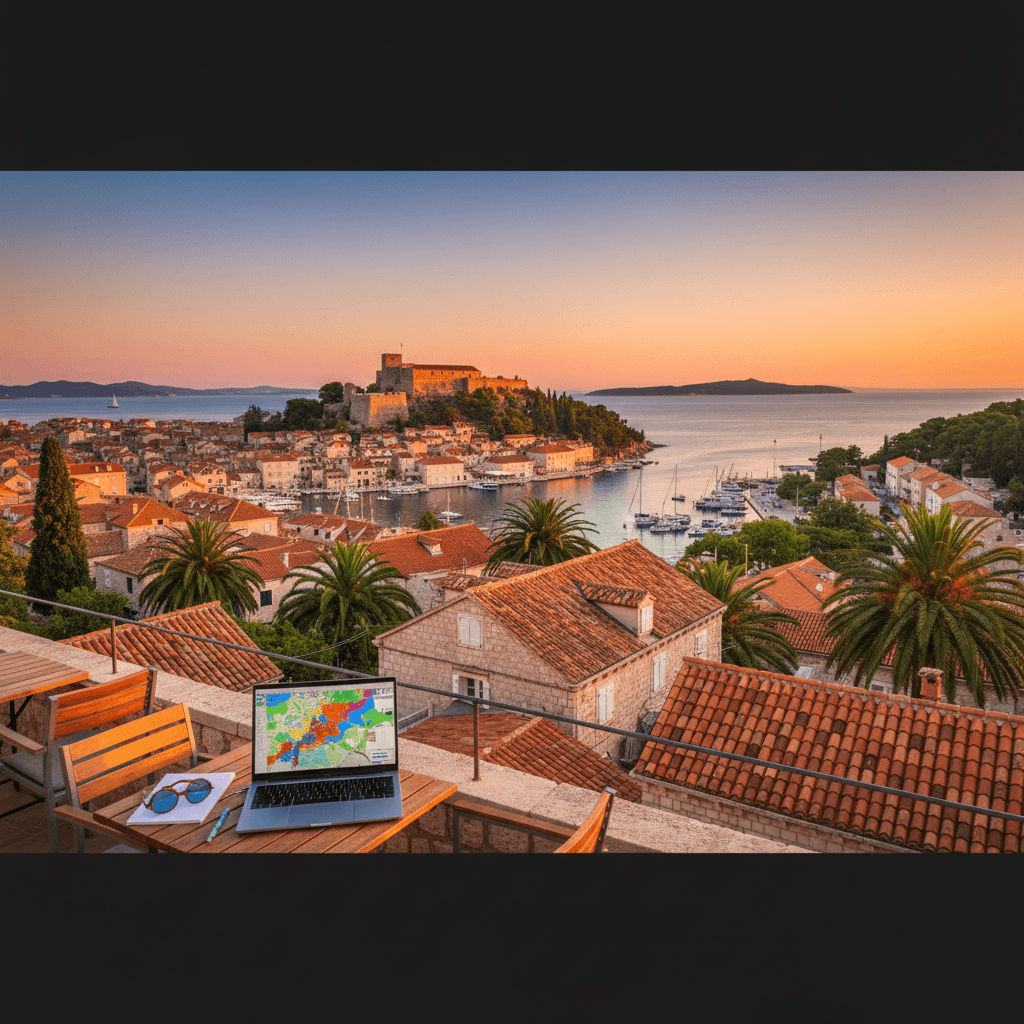
Hvar Town
🇭🇷 Croatia
The Dual Soul of the Adriatic
Hvar Town is a bit of a shapeshifter. During the peak of summer, it earns its reputation as the Ibiza of Croatia, where the Riva promenade transforms into a high energy runway of superyachts and champagne bars. But for the nomad looking at 2025 and 2026, the real magic happens in the shoulder seasons. When the July heat breaks and the party crowds thin, you're left with a town that feels like a sun drenched limestone sanctuary.
What sets Hvar apart from hubs like Split or Zadar is the sheer sensory overload of the island. You aren't just working from a Mediterranean town; you're working surrounded by the scent of wild lavender and rosemary. The light here is famously bright, reflecting off the polished marble of St. Stephen’s Square. Most nomads find that the lifestyle encourages a "slow work" mentality. You might hammer out emails for four hours, then take a fifteen minute walk to a rocky cove for a dip in water so clear it looks like glass.
The vibe is decidedly upscale but grounded. You’ll see locals playing balote (a traditional bowling game) just a few streets away from high end seafood spots. It’s a place where you can wear linen and feel fancy on the Riva, or hike up to the Fortica Fortress in dusty boots for a sunset view that makes the monthly rent feel like a bargain. It’s less about "hustle culture" and more about finding a high quality of life between the sea and the stone.
The Practical Reality
While the atmosphere is dreamy, the infrastructure requires a bit of strategy. Hvar doesn't have a massive, dedicated coworking scene like Lisbon or Bali. Instead, the town functions as a "cafe office" society. You’ll see remote workers tucked into the corners of cafes around the Pjaca (the main square), though veteran expats recommend bringing your own 5G SIM card from A1 or Hrvatski Telekom. The public WiFi is notoriously finicky for video calls, but the 5G coverage is surprisingly robust across the town center.
Living here means embracing a pedestrian lifestyle. The town is almost entirely walkable, and most nomads choose to stay within a ten minute radius of the center to stay close to the action. If you prefer quiet, the residential edges offer a more authentic island feel at a lower price point, though you'll likely want to rent a scooter for €10 to €20 a day to get groceries or reach the more secluded beaches like Dubovica.
Budgeting for the Island Life
Hvar is one of Croatia's more expensive destinations, but it’s still manageable compared to Western European capitals. Your biggest variable will be the time of year. Prices for everything, especially housing, can double or triple in July and August. Most long term travelers aim for a mid range budget of around €2,000 per month to live comfortably without constantly checking their bank app.
- Housing: Expect to pay €700 to €1,000 for a solid one bedroom apartment in the center. If you’re looking for those iconic Riva views, you’re easily looking at €1,200 or more.
- Dining: A meal at a mid range konoba (traditional tavern) usually runs between €15 and €25. Groceries are affordable, but remember that island prices are always a tick higher than the mainland because everything comes in by ferry.
- Connectivity: A month of unlimited data will cost you roughly €10 to €20. It’s the best investment you’ll make here.
Why Nomads Choose Hvar
The draw here isn't just the the Digital Nomad residence permit, which makes staying for up to 18 months relatively painless. It’s the community that forms around the shared love of the outdoors. You’ll meet people on the ferry from Split or while grabbing a coffee at a waterfront bar. There’s a collective understanding that work is something you do so you can spend the rest of your time on a boat to the Pakleni Islands or exploring the ancient streets of Stari Grad.
It’s not the place for someone who needs a tech lab or a 24/7 metropolitan buzz. It’s for the professional who wants to trade the subway for a catamaran and a cubicle for a terrace overlooking the Adriatic. In Hvar, the "vibe" is essentially an invitation to breathe a little deeper while staying productive.
The Price of Paradise
Living in Hvar Town feels like a luxury, and during the peak summer months of July and August, your bank account will certainly feel the pressure. However, for digital nomads who time their stay for the shoulder seasons or the quiet winter months, the island becomes surprisingly manageable. While it's pricier than Zagreb or the interior of Croatia, it remains significantly more affordable than coastal hotspots in France or Italy.
Most nomads find that a monthly budget of €2,000 provides a comfortable mid range lifestyle. This covers a decent apartment, regular meals out at the Riva, and enough left over for weekend boat trips to the Pakleni Islands. If you're on a tighter budget, you can scrape by on €1,200, but you'll likely be living on the outskirts and cooking most of your meals at home.
Accommodation Breakdown
Rent is your biggest variable. Prices fluctuate wildly based on the proximity to the harbor and the time of year. If you're looking for a long term stay, try to negotiate a monthly rate starting in October, when landlords are eager to fill rooms left vacant by summer tourists.
- Budget Tier: Expect to pay €400 to €600 for a studio on the outskirts or residential edges. You'll have a bit of a walk to the center, but it's much quieter.
- Mid Range: A 1BR apartment in central Hvar Town typically runs between €700 and €1,000. These spots are usually walkable to the main square and local markets.
- Comfortable: If you want those iconic Riva promenade views and high end finishes, be prepared to shell out €1,200 or more.
Food and Dining
Groceries are reasonably priced if you shop where the locals do. Fresh produce from the local markets and staples from Konzum or Tommy supermarkets will keep your costs down. Eating out is where things get expensive, especially in the glitzy restaurants lining the waterfront.
- Street Food and Quick Bites: A slice of pizza or a burger will cost you €5 to €10.
- Mid Range Dining: A solid meal at a local konoba (tavern) with a glass of island wine usually lands between €15 and €25.
- Fine Dining: Upscale seafood spots and trendy waterfront restaurants easily start at €40 per person and go up from there.
Connectivity and Transport
Since Hvar Town is incredibly compact, you won't spend much on transport. Most nomads simply walk everywhere. If you want to explore the rest of the island, like the historic streets of Stari Grad, you'll need to budget for the bus or a rental.
- Getting Around: Local buses are affordable, but many expats recommend renting a scooter for about €10 to €20 a day to find the best secluded beaches.
- Internet: Since dedicated coworking spaces are still rare on the island, you'll likely work from home or a cafe. A high speed 5G SIM card from A1 or Hrvatski Telekom costs around €10 to €20 a month for unlimited data, which is a lifesaver when cafe WiFi gets spotty during the tourist rush.
- Home Fiber: If your rental doesn't include it, a standard home connection runs about €30 to €50 per month.
The Bottom Line
To live well in Hvar Town without constantly checking your banking app, aim for a total monthly spend of €2,000 to €3,000. This allows you to enjoy the high energy of the island, take the occasional ferry to Split for shopping, and indulge in the local Mediterranean cuisine that makes living here so attractive in the first place.
The Social Nomad: Hvar Town Center (Riva)
If you want to be in the thick of it, the Riva promenade is your base. This is the heart of the island's social scene, where the Venetian architecture meets the Adriatic. Most nomads gravitate here because everything is walkable. You can grab a morning espresso at Hvar Town Square, work for a few hours on your laptop, and be at a beach club by 4:00 PM.
Living here means dealing with the noise of the summer party crowds, often compared to a Mediterranean Ibiza. It's the most expensive part of the island, with central studio apartments ranging from €700 to €1,000 per month. During the peak months of July and August, prices can spike even higher, and the streets get packed with travelers from the ferries.
- Internet: Reliable 5G coverage from A1 or Hrvatski Telekom. Cafe WiFi is okay for emails but bring a hotspot for video calls.
- Vibe: High energy, social, and very touristy.
- Best for: Solo travelers looking to meet people and those who don't want to rent a scooter.
The Long-Term Expat: Residential Edges and Podstine
Expats who stay for several months usually move toward the residential outskirts or the Podstine area. It's a 15 to 20 minute walk from the main square, which makes a world of difference for your sleep quality. You'll find more authentic local housing here, often with better kitchens and actual desks rather than just a small dining table.
Rent is more manageable in these pockets, typically falling between €400 and €600 if you book during the off-season. You'll likely want to use njuskalo.hr to find local listings, though you might need Google Translate to talk to landlords. It’s quieter, the grocery stores are less picked over, and you’re closer to the more secluded swimming spots like Bonj Beach.
- Rent: €500 average for a decent one-bedroom.
- Atmosphere: Calm, local, and scenic.
- Practicality: A scooter rental for €15 a day is recommended if you're hauling groceries or exploring the island's interior.
Families and Slow Travelers: Stari Grad and Vrboska
While not technically within Hvar Town, many families and digital nomad parents choose Stari Grad or Vrboska. Stari Grad is one of the oldest towns in Europe and offers a much slower pace than the main hub. It’s flat, which makes it far easier to push a stroller or bike around compared to the steep stone stairs of Hvar Town.
The cost of living here is roughly 20% lower than in the center of Hvar Town. You get more space for your money, and the community is much more family oriented. There are plenty of parks and the Stari Grad Plain, a UNESCO site, is perfect for weekend bike rides. You can still hop on a 20 minute bus to Hvar Town if you need a night out, but you’ll appreciate the silence when you return.
- Pros: Safe, pedestrian friendly, and significantly cheaper dining options.
- Cons: Limited nightlife and fewer English speaking nomad meetups.
- Transport: Regular buses connect to the ferry port and Hvar Town for about €4 to €6.
Solo Travelers: The Hostel and Guesthouse Loop
For solo travelers on a tighter budget, the area climbing up toward the Fortica Fortress is the place to be. It’s a workout for your calves, but the guesthouses here offer some of the best views of the Pakleni Islands. You’ll find a lot of "sobe" (rooms for rent) that cater to younger travelers and solo workers.
The prices here stay more consistent, and you're close to the Hvar Town Center without being right on top of the bars. Most solo nomads find that the community at the local cafes is the best way to network, as there aren't many formal coworking spaces yet. Grab a €15 unlimited data SIM, find a terrace with a view, and you've got the best office in Croatia.
- Food: Street food like burek or pizza slices for €5 to €10.
- Social: Easy to meet people at the Riva bars or on day trips to the Pakleni Islands.
- Tip: Stay here in May, June, or September for the best balance of weather and social life without the 30 degree heat.
Connectivity and Speed
Internet in Hvar Town is a bit of a mixed bag. Nationally, Croatia hits average speeds of over 100 Mbps download, and you'll find the infrastructure in the town center is surprisingly robust for an island. Most apartments and rentals now offer decent fiber or high speed broadband, but if you're staying on the residential edges or in an older stone building, thick walls can be the enemy of a stable signal.
Mobile data is your best friend here. The 4G and 5G coverage across the Riva and the main town square is excellent. Most nomads skip the public WiFi, which tends to crawl when the summer crowds arrive, and opt for a local SIM instead. Providers like A1 and Hrvatski Telekom are the go-to choices. You can pick up an unlimited data SIM for roughly €10 to €20 per month, which is plenty for tethering during Zoom calls or uploading large files.
The Coworking Situation
If you're looking for a dedicated, glass walled coworking office with ergonomic chairs and networking events, you won't find it in Hvar Town yet. The island doesn't have a formal coworking hub, so the community relies on a "work from anywhere" philosophy. Most remote workers treat the local cafes as their temporary offices, especially during the quieter morning hours.
The Riva promenade is lined with spots where nobody will blink if you open a laptop for an hour or two. However, these aren't the places for private client meetings. The background noise of espresso machines and tourists is constant. If you need a professional environment, your best bet is to book an Airbnb with a dedicated desk or head to one of the boutique hotels that offer quiet lounge areas for guests.
Cafe Culture for Nomads
Working from cafes is a staple of the Hvar lifestyle, but there's an etiquette to it. Stick to the larger spots around Hvar Town Square (Pjaca) where there's more space. During the peak months of July and August, table turnover is high, and sitting with a single coffee for four hours might get you some side eye. In the shoulder seasons of May or September, the vibe is much more relaxed.
- WiFi Reliability: Generally good for emails and Slack, but often unstable for video calls. Always have your 5G hotspot ready as a backup.
- Power Outlets: Rare in outdoor seating. Charge your devices fully before heading out, or carry a high capacity power bank.
- Cost: A coffee will set you back €3 to €5 in the center, which is essentially your "rent" for the morning.
Practical Setup Tips
Since you'll likely be working from your accommodation, vetting your host's internet speed is the first thing you should do before booking. Don't just take their word for it; ask for a screenshot of a speed test. If you're planning a long term stay via the Croatia Digital Nomad Visa, setting up a home contract with a local provider is possible, but most nomads find the prepaid SIM cards much easier to manage.
For those who absolutely need a traditional office environment once in a while, some travelers take the consistent catamaran to Split. It puts you within walking distance of several high end coworking spaces like Amosfera or The Works. It's a long commute, but it's a great way to batch your heavy meeting days while enjoying the island life the rest of the week.
Staying Safe on the Island
Hvar Town is remarkably safe, even by European standards. Most nomads feel comfortable walking home from the Riva promenade at 3:00 AM without a second thought. Crime is rare, and the island community is tight knit. You'll likely see locals leaving their doors unlocked or bikes leaning against stone walls without heavy chains.
The only real "danger" comes from the summer party scene. Between July and August, the town transforms into a high energy hub. While violent crime remains low, petty theft like phone or wallet snatching can happen in crowded clubs or on the beaches if you leave your bag unattended while swimming. Stick to the basic rule of thumb: keep your valuables in sight at the beach and don't leave your phone on an outdoor cafe table if you aren't sitting there.
Solo female travelers consistently rank Hvar as a top destination because of the respectful atmosphere. You won't find much of the aggressive catcalling common in other Mediterranean hotspots. If you ever feel uneasy, duck into a local konoba (tavern); the owners are usually more than happy to help you out.
Healthcare and Medical Services
For minor issues, your first stop should be the Ljekarna (pharmacy). There are several located near the main square, and the pharmacists usually speak excellent English. They can provide over the counter remedies for sunstroke, sea urchin stings, or the seasonal allergies that come with the island's famous lavender blooms.
If you need a doctor, the Hvar Health Center (Dom Zdravlja) is located just a short walk from the center. It handles basic emergencies and general consultations. For anything serious or specialized, you'll likely be stabilized and sent to the mainland via a fast catamaran or helicopter to the hospital in Split, which provides high level EU standard care.
- Emergency Number: Dial 112 for all emergency services (police, fire, or ambulance).
- Health Insurance: If you're on the Digital Nomad Visa, you'll need private health insurance or to pay into the Croatian state system (HZZO). EU citizens should always carry their EHIC card.
- Air Quality: The air here is some of the cleanest in Europe, with an AQI usually between 0 and 50. It's a massive draw for nomads looking to escape the smog of larger cities.
Practical Wellness Tips
The biggest health risk on Hvar is the sun. Temperatures regularly hit 33°C (91°F) in the summer, and the Adriatic reflection makes the UV index climb fast. Hydrate constantly; the tap water in Hvar is safe to drink and tastes great, so keep a reusable bottle on your desk.
If you're exploring the rocky coves, watch out for sea urchins. They love the clean water here. Most locals recommend buying a pair of €10 rubber swim shoes at any of the stalls near the harbor to save yourself a painful encounter. If you do get stung, don't try to pull the spines out with tweezers; soak the area in warm vinegar or olive oil to help them dissolve or slide out naturally.
Emergency Contacts and Apps
- Police: 192
- Fire Brigade: 193
- Ambulance: 194
- Sea Rescue: 195
Most expats recommend keeping the HAK (Croatian Automobile Club) app on your phone. Even if you don't drive, it provides real time info on ferry cancellations due to the "Bura" wind, which can occasionally trap you on the island during the winter months.
The Pedestrian Pace
Hvar Town is a dream for anyone who hates a long commute. The historic core is almost entirely pedestrian, meaning your primary mode of transport will be your own two feet. If you're staying central, you can reach the Riva promenade, the main square, and most cafe-work spots within 10 to 15 minutes. The limestone streets are beautiful but can be slick when wet, so leave the flimsy flip-flops for the beach and wear shoes with a bit of grip.
For those living on the residential hillsides, the walk into town is a great workout, though the climb back up in the 30°C August heat is less fun. Most nomads find that a central apartment saves them the cost and hassle of renting wheels entirely.
Scooters and Bikes
If you want to explore the hidden coves or visit the lavender fields of Brusje without relying on a schedule, a scooter is the local gold standard. You'll find rental shops scattered near the ferry terminal and bus station. Expect to pay between €40 and €65 per day, though you can often negotiate a weekly rate if you're staying for a month or more.
- E-bikes: These are becoming popular for the steep island terrain. They usually rent for about €25 per day.
- Parking: In the town center, parking is restricted. Scooters have dedicated spots near the waterfront, but cars are a nightmare to park and generally unnecessary unless you're living deep in the island's interior.
Island Transit: The Bus Network
While Hvar Town is the hub, you'll likely want to visit Stari Grad or Jelsa for a change of scenery. The local bus service is reliable and surprisingly affordable. The main bus station is located just behind the St. Stephen’s Cathedral. A one-way ticket to Stari Grad usually costs around €4 to €6. It's a scenic 20 to 30 minute ride that winds through the hills, providing some of the best views of the Adriatic you'll find without hiring a private boat.
Water Taxis and Ferries
Since Hvar is an island, "getting around" often involves getting on the water. To reach the Pakleni Islands for a remote afternoon of work or a swim, you'll use the small taxi boats lined up along the Riva. These usually run on a loop and cost roughly €5 to €15 depending on which beach you're heading to. They operate frequently during the summer but scale back significantly once the October winds pick up.
For trips back to the mainland, the Jadrolinija or Krilo catamarans are your best bet. These high-speed boats get you to Split in about one hour. It's a smooth ride, and most have decent enough Wi-Fi to send a few emails, though don't count on it for a Zoom call. Tickets are usually around €15 to €25.
Practical Transport Tips
- No Ride-Hailing: Don't bother looking for Uber or Bolt; they don't really operate here. Local taxis exist but are notoriously expensive, often charging €20 for even a short trip.
- Ferry Apps: Download the Jadrolinija app. It's the easiest way to check schedules and buy tickets on the fly without standing in line at the kiosk.
- Off-Season Shifts: Be aware that bus and ferry frequencies drop by 50% or more starting in November. If you're here for the winter, you'll need to be much more intentional about your travel timing.
The Local Linguistic Landscape
In Hvar Town, language is rarely a barrier to getting things done. While Croatian is the official tongue, the town has been a Mediterranean crossroads for centuries. Today, that translates to a high level of English proficiency, especially among the younger generation and anyone working in the hospitality sector. You will find that staff at Riva promenade cafes and local boutique owners speak English fluently, often with a level of ease that makes settling in feel seamless.
Italian is also widely understood and spoken, a nod to the island's deep historical ties with Venice. If you venture into more residential areas or smaller family run konobas, older residents might speak more German or Italian than English. Most nomads find that while they can survive entirely in English, learning a few Croatian basics goes a long way in building rapport with the locals.
Essential Phrases for Your Toolkit
Croatian is a Slavic language and can be a bit of a tongue twister for native English speakers. However, locals genuinely appreciate the effort when you try. Here are the staples you will use daily:
- Dobar dan (Doh-bar dahn): Good day. Use this when entering any shop or cafe.
- Hvala (Hvah-lah): Thank you. You will say this a dozen times a day.
- Molim (Moh-leem): Please, or "you're welcome" depending on the context.
- Bok (Bohk): A versatile, informal "Hi" or "Bye."
- Koliko košta? (Koh-lee-ko kosh-tah?): How much does it cost?
- Račun, molim (Rah-choon, moh-leem): The bill, please.
Digital Tools and Translation
For official business or navigating local services, technology is your best friend. Expats recommend keeping Google Translate downloaded for offline use, specifically for the camera feature. This is a lifesaver when you are staring at a wall of text on a utility bill or trying to decipher ingredients at the Konzum supermarket.
When searching for long term housing, you will likely end up on njuskalo.hr, the local equivalent of Craigslist. The site is entirely in Croatian, so using a browser with an auto translate extension is the only way to navigate the listings effectively. For real time communication with landlords or local friends, WhatsApp is the undisputed king of messaging on the island.
Communication Etiquette
The pace of communication in Hvar Town mirrors the "pomalo" lifestyle, a local philosophy that roughly translates to "take it easy" or "no rush." Don't expect lightning fast responses to emails from local businesses. A phone call or a face to face visit at a cafe is often more effective than a formal message.
During the peak summer months, the town is loud and energetic, but as the season winds down, a respectful quiet takes over. Being mindful of noise levels in residential buildings is important, as sound travels easily through the stone streets. In terms of connectivity, while you can get by on cafe WiFi for casual browsing, serious remote work requires a local SIM. Most nomads pick up an unlimited data 5G SIM from A1 or Hrvatski Telekom for about €10 to €20 per month to ensure they stay connected during video calls when the public signals dip.
The Sweet Spot: May, June, and September
If you're looking for that perfect balance of productive workdays and postcard-worthy afternoons, aim for the shoulder seasons. May, June, and September are the goldilocks months in Hvar Town. During these windows, temperatures hover comfortably between 20°C (68°F) and 28°C (82°F). You'll get enough Vitamin D to feel like you're on vacation, but it won't be so stifling that your laptop fan starts screaming during a Zoom call.
Expats generally prefer these months because the town feels breathable. The Riva promenade is lively but you won't have to elbow through crowds to find a table with decent WiFi. Most local businesses are fully open, the ferries to Split run frequently, and the Adriatic is warm enough for a post-work dip in the coves near the Franciscan Monastery.
Survival Guide for High Summer
July and August are when Hvar Town transforms into what many call the Ibiza of Croatia. It gets hot, with peaks often hitting 33°C (91°F) or higher. If you're sensitive to heat or noise, this might be your cue to head elsewhere. The town becomes a magnet for the yachting crowd and party seekers, driving up short term rental prices significantly.
- The Heat: Expect very low rainfall and intense sun. You'll want an apartment with reliable air conditioning, as working from outdoor cafes becomes a sweaty ordeal by noon.
- The Crowds: The central Riva becomes packed. If you're staying here during these months, invest in a good pair of noise-canceling headphones to block out the nightlife.
- Prices: Expect to pay a premium for everything from iced coffee to scooter rentals.
The Quiet Season: Deep Work and Winter Chills
From November through February, Hvar Town enters a period of hibernation. This is the rainy season, and while it's rarely freezing, the damp Mediterranean chill is real. Average highs drop to around 13°C (55°F) and many of the more tourist-oriented restaurants and bars board up for the season.
For the budget-conscious nomad, this is when you can score the best deals on long-term housing. Monthly rents for central apartments can drop by 50% or more compared to summer rates. It's a fantastic time for deep work or creative projects, provided you don't mind a much slower social scene. Just be aware that ferry schedules are reduced, and the island can feel a bit isolated when the Bura wind starts blowing.
Quick Weather Breakdown
- Spring (April to June): Mild and increasingly sunny. 20°C to 28°C. Low rainfall. Perfect for hiking the lavender trails before the heat hits.
- Summer (July to August): Hot and dry. 29°C to 33°C. Peak tourist season. Best for social butterflies and sun seekers.
- Autumn (September to October): Warm water and cooling air. 18°C to 25°C. Medium rainfall starts in late October. Great for late-season swimming.
- Winter (November to March): Cool and rainy. 13°C to 17°C. Very quiet. Ideal for those who want total solitude and lower living costs.
Most nomads find that September is the ultimate winner. The sea has spent all summer warming up, the frantic energy of August has faded, and the 5G signal is less strained by thousands of tourists posting stories at the same time. It's the best time to experience the island the way locals do, with plenty of sun and just enough room to breathe.
Connectivity and the Remote Work Setup
Hvar Town isn't exactly a hub for dedicated coworking offices. You won't find a WeWork here; instead, the local work culture revolves around the Riva promenade and the historic town square. Most nomads settle into cafes for light tasks, but be warned that public WiFi is hit or miss for video calls. If your job depends on Zoom or heavy uploads, your best bet is a private apartment with fiber or a solid 5G backup.
For reliable data, pick up a local SIM from A1 or Hrvatski Telekom immediately. You can usually snag an unlimited data plan for between €10 and €20 per month. 5G coverage is surprisingly strong in the town center, though it drops off fast once you head into the lavender fields or more remote coves.
Budgeting for the Island Life
Living here isn't as cheap as it used to be, especially during the sun-soaked peak months. A single person can expect to spend around €2,000 a month for a mid-range lifestyle, but that number fluctuates wildly based on the season.
- Rent: A studio on the outskirts during the off-season might run you €400 to €600. If you want a view of the Riva in July, expect to pay €1,200 or more.
- Dining: Street food like burek or slices of pizza costs €5 to €10. A nice sit-down dinner with local wine usually lands between €25 and €40.
- Transport: Most of your days will be spent on foot, costing you nothing. Scooter rentals for island exploring typically go for €20 a day.
Navigation and Logistics
Hvar Town is incredibly walkable, but the hills are no joke. If you're carrying groceries back to an apartment on the residential edges, you'll get a workout. There are no major ride-hailing apps like Uber here. For getting around the rest of the island, the public bus system is reliable and links you to Stari Grad and Jelsa for a few euros.
To get here from the mainland, you'll take a catamaran from Split. It's about a two-hour journey from the airport to the island docks. For apartment hunting, locals recommend njuskalo.hr for long-term stays, though you'll need Google Translate to navigate the listings. If you're staying longer than 90 days, look into the Croatia Digital Nomad residence permit, which allows you to stay for up to 18 months if you meet the income requirements.
Health and Safety
The island is exceptionally safe. You can walk home from the bars at 3:00 AM without much worry, though the standard rules of city life apply near the late-night clubs. For medical needs, there are several pharmacies in town for basics. For anything serious, you'll likely be stabilized at the local clinic before being whisked away on a ferry to the main hospital in Split. In any emergency, dial 112.
Language and Local Etiquette
While Croatian is the native tongue, English is spoken fluently by almost everyone in the service industry. You'll have no trouble ordering a coffee or negotiating a lease in English. Learning a few words like Hvala (thanks) goes a long way with the locals. During the off-season, the pace of life slows down significantly. Respect the quiet hours in residential neighborhoods; the island shifts from a party destination to a serene retreat once the summer crowds vanish.
Need visa and immigration info for Croatia?
🇭🇷 View Croatia Country GuideEasy Landing
Settle in, no stress