Helsinki
🇫🇮 Finland
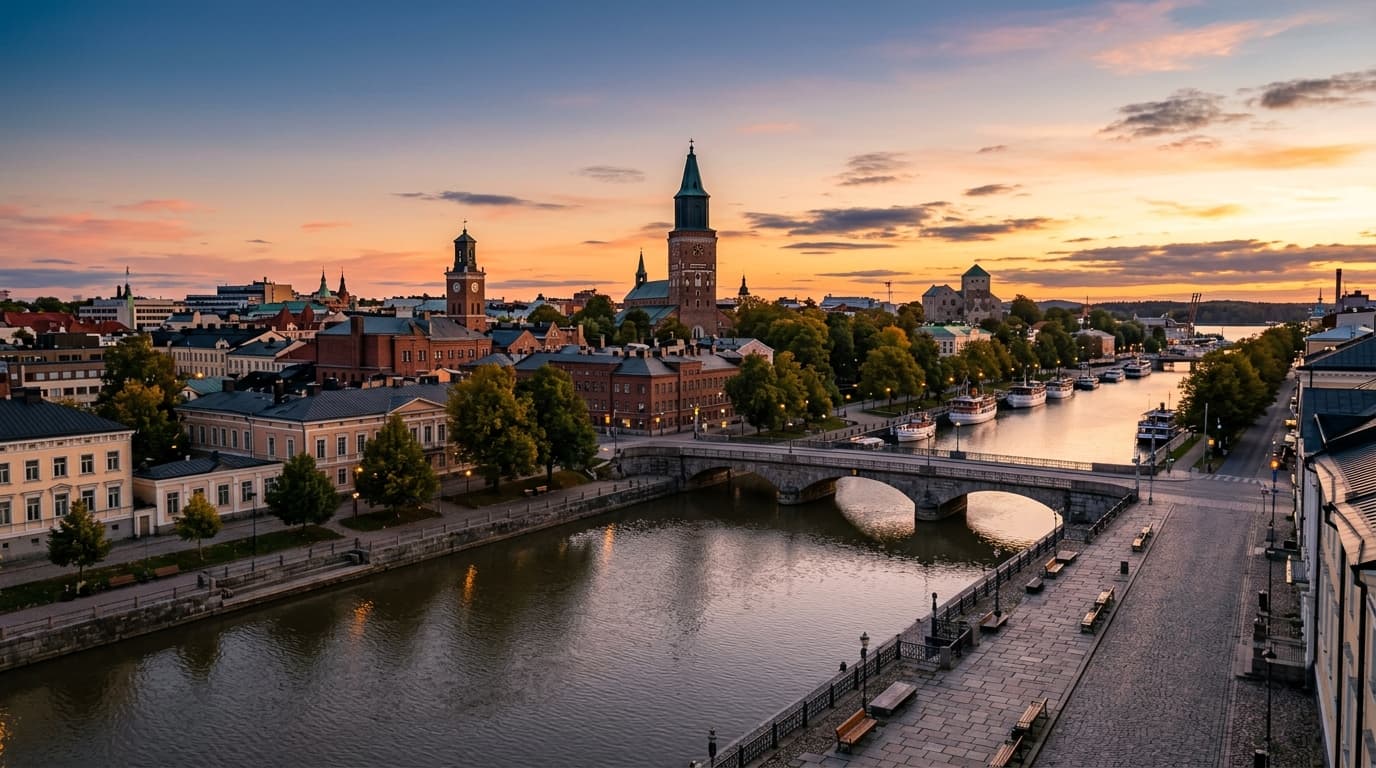
Helsinki doesn't try to impress you. That's, honestly, part of the appeal. There's no chaos, no noise, no one hawking things at you on the street. What you get instead is a city that's quietly, almost stubbornly functional: clean trams that actually run on time, fiber internet that doesn't flinch and a population that respects your personal space to a degree that can feel either refreshing or isolating depending on your personality.
The pace is slow. Genuinely slow. Mornings smell like coffee and pine resin drifting off the harbor and the city feels half-asleep even at 9am. In summer, the light stretches past 10pm and there's this strange, golden stillness that makes it easy to lose track of time entirely. Nomads who arrive in June often say they didn't expect to feel so calm here, it catches people off guard.
Winter is a different story. By November, daylight shrinks to six hours, the cold settles into your bones around minus three and the sky turns a flat, unbroken gray that doesn't lift for months. That darkness is not a minor inconvenience; it genuinely affects mood and plenty of nomads cut their stays short because of it. Plan accordingly.
What makes Helsinki distinct among nomad cities is the combination of Nordic minimalism and genuine outdoor culture. Saunas aren't a tourist gimmick here, they're social infrastructure. You'll find yourself sweating in a public sauna by the sea, jumping into the Baltic and cracking open a cold Karhu with strangers who won't say much but don't need to. It's weirdly intimate for such a reserved culture.
The cost is real and doesn't negotiate. Budget €2,300 a month at minimum, more realistically €3,000 if you want your own space and an occasional restaurant meal. Grocery runs at Lidl help, but eating out adds up fast, a mid-range dinner for two runs €50 to €120 without blinking.
English fluency is near-universal, especially among anyone under 50, so there's no communication friction. Safety is solid across most of the city. The infrastructure, turns out, is some of the best in Europe: fast internet, reliable transport, excellent hospitals within reach.
Helsinki rewards patience. It's not a city that opens up immediately, but the nomads who stay past the adjustment period tend to not want to leave.
Helsinki is, honestly, one of the more expensive cities you can pick as a base. Most nomads land somewhere between €2,300 and €4,000 a month and that's not because they're living lavishly, that's just what a normal life costs here.
Rent is the biggest hit. A studio or one-bedroom in Kamppi or Punavuori runs €900 to €1,300, sometimes more if the apartment's nice. Push out to Herttoniemi or Lauttasaari and you're looking at €650 to €1,100, with a metro ride that, turns out, only adds 15 to 20 minutes to your commute. Most budget-conscious nomads go that route and don't regret it.
Food costs depend entirely on how disciplined you are about cooking. Lidl and Aldi keep grocery bills manageable, a week's worth of basics won't destroy you. Eating out is a different story: a casual sit-down meal for two hits €50 to €80 easily and a proper restaurant evening can climb past €120 before you've thought about dessert. Street food around Market Square is your friend, a decent lunch runs €10 to €15.
- Budget tier (€2,000/mo): Shared housing, cooking most meals, public transport only
- Mid-range (€3,000/mo): One-bedroom outside the center, occasional dining out, coworking a few days a week
- Comfortable (€4,000+/mo): Central apartment, eating out regularly, no financial stress
Transport is weirdly affordable compared to everything else. A monthly HSL pass covers trams, buses, metro and ferries for €72, which is frankly a bargain given how well the system runs. Single tickets are €3.20, so just get the monthly pass.
Coworking won't wreck your budget either. Regus offers day passes from €19, dedicated desks drop to around €4 a day if you commit to a plan. VALO Work and Spaces are solid alternatives with fast fiber connections. Cafes in Punavuori also work fine if you need a change of scene, the WiFi's reliable and nobody rushes you out.
The math is simple. Helsinki doesn't do cheap, it does predictable and for a lot of nomads that trade-off is worth it.
For Digital Nomads
Punavuori is, honestly, the default choice for most nomads and it earns that reputation. The cafes have strong WiFi, the streets smell like fresh coffee and rain-soaked cobblestone and coworking spaces like VALO Work and Regus are close enough to walk to. Rent runs €900 to €1,100 for a studio, which stings, but you're paying for a neighborhood that actually works for a remote schedule.
Kamppi is louder and more chaotic, it's the city's main transport hub so trams and buses run constantly outside your window. Still, if you want to be central and don't mind the noise, it's hard to beat for convenience.
For Solo Travelers
Kallio is the obvious pick. Rents drop to €800 to €1,000, the bar scene is genuinely good and it draws a younger, more social crowd than the rest of Helsinki. The neighborhood has a slightly rough edge after midnight, turns out that's actually part of the appeal for most people who end up loving it.
It's not polished. The streets feel lived-in, the bars are unpretentious and you're more likely to meet actual Finns here than anywhere else in the city, which is weirdly rare given how reserved the culture is overall.
For Expats
Töölö suits expats who want calm without being far from the center. Parks, quiet streets and a slower pace make it genuinely livable for the long term. It's not cheap and there's almost no nightlife, but most long-term expats say they stop caring about that within a few months.
Punavuori also works well for expats plugged into the creative and design scene, the expat community here is, frankly, more established than in other neighborhoods, with regular meetups through groups like IWFS Helsinki.
For Families
Herttoniemi is the practical choice: 15 to 20 minutes from the center by metro, more greenery, more space and noticeably lower rents at €650 to €1,100. It feels a bit faded compared to the core neighborhoods, that's the tradeoff. Lauttasaari is another solid option, bike-friendly and quieter, with an island feel that families tend to appreciate once the novelty of city life wears off.
Helsinki's internet infrastructure is, honestly, one of the best things about working here. Citywide speeds average 47 to 156 Mbps, fiber broadband runs around €23 a month for unlimited data and the free WiFi in cafes across Punavuori is genuinely strong enough to run video calls without sweating it. You're not going to find dead zones or throttled hotel connections frustrating your workflow.
The coworking scene is smaller than you'd expect for a capital city, it's not Amsterdam or Lisbon, but what's here works well. Most nomads gravitate toward three main options:
- Regus: Flex desks from €4 to €19 a day depending on the plan; multiple central locations, reliable and no-fuss.
- Spaces: Fiber internet, proper lounges, a bit more atmosphere than Regus if that matters to you.
- VALO Work: Smaller, quieter, popular with locals; good if you want to actually concentrate rather than network.
Cafes in Punavuori are a solid free alternative, the neighborhood's creative crowd means decent seating, strong coffee and no one rushing you out after an hour. That said, Helsinki cafe culture is quieter than you'd expect, turns out Finns aren't big on small talk while you're working, which is either a feature or a bug depending on your personality.
SIM Cards & Mobile Data
Getting a local SIM is straightforward. Elisa, Telia and DNA sell prepaid ~€10-30 for varying data [5] at R-kioski shops and the airport, which covers a full month comfortably if you're mostly working from spaces with WiFi. Pick one up at the airport on arrival, don't wait until you're in the city center because the airport kiosks are genuinely convenient and the prices are the same.
If you'd rather not deal with a physical SIM, Airalo's eSIM works fine here, coverage is solid across the city and on the metro. One thing to know: the metro goes underground through the center, so you'll lose signal in stations, it's a minor annoyance but worth knowing if you're on a call.
Overall, the connectivity side of Helsinki won't give you headaches. It's the rent that'll do that.
Helsinki is, honestly, one of the safest cities you'll ever work from. Street crime is rare, scams targeting tourists are almost nonexistent and walking home late doesn't carry the low-level dread you feel in a lot of European capitals. Day-to-day, the city feels calm. No honking, no chaos, no sense of threat. You can leave a laptop bag on a cafe chair and it'll still be there, most nomads find that kind of baseline safety quietly addictive after living elsewhere.
The healthcare system is genuinely excellent, it's just not set up with short-stay foreigners in mind. Public hospitals like Meilahti Tower Hospital provide fast, high-quality care, but non-residents often get routed toward private clinics where costs climb quickly. Most nomads staying longer than a month pick up travel insurance before they arrive, because paying out-of-pocket at a private clinic for something minor can still sting.
- Emergencies: Dial 112. Dispatch is fast, operators speak English.
- Non-urgent issues: Call the Medical Helpline at 116 117 before heading anywhere. They'll tell you what you actually need.
- 24-hour pharmacy: Yliopiston Apteekki in the city center. Well-stocked, staff speak English, turns out they handle a lot of nomad walk-ins with basic ailments.
- Hospital: Meilahti Tower Hospital, switchboard +358 9 4711 [7]
Expats consistently say the public system moves quickly once you're in it, the frustration is figuring out whether you're eligible. If you're on a short stay, don't assume you'll be covered, sort your insurance before you land.
One thing worth knowing: Finnish winters don't just affect your wardrobe. The months from November through February bring near-total darkness, genuinely cold air that bites through layers and a stillness that some people find peaceful and others find suffocating. Seasonal depression is real here, locals talk about it openly. If you're prone to low mood in dark months, that's a practical health consideration, not a small one.
Helsinki's public transport is, honestly, one of the better systems you'll use in Northern Europe. Trams, buses, the metro and even ferries all run under the HSL network and they're remarkably punctual. One app covers everything: download HSL, load a ticket and you're done.
A single AB zone ticket runs €3.30-€3.50 depending on payment method, a day pass €10.60 and a monthly pass ~€75. That monthly pass pays for itself fast if you're staying more than two weeks, most nomads just grab it on arrival and don't think about transport again.
The city core is walkable. Kamppi to Punavuori takes ten minutes on foot, Punavuori to the Market Square maybe fifteen and the cold, clean air makes it genuinely pleasant in summer. Winter is a different story: February sidewalks are icy and unforgiving, so budget time for slower movement and wear actual boots.
City bikes are available through HSL at €5 per day and they're worth it from May through September when the city is dry and the routes along the waterfront are flat and fast. E-scooters from Tier and Voi are scattered everywhere too, they're convenient for short hops though they feel a bit chaotic on cobblestones.
For rides, both Uber and Bolt operate here. Taxis aren't cheap, starting around €8.45 before you've moved an inch, so Bolt tends to be the default for most people. Uber runs similarly priced, turns out there's not much difference between them in Helsinki.
Getting in from the airport is straightforward:
- Train: 30 minutes to the city center, costs ~€4.50, runs frequently
- Taxi or Uber: 25 minutes depending on traffic, expect €40-50
Take the train. It's faster than you'd expect and the taxi fare is, frankly, hard to justify when the rail connection is that clean and direct.
One thing to know: fares are going up in 2026, so the prices above may shift slightly by the time you arrive. Check the HSL app for current rates before loading your card. The system doesn't really have gaps worth complaining about, getting around Helsinki is one of the least stressful parts of being here.
Good news first: you won't need Finnish to survive here. English proficiency in Helsinki is very high, with around 70% speaking at conversational level or better and that number skews even higher among anyone under 40 or working in business, tech or hospitality. Ordering coffee, asking for directions, signing a lease, none of it requires you to crack open a phrasebook.
Finnish is the primary official language, Swedish is the second and you'll see both on every street sign and government document. Don't let that intimidate you, it's mostly background noise for daily life as a nomad. The real quirk of Finnish communication isn't the language itself, it's the culture around it.
Finns are, weirdly, comfortable with silence in a way that can feel jarring if you're used to small talk filling every gap. A quiet checkout interaction isn't rudeness, it's just normal, don't read into it. Expats consistently say the same thing: locals aren't cold, they're just not performatively warm. Once you're past that initial reserve, turns out, people are genuinely helpful and direct.
That said, learning a handful of Finnish phrases goes a long way, not because you need them, but because locals visibly appreciate the effort. A few worth knowing:
- Hei: Hello (works for any situation)
- Kiitos: Thank you
- Anteeksi: Excuse me / sorry
- Paljonko tämä maksaa?: How much does this cost?
- Mitä kuuluu?: How are you? (casual)
Pronunciation is, frankly, its own challenge. Finnish is phonetically consistent once you learn the rules, but those double vowels and consonants trip most people up early on. Don't stress it, a mangled "kiitos" still lands better than nothing.
For translation on the go, download the Google Translate offline Finnish pack before you arrive, cellular data at the airport costs you nothing if you've already cached it. Elisa and DNA prepaid SIMs are available at the R-kioski inside the terminal, so you're connected within minutes of landing anyway.
Written Finnish on menus or signage can look impenetrable at first glance, the words are long and compound-heavy, but Google Translate's camera mode handles it cleanly. You won't be lost for long.
Helsinki's seasons aren't subtle. You get long, bright summers that feel almost surreal after months of darkness and winters that are, frankly, a genuine test of your mental resilience. Most nomads who struggle here underestimated the winter, it's not just cold, it's the absence of light that gets you.
May through September is the sweet spot. June, July and August bring mild temperatures between 18 and 23°C, long daylight hours and a city that genuinely comes alive. Outdoor markets, terrace cafes, ferries to the islands. People are warmer too, weirdly, as if the sun unlocks a different social mode entirely.
April and October are shoulder months worth considering if you want lower accommodation costs and fewer tourists. April still bites with cold mornings around 9°C, but the city's walkable and the coworking spaces are quieter, which has its appeal. October turns fast though, so pack layers you'll actually use.
November through March is where things get hard. Temperatures hover between -5 and 0°C through the core winter months, with February bringing the heaviest snowfall, around 230mm. January highs average -3°C, the sky gets dark by 3pm and the cold has a damp, bone-deep quality that a good jacket only partially solves. Some nomads genuinely love the cozy, candle-lit cafe culture this forces you into, others book a flight to Lisbon by week three, it really depends on your tolerance.
August is, turns out, the rainiest month at around 80mm, so don't assume late summer means dry. Pack a decent waterproof regardless of when you visit.
- Best months: June, July, August for warmth and daylight
- Good alternatives: May and September for fewer crowds, still pleasant
- Shoulder season: April and October, cheaper but cold
- Avoid (unless you're prepared): November through February for first-timers
If you're staying long-term and hitting winter, invest in a SAD lamp early, expats recommend it constantly and they're right. Helsinki doesn't apologize for its climate, you either adapt or you don't.
Helsinki runs on cards. Bring one, forget cash exists and you'll be fine in every shop, cafe, tram and pharmacy in the city. Contactless is the default, not the exception.
For money transfers and avoiding conversion fees, most nomads here use Wise or Revolut rather than touching a local bank account. Nordea and OP are the main Finnish banks if you do need one, though opening an account without a Finnish personal identity code is, honestly, a bureaucratic headache that isn't worth pursuing for short stays.
Pick up a SIM at the airport or any R-kioski. Elisa and DNA offer prepaid plans starting ~€10-30 depending on data amount, it takes five minutes and works immediately. If you'd rather not swap physical cards, Airalo's eSIM works well before you even land.
For apartments, skip Airbnb for anything longer than two weeks. Oikotie.fi and Vuokraovi.com are where locals actually rent and you'll find better prices there, just expect listings in Finnish. Google Translate's offline Finnish pack handles it, turns out it's more useful here than in most European cities because English signage drops off fast outside the center.
A few customs that'll save you from awkward moments:
- Shoes off: Remove them at the door of any home, without being asked.
- Sauna etiquette: Nudity is normal in social saunas, swimwear is the odd choice.
- Punctuality: Being five minutes late is genuinely noticed. Don't.
- Personal space: Finns aren't cold, they're just not going to fill silence for you. Don't read it as unfriendliness.
For healthcare, the Medical Helpline is 116 117 for non-urgent issues; dial 112 for emergencies. Yliopiston Apteekki near the center runs 24 hours and the staff speak English without hesitation.
Day trips are genuinely easy. Porvoo's old wooden town is an hour by train, Nuuksio National Park is under 40 minutes and weirdly wild-feeling for something so close to a capital. Both are worth a slow afternoon when the laptop can stay shut.
Weather-wise, plan around it rather than against it. May through September is when Helsinki actually opens up, winters are dark and the cold has a damp, biting quality that layers don't fully fix.
Need visa and immigration info for Finland?
🇫🇮 View Finland Country GuideEasy Landing
Settle in, no stress