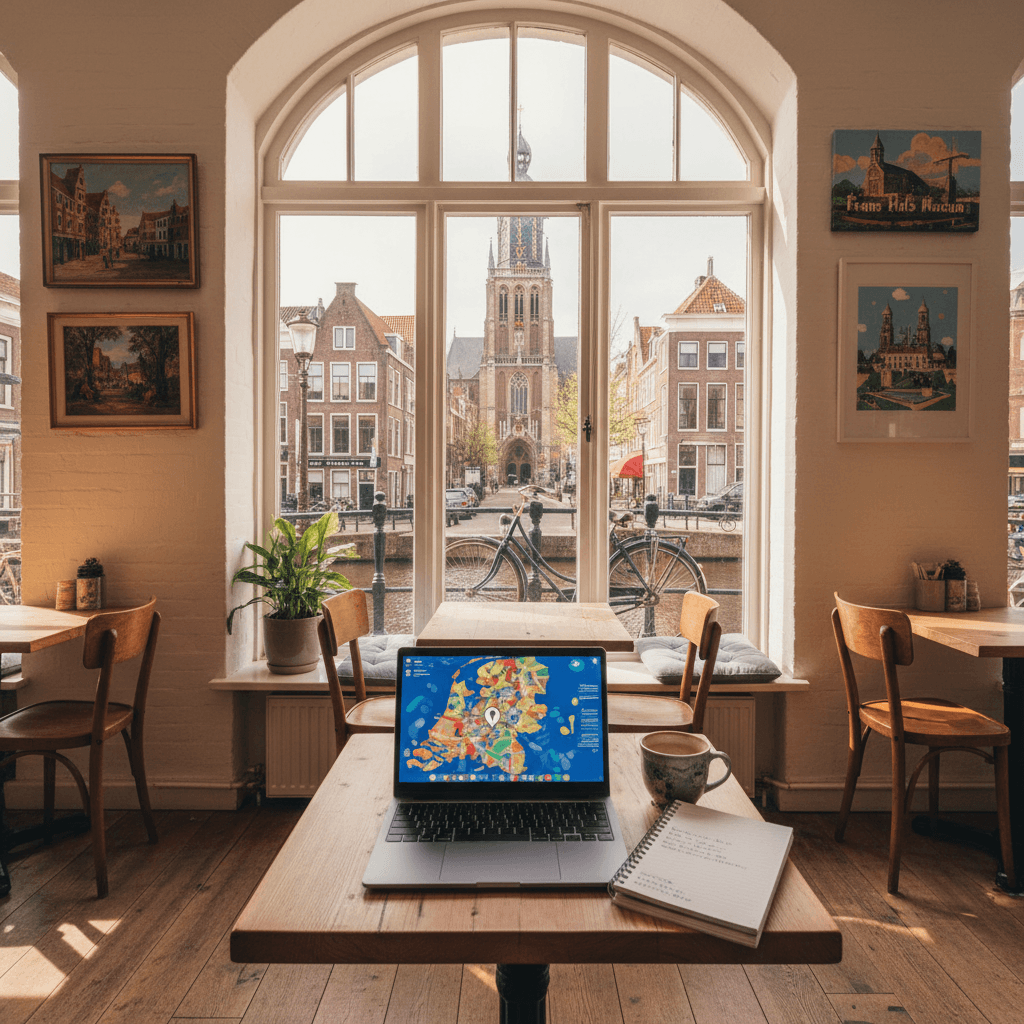
Haarlem
🇳🇱 Netherlands
The Haarlem Flow
If Amsterdam is a high energy festival that never ends, Haarlem is the sophisticated afterparty where you can actually hear yourself think. It has all the Dutch Golden Age charm you came for, the gabled houses, the winding canals, and the cobblestone streets, but without the wall of tourists blocking your bike path. Most nomads find that Haarlem offers a rare balance: you're only 15 minutes from the capital by train, yet you wake up in a city that feels like a quiet, wealthy village.
The vibe here is deeply rooted in the "slow living" movement. You'll see locals spending their Saturday mornings at the Grote Markt, picking up fresh stroopwafels and aged Gouda, or cycling toward the dunes with a surfboard strapped to their rack. It is a city that prioritizes quality of life over the hustle, making it a sanctuary for deep work during the day and beach sunsets in the evening.
The Cost of Living
Living in Haarlem isn't exactly a budget hack. It is one of the most desirable cities in the Netherlands, and the prices reflect that. While it is slightly more affordable than Amsterdam, you are still looking at a premium lifestyle. Most expats and nomads report a monthly burn rate between $4,800 and $5,500 to live comfortably.
- Budget Tier ($4,000 to $4,800): This usually involves a room in a shared house, cooking most meals at home, and relying entirely on a second hand bike for transport.
- Mid-range Tier ($4,800 to $5,200): You can snag a decent 1BR apartment, eat out a few times a week at mid-range spots, and take frequent train trips to nearby cities.
- Comfortable Tier ($5,200+): This covers a private studio in the historic center, regular dining at upscale spots like Ratatouille, and a dedicated desk at a coworking space.
Where to Plant Your Flag
The city is compact, but your choice of neighborhood changes your daily rhythm. Most solo travelers and short term nomads gravitate toward the Historic Center. You're steps away from the Teylers Museum and the best cafes, though you'll pay a premium for the privilege of living in a 17th century building with steep, narrow stairs.
If you prefer salt air and wide open spaces, look toward the western edges near Bloemendaal. It's a 15 minute bike ride to the beach, offering a more residential, green atmosphere that families and outdoor enthusiasts love. You'll swap the canal views for sand dunes and pine trees, which is a fair trade during the warmer summer months.
Work, WiFi, and Connectivity
The Netherlands has some of the fastest internet in Europe, and Haarlem is no exception. While some older apartments might have spotty signals due to thick brick walls, you can generally expect citywide averages around 112 Mbps, with typical residential speeds ranging between 23 Mbps and 42 Mbps, while fiber connections in modern buildings can hit much higher maximums. For those who need a professional environment, the city is dotted with "laptop friendly" cafes, though many nomads hop on the train to Amsterdam for a wider selection of high end coworking hubs.
To stay connected on the move, skip the physical SIM hunt and grab an eSIM from Holafly or WorldSIM. If you are staying long term, KPN and Vodafone have shops in the center where you can get a local contract. For banking, Bunq is the go to app for nomads here because it's digital first and handles the Dutch "Tikkie" payment culture perfectly.
The Daily Grind (and How to Escape It)
Haarlem is a "15 minute city" in the truest sense. You can bike from the train station to the Frans Hals Museum in minutes. When the sun comes out, the entire city moves outdoors. You'll find yourself joining the locals for a beer by the Spaarne River or taking a $12 train ride into Amsterdam for a networking event. It’s the kind of place where you come for a month of focus and end up staying for the community and the easy access to the North Sea breeze.
The Price of the Haarlem Lifestyle
Living in Haarlem feels like a strategic upgrade. You're getting the canals and the Golden Age architecture of Amsterdam without the claustrophobic tourist crowds, but don't expect a bargain. It's one of the more expensive corners of the Netherlands. Most nomads find that a comfortable life here requires a monthly budget between $4,800 and $5,500. While that's a steep entry price, the value comes through in the high quality of life, the safety, and the fact that you can be at the beach or in the capital in 15 minutes.
Rent is your biggest hurdle. While specific studio prices fluctuate, expats usually budget at least $2,000 to $2,500 for a decent 1BR in the historic center. If you're willing to share a house or live slightly further out toward the Kleverpark area, you might squeeze your total monthly spend down toward $4,000, but that’s considered a "budget" existence in this city.
Monthly Budget Tiers
- The Budget Local (~$4,000 to $4,800): This tier covers a room in a shared house, cooking most meals at home with occasional stops at the Saturday market, and relying entirely on a second hand bike for transport.
- The Mid Range Nomad (~$4,800 to $5,200): You'll have your own 1BR apartment, eat out a few times a week at mid range spots, and keep an NS train card topped up for trips to Amsterdam or Utrecht.
- The Comfortable Expat ($5,200+): This budget allows for a private studio in the Historic Center, regular upscale dining, a dedicated desk at a coworking space, and plenty of weekend travel.
Daily Expenses and Dining
Eating out in Haarlem is a treat, especially if you stick to the local rhythm. The Saturday market at Grote Markt is your best friend for high quality, affordable food. You can grab fresh herring, local cheeses, or artisanal bread for €5 to €10. If you're sitting down for a meal, a mid range dinner will typically run you €15 to €25, while an upscale evening at one of the spots near the Teylers Museum will easily cross €40 per person.
Practical costs are predictable. A bike rental is about €10 per day, though most people staying longer than a week just buy a used one for €100 and sell it before they leave. A train ticket to Amsterdam is roughly €12 for a round trip. For your phone, skip the roaming charges and grab an eSIM like Holafly or a local KPN SIM card to stay connected to the city's solid 4G/5G network.
Choosing Your Neighborhood
Where you drop your bags changes your daily burn rate significantly. Most solo travelers and nomads head straight for the Historic Center. It’s walkable, packed with cafes, and puts you right in the middle of the action, though you'll pay a premium for the privilege. If you want more space and a quieter vibe, the areas toward Bloemendaal or Zandvoort are popular with families and those who want to be a 15 minute bike ride from the North Sea dunes.
- Historic Center: Best for walkability and social life. Pros: Museums and markets at your doorstep. Cons: Highest rents and summer crowds.
- Beach Districts (Bloemendaal/Zandvoort): Best for nature lovers. Pros: Fresh air and green space. Cons: A longer commute to the Haarlem train station.
Internet speeds in Haarlem are generally excellent, often hitting between 23 Mbps and 298 Mbps depending on your setup. While there aren't many "nomad specific" coworking spaces within the city walls yet, the local cafes are work friendly and the library is a great quiet spot. For a more professional setup, many residents take the 15 minute train into Amsterdam to use the world class coworking hubs there.
For Nomads and Social Butterflies: The Historic Center
Living near the Grote Markt is the quintessential Haarlem experience. Most nomads gravitate here because everything you need is within a five minute walk. You've got the Saturday market for fresh stroopwafels and local cheese, the Teylers Museum for a rainy afternoon, and enough cafes to keep your laptop screen busy for months. It feels like a movie set from the Dutch Golden Age, but with high speed fiber internet.
The trade off for being in the heart of the action is the price tag and the noise. Rents here are the highest in the city, often pushing monthly nomad budgets toward the $5,200 mark if you want a private studio. During peak tourist season, the cobblestone streets get crowded, but the convenience of being 15 minutes from Amsterdam Central by train usually makes the premium worth it.
- Best for: Networking, cafe hopping, and those who don't want to own a car.
- Monthly Cost: Expect to spend $4,800 to $5,500 total including a central apartment.
- Pros: Incredible walkability, safe at all hours, and the best social scene in the city.
- Cons: Tourist crowds on weekends and higher rent than the outskirts.
For Families and Nature Lovers: Bloemendaal and Zandvoort
If you need more square footage and a backyard for the kids, look toward the western edges of the city or the neighboring beach towns. While technically separate municipalities, Bloemendaal and Zandvoort function as Haarlem's leafy suburbs. Expats with families often choose these areas for the proximity to National Park Zuid-Kennemerland and the North Sea beaches.
You can reach the shore in about 15 minutes on a bike. The vibe here is significantly quieter than the center, and the air feels fresher. You'll find more green spaces and better access to international schools, though you'll be trading away the immediate "city" feel. It's the perfect middle ground for those who want to work remotely while maintaining a coastal lifestyle.
- Best for: Families, surfers, and anyone who prefers trees over tourists.
- Monthly Cost: Often $5,000+ for larger family homes, though value per square foot is better than the center.
- Pros: Easy beach access, quiet nights, and excellent bike paths.
- Cons: Requires a 15 to 20 minute bike ride to reach the main train station or city shops.
For Solo Travelers on a Budget: The North and East Districts
Solo travelers looking to keep costs closer to the $4,000 range should look just outside the historic ring, particularly in the neighborhoods north of the central station. These areas are less "postcard perfect" but offer a more authentic look at local life. You'll find smaller, more affordable apartments and local grocery stores that aren't marked up for tourists.
Since Haarlem is so compact, you're never truly far away from the action. Even from the northern edges, a 10 minute bike ride gets you to the Grote Markt. Many solo expats find these areas better for "real" living, as the local cafes are filled with residents rather than day trippers from Amsterdam. It's a smart way to enjoy the city's perks without the "center city" tax.
- Best for: Long term stays and budget conscious solo travelers.
- Monthly Cost: Possible to manage on $4,000 to $4,800 with shared housing or a modest 1BR.
- Pros: More "local" feel, easier to find available rentals, and close to the train station.
- Cons: Modern architecture lacks the historic charm of the center.
For Expats Seeking Balance: Kleverpark and Koninginnebuurt
These neighborhoods are the sweet spot for professional expats who want style without the Grote Markt madness. Kleverpark has a village feel with its own local bakeries and specialty shops, while Koninginnebuurt is known for its grand, stately homes and proximity to the Haarlemmerhout forest. Most residents here are a mix of young professionals and families who work in Amsterdam but want a calm retreat to come home to.
- Best for: Working professionals and couples who want a high quality of life.
- Monthly Cost: Mid-range budgets around $4,800 to $5,200.
- Pros: Beautiful architecture, very safe, and great local community.
- Cons: Competition for apartments is fierce; you'll need to move fast when a listing appears.
Connectivity and Speed
You won't have to hunt for a signal in Haarlem. The Netherlands boasts some of the fastest infrastructure in Europe, and Haarlem is no exception. While citywide averages often hit 112 Mbps, typical residential speeds range from 23-42 Mbps, though fiber connections can reach 298 Mbps. This is plenty for seamless Zoom calls or uploading large files from a cafe near the Grote Markt.
Public Wi-Fi is standard in most establishments, but for a foolproof backup, pick up a local SIM. KPN and Vodafone are the reliable heavy hitters for physical cards. If you prefer to skip the shop visit, Holafly or WorldSIM eSIMs provide instant data the moment you step off the train from Schiphol. Expect to pay around $10 to $20 for a solid data package that will keep you connected while cycling between the city center and the dunes.
Coworking and Shared Spaces
Haarlem doesn't have the massive "tech campus" feel of Amsterdam, and that is exactly why people love it. The coworking scene is intimate and professional, often housed in beautiful historic buildings. While specific local names change, the standard rate for a desk in this region typically falls between €200 and €400 per month. Many nomads opt for a "flexplek" (flexible desk) for a few days a week to keep costs down.
If you prefer a more social atmosphere, the city's cafe culture is incredibly work friendly. You'll see plenty of laptops at spots around the Jopenkerk or the quieter side streets of the Vijfheerenbuurt. The local library, De Bibliotheek Haarlem Centrum, is another favorite for those seeking a quiet, free environment with reliable internet. Just remember the local etiquette: if you're taking up a table in a cafe, keep the coffee orders flowing and move along during the busy lunch rush.
The Laptop Friendly Lifestyle
One of the biggest perks of working here is the proximity to Amsterdam. If you need a high intensity networking event or a specific niche coworking community, a 15 minute train ride puts you in the heart of the capital for about €12. Most expats find that living in Haarlem provides the perfect "deep work" environment, while Amsterdam serves as the "office" for occasional meetings.
- Best for Deep Work: The Public Library (Centrum) for silence and zero cost.
- Best for Networking: Taking the train to Amsterdam's larger tech hubs.
- Best for Atmosphere: Cafes near the Frans Hals Museum for a creative spark.
Practical Tech Tips
Power outlets in the Netherlands use the standard European Type C and F plugs. If you're coming from the US or UK, you'll need an adapter. Most modern coworking spaces provide ergonomic chairs and monitors, but in smaller cafes, power outlets can be scarce. Always carry a fully charged power bank if you plan on working from the Grote Markt during the Saturday market hours.
For managing your life on the go, download the NS app for train schedules and 9292 for local buses. These are the lifeblood of any nomad moving between Haarlem, the beach at Zandvoort, and the surrounding business districts. If you're staying long term, look into Bunq. It's a popular mobile banking choice for nomads that makes splitting bills and paying for your monthly coworking membership much easier than traditional Dutch banks.
A Safe Haven in the Randstad
Haarlem is frequently cited as one of the safest cities in the Netherlands, providing a peaceful environment that contrasts sharply with the frantic energy of neighboring Amsterdam. Most nomads feel comfortable walking through the historic center or cycling home from the train station at any hour. Violent crime is exceptionally rare here, and the city maintains a polished, community focused atmosphere where people look out for one another.
While the overall risk is low, petty theft does happen, particularly involving bicycles. Bike theft is practically a national sport in the Netherlands. If you are renting a bike or buying a second hand swapfiets, always use two locks: a frame lock for the back wheel and a heavy chain to secure it to a fixed object. Expats generally suggest avoiding leaving your bike in unlit areas near the Haarlem station overnight if it looks particularly expensive.
Healthcare Quality and Access
The Dutch healthcare system is world class, and Haarlem is no exception. You will find high quality facilities like Spaarne Gasthuis, which has major locations in both the south and north of the city. These hospitals are equipped with modern technology and staffed by professionals who almost certainly speak fluent English, making it easy to communicate your symptoms or concerns.
For day to day health needs, the Huisarts (General Practitioner) is your first point of contact. If you are staying long term on a residence permit, you are required to register with a local doctor and take out Dutch health insurance. For short term nomads, your travel insurance will usually cover visits to a GP, though you might have to pay a consultation fee of around €30 to €50 upfront and claim it back later.
Pharmacies, known as Apotheek, are easy to spot throughout the Grote Markt area and residential neighborhoods. They handle prescription medications, while Drogisterijen like Kruidvat or Etos sell over the counter basics like ibuprofen, bandages, and vitamins. Most pharmacies have a rotating after hours schedule for emergencies, which is usually posted on their front doors.
Emergency Information
If you find yourself in a serious situation, the emergency number is 112. This covers police, fire, and ambulance services across the EU. For non urgent police matters, such as reporting a stolen bike or a noise complaint, you should call 0900 8844. This keeps the emergency lines clear for life threatening situations.
- Emergency Services: 112
- Non-Urgent Police: 0900 8844
- Main Hospital: Spaarne Gasthuis (Haarlem Zuid or Noord)
- Standard GP Visit: €30 to €50 (for non residents)
Practical Safety Tips for Nomads
The biggest "danger" you will likely face in Haarlem is the bike lane. If you are walking, be extremely careful not to wander into the red paved paths. Cyclists in Haarlem are generally polite but they move fast and expect pedestrians to stay on the sidewalk. Always look both ways before crossing any path, even if it looks like a quiet side street.
Solo travelers often mention that Haarlem feels like a large village. The lack of "no go" zones makes it an ideal spot for those who want to explore without constantly checking their surroundings. Stick to the well lit areas of the Historic Center or Vijfhoek and you will likely find the city to be one of the most welcoming stops on your journey.
The Two-Wheeled Way of Life
In Haarlem, your bike isn't just a way to get around; it's your primary identity. The city is designed with a "cyclists first" mentality that makes cars feel like an awkward afterthought. Most nomads rent a reliable set of wheels from local shops for about €10 a day, though if you're staying for a month or more, it's smarter to look into a Swapfiets subscription or a second-hand purchase.
The bike lanes are wide, paved, and separated from traffic, connecting the historic center to the outskirts in minutes. You can pedal from the Grote Markt to the dunes of Bloemendaal or the sands of Zandvoort in about 15 minutes. It's the ultimate freedom for anyone tired of being stuck in traffic or waiting on a bus schedule.
Mastering the Rails
When you need to leave the city limits, the Dutch rail system (NS) is your best friend. Haarlem's train station is a stunning Art Nouveau masterpiece that functions as a high-speed gateway to the rest of the country. Trains to Amsterdam Centraal run every few minutes, and the journey takes a mere 15 minutes.
Expect to pay around €12 for a round trip to Amsterdam. If you're planning to explore further, a day pass usually costs between €25 and €35, allowing you to hit Utrecht, Rotterdam, or Delft without worrying about individual tickets. For arrivals, the train from Schiphol Airport to Haarlem is incredibly efficient, costing roughly €6 and taking about 15 minutes, which is far cheaper and often faster than a taxi.
Walking and Public Transit
The historic core is compact enough that you'll likely spend most of your workdays on foot. The cobblestone streets around the Frans Hals Museum and the boutique-lined alleys are strictly pedestrian-friendly. You won't need a car here; in fact, parking is expensive and the narrow streets are a nightmare to navigate behind a wheel.
For longer hops within the city or when the Dutch rain gets too heavy for cycling, the local bus network is reliable. You can tap in and out using your contactless debit card or phone, which has largely replaced the need for physical transport cards. If you're heading home late from a night out in Amsterdam, ride-hailing apps like Uber and Bolt operate in the area, with short trips within Haarlem typically costing between €10 and €20.
Transport Quick Facts
- Bike Rental: Roughly €10 per day at central shops.
- Schiphol Airport Transfer: €6 via train; 15-minute duration.
- Amsterdam Commute: €12 round trip; 15-minute duration.
- Payment: Use contactless credit/debit cards or Apple/Google Pay for buses and trains.
- Apps to Download: NS (for trains), 9292 (for all public transit routes), and Buienradar (to check if you'll get soaked on your bike).
The Linguistic Landscape
You will find that moving through Haarlem feels incredibly seamless from a communication standpoint. The Dutch are famously proficient in English, often ranking at the very top of global non native speaker indices. In Haarlem, this proficiency is baked into the culture. Whether you are ordering a coffee at a cafe near the Grote Markt or asking for a specific part at a bike repair shop, you can expect nearly everyone to switch to fluent English the moment they realize you aren't a local.
While Dutch is the official language, English is the unofficial second language of the city. Most nomads find they can live here for months without knowing more than a few words of Dutch. However, the local community appreciates it when you make a small effort. It breaks the ice and shows you aren't just a revolving door tourist. Learning the basics can also help you decipher signs at the Saturday market or understand announcements at the Haarlem train station.
Key Phrases to Know
- Hallo (Hello): The universal greeting. It sounds just like it looks.
- Dank je (Thank you): Use this constantly. The Dutch value politeness in transactional settings.
- Lekker (Delicious/Nice): You will hear this everywhere. It describes everything from a good meal to a comfortable chair or a sunny day.
- Fiets (Bike): Since you will likely be on two wheels within 24 hours of arriving, knowing the word for your primary mode of transport is helpful.
- Dag (Good day/Goodbye): A short, snappy way to end a conversation.
Communication Tools and Connectivity
Digital nomads in Haarlem generally rely on high speed mobile data to stay connected while moving between the historic center and the beaches at Zandvoort. While public WiFi is common in libraries and cafes, having your own data is a must for navigating bike paths or using Google Translate to read ingredient labels at the grocery store.
- eSIM Options: Most expats recommend using Holafly or WorldSIM for immediate data upon arrival. It saves you the hassle of finding a physical shop and dealing with registration paperwork.
- Local Providers: If you are staying longer than a month, getting a physical SIM from KPN or Vodafone is usually more cost effective. You can find these shops easily in the main shopping district.
- Translation Apps: While you won't need it for conversation, the camera feature on Google Translate is a lifesaver for translating mail, utility bills, or complex restaurant menus.
Social Nuances and Etiquette
Communication in Haarlem is direct. If a Dutch person thinks your idea won't work or they don't like a specific plan, they will tell you plainly. This isn't rudeness; it is efficiency. Expats often find this refreshing once they get used to it because you never have to guess where you stand.
When you are out at the markets or smaller boutiques, a simple Hallo when you enter is expected. In social settings, the Haarlem community is supportive and relatively open, though the Dutch tend to keep a clear line between work and private life. If you want to build a social circle, joining local expat groups or attending networking events in nearby Amsterdam, just 15 minutes away by train, is the standard route for most nomads.
Practical Communication Costs
- Prepaid SIM Card: €10 to €20 depending on data limits.
- Monthly Phone Plan: €25 to €40 for generous data speeds.
- Home Internet: Generally included in nomad rentals, but standalone plans average €40 to €60 per month for speeds up to 298 Mbps.
The Seasonal Vibe
Haarlem follows a classic maritime rhythm. You'll get plenty of gray skies and misty rain, but when the sun breaks through, the city transforms. The canals sparkle, and the Grote Markt fills with cafe tables. Most nomads find the weather manageable as long as they embrace the local philosophy: there is no bad weather, only bad clothing. Invest in a solid raincoat and a sturdy bike lock before you arrive.
The temperature typically swings between 7°C (45°F) in the depths of winter and a comfortable 20°C (68°F) during the peak of summer. Because it's so close to the North Sea, the breeze is constant. It keeps the air fresh, with AQI levels usually staying between 43 and 119, but it can make a 10 degree day feel much chillier when you're cycling against the wind.
Summer: The Golden Window (June to August)
This is undeniably the best time to be in Haarlem. The days are incredibly long, with light lingering until nearly 10:00 PM in June. This is when the city's proximity to the coast becomes its biggest selling point. You can finish your deep work session by 4:00 PM and be on the sands of Zandvoort or Bloemendaal by 4:15 PM via a quick bike ride.
- Average Highs: 19°C to 20°C (66°F to 68°F)
- Why nomads love it: The outdoor cafe culture is at its peak. You can work from a terrace in the Historic Center without freezing, and the Saturday markets are overflowing with fresh local produce.
- The Downside: This is peak tourist season. While Haarlem is quieter than Amsterdam, the Grote Markt gets crowded, and short term rental prices often spike toward the $5,500 mark for comfortable setups.
Shoulder Seasons: Spring and Autumn
April and May are iconic for the tulip season. Haarlem sits right at the edge of the flower bulb region, making it a perfect base for seeing the blooms without the massive crowds staying in Lisse. September and October offer a crisp, moody atmosphere that suits the city's Golden Age architecture perfectly.
- Spring (April to May): Expect 12°C to 15°C (53°F to 59°F). It's the best time for photography and long bike rides through the surrounding national parks.
- Autumn (September to November): The rain picks up here. It's the "cozy" season where expats retreat to wood paneled brown cafes and libraries. It's a great time to focus on heavy projects.
Winter: The Low Season (December to February)
Winter in Haarlem is rarely "white" and more often "wet." Temperatures hover around 7°C (45°F). While it's not the time for beach trips, the city feels intimate. The Christmas markets and lights around the Teylers Museum make the dark afternoons much more bearable. Short term housing is slightly easier to find, though "budget" prices still rarely dip below $4,000 per month due to high baseline utility and tax costs.
When to Book Your Stay
If you want the full Dutch experience with the best outdoor quality of life, aim for late May through early September. You'll pay a premium for housing, but the ability to bike to the beach after work is a massive perk. If you're on a tighter budget, March or October offer a middle ground where the city is quiet, the museums are empty, and you can still find a decent 1BR for under $5,000 total monthly spend.
Whenever you visit, download the Buienradar app. It's the local gold standard for predicting rain down to the minute, which is the only way to survive a commute in this part of the Netherlands without getting soaked.
Making it Work in Haarlem
Living in Haarlem feels like a strategic upgrade. You get the 17th century Dutch charm and easy access to the capital without the constant swarm of tourists clogging your front door. It is a compact, polished city where most things just work, though you will pay a premium for that efficiency. Nomads typically find that a monthly budget between $4,800 and $5,500 is necessary to live comfortably here, covering a private apartment and frequent dining out.
The Neighborhood Breakdown
Most newcomers gravitate toward the Historic Center near the Grote Markt. It is the heart of the city, perfectly walkable, and home to the massive Saturday markets where you can grab fresh stroopwafels and local cheese. The downside is the price tag; rents here are the highest in the city and apartments can be small and drafty. It is ideal if you want to be steps away from the Frans Hals Museum and the best cafes.
For those who prefer a bit more space or a quieter vibe, the areas toward Bloemendaal or Zandvoort are popular. These are technically separate beach towns but they are only a 15 minute bike ride from Haarlem. Expats with families often choose these spots for the proximity to the North Sea dunes and better access to green space, though you will be further from the central social scene.
Staying Connected
Internet speeds in Haarlem are generally reliable, hovering between 23 and 42 Mbps in most residential areas, though some fiber connections can hit much higher. While specific coworking brands are more prevalent in Amsterdam, Haarlem has a strong cafe culture that is welcoming to laptops. Local libraries and independent coffee shops are the go to spots for a few hours of deep work.
- Connectivity: Pick up a local SIM from KPN or Vodafone if you are staying long term. For short stays, Holafly or WorldSIM eSIMs work perfectly.
- Banking: Most locals use Bunq or ING. Note that many Dutch shops and markets still prefer Maestro cards or "Pinnen" over Visa and Mastercard.
- Apps: Download 9292 or the NS app for train schedules, and Google Translate for menus.
Getting Around
The bicycle is king here. You can rent one for about €10 per day, but if you are staying for a month, it is cheaper to buy a used one or look into a Swapfiets subscription. The city is crisscrossed with dedicated lanes that make cars feel obsolete. If you need to head into Amsterdam, the train takes exactly 15 minutes and costs about €12 for a round trip.
Cost of Living Tiers
- The Budget Route ($4,000 to $4,800): This usually involves a shared housing situation or a very small studio on the outskirts. You will be cooking at home mostly and relying entirely on your bike.
- The Mid Range Lifestyle ($4,800 to $5,200): This covers a standard one bedroom apartment, regular meals at mid range restaurants, and occasional train trips to other Dutch cities like Utrecht or Rotterdam.
- The Comfortable Tier ($5,200+): At this level, you are looking at a premium apartment in the historic center, frequent upscale dining, and perhaps a dedicated desk at a workspace or a gym membership.
Language and Culture
You can easily survive here with zero Dutch. English proficiency is incredibly high, especially among the younger crowd and in the service industry. That said, learning a few basics like "Dank je" (thank you) and "Hallo" goes a long way with the locals. The vibe is generally more reserved and relaxed than Amsterdam; people value their privacy but are helpful if you approach them. The Saturday market at Grote Markt is the best place to soak in the local culture and pick up fresh produce for the week.
Health and Safety
Haarlem is exceptionally safe, even by European standards. Crime rates are very low, and there are no specific neighborhoods that travelers are advised to avoid. If you have an emergency, the number is 112. For minor health issues, pharmacies are easy to find, and the healthcare system is top tier, though you should ensure your travel insurance covers private clinics if you aren't on a local Dutch plan.
Need visa and immigration info for Netherlands?
🇳🇱 View Netherlands Country GuideEasy Landing
Settle in, no stress