Graz
🇦🇹 Austria
The Mediterranean Soul of Austria
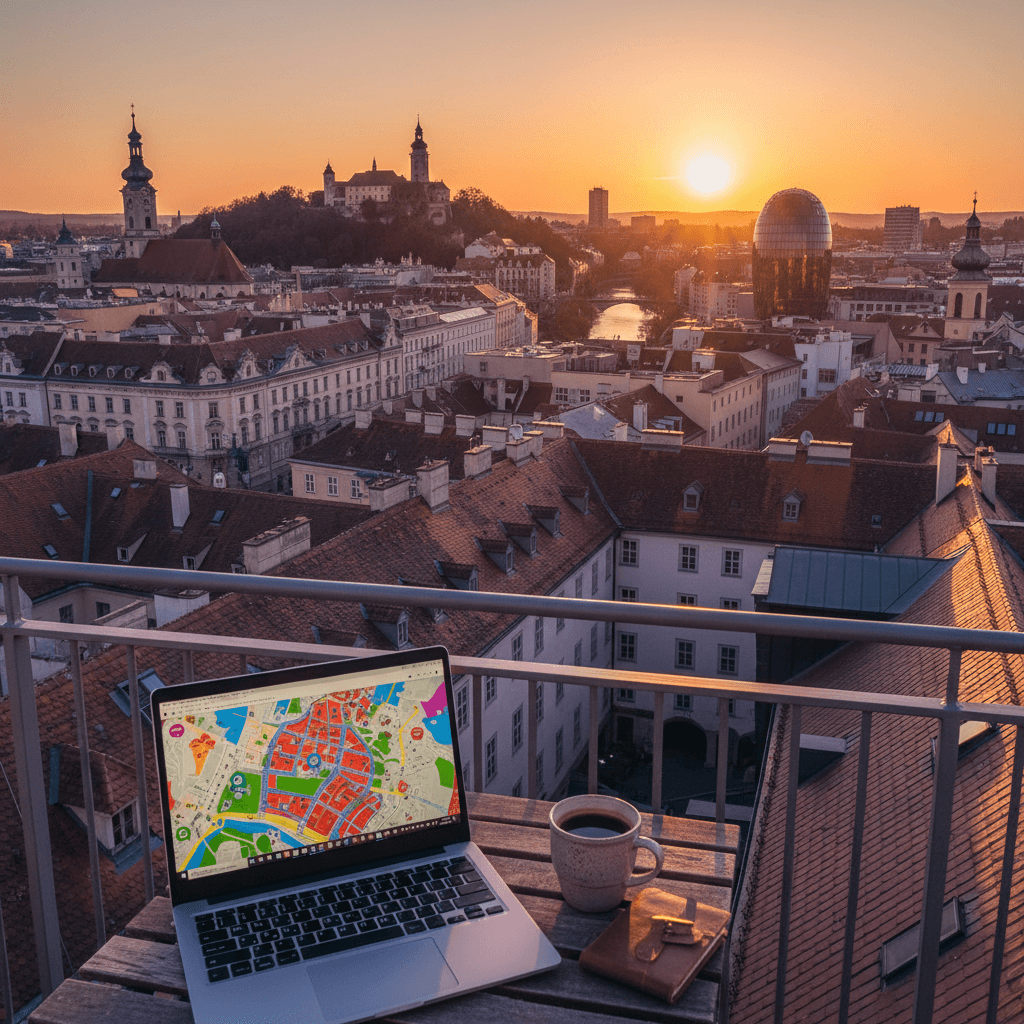
If Vienna is the grand, formal ballroom of Austria, Graz is the sun-drenched courtyard where everyone actually wants to hang out. It is the country's second-largest city, but it doesn't feel like a metropolis. Instead, it carries a distinct Mediterranean flair that you won't find further north. This is largely due to the Renaissance architecture and a lifestyle that prioritizes relaxed, outdoor living over the typical Germanic hustle. You'll feel it most when sitting in a cafe in the Landhaus courtyard or wandering through the red-tiled roofs of the UNESCO-protected Old Town.
What sets Graz apart for digital nomads is the collision of medieval history and futuristic ambition. One minute you're looking at the Uhrturm, a clock tower that's stood since the 13th century, and the next you're staring at the Kunsthaus Graz, a blue, blob-like modern art museum locals affectionately call the "Friendly Alien." This contrast defines the city's personality: it respects its roots but is obsessed with what's next.
The Vibe: Youthful, Green, and Academic
With eight different universities and a student population of over 60,000, the energy here is perpetually young. This keeps the city's pulse steady even during the quiet winter months. Expats often remark that Graz feels like a "15-minute city" where everything is reachable by bike. The pace of life is efficient but never frantic. People work hard at tech hubs like Science Park Graz during the day, but by 5:00 PM, they're usually heading to the Schlossberg for a sunset hike or grabbing a pumpkin seed oil-infused dish at a local market.
The social scene is intimate. While the nomad community is smaller than what you'll find in Lisbon or Berlin, it's incredibly high-quality. You aren't just another face in a revolving door of travelers; you're part of a creative ecosystem. Between the design festivals and the growing startup scene, it's easy to find your tribe if you're willing to show up at an Impact Hub event or a community night at Spacelend.
Where to Plant Your Roots
Choosing a neighborhood in Graz changes your daily experience significantly. Most nomads gravitate toward these three areas:
- Innere Stadt: This is the historic heart. It's beautiful and walkable, but you'll pay a premium for the privilege. Expect rents between €900 and €1,500 for a decent studio. It's perfect if you want to be steps away from the Opera House and the main square, but it can get crowded with weekend tourists.
- Lend & Gries: These are the "cool" districts across the Mur River. Once gritty, they're now the epicenter of Graz's creative class. Lendplatz hosts a fantastic farmers' market by day and turns into a social hub with hip bars by night. Rents are more approachable here, usually ranging from €700 to €1,200.
- St. Leonhard: Located near the Technical University, this area is leafy and academic. It has a great mix of quiet residential streets and lively cafes catering to the student crowd. It's a solid middle ground for those who want a neighborhood feel without being too far from the action.
The Bottom Line for Nomads
Living here isn't the cheapest option in Europe, especially compared to the Balkans or Southeast Asia. A comfortable monthly budget sits around €2,800, which covers a private apartment, frequent dining out, and a coworking membership. Most travelers find the trade-off is worth it for the sheer quality of life. The air is clean, the tap water is world-class, and the Mur River bike paths provide a perfect mental reset after a long day of deep work. It's a city that invites you to slow down, stay a while, and actually enjoy the work-life balance everyone else just talks about.
The Price of Productivity in Austria's Second City
Graz sits in a sweet spot for nomads who find Vienna too pricey and Eastern Europe a bit too chaotic. It isn't exactly a budget destination, but your Euro goes significantly further here than in Salzburg or the capital. Most digital nomads find that a monthly budget between €1,800 and €2,800 allows for a high quality of life without constantly checking your bank balance.
The city's university culture keeps everyday costs like coffee and quick lunches reasonable. You can grab street food like a Bosna or a kebab for €5 to €8, while a solid mid-range dinner at a local spot in Lend will run you about €20. If you're planning to stay long term, shopping at the farmers' markets at Lendplatz or Kaiser-Josef-Platz isn't just a cultural experience; it's a savvy way to get high quality local produce for less than supermarket prices.
Accommodation Breakdown
Housing will be your biggest overhead. While long term residents pay less, nomads using platforms like Flatio or Airbnb for furnished monthly stays should prepare for higher rates. Prices fluctuate based on how close you are to the historic core.
- Innere Stadt (City Center): Expect to pay €900 to €1,500 for a studio or one bedroom. You're paying for the privilege of walking out your door into a UNESCO World Heritage site.
- Lend & Gries: These are the go-to districts for the creative crowd. Rents here are more palatable, usually ranging from €700 to €1,200. It's edgier, younger, and arguably has better cafes for working.
- St. Leonhard: Popular with the academic and tech set, this area averages around €800 to €1,300. It's well connected and slightly quieter than the immediate center.
Coworking and Connectivity
Graz has a surprisingly robust infrastructure for remote work. Most nomads find the citywide WiFi reliable enough for video calls, but a dedicated desk is often worth the investment for the community aspect alone. Impact Hub Graz is a favorite for those looking to network, with monthly memberships starting around €200. If you prefer a more corporate, high tech environment, Spacelend offers premium facilities starting at €250 per month.
For the "cafe nomad" days, Tribeka is the local gold standard for laptop-friendly vibes. Local SIM cards from providers like A1 or Drei are cheap and easy to grab, with unlimited data plans usually costing between €10 and €20 per month. It's a small price to pay for the freedom to work from a park bench in the Stadtpark.
Transport and Daily Extras
Graz is a compact city, and many expats recommend skipping the car entirely. The bike infrastructure is excellent, and a monthly public transport pass costs roughly €50, covering all trams and buses. If you're only here for a few weeks, renting a bike through Nextbike for about €1 to unlock plus a small per minute fee is the most efficient way to get around.
Lifestyle Tiers
- The Budget Nomad (€1,800/month): Living in a shared flat or a cheaper studio in Gries, cooking most meals, using a bike to get around, and sticking to free social activities like hiking the Schlossberg.
- The Balanced Professional (€2,800/month): A private, furnished apartment in Lend, a dedicated coworking desk at Impact Hub, dining out a few times a week, and the occasional weekend train trip to Vienna.
- The High Life (€4,000+/month): A premium apartment in the Innere Stadt, frequenting upscale restaurants like those near the Opera, and taking full advantage of the proximity to the Alps for skiing or luxury weekend retreats.
For Digital Nomads and Creatives: Lend and Gries
If you want to be where the action is, head across the Mur River to the right bank. Lend and Gries have shaken off their gritty reputations to become the city's creative engine. It is the kind of area where you will find a €4 craft beer next to a traditional farmers' market. Lendplatz is the heart of this district, hosting a daily market that transforms into a social hub in the evenings.
Nomads flock here because it is home to Impact Hub Graz and Spacelend, two of the best coworking spots in the city. The vibe is youthful and slightly edgy, anchored by the "Friendly Alien" Kunsthaus Graz museum. You are looking at rents between €700 and €1,200 for a decent apartment, which is a steal compared to Vienna. It is walkable, bike-friendly, and packed with laptop-friendly cafes like Tribeka.
For Solo Travelers and History Buffs: Innere Stadt
Living in the Old Town means waking up in a UNESCO World Heritage site. It is ideal if you are only in town for a few weeks and want everything at your doorstep. You will be steps away from the Hauptplatz and the Schlossberg clocktower. The convenience is unbeatable, but you will pay a premium for it. Expect studio rents to land between €900 and €1,500.
The downside is the crowd. During peak tourist season, the narrow cobblestone streets get packed. However, solo travelers often find it easier to meet people here since the highest concentration of bars and cultural sites are within a ten minute walk. If you don't mind the noise of the tram and the occasional tour group, it is the most immersive way to experience Graz.
For Students and Tech Workers: St. Leonhard
Located just east of the center, St. Leonhard is fueled by the energy of the nearby Graz University of Technology. It is a smart choice if you are in the tech or startup scene. The neighborhood feels academic and polished, with plenty of affordable eateries catering to the university crowd. You can usually grab a solid lunch for under €10 at the local bistros.
The atmosphere is lively during the semester but can get surprisingly quiet during university breaks. It lacks the green expanses of the outer districts, but the proximity to the city's innovation hubs makes it a strategic base for networking. Most residents here rely heavily on the efficient tram system, with monthly passes costing around €50.
For Families and Long-Term Expats: Geidorf
Geidorf is where you go when you want to trade the nightlife for quiet, leafy streets. It is situated north of the city center and is widely considered the most prestigious residential area. It is close to the Stadtpark, providing plenty of room for kids to run around or for you to take a morning jog. The air feels a bit fresher here, and the pace is noticeably slower.
Expats with children prefer Geidorf because of the high concentration of quality schools and the safe, community-oriented feel. While it is further from the main cluster of coworking spaces, the commute into the center is a quick 15 minute bike ride along the river. It is not the cheapest area, but for those planning to stay in Graz for a year or more, the quality of life is hard to beat.
Neighborhood Comparison at a Glance
- Lend: Best for startups, street art, and mid-range budgets. Rents average €850.
- Innere Stadt: Best for short stays and sightseeing. Rents average €1,200.
- St. Leonhard: Best for tech networking and university vibes. Rents average €900.
- Geidorf: Best for families and quiet living. Rents average €1,100.
Connectivity and Speed
You won't have to hunt for a decent signal in Graz. The city is a quiet powerhouse for remote work; internet speeds average around 77 Mbps download for broadband and 188 Mbps for mobile, with peaks over 300 Mbps in cafes and coworking spots. This makes the city ideal for handling heavy video calls or large uploads without interruption.
For your mobile data, skip the roaming charges and grab a local SIM. A1, Magenta, and Drei are the big players here. You can pick up a prepaid card at the airport or any mobile shop in the city center for about €10 to €20, which usually nets you more than enough data for a month. If you prefer the digital route, Airalo eSIMs work perfectly across the city.
Top Coworking Spaces
Graz has an surprisingly robust coworking scene for its size, largely fueled by the local university energy and a growing tech sector. Most nomads find the community smaller than Vienna's, but it's much easier to actually meet people here.
- Spacelend: Located in the trendy Lend district, this is the go-to for a professional, high-end environment. It's sleek, modern, and offers private offices if you need to escape the open plan. Expect to pay around €250 per month for a dedicated spot.
- Impact Hub Graz: This is the heart of the local startup and social innovation scene. It's less about just having a desk and more about the networking events and community vibe. Check current pricing; similar spaces €189+ per month.
Laptop-Friendly Cafes and Quiet Zones
The cafe culture in Graz is deeply ingrained, and while some traditional spots might give you the side-eye for staying too long, plenty of modern joints welcome the laptop crowd. Just remember to keep the coffee flowing as a courtesy.
- Tribeka: With several locations around the city, this is the unofficial headquarters for the student and nomad crowd. It's relaxed, the coffee is great, and the WiFi is consistently reliable.
- Graz City Library: If you need absolute silence to hit a deadline, head here. It's free, the WiFi is solid, and it's a refreshing break from the hum of a coffee shop.
- Duck's Coffee Shop: A cozy spot in the Innere Stadt that's perfect for a few hours of deep work. It can get busy during lunch, so try to snag a table early in the morning.
Practical Work Style
Expats recommend sticking to the Lend or Gries neighborhoods if you want to be within walking distance of the best workspaces. These areas are slightly more affordable than the historic center and house the bulk of the city's creative energy. Most nomads find that a budget of €200 to €400 covers their monthly desk and coffee expenses comfortably.
One thing to keep in mind: while English proficiency is high among the younger tech crowd, many community events at the hubs might still be held in German. Don't be shy about asking for a translation; the locals are generally happy to pivot to English to keep you in the loop.
A High Standard of Safety
Graz is remarkably safe, even for a city of its size. Most nomads find they can walk through the historic center or the trendy Lend district at any hour without a second thought. The crime rate is consistently low, and the general atmosphere is one of civic order and mutual respect. You'll notice locals leaving their bikes locked with relatively simple cables, though it's still smart to use a sturdy U-lock for your own gear.
While there aren't any "no-go" zones in the traditional sense, travelers often suggest staying aware of your surroundings near the Mur River paths late at night. These areas can be poorly lit and isolated. Similarly, the area around the main train station (Hauptbahnhof) can feel a bit gritty after dark, but it's more about occasional loitering than actual danger. Most expats recommend sticking to well populated streets in Gries or the Innere Stadt if you're heading home solo after a late night at the bars.
Healthcare Infrastructure
The healthcare system in Graz is world class, as you'd expect from Austria's second largest city. The University Hospital Graz (LKH-Universitätsklinikum) is the primary hub for specialized care and emergencies. It's a massive, high tech facility where the staff usually speaks excellent English. If you need urgent but non life threatening care, there are numerous private clinics and specialists (Fachärzte) scattered throughout the city.
Expats recommend registering with a local Hausarzt (General Practitioner) as soon as you settle in. These neighborhood doctors act as gatekeepers for the rest of the system. If you're an EU citizen, your EHIC card covers most basics. For everyone else, having private nomad insurance like SafetyWing or World Nomads is a must to avoid hefty out of pocket bills for hospital visits.
Pharmacies and Everyday Care
You'll find an Apotheke (pharmacy) on almost every major corner. Look for the large red "A" sign. These aren't like American drugstores; they focus strictly on health. The pharmacists are highly trained and can often provide better medical advice for minor ailments than a quick Google search. Many common over the counter medications in other countries require a prescription here, so it's worth asking the pharmacist first.
Pharmacies operate on a strict rotation for night and weekend shifts. If your local shop is closed, check the sign on their door; it will list the nearest Bereitschaftsdienst (on call pharmacy) that is open 24/7. Expect to pay a small "night fee" for transactions after hours.
Emergency Contacts and Apps
It's helpful to keep these numbers saved in your phone, though you'll hopefully never need them. Most dispatchers speak English, especially in a university town like Graz.
- 112: General European emergency number
- 133: Police
- 144: Ambulance
- 122: Fire Department
- 141: Night/weekend medical emergency service
For non emergencies, the Graz Mobil app is great for transit, but nomads also recommend downloading Apotheken-App to find the nearest open pharmacy. If you're hiking in the nearby Alps on the weekend, the SOS EU Alp app is a literal lifesaver for mountain rescues, providing your exact GPS coordinates to emergency teams.
The Pulse of the City
Graz is a breath of fresh air if you're tired of the frantic pace of larger European capitals. It's Austria's second city, but it feels more like a collection of interconnected villages. Most nomads find the city incredibly easy to navigate because the historic core is almost entirely pedestrianized. You can walk from the Hauptplatz to the Schlossberg clocktower in minutes, making it one of the few places where your daily commute might actually be the highlight of your day.
The layout is intuitive. The Innere Stadt is your central hub for history and high-end shops, while the Lend and Gries districts across the river serve as the creative engines. Because the city is compact, you'll rarely find yourself spending more than 20 minutes getting anywhere. It's an efficient setup that leaves more time for deep work or afternoon hikes.
Public Transit: Trams and Buses
The public transport network here is run by Graz Linien, and it's remarkably punctual. Trams are the backbone of the system, fanning out from the city center to the suburbs. If you're staying in St. Leonhard or Geidorf, you'll likely rely on the 1 or 7 tram lines to get into the heart of the action.
- Single Ticket: €2.50 (valid for one hour on all lines).
- 24-Hour Pass: €6.40 (best for a day of exploring).
- Monthly Pass: €66.60 for zone 101 (Graz city area).
- The Altstadt-Bim: This is a local secret you'll love. Trams are completely free to ride within the historic center, specifically between Jakominiplatz and Schloßbergplatz. Just hop on and off without a ticket.
Tickets are easy to grab. You can use the ticket machines on the trams, at major stops, or via the GrazMobil app on your phone. Most expats recommend the app because it handles route planning and payments in one go without fumbling for coins.
Life on Two Wheels
If you want to feel like a local, get a bike. Graz is arguably the most bike-friendly city in Austria. The paths along the Mur River aren't just for scenic weekend rides; they're the primary arteries for commuters. The terrain is mostly flat, except for the climb up the Schlossberg, so you won't arrive at your coworking space drenched in sweat.
- Nextbike: This is the main bike-sharing scheme. It costs €1 to unlock and then €0.10 per minute. You'll see the silver bikes parked at stations all over Lendplatz and the university areas.
- Buying Used: If you're staying for more than a month, check Willhaben (the local Craigslist/eBay). You can often snag a decent city bike for under €100 and sell it before you leave.
Ride-Hailing and Taxis
While you won't need a car within the city limits, ride-hailing is available when you're carrying groceries or heading home late from a bar in Gries. Uber and Bolt both operate here, though they aren't as saturated as they are in Vienna. A typical ride across town will set you back €12 to €20. For a more traditional experience, taxi stands are clustered around Hauptbahnhof (the main train station) and Jakominiplatz. Expect a base fare of around €4 with prices climbing quickly after that.
Getting to and from the Airport
Graz Airport (GRZ) is located about 9 kilometers south of the city. It's a small, stress-free airport that makes regional travel easy. You have two main ways to reach the center:
- The Train (S-Bahn): The S5 line takes about 11 minutes to reach the main station. The station is a short walk from the terminal, and a ticket costs the standard €2.50.
- Bus: Lines 630 and 631 run directly from the terminal to Jakominiplatz.
- Taxi/Bolt: A ride to the Innere Stadt takes roughly 15 to 20 minutes and costs between €20 and €30 depending on traffic.
For those looking to head further afield, the ÖBB (Austrian Federal Railways) runs frequent trains to Vienna. The journey takes about 2.5 hours and is one of the most scenic rail routes in the country, winding through the Semmering Pass. Tickets start around €9 if you book a "Sparschiene" fare in advance, but usually hover around €25 to €40 for last-minute trips.
The Local Linguistic Landscape
In Graz, German is the official language, but don't let that intimidate you. Because it's a major university hub with a massive student population, you'll find that 80% of the people you encounter in central areas speak English quite well. In the tech circles of the Lend district or at coworking spots like Impact Hub, English is often the default bridge for international teams.
While you can get by with English for your daily coffee order at Tribeka or a coworking desk at Spacelend, locals truly appreciate it when you make an effort. The regional flavor of German here is Styrian, which can sound a bit softer and more melodic than what you'd hear in Berlin. You'll hear "Grüß Gott" as a standard formal greeting, though "Hallo" or "Servus" works perfectly for casual interactions with younger crowds.
Communication Styles
Austrian communication is famously direct. If you're working with local clients or landlords, expect them to get straight to the point without much fluff. They value punctuality and clear expectations. Most nomads find this refreshing because there's very little guesswork involved in professional settings.
Socially, the vibe is a bit more reserved at first compared to Southern Europe, but it thaws quickly over a beer at a Lendplatz market stall. People generally respect personal space and keep noise levels down on public transit, so keep those Zoom calls for the coworking space rather than the tram.
Digital Essentials
Staying connected is straightforward. You can pick up a physical SIM card from providers like A1, Magenta, or Drei at most shops or even some supermarkets. Expect to pay between €10 and €20 per month for a solid data package. If you prefer the convenience of an eSIM, Airalo is the go-to choice for many expats arriving at the airport.
For navigating daily life, a few apps will make your transition much smoother:
- Google Translate or DeepL: These are life-savers for reading menus or official documents from the city administration. DeepL is particularly good with German nuances.
- Graz Mobil: This is the best way to handle public transport tickets and routes without needing to speak a word of German at a ticket machine.
- WhatsApp: This is the primary way everyone communicates here, from social groups to some small business inquiries.
Key Phrases for Your Pocket
Even if you're only here for a month, tucking these phrases into your vocabulary will earn you a lot of smiles. It shows you're not just passing through, but actually engaging with the city.
- Grüß Gott: The standard, respectful way to say hello.
- Danke: Thanks. You'll use this constantly.
- Die Rechnung, bitte: "The bill, please." Useful when you're finishing up a work session at a cafe.
- Entschuldigung: "Excuse me." Perfect for getting past someone on a crowded tram.
- Sprichst du Englisch?: "Do you speak English?" Use this before diving into a long question.
Most expats recommend joining local Facebook groups or InterNations if you're looking for English-speaking meetups. While the nomad scene is smaller than Vienna's, it's tight-knit, and you'll often find that communication flows easily once you've been spotted at the same cafe a few times.
The Seasonal Cycle in Graz
Graz enjoys a temperate continental climate that keeps life interesting without getting too extreme. You'll find four distinct seasons here, each changing the city's energy. In the summer, the Mediterranean influence from the south makes the sidewalk cafes in Lend feel like a mini-Italy. Come winter, the focus shifts to cozy indoor coworking and the festive markets near Hauptplatz.
Most nomads find that May through September is the sweet spot. During these months, temperatures usually hover between 10°C and 26°C. It's the best time to take your laptop to a park or spend your weekends biking the Mur River paths. Just keep a light rain jacket in your bag; the city doesn't really have a dry season, and quick showers are common even on sunny days.
What to Expect Each Season
- Spring (March to May): The city wakes up as the student population floods the outdoor seating at Tribeka. Temperatures climb from 5°C to 15°C. It's crisp and refreshing, though you'll still want layers for the chilly mornings.
- Summer (June to August): This is peak season. Highs average around 25°C or 26°C, but heatwaves can occasionally push things into the 30s. The city feels alive, though it's also the time when you'll see the most tourists in the Innere Stadt.
- Autumn (September to November): Expats often recommend this as the most beautiful time for hiking the outskirts of the Alps. The air turns sharp, and the Schlossberg hill turns deep shades of orange. Expect highs to drop from 20°C down to 10°C by November.
- Winter (December to February): It gets cold, gray, and quiet. Temperatures frequently dip to -2°C or -5°C at night, and highs rarely break 5°C. While snow isn't guaranteed every day, it's common enough to make the medieval streets look like a postcard.
When to Book Your Stay
If you're looking for the best balance of weather and social activity, aim for June or July. The days are long, the sun is out, and the "Friendly Alien" Kunsthaus Graz looks spectacular against a blue sky. This is when the city's green spaces, like Stadtpark, become secondary offices for anyone with a decent hotspot.
For those on a tighter budget, late autumn or early spring can sometimes yield better deals on nomad-friendly housing through platforms like Flatio. You'll miss the summer heat, but you'll avoid the peak winter heating bills and the gray slush of January. Travelers often say that December is the only winter month worth the chill, purely for the atmosphere of the Christmas markets and the lights across the Old Town.
Avoid January and February unless you're a fan of winter sports. The nomad scene can feel a bit smaller during these months as people head south to escape the freezing temperatures and the overcast Styrian sky. If you do stay, make sure your apartment has solid heating and plan on spending a lot of time at Impact Hub or Spacelend to stay productive and social.
Making Graz Work for You
Living in Graz feels like a breath of fresh air compared to the frantic pace of Vienna. It's an efficient city where things just work, but there's a laid-back university town energy that keeps it from feeling stuffy. Most nomads find the May to September window the sweet spot for a visit, when the temperatures hover around 20 to 26°C and the city parks become communal living rooms.
Cost of Living Breakdown
While cheaper than London or Munich, Graz isn't a budget destination like the Balkans. You should budget between €1,800 and €2,800 per month for a comfortable mid-range lifestyle. Here is how those costs typically break down:
- Housing: A furnished studio in the Innere Stadt runs €900 to €1,500. If you head across the river to Lend or Gries, you can find quality spots for €700 to €1,200.
- Coworking: Monthly memberships at top-tier spots like Spacelend or Impact Hub Graz range from €200 to €400.
- Dining: A quick street food meal costs €5 to €8, while a nice dinner at a mid-range restaurant will be €15 to €25 per person.
- Connectivity: Expect to pay €10 to €20 for a local SIM card with plenty of data.
Connectivity and Workspace
Internet speeds are reliable enough for heavy video calls, usually averaging 15 to 30 Mbps, though tech-focused cafes often hit 300 Mbps. For a dedicated desk, Spacelend is the gold standard for productivity. If you prefer a social, mission-driven environment, Impact Hub Graz is where you'll meet the local startup crowd.
On days when you want to work from a cafe, Tribeka is a nomad favorite for its relaxed vibe. The Graz City Library is another solid option if you need total silence and free WiFi without the pressure to keep buying lattes.
Getting Around the City
Graz is a biker's dream. The paths along the Mur River aren't just for exercise; they are the fastest way to get across town. You can grab a Nextbike rental for €1 to unlock and €0.10 per minute. If you prefer public transit, the tram system is excellent. A single ride is €2.50, but most expats recommend the €50 monthly pass if you're staying for a while.
The city is incredibly walkable, especially within the historic core. To get to and from the airport, a taxi takes about 15 minutes for roughly €25, or you can hop on the bus for just €2.
Safety and Healthcare
This is one of the safest cities in Europe. Solo travelers and nomads generally feel comfortable walking home at night, though it's smart to stay alert in quieter areas near the river after dark. If you need medical attention, University Hospital Graz provides world-class care. Most pharmacists speak fluent English and can help with minor ailments. In an emergency, dial 112 for general help or 133 for the police.
Cultural Nuances
Austrians value punctuality and directness. If you're meeting a local for coffee, don't be late. When entering a shop or cafe, a friendly "Grüß Gott" goes a long way. While over 80% of the younger population speaks great English, learning basic German phrases like "Danke" (thanks) and "Wo ist...?" (where is...?) will certainly earn you some smiles. When it comes to tipping, 10% is the standard at restaurants.
Logistics and Apps
- Banking: Revolut and N26 are widely used and accepted. ATMs are everywhere, though it's always good to have a little cash for smaller bakeries.
- Housing Apps: Use Flatio for mid-term nomad stays or Willhaben if you are looking for longer-term, unfurnished apartments.
- Mobile Data: Pick up a physical SIM from A1, Magenta, or Drei at the airport. For an immediate digital solution, Airalo eSIMs work perfectly here.
Need visa and immigration info for Austria?
🇦🇹 View Austria Country GuideEasy Landing
Settle in, no stress