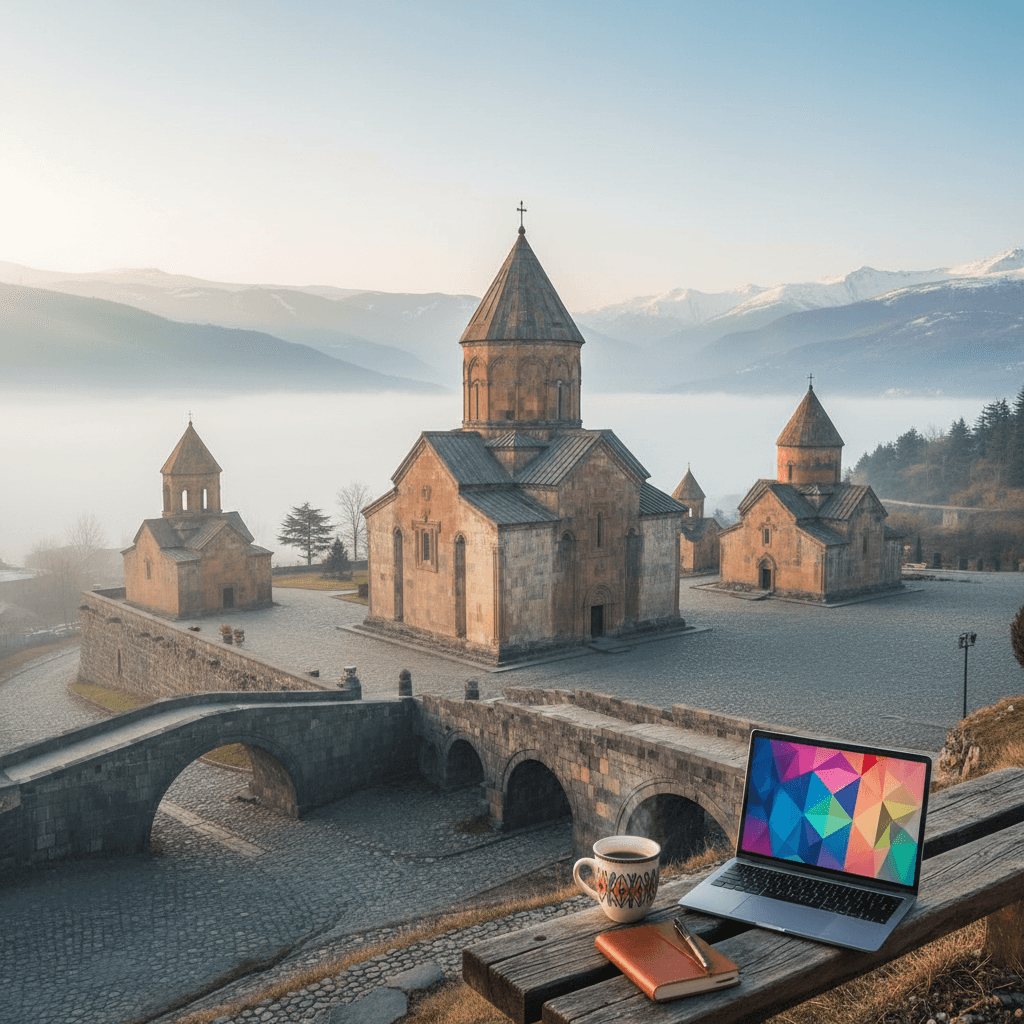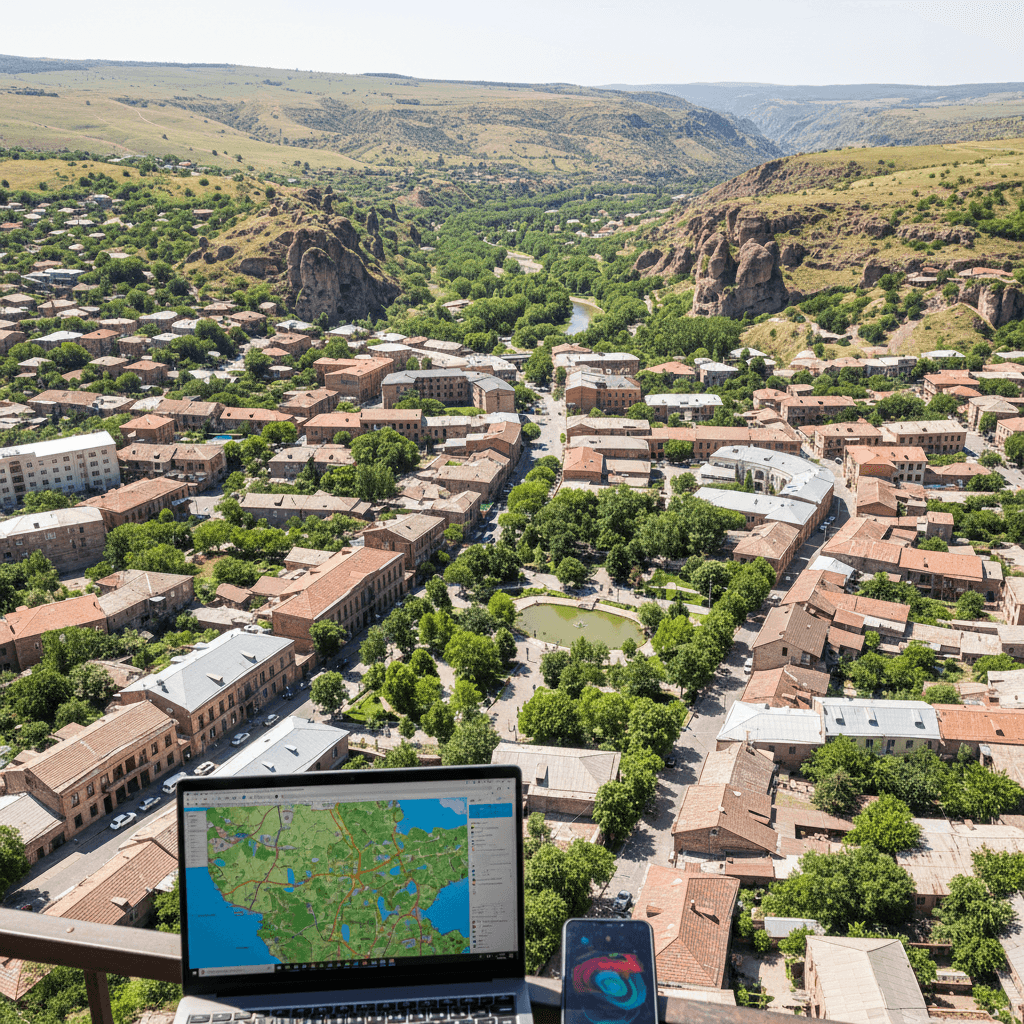
Goris
🇦🇲 Armenia
The Southern Sanctuary
Stepping into Goris feels like entering a different era, one where the limestone cliffs and jagged rock pillars define the skyline instead of glass high rises. Located in the Syunik province, this town is the antithesis of Yerevan's fast paced energy. It is a place where the morning fog clings to the red roofs and the air carries a crisp, mountain chill even in the height of summer. For nomads who find the capital too chaotic, Goris provides a grounded, authentic Armenian experience that prioritizes nature and quiet focus over networking events and late night clubbing.
The personality of Goris is built on its history of cave dwellings and its reputation as a gateway to the south. You aren't just here to work; you're here to decompress. The streets follow a distinct grid pattern, making it surprisingly easy to navigate for a mountain town. Locals are famously hospitable, often inviting travelers for a coffee or a glass of mulberry vodka before they've even finished asking for directions. It is a slow, rhythmic way of life that suits deep work and long afternoon hikes.
The Nomad Experience
While Goris is undoubtedly rural, it is becoming a legitimate contender for what many call a workation. The arrival of Impact Hub Goris has changed the game, providing a dedicated space where you can get 50 to 100 Mbps speeds while overlooking the dramatic landscape. You'll find a small but dedicated community of remote workers here, mostly those who have fled the rising prices of Yerevan in search of a $1,200 monthly budget that actually feels luxurious.
The trade off for this serenity is the social scene. If you need a different cocktail bar for every night of the week, you'll be disappointed. Socializing here happens in the cafes near the town center or around a fire at a guesthouse in Old Goris. It's an intimate, small town vibe where you'll start recognizing the same faces at the bakery within three days. Most nomads find that the lack of distractions actually boosts their productivity, leaving weekends open for exploring the Tatev Monastery or the swinging bridge of Khndzoresk.
Neighborhood Breakdown
- Central Goris: This is the functional heart of town. It's the best spot for long term stays because you're within walking distance of the GG taxi pick up points, grocery stores, and the coworking hub. Rent for a decent one bedroom here usually lands between $200 and $400.
- Old Goris: Located across the Vararakn River, this area is famous for its medieval cave houses carved into the soft volcanic rock. It's incredibly scenic and perfect for short term stays in boutique guesthouses, with prices often as low as $150 to $300 a month for simple setups. However, the hilly terrain and lack of supermarkets make it less practical for those without a car.
- The Outskirts: As you move toward the surrounding hills, you'll find larger homes that cater to families or groups. These offer the best views of the "stone forest" rock formations but require a $3 to $5 ride hailing trip via Yandex Go to get into the center for supplies.
Cost of Living & Logistics
Your money goes significantly further here than in northern Armenia. A filling meal of khorovats or fresh jengyalov hats will set you back about $5 to $10 at a local tavern. Even if you're dining out frequently and maintaining a private apartment, a mid range lifestyle rarely exceeds $1,800 a month. Most expats recommend keeping a Ucom or Beeline SIM card as a backup, as 20GB of data costs less than $10 and provides a safety net for those rare moments when the mountain weather interferes with the local WiFi.
Safety is almost a non issue in Goris. It is the kind of place where people leave their front doors unlocked and the biggest "danger" is a stray cow blocking the road during your morning jog. While English isn't widespread outside of the nomad hubs, the combination of Google Translate and the local eagerness to help makes daily life manageable. You'll likely leave Goris with a few extra pounds from the bread and a much lower stress level than when you arrived.
The Financial Breakdown
Living in Goris feels like a step back into a slower, more affordable era of travel. If you're coming from Yerevan, you'll notice your bank account breathing a sigh of relief. Prices here generally run 30% to 50% lower than the capital, making it one of the most cost-effective spots in Armenia for a long-term stay.
Most digital nomads find they can live comfortably on $1,500 to $2,000 per month. This mid-range budget covers a private one-bedroom apartment, daily cafe visits, and plenty of weekend trips to the surrounding mountains. If you're on a tighter grind, a budget of $800 to $1,200 is doable if you opt for shared housing and stick to the local street food stalls.
Monthly Living Expenses
- Housing: You can expect to pay between $300 to $500 for a central one-bedroom apartment. If you want to be closer to the historic cave district in Old Goris, prices can drop to $150 to $300, though the amenities might be more rustic.
- Coworking: Impact Hub Goris is the go-to spot for reliable infrastructure. A day pass costs about $10 to $15 and includes fast WiFi and all the coffee you can drink.
- Connectivity: A local SIM from Ucom or Beeline with 20GB of data will only set you back about $5 to $10.
- Transportation: Local bus rides are a steal at $0.50. For quick trips across town, the GG or Yandex Go apps are reliable, with most rides costing between $2 and $5.
Eating and Drinking
The food scene in Goris is heavy on local flavors and light on the wallet. You can grab a quick khachapuri or a lavash wrap on the street for $2 to $4. When you want a proper sit-down meal with dolma or jengyalov hats, a mid-range restaurant will usually charge between $8 and $12 per person.
For those nights when you want to splurge, the town's upscale dining options rarely exceed $20 for a full meal. Since there isn't much of a club scene, social spending usually revolves around house parties or low-key beers at local cafes, which keeps the "entertainment" portion of your budget very manageable.
Neighborhood Estimates
Where you park your laptop matters. The city center is the practical choice, while the outskirts offer more peace but fewer conveniences.
Central Goris
- Monthly Rent: $300 to $500
- Vibe: Best for nomads who want to walk to Impact Hub and local cafes.
- Pros: Modern amenities, better internet, close to shops.
Old Goris (Cave District)
- Monthly Rent: $150 to $300
- Vibe: Historic and scenic, with many guesthouses built into the rock.
- Pros: Incredible views and cultural immersion.
- Cons: Hilly terrain and spotty infrastructure.
The Bottom Line
Goris is a place where your money goes a long way without sacrificing the essentials of a remote work lifestyle. While you won't find the high-end luxury or the networking density of Yerevan, the trade-off is a significantly lower cost of entry and a high quality of life for nature lovers. Most travelers recommend using List.am or local Facebook groups to find the best housing deals, as the best prices are rarely found on the major international booking platforms.
For Digital Nomads: Central Goris
If you need to stay productive while soaking in the mountain air, the town center is your best bet. It's the most functional part of Goris, where the grid-like streets make it easy to find your way between your apartment and the local infrastructure. Most nomads gravitate here because it's home to Impact Hub Goris, the primary workspace in town. You can grab a desk for $10 to $15 a day and enjoy reliable 50 to 100 Mbps speeds, which is a significant step up from the patchy WiFi you might find in older guesthouses.
Living in the center means you're within walking distance of the main supermarkets, pharmacies, and the few modern cafes that have popped up lately. Rent for a decent one-bedroom apartment usually falls between $200 and $400 a month. While it's busier than the outskirts, it's still quiet by any international standard. You'll find it easiest to use the GG or Yandex Go apps here to catch a ride, with most trips across town costing just $2 to $5.
For Solo Travelers and History Buffs: Old Goris
For those who want a stay they'll actually remember, the Old Goris district (often called the cave district) is unlike anywhere else in Armenia. This area is famous for its "forest" of volcanic rock pillars and ancient cave dwellings carved into the hillsides. Many of these historic structures have been converted into unique guesthouses and boutique stays. It's incredibly scenic and offers a deep sense of cultural immersion that the modern center lacks.
Prices here are often lower, with monthly stays in traditional guesthouses ranging from $150 to $300. However, there's a trade-off. The terrain is steep and rocky, so you'll be doing a lot of climbing. The internet can be hit or miss depending on the thickness of the stone walls, so it's better for those on a creative retreat rather than those with back-to-back Zoom calls. It's the perfect base if you plan on hiking to the nearby medieval cave village of Khndzoresk or taking the cable car to Tatev Monastery.
For Families: The Surrounding Suburbs
Goris doesn't have the sprawling suburban developments you'd see in Yerevan, but the residential fringes of the town offer a slower pace that suits families well. These areas provide more space, often featuring houses with small gardens or yards where kids can play. It's much quieter than the center, and the access to nature is immediate. You'll wake up to views of the jagged mountains every morning.
The main downside for families is the distance from amenities. You won't find many playgrounds or kid-centric entertainment hubs, and you'll likely need to rely on local buses or taxis to get to the shops. While the town is very safe and locals are famously welcoming to children, there aren't established expat family enclaves here yet. Most families find that a mid-range budget of $1,500 to $2,000 a month allows for a very comfortable lifestyle, including private housing and frequent dining out at local spots for khorovats and fresh lavash.
Neighborhood Comparison at a Glance
- Central Goris
- Best for: Reliable work setups and convenience.
- Monthly Rent: $200 to $400.
- Vibe: Walkable, practical, and social.
- Old Goris
- Best for: Budget travelers and unique atmosphere.
- Monthly Rent: $150 to $300.
- Vibe: Historic, rugged, and quiet.
- Suburbs
- Best for: Long-term stays and nature lovers.
- Monthly Rent: $200 to $350.
- Vibe: Spacious, residential, and scenic.
Connectivity and Speed
Internet in Goris is surprisingly resilient for a town tucked into the Syunik mountains. If you are staying in the city center, you can expect fiber optic speeds ranging from 50 to 100 Mbps. Providers like Ucom and Beeline dominate the market, and most guesthouses have caught on to the fact that nomads need more than just a basic connection to survive. It is reliable enough for video calls and heavy uploads, though speeds can dip if you venture into the more rustic cave dwellings of Old Goris where thick stone walls aren't exactly WiFi friendly.
For a backup, your first stop should be a local kiosk or a shop in the center to grab a SIM card. Ucom is generally the favorite for regional coverage. You can get 20GB of data for roughly $5 to $10 a month. It is a smart move to set up a hotspot before heading out to explore the surrounding cliffs, as 4G coverage remains solid throughout the main town area.
Coworking in the Mountains
The crown jewel for remote workers here is Impact Hub Syunik. It is more than just a desk; it is the primary anchor for the local nomad community. For a daily rate of $10 to $15, you get high speed internet, a professional environment, and the standard perks of free tea and coffee. It is the best place to meet other expats and locals working on social enterprises, and they often host community events that help bridge the gap between travelers and the town's permanent residents.
The vibe at Impact Hub is productive but relaxed. You won't find the frantic energy of a Yerevan tech office here. Instead, it feels like a focused mountain retreat. Most nomads find that spending a few days a week here provides the structure they need before retreating to a quieter cafe or guesthouse for deep work sessions.
Cafe Culture and Laptop Friendly Spots
Goris does not have a massive "cafe hopping" scene like the capital, but the spots that do exist are incredibly welcoming to laptop users. In the center, you'll find several local cafes where the staff won't mind if you linger over a coffee for a few hours. While they might not all have dedicated "work zones," the WiFi is usually snappy and the atmosphere is quiet during the day.
- Central Cafes: Most spots near the main square offer free WiFi and power outlets if you look for them. Expect to pay about $2 to $4 for a coffee or a quick snack like khachapuri.
- Guesthouse Lounges: Many nomads choose to work from their guesthouses, especially the newer boutique spots that cater to international travelers. These often have the most comfortable seating and reliable routers.
- Outdoor Working: During the mild months from May to October, working from a balcony with a view of the jagged green peaks is a major draw. Just ensure you have a matte screen protector for the bright Armenian sun.
Practical Logistics for Digital Nomads
If you are planning to stay long term, you might want to look into the one year residence permit for remote workers, which involves a business registration fee of about $264 to $353. For banking, Ameriabank is a popular choice for expats and usually plays well with international transfers. While Wise works for most transactions, having a local account is helpful if you are renting a private apartment through List.am or Facebook groups.
To get around between work sessions, download GG or Yandex Go. Rides around town are cheap, usually $2 to $5, and they save you the trouble of negotiating prices in basic Armenian or Russian. Most nomads find that the combination of a dedicated desk at the Impact Hub and a reliable 4G backup makes Goris a perfectly viable, albeit quiet, base for a few months of focused work.
Staying Safe in the Stone City
Goris is one of those rare places where your biggest safety concern isn't pickpockets, but rather twisting an ankle on the uneven volcanic rock paths of Old Goris. The crime rate here is remarkably low. Locals are famously hospitable and often treat visitors with a protective, almost parental kindness. You'll find that walking through the town center at night feels perfectly secure, though you should stick to the main streets simply because side alleys can be poorly lit.
While there are no specific no-go zones, it's smart to stay aware of your surroundings if you're hiking alone in the surrounding mountains. The terrain is rugged and weather can shift quickly. If you're heading out to the cave dwellings or the "Stone Forest" pinnacles, tell someone at your guesthouse where you're going. Most nomads find the local atmosphere incredibly relaxed, with very few of the scams or aggressive touts you might encounter in larger regional hubs.
- Police: Dial 102 for assistance. The local precinct is responsive, though English is rarely spoken.
- Emergency: Dial 101 for fire or 103 for medical emergencies.
- Apps: Keep GG or Yandex Go on your phone. Even if you prefer walking, these apps provide a safe, tracked way to get home if you're out late or in an unfamiliar neighborhood.
Healthcare and Medical Services
For day to day health needs, Goris is well equipped with pharmacies, particularly around the central square. You'll recognize them by the green cross signs. Most common medications are available over the counter and are very affordable. If you have a specific prescription, it's still best to bring a supply from home, as brand names can differ significantly in Armenia.
The local hospital in Goris can handle basic medical issues, minor injuries, or sudden illnesses. The facility is functional but basic. For anything complex, specialized, or requiring advanced diagnostic equipment, you'll likely need to travel back to Yerevan. Most expats and long term travelers keep a travel insurance policy that includes medical evacuation to the capital just in case.
Practical Wellness Tips
The tap water in Goris is generally considered safe to drink and comes directly from mountain springs. It's actually quite famous for its quality. However, if you have a sensitive stomach, it doesn't hurt to stick to bottled water for the first few days while you adjust. You'll see public drinking fountains, known as pulpulaks, scattered around town; these are a local staple and perfectly fine for a quick refill during a walk.
If you need dental work or a routine checkup, you'll find prices are a fraction of what you'd pay in Western Europe or the US. While Goris has local clinics, many nomads prefer to schedule these appointments in Yerevan where there are more English speaking practitioners and modern private clinics like Wigmore Medical or Nairi Medical Center.
- Pharmacy Costs: Basic painkillers or cold meds usually cost between $2 and $5.
- Doctor Consultation: A basic visit at a local clinic might cost around $15 to $25.
- Insurance: Ensure your policy covers "repatriation to the capital" given the 4 to 5 hour drive from Goris to Yerevan.
The Local Rhythm
Goris is a refreshingly compact town where your own two feet are often the best way to get around. The central grid is highly walkable, making it easy to hop between your apartment, local bakeries, and the Impact Hub Goris. While the terrain is mostly flat in the center, be prepared for a workout if you're staying near the Old Goris cave district; the hills there are steep and the paths can be uneven.
Ride-Hailing and Taxis
For longer trips across town or when you're carrying groceries, ride-hailing apps are the gold standard here. Don't bother trying to hail a car on the street when you can use GG or Yandex Go. These apps work just like Uber and save you the hassle of negotiating prices in broken Armenian. A typical trip within the city limits usually costs between $2 and $5. It's reliable, cheap, and the drivers generally know the shortcuts to avoid any minor afternoon congestion.
Public Transit and Marshrutkas
Local buses are available for a bargain at about $0.50 per ride, though they don't run on a strict Western-style schedule. Most nomads skip the local city buses in favor of walking or taxis. However, the intercity marshrutkas (minibuses) are your lifeline to the rest of Armenia. If you're heading back to Yerevan, the journey takes about 4 to 5 hours and costs roughly $5 to $7. These vans depart from the main bus station and are a rite of passage for anyone living in the southern provinces.
Regional Exploration
If you want to explore the surrounding Syunik region on your own terms, you have a few specialized options:
- Bike Rentals: Some local guesthouses offer bicycle rentals for around $10 a day. It's a great way to see the rock formations, but keep in mind that the outskirts of town get vertical very quickly.
- Car Rentals: There aren't many major rental agencies based directly in Goris. Most expats recommend renting a car in Yerevan if you plan on a long-term stay and want to explore spots like the Tatev Monastery or Khndzoresk frequently.
- Private Drivers: For day trips, it's common to hire a local driver for the day. You can usually negotiate a rate of $30 to $50 to have someone take you to the wings of Tatev and back, including wait time.
Arriving from the Airport
Since Goris doesn't have its own active commercial airport, you'll likely be arriving via Zvartnots International Airport in Yerevan. The most cost-effective way to reach Goris is taking a shuttle from the airport to the city center, then catching a southward marshrutka. Total travel time is usually over 5 hours, and the total cost sits around $10 to $15. If you're arriving late or have heavy gear, a private transfer from the airport directly to your Goris doorstep will run you significantly more but saves a lot of logistical headaches.
Navigation Tips
While the town is small, digital maps can sometimes be hit or miss with the smaller alleyways in the historic districts. Most travelers recommend downloading the offline Armenian pack on Google Maps or using 2GIS, which often has better detail for post-Soviet cities. If you get lost, locals are incredibly helpful, though you might need a translation app to bridge the gap if your Armenian or Russian is rusty.
The Linguistic Landscape
In Goris, Armenian is the heart of every interaction. Unlike the more international vibe of Yerevan, this southern town leans heavily into its local roots and the regional Syunik dialect. You'll find that while the local tongue is the primary mode of communication, Soviet history means Russian is still widely understood and spoken by almost everyone over the age of thirty. It's the most common bridge for complex conversations if you happen to know a few phrases.
English proficiency is growing but remains concentrated. At Impact Hub Goris or newer cafes near the town center, you'll find younger locals and staff who speak English well. Outside of these nomad hubs, expect to rely on a mix of basic vocabulary and expressive hand gestures. Most travelers find that the people here are incredibly patient and will go out of their way to understand you, often calling over a younger neighbor or relative to help translate if a conversation gets stuck.
Digital Tools and Translation
Don't expect to wing it without some digital help. Before you leave Yerevan or arrive at Zvartnots airport, download the Google Translate offline Armenian pack. The app's camera feature is a lifesaver for reading menus at local taverns or signs at the pharmacy. For day to day logistics, Yandex Go and GG are the standard apps for getting around. They allow you to set your destination digitally, which completely removes the need to negotiate prices or give directions in a language you haven't mastered yet.
- Google Translate: Essential for menus and street signs.
- Yandex Go / GG: Best for avoiding language barriers with drivers.
- Facebook Groups: Use "Digital Nomads Armenia" to connect with the small but helpful English speaking community in the region.
Key Phrases to Know
Learning a handful of Armenian words goes a long way in building rapport with the locals. Even if your pronunciation isn't perfect, the effort is deeply appreciated. Start your day with a friendly Barev (Hello) and always remember Shnorhakal em (Thank you) when finishing a meal or a transaction. If you need to keep it simple, Jan is a versatile term of endearment you'll hear constantly; adding it after someone's name shows warmth and respect.
- Barev: Hello
- Vonts es?: How are you? (Informal)
- Ayo / Voich: Yes / No
- Shnorhakal em: Thank you
- Knerer: Sorry / Excuse me
- Hajoghutyun: Goodbye
Communication Tips for Nomads
If you're planning on staying for more than a few days, get a local SIM card immediately. Ucom and Beeline are the most reliable in the Syunik province. A plan with 20GB of data usually costs between $5 and $10. Having a local number makes it much easier to coordinate with landlords on List.am or book guesthouses in the Old Goris cave district, where owners might not be on the major booking platforms.
Socializing in Goris is often done over a table. If you're invited for coffee or a glass of mulberry vodka, the communication will be more about the shared experience than the words themselves. It's common for locals to use translation apps mid-toast to ensure you understand their well wishes. Embrace the slower pace and the occasional awkward silence; it's all part of the authentic southern Armenian experience.
Seasonal Breakdown
Goris sits in a bowl of dramatic mountains, which means its weather is a bit more temperamental than the dry heat of Yerevan. You'll experience a temperate continental climate where the air is crisp, the fog often rolls over the stone needles of Old Goris, and the seasons are clearly defined.
Summer (June to August) is the peak season for a reason. While the capital swelters in 40°C heat, Goris stays comfortable between 20°C and 30°C. It's the perfect window for working from the balcony of a stone guesthouse or taking your laptop to a cafe in the center. The evenings are cool enough that you'll actually want a light jacket, a rare luxury in Armenian summers.
Autumn (September to November) is arguably the most beautiful time to arrive. The surrounding Syunik mountains turn deep shades of gold and rust. September still feels like summer, but by late October, the rains pick up. Most nomads find this the best time for deep work sessions at Impact Hub Goris before the winter chill sets in.
Winter (December to February) is quiet and cold. Temperatures hover between -5°C and 5°C, and snow is common. While the town looks like a postcard, the hilly terrain and Old Goris cave district can become slippery and difficult to traverse. Many local guesthouses close or limit services, so if you're staying through winter, ensure your apartment has reliable heating, usually gas powered.
Spring (March to May) brings heavy mist and frequent showers. It's atmospheric but damp. By May, the wildflowers bloom across the plateau, and the weather settles into a mild, pleasant rhythm that signals the start of the hiking season.
The Best Time to Visit
If you want the perfect balance of reliable internet, outdoor access, and social activity, aim for May through October. This window allows you to take full advantage of the region's natural beauty without fighting the snow or heavy spring rains.
- For Hikers: June and September offer the best trail conditions for exploring the Khndzoresk swinging bridge or the paths around the cave dwellings.
- For Budget Travelers: Late October and November see a dip in prices for guesthouses in the Old Goris area, with rates sometimes falling to $150 to $250 for a month.
- For Digital Nomads: September is the sweet spot. The tourist crowds thin out, the WiFi is stable, and the local harvest means the markets are overflowing with fresh produce and herbs for jengyalov hats.
What to Pack
Goris is a casual, practical town. You won't need high fashion here, but you will need layers. Even in the height of summer, the mountain air cools down significantly once the sun drops behind the cliffs. Travelers often recommend bringing a sturdy pair of waterproof shoes, especially if you plan on exploring the cave district or walking to the center from the outskirts.
If you're planning a "workation" during the shoulder seasons, a high quality power bank is a smart addition to your bag. While the infrastructure is solid, heavy storms in the Syunik province can occasionally cause brief power flickers in the older neighborhoods.
Money and Cost of Living
Living in Goris is significantly lighter on the wallet than staying in Yerevan. You can expect your monthly expenses to drop by 30% to 50% compared to the capital. Most nomads find that a budget of $800 to $1,200 covers a comfortable, local life, while $1,500 to $2,000 allows for frequent dining out and a more modern apartment.
- Housing: A central one bedroom apartment typically runs between $200 and $400. If you are looking for a more rustic experience near the Old Goris cave district, prices can dip as low as $150.
- Food: Street food like fresh khachapuri or lavash wraps costs about $2 to $4. A meal at a mid range restaurant usually lands between $8 and $12, while a high end dinner with wine rarely exceeds $25.
- Transport: Local bus rides are a steal at $0.50, and a cross town trip using a ride hailing app usually costs under $5.
Connectivity and Workspace
While the town feels ancient, the internet is surprisingly reliable. Most central cafes and guesthouses offer speeds between 50 and 100 Mbps. For a guaranteed connection and a professional environment, head to Impact Hub Goris. It is the heart of the local nomad scene, offering daily passes for $10 to $15 that include fast WiFi and bottomless coffee.
For mobile data, pick up a SIM card from Ucom or Beeline. You can get 20GB of data for roughly $5 to $10. It is best to handle this at the airport or a kiosk in the center of town. Keep in mind that while the hub is solid, WiFi in the hilly cave district can be spotty, so have a backup hotspot ready if you are staying in a traditional guesthouse.
Getting Around
Goris is a walkable town, especially within the center and the historic Old Goris area. For longer trips or when the hills get too steep, download the GG or Yandex Go apps. They are the local equivalents of Uber and work reliably throughout the day.
To reach Goris from Yerevan, you will likely take a marshrutka (minibus). The journey takes about 4 to 5 hours and costs between $5 and $7. It is a scenic but long drive through the mountains. If you want to explore the surrounding area, like the Tatev Monastery or the Khndzoresk swinging bridge, you can often rent a bike or arrange a local driver for about $10 to $20 for the day.
Language and Local Customs
Armenian is the primary language, and Russian is widely understood by almost everyone. English proficiency is high at Impact Hub and newer cafes, but you will need a translation app for the local markets. Learning a few basics like Barev (hello) and Shnorhakal (thank you) goes a long way with the locals, who are famously hospitable.
Customs are traditional but welcoming. Always remove your shoes when entering someone's home. If you are invited to dinner, expect plenty of toasts with local fruit brandies or cognac. It is considered polite to accept at least one glass. Most residents are Orthodox Christian, so dress modestly when visiting the local churches or monasteries.
Safety and Health
Goris is incredibly safe with very low crime rates. You can walk comfortably at night, though some side streets are poorly lit, so a phone flashlight is handy. For healthcare, the local hospital handles basic needs and emergencies. For anything complex or specialized, expats generally recommend heading back to Yerevan where the facilities are more modern. Pharmacies are easy to find in the town center and carry most standard over the counter medications.
Visas and Paperwork
Armenia is one of the most nomad friendly countries in the region. Many nationalities get 180 days visa free. If you want to stay longer, you can apply for a one year residency as a remote worker. This involves registering a small business or as a sole proprietor. Business registration is typically free or low-cost via online portal; residency permit government fee is approximately $276. For banking, Ameriabank is a popular choice for expats, and Wise works perfectly for international transfers.
Need visa and immigration info for Armenia?
🇦🇲 View Armenia Country GuideHidden Gem
Worth the effort