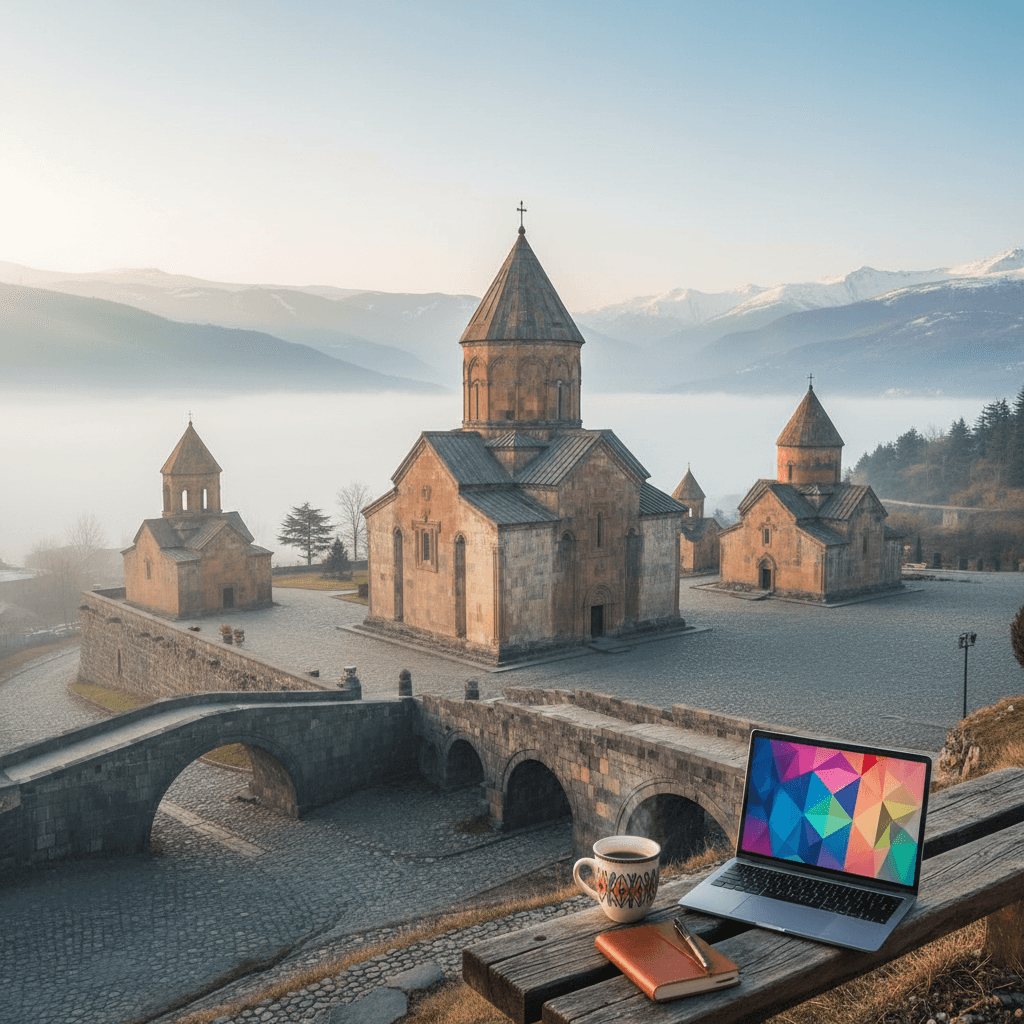
Tsaghkadzor
🇦🇲 Armenia
The High-Altitude Slow Down
Tsaghkadzor translates to the Valley of Flowers, but for most of the year, it feels more like a quiet, pine-scented sanctuary perched in the Armenian highlands. At an elevation of 1,841 meters, the air is noticeably thinner and crisper than in Yerevan. While the capital is often frantic and heat-soaked, Tsaghkadzor operates on mountain time. It is a town of around 1,000 permanent residents, meaning you will quickly start recognizing the same faces at the base of the ropeway or the local taxi stand.
The vibe here is deeply seasonal. In winter, the town transforms into a snowy hub for skiers and snowboarders, centered around the Teghenis Mountain lifts. During the summer, it becomes a cool-weather retreat where the dense forests offer a playground for hikers. For nomads, it is less of a networking hub and more of a deep-work retreat. You come here to clear your head, finish that project, and spend your afternoons walking through the 11th-century Kecharis Monastery complex.
Cost of Living & Logistics
Living here is significantly more affordable than most European ski resorts, though prices fluctuate based on the snow. Since there is no dedicated coworking space, you will likely be working from your rental or the cafe at the ropeway base. Most nomads find that a monthly budget of $1,500 to $2,000 provides a very comfortable lifestyle, including a private apartment and frequent dining out.
- Housing: Expect to pay between 150,000 and 300,000 AMD ($350 to $700 USD) per month for a decent apartment near the center. Prices peak in December through March.
- Dining: A meal at a mid-range local spot costs about 3,000 to 5,000 AMD ($7 to $12). For a quick bite, street food like lahmajun or khorovats will only set you back about 1,000 to 2,000 AMD ($2 to $5).
- Transportation: Taxis are the primary way to get around if you aren't walking. A ride from the town center to the ropeway is a flat 300 AMD ($0.75).
The Neighborhood Breakdown
Tsaghkadzor is compact enough that you can walk across the main town area in twenty minutes. However, where you stay changes your daily rhythm significantly.
Ropeway & Central Area
- Best For: Active nomads and solo travelers who want to be near the action.
- Pros: Immediate access to the ski lifts, mountain cafes, and the most reliable internet connections in town.
- Cons: It gets loud and crowded during peak winter weekends.
Monastery Outskirts
- Best For: Peace seekers and those staying for a month or more.
- Pros: Stunning views of Kecharis and Makravank, direct access to hiking trails, and a more authentic village feel.
- Cons: Further from the few grocery options; you will rely on taxis or a car more often.
Town Center (Nalbandyan St)
- Best For: General convenience and first-time visitors.
- Pros: Home to the tourist information office and the main taxi hub. You are close to the pharmacy and small markets.
- Cons: Limited housing variety; mostly older apartments or smaller guesthouses.
The Nomad Experience
The emotional reality of Tsaghkadzor is one of solitude and nature. You won't find the thriving expat meetups of Yerevan here. Instead, you'll find a community of locals who are used to tourists but appreciate those who stay long enough to learn a few Armenian phrases. English is not widely spoken outside of the hotels and the ropeway ticket office, so having Google Translate ready is a must. Most expats recommend setting up your tax and residency paperwork in Yerevan first, as the 1-year residence permit for sole proprietors is a major draw for those looking to stay in Armenia long-term.
Getting here requires a bit of effort. There is no direct train; you will usually take a shared van or taxi from Yerevan, which takes about 1 to 1.5 hours. Many nomads choose to keep a base in the capital and head to Tsaghkadzor for two or three weeks at a time to reset. It is the kind of place where the silence of the forest is your primary colleague, and the December to March ski season provides the perfect excuse to close your laptop early.
The Cost of Low-Key Alpine Living
Living in Tsaghkadzor feels like a strategic retreat. You are getting mountain air and ski-resort access at a fraction of the price of the Alps or even Georgia's Gudauri. Because the town is small and seasonal, your monthly burn depends heavily on whether you are here for the winter powder or the quiet summer hiking trails. Most nomads find they can live comfortably on $1,500 to $2,000 a month, though you can definitely squeeze that under $1,000 if you opt for shared housing and stick to local markets.
Rent is the biggest variable. There is no formal market for long-term nomad studios, so you will likely be negotiating monthly rates with guesthouses or small hotels. Near the ropeway, expect to pay between 150,000 and 300,000 AMD (roughly $350 to $700) for a decent setup. Prices peak in January and February, then drop significantly once the snow melts. If you are staying long-term, many travelers suggest using the tourist office on Nalbandyan Street as a starting point to find local landlords who don't list on major booking sites.
Monthly Budget Tiers
- The Budget Nomad ($800 to $1,200): You are likely sharing a house or staying in a modest guesthouse further from the lifts. You cook most meals and stick to street food like 1,000 AMD lahmejun or khorovats wraps.
- The Mid-Range Resident ($1,500 to $2,000): This covers a private one-bedroom apartment or a high-end guesthouse suite. You eat out at mid-range spots daily, spending about 4,000 AMD per meal, and take plenty of taxis.
- The High-End Escape ($2,500+): You are staying in a premium resort hotel near the ropeway. You frequent upscale dining where dinners top 10,000 AMD and likely keep a rental car for easy trips to Yerevan.
Daily Expenses and Infrastructure
Local transport is incredibly cheap but limited. A taxi from the town center to the ski lifts is usually just 300 AMD, which is less than a dollar. However, getting out of town is a bit of a puzzle. You will often need to take a local bus to the nearby city of Hrazdan first, then transfer to a van heading to Yerevan. For many, the convenience of a rental car or the gg ride-hailing app (if you can snag a driver coming from the city) is worth the extra cost.
Eating out is affordable but the variety is thin. The cafe at the base of the ropeway is a reliable spot for a quick bite and some light laptop work. For a proper grocery haul, you might find the local shops a bit basic. Expats often recommend making a weekly run to Yerevan to stock up on specialty items or tech gear, as Tsaghkadzor lacks the big supermarkets and electronics stores found in the capital.
The Connectivity Trade-off
There are no dedicated coworking spaces in Tsaghkadzor. If you need a professional office environment, you will have to head to Yerevan, where spaces like Impact Hub (around 80,000 AMD/month) provide a more structured setting. Most nomads here rely on hotel WiFi or local SIM cards from providers like Team or Viva-MTS. The connection is generally stable enough for Zoom calls, but it is always smart to have a backup hotspot, especially during peak tourist weeks when the local towers get crowded.
On the legal side, Armenia is famously friendly to remote workers. If you register as a sole proprietor, you can benefit from incredibly low tax rates, sometimes as low as $7.60 for the initial business registration. This makes the country a top-tier choice for those looking to establish a legal residency base while enjoying the quiet, high-altitude life of the Kotayk province.
The Ropeway & Central Area
For solo travelers and digital nomads, the area surrounding the Teghenis Mountain ropeway is the heartbeat of the town. This is where you'll find the most energy, especially during the winter ski season from December to March. Living here means you're within walking distance of the ski lifts and the small cluster of cafes at the base of the mountain. It's the best spot to find a seasonal vibe, though it can get crowded when the weekend crowds arrive from Yerevan.
- Rent: Expect to pay between 150,000 and 300,000 AMD ($350 to $700 USD) for a decent apartment or resort suite near the lifts.
- Internet: While there are no dedicated coworking spaces, the cafes at the ropeway base are popular for light work sessions. Most nomads rely on mobile hotspots or hotel WiFi, which is generally stable enough for video calls.
- Vibe: Active and social. You'll meet plenty of people on the slopes or at the mountain-side bars, though the "nomad scene" is still very much in its infancy here.
Town Center (Nalbandyan Street)
Digital nomads who need a bit more "city" structure usually gravitate toward the town center, specifically around Nalbandyan Street. This is the most practical area for long term stays because it houses the tourist information office and the main taxi stands. You're centrally located between the ski resort and the historical sites, making it easy to pivot between work and exploration.
- Food: Street food like khorovats or local snacks will run you about 1,000 to 2,000 AMD ($2 to $5), while a solid mid range dinner costs around 4,000 AMD ($10).
- Transport: A taxi from the center to the ropeway is incredibly cheap, usually around 300 AMD ($0.75).
- Accessibility: It's the easiest place to catch a bus toward Hrazdan if you need to head into Yerevan for a day of networking at a professional coworking space.
Monastery Outskirts & Makravank
Expats and families often prefer the quieter outskirts near the Kecharis and Makravank monasteries. This area feels less like a resort and more like a traditional Armenian village. It's perfect if you're looking for deep focus, fresh mountain air, and immediate access to hiking trails. You'll trade the convenience of the ski lifts for a more spiritual and serene atmosphere.
- Environment: Very quiet and nature focused. It's the best area for those who want to escape the noise of the winter tourists.
- Logistics: You'll likely want a car if you stay out here. Public transport is difficult, often requiring a taxi or a long hike to get into the main part of town.
- Healthcare: There are no major hospitals in Tsaghkadzor, so families usually rely on facilities in nearby Hrazdan or make the 1 hour drive to Yerevan for specialized care.
Practical Perspectives for Residents
Most nomads find that while Tsaghkadzor is beautiful, it works best as a "deep work" retreat rather than a permanent base. The low cost of living is a major draw, with budget travelers getting by on $800 to $1,200 per month. However, the lack of English speakers outside the tourist office can be a hurdle. Expats recommend learning a few basic Armenian phrases or having Google Translate ready for daily errands. If you're staying long term, many suggest registering as a sole proprietor in Armenia to take advantage of the $7.60 business registration fee and favorable tax rates for remote workers.
Connectivity in the Mountains
Working from Tsaghkadzor requires a bit of a pioneer spirit compared to the tech hubs of Yerevan. You won't find sleek, glass-walled coworking spaces or dedicated nomad hubs here yet. Instead, the town functions as a "deep work" retreat where your office is usually a hotel balcony or a corner table in a quiet resort cafe.
Most nomads find the local WiFi surprisingly stable for a mountain town, especially in the newer hotels and apartment rentals near the center. It is reliable enough for video calls and standard remote tasks, though you should always have a backup. Since public infrastructure is still catching up to the town's popularity, the "work from anywhere" lifestyle here usually means working from the base of the ropeway at a cafe or setting up shop in your rental on Nalbandyan Street.
The Coworking Gap
If you absolutely need a professional office environment with ergonomic chairs and networking events, you'll have to make the 1-1.5 hour trip into Yerevan. The capital is where the real nomad community lives, featuring spaces like Impact Hub. Most expats living in Tsaghkadzor treat the town as a place to disconnect from the grind and focus on specific projects, rather than a place to network.
For a change of scenery, travelers often head to the cafe at the base of the Tsaghkadzor Ropeway. It offers the basics for a morning of emails before hitting the slopes or hiking trails. Just keep in mind that during the peak ski season from December to March, these areas become loud and crowded, making focused work nearly impossible during the day.
Mobile Data and SIM Cards
Since there are no dedicated workspaces, a local SIM card with a hefty data plan is your best friend. Most nomads recommend picking up a SIM in Yerevan before heading up the mountain, as the selection in Tsaghkadzor is limited. Armenian providers offer very affordable data packages that generally provide strong 4G coverage throughout the town center and the lower resort areas.
- Standard SIM Cost: Expect to pay around 3,000 to 5,000 AMD ($7 to $12) for a generous monthly data plan.
- Top-up Apps: Use the GG app or local terminals for easy mobile payments.
- Reliability: Coverage is great in town but can drop off quickly once you head toward the Makravank monastery or deeper into the forest trails.
Practical Work Setup
Because the town is so compact, your choice of accommodation effectively becomes your coworking space. If you're planning a stay longer than a few days, look for rentals in the Town Center. This area gives you the best proximity to the tourist info office and the few cafes that won't mind you lingering over a laptop for a couple of hours.
Prices for a decent 1BR or studio setup usually range between 150,000 and 300,000 AMD ($350 to $700) per month. If you are staying during the off-season in the summer, you can often negotiate better rates for places with better desks and views. Just remember that the town is seasonal; what is a quiet sanctuary in June can become a 24/7 party zone in January, so check the proximity to the main ski lifts before booking your "quiet" office.
Digital Nomad Logistics
Armenia is famous for its nomad-friendly policies, including a 180-day visa-free stay for many nationalities. If you decide to make Tsaghkadzor a long-term base, you can even register as a sole proprietor in Yerevan for a one-year residence permit. The business registration fee is remarkably low, often around $7.60, making it one of the most accessible spots in the region for remote workers looking for a legal foothold.
- Nearest Tech Support: Hrazdan (15 minutes by taxi) or Yerevan.
- Best Work Window: Weekdays during the shoulder seasons (spring and autumn) when the tourists vanish and the WiFi speeds stay consistent.
- Power Stability: Generally good, though heavy winter storms can occasionally cause brief flickers; a laptop with a solid battery is a must.
A Safe Haven in the Highlands
Armenia is consistently ranked as one of the safest countries in the region, and Tsaghkadzor is no exception. Because it is a small, tight knit resort town with a population of around 1,000 residents, the atmosphere is incredibly peaceful. You won't find the typical "tourist trap" scams or aggressive street vendors here. Most nomads feel perfectly comfortable walking back to their guesthouses after a late dinner or a sunset hike near the Kecharis Monastery.
The biggest safety concerns aren't related to crime, but rather the mountain environment itself. During the winter ski season from December to March, the roads can get slick with ice and snow. If you are driving from Yerevan, make sure your car has proper winter tires. On the slopes, the ropeways have been upgraded to modern Western equipment, but it is still wise to stay on marked trails since the terrain gets rugged quickly once you head into the dense forests.
Healthcare Logistics
It is important to manage your expectations regarding medical facilities within the town limits. Tsaghkadzor does not have a full scale hospital of its own. For minor issues like a cold or a small scrape, there are local pharmacies, but for anything serious, you will need to head to the nearby city of Hrazdan or make the 1 hour drive back to Yerevan.
Expats and long term nomads typically rely on the private healthcare system in Yerevan, which is high quality and very affordable by Western standards. If you are staying on a residence permit, you can access the national healthcare system, but most travelers prefer paying out of pocket at private clinics like Nairi Medical Center or Wigmore Clinic in the capital. A standard doctor's visit usually costs between 10,000 and 20,000 AMD (roughly $25 to $50).
- Emergency Ambulance: Dial 101
- Police: Dial 102
- Tourist Info Office: Located at 3 Nalbandyan St for general assistance and local guidance.
Practical Wellness Tips
The altitude is something to keep in mind if you are arriving directly from sea level. Tsaghkadzor sits significantly higher than Yerevan, and the air is crisp and thin. Stay hydrated, especially during your first few days of skiing or hiking. The tap water in Armenia is generally considered safe and is actually quite famous for its quality; you will see "pulpulaks" (public water fountains) all over the country where you can refill your bottle for free.
For those planning a longer stay, it is smart to stock up on any specific prescription medications in Yerevan before heading up the mountain. While Hrazdan has basic supplies, the specialized pharmacies in the capital offer a much wider selection of international brands. If you are registering as a sole proprietor for the $7.60 business fee to get your residency, you will eventually want to look into local health insurance providers like Ingo Armenia or Rosgosstrakh to cover you while you explore the peaks.
The Walkability Factor
Tsaghkadzor is a compact mountain town where your two feet are often your best asset. If you are staying near the Town Center or along Nalbandyan Street, you can easily reach the local tourist office, small grocery shops, and the lower monastery complexes without much effort. The air is crisp and the distances are short, making it one of the few places in Armenia where you can truly ditch the car for daily errands.
Things change once you head toward the Ropeway or the higher forest trails. While it is technically walkable, the incline can be a workout, especially in the winter when the roads are slick with snow. Most nomads choose their base based on whether they want to be steps from the ski lifts or closer to the few amenities in the town center.
Taxis and Ride-Hailing
Taxis are the lifeline of the resort. They are incredibly cheap by international standards, and you will find them idling near the main square or the base of the ski resort. A quick hop from the town center to the ropeway typically costs around 300 AMD, which is less than $1 USD. It is common practice to negotiate a price before you get in, though the rates are generally standardized among the local drivers.
While Yerevan relies heavily on apps like GG or Yandex, these are less reliable in Tsaghkadzor. You might find a driver on the app during the peak winter season, but in the quieter months, it is better to ask your hotel or a local cafe to call a driver for you. Keep some small cash on hand, as card payments in local cabs are almost non-existent.
Public Transport Challenges
Public transit is the one area where Tsaghkadzor shows its small-town roots. There is no direct, high-frequency bus service that runs through the town. To get almost anywhere else in the country, you first have to get to Hrazdan, the neighboring industrial city. Local marshrutkas (minibuses) run between Tsaghkadzor and Hrazdan, but they follow a loose schedule that can be frustrating if you are on a tight timeline.
If you are trying to get to Makravank Monastery, be prepared for a bit of a detour. Because of the way the roads are laid out, you often have to go through Hrazdan even though it looks close on a map. For any specific regional routes, your best bet is to pop into the tourist information office on Nalbandyan Street; the staff there can give you the most current departure times for the shared vans.
Getting to and from Yerevan
Most travelers arrive via Zvartnots International Airport in Yerevan. The drive takes about 1 to 1.5 hours depending on the weather. You have a few options for the trek:
- Private Taxi: A direct ride from the airport or central Yerevan will cost between 7,000 and 10,000 AMD. It is the most comfortable way to move with ski gear or heavy luggage.
- Shared Taxis: A staple of Armenian travel, these depart from specific hubs in Yerevan once the car is full. They are much cheaper than a private ride but require some patience.
- Rental Cars: If you plan on exploring the surrounding Kotayk province or visiting Lake Sevan, renting a car in Yerevan is highly recommended. Just ensure it has 4WD if you are visiting between December and March.
Alternative Wheels
During the summer, mountain bikes are available for rent near the resort area, which is a great way to hit the forest trails. In the winter, the focus shifts to snowmobiles. You will see them for rent near the ropeway parking lots, though they are more for recreation than actual commuting. For daily life, most expats and long-term visitors find that a combination of walking and the occasional $0.75 taxi ride covers everything they need.
The Linguistic Landscape
In Tsaghkadzor, language is a mix of mountain hospitality and Soviet history. Armenian is the heart of every interaction, and while you can get by with just a smile in the ski lift lines, knowing the local context helps. Most residents are bilingual in Armenian and Russian, a carryover from the town's history as a prominent Soviet era training ground. If you speak even a little Russian, you'll find it much easier to negotiate taxi prices or discuss hiking routes with the locals.
English is less common here than in Yerevan. While staff at the Tourist Information Office on Nalbandyan Street and high end hotels like the Marriott speak it well, the average person on the street likely won't. Most nomads rely heavily on Google Translate or similar apps to bridge the gap, especially when reading menus at the ropeway base cafe or coordinating a trip into Hrazdan. If you plan on staying for the full winter season, learning the Armenian alphabet is a smart move; it makes identifying grocery items and street signs significantly less stressful.
Staying Connected
Since Tsaghkadzor doesn't have its own dedicated coworking spaces, your laptop life will revolve around your accommodation and a few select cafes. Most nomads find that the internet in local hotels and rentals is stable enough for video calls, though it's always worth asking for a speed test before signing a monthly lease. If the house WiFi fails, the cafes near the ropeway are your best bet for a change of scenery, though they get loud during the peak ski months of December to March.
For a reliable backup, pick up a local SIM card before you leave Yerevan. The main Armenian providers offer excellent coverage in the town center, and data is remarkably cheap. You can usually get a generous data package for under 5,000 AMD. Using your phone as a hotspot is a common workaround for nomads who want to work from the quieter areas near the Kecharis Monastery where public WiFi is nonexistent.
Navigating Daily Life
Communication isn't just about words; it's about knowing which apps to use. While Tsaghkadzor is small enough to walk, you'll eventually need a set of wheels. The ride hailing apps popular in the capital, like GG or Yandex, can be hit or miss here. Most expats recommend keeping a few local taxi numbers in your phone. A quick call can get you from the town center to the ski lifts for about 300 AMD, but don't expect the driver to speak English. Just state your destination clearly or show it on a map.
If you're looking for a community fix, you'll likely have to head back to Yerevan. There are no formal nomad meetups in these mountains yet. Most social interaction happens organically on the slopes or during the summer hiking season. Travelers often say that the locals are incredibly patient with language barriers, especially if you've made an effort to learn basic Armenian greetings like "Barev" (Hello) or "Shnorhakalutyun" (Thank you).
Practical Checklist
- Primary Language: Armenian
- Secondary Language: Russian (widely understood)
- English Proficiency: Low, mainly in tourist spots
- Local SIM Cost: Approx 3,000 to 5,000 AMD
- Essential Apps: Google Translate, Yandex Maps
- Emergency Numbers: 101 (Ambulance), 102 (Police)
For those planning a long term stay via the business registration route, keep in mind that the process for registering as a sole proprietor is around 3,000 AMD (~$7.50). You'll definitely want a local translator or a fixer from the Yerevan tech scene to help you navigate the bureaucracy. Once that's settled, the peace and quiet of the Kotayk' province makes for an ideal deep work retreat.
The Seasonal Shift
Tsaghkadzor lives and breathes by the seasons. Because it sits high in the Kotayk province, the climate is a world away from the sweltering concrete heat of Yerevan. You'll find the air is thinner, crisper, and carries the scent of pine year round. Most digital nomads time their arrival based on whether they want to carve through fresh powder or hike through emerald forests.
Winter: The High Season
From December to March, the town transforms into Armenia's premier winter playground. This is when the Soviet era ropeways, now modernized with Western equipment, stay busy from dawn until dusk. If you're here for the skiing, January is typically the sweet spot for consistent snow cover.
- Average Highs: -1°C (30°F)
- Vibe: High energy, snowmobiles in the streets, and a lively aprés ski scene at the ropeway base cafe.
- Nomad Tip: Accommodation prices spike during these months, and the town center gets crowded on weekends when the Yerevan crowd drives up.
Summer: The Alpine Escape
When Yerevan hits 40°C in July and August, Tsaghkadzor becomes the ultimate refuge. The mountain breezes keep things comfortable, making it the perfect time for focused deep work during the day and hiking to the Makravank or Kecharis monasteries in the late afternoon.
- Average Highs: 25°C (77°F)
- Vibe: Quiet, green, and meditative. It's the best time for those who want to save on rent while enjoying the outdoors.
- Activities: Mountain biking, long forest treks, and exploring the historic stone architecture without the winter gear.
The Shoulder Seasons
Spring and fall are the "quiet" months, but they come with caveats. April and May bring the thaw, which often means mud and unpredictable rain. Similarly, October and November can feel a bit desolate as the town prepares for the first snowfall. Many shops and seasonal cafes might close their doors during these windows.
Travelers often say the shoulder seasons are the hardest time to get around. Public transport, which already requires a bit of a dance through Hrazdan, can be less frequent, and the lack of a car becomes more noticeable when the weather is gloomy.
When to Visit: Summary by Goal
- For Skiing and Snowboarding: Aim for late December through early March. The lifts are reliable and the views of the valley are unmatched.
- For Hiking and Nature: June through September offers the most stable weather for trail running and exploring the surrounding peaks.
- For Maximum Savings: Visit in May or October. You'll have plenty of leverage to negotiate monthly rates on apartments, though you'll trade off some of the town's social energy.
Most nomads find that a three month stay starting in June provides the perfect balance of cool weather and accessibility. If you're a winter sports enthusiast, arriving in early January ensures you miss the chaotic New Year's rush while still catching the best of the Armenian winter.
The Essentials
Living in Tsaghkadzor means trading the high energy of Yerevan for mountain air and a slower, seasonal rhythm. While most visitors treat it as a weekend ski trip, nomads who stay longer find a quiet retreat where the biggest distraction is the view of the valley. The town is tiny, with a permanent population of around 1,400, so you'll quickly become a familiar face at the local shops.
The winter season from December to March is the busiest time. If you aren't here to ski, the summer months of June through August offer a perfect escape from the sweltering heat of the Ararat plain. Be prepared for a language barrier; while Russian is widely spoken, English proficiency is quite low outside the main tourist office on Nalbandyan Street. Having Google Translate downloaded for offline use is a smart move.
Cost of Living
Armenia remains one of the most affordable corners of the Caucasus, and Tsaghkadzor follows suit, though resort pricing can creep up during peak ski weekends. Most nomads find they can live comfortably on $1,500 to $2,000 a month, while budget travelers can get by on closer to $1,000 if they stick to local guesthouses and street food.
- Rent: You won't find many long term listings online. Expect to pay between 150,000 and 300,000 AMD ($350 to $700 USD) for a decent apartment near the ropeway.
- Dining: A quick meal of Lahmajoun or street food costs about 1,000 to 2,000 AMD ($2 to $5). A mid range dinner at a local tavern usually runs 3,000 to 5,000 AMD ($7 to $12).
- Transport: Taxis are incredibly cheap. A ride from the town center to the ski lifts is usually just 300 AMD ($0.75).
Connectivity and Work
If you're looking for a dedicated coworking space with ergonomic chairs and networking events, you won't find it here. Nomads generally work from their rentals or set up at the cafe at the base of the ropeway for a few hours. For a proper office environment, you'll need to head to Yerevan, where spaces like Impact Hub (prices around 80,000 AMD/month) offer monthly memberships.
For internet, don't rely solely on hotel WiFi. Pick up a local SIM card from providers like Team or Viva-MTS in Yerevan before you head up the mountain. Armenia's mobile data is generally fast and reliable enough for video calls, making it easy to tether if the local connection dips.
Getting Around
The town center is compact and very walkable. However, public transport is a bit of a puzzle. There are no direct large buses from Yerevan; you'll usually need to take a marshrutka (minibus) to the nearby city of Hrazdan first and then grab a local taxi. If you're coming straight from Zvartnots International Airport, a private transfer takes about one to 1.5 hours and is the most stress free option.
For daily errands, most people rely on the local taxi network or simply walk. If you plan on exploring the more remote monasteries like Makravank, renting a car for a few days is highly recommended as the uphill hikes can be grueling.
Safety and Health
Tsaghkadzor is exceptionally safe, even late at night. There are no specific neighborhoods to avoid. For healthcare, the town has limited facilities. While there is a tourist information office that can help with minor issues, any serious medical needs or specialized pharmacies will require a trip to Hrazdan or back to Yerevan. Most expats recommend getting a local residence permit through business registration, which grants access to the national healthcare system.
Residency and Paperwork
Armenia is famous in the nomad community for its easy residency rules. Many nationalities can stay visa free for up to 180 days. If you want to stay longer, registering as a sole proprietor is a popular route. It costs about $7.60 to register a business, and it can pave the way for a one year renewable residence permit. This also allows you to open local bank accounts and simplifies your tax situation if you're working remotely.
Need visa and immigration info for Armenia?
🇦🇲 View Armenia Country GuideHidden Gem
Worth the effort