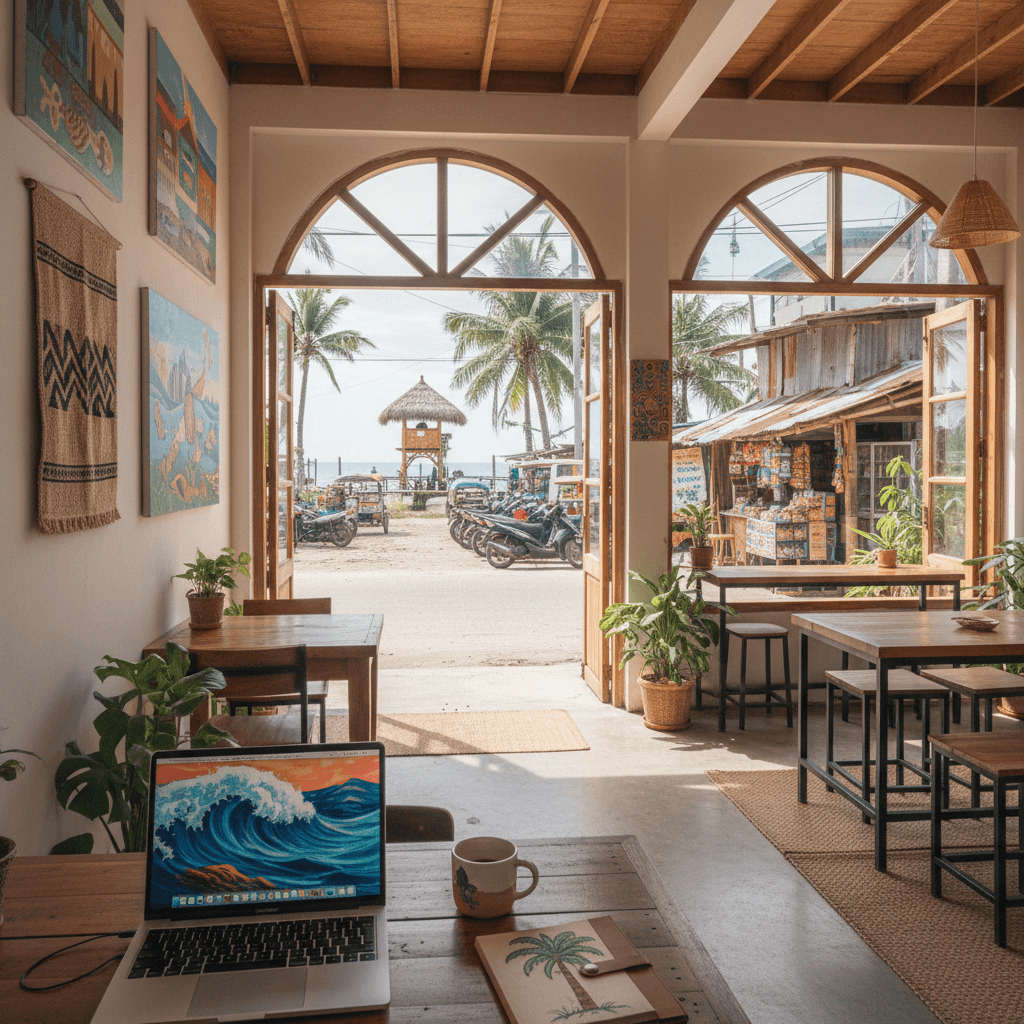
General Luna (Siargao)
🇵🇭 Philippines
The Vibe: Tropical Hustle Meets Island Soul
General Luna is the beating heart of Siargao, a place where the morning alarm is usually a rooster or the sound of a surfboard hitting the water. Often called the mini Bali of the Philippines, it has managed to keep a raw, unpolished edge that its Indonesian cousin lost years ago. You will find a unique blend of world class waves, coconut groves, and a rapidly growing digital nomad scene that thrives on a work hard, surf harder mentality.
The atmosphere is social and high energy, especially along Tourism Road. It is common to see nomads on motorbikes with surf racks, balancing a laptop bag on their lap. While the pace is technically relaxed, there is a constant buzz of community events, sunset sessions at the bridge, and late night gatherings at local bars. It is an easy place to arrive solo and leave with a dozen new friends within forty eight hours.
What sets General Luna apart from other nomad hubs is the resilience of the infrastructure. For years, the island was a gamble for remote workers due to spotty signals. Now, with Starlink becoming the standard in cafes and villas, it is a legitimate home base for those with high stakes Zoom calls. You still have to deal with the occasional power outage, but most central hubs use backup generators to keep the fans spinning and the WiFi alive.
The Cost of Living
Living here is affordable compared to Western standards, but prices have climbed as the island’s popularity exploded. Most nomads find they need between ₱50,000 and ₱80,000 ($900 to $1,440 USD) per month to live comfortably. This covers a private room, frequent dining out, and a scooter rental.
- Housing: A studio or 1BR near the action ranges from ₱15,000 to ₱30,000. If you look toward the outskirts like Dapa, prices drop to ₱10,000, though you will spend more on gas and time commuting.
- Food: Street food like grilled skewers or local carinderia meals cost ₱50 to ₱100. Mid range cafes like Spotted Pig or Bravo typically charge ₱200 to ₱400 for a solid meal.
- Transport: A scooter is your lifeline. Daily rentals are about ₱300 to ₱350, but you can negotiate monthly rates for much less. A quick ride on a habal-habal motorbike taxi is usually ₱20 to ₱50.
- Coworking: Expect to pay ₱200 to ₱500 for a day pass at dedicated spaces.
Where to Plant Your Flag
Choosing a neighborhood depends on how much you value sleep versus proximity to the party. Most expats recommend staying central for your first month to get the lay of the land.
General Luna Center (Tourism Road)
- Best For: First timers and social butterflies.
- Pros: Walkable to the best cafes, fast Starlink hubs, and the nightlife.
- Cons: It is loud, dusty, and the most expensive area on the island.
- Rent: ₱20,000 to ₱30,000 for a decent 1BR.
Santa Fe
- Best For: Long term nomads and those who want quiet.
- Pros: More peaceful, stable internet, and a short five to ten minute drive to the center.
- Cons: You absolutely need your own wheels; nothing is walkable here.
- Rent: ₱15,000 to ₱25,000.
Dapa
- Best For: Budget travelers and families.
- Pros: Lowest rents and a more authentic local feel near the port.
- Cons: It is a 20 minute drive to the surf, and the internet can be spotty.
- Rent: ₱10,000 to ₱20,000.
The Remote Work Reality
Working from Siargao used to be a headache, but the game has changed. Fiber internet and Starlink have made 20 to 50 Mbps speeds common in the main hub. Coco Space is the go to for many, offering air conditioning and backup power for ₱300 to ₱500 a day. If you prefer a cafe vibe, Spotted Pig and Amon Cafe are nomad favorites with reliable WiFi and plenty of outlets.
For a backup, grab a Globe or Smart SIM card at Sayak Airport. Smart often has better coverage in the rural north, while Globe is solid in town. Most travelers use the GCash app to load data and pay for everything from coffee to groceries, as it is the dominant digital payment method on the island.
Safety and Logistics
General Luna is generally safe, even for solo travelers. The biggest risks are petty theft in crowded bars and the infamous "Siargao tattoo," a nasty exhaust burn or road rash from a scooter accident. Healthcare is basic; there are clinics along Tourism Road for minor issues, but for anything serious, you will likely head to Dapa or fly to the mainland.
The weather stays warm year round, but the seasons dictate the crowd. December to April is the dry season and the peak for sun seekers. If you are here between July and October, expect heavy monsoon rains, though the surfing is at its prime. Even in the rain, the community remains active, moving the party from the beach to the covered decks of the local bars.
The Price of Paradise
Living in General Luna feels like stepping into a "mini Bali" before the high-rises took over. It isn't the cheapest island in the Philippines, but it provides a high quality of life for nomads who value surf and community over polished city infrastructure. Most solo travelers find that a monthly budget of ₱50,000 to ₱80,000 ($900 to $1,440 USD) hits the sweet spot, covering a private room, daily cafe sessions, and a scooter rental.
If you're on a tighter budget, you can get by on ₱30,000 to ₱50,000 ($540 to $900 USD) by staying in shared accommodations and sticking to local carinderias. On the flip side, those looking for luxury resorts and upscale dining at Harana Surf Resort should plan for ₱80,000 ($1,440 USD) and up.
Breaking Down the Monthly Spend
- Housing: Expect to pay ₱20,000 to ₱30,000 ($360 to $540 USD) for a decent studio or 1BR near Tourism Road. Prices drop to ₱10,000 to ₱20,000 if you head toward Dapa.
- Food: Local street food near Sunset Bridge costs ₱50 to ₱100 ($0.90 to $1.80). A mid-range meal at Bravo Beach Resort runs ₱200 to ₱400 ($3.60 to $7.20), while high-end dinners start at ₱500 ($9).
- Transport: A scooter is a non-negotiable expense. Daily rates are ₱300 to ₱350 ($5.40 to $6.30), but you can negotiate significant discounts for monthly rentals.
- Coworking: Daily passes at hubs like Coco Space cost ₱300 to ₱500 ($5.40 to $9), which usually includes backup power and Starlink access.
Where to Plant Your Flag
General Luna Center (Tourism Road)
- Best for: Social nomads and solo travelers who want to be near the action.
- Rent: ₱20,000 to ₱30,000.
- Pros: Everything is walkable; you're steps away from Cloud 9 and the best bars.
- Cons: It's noisy, crowded, and the most expensive area on the island.
Santa Fe
- Best for: Families or remote workers who need a quiet environment.
- Rent: ₱15,000 to ₱25,000.
- Pros: Peaceful atmosphere and more stable internet options.
- Cons: You'll need a scooter for everything as it's not very walkable.
Dapa
- Best for: Long-term expats on a strict budget.
- Rent: ₱10,000 to ₱20,000.
- Pros: The lowest prices on the island and a more authentic local feel.
- Cons: It's a long drive from the surf and the internet can be spotty.
Connectivity and Workspace
Internet used to be the "Siargao tax" nomads had to pay, but Starlink has changed the game. Most cafes and coworking spaces now offer 20 to 50 Mbps. Reliable spots like Coco Space provide A/C and generators, which are vital because power outages happen frequently. If you prefer a cafe vibe, Spotted Pig Café and Amon Cafe are favorites for their reliable WiFi and great coffee.
For mobile data, grab a Globe or Smart SIM at Sayak Airport for about ₱50. Most expats use GOMO for data that doesn't expire. It's smart to keep a pocket WiFi device as a backup and use the GCash app to load data promos and pay at most local businesses.
Practical Money Tips
Cash is still king for small purchases, though GCash and Maya are widely accepted in General Luna. ATMs are available in town, but they occasionally run out of cash during busy weekends, so keep a small reserve. When hunting for long-term housing, skip the booking sites and join Facebook groups like "Siargao apartment rentals" to find the best monthly deals directly from owners.
For Digital Nomads & Social Seekers: Tourism Road (GL Center)
If you want to be in the heart of the action, Tourism Road in the General Luna center is the place to be. This is the island's primary artery, where the proximity to Cloud 9 and the densest concentration of cafes makes it the default choice for anyone working remotely. You'll find the most reliable infrastructure here, including Starlink setups at spots like Coco Space and Spotted Pig Café.
The social scene is unavoidable. Most nomads find themselves meeting for post-surf drinks at Bravo Beach Resort or grabbing a ₱200 to ₱400 mid-range dinner before heading to a local bar. While it's the most convenient area, it's also the loudest. Between the motorbikes and the late-night music, it isn't the spot for light sleepers.
- Rent: Expect to pay ₱20,000 to ₱30,000 for a decent 1BR or studio.
- Connectivity: Best on the island; most cafes offer 20 to 50 Mbps.
- Vibe: High energy, walkable, and very social.
For Long-Term Expats & Slow Travelers: Santa Fe
Just a short scooter ride north of the main hub lies Santa Fe. It's the neighborhood of choice for those who've moved past the initial honeymoon phase with General Luna and want a bit more breathing room. It feels more like a community and less like a tourist strip, offering a balance of quiet coconut groves and easy access to the center.
Expats recommend this area because you get more value for your money. The houses are often larger and the surroundings are peaceful, yet you're only 10 minutes away from the coworking spaces. Internet reliability has improved significantly here, though you'll still want to ensure your rental has a backup power solution for the occasional island outage.
- Rent: Typically ₱15,000 to ₱25,000 for a long-term lease.
- Transport: You'll definitely need a scooter rental, which runs about ₱300 per day or less for monthly deals.
- Vibe: Residential, lush, and relaxed.
For Families & Budget-Conscious Residents: Dapa
Dapa is the main port town and the administrative heart of the island. It's not a typical "vacation" spot, but it's where many families and budget-focused expats settle down. It’s far less polished than General Luna, but it offers the lowest cost of living and the most authentic local experience. You’ll find the best prices on fresh produce at the public market here.
The trade-off is the distance. It’s a 20 to 30 minute drive to the surf breaks and the nomad hangouts. While mobile signals are generally fine, the high-speed fiber and Starlink options are less common in private rentals compared to the tourist zones. It’s a great home base if you prefer a traditional Filipino town over a resort atmosphere.
- Rent: Budget around ₱10,000 to ₱20,000 for a house.
- Food: Local carinderias serve meals for ₱50 to ₱100.
- Vibe: Local, busy, and unpretentious.
For Solo Travelers & Short-Term Explorers: Catangnan
Often grouped with General Luna, Catangnan is the specific area surrounding the Cloud 9 pier. It’s the epicenter of surf culture. Solo travelers flock here because it’s incredibly easy to meet people during surf lessons or at the Sunset Bridge, where everyone gathers on weekends for ₱50 street food and views.
Staying here means you can walk to the waves at dawn and hit the yoga studios, like Prana, by mid-morning. It's slightly more expensive than the deep center of town because of the "surf-in, surf-out" convenience, but the community vibe is worth the premium for those traveling alone.
- Rent: ₱25,000+ for premium spots near the boardwalk.
- Activities: Surf lessons are roughly ₱500 per hour.
- Vibe: Pure surf-centric energy.
The Starlink Revolution
For a long time, Siargao was the place you went to disappear, not to hop on a Zoom call. That changed almost overnight with the arrival of Starlink. While the island still deals with the occasional tropical power outage, the days of hunting for a single bar of LTE are mostly over. Most nomads find that fiber or satellite connections in General Luna now hover between 20 and 50 Mbps, making it a "100 percent yes" for remote work.
You'll still want a backup plan. Local power grids can be finicky, especially during the rainy season from July to October. Expats recommend staying at places with backup generators or keeping your devices fully charged. If the house WiFi drops, a local SIM card is your best friend. Smart generally has better coverage in rural spots, while Globe is the go-to in the heart of town. Grab a GOMO SIM if you want data that never expires, and use the GCash app to top up your load.
Top Coworking Spots
The work culture here is social and fluid. You aren't confined to fluorescent-lit offices; instead, you're working from open-air bamboo structures or air-conditioned cafes filled with other people living the same lifestyle.
- Coco Space: Located right in General Luna, this is the gold standard for focus. It features Starlink, reliable A/C, and backup power. A day pass is ₱500, making it the best spot if you have high-stakes meetings or large uploads.
- Spotted Pig Café: A favorite for the "work-from-cafe" crowd. They have free WiFi, plenty of outlets, and arguably the best all-day breakfast on the island. It gets busy, so arrive early to snag a table.
- Amon Cafe: A cozy alternative that uses a voucher system for WiFi. It's a bit quieter than the main hubs, perfect for clearing your inbox without too many distractions.
- Lexias and Sinag Hostel: These coliving spots often host community events and meetups, making them great for solo travelers looking to network while they grind.
Connectivity by Neighborhood
Where you choose to sleep will dictate your productivity. General Luna is the epicenter, but other pockets offer different trade-offs between peace and pings.
General Luna Center
This is where the action is. You'll have the fastest speeds and the most choices for cafes. Expect to pay ₱20,000 to ₱30,000 for a decent studio. The downside is the noise; between the roosters, motorbikes, and late-night bars, your noise-canceling headphones will earn their keep.
Santa Fe
Located on the quieter edge of the main strip, Santa Fe is a favorite for long-termers. Rent is slightly cheaper, usually ₱15,000 to ₱25,000. The internet is stable here, and you're only a short scooter ride from the coworking hubs, but you'll feel much further from the tourist crowds.
Dapa
This is the local port town. It's significantly cheaper, with rents often under ₱20,000 for more space. However, the internet is spottier and the nomad infrastructure is almost non-existent. It’s better for budget-conscious expats than for someone who needs to be online eight hours a day.
Practical Mobile Tips
Don't wait until you're deep in the coconut groves to set up your tech. Pick up a SIM card at Sayak Airport or one of the small stalls along Tourism Road for about ₱50. Most travelers find that having both a Globe and a Smart SIM is the safest bet. If you're heading north for a day trip to Pacifico or Alegria, download your Google Maps for offline use, as the signal drops off significantly once you leave the General Luna orbit.
Staying Safe on the Island
General Luna is widely considered one of the safest hubs in the Philippines for solo travelers and digital nomads. The community is tight knit, and the "island vibe" extends to how people look out for one another. That said, petty theft can happen in crowded beach bars or if you leave valuables unattended on your scooter seat while surfing at Cloud 9. Keep your tech locked up at your accommodation and don't leave your phone sitting on a cafe table if you step away for a bathroom break.
The biggest physical risk in Siargao isn't crime; it's the roads. Most nomads rent scooters for around ₱300 to ₱350 per day, and while the main Tourism Road is paved, it gets slick and unpredictable during the rainy season from July to October. "Siargao tattoos" (exhaust burns or road rash) are common badges of honor you'd rather avoid. If you aren't experienced on a bike, stick to the habal-habal taxis, which usually cost between ₱20 and ₱50 for a hop across town.
While the center of General Luna stays lively late into the night, use more caution if you're exploring northern areas like Pacifico or Alegria. These spots are stunning for day trips, but they lack street lighting and reliable cell signals. It's best to head back toward General Luna before the sun goes down to avoid navigating unlit rural roads.
Healthcare Basics
For minor issues like tropical rashes, surf cuts, or the occasional stomach bug, General Luna has several small clinics and well stocked pharmacies along Tourism Road. Most nomads head to these local clinics for quick consultations or to grab antibiotics and bandages. If you need a pharmacy, look for the Mercury Drug or local generic stores in the town center.
- Emergency Services: Dial 911 for immediate assistance, though response times can vary on island time.
- Local Clinics: Best for "surf fever," minor infections, or basic stitches.
- Pharmacies: Abundant in General Luna; stock up on mosquito repellent and antiseptic cream.
Serious Medical Needs
If you face a more serious medical emergency or require specialized diagnostic equipment, you'll need to head to Dapa, which is about a 20 to 30 minute drive from General Luna. Dapa has the island's primary hospital facilities. While they can handle most urgent care, they aren't equipped for complex surgeries or intensive long term care.
For anything critical, expats and long term nomads usually fly to Cebu or Manila. This is why having robust travel insurance that covers medical evacuation is a smart move. Because the island is remote, a medical flight can be incredibly expensive if you're paying out of pocket. Most travelers find that for 95% of their needs, the local clinics in General Luna do a perfectly fine job for a very low cost.
Practical Health Tips
The tropical sun in Siargao is intense. Many new arrivals underestimate the heat and end up with heat exhaustion or severe burns within their first week. Drink plenty of bottled or filtered water, as tap water is a no go for drinking. Most coworking spaces like Coco Space provide free filtered water, so keep a reusable bottle on you at all times.
- Water Safety: Only drink bottled or "blue jug" filtered water. Even for brushing teeth, some sensitive travelers prefer bottled.
- Vaccinations: Ensure your routine shots are up to date. Most nomads also recommend being current on Tetanus (given the coral cuts) and Typhoid.
- First Aid: Keep a small kit with betadine and waterproof bandages. A small cut can turn into a nasty infection quickly in this humidity.
If you're feeling unwell, don't hesitate to ask the staff at your hostel or cafe for a recommendation. The expat community is very active on Facebook groups like Siargao Apartment Rentals and community boards, where you can find real time advice on which doctors are currently on the island and which clinics have the shortest wait times.
Navigating General Luna is a rite of passage for every nomad who lands on the island. While the main Tourism Road is technically walkable, the tropical heat and the distance between the best surf breaks and the coolest cafes make wheels a necessity rather than a luxury.
The Two-Wheeled Lifestyle
Scooters are the lifeblood of Siargao. Most nomads rent a bike the moment they drop their bags. You can expect to pay between ₱300 and ₱350 per day for a standard 125cc scooter. If you are staying for a month or more, don't pay the daily rate. Negotiate a monthly deal, which usually brings the cost down significantly, often landing between ₱8,000 and ₱12,000 depending on the bike's condition.
- Rental Spots: You'll find rental shops every hundred meters along Tourism Road. It is often easier to rent directly from your hostel or homestay for better accountability.
- Fuel: Gas is sold at proper stations near the town center, but you will also see Coca-Cola bottles filled with gasoline sold at small roadside sari-sari stores. It is slightly more expensive this way, but it's a lifesaver when you are running low near Cloud 9.
- Safety: Road burns are the most common injury here. The roads can get slick during the rainy season from July to October, and sand on the asphalt makes for tricky turns. Always wear a helmet, even if the locals don't.
Habal-Habal and Tricycles
If you aren't comfortable driving yourself, the habal-habal (motorcycle taxi) is the standard way to get around. You just flag one down on the street. A short hop within General Luna typically costs ₱20 to ₱50. Prices might double at night or if you are heading further out to places like Catangnan.
For groups or those with heavy luggage, tricycles are available but less common than in other Philippine cities. There is no Grab or Uber on the island, so you are at the mercy of whatever passes by. Most expats keep a few trusted drivers' numbers on WhatsApp or Viber for early morning surf sessions or late night runs back from the bars.
Getting To and From the Airport
Sayak Airport is about 45 minutes away from the heart of General Luna. The most common way to make the trek is via a shared passenger van. These wait outside the terminal for every arriving flight and cost around ₱400 per person, dropping you directly at your accommodation. If you prefer privacy or have a lot of surfboards, a private van will run you between ₱1,000 and ₱1,500.
Pro Tips for Long Distance
If you are planning a day trip to the northern beaches or the Magpupungko Rock Pools, make sure your bike is in good shape. The roads heading north are beautiful but can be isolated. Expats recommend downloading offline Google Maps before you leave town, as mobile signals from Globe and Smart get spotty once you leave the General Luna hub. If you are heading out for a sunset session at the famous Coconut Mountain View, leave a small tip for the locals who help with parking or offer to take drone-style videos of you on your bike.
Transportation Cost Breakdown
- Daily Scooter Rental: ₱300 to ₱350
- Monthly Scooter Rental: ₱8,000 to ₱12,000
- Short Habal-Habal Ride: ₱20 to ₱50
- Airport Van Transfer: ₱400 (shared) or ₱1,500 (private)
- Gasoline: Approximately ₱60 to ₱75 per liter
While the center of General Luna is compact enough to explore on foot, having your own transport is what truly opens up the island. It gives you the freedom to chase the best swells at different breaks or find a quiet cafe in Santa Fe when the Tourism Road gets too loud.
The Local Lingo
You can breathe a sigh of relief when it comes to the language barrier in General Luna. English proficiency is incredibly high here, especially among the staff at cafes, surf camps, and resorts. Most locals are bilingual or trilingual, switching effortlessly between English, Filipino (Tagalog), and the local Surigaonon dialect. You'll have no trouble negotiating a scooter rental, explaining your dietary preferences at Bravo Beach Resort, or troubleshooting your connection at Coco Space.
While English gets the job done, learning a few phrases in Surigaonon or Tagalog goes a long way in building rapport with the community. Nomads who stick around for a month or two usually pick up the basics to use at the sari-sari stores or when chatting with their habal-habal drivers. It signals that you're more than just a passing tourist and helps integrate you into the island's tight-knit social fabric.
- Salamat: Thank you (Universal across the Philippines)
- Magkano?: How much? (Useful at the weekend markets near Sunset Bridge)
- Direction sa...?: Directions to...? (Handy if your GPS fails while exploring the north)
- Maayong buntag: Good morning (Surigaonon)
Staying Connected
Siargao’s reputation for spotty internet is quickly becoming a thing of the past. The arrival of Starlink has been a game changer for the digital nomad scene, making it possible to take Zoom calls without the dreaded lag. Most high-end rentals and coworking spots now rely on satellite or fiber, though it's smart to have a backup plan for when the island’s frequent power outages hit.
For mobile data, you’ll want to pick up a local SIM card immediately. You can grab one at Sayak Airport upon arrival or at small shops along Tourism Road for about ₱50. Globe and Smart are the two main providers. Expats generally recommend Smart for better coverage in the more rural northern parts of the island, while Globe performs well in the heart of General Luna.
Many long-termers use GOMO, a provider that runs on the Globe network but offers data that never expires. This is perfect if you mostly use cafe WiFi but need a safety net for those times you're working from a hammock. To manage your data and pay for everything from coffee to rent, download GCash or Maya. These fintech apps are the lifeblood of the local economy; even small kiosks often prefer a GCash transfer over hunting for change.
Communication Logistics
If you need to get deep work done, don't rely on your phone's hotspot alone. Head to established hubs like Spotted Pig Café or Amon Cafe. These spots are designed for the remote work crowd, often providing WiFi vouchers with your meal to ensure the bandwidth stays manageable for everyone. For the most stable environment, Coco Space offers daily rates between ₱300 and ₱500, featuring air conditioning and, most importantly, backup generators that keep the routers humming when the rest of the town goes dark.
Outside of the Tourism Road bubble, communication gets a bit more "island style." If you're heading up to the quiet beaches in the north or taking a boat to Guyam Island, expect your bars to drop. It’s a good habit to download offline versions of Google Maps before you leave your villa. Most nomads find that a mix of a Smart SIM for data and a GCash account for payments covers about 95% of their daily needs.
The Sweet Spot: December to February
If you're looking for the quintessential Siargao experience, aim for the window between December and February. This is the island's dry season, characterized by sunny skies and temperatures hovering around 28°C to 30°C (82°F to 86°F). It is the most popular time for a reason: the weather is predictable, the humidity is manageable, and the surf at Cloud 9 is consistent without being too intimidating for intermediate riders.
Most nomads find this period ideal for balancing work and play. You can put in a few hours at Coco Space in the morning and reliably hit the beach by 3:00 PM without worrying about a sudden tropical downpour soaking your commute. Just keep in mind that since it's peak season, prices for short term rentals in the General Luna center can spike, and you'll want to book your scooter rental in advance to secure a better daily rate than the standard ₱350.
The Monsoon Shift: July to October
The weather takes a turn from July through October. This is the heart of the monsoon season, bringing heavier rains and the occasional typhoon. While the term "monsoon" sounds daunting, it rarely means constant rain. You'll often see intense, short bursts in the afternoon followed by clear spells. However, the north of the island becomes much harder to access during these months as rural roads can get slippery and muddy.
For serious surfers, this is actually the prime time to visit because the swells are at their largest. For digital nomads, it's a bit of a trade-off. You'll spend more time indoors, but because Starlink has become the standard at hubs like Spotted Pig Café, the rain won't necessarily kill your productivity. The biggest headache during the rainy season is the power grid. Outages are more frequent when the wind picks up, so staying somewhere with a backup generator is a non-negotiable for anyone with a 9-to-5 schedule.
What to Expect Year-Round
Siargao is tropical, so "cold" isn't really in the vocabulary here. Even in the depths of the rainy season, temperatures rarely dip below 26°C (79°F). You'll want to pack light, breathable fabrics and a solid raincoat if you plan on riding a scooter. Travelers often say the humidity is the real factor to dress for, rather than the actual heat.
- Dry Season (Dec to Apr): Best for general travel, island hopping, and consistent sunshine.
- Shoulder Season (May to June): Great for lower prices and fewer crowds before the big swells arrive.
- Surf Peak (Aug to Nov): Best for pro-level waves, but expect more rain and potential travel disruptions.
Pro Tips for the Rain
If you find yourself in General Luna during a wet week, don't panic. The social scene just moves from the beach to the cafes. Expats recommend using the rainy days to catch up on deep work at Amon Cafe or joining a yoga session at Prana Studios. If you are renting a scooter, be extra cautious on the bridges, especially the Sunset Bridge, as they can get incredibly slick when wet. Always keep a dry bag in your scooter seat for your laptop and phone; a five-minute tropical shower is all it takes to fry your electronics if they aren't protected.
The Nomad Life in GL
General Luna, or GL as the locals call it, has transformed from a sleepy surf outpost into a legitimate digital nomad hub. It's often compared to a mini Bali, but with a distinctly Filipino flavor. You'll find a community that revolves around the surf tides and sunset sessions at the bridge. While the island pace is relaxed, the infrastructure has finally caught up with the demand for remote work.
Most nomads find the sweet spot in General Luna center or the slightly quieter Santa Fe. It's the kind of place where you'll be answering emails in a cafe surrounded by coconut trees, then hitting the waves at Cloud 9 an hour later. Just be prepared for the occasional power outage; it's part of the island charm, though most dedicated workspaces now have backup generators to keep you online.
Cost of Living
Your budget in Siargao depends heavily on how much Western comfort you need. A solo nomad can live comfortably on ₱50,000 to ₱80,000 ($900 to $1,440) per month, which covers a decent studio, daily cafe meals, and a coworking membership.
- Rent: Expect to pay ₱15,000 to ₱30,000 for a 1BR near Tourism Road. If you're staying long term, check Facebook groups like Siargao Apartment Rentals for better deals.
- Food: Street food at the night markets costs ₱50 to ₱100. Mid range spots like Bravo or Harana Surf Resort will run you ₱200 to ₱500 per meal.
- Transport: A scooter is your lifeline. Daily rates are around ₱300 to ₱350, but you can negotiate this down significantly for monthly rentals.
Where to Set Up Shop
General Luna Center: This is the heart of the action. It's social, walkable, and packed with the best cafes. You'll pay a premium for rent, usually ₱20,000 to ₱30,000, but you're steps away from the nightlife and fast Starlink connections.
Santa Fe: A short five to ten minute drive from the main strip, this area is perfect if you want more peace and quiet. Rents are slightly lower, ranging from ₱15,000 to ₱25,000, and the internet is surprisingly stable.
Dapa: This is the port town. It's not a tourist spot, which makes it the cheapest option at ₱10,000 to ₱20,000 for rent. It's great for budget expats, but you'll be far from the surf and the social scene.
Internet and Coworking
The arrival of Starlink has been a game changer for the island. You can now expect speeds between 20 and 50 Mbps in most established spots. For guaranteed uptime during power cuts, head to Coco Space in General Luna. They offer A/C and backup power for ₱300 to ₱500 a day.
If you prefer the cafe vibe, Spotted Pig Café is a nomad favorite for its reliable WiFi and plenty of outlets. Amon Cafe is another solid choice, though they usually operate on a voucher system for internet access. For a mobile backup, grab a Globe or Smart SIM card at Sayak Airport for about ₱50 and load data via the GCash app.
Getting Around
There are no ride hailing apps like Grab here. Most people rent a scooter the moment they arrive. If you aren't comfortable riding, you can flag down a habal-habal (motorcycle taxi) for ₱20 to ₱50 for short trips around town. For the 45 minute trek from Sayak Airport to GL, a shared van typically costs ₱300, or you can book a private transfer for around ₱1,000.
Health and Safety
The island is generally very safe, even for solo travelers. The biggest risks are minor petty theft in crowded bars and the infamous "Siargao kiss" (exhaust burns or scrapes from scooter accidents). There are local clinics along Tourism Road for basic needs, but for anything serious, you'll need to head to the hospital in Dapa or fly back to Cebu or Manila. Always carry a bit of cash as many smaller pharmacies don't take cards, though GCash is widely accepted almost everywhere now.
Timing Your Visit
The best weather hits between December and April. This is the dry season when the sun is out and the surf is consistent. If you visit between July and October, expect more rain and potential monsoons. However, with the improved indoor workspaces and Starlink, many nomads now stay through the rainy season to enjoy the smaller crowds and lower prices.
Need visa and immigration info for Philippines?
🇵🇭 View Philippines Country GuideEasy Landing
Settle in, no stress
Monthly Budget Estimates
More cities in Philippines
Legazpi City
🇵🇭 Philippines
Naga City
🇵🇭 Philippines
Pasig (Ortigas)
🇵🇭 Philippines