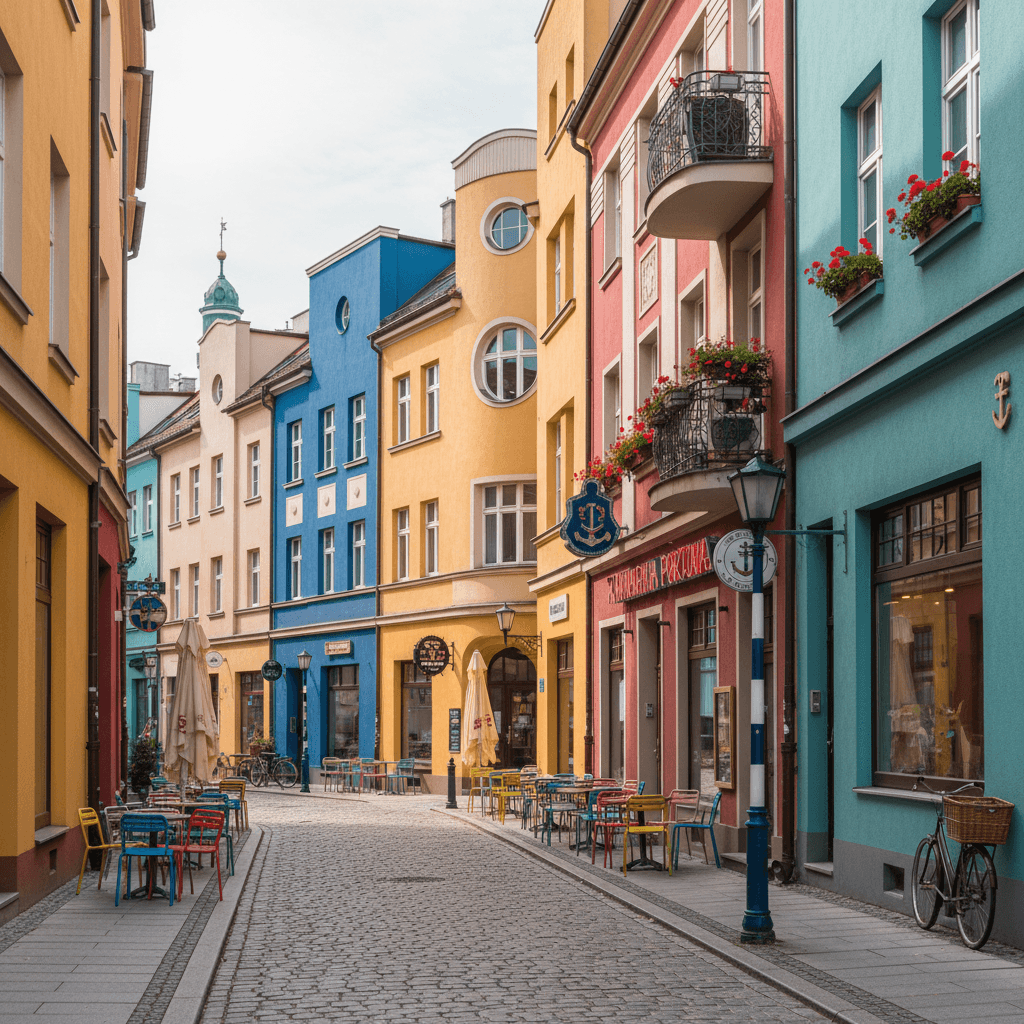
Gdynia
🇵🇱 Poland
Gdynia feels calmer than Gdańsk and less scene-y than Sopot, which is exactly why a lot of nomads stick around. The waterfront is the main character here, with Skwer Kościuszki, gulls screaming overhead, ferry horns in the distance and that cold Baltic wind that gets into your sleeves and, honestly, doesn’t really care about your plans.
It’s a city with a practical streak. You get modern apartments, decent sidewalks, reliable buses and the SKM rail line, so you can work in Gdynia and still hop to Gdańsk for museums or Sopot for a louder night out without much fuss. The vibe is active but not frantic and the seafront promenades make it easy to reset after a screen-heavy day.
What people like: clean, walkable, safe, fast internet, easy access to nature and a quality of life that feels better than the price tag suggests.
What annoys people: the wind, the smaller nightlife scene, and, weirdly, fewer good vegan options than you’d expect in a city this modern.
For monthly costs, Gdynia lands in the affordable-to-midrange bucket for Europe, not dirt cheap, but still manageable if you’re not trying to live right on the water. A solo nomad can make it work on roughly 4,000 to 6,000 PLN with shared housing, while a more comfortable setup usually starts around 7,000 PLN and climbs fast if you want a sea-view one-bedroom.
- 1BR in the center: about 2,800 to 3,500 PLN
- 1BR outside the center: about 2,600 to 2,700 PLN
- Monthly pass: around 120 PLN
- Street food: about 40 to 45 PLN
- Coworking at Concept Space: 545 PLN for a hot desk
The city feels especially good if you like a routine that mixes work, seawater and movement. You can finish calls, then walk past shipyards, cafes and the ORP Błyskawica and the whole place has this slightly salty, metal-and-coffee smell that sticks to your clothes in a nice way. Nightlife exists, but it’s not the point, so if you need clubs every weekend, Gdynia may get old.
Most nomads who settle here are choosing a slower, cleaner, more functional version of coastal life. It’s not flashy. It works.
Gdynia isn’t cheap by Polish standards, but it’s still a lot gentler on the wallet than most Western European beach cities and the tradeoff is pretty good if you want sea air, fast trains and a city that doesn’t chew through your budget in a week. Monthly spend for one person usually lands around 6,300 PLN with rent included, though that number moves fast if you want a nicer flat near the waterfront or you eat out a lot. Not luxury-priced. Still manageable.
For housing, the center is the obvious convenience play and also the priciest. A one-bedroom in Śródmieście runs about 3,450 PLN, while the outskirts sit closer to 2,700 PLN and the gap matters because the sea, SKM station, cafes and coworking spots all stack up inside the same few walkable blocks. The wind off the bay can rattle your windows, honestly, so paying extra for a better-insulated place doesn’t feel silly here.
- Shared or budget housing: 4,000 to 6,000 PLN a month
- Mid-range solo setup: 7,000 to 9,000 PLN a month
- Comfortable sea-view life: 10,000 PLN and up
Food prices are fair if you shop like a local and don’t eat every meal by the promenade. A street food hit or even McDonald’s in a pinch, is around 40 to 45 PLN, a mid-range dinner for two comes in around 210 PLN and upscale seafood climbs quickly past 250 PLN, especially in places where you can hear cutlery, clinking glasses and seagulls yelling outside the window. Groceries and cafés are where the little leaks happen, which, surprisingly, is how a cheap month gets expensive.
- Street food: about 20 PLN for zapiekanka
- Casual meal for one: 40 to 45 PLN
- Mid-range dinner for two: around 210 PLN
Transport is easy on the budget. Local tickets cost about 4.80 to 5 PLN, a monthly pass is 120 PLN and Bolt or Uber are handy when the rain’s coming sideways and you really don’t want to walk uphill in soaked shoes. Gdynia’s internet is, frankly, excellent, broadband can sit around 67 PLN a month and coworking at Concept Space costs about 545 PLN for a hot desk, so working here doesn’t feel like a money trap.
- Local transit ticket: 4.80 to 5 PLN
- Monthly pass: 120 PLN
- Coworking hot desk: 545 PLN monthly
If you want the short version, Gdynia works best for nomads who like clean streets, Baltic weather and a budget that isn’t constantly on fire. It’s cheaper than Warsaw, usually a bit calmer than Gdańsk and the center is where your money buys convenience, coffee and fewer long tram rides.
Gdynia works best if you want sea air, decent rents and a city that doesn’t chew up your day just to get across town. It’s calmer than Gdańsk, less flashy than Sopot and frankly more practical if you’re here to work. The wind can slap you in the face, the gulls are noisy and the waterfront still feels worth it.
Nomads
- Śródmieście: Best all-around pick. You can walk to Skwer Kościuszki, coworking spots, cafes and SKM trains, so mornings are easy and nights don’t require a taxi.
- Orłowo: Quieter, prettier and better for people who want cliffs, beach walks and fewer honking cars. Rent climbs here and the uphill walks get annoying fast when it’s icy.
- Kamienna Góra: Good if you like central access with a more residential feel, though the hills are a workout and groceries mean more climbing than you’d expect.
Most nomads end up in Śródmieście because it’s practical, even if it’s a bit pricier and noisier. You’ll hear trams, scooter bells and late-night chatter near the waterfront, but you’ll also be close to work, coffee and the sea, which, surprisingly, still matters when you’re living here month after month.
Expats
- Mały Kack: Clean, modern and easy for daily life, with shops, schools and solid Tricity links. It’s more suburban, so don’t expect much character at street level.
- Śródmieście: Still the easiest base if you’re new in town and want English-friendly services, fast connections and fewer logistics headaches.
Expats who stay longer usually like Mały Kack because it feels orderly and less chaotic, though traffic can get irritating and the streets don’t have much charm. If you want restaurants, nightlife and walkability, stay closer to the center, because the farther-out districts get quiet fast after dark.
Families
- Mały Kack: The safest bet for schools, parking and daily routines.
- Orłowo: Better if your family likes greenery, beach access and weekend walks.
- Chwarzno: Cheaper, with more space, but you’ll trade away convenience and amenities.
Families tend to prefer Mały Kack or Orłowo because the pace is calmer and the neighborhoods feel more settled. Chwarzno is the budget play, but you’ll spend more time on buses or in cars and that gets old in winter when the wind cuts through everything.
Solo Travelers
- Śródmieście: Best for a short stay, simple transport and meeting people.
- Kamienna Laski: Better if you want greenery and don’t mind hills.
If you’re solo and only here a month or two, Śródmieście makes life easiest, honestly. You can grab a zapiekanka, catch a tram, work from a cafe with decent WiFi, then end the day by the water without planning your whole schedule around it.
Gdynia’s internet is solid, honestly better than most people expect from a seaside city. In apartments and cafés you’ll usually see 300 to 500 Mbps WiFi and home broadband can start around 67 PLN a month, so video calls and uploads don’t tend to drag unless your building’s router is ancient.
The city works well for nomads who want calm days and decent speeds, not a 24-hour hype machine. You’ll hear gulls, tram brakes and the wind coming off the Baltic and then you’ll be back inside with a stable connection and a coffee that doesn’t cost Berlin money.
Coworking and cafes
- Concept Space, 21 Plac Górnośląski: the main coworking name in town, with hot desks around 545 PLN per month and dedicated desks you can usually negotiate.
- Cafés: LaptopFriendlyCafe listings help, because plenty of places have outlets and decent WiFi, though some still give you the side-eye if you nurse one flat white for three hours.
- Community: Concept Space runs events, which, surprisingly, makes it one of the easiest places to meet other remote workers without forcing awkward small talk in a bar.
If you want a proper work base, go with Concept Space. If you just need a few hours of focus, a café near Śródmieście or the seafront usually does the job, though the espresso smell, chair noise and lunchtime chatter can get old fast.
Mobile data and SIMs
- Orange Flex eSIM: 75GB for 35 PLN or 150GB for 50 PLN monthly.
- Play: a common backup for nomads, easy to buy at kiosks and useful if you want a second data line.
- Where to buy: airport kiosks, Ruch stands and local shops, so you won’t waste half a day hunting for a SIM.
Mobile data’s handy when you’re bouncing between Gdynia, Gdańsk and Sopot on the SKM. The train platform can be windy enough to sting your face, but the signal usually holds and that matters more than fancy coworking branding when you’re trying to send files on the move.
My take, skip the overly polished laptop cafés in the center if they’re packed and head for a quieter spot early. Gdynia’s internet won’t impress tech snobs, but it’s good enough, cheap enough and far less annoying than the average beach town setup.
Gdynia feels calm on the surface, but it’s still a real city, so keep your wits about you around the station and on late-night trams. The center, especially Śródmieście and the seafront, is generally very safe, though occasional pickpocketing does happen where crowds and backpack zippers meet, honestly it’s the same old story in most Polish cities.
Most nomads settle in without drama. The sidewalks are well lit, people mind their business and you’ll usually hear gulls, bus brakes and wind rattling the marina railings more than anything threatening, still I’d avoid empty underpasses after dark and keep your phone tucked away in busy spots.
Safety
- Main risk: petty theft at SKM stations, bus stops and touristy waterfront areas.
- Night comfort: good in Śródmieście and Orłowo, less lively elsewhere, so don’t expect much late-night chaos.
- Common sense: use normal city habits, watch your bag, don’t flash cash and skip deserted streets when the wind cuts through the blocks.
Healthcare is solid by regional standards. Clinics and hospitals are easy to reach, pharmacies are everywhere and English is often available in bigger facilities like Szpital Morskie, which, surprisingly, makes a huge difference when you’re dealing with a nasty flu or a sprained ankle and don’t feel like playing charades with a receptionist.
For anything minor, head to an apteka first, since pharmacists are used to giving practical advice on coughs, fevers and basic pain relief. For bigger problems, call 112 or use 999 for an ambulance and 997 for police, though 112 is the one most travelers remember because English is usually handled there.
Healthcare basics
- Emergency number: 112, works across Poland.
- Pharmacies: easy to find, even near residential streets and tram stops.
- Language: English is common in major hospitals, less so in smaller clinics.
- Best move: keep travel insurance and your passport copy handy, just in case.
For a digital nomad, that’s pretty reassuring. You can work a full day at Concept Space, walk home through Skwer Kościuszki with cold sea air in your face, then still know a decent hospital isn’t far if something goes wrong and that peace of mind matters more than people admit.
The only real annoyance is the weather, because the wind can make you feel half-awake and half-shouted-at all day. Gdynia isn’t dangerous, it’s just a place where good habits pay off and that’s exactly why most expats end up staying longer than planned.
Gdynia’s center is easy to handle on foot and that’s the big win. Skwer Kościuszki, the waterfront and most cafes around Śródmieście sit close together, so you’ll spend less time on transport and more time hearing gulls, scooter buzz and the wind coming in off the bay, which can feel pretty sharp in winter.
For day-to-day moving around, locals lean on the SKM rail line, ZTM buses and trams, then check everything in Jakdojade because timetables can be awkward if you’re guessing. A single ride costs about 4.80 to 5 PLN, a monthly pass runs around 120 PLN and yes, that’s cheap by Western European standards, but late-night service gets thin fast.
Honestly, the system works best if you keep trips simple. Gdynia links neatly to Gdańsk and Sopot through the Tricity rail network, so a coffee in Śródmieście and dinner in Sopot can happen in one day without much drama, though trains get crowded on sunny weekends and the platforms can feel a bit grimy.
- Walk: Best for Śródmieście and the seafront, especially if you’re based near the promenade.
- SKM: Fast for Tricity hops, especially to Gdańsk or Sopot.
- Bus/tram: Useful for wider Gdynia, check Jakdojade before you head out.
- Bolt/Uber/FreeNow: Handy for rainy nights, heavy bags or when the wind is ridiculous.
- Bikes/scooters: Growing around the center, but paths still feel patchy in places.
Ride-hailing is common and Bolt usually wins on price. Scooters are everywhere in warmer months, then disappear fast when the Baltic weather turns nasty and frankly, you won’t love cycling uphill in Orłowo when the sea wind is slapping your face sideways.
Getting to Gdańsk Airport is straightforward. A taxi usually takes about 15 minutes and costs roughly 60 to 70 PLN, while bus 210 or N3 is much cheaper at around 3.80 PLN, just slower at about 35 minutes and less pleasant if you’ve got luggage or land after a long flight.
For nomads, the practical move is to live near Śródmieście if you can afford it, because you can walk to coworking, catch the train and skip a lot of minor hassles. If you’re in Orłowo or Kamienne Laski, the scenery is better, but you’ll feel every extra stop, every hill and every gusty return trip home.
Gdynia’s English level is decent in the places you’ll actually use it, though don’t expect every corner shop or older neighbor to switch over smoothly. In Śródmieście, around Skwer Kościuszki, coworkings, hotels and younger staff often speak English well and you can get by easily enough if you keep your requests simple, honestly. Outside the center, Polish takes over fast.
Polish is the default for everyday life, from pharmacy counters to rental calls and that’s where a few phrases save time, money and awkward hand gestures. You’ll hear clipped, practical conversations, tram doors hissing, gulls overhead and the wind doing its usual thing off the water, so speaking even basic Polish gets you treated better than standing there with a blank stare.
Learn these first:
- Cześć, hi.
- Dzień dobry, good day.
- Proszę, please or here you go.
- Dziękuję, thanks.
- Przepraszam, sorry or excuse me.
For digital nomads, Google Translate is the backup you’ll end up using most, especially for menus, lease clauses and random paperwork that arrives in dense Polish with zero explanation. Duolingo helps build the basics, but it won’t teach you the little social moves, like greeting the receptionist before asking your question or saying thanks when a cashier bags your groceries. That stuff matters here.
How communication feels on the ground
- Restaurants and cafes: English is usually fine in central spots and tourist-facing places.
- Rentals and admin: Polish often wins and a bilingual friend helps a lot.
- Taxi and ride-hailing: Bolt, Uber and FreeNow keep things easy, since the app handles most of the talking.
- Healthcare and pharmacies: English is often available, but don’t count on it everywhere.
If you’re staying longer, a little Polish goes a long way and weirdly, locals seem to relax as soon as you make the attempt. You don’t need fluent grammar, just enough to be polite and clear, because Gdynia’s communication style is direct, brisk and low on small talk, which, surprisingly, makes life simpler once you get used to it.
My advice: skip the embarrassment and start using the language on day one. Even a rough dziękuję gets you further than perfect English with no effort. That’s Gdynia for you, practical, slightly reserved and much smoother once you speak a bit of the local shorthand.
Gdynia’s weather is coastal in the honest, slightly annoying way Baltic weather usually is, mild enough for long walks but windy enough to slap your face by the waterfront. Summer sits around 18 to 22°C, winter hovers near freezing and the sea air can feel damp and gritty when the wind picks up off the harbor.
Best months: May through September. Worst stretch: December through February.
That’s when the city feels easiest, with brighter evenings, outdoor cafe tables on Skwer Kościuszki and fewer days spent staring at a gray window while rain taps the glass. April can be weirdly decent too, because it’s usually milder and less wet than you’d expect, though the sea still keeps things cool.
If you want the practical answer, come for late spring or early autumn. You’ll get enough warmth for beach time in Orłowo, easier cycling and a better shot at actually enjoying the promenade without being blasted by cold gusts, which, surprisingly, can make even a 10-minute walk feel like a small expedition.
Season by season
- Spring: Fresh, breezy and good for walking, though mornings can still feel raw and the wind carries that salty, metallic smell off the water.
- Summer: Best overall, with long days, outdoor events and beach weather, but it gets busier and prices tick up a bit.
- Autumn: Pleasant in September, then quickly moodier, with wet sidewalks, yellow leaves and more rain on the windows than you’d like.
- Winter: Cold, dark and honestly a bit bleak, with fewer reasons to linger outside unless you like sharp sea wind and empty beaches.
Nomads who care about daily comfort usually prefer May to September, because the WiFi, cafes and Tricity train links work year-round, but your mood won’t get dragged down by constant drizzle and cold pavement. If you’re here for lower crowds and better apartment hunting, late autumn can work, just don’t expect beach life to feel romantic when the wind’s howling through Śródmieście and your scarf keeps flying off.
My take, skip deep winter unless you’re here for work and don’t mind staying indoors a lot. Gdynia’s nice, but it’s not kind to people who need sun on demand.
Gdynia makes daily life pretty easy, honestly. The center is walkable, SKM trains stitch the Tricity together and you can go from a quiet morning coffee to sea spray on Skwer Kościuszki in minutes, though the wind can slap you in the face hard enough to ruin a neat hairstyle.
Budget: plan on 4,000 to 6,000 PLN if you’re sharing a flat, 7,000 to 9,000 PLN for a comfortable solo setup and 10,000 PLN plus if you want a sea-view one-bedroom in Śródmieście or Orłowo. Not cheap, but still saner than Warsaw and groceries plus a few cafe days won’t wreck you if you keep an eye on rent.
Money and payments
- Cards: accepted almost everywhere, even small spots.
- ATMs: PKO machines are reliable, but watch fees.
- Banking: Revolut and Wise are the usual nomad picks.
- Cash: handy for tiny kiosks and the odd old-school place.
ATM screens can be annoying, with sneaky conversion prompts and the usual bank fee nonsense, so decline dynamic currency conversion and move on. If you need a local SIM, Orange and Play are easy to find in Ruch kiosks or kiosks near stations and eSIMs through Airalo or MaalTalk save time when you land tired and mildly cranky.
Getting around
- Public transport: use Jakdojade, it’s the best app.
- Single ticket: about 4.80 to 5 PLN.
- Airport taxi: roughly 60 to 70 PLN from Gdynia.
- Airport bus: cheaper, slower and fine if you’re patient.
For housing, start with Otodom or Flatio, then move fast because the better flats get snapped up, especially in Śródmieście where you’ll pay more for walkability and train access. Orłowo is calmer and prettier, but the hills are real and hauling groceries uphill in that damp Baltic air feels rude after about day three.
Local habits
- Greeting: handshake works well in formal settings.
- Inside homes: take your shoes off.
- Tipping: 10 percent is normal in restaurants.
- Style: Poles are direct and honestly, that helps.
Day trips are easy, which, surprisingly, is one of Gdynia’s best perks. Sopot is ten minutes away by SKM, Gdańsk takes about twenty and Hel is a good beach escape when you want dunes, salty air and a slower pace without booking a whole weekend.
If you’re working late, use Concept Space or a laptop-friendly cafe and don’t expect loud nightlife to save the week, because Gdynia gets quieter than its neighbors. The city feels safe, the healthcare system is solid and if something goes wrong, 112 works fine, so the main frustration is usually the weather, not the logistics.
Frequently asked questions
How much does it cost to live in Gdynia as a digital nomad?
Which neighborhood is best for digital nomads in Gdynia?
Is Gdynia safe for expats and remote workers?
How good is the internet in Gdynia for remote work?
Where can I work from in Gdynia?
How much is local transport in Gdynia?
What is the best area in Gdynia for short-term solo stays?
Need visa and immigration info for Poland?
🇵🇱 View Poland Country GuideEasy Landing
Settle in, no stress