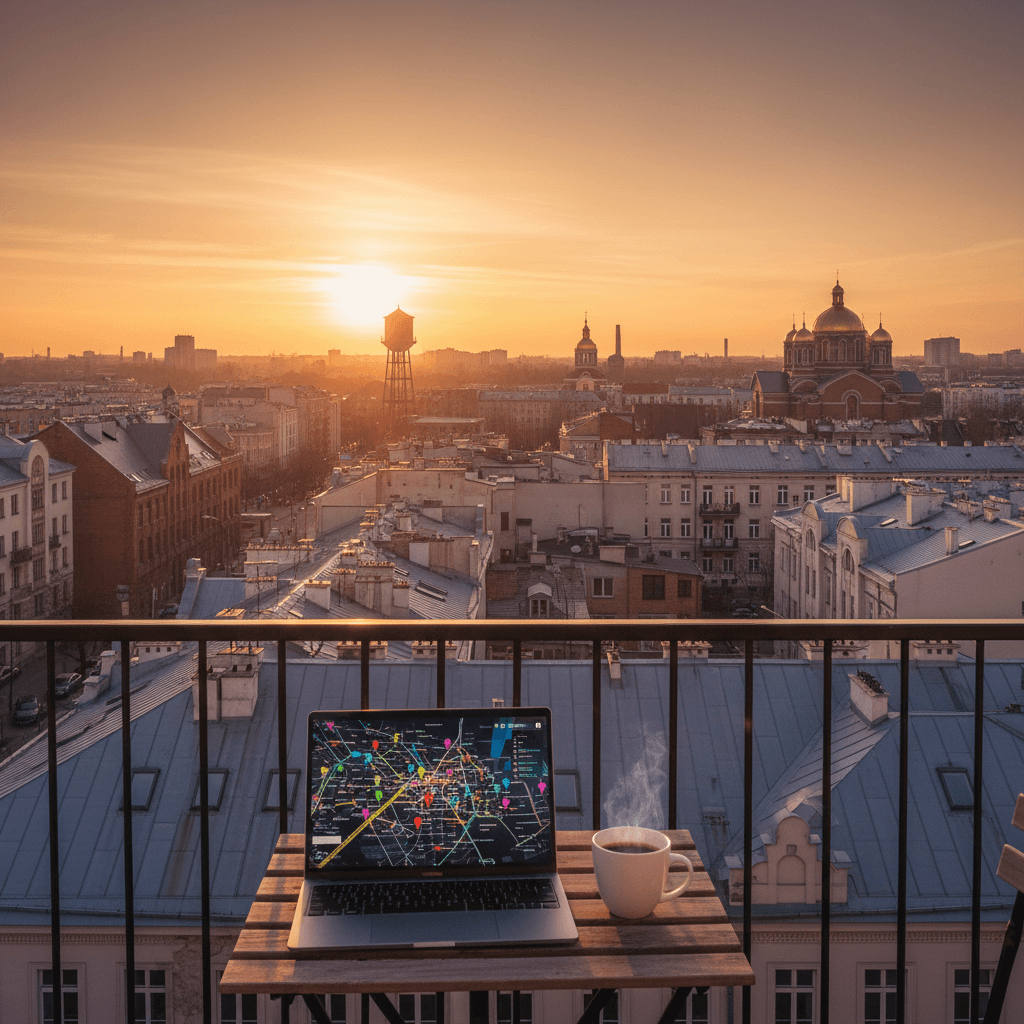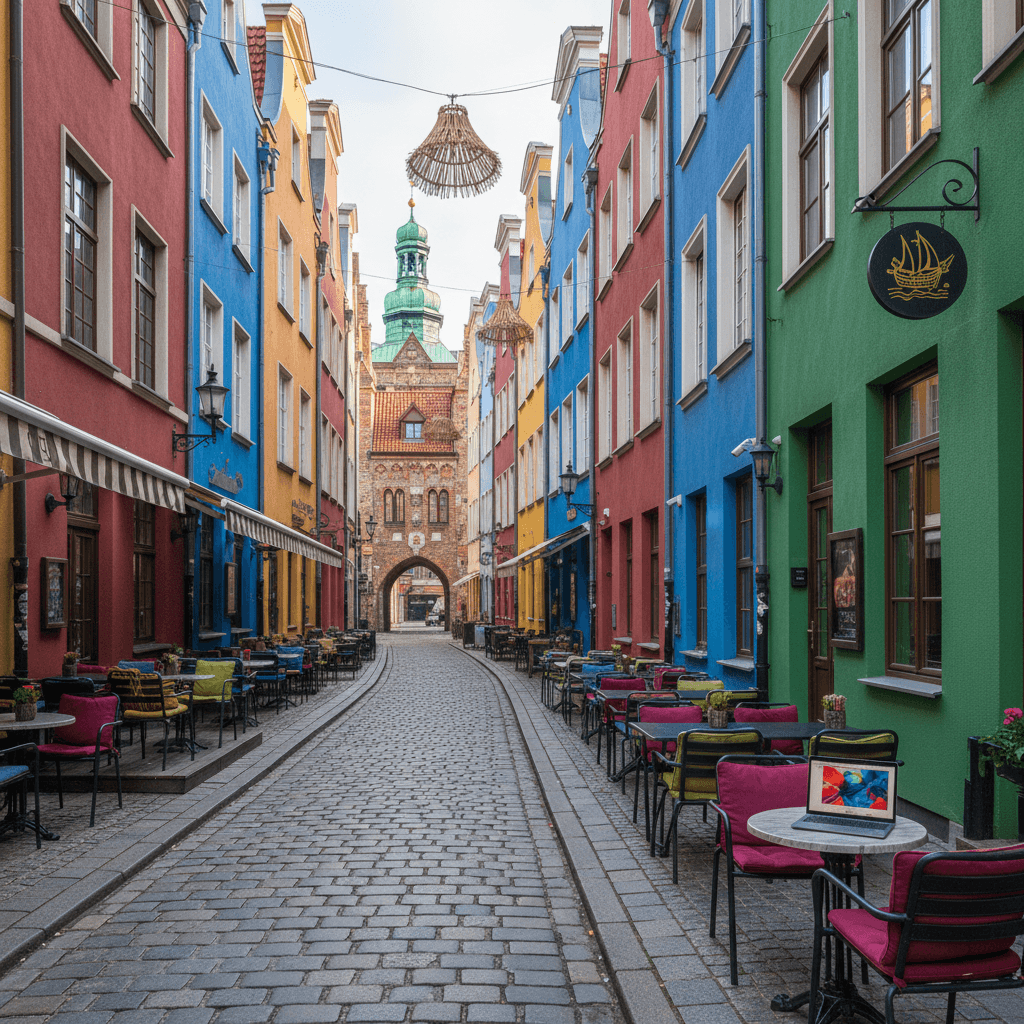
Gdańsk
🇵🇱 Poland
Gdańsk doesn't feel like a typical digital nomad city and that's honestly what makes it work. It's a place where you can walk cobblestone streets lined with tall, candy-colored Hanseatic merchant houses in the morning, then sit on a Baltic beach in the afternoon, then grab a craft beer for 15 PLN at a bar on Piwna Street that evening, all without feeling like you're chasing some curated expat experience.
The city sits in the Tri-City metro alongside Sopot and Gdynia and the SKM rail line connecting them runs so frequently that most nomads treat the whole stretch as one extended neighborhood. That matters, because Sopot's beach is 15 minutes away and Gdynia's tech scene adds real depth to the professional network here.
The pace is relaxed without being sleepy. There's a serious student and tech population keeping things sharp, coworking spaces like O4 and Inkubator STARTER are genuinely good and the internet, turns out, averages 300 to 500 Mbps across the city. Fast enough that you'll stop thinking about it entirely, which is the whole point.
Still, Gdańsk isn't perfect. Winters are genuinely grim: gray, windy and dark by 4pm and the Baltic cold has a damp edge to it that gets into your coat in a way that dry cold doesn't. Summers flip hard in the other direction, the Old Town fills with cruise ship tourists and the noise in central areas can make Stare Miasto feel less charming and more exhausting by July.
The emotional texture of the place is harder to pin down. There's something weirdly moving about a city that was almost entirely destroyed in 1945 and rebuilt itself so meticulously, the Long Market looks like it's always been there, it hasn't. That history sits quietly under everything, you feel it without anyone making a fuss about it.
Monthly costs land anywhere from around 590 EUR on a tight shared-flat budget to 1,600 EUR for a comfortable solo apartment, which makes it genuinely affordable by Western European standards without feeling like a compromise. Most nomads who stay more than a month say the same thing: they didn't expect to like it this much.
Gdańsk is, honestly, one of the more affordable coastal cities you'll find in Northern Europe. A comfortable solo setup, think a one-bedroom apartment in a decent neighborhood with coworking and meals out, runs around 6,915 PLN (~1,600 EUR) a month. Budget harder with a shared flat and you're closer to 2,545 PLN (~590 EUR), which is genuinely low for a city this livable.
Rent is where your choices matter most. Stare Miasto is the obvious pick for walkability and that amber-lit Old Town atmosphere, but you'll pay for it, studios run 3,000 to 4,500 PLN and the summer tourist noise is real. Wrzeszcz is where most expats actually land because it's a transit hub with decent cafes and rents that come in 800 to 1,000 PLN cheaper. Oliwa is quieter, greener and popular with families, though the commute into the center adds up. Przymorze gets you beach access and the lowest rents, the architecture is bleak though, don't expect charm.
Food is cheap if you eat like a local. Milk bars serve hot meals for 14 to 24 PLN, a zapiekanka from a street stall costs 12 to 20 PLN and a proper sit-down lunch at a mid-range spot is 24 to 40 PLN. Craft beer at Old Town bars runs 12 to 20 PLN, which makes the social side of nomad life surprisingly affordable.
Getting around costs almost nothing. The Tri-City monthly transit pass is 100 to 130 PLN and covers trams, buses and SKM rail to Sopot and Gdynia. Bolt or Uber for a 5km ride is 14 to 24 PLN, the airport run is 25 to 40 PLN. Mevo bikes are free for the first 20 minutes, which covers most of the Old Town easily.
Coworking is solid. Inkubator Starter offers a dedicated desk for 800 PLN a month with 24/7 access, hot desk days are 100 PLN. O4 Coworking comes in around 110 EUR with sea views, which is, turns out, not a bad place to take a video call. Internet across the city averages 300 to 500 Mbps, cafes are genuinely work-friendly and a Play or Orange SIM with 20 to 50GB costs 21 to 42 PLN at any Żabka.
Gdańsk's neighborhoods are genuinely different from each other, not just in price but in feel, noise level and who you'll end up drinking coffee next to. Pick the wrong one and you'll spend your first month annoyed. Pick the right one and you won't want to leave.
For Digital Nomads
Wrzeszcz is where most nomads land and honestly, it makes sense. Rent runs 1,400 to 2,000 PLN for a room, the SKM rail connects you to the whole Tri-City in minutes and the cafe scene is solid enough that you can hop between spots without ever feeling like you're overstaying your welcome. It's louder than you'd expect, trams and buses run constantly, but you adapt fast.
Stare Miasto looks incredible on Instagram, all amber-lit facades and cobblestone, but it's expensive and summers turn it into a slow-moving crowd of tourists. Nomads who stay there past July usually regret it.
For Expats
Oliwa is, turns out, one of the most livable neighborhoods in the whole city. It's quieter, greener and sits near the university, so there's an international crowd without the chaos of the center. Rooms go for 1,300 to 1,900 PLN, you're near Oliwa Park for morning runs and the commute downtown is easy on the SKM. The nightlife is basically nonexistent, that's not a complaint if you've got a 9am call.
For Families
Oliwa works here too, though expat families with kids also look at Zaspa. Rents are the cheapest in the city, 1,100 to 1,600 PLN and the apartments are spacious in a way that central Gdańsk simply isn't. The architecture is grim Soviet-era concrete, the neighborhood is still developing and you'll want to be home before it gets dark. Still, for families prioritizing space and budget over atmosphere, it's a practical call.
For Solo Travelers
Przymorze is underrated. It's not pretty, the dining options are limited, but you're a short walk from the Baltic and rents are genuinely affordable at 1,200 to 1,700 PLN. Solo travelers who want beach access without paying Stare Miasto prices end up here and are, weirdly, pretty happy about it. Skip Letnica entirely if you're arriving alone and unfamiliar with the city.
Gdańsk's internet is, honestly, better than most Western European cities. You're looking at 300-500 Mbps on average, 5G coverage across the center and cafes that genuinely support working culture rather than glaring at you after one coffee. The Baltic tech scene runs quiet but fast and that shows in the infrastructure.
For coworking, three spaces come up again and again among nomads here. Inkubator STARTER is the most popular: 800 PLN a month for a dedicated desk, 100 PLN for a day pass, 24/7 access and a startup crowd that's good for accidental networking. O4 Coworking runs around 110 EUR monthly and has sea views, which sounds like a marketing line until you're actually sitting there at 9am with coffee. Spaces offers fiber internet and proper lounges, it's the slicker corporate option if that's your style.
SIMs are dead simple to sort. Orange Flex does an eSIM for 5 EUR with 30GB, which is, turns out, enough for most people unless you're streaming constantly. Play and Orange both sell prepaid cards at Żabka convenience stores for 21-42 PLN, covering 20-50GB. Pick one up the day you arrive, don't wait.
Cafe working is genuinely viable here. The spots along Piwna Street have decent WiFi and the kind of ambient noise that's, weirdly, easier to concentrate in than silence. Hala Targowa market is better for lunch than laptop time, though. Noise and foot traffic make it hard to focus, the food's worth the detour anyway.
A few things to know before you set up:
- Best coworking value: Inkubator STARTER, 100 PLN/day or 800 PLN/month with 24/7 access
- Sea view option: O4 Coworking, roughly 110 EUR/month
- Easiest SIM: Orange Flex eSIM, 5 EUR for 30GB, no physical card needed
- Backup SIM: Play prepaid, 21-42 PLN at any Żabka, widely available
- Planning app: jakdojade for transit if you're bouncing between coworking spots across the Tri-City
Most nomads find the internet reliable enough that a SIM as backup is fine, you probably won't need a dedicated mobile hotspot. The coworking scene punches above what you'd expect for a city this size, frankly and the pricing makes Warsaw look absurd by comparison.
Gdańsk is, honestly, one of the safer cities you'll find in Central Europe. Violent crime is rare, the kind of low-level threat you'd encounter in any Western European city rather than anything more serious. Solo female travelers consistently rate it around 4.8 out of 5 for safety, which tracks with most nomads' day-to-day experience.
That said, pickpockets do work the crowds on Długa Street and around the Main Market in summer, so keep your bag in front of you when it's packed. Letnica and Młyniska are the two neighborhoods worth avoiding after dark; they're not dangerous exactly, but they're poorly lit and quiet in a way that doesn't feel good at night. Stick to Stare Miasto, Wrzeszcz or Oliwa after midnight and you'll be fine.
Healthcare
Public healthcare runs through the NFZ system, it's free if you have a valid EHIC card, though wait times can stretch into weeks for non-emergency appointments. Most nomads don't bother waiting, they go private instead. A GP visit at Medicover or LuxMed runs 150 to 250 PLN, specialist appointments land between 200 and 350 PLN and you're usually seen within a day or two.
Pharmacies are everywhere. Seriously, there's one on almost every block in the center and common medications are heavily subsidized, often just 3.50 to 20 PLN for a course of treatment. For anything urgent, the emergency number is 112, which connects to police, fire and ambulance.
Practical Health Notes
- Public care: Free with EHIC; long waits for non-urgent cases
- Private GP: 150 to 250 PLN, usually same-day or next-day at Medicover or LuxMed
- Specialist visits: 200 to 350 PLN private
- Pharmacies: Ubiquitous; subsidized meds start at 3.50 PLN
- Emergency: Call 112
The tap water is safe to drink, which, surprisingly, some long-term expats still don't realize. Air quality is generally good near the coast, though wood-burning stoves in older residential areas can make winter mornings smell thick and smoky. Nothing alarming, just worth knowing if you're sensitive to it.
Gdańsk's center is, honestly, very walkable. The Old Town, Długi Targ and the waterfront are all within easy reach on foot and most nomads staying in Stare Miasto or Wrzeszcz rarely need anything else for daily life. That said, the Tri-City network of trams, buses and SKM rail is cheap and surprisingly reliable once you figure out the rhythm of it.
A single 75-minute ticket runs 4.80 PLN and a monthly Tri-City pass is 130 PLN. That covers Gdańsk, Sopot and Gdynia, so you can hop the SKM to Sopot's beach in 15 minutes or push on to Gdynia without thinking twice about cost. Download jakdojade for route planning and zbiletem.pl to buy tickets digitally, because hunting for a kiosk when a tram is pulling up is genuinely annoying.
For rides, Uber and Bolt both work well here. A 5km trip runs 14 to 24 PLN and the airport is only 25 to 40 PLN from the center, which is turns out one of the better airport-to-city deals in Poland. Traffic in Wrzeszcz and around the main station can crawl during rush hour, so factor that in if you've got a call to make.
Bikes are worth considering. Mevo, the city's bike-share system, gives you the first 20 minutes free and the waterfront paths are genuinely pleasant in summer, salt air, flat terrain, the works. Don't bother in January though, it's cold and the wind off the Baltic has a bite to it.
Getting a SIM sorted on arrival is easy, prepaid options from Orange or Play are available at Żabka convenience stores for 21 to 42 PLN and come loaded with 20 to 50GB of data. Orange also offers an eSIM for around 5 EUR if you'd rather skip the physical card entirely.
- Single ticket: 4.80 PLN (75 min, all modes)
- Monthly pass: 130 PLN (Tri-City)
- Uber/Bolt 5km: 14 to 24 PLN
- Airport transfer: 25 to 40 PLN by ride-hail
- Mevo bikes: First 20 min free
- Prepaid SIM: 21 to 42 PLN at Żabka
Polish is the language you'll hear everywhere, German pops up occasionally given the city's Hanseatic history and English gets you surprisingly far in the center. In Old Town, Wrzeszcz and anywhere near a university, most younger locals speak decent English, it's the outer neighborhoods and older residents where things get trickier.
That said, don't expect the same English fluency you'd find in Amsterdam or Lisbon. Outside the tourist belt, you'll hit blank stares at the pharmacy or the local market and honestly, that's not a complaint, it's just reality. Having Google Translate ready on your phone isn't paranoia, it's just sensible.
A few Polish phrases go a long way. Locals genuinely warm up when you make the effort, even if your pronunciation is, frankly, a disaster the first few times.
- Dzień dobry , hello / good day (use this constantly, it opens doors)
- Dziękuję , thank you
- Przepraszam , excuse me / sorry
- Bardzo dobre! , very good (use it after a meal, watch the reaction)
- Ile to kosztuje? , how much does it cost?
- Nie mówię po polsku , I don't speak Polish
Polish pronunciation is, turns out, genuinely hard. The "szcz" cluster in words like Rzeczpospolita will tie your tongue in knots, nobody expects you to nail it. What matters is showing you tried.
For day-to-day communication, Google Translate handles most situations well enough and the camera translation feature is a lifesaver for menus, signs and pharmacy labels. DeepL is, weirdly, better for longer or more nuanced text if you're drafting emails to landlords or coworking spaces.
Most coworking spaces, cafes with working culture and tech-adjacent businesses operate comfortably in English, Inkubator STARTER and O4 Coworking both have English-speaking staff. Anything administrative, think lease agreements, NFZ registration or dealing with local offices, you'll want a Polish-speaking friend or a translator app open the whole time, those processes aren't set up with foreigners in mind.
The communication barrier in Gdańsk is real but manageable. It won't stop you from living well here, it just means you can't fully coast on English alone.
Gdańsk has a classic Baltic personality: genuinely lovely for about five months, then gray and relentless for the rest. Plan around that and you'll be fine, ignore it and you won't.
May through September is when the city earns its reputation. August peaks at around 23°C, the light off the water is genuinely beautiful and the beach at Sopot is 15 minutes away by SKM rail. July is, honestly, the most contested month, warm and sunny but also the wettest on paper, averaging 76mm of rain and the Old Town fills with tourists to the point where Piwna Street starts feeling like a queue rather than a street.
Most nomads who've spent real time here say May and June are the sweet spot. Crowds haven't arrived yet, temperatures are comfortable, cafe terraces open up and you can actually get a table at Hala Targowa without planning your lunch like a military operation. September holds up well too, it cools slightly but stays pleasant and the tourist pressure drops fast after the school holidays end.
Then there's November through February. Cold, wet and frankly grim in a way that photos don't capture. The wind off the Baltic isn't dramatic, it's just persistent, the kind that turns out to be more exhausting than any single cold snap. Temperatures sit around 3°C in January, the sky stays a flat pewter for days at a stretch and the city's outdoor charm mostly disappears. Cafes are still good, coworking spaces like Inkubator STARTER stay busy and rent drops slightly if you're negotiating a longer lease, so there are upsides if you can handle the mood.
A few things to keep in mind when timing your visit:
- Peak season (July to August): Highest prices, most energy, most crowds; book accommodation weeks ahead
- Shoulder season (May to June, September): Best overall balance of weather, cost and crowd levels
- Low season (November to March): Cheapest rates and quietest streets, but the gray gets to people faster than they expect
Gdańsk rewards visitors who time it right, it's a genuinely different city in summer versus winter, not just in weather but in atmosphere and pace.
Gdańsk runs on Polish złoty, so sort out your money before you arrive. Revolut and Wise are, honestly, the easiest way to hold PLN without getting hammered by conversion fees and ATMs are everywhere in the center. Avoid airport exchange counters, the rates are embarrassing.
For a SIM, grab an Orange or Play prepaid card at any Żabka convenience store. You'll pay 21,42 PLN for 20,50GB, it takes five minutes to set up and the 5G coverage across the Tri-City area is genuinely good. Orange also offers an eSIM if you'd rather skip the physical card.
Getting around is straightforward. A single 75-minute ticket costs 4.80 PLN and covers trams, buses and the SKM rail that connects Gdańsk to Sopot and Gdynia; a monthly Tri-City pass runs 130 PLN, which is, turns out, one of the better transit deals in Central Europe. Download jakdojade for route planning and zbiletem.pl to buy tickets without fumbling for cash. Uber and Bolt are cheap for late nights, usually 14,24 PLN for a short hop and the Mevo bike scheme gives you the first 20 minutes free.
English gets you far in the Old Town and Wrzeszcz, don't stress about it. Outside those areas, a few Polish basics help: Dzień dobry (hello), Dziękuję (thank you). Google Translate handles the rest, it's a non-negotiable install.
A few customs worth knowing before you accidentally offend someone:
- Shoes off: remove them when entering a home, it's expected, not optional
- Tipping: 10% is standard at sit-down restaurants; nobody expects it at milk bars
- Greetings: a firm handshake works in most situations, weirdly formal compared to Western Europe but that's just how it's
Healthcare is solid and cheap. Private GP appointments at Medicover or LuxMed run 150,250 PLN, you'll usually get seen same-day and pharmacies are on nearly every block with subsidized meds starting around 3.50 PLN. If something goes seriously wrong, call 112.
November through February is gray, windy and genuinely bleak, the Baltic doesn't soften that. Plan accordingly or book your longer trips for then. May through September is when Gdańsk actually earns its reputation.
Need visa and immigration info for Poland?
🇵🇱 View Poland Country GuideNomad Haven
Your home away from home
Monthly Budget Estimates
More cities in Poland
Bydgoszcz
🇵🇱 Poland
Poznań
🇵🇱 Poland
Lublin
🇵🇱 Poland