Ganja
🇦🇿 Azerbaijan
The Vibe: Poetry in Motion
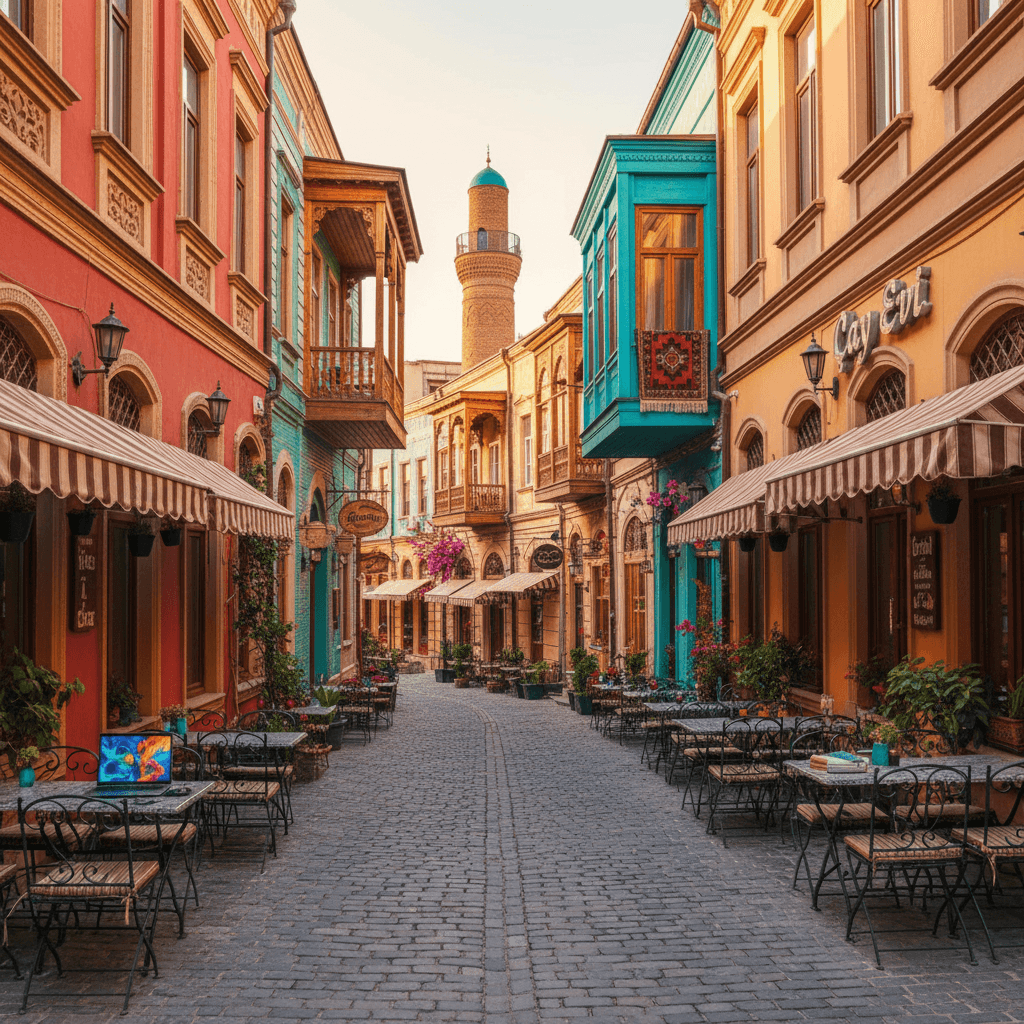
If Baku is the high-octane, glass-and-steel heart of Azerbaijan, Ganja is its soulful, intellectual backyard. It feels like a university town that hasn't quite realized how cool it is yet. You won't find the aggressive "hustle culture" of larger hubs here. Instead, you'll find a city that moves at the pace of a long tea break. It is a place where history isn't just in museums; it is baked into the red-brick Russian-imperial architecture and the sprawling, centuries-old plane trees in Khan Gardens.
The emotional experience of Ganja is one of being "seen" but not "sold to." Locals are genuinely curious about why you've chosen their city over the capital. You'll likely spend your afternoons working from a cafe on Javad Khan Street, watching students and families stroll the pedestrian zones. It is quiet enough to actually hear yourself think, which is exactly why it is gaining traction with nomads who are burnt out on the noise of Tbilisi or Lisbon. It is authentic, slightly rough around the edges, and deeply hospitable.
What You'll Love (and What You Won't)
Nomads usually gravitate here for the balance. You get the amenities of a major city, like reliable ride-hailing through Bolt and Yandex Go, but with a cost of living that makes your budget stretch twice as far. The "poetic heritage" isn't just a marketing slogan; as the birthplace of the legendary poet Nizami Ganjavi, there is a palpable respect for arts and education that gives the city a refined, quiet energy.
- The Greenery: Between the massive Heydar Aliyev Park and the central gardens, you are never more than a ten-minute walk from a massive oxygen hit.
- The Affordability: You can live a high-end lifestyle here for under $1,800 a month, something that is becoming impossible in other regional hubs.
- The Infrastructure Gap: Dedicated coworking spaces are still a myth here. You'll be relying on the WiFi at Coffeemania or Butler Café. It works, but don't expect a community manager to hand you a craft beer at 5:00 PM.
- The Language Barrier: Outside of the student population, English is sparse. You'll want Google Translate downloaded for offline use, and a few Azeri phrases will go a long way with the vendors at Ganja Central Market.
The Living Costs: 2025-2026 Estimates
Ganja is arguably one of the most budget-friendly spots in the Caucasus for 2025. While Baku prices are creeping up toward European standards, Ganja remains firmly accessible. Most nomads find that $1,000 to $1,500 provides a very comfortable life, including a central apartment and eating out daily.
- Budget Tier ($800 to $1,200): This covers a studio in the student districts for $200 to $300, local meals like qutab or piti stew for $3 to $5, and using the local bus system for pennies.
- Mid-range Tier ($1,200 to $1,800): You can snag a nice one-bedroom apartment near the center for $300 to $500. This budget allows for frequent dinners at better restaurants ($7 to $12 per meal) and weekend trips to Lake Göygöl.
- Comfortable Tier ($1,800+): You'll be living in the best real estate the city offers, likely near the parks, with a budget for private tours, upscale dining, and premium data plans.
The Nomad Neighborhoods
Ganja is compact and highly walkable, so you won't feel isolated no matter where you land. However, three main areas stand out for different styles of stay.
Javad Khan Street & The Historic Center
This is the heartbeat of the city. It is the best spot for solo travelers who want to be steps away from the Bottle House, the Shah Abbas Mosque, and the best cafes. It is vibrant and safe, though it can get a bit lively on weekend evenings when the local youth congregate.
Heydar Aliyev Park Area
Expats with families or those who prioritize morning runs often choose the neighborhoods surrounding the park. It is more residential and peaceful. The downside is that you'll likely need a quick $2 Bolt ride to get into the thick of the dining scene.
The University District
If you are on a strict budget, the area around the local universities offers the cheapest rents, often between $200 and $350 for a decent flat. The vibe is young and energetic, though the housing stock can be older and less polished than the central renovations.
The Nomad Budget Breakdown
Living in Ganja is a breath of fresh air for your bank account, especially if you're transitioning from Baku or higher-priced hubs like Tbilisi. It’s a city where your dollars stretch remarkably far without forcing you to compromise on a central lifestyle. Most digital nomads find they can live comfortably here on $1,200 to $1,800 per month, while those on a tighter budget can easily manage on $800 if they stick to student-heavy neighborhoods.
The local currency is the Azerbaijani Manat (AZN), and while cards are increasingly accepted in modern cafes like Coffeemania, you'll want to keep cash on hand for the smaller markets and local buses. Most expats recommend using apps like Wise or Revolut for transfers to keep conversion fees low.
Monthly Expense Tiers
- The Lean Nomad ($800 to $1,200): This covers a studio apartment in a student area, plenty of street food like qutab or piti stew, and working from laptop-friendly cafes rather than dedicated offices.
- The Mid-Range Professional ($1,200 to $1,800): This is the sweet spot. You'll get a solid one-bedroom apartment near Javad Khan Street, daily cafe visits, regular ride-hailing with Bolt, and weekend trips to Lake Goygol.
- The High-End Resident ($1,800+): At this level, you’re looking at the best housing near Khan Gardens, frequent upscale dining, and private tours or car rentals for exploring the surrounding mountains.
Housing and Neighborhoods
Rent is the biggest variable, but even "expensive" Ganja is affordable by international standards. Most nomads look for short-term rentals through local Facebook groups or Airbnb, though the latter has limited inventory compared to the capital.
Javad Khan Street (City Center)
- Vibe: Historic, walkable, and right in the thick of the cafe culture.
- Expected Rent: $300 to $500 for a modern one-bedroom.
- Pros: You won't need a car; everything is at your doorstep.
University Districts
- Vibe: Younger, high-energy, and very budget-friendly.
- Expected Rent: $200 to $300 for a simple studio.
- Pros: Cheapest groceries and local eats in the city.
Eating and Drinking
Food is where Ganja really shines. If you're cooking at home and shopping at the Ganja Central Market, your weekly grocery bill might stay under $40. Eating out is equally accessible. A quick lunch of qutab or a hearty bowl of piti at a local spot usually runs between $2 and $5. If you prefer a more "digital nomad" setting like Butler Cafe, a coffee and a light meal will cost you around $7 to $10.
Alcohol is available in specific bars and restaurants but isn't a massive part of the local social scene. A local beer is usually around $2 or $3, while a bottle of Azerbaijani wine in a restaurant might start at $15.
Transport and Connectivity
Ganja is a compact city, and if you live near the center, your transport costs will be negligible. For longer trips, the local buses are incredibly cheap at roughly $0.20 per ride. Most expats rely on Bolt or Yandex Go for convenience; a cross-town trip rarely exceeds $3 to $5.
Since there aren't many dedicated coworking spaces, your "office" cost is usually the price of a few coffees. Data is affordable too. A local SIM from Azercell or Bakcell with a generous data package typically costs between $10 and $15 per month, which is a smart investment given that cafe WiFi can occasionally be temperamental during peak student hours.
The Solo Nomad: Central Javad Khan Street
If you want to be where the action is, park yourself near Javad Khan Street. This is Ganja's pedestrian heart, lined with low rise European style architecture and plenty of cafe seating. It feels more like a cozy corner of Central Europe than a post Soviet city. You'll have the best access to reliable WiFi at spots like Butler Café or Coffeemania, which serve as the city's unofficial coworking hubs.
- Rent: Expect to pay $200 to $350 for a decent studio or small apartment in the surrounding blocks.
- Vibe: Social and walkable. You can hit the Shah Abbas Mosque or the Bottle House between Zoom calls.
- Drawbacks: It gets lively in the evenings. If you're an early sleeper, the foot traffic and street performers might be a bit much.
The Long Term Expat: Heydar Aliyev Park & Khan Gardens
Expats who plan to stay for a few months usually migrate toward the greener fringes of the city. The area around Heydar Aliyev Park is massive, offering one of the largest urban green spaces in the Caucasus. It is significantly quieter than the city center and feels more like a residential retreat. It is the kind of place where you can go for a morning run without dodging delivery scooters.
- Rent: Modern 1BR apartments range from $400 to $550. These often come with better amenities and newer appliances than central units.
- Vibe: Relaxed and scenic. Most nomads here use Bolt or Yandex Go to get to the center, which usually costs less than $2.
- Drawbacks: You'll be further from the main cluster of cafes, so you'll likely need a dedicated home office setup.
The Budget Traveler: University Districts
Ganja is a major student town, and the neighborhoods surrounding the local universities are where the deepest discounts are found. These areas are high energy and unpretentious. You won't find many upscale bistros here, but you will find the best $3 piti stew and $1 qutabs in the city. It is an authentic look at local life away from the renovated tourist facades.
- Rent: Very affordable, often $150 to $250 for simple apartments.
- Vibe: Young and energetic. It is easy to meet locals here, as students are often eager to practice their English with foreigners.
- Drawbacks: Housing can be basic. Don't expect "luxury" finishes; these are functional, lived in spaces.
Families: Quiet Residential Pockets
For those traveling with a spouse or kids, the neighborhoods tucked behind the Khan Gardens are the gold standard. You get the benefit of being within walking distance of the city's most beautiful park while staying in a quiet, low traffic zone. There are plenty of small grocery stores and pharmacies nearby, making daily errands easy without needing a car.
- Rent: Larger 2BR or 3BR apartments typically go for $500 to $700.
- Vibe: Safe and community oriented. You'll see neighbors drinking tea on the sidewalks and kids playing in the courtyards.
- Drawbacks: English is less common here than on Javad Khan Street, so have Google Translate ready for your trips to the corner market.
If you are coming from Baku, the first thing you will notice about Ganja is the shift in pace. While the capital feels like it is constantly sprinting toward the future, Ganja is content with a steady walk. For digital nomads, this means fewer distractions and a significantly lower cost of living, though you will have to trade the sleek coworking hubs of the capital for a more DIY approach to your workspace.
Connectivity and Speeds
The internet infrastructure in Ganja is surprisingly reliable for a city of its size. Internet speeds in Ganja have improved significantly, with upload speeds around 70 Mbps in central areas and national averages nearing 200 Mbps. It is stable enough for Zoom calls and uploading standard files. If your work involves heavy video editing or massive data transfers, you will find the bandwidth more than sufficient for your needs.
To stay connected on the move, pick up a local SIM card immediately. Azercell and Bakcell are the two heavy hitters here. You can grab a card at the airport or at various shops around the city center for about $5 to $10, which usually includes a generous data package. For those who prefer a digital-first approach, the Voye eSIM is a solid backup to ensure you have data the moment you cross the border.
Where to Work: The Cafe Scene
Ganja does not currently have dedicated, high end coworking spaces like those found in Tbilisi or Baku. Instead, the local nomad community has turned the city's cafes into de facto offices. The culture here is very welcoming; as long as you are ordering coffee or a meal, staff generally won't mind if you stay for a few hours with your laptop.
- Coffeemania: This is arguably the most popular spot for remote workers. It is spacious, offers both indoor and outdoor seating, and has the most consistent WiFi in the city. The atmosphere is professional enough that you won't feel out of place taking a meeting.
- Butler Café: A more stylish, boutique option. It is a bit quieter than Coffeemania, making it the better choice for deep work sessions. The decor is modern, and the power outlets are relatively easy to find if you snag a seat near the walls.
- Javad Khan Street: While not a specific venue, this pedestrianized stretch is lined with smaller tea houses and cafes. These are great for light admin work, though the WiFi can be hit or miss compared to the larger established brands.
Practical Workflow Tips
Most nomads find that the best way to work in Ganja is to treat the morning as "deep work" time in their apartment and use the afternoons for "admin work" in cafes. Since the city is so walkable, especially if you are staying near Javad Khan Street or Khan Gardens, you can easily hop between spots if the connection at one place starts to lag.
Electricity is generally stable, but it is always smart to keep your devices charged. In the university districts, you will find a younger, tech savvy crowd in the cafes, which makes for a great environment if you are looking to network with local students or entrepreneurs. If you need to print documents or require more "office" like services, look for internet shops near the universities; they are cheap and plentiful.
One thing to keep in mind is the local hospitality. Don't be surprised if a local strikes up a conversation while you are working. People in Ganja are genuinely curious about travelers, and these interactions are often the highlight of the day, even if they cost you twenty minutes of productivity.
Street Smart Safety
Ganja is remarkably safe, even by the high standards of Azerbaijan. You'll notice a distinct lack of the aggressive touting or petty scams common in more tourist-heavy regions. Most nomads find the city has a protective, small-town feel despite being the country's second-largest hub. Locals are generally curious and hospitable toward foreigners, often going out of their way to help if you look lost.
Violent crime is extremely rare. Your main concern will be the standard precautions you'd take anywhere. Stick to well-lit areas like Javad Khan Street or the Khan Gardens after dark. While the city is peaceful, the outskirts can get a bit dim at night, so it's smarter to use ride-hailing apps like Bolt or Yandex Go if you're headed back to your apartment late. These rides usually cost less than $5 and provide a digital record of your trip.
Solo female travelers generally report feeling comfortable here. However, Azerbaijan is still culturally conservative. To avoid unwanted attention, most expats recommend dressing somewhat modestly, especially when visiting religious sites like the Shah Abbas Mosque. You don't need to be fully covered, but keeping shoulders and knees in mind helps you blend in with the local student population.
Healthcare Essentials
For minor ailments or everyday health needs, pharmacies (locally called "Aptek") are everywhere. They are well-stocked with European and Turkish brands, and many pharmacists speak enough English or Russian to help with basic requests. If you have specific maintenance medications, it's wise to bring a supply from home, though common antibiotics and painkillers are easy to find over the counter.
Ganja has several state facilities, including the Central Clinic Hospital and Ganja International Hospital, which can handle basic emergencies and diagnostic tests. However, the quality of care can be inconsistent compared to Western standards. For anything serious, specialized, or requiring surgery, most expats and long-term nomads head to Baku, which is about a four-hour drive or a quick train ride away. Baku has international-standard clinics like Bona Dea or Liv Bona Dea Hospital where English-speaking staff are the norm.
Emergency Contacts and Insurance
- General Emergency: Dial 112 for fire, police, or medical emergencies.
- Ambulance: Dial 103 specifically for medical dispatch.
- Police: Dial 102 for direct police assistance.
Don't skip out on travel insurance that includes medical evacuation. Since Ganja's facilities are best suited for stabilization rather than long-term intensive care, having a policy that covers a transfer to Baku or your home country is a smart move. Most digital nomads use SafetyWing or World Nomads, as they understand the "remote work" lifestyle and cover the basics for a reasonable monthly fee.
Environmental Health
The tap water in Ganja is generally not recommended for drinking. While it is fine for showering and brushing your teeth, most residents and travelers stick to bottled water or high-quality filters. You can buy 5-liter jugs at any local market for about $1.50.
Air quality is usually excellent, especially compared to the industrial parts of Baku. The city is filled with old-growth trees and massive parks like Heydar Aliyev Park, which act as the city's lungs. If you suffer from seasonal allergies, be prepared for high pollen counts during the spring months of April and May when the city is in full bloom.
Navigating the City on Foot
Ganja is a breath of fresh air for those tired of the traffic snarls in Baku. The city center is impressively compact, making it one of the most walkable urban hubs in Azerbaijan. Most nomads find they can handle about 80 percent of their daily life on foot if they base themselves near Javad Khan Street or the Khan Gardens.
The pedestrianized zones are well-maintained, and walking between the major historic sites like the Shah Abbas Mosque and the quirky Bottle House rarely takes more than fifteen minutes. It is a slow-paced environment where you can actually enjoy the European-style architecture without constantly dodging cars.
Public Buses and Marshrutkas
When you need to venture further out, perhaps to the Nizami Mausoleum or the university districts, the local bus network is your best friend. These buses and minibuses, known locally as marshrutkas, are incredibly cheap. You can expect to pay between $0.20 and $0.50 per ride.
- Payment: While Baku uses a sophisticated card system, Ganja is often more cash-reliant. Keep small change in Manat (AZN) handy for the driver.
- Routes: Routes aren't always clearly marked in English. It helps to have the name of your destination written down or pinned on a map to show the driver.
- Frequency: Buses run frequently during daylight hours but thin out significantly after 8:00 PM.
Ride-Hailing and Taxis
For late nights or grocery hauls, ride-hailing apps are the gold standard for expats. They remove the language barrier and the need to haggle over prices. Bolt and Yandex Go are the dominant players here. They are reliable, and a cross-town trip rarely exceeds $3 to $5.
If you hail a traditional taxi on the street, always agree on the price before the wheels move. Most central trips should stay under 5 AZN. From Ganja International Airport, a fair price for a taxi to the city center sits between $5 and $10, depending on your negotiation skills and the time of day.
Cycling and Scooters
While you won't find a city-wide bike-share program like those in Western Europe, Ganja is slowly warming up to cycling. The terrain is relatively flat, which is a plus. However, dedicated bike lanes are almost non-existent outside of the major parks. Heydar Aliyev Park is the best spot for a ride; it is massive and offers plenty of paved space for cycling or longboarding away from traffic.
Getting Out of Town: Lake Goygol
The most popular day trip is Göygöl National Park, located about an hour south of the city. Since there isn't a direct, high-frequency public bus to the lake shore, travelers usually choose between two options:
- Shared Taxis: You can find these near the central bus station. They depart once full and usually cost around $10 to $15 for a return trip if you split the cost with others.
- Private Tours: Many local guesthouses can arrange a driver for the day for roughly $20 to $30. This is often the best choice for nomads who want to set their own schedule and stop for photos along the mountain roads.
For longer hops to Baku or Sheki, the train station and the main bus terminal are your gateways. The high-speed train to Baku is a favorite for nomads, offering a comfortable ride with decent scenery for a fraction of the cost of a flight.
The Linguistic Landscape
In Ganja, the primary language is Azerbaijani, a Turkic tongue that shares significant similarities with Turkish. If you've spent time in Istanbul or Ankara, you'll recognize many words and grammatical structures. While the city is the second largest in the country, it hasn't quite reached the international linguistic saturation of Baku. This means you'll rely on a mix of local phrases, translation tools, and a bit of patience.
Russian remains widely understood, especially among the older generation and professionals. It’s a legacy of the Soviet era and serves as a common second language for many locals. If you speak basic Russian, you'll find it much easier to negotiate at the Ganja Central Market or discuss lease terms with landlords. For English speakers, the experience is more hit or miss. You'll find a growing number of students and young professionals near the university districts who speak English well, but don't expect the average shopkeeper or bus driver to be fluent.
Communication for Nomads
Most nomads find that a "digital first" approach works best. Young people frequenting spots like Coffeemania or Butler Café are usually your best bet if you need help translating something complex. They're typically quite curious about foreigners and happy to practice their English in exchange for a chat about your travels.
When it comes to technology, Google Translate is your most important tool. Expats recommend downloading the Azerbaijani language pack for offline use, as it handles the Latin script quite well. For text on menus or official documents, the camera translation feature is a lifesaver. For messaging, WhatsApp is the king of communication here. Whether you're talking to a real estate agent or a new friend, expect to use it for everything.
Essential Local Phrases
Learning even five words in Azerbaijani goes a long way with the locals. Ganja residents are known for their hospitality, and showing effort in their native tongue usually results in a warmer welcome or even an extra piece of qutab at a stall.
- Salam: Hello (The universal opener)
- Sağ ol: Thank you (Pronounced like "sagh ol")
- Hə / Yox: Yes / No
- Zəhmət olmasa: Please
- Neçədir?: How much is it? (Vital for market shopping)
- Çox sağ olun: Thank you very much
Staying Connected
Setting up your digital life is straightforward. You shouldn't rely on international roaming, as it's prohibitively expensive. Instead, grab a local SIM card immediately. Azercell and Bakcell are the two main providers with the best coverage in Ganja. You can pick these up at the airport or various kiosks along Javad Khan Street.
- Local SIM Cost: Usually $5 to $10 for a generous data package.
- Documentation: You'll need your passport to register the SIM.
- Registration Tip: If you stay in Azerbaijan for more than 30 days, you must register your phone's IMEI number and pay a tax, or the device will be blocked from local networks.
- eSIM Backup: Many travelers use Voye or similar eSIM apps as a temporary bridge until they get a physical local card.
Internet speeds in Ganja have improved significantly, with upload speeds around 70 Mbps in central areas and national averages nearing 200 Mbps. While this is stable enough for Zoom calls and standard remote work, if you're staying long term, always check the router speed in an apartment before signing a contract, as older buildings may have outdated wiring.
Seasonal Breakdown
Ganja experiences a continental climate that brings sharp contrasts between the seasons. While the city stays relatively dry, you'll want to time your arrival carefully to avoid the peak summer heat or the biting winter winds that sweep across the plains.
Spring (April to June) is the sweet spot for most digital nomads. Temperatures hover between 15°C and 25°C (59°F to 77°F), making it the perfect time to work from the outdoor terrace at Coffeemania or take your laptop to the Khan Gardens. The city turns incredibly green during these months, and the occasional light shower keeps the dust down without ruining your afternoon plans.
Fall (September to October) is equally pleasant. The intense summer heat breaks by early September, returning the city to a comfortable 18°C to 24°C (64°F to 75°F) range. This is also harvest season, so the local markets are overflowing with fresh produce, and the air is crisp enough for long walks down Javad Khan Street after you finish your work day.
Summer (July to August) can be a challenge if you aren't a fan of the heat. Temperatures frequently climb to 30°C or 35°C (86°F to 95°F). While many cafes have air conditioning, the city can feel sluggish in the afternoons. Most expats use this time to escape to Göygöl National Park, where the higher elevation and forest cover provide a much-needed cooling effect.
Winter (December to February) is generally cold and grey. You'll see temperatures between 0°C and 10°C (32°F to 50°F), and while heavy snow isn't a daily occurrence, it does happen. If you're staying in a budget apartment in the student quarters, make sure to check the heating situation before signing a lease, as older buildings can get drafty.
The Best Time to Visit
If you're looking for the ideal balance of weather and social activity, aim for May or September. These months offer the most reliable "outdoor office" weather and coincide with the university semesters when the city feels most alive. You'll find the parks full of students and locals, making it much easier to meet people and integrate into the community.
What to Pack
- Layers for Spring/Fall: The temperature can drop quickly once the sun goes down, so a light jacket is a must for evening walks.
- Modest Summer Wear: Even when it hits 35°C, Ganja is more conservative than Baku. Lightweight linen trousers and breathable cotton shirts are better than short shorts if you want to blend in.
- Sturdy Walking Shoes: Ganja is a walkable city, but some of the pavement around the historic sites and markets can be uneven.
- Universal Power Adapter: Azerbaijan uses European-style Type C and F plugs.
Monthly Climate Expectations
- April to June: Mild and green; 15°C to 25°C; peak season for digital nomads.
- July to August: Hot and dry; 30°C+; best for mountain day trips.
- September to October: Crisp and cool; 18°C to 24°C; excellent for exploring the city core.
- November to March: Cold and damp; 0°C to 12°C; quietest time with the lowest rent prices.
Connectivity and Remote Work
While Ganja doesn't have a massive cluster of dedicated coworking spaces yet, the city's cafe culture is surprisingly friendly to remote workers. Most nomads head to Coffeemania near the center. It has plenty of space, reliable WiFi, and a mix of indoor and outdoor seating that works well for deep work sessions. If you need a more stylish backdrop for video calls, Butler Café is the go-to spot for its consistent speeds and quiet corners.
For your mobile data, don't rely solely on hotel WiFi. Pick up a local SIM from Azercell or Bakcell at the airport or near the central market. A decent data package usually runs between $5 and $10. If you prefer to hit the ground running, an eSIM like Voye is a solid backup until you can get a local number. Expect internet speeds in cafes around 70 Mbps or higher, suitable for most remote work needs, though you might still feel a slight lag on heavy file uploads.
Money and Budgeting
Ganja is significantly cheaper than Baku, making it a paradise for those looking to stretch their budget. You'll be dealing in Azerbaijani Manat (AZN). While cards are widely accepted in supermarkets and larger cafes, you'll definitely need cash for the local markets and smaller shops. ATMs are easy to find throughout the central district, and apps like Wise or Revolut are the best way to handle transfers without getting hit by massive fees.
- Budget Lifestyle: Around $800 to $1,200 per month. This covers a basic studio, plenty of $2 qutabs from the market, and local bus fare.
- Mid-range Lifestyle: Around $1,200 to $1,800 per month. This gets you a nicer one bedroom apartment in a student area, daily cafe visits, and regular ride-hailing.
- Comfortable Lifestyle: $1,800+ per month. This allows for upscale dining, weekend trips to Göygöl Lake, and a premium apartment near Khan Gardens.
Getting Around
The city core is remarkably walkable. You can get from the historic Shah Abbas Mosque to the shops on Javad Khan Street in a matter of minutes. For longer distances, download Bolt or Yandex Go. These apps are the gold standard for transport in Azerbaijan; a cross-town trip rarely costs more than a few dollars. Local buses and minibuses are even cheaper at about $0.20 per ride, though they can be a bit confusing if you don't speak the language.
Language and Local Customs
Azerbaijani is the primary language, and while Russian is very common among the older generation, English is mostly spoken by students and younger staff in trendy cafes. Download the Azerbaijani pack on Google Translate for offline use; it's a lifesaver at the Ganja Central Market. A simple "Salam" (hello) or "Sag ol" (thank you) goes a long way with the locals, who are generally quite curious and hospitable toward foreigners.
Hospitality is a big deal here. If you're invited to someone's home, remember to remove your shoes at the door. Tea is served constantly, and it's polite to accept at least one glass. When visiting religious sites like the Shah Abbas Mosque, dress modestly; long trousers and covered shoulders are expected for everyone.
Safety and Health
Ganja is a very safe city with low crime rates, especially in the student districts and central parks. Use common sense at night in unlit areas on the outskirts, but generally, you can walk around comfortably. For health issues, pharmacies are on almost every corner for minor ailments. For anything serious, you'll likely want to head to Ganja State facilities or, for major emergencies, take the trip back to Baku where the international hospitals are located. Dial 112 for emergencies.
Best Times to Visit
The sweet spot for Ganja is April to June or September to October. During these months, the temperature stays between 15°C and 25°C, which is perfect for working from a terrace. July and August can get uncomfortably hot, often climbing above 30°C, while winters are chilly and damp, sometimes dropping to freezing. If you're planning a long stay, ensure your apartment has a "kombi" heating system for those winter months.
Need visa and immigration info for Azerbaijan?
🇦🇿 View Azerbaijan Country GuideOff the Radar
Pioneer territory