Fergana
🇺🇿 Uzbekistan
The Lowdown on Uzbekistan’s Greenest Hub
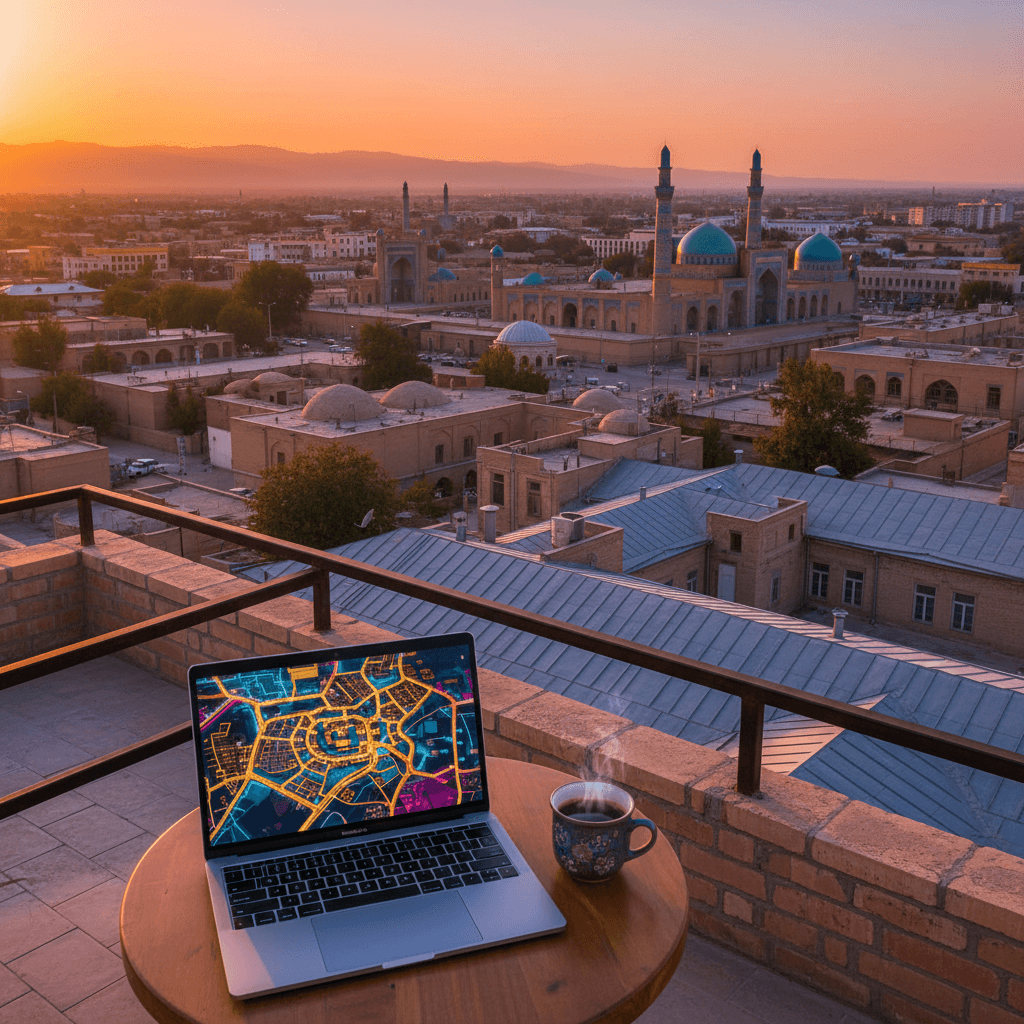
If you have spent any time in the desert-baked cities of Samarkand or Bukhara, arriving in Fergana feels like taking a deep breath. It is a city defined by its canopy. Plane trees and poplars line the wide, Russian-style boulevards, casting long shadows that make the summer heat much more manageable. While the rest of the country leans into the grandeur of turquoise domes and ancient mud-brick walls, Fergana City feels more like a relaxed, provincial capital that just happens to be the gateway to the most fermented cultural region in Central Asia.
The vibe here is decidedly unhurried. You won't find the aggressive souvenir hawkers or the "museum city" feel of the west. Instead, you get a working city where the locals are genuinely surprised, and then immediately delighted, to see a foreigner with a laptop. It is the kind of place where a quick trip to the bazaar for apricots turns into a forty minute conversation about where you are from and whether you like Uzbek plov. For a nomad, the appeal isn't in high-tech infrastructure; it is in the total lack of pretension and the dirt-cheap cost of a very comfortable life.
Why Nomads are Looking East
Fergana is the logistical heart of the valley. While neighboring Margilan handles the silk and Kokand handles the history, Fergana City handles the modern comforts. It is the most "Westernized" spot in the region, meaning you can find decent coffee, reliable grocery stores, and the best chance of a stable fiber-optic connection. It serves as a perfect base camp. You can spend your Tuesday working from a cafe, then hop in a shared taxi on Wednesday to see 2,000 year old pottery techniques in Rishtan for less than the price of a Starbucks latte.
The emotional experience of living here is one of being a guest rather than a tourist. There is a weight of hospitality that is hard to describe until you have experienced it. You aren't just a digital nomad to the people here; you are a visitor in their home. It is a place that rewards the slow traveler. If you are looking for a frantic nightlife or a massive community of remote workers to network with, you will be disappointed. But if you want a quiet, leafy corner of the world where your monthly budget stretches further than you ever thought possible, this is it.
The Realities of the Region
Let's be realistic about the trade-offs. Fergana is not Bali or Lisbon. You are trading high-speed coworking spaces and smoothie bowls for authentic teahouse culture and $1 shared taxi rides. The infrastructure is catching up, but it still requires some patience. You will need a local SIM card immediately, and you will likely be tethering your laptop more often than you are using high-speed cafe Wi-Fi.
- The Pace: Everything moves slower. Expect long lunches and afternoon tea breaks that are non-negotiable.
- The Language: English proficiency is low compared to Tashkent. Learning a few phrases of Uzbek or Russian will change your entire experience.
- The Connectivity: It is getting better, but a backup power bank and a solid data plan are mandatory for anyone with a 9-to-5 schedule.
- The Cost: This is one of the most affordable regions in a country that is already very budget-friendly. You can live well on a fraction of what you would spend in Europe.
Ultimately, Fergana is for the nomad who is a bit "tapped out" on the standard circuit. It is for the person who wants to see how the Silk Road actually functions today, away from the postcard-perfect restoration projects. It is raw, it is green, and it is incredibly welcoming.
The Budget Advantage
Living in Fergana City is a lesson in how far the US dollar can actually stretch. While Tashkent has seen prices creep up due to the recent influx of remote workers, the Fergana Valley remains one of the most affordable corners of Central Asia. You aren't just saving money here; you're living a comfortable, middle-class lifestyle for a fraction of what you'd spend in Southeast Asia or Eastern Europe.
Most nomads find that a monthly budget of $600 to $800 covers a high quality of life, including a private apartment, daily meals out, and frequent regional travel. Because the region isn't a primary tourist hub, you won't deal with "tourist pricing" in the markets or taxis. You'll pay what the locals pay, which is refreshing if you've recently spent time in Samarkand or Bukhara.
Accommodation and Rent
Finding a place to stay is the biggest hurdle because there aren't many online listings. You won't find much on Airbnb, and what is there is overpriced for the local market. Most expats recommend booking a hotel or guesthouse for your first week and using that time to find a local apartment through Telegram groups or by asking around.
- One-bedroom apartment (City Center): Expect to pay between $250 and $400 per month. These are usually Soviet-style blocks that have been renovated with modern appliances.
- Guesthouses: If you prefer a short-term stay with breakfast included, local guesthouses run about $15 to $25 per night.
- Utilities: High-speed internet, electricity, and heating (vital in the winter) rarely exceed $40 a month.
Food and Dining
The Valley is the agricultural heart of Uzbekistan, so fresh produce is incredibly cheap. If you eat like a local, your food costs will be negligible. A massive bowl of lagman or a plate of plov at a neighborhood teahouse usually costs between 15,000 and 30,000 UZS, which is roughly $1.20 to $2.40. Even at the "fancier" restaurants in Fergana City, a full dinner with drinks rarely tops $10.
Grocery shopping at the local bazaar is where you'll see the real savings. A kilogram of seasonal fruit or vegetables often costs less than $0.50. Imported goods like peanut butter or specific European cheeses are harder to find and will be your biggest expense if you can't live without them.
Transport and Connectivity
Getting around is almost free by Western standards. Since Fergana is a hub, you'll likely use shared taxis to visit nearby Margilan or Kokand. These are highly efficient and cost next to nothing.
- Yandex Go: A cross-city ride in a private car usually costs between 8,000 and 15,000 UZS ($0.65 to $1.20).
- Shared Taxis: A seat in a shared car to a neighboring city typically costs between $1 and $3 depending on the distance.
- Mobile Data: A monthly plan with 20GB to 50GB of data from providers like Ucell or Beeline costs around $5 to $8.
Daily Essentials
Local gym memberships are affordable, usually around $20 a month for a decent facility. A coffee at one of the newer cafes in Fergana City will set you back about $1.50 to $2.50. Since there isn't a massive nightlife scene, you won't find yourself dropping $50 on a Friday night out, which helps keep the overall cost of living remarkably low. Most of your "entertainment" budget will likely go toward weekend trips to explore the silk factories and ceramic workshops in the surrounding towns.
Digital Nomads and Remote Workers
If you're coming to Fergana to work, the City Center is your only real choice. Unlike Tashkent, Fergana doesn't have a sprawling layout, so staying near the Al-Fergani Park area puts you within walking distance of the best infrastructure the valley has to offer. This is where you'll find the highest concentration of cafes with reliable power outlets and the best chances of consistent fiber optic internet.
- The Vibe: Surprisingly green and walkable, with wide, Russian-style boulevards shaded by massive plane trees.
- Connectivity: This is the hub for Beeline and Ucell flagship stores where you can get your SIM card sorted quickly.
- Top Spot: Most nomads congregate around Mustaqillik Avenue. It's the most modern strip in the city and the best place to find a quiet corner with a laptop.
Expats and Long-Term Residents
Expats usually gravitate toward the Kirguli district or the quieter residential pockets just south of the main administrative buildings. These areas offer a more authentic local rhythm while still being close enough to the Yandex Go pickup points that can zip you into the center for 5,000 to 8,000 UZS.
- Housing: You'll find more spacious apartment rentals here compared to the cramped studios in the immediate center.
- Local Life: It's less about "sights" and more about being near the best Mahalla (neighborhood) bakeries where you can get fresh lepeshka bread every morning.
- Practicality: This area is closer to the regional hospitals and larger grocery stores that carry a few more imported items than the corner stalls.
Solo Travelers and Culture Seekers
If your goal is to soak up the Silk Road atmosphere rather than grind out emails, you might actually prefer Margilan over Fergana City. Located just 15 to 20 minutes away by shared taxi, Margilan feels centuries older. It's the silk capital of the region and offers a much more traditional Uzbek experience.
- The Draw: Living right next to the Yodgorlik Silk Factory. You'll wake up to the sound of looms rather than traffic.
- Social Scene: The teahouses (Chaikhanas) here are the real deal. Solo travelers find it incredibly easy to meet locals over a pot of green tea; hospitality here is aggressive in the best way possible.
- Cost: Generally cheaper than Fergana City for both food and guesthouses, with local meals often costing under $3 USD.
Families and Slow Travelers
Families generally do best in the New City developments or near Central Park. These areas are further from the chaotic main bazaars and offer more playground space and paved sidewalks for strollers. The atmosphere is calm, and the noise levels drop significantly after 9:00 PM.
- Safety: This is arguably the safest part of an already very safe city. You'll see local kids playing outside well into the evening.
- Amenities: You're within reach of the better-stocked pharmacies and the Fergana Regional Museum, which provides a good indoor activity for kids on hotter days.
- Transport: It's easy to hail a Damas (small minivan) from here to reach the Fergana Bazaar for fresh fruit and supplies without having to live in the middle of the market's congestion.
The Connectivity Reality
If you're coming to Fergana expecting the fiber-optic speeds of Tashkent or the digital nomad hubs of Southeast Asia, you'll need to adjust your expectations. Fergana is a city where life happens in teahouses rather than sleek glass offices. While the infrastructure is improving, the internet here remains a bit of a DIY project. Most nomads who spend time in the valley rely on a "belt and braces" approach: a mix of hotel Wi-Fi and a robust local data plan.
The city's Wi-Fi is generally functional for emails and basic browsing, but it can be temperamental during peak evening hours. If your work involves heavy video editing or constant Zoom calls, you'll find the stability frustrating. The local workaround is simple: go mobile. 4G coverage in Fergana city is surprisingly solid, and data is incredibly cheap compared to Western standards.
SIM Cards and Mobile Data
Getting connected should be your first priority upon arrival. You can pick up a physical SIM card at the airport or at various brand stores along Mustaqillik Avenue. You'll need your passport and your registration slip from your hotel or guesthouse to sign up for a local plan.
- Beeline Uzbekistan: Generally considered the most reliable for foreigners. Their coverage is consistent throughout the city and even holds up well when you're traveling between Fergana and Margilan.
- Ucell: A strong second choice with competitive data packages. Many expats find their signal strength better in more rural parts of the valley.
- Mobiuz: Often offers the most aggressive pricing for high-volume data users.
- eSIM options: Services like Airalo or Nomad work here, but they are significantly more expensive than local cards. They are great for the first 24 hours, but you'll want a local SIM for long-term stays to get better speeds and lower latency.
Expect to pay around $5 to $8 USD for a monthly plan that includes 20GB to 50GB of data. Tethering your laptop to your phone is often faster and more secure than using public Wi-Fi in cafes.
Coworking and Workspaces
Fergana does not currently have dedicated, "nomad-style" coworking spaces with ergonomic chairs and bottomless cold brew. Instead, the local tech scene revolves around IT Centers and educational hubs. The Fergana IT Park branch is under development and expected soon. While the city continues to build its digital infrastructure, the best place to head if you need a professional environment or a high-speed connection is often one of the local educational centers. The staff are usually welcoming to foreign remote workers and can sometimes arrange a desk for a small daily fee.
For a more casual vibe, you'll be looking at "work-friendly" cafes. Fergana is the most modern city in the valley, so you have options that feel familiar. Traktir and some of the newer coffee shops near the Fergana State University campus are your best bets. These spots usually have decent Wi-Fi and plenty of power outlets. Just keep in mind that the concept of sitting for five hours with one coffee isn't yet a standard part of the local culture, so it's polite to order food or a fresh pot of tea every couple of hours.
Practical Tips for Remote Work
Power outages are less frequent than they used to be, but they still happen, especially during the peak of summer or the dead of winter when the grid is stressed. A high-capacity power bank is a mandatory piece of gear here. If you're staying in a local apartment or a smaller guesthouse, ask the host specifically about their router setup before you commit. Many hosts are happy to upgrade their plan for you if you're staying for a month or more, provided you offer to cover the small price difference.
Since English proficiency is still developing in the region, download the Uzbek and Russian offline packs on Google Translate. If you run into a technical issue with your connection, showing a translated screen at a provider shop will save you a lot of headache. Most technical support staff will speak Russian, which is the lingua franca for anything related to tech or business in the valley.
General Safety and Street Awareness
Fergana is widely regarded as one of the safest cities in Central Asia for foreigners. The local culture is deeply rooted in hospitality and respect for guests, meaning you are more likely to be offered tea by a stranger than to encounter any hostility. Street crime is statistically very low, and walking around late at night is generally considered safe, even for solo female travelers. The main streets are well lit and there is a visible, yet non-intrusive, police presence that keeps things orderly.
The biggest safety concern you will face isn't crime, but the traffic. Drivers in the valley can be aggressive, and pedestrian crossings are often treated as suggestions. When crossing the street, wait for a clear gap or follow a local. If you are using Yandex Go, make sure the car has working seatbelts, as some older Daewoo models common in the region might have them tucked under the seat covers.
While the region is the religious heartland of Uzbekistan, it is not restrictive. However, dressing modestly is a sign of respect that goes a long way. Most nomads find that wearing long trousers and avoiding sleeveless shirts helps them blend in and avoids unwanted attention. Petty theft is rare, but it is still smart to keep your phone and wallet in zipped pockets when navigating the crowded bazaars like Kumtepa.
Healthcare Infrastructure
Healthcare in Fergana is adequate for minor issues, but it lacks the westernized private clinics you might find in Tashkent. If you come down with a stomach bug or a cold, local pharmacies, known as Dorixona, are everywhere. Many pharmacists speak basic Russian and can provide over the counter medications for common ailments. Look for the green cross signs that are often lit up 24/7.
For more serious medical needs, the Fergana Regional Multidisciplinary Medical Center (or local multi-profile hospitals) is the primary facility. While the doctors are highly trained, the equipment can be dated and English proficiency is almost non-existent. If you require specialized care or surgery, most expats and long term travelers take the four hour train or a quick flight back to Tashkent, where international clinics like Tashkent International Clinic offer western standards of care and English speaking staff.
Staying Healthy and Hydrated
The most common health issue for newcomers is "Fergana belly," usually caused by the heavy use of cottonseed oil in local dishes like Plov. If your stomach is sensitive, ease into the local diet and keep some rehydration salts handy. Tap water is generally not considered safe for drinking. Most nomads stick to bottled water, which is incredibly cheap at around 3,000 UZS for a 1.5 liter bottle, or use a high quality filtration bottle.
Emergency Contacts and Insurance
Before you arrive, ensure your travel insurance covers medical evacuation to Tashkent or Istanbul, as local facilities might not be able to handle complex emergencies. It is also helpful to have a local SIM card active so you can use translation apps if you need to explain symptoms to a doctor.
- Fire: 101
- Police: 102
- Ambulance: 103
- Emergency Services: 1050
Most emergency operators will not speak English. If you find yourself in a bind, your best bet is to ask a younger local or your hotel reception to make the call for you. The community is tight knit, and people are usually very willing to step in and help a visitor in distress.
The Logistics of the Valley
Movement in the Fergana Valley feels different than the high speed tourist circuit of Samarkand or Bukhara. Here, the pace is dictated by shared taxi stands and the rhythmic schedule of the regional rail. While it takes a bit of local know-how to master, it's easily one of the most affordable regions in Central Asia to navigate. You won't find a metro system, but you'll rarely wait more than ten minutes for a ride.
Mastering the Shared Taxi
Shared taxis are the lifeblood of regional travel. These aren't standard cabs; they function more like flexible bus routes. You head to a specific "pyatak" (taxi stand), tell the drivers your destination, and wait for the car to fill up with three other passengers. It’s a great way to meet locals, though be prepared for some friendly interrogation about where you're from.
- Intercity hops: A seat in a shared taxi between Fergana City and Margilan usually costs between 2,000 and 5,000 UZS.
- Longer hauls: Crossing between major hubs like Fergana and Kokand will typically set you back around 10,000 UZS, which is less than $1 USD.
- Etiquette: If you're in a hurry or carrying a lot of gear, you can pay for all four seats to have the car leave immediately and enjoy the extra space.
Digital Hailing with Yandex Go
For getting around within Fergana City limits, Yandex Go is your best friend. It works exactly like Uber or Bolt and removes the need to haggle over prices. It's incredibly reliable in the city center and near the main hotels. You'll need a local SIM card from a provider like Beeline or Ucell to register the app, but once you're set up, you can link your card or pay in cash. Most rides across town rarely exceed 12,000 UZS.
The Train Network
The railway is the most comfortable way to enter or leave the valley. The line connects Andijon, Margilon, and Kokand directly to Tashkent. The journey through the Kamchik Pass is stunning, though the trains move slowly through the mountains for safety. It's a massive upgrade in comfort compared to a long car ride.
- Booking: You can buy tickets on the official Uzbekistan Railways website or app. It's wise to book at least 3 to 5 days in advance, especially for weekend travel.
- Margilon Station: If you're staying in Fergana City, remember that the "Fergana" train station is actually located in Margilan, about 15 to 20 minutes away by car.
- Class options: Choose "O'zbekiston" (Economy) for a budget experience or "Biznes" for wider seats and a snack.
Walking and Micromobility
Fergana City is surprisingly walkable compared to the more sprawling industrial hubs in the region. The city was designed with wide, tree-lined avenues that provide much-needed shade during the punishing summer heat. Many nomads choose to stay near the Central Park area because most essentials, teahouses, and administrative buildings are within a 15 minute walk. You won't find electric scooters littering the sidewalks here yet, so comfortable walking shoes are a requirement for your daily routine.
Regional Connections
If you're looking to head further afield to spots like Chust for knife shopping or Rishtan for ceramics, you'll rely on "Damas" vans. These tiny, often cramped white minivans are the cheapest transport available. They don't have a set schedule and leave when full. They aren't built for tall travelers, but for a 30 minute trip, the 3,000 UZS fare is hard to beat. Just look for the destination sign in the front window or listen for the drivers shouting city names at the local bazaar.
The Linguistic Landscape
Expect a significant shift in the communication vibe when you move from Tashkent to the Fergana Valley. In the capital, Russian is the lingua franca of business and tech, but here in Fergana City, Uzbek is the undisputed king. It is the language of the street, the bazaar, and the teahouse. While you will find that many people over the age of thirty are still fluent in Russian, the younger generation is increasingly Uzbek-centric.
English proficiency is quite low compared to global nomad hubs. You might find a few students or hotel staff who speak it well, but don't count on it for your daily errands. If you are planning to stay for more than a week, learning the Cyrillic alphabet is a massive help. Even though the official script is moving toward Latin, most signage, menus, and shop fronts still use Cyrillic characters.
Essential Tools for Survival
Since you won't find many English speakers, your smartphone is your best friend. Google Translate is decent for Uzbek, but it often struggles with local dialects. Many nomads find that downloading the Russian language pack is actually more useful for complex tasks, as the translation engine is more refined. If you're stuck, try translating English to Russian first; most locals will understand the result perfectly.
- Yandex Go: This app is mandatory. It removes the need to haggle over prices in broken Uzbek and ensures the driver knows exactly where you're going.
- Telegram: This is the primary way people communicate in Uzbekistan. Whether you're reaching out to a landlord or asking a cafe about their WiFi, do it via Telegram.
- Voice-to-Text: Don't be shy about speaking into your phone and playing the translation back. It is a common way to communicate in the markets here.
Cultural Nuances and Etiquette
Communication in Fergana is deeply rooted in hospitality and formal greetings. It is considered rude to jump straight into a business question or a price inquiry. Always start with a "Assalomu Alaykum" (Peace be upon you). Even a simple "Rahmat" (Thank you) goes a long way in building rapport with the locals, who are generally thrilled to see foreigners taking an interest in their culture.
In social settings, expect people to be curious. You will likely be asked where you are from, what your job is, and if you are married within five minutes of meeting someone. This isn't an invasion of privacy; it's just the local way of being friendly. If you're a digital nomad, explaining your job can be tricky. Using the term "IT-specialist" or "freelancer" usually works better than trying to explain the nuances of content strategy or SEO.
Connecting with the Community
Since there isn't a dedicated digital nomad scene, your "coworking" will likely happen in local teahouses (choyhonas) or the few modern cafes in the city center. This is where the real networking happens. If you sit in a cafe with a laptop, you will probably be approached by curious locals or English teachers looking to practice their skills. Embrace it; these interactions are often the best way to find out about under the radar apartments or the best places to get Osh (plov).
For more formal networking, keep an eye on the Expats in Uzbekistan Facebook groups. While most of the activity is centered in Tashkent, you can often find people who have recently scouted the Fergana region and can give you the latest on which cafes have the most stable connections or which local SIM providers are currently offering the best data speeds for remote work.
The Best Time to Visit
Timing your stay in the Fergana Valley is all about avoiding the extremes. Because this region sits in a geographic bowl surrounded by mountains, it traps heat in the summer and holds onto the chill in the winter. For most nomads, the sweet spot falls between April and early June, or September through October.
Spring is arguably the most beautiful time to arrive. By April, the valley starts to earn its reputation as the garden of Uzbekistan. You will see fruit trees in blossom across every backyard and roadside. Temperatures usually hover between 20°C and 25°C (68°F to 77°F), which is perfect for walking between teahouses or taking the train to nearby Margilan. It is warm enough for a t-shirt during the day, though you will still want a light jacket for the evenings.
Autumn is the valley's reward for surviving the heat. September and October bring the harvest, and the local markets overflow with the famous Fergana melons, grapes, and pomegranates. The air is crisp, the sky is usually a deep blue, and the oppressive humidity of other regions is nonexistent here. If you are planning a longer stint, this is the most comfortable window for productivity.
The Seasons to Watch Out For
Summer in Fergana is intense. From late June through August, the valley experiences what locals call the chilla, a forty day period of extreme heat. Temperatures frequently climb above 40°C (104°F). Since the city of Fergana is more modern and heavily forested with Russian era plane trees, it stays a few degrees cooler than the surrounding desert plains, but it is still a slog. You will find that the city goes quiet in the afternoon as everyone retreats indoors, only coming alive after the sun sets.
Winter, from December to February, is gray and biting. While it does not get as bone chillingly cold as the steppe in Kazakhstan, temperatures often sit right around freezing. Snow is common but rarely stays on the ground for long. The real downside for a nomad is the atmospheric haze; the valley can trap wood smoke and fog for days at a time, making it feel a bit claustrophobic. Many local cafes and guesthouses might have limited heating, so if you visit now, pack high quality thermal layers.
A Month-by-Month Breakdown
- March: The Persian New Year, Navruz, happens on March 21st. It is a massive celebration in the valley with street festivals and traditional sports. The weather is unpredictable and rainy, but the cultural experience is peak.
- May: This is the goldilocks month. Everything is green, the markets are starting to fill up, and the outdoor teahouses are in full swing.
- July: Avoid this month if you can. The heat is draining, and unless your apartment has a reliable AC unit, you will struggle to get any work done during the day.
- September: Peak harvest season. This is the best time for foodies to visit, as the produce is at its absolute best and the weather is cooling down to a manageable 28°C (82°F).
- November: The transition to winter. It is often rainy and damp, but you will find the lowest prices on accommodation as the few tourists in the region head home.
What to Pack
Because the Fergana Valley is more conservative than Tashkent, your packing list should reflect that. Even in the heat of July, most locals wear long trousers or modest dresses. For the shoulder seasons, layering is your best friend. A windbreaker is essential for the breezy evenings, and comfortable walking shoes are a must for navigating the uneven sidewalks in the older parts of town. If you are coming in the summer, focus on linen or light cotton fabrics to stay cool while remaining culturally respectful.
Base Yourself in the Green City
Fergana City is your best bet for a home base in the valley. While Kokand and Margilan have more historical weight, Fergana is the region's modern administrative hub. It was built with a Russian colonial layout, meaning you get wide, tree-lined boulevards and plenty of shade, which is a lifesaver during the scorching summer months. Most expats and long term visitors stick to the city center near Mustaqillik Square to stay close to the better grocery stores and the few cafes that won't give you a blank stare when you pull out a laptop.
Connectivity and Gear
Don't expect reliable fiber optics in every guesthouse. To stay online, grab a local SIM card immediately. Beeline and Ucell have the best coverage in the valley. You can find their kiosks at the airport or near the central banner. A monthly data package with 20GB to 50GB of data usually costs between $5 and $10. If your phone supports eSIM, providers like Airalo work here, but they are significantly more expensive than just buying a local chip. Since coworking spaces haven't really hit Fergana yet, you will be tethering to your phone for most of your heavy lifting.
Moving Around the Valley
The Yandex Go app is your best friend. It works just like Uber and prevents you from having to haggle over every ride. A trip across town usually costs less than $1.50. For traveling between cities like Margilan or Kokand, shared taxis are the local way of life. You'll find them at designated stands near the bus stations. They leave as soon as the car is full, and a seat usually costs between 2,000 and 10,000 UZS depending on the distance. If you prefer the rails, the train to Tashkent is comfortable and cheap, but you should book your tickets a few days in advance on the Uzbekistan Railways website or app, especially on weekends.
Money and Payments
Uzbekistan is still very much a cash society, especially once you leave Tashkent. While some upscale hotels and larger supermarkets in Fergana City take Visa or Mastercard, the local bazaars and smaller teahouses are cash only. ATMs are becoming more common, but they frequently run out of bills or reject foreign cards. Carry a backup stash of US Dollars in crisp, new bills. You can exchange these at any bank or the exchange booths found in most large hotels. The local currency, the Som (UZS), has a lot of zeros, so prepare for a thick wallet.
Visa and Stay Requirements
Uzbekistan has one of the most generous visa policies in Central Asia. Citizens of around 80-90 countries (check current list) can enter visa-free for up to 30 days. If you want to stay longer, you'll likely need to look into a business visa, as there is currently no dedicated digital nomad visa. One quirk you can't ignore is registration. Every time you stay at a hotel or guesthouse, they must register your presence with the authorities. If you rent a private apartment, your landlord needs to do this for you online. Keep these registration slips; sometimes officials ask to see them when you exit the country.
Social Life and Etiquette
The Fergana Valley is more conservative than Tashkent. While you don't need to dress in traditional gear, it's respectful to keep your shoulders and knees covered when wandering through smaller villages or visiting mosques. People here are incredibly hospitable and will likely invite you for tea or a meal. It is polite to accept, even if just for a few minutes. To find other foreigners, join the Expats in Uzbekistan Facebook groups. You won't find a huge nomad scene in Fergana, but the few people who are there tend to be very well connected and helpful to newcomers.
Need visa and immigration info for Uzbekistan?
🇺🇿 View Uzbekistan Country GuideHidden Gem
Worth the effort