Esbjerg
🇩🇰 Denmark
The Industrial Coast Meets Hygge
Esbjerg doesn't try to compete with the fairytale aesthetic of Copenhagen or the historic charm of Aarhus. Instead, it carved out its own identity as a gritty, functional, and surprisingly cozy maritime outpost on Denmark's west coast. It feels like a city that works for a living, but knows exactly how to clock out and enjoy the North Sea breeze. For nomads, the vibe is refreshing: you get world class Danish infrastructure without the frantic tourist crowds or the inflated ego of a capital city.
The emotional core of Esbjerg is defined by the Man Meets the Sea sculptures. These four massive, white figures sit stoically facing the water, embodying the city's quiet strength. When you're living here, you'll feel that same sense of space. It’s a place where you can spend your morning hitting 197 Mbps download speeds at a local cafe and your afternoon walking through the wind-swept dunes of the Wadden Sea, a UNESCO World Heritage site that feels like the edge of the world.
What to Expect on the Ground
Life here moves at a deliberate pace. Residents value their hygge, so expect dimly lit cafes, warm textures, and a social life that revolves around intimate gatherings rather than massive clubs. While the city center around Kongensgade is walkable and filled with shops, the harbor remains the beating heart of the economy. You'll see massive wind turbine components being loaded onto ships alongside traditional fishing boats, a reminder that Esbjerg is Denmark's energy hub.
- The Social Scene: It can be a slow burn. Danes are famously private, and Esbjerg doesn't have a massive pre-packaged nomad community. You’ll find your tribe at spots like Loves Bog- og Vincafe, where the atmosphere encourages staying a while with a book or a laptop.
- The Connectivity: Internet reliability is almost flawless. Whether you're working from the public library or a rental in Hjerting, you won't struggle with video calls.
- The Costs: It's Denmark, so your wallet will feel the pinch. A monthly budget of $3,000 is the sweet spot for a comfortable life, though you can scrape by on $2,000 if you're diligent about cooking at home and sticking to the suburbs.
The Neighborhood Breakdown
Choosing where to plant your flag depends on whether you want the salt air or the city lights. Most solo travelers stick to the center for convenience, while those staying longer often head toward the coast.
City Center (Indre By)
- Vibe: Urban, walkable, and the most social part of town.
- Rent: $1,400 to $1,800 for a central one-bedroom.
- Pros: Short walk to Skolegade nightlife and the train station.
- Cons: Can feel a bit more "concrete" than the scenic outskirts.
Hjerting
- Vibe: Upscale seaside suburb with a vacation feel.
- Rent: $1,000 to $1,400 for older apartments or shared houses.
- Pros: Stunning beach views and a 15 minute bike ride to the center.
- Cons: Fewer dining options and requires a bike or bus for everything.
The Nomad Reality Check
Expats often mention that the weather is the biggest hurdle. Between September and November, the rain is frequent and the wind off the North Sea is biting. If you aren't a fan of grey skies, aim for a June to August stay when the temperature hovers around 20°C (68°F) and the sun stays up until nearly midnight. It’s during these months that the city truly opens up, with outdoor markets and ferry trips to Fanø Island for about $20. It’s a city for the nomad who wants to trade the "hustle" for a bike, a rain jacket, and some of the freshest seafood in Scandinavia.
The Real Cost of Living in Esbjerg
Living on Denmark's west coast isn't exactly cheap, but Esbjerg offers a slightly more manageable price tag than the frantic markets of Copenhagen or Aarhus. For a digital nomad or expat planning a stay in 2025 or 2026, you should budget roughly $3,000 per month to live comfortably without constantly checking your bank app. While the local average income sits around $2,500, your costs for short-term housing and dining out will likely push your expenses higher.
Denmark is famously cashless. You can go months without seeing a physical krone, so make sure your Revolut or N26 cards are ready. Most travelers find that while the base costs are high, the infrastructure you get in return, like ultra-fast 197 Mbps internet and pristine public spaces, makes the "Danish tax" feel a bit more equitable.
Monthly Budget Breakdowns
Depending on your lifestyle, your monthly burn rate will generally fall into one of these three tiers:
The Lean Nomad Tier
- Total Budget: Approximately $2,000
- Housing: $1,000 to $1,400 for a modest studio or a room in a shared apartment, likely in suburbs like Hjerting.
- Food: Relying on Netto or Føtex for groceries and sticking to $10 fish market snacks or street food.
- Transport: A $20 monthly bike rental via Donkey Republic and a pair of sturdy walking shoes.
- Workspace: Utilizing the free public library or rotating through low-cost cafes.
The Mid-Range Tier
- Total Budget: Approximately $2,500
- Housing: $1,400 to $1,800 for a central one-bedroom near Skolegade where the action is.
- Food: A mix of home cooking and $30 dinners at mid-range seafood spots or cozy cafes like Loves Bog- og Vincafe.
- Transport: A $80 regional transit pass for the Sydjylland buses and occasional $15 Bolt rides.
- Workspace: A dedicated desk in a shared space for about $100 to $200 a month.
The High-End Tier
- Total Budget: $3,500+
- Housing: $1,800+ for a modern apartment with harbor views and floor-to-ceiling windows.
- Food: Frequent fine dining at upscale harbor restaurants where meals start at $60 per person.
- Transport: Full car-sharing access or frequent private taxis.
- Workspace: A premium private office or a $300 monthly coworking membership with all the perks.
Daily Expenses and Practicalities
The small stuff adds up quickly here. A standard cappuccino in the city center will set you back about $5 to $7, while a pint of local beer at a pub usually lands between $8 and $12. If you are looking to save, expats recommend focusing your social life around "hygge" at home rather than nightly bar crawls.
For connectivity, nomads usually grab a prepaid SIM from Lebara or Lycamobile. You can get unlimited data for about $20 a month, which is a steal considering the speeds. If you're planning a day trip to see the "Man by the Sea" sculptures or hopping the ferry to Fanø Island, budget an extra $20 to $40 for the round trip and a quick lunch.
While there isn't a specific digital nomad visa for Denmark yet, most visitors use the 90-day Schengen allowance. Just keep in mind that short-term rentals on platforms like Airbnb or Boligportal can be significantly more expensive than the long-term rates locals pay, so booking at least a month in advance is the smartest way to protect your budget.
Best for Nomads and Solo Travelers: City Center
If you want to be where the action is, the area around Kongensgade and Skolegade is your best bet. This is Esbjerg's urban heartbeat, packed with pedestrian streets, retail shops, and the city's most reliable caffeine stops. It is the most walkable part of town, meaning you can ditch the bus pass and rely on your own two feet or a Donkey Republic bike rental.
Most nomads gravitate toward Loves Bog- og Vincafe for a work session. It is a cozy hybrid of a bookstore and wine bar that handles the laptop crowd well. While there are not many dedicated coworking hubs yet, the public library in the center offers 197 Mbps speeds and plenty of desk space for free. You will pay a premium for the convenience here, but the social payoff is higher than anywhere else in the city.
- Rent: expect to pay $1400 to $1800 for a central studio or one bedroom apartment.
- Vibe: social, convenient, and close to the best pubs and seafood spots.
- Top Tip: Skolegade gets lively on weekends; pick a side street if you value a quiet night's sleep.
Best for Expats and Maritime Lovers: The Harbor Area
Living near Esbjerg Havn puts you right at the source of the city's identity. This area has a rugged, industrial charm that appeals to expats working in the energy or shipping sectors. It is not a traditional residential neighborhood, but newer developments are bringing a modern, waterfront lifestyle to the docks.
The air smells like salt, and the views of the North Sea are unbeatable. You are within walking distance of the Fisheries and Maritime Museum and the iconic Man by the Sea sculptures. It is a bit noisier due to the port activity, but the proximity to fresh fish markets and the ferry to Fanø Island makes up for the industrial grit.
- Rent: premium prices for harbor views, often starting at $1800.
- Vibe: maritime, industrious, and scenic.
- Top Tip: Use the Rejseplanen app to coordinate your trips if you are heading inland, as the harbor layout can feel a bit spread out.
Best for Families: Hjerting
Located just a few miles south of the city center, Hjerting is the go-to suburb for families and those staying long term. It feels like a seaside village rather than a city district. It is quieter, greener, and sits right on the edge of the Wadden Sea, a UNESCO World Heritage site. Kids have plenty of space to run, and the local beaches are perfect for weekend walks.
While it is more affordable than the center, you will be a 15 minute bike ride or a short bus trip away from the main shops. Expats moving here usually appreciate the slower pace and the tight knit community feel. It is the kind of place where people actually know their neighbors, which helps when you are trying to integrate into Danish culture.
- Rent: more competitive, ranging from $1000 to $1400 for decent sized spaces.
- Vibe: peaceful, coastal, and community focused.
- Top Tip: Grab a Lebara SIM card with unlimited data, as some older houses in the suburbs might have slower fixed line setups than the modern city apartments.
Best for Nature Seekers: Near the Wadden Sea
If you are in Esbjerg specifically to escape the grind, look toward the outskirts near the Wadden Sea national park. This is not for the nomad who needs a daily latte, but it is perfect for travelers who want to wake up to sand dunes and bird calls. It is a seasonal area, so it is much livelier in the summer months between June and August.
Public transport is less frequent here, so you will likely want a car share or a sturdy bike. Most people stay here in short term rentals or holiday homes. It is the ultimate spot to experience hygge away from the city lights, especially during the crisp, windy autumn months.
- Rent: varies wildly by season; expect $1200 for basic setups, higher in mid summer.
- Vibe: remote, stunning, and quiet.
- Top Tip: Always pack layers; the coastal wind near the dunes is much sharper than it is in the city center.
Digital Infrastructure
You won't have to worry about connectivity in Esbjerg. Denmark consistently ranks among the world leaders for internet speeds, and this coastal hub is no exception. Denmark's fixed broadband median exceeds 200 Mbps in recent national rankings, so you can handle video calls, large file uploads, and streaming without a hiccup. Fiber optic connections are standard in most residential apartments in the city center and harbor areas.
Mobile coverage is equally impressive. You'll find 5G coverage throughout the urban core and reliable 4G even as you head out toward the Wadden Sea dunes. For data, nomads usually grab a prepaid SIM from Lebara or Lycamobile. You can pick these up at local convenience stores for around $20, which typically gets you a massive or even unlimited data bucket for the month.
Coworking and Workspaces
Esbjerg doesn't have a massive, dedicated coworking scene like Copenhagen or Aarhus. You won't find a dozen specialized hubs here, but there are professional options if you look in the right places. Most local professionals use shared office environments that cater to the maritime and energy sectors. Expect to pay between $100 and $200 per month for a desk in these flexible setups.
The Esbjerg Main Library (Hovedbiblioteket) is a favorite for those who want a quiet, free environment. It's modern, has plenty of power outlets, and the WiFi is rock solid. It's a great spot to hunker down for a few hours of deep work without the pressure to keep buying lattes.
The Cafe Office Scene
If you prefer a bit of background noise and a steady supply of caffeine, the local cafe culture is very welcoming to laptop users. There are several spots near the city center where you can settle in for a few hours of work. They don't mind if you stay for a while, provided you're ordering throughout your stay.
- Espresso House: A reliable Nordic chain with fast WiFi and plenty of seating, located near the main shopping streets.
- Dronning Louise: While more of a restaurant, it's quiet during weekday mornings and offers a classic Danish setting for a quick meeting.
Connectivity Costs at a Glance
- Prepaid SIM (Unlimited Data): ~$20 per month
- Coworking Desk (Monthly): $100 to $200
- Coffee at a Workspace Cafe: $5 to $7
- Home Fiber Internet: Often included in mid-range rentals; otherwise ~$40 to $60 per month
Most travelers find that while the social side of the nomad community is smaller here, the sheer speed of the internet makes up for it. You can get your work done faster and then head out to the harbor or the beach. Just remember that Danes value their hygge and work life balance; while working in cafes is accepted, people generally pack away their screens by 5:00 PM to enjoy the evening.
Personal Safety and Peace of Mind
Esbjerg is remarkably safe, even by high Danish standards. You won't find the gritty neighborhoods common in other European port cities. Most nomads feel perfectly comfortable walking home from a late dinner at Skolegade or cycling through the city center after dark. The crime rate is consistently low, and the general atmosphere is one of quiet order.
The only area where you should keep your wits about you is the industrial harbor zone at night. It isn't necessarily dangerous, but it's a massive working port with heavy machinery and limited lighting. If you're exploring the Esbjerg Havn area, stick to the main roads and watch out for truck traffic. For solo travelers, the city's compact nature means you're rarely far from a well lit street or a friendly face.
Healthcare Infrastructure
The healthcare system here is world class. Esbjerg og Grindsted Sygehus (formerly Sydvestjysk Sygehus) is the primary facility, offering high quality emergency and specialist care. Expats living here long term usually gain access to the public system via their CPR number, which covers most doctor visits and hospital stays. If you're just passing through as a nomad, make sure you have solid travel insurance, as private costs can rack up quickly without a Danish health card.
For minor issues, pharmacies (known as Apotek) are easy to find. The Esbjerg Jernbane Apotek near the train station is a reliable spot for over the counter meds and professional advice. Most pharmacists speak perfect English and can help you figure out local equivalents to brands you use at home.
- Emergency Services: Dial 112 for immediate police, fire, or ambulance assistance.
- Non-Emergency Medical: Dial 70 11 07 07 for the after hours doctor service (Lægevagten) if it's urgent but not life threatening.
- Water Quality: The tap water is some of the cleanest in the world. Don't waste money on bottled water; just refill your flask.
- Air Quality: Thanks to the North Sea breeze, the air is incredibly fresh, though the wind can be biting during the winter months.
Practical Tips for Staying Healthy
Danes are big on outdoor activity, and joining in is the best way to stay fit. You'll see locals jogging along the waterfront by the Man by the Sea sculptures regardless of the weather. If the coastal wind gets too intense, there are several modern gyms in the center like Fitness World where a monthly pass usually runs around $40 to $50.
Food safety standards are exceptionally high. Whether you're buying fresh North Sea shrimp at the harbor or eating a $10 fish taco at a street stall, you don't need to worry about hygiene. Expats often remark that the biggest health challenge in Esbjerg isn't illness, it's the lack of sunlight in the winter. Most locals supplement with Vitamin D from November to March, and it's a habit you should probably adopt if you're staying through the darker months.
Emergency Contacts and Apps
Before you arrive, download the 112 App. It's the official Danish emergency app that sends your GPS coordinates to dispatchers the moment you call. It's a lifesaver if you get turned around in the more remote parts of the Wadden Sea dunes where landmarks are scarce. For general health queries, the Medicinkortet app allows those with a CPR number to track prescriptions and health records digitally.
The Two-Wheeled Standard
In Esbjerg, the bicycle isn't just a leisure activity; it's the primary mode of transport for anyone wanting to live like a local. The city center is impressively compact and flat, making it easy to zip from the shops on Kongensgade to the harbor in minutes. Most nomads find that renting a bike through the Donkey Republic app is the most efficient way to get around, usually costing about $20 per month for a long-term subscription.
The infrastructure is top-tier, with dedicated lanes that keep you safely separated from car traffic. If you're staying in the suburbs like Hjerting, you'll appreciate the scenic coastal paths that turn a commute into a morning workout. Just be prepared for the North Sea wind; it's often strong enough to make a short ride feel like an uphill climb.
Public Transit and Regional Travel
When the weather turns or you're heading further out, the regional bus and train network managed by Sydttrafik has you covered. The system is punctual and clean, though it's not the cheapest way to travel. Expect to pay around $80 per month for a local transit pass if you aren't cycling. For planning any trip, download the Rejseplanen app. It's the gold standard for Danish transit, providing real-time updates for buses and trains across the country.
Getting to and from Esbjerg Airport (EBJ) is straightforward. The #23 bus runs the route regularly, taking about 10 minutes and costing roughly $5. If you're arriving late or carrying heavy gear, a taxi from the airport to the city center will set you back about $20. For ride-hailing, Bolt is the most reliable option in the area, though traditional taxis are always available at the station.
Out on the Water
Living in a maritime hub means your commute might occasionally involve a boat. The ferry to Fanø Island is a staple for weekend trips or quiet workdays away from the mainland. The crossing takes about 12 minutes and costs around $20 for a return ticket. It's a favorite among expats who want to trade the industrial harbor views for sand dunes and quiet cafes.
Driving and Car Sharing
You won't need a car if you stay central, but they're handy for exploring the Wadden Sea or heading north to the quieter beaches. Parking in the city center is generally managed through apps like EasyPark. While car ownership is prohibitively expensive due to high Danish taxes, occasional car sharing or rentals are manageable for mid-range budgets. Just remember that Denmark has a strict zero-tolerance approach to drinking and driving, and traffic fines are pegged to your income level, which can make a simple speeding ticket very expensive.
Walking the Center
If you're based near Skolegade or the main square, your best transport assets are a solid pair of waterproof boots. The city's grid layout is incredibly walkable. You can hit the main library, several work-friendly cafes like Loves Bog- og Vincafe, and the grocery stores all within a ten-minute radius. Most travelers report that the pedestrian-only zones make the city feel much smaller and more intimate than its industrial reputation suggests.
Will You Be Understood?
You can breathe easy here. Denmark consistently ranks as one of the top non native English speaking countries in the world, and Esbjerg is no exception. Whether you are ordering a craft beer at Loves Bog og Vincafe or asking for directions to the harbor, you will rarely encounter a language barrier. Almost everyone under the age of 60 speaks English with near perfect fluency, often with a slight North Sea lilt.
While English gets you through the day, Danish is the key to truly unlocking the local hygge. It is a Germanic language, so if you speak German or English, the written words might look familiar, but the pronunciation is notoriously tricky. Expats often joke that speaking Danish sounds like trying to talk with a hot potato in your mouth. Don't let that intimidate you; locals genuinely appreciate it when you try a few basics.
Essential Phrases to Pack
- Hej (Hi): Pronounced like "hi." Use it for everyone from the barista to the bus driver.
- Tak (Thanks): Simple and used constantly. If you want to be extra polite, say Mange tak (Many thanks).
- Undskyld (Excuse me/Sorry): Use this if you accidentally bump into someone on their bike.
- Skål (Cheers): You will need this one at the pubs on Skolegade.
Digital Communication and Apps
The city runs on digital infrastructure. You won't see many paper maps or cash transactions. To stay connected, most nomads pick up a prepaid SIM from Lebara or Lycamobile. You can grab these at most convenience stores for about $20, which usually nets you more data than you could possibly use in a month of remote work.
For getting around, Rejseplanen is the undisputed king. It’s the local app for all train and bus schedules across the Sydjylland region. If you are planning to stay for more than a week, download Donkey Republic for bike rentals. It’s the most common way to communicate with the city's transit system, and it's much cheaper than taxis, which can easily run you $20 for a short 10 minute trip.
Social Etiquette and Communication Style
Danish communication is refreshingly direct. If a local thinks your idea won't work, they will likely tell you straight out. It isn't rudeness; it's efficiency. They value punctuality above almost everything else. If you meet a local for coffee at 2:00 PM, being five minutes late is considered quite poor form.
Expats often find that while Danes are friendly and polite, they can be private. The "Peach vs. Coconut" analogy applies here: Danes are coconuts. They have a hard shell that takes time to crack, but once you are in, you have a friend for life. Joining a local interest group or a sports club is the standard way to break the ice. If you are struggling to meet people, check out the Internations groups or local Facebook hubs for expats in Southern Denmark.
Practical Tools for the Long Haul
If you decide to stick around for a few months, Google Translate is your best friend for grocery shopping. Danish food labels aren't always bilingual, and "fløde" (cream) looks a lot like "mælk" (milk) when you're in a rush. For official documents or long form reading, the camera feature on the app works flawlessly on Danish text. For those looking to move here permanently, the government offers free Danish lessons to residents, which is a fantastic way to network with other newcomers while learning the local tongue.
The Seasonal Sweet Spot
If you're planning a stint on Denmark's west coast, timing is everything. Most nomads and expats agree that June through August is the undisputed gold standard for visiting Esbjerg. During these months, the city sheds its grey maritime coat and comes alive with temperatures hovering between 15°C and 22°C (59°F to 72°F). It's the driest part of the year, making it the only reliable window for exploring the Wadden Sea or biking out to the "Man by the Sea" sculptures without getting soaked.
The summer vibe here is unique because of the coastal light. You'll get long days where the sun barely seems to set, giving you plenty of "post-work" hours to take the ferry to Fanø or grab a beer at Loves Bog- og Vincafe. Just keep in mind that this is peak season; while Esbjerg doesn't get the crushing crowds of Copenhagen, accommodation prices in the city center can spike, and you'll want to book your Airbnb or harbor-view apartment well in advance.
Shoulder Season Realities
May and September are the transition months, and they're a bit of a gamble. May can be surprisingly crisp and clear, perfect for those who prefer working in cafes without the summer humidity. By September, the frequent showers begin to move in. Travelers often find the shoulder season ideal for deep-focus work phases since the city slows down, but you'll definitely need a high-quality raincoat and layers to handle the North Sea winds.
If you're a nature lover, September is actually a prime time to witness the "Black Sun" phenomenon in the nearby marshlands, where thousands of starlings create patterns in the sky. It's a local highlight that makes the increasing drizzle a bit more bearable.
Surviving the West Coast Winter
Winter in Esbjerg (December through February) isn't for the faint of heart. It’s not just the cold, which stays around 0°C to 5°C (32°F to 41°F), but the biting wind and the darkness. By 4:00 PM, the city is dark. However, this is when the Danish concept of hygge truly takes over. Expats recommend leaning into the indoor lifestyle during these months.
- January: Often the coldest month, with an average high of 4°C. Expect high rainfall and occasional sleet.
- Atmosphere: Think candlelit cafes, heavy wool sweaters, and very few tourists.
- Budget Tip: This is when you'll find the lowest rates on short-term rentals, sometimes 20-30% cheaper than summer prices.
What to Pack
The weather here is famously fickle. Even in July, a sunny morning can turn into a rainy afternoon in minutes. Locals live by the "layering" rule. You'll want a windproof shell regardless of the season, as the harbor breeze is constant. If you're coming in the winter, a heavy parka and waterproof boots are non-negotiable. For the summer, pack light cottons but always keep a sweater handy for the evenings when the temperature drops quickly after sunset.
Quick Climate Breakdown
- Best for Outdoor Life: July and August (Highs of 20°C, lowest rainfall).
- Best for Budgeting: January and February (Coldest temps, but lowest rent).
- Rainiest Period: September through November (Pack a serious umbrella).
- Sea Temperatures: Even in mid-summer, the water rarely tops 17°C (63°F), so beach days are more about the sand than the swimming for most people.
Connectivity and Tech Setup
You won't have to worry about the internet here. Denmark is a global leader in connectivity, and Esbjerg is no exception. With median download speeds hitting nearly 200 Mbps, you can handle video calls from almost any corner of the city. Most nomads skip the expensive roaming plans and grab a local SIM from Lebara or Lycamobile. You can find these at most convenience stores for around $20 per month, which usually gets you more data than you will actually need.
Coworking is still a relatively new concept in this maritime hub. You won't find a dozen specialized hubs like you would in Aarhus, so most remote workers head to the Esbjerg Public Library or settle into a corner at Loves Bog- og Vincafe. It's a cozy spot that transitions from coffee to wine and welcomes laptop users. If you prefer a more corporate vibe, a desk at a local business center usually runs between $100 and $200 per month.
Budgeting for the Coast
Esbjerg is slightly cheaper than Copenhagen, but it is still Denmark, so keep your expectations realistic. A monthly budget of $3,000 is the sweet spot for a comfortable nomad lifestyle. Cash is virtually extinct here; you will want a card like Revolut or N26 to avoid transaction fees, as even the smallest harbor stalls take contactless payments.
Monthly Cost Breakdown
- Housing: Expect to pay $1,000 to $1,400 for a studio in suburbs like Hjerting. If you want to be right in the City Center or near Skolegade, prices jump to $1,400 to $1,800.
- Food and Drink: A casual meal at a fish market or street food stall is about $10. A mid-range dinner at a seafood spot will cost $25 to $30, while a pint of beer is usually around $8.
- Transportation: A monthly transit pass is roughly $80. However, most residents just use the Donkey Republic app to rent bikes for about $20 per month.
Getting Around
The city center is incredibly walkable, but the real local way to get around is on two wheels. Esbjerg is flat and the bike lanes are impeccable. For longer trips or rainy days, the Rejseplanen app is your best friend for bus and train schedules. If you are arriving at Esbjerg Lufthavn, catch the #23 bus; it costs about $5 and gets you to the center in 10 minutes. Taxis are available but expensive, often costing $20 for that same short trip.
Health and Safety
This is one of the safest cities you will visit. Crime is very low, and the air quality is fantastic thanks to the North Sea breeze. If you do run into trouble, the emergency number is 112. Esbjerg Regional Hospital is the main facility in town, and the quality of care is world-class. Pharmacies are easy to spot, but keep in mind that many stronger over-the-counter meds from the US or UK require a prescription here.
Weather and Timing
If you hate the cold, aim for June through August. The temperatures hover between 15°C and 22°C, and the days stay light until late in the evening. This is also the best time to take the 12-minute ferry to Fanø Island for a day trip. Winters are a different story. December through February are dark, windy, and hover around 2°C. If you visit then, you will need to lean heavily into hygge, the Danish art of making things cozy, to get through the gray days.
Local Etiquette
Danes are famously punctual. If you meet someone for coffee at 2:00 PM, show up at 1:59 PM. Communication is direct and honest, which some newcomers mistake for coldness, but it is actually just a respect for your time. Almost everyone under 60 speaks nearly perfect English, so you won't have trouble ordering food or asking for directions. Just remember to recycle strictly; the local system is comprehensive and they take it seriously.
Need visa and immigration info for Denmark?
🇩🇰 View Denmark Country GuideEasy Landing
Settle in, no stress
Monthly Budget Estimates
More cities in Denmark
Aarhus
🇩🇰 Denmark
Aalborg
🇩🇰 Denmark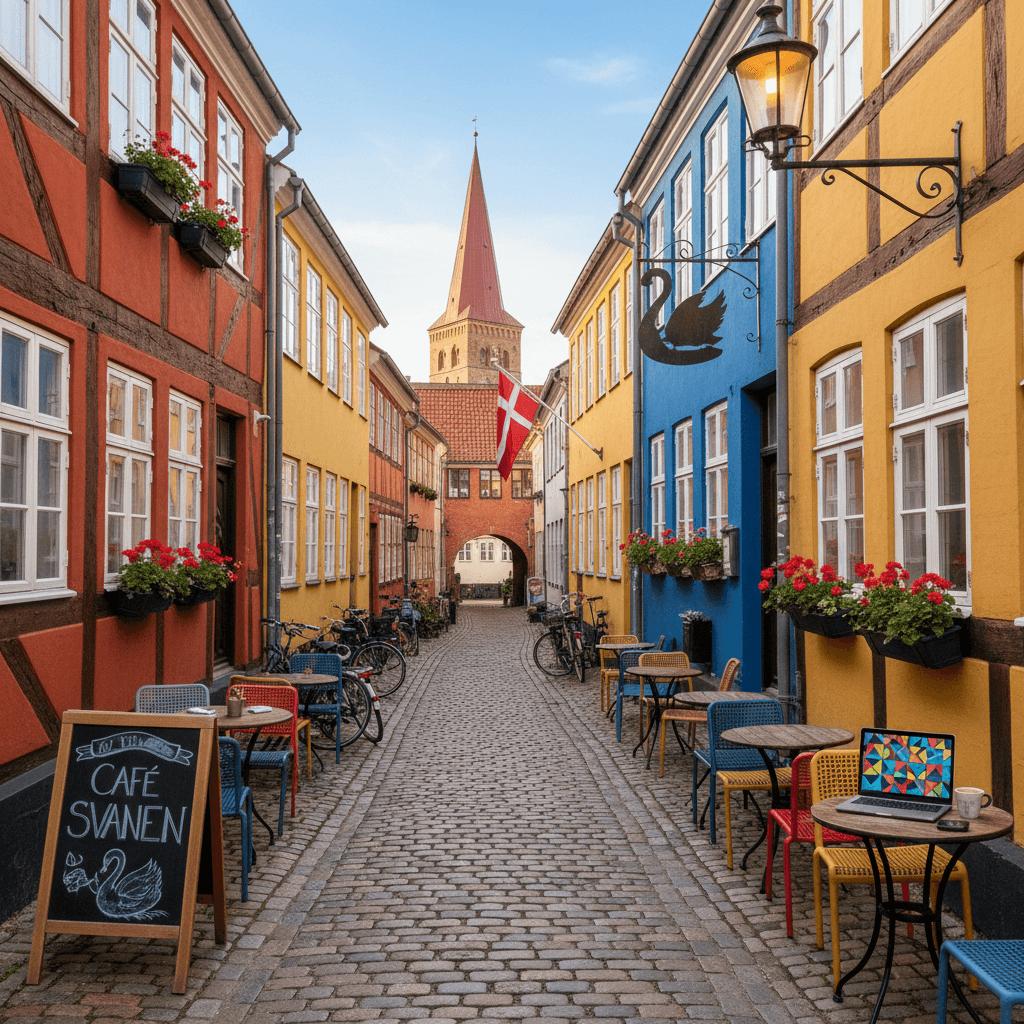
Odense
🇩🇰 Denmark