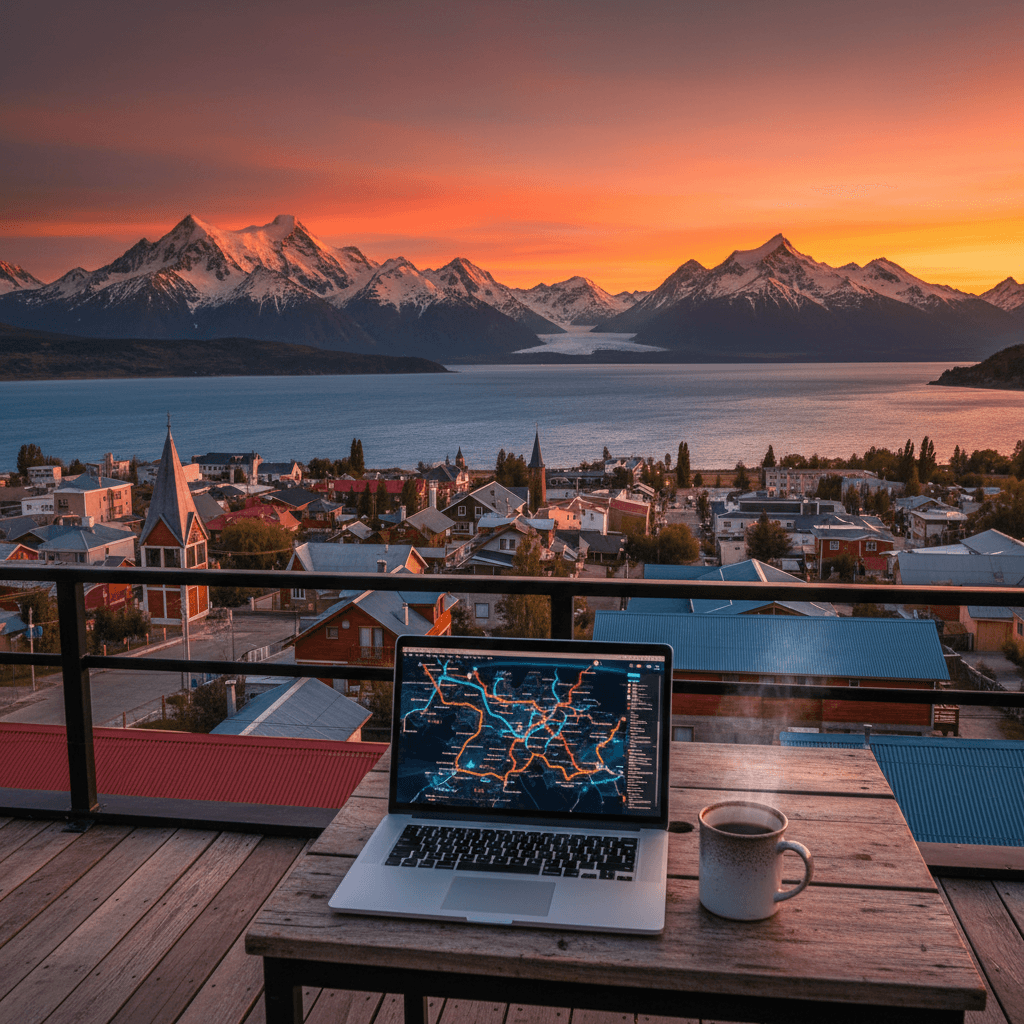
El Calafate
🇦🇷 Argentina
The Gateway to the Glaciers
El Calafate isn't your typical digital nomad hub. It's a rugged, wind-swept frontier town that has grown up around the sheer awe of the Southern Patagonian Ice Field. While most remote workers flock to Buenos Aires for the nightlife or Medellín for the community, people come here for the silence of the steppe and the thunderous crack of ice calving into Lago Argentino. It feels like the edge of the world because, geographically, it almost is.
The vibe is a unique blend of high-end tourism and old-school Patagonian grit. You'll see mountain guides in technical gear sharing the sidewalk with travelers fresh off a gourmet glacier cruise. The town center along Avenida del Libertador is walkable and charming, filled with chocolate shops, cozy wine bars, and the smell of slow-roasted lamb hitting the grills at Mi Viejo. It's a place where the pace of life is dictated by the weather and the departure times of the next excursion.
The Nomad Reality Check
Living here requires a bit of a trade-off. You're trading 24/7 convenience for some of the most inspiring views on the planet. Recent infrastructure improvements mean that internet speeds are now suitable for streaming and more demanding tasks, making it easier to stay connected than in years past. It’s a "working vacation" destination rather than a long-term base, with monthly costs significantly higher in 2026 due to current inflation.
- The Pros: Unmatched access to Parque Nacional Los Glaciares, clean air, and a very high safety rating for solo travelers.
- The Cons: High cost of living due to its remote location, seasonal crowds that peak from December to February, and limited urban amenities.
- The Experience: Expect to spend your mornings working from a cafe like Buenos Cruces and your afternoons trekking across Perito Moreno or watching flamingos at Reserva Laguna Nímez.
Neighborhoods and Where to Stay
The town is compact enough that you don't need a car for daily life. Most expats and short-term nomads stick to the Centro or the Costanera. Outside these areas, you're looking at remote estancias which are beautiful but impractical for anyone needing a stable Wi-Fi signal.
Centro (Avenida del Libertador)
- Best For: First-timers and those who want to be near the action.
- Rent: ARS 750,000+ for a decent studio in 2026.
- Pros: Everything is within a five-minute walk, including the best parrillas and tour agencies.
- Cons: It gets loud and crowded when the tour buses return in the evening.
Costanera
- Best For: Nature lovers and photographers.
- Rent: ARS 800,000+ for places with lake views.
- Pros: Stunning views of the turquoise water and easy access to the lakeside walking path.
- Cons: It’s significantly windier than the sheltered center and has fewer shops.
Practical Logistics for 2025
Inflation in Argentina is a moving target, so using local tools is a must. Travelers recommend downloading the El Calafate Invita 2025 app, which offers discounts between 10% and 25% during the shoulder season of April and May. For connectivity, don't rely solely on hotel Wi-Fi; grab a Holafly eSIM or a local SIM card to stay connected while you're out exploring.
Dining out is a highlight but can eat into your budget quickly. A basic meal in 2026 starts around ARS 20,000+, while a high-end dinner at a place like Kau Kaleshen can easily top ARS 15,000. If you're on a budget, look for local rotiserías or use the El Calafate Tierra de Glaciares app to find more affordable local spots. You'll find that while the prices are higher than in the north, the quality of the regional trout and cordero (lamb) is legendary.
Ultimately, El Calafate is for the nomad who wants to disconnect from the digital grind and reconnect with the physical world. It's a place that demands you put down your laptop and look up at the sky. You won't find a massive coworking scene here, but you will find a community of adventurers who value a sunset over a spreadsheet.
The Patagonian Premium
Living at the edge of the world comes with a price tag to match. While Argentina is often seen as a budget-friendly haven, El Calafate is an outlier. Because it's remote and heavily driven by high-end tourism, you'll find costs here significantly higher than in Buenos Aires or Salta. Most nomads should update for 2026 inflation when planning their monthly budget, though your biggest variable will be how many glacier treks you squeeze into your schedule.
Inflation in Argentina is a moving target, so it's smart to think in terms of relative value. For a mid-range lifestyle, expect to spend ARS 750,000+ for a decent studio or one-bedroom apartment in the center. If you want those iconic views of Lago Argentino from your window, prices climb even higher. Short-term rentals on Booking.com are the standard way to secure a spot, as the local long-term rental market is tight.
Dining and Daily Expenses
Food costs vary wildly depending on whether you're eating like a local or a tourist. You can grab street food for around ARS 2,000, but a sit-down meal at a mid-range spot like Buenos Cruces usually runs between ARS 8,000 and 12,000. For the quintessential Patagonian experience, a night at Mi Viejo for traditional parrilla will cost ARS 15,000 or more. Travelers recommend downloading the El Calafate Invita 2025 app; it offers discounts of 10% to 25% during the shoulder months of April and May.
- Daily transport: A round-trip bus to the glacier is roughly ARS 10,000, while private excursion shuttles hit ARS 20,000.
- Coffee and WiFi: Expect to pay around ARS 3,000 for a latte at a cafe on Avenida del Libertador.
- Groceries: Prices are roughly 20% higher than in northern cities due to the cost of trucking goods down Route 40.
Where to Plant Your Flag
The town is compact enough that you don't need a car, but your choice of neighborhood dictates your daily vibe. Most nomads stick to Centro along Avenida del Libertador. It's the heartbeat of the town where you'll find the banks, pharmacies, and the best restaurants. It gets crowded during the peak summer months of December through February, but the convenience of being walking distance to everything is hard to beat.
If you prefer a quieter morning, the Costanera area offers scenic walks along the lake and proximity to the Reserva Laguna Nímez. It's windier here, and you'll have fewer cafes to duck into for a quick work session, but the views are unbeatable. For those seeking total isolation, the outskirts feature various estancias. These are great for a weekend getaway but impractical for nomads without a rental car, which typically costs about ARS 30,000 per day.
The Connectivity Reality Check
Internet is the main hurdle for serious remote work. While the town promotes itself as nomad-friendly, average speeds hover around 10 Mbps. This is fine for emails and Slack, but heavy video editors or those with constant Zoom calls might struggle. There aren't dedicated coworking spaces yet, so the local cafe culture serves as the de facto office. Spots like Kau Kaleshen offer a cozy atmosphere, though the WiFi can be spotty when the town is full of tourists.
For backup, most expats suggest a Holafly eSIM or picking up a local SIM card in town for better reliability. Use the El Calafate Tierra de Glaciares app to stay updated on local services. Safety is rarely a concern here; the town is remarkably safe for solo travelers. Your biggest risks are the elements, so pack high-quality layers and keep an eye on the wind reports before heading out for a hike.
El Calafate isn't a sprawling metropolis with distinct districts. It's a compact, frontier-style town where the "neighborhood" you choose depends entirely on how much wind you want to face and how close you need to be to a reliable espresso. Most of the action hugs the shoreline of Lago Argentino or clusters around the main drag, Avenida del Libertador.
While the town is small, the logistics change depending on your goals. If you're here to work, you'll want the density of the center. If you're here to soak in the silence of Patagonia, you'll head toward the lakeside or the steppe. Here is how to break down the best areas based on your travel style.
Digital Nomads
For those balancing a laptop with glacier trekking, Centro (Avenida del Libertador) is the only logical choice. This is the heartbeat of El Calafate. Living here puts you within a five minute walk of the banks, tour agencies, and the highest concentration of cafes with functional WiFi. While the internet average sits around 10 Mbps, the central cafes are your best bet for a stable connection.
- Rent: Expect to pay between ARS 750,000 and 1,000,000 for a decent mid-range studio or one bedroom apartment.
- Vibe: High energy and touristy, but incredibly convenient. You'll be steps away from Buenos Cruces for a pasta lunch and Mi Viejo for a late night parrilla session.
- Pros: Everything is walkable; no need for taxis or rentals. You're close to the bus terminal for trips to Perito Moreno which cost about ARS 45,000 round trip.
- Cons: It gets loud during the peak summer months of December to February, and you won't get much of a "local" feel.
Expats and Long-Term Residents
If you're staying for a month or more, look toward Barrio Alto or the residential pockets just behind the main avenue. These areas offer a bit more peace while keeping the amenities of the center within reach. You'll find more traditional houses here rather than just hotels and hostels. Expats often prefer this area to escape the constant churn of tour buses on the main street.
- Rent: Prices reflect current market trends, typically ranging from ARS 650,000 to 900,000, but you often get more space or a small garden for your money.
- Vibe: Quiet, residential, and authentic. You'll see locals going about their daily lives, away from the souvenir shop glare.
- Pros: Better value for long term stays and less wind than the lakeside properties.
- Cons: It involves an uphill walk from the main street. It’s not a mountain climb, but you'll feel it after a long day of hiking.
Families
The Costanera (Lakeside) is the prime spot for families. This area follows the curve of Bahía Redonda and offers wide open spaces and the scenic lakeside path. It's perfect for morning walks or letting kids burn off energy near the water. You're also close to the Reserva Laguna Nímez, where you can spot flamingos and other Patagonian birds.
- Rent: This is the premium zone. Comfortable apartments or houses with lake views can easily exceed ARS 1,000,000 per month.
- Vibe: Scenic and breezy. It feels more like a retreat than a town center.
- Pros: Incredible views of Lago Argentino and easy access to the Museo Regional and Iglesia Santa Teresita.
- Cons: It is significantly windier than the rest of the town. You’re also further from the supermarkets, so you might end up spending more on taxis or a car rental at ARS 30,000 per day.
Solo Travelers
Solo travelers usually find their groove in Centro, specifically the blocks near the main avenue. This area is packed with hostels and boutique b&bs, making it the easiest place to meet people for shared excursions or a beer at the local bars. It’s the social hub of the town.
- Food: This area is great for budget conscious solos. You can grab street food for around ARS 2,000 or a basic meal for ARS 5,000.
- Vibe: Social and adventurous. Everyone here is planning their next trek or comparing photos of the "Big Ice" tour.
- Pros: Very safe at night and easy to find "El Calafate Invita" discounts at nearby shops, which can save you 10 to 25 percent during the shoulder season.
- Cons: Can feel a bit "transient" as people are constantly arriving and leaving for El Chaltén.
Regardless of where you land, make sure to download the El Calafate Tierra de Glaciares app. It’s the local digital bible for navigating the town’s services and finding the latest deals in 2025. If you're visiting in the winter months of June through August, stick to the center; many places on the outskirts or lakeside close down or become difficult to access when the snow hits.
Connectivity in the Glacial Frontier
Working from the edge of the Patagonian ice field is an exercise in managing expectations. While the local government has made a push to brand the city as nomad friendly, the reality on the ground is that you're in a remote outpost. You'll find enough bandwidth to handle emails and standard Slack chats, but those planning to lead high definition webinars or upload massive video files might find the local infrastructure frustrating. Most accommodations in the center now provide a reliable baseline for standard remote work tasks.
For a reliable backup, don't rely solely on hotel WiFi. Most long term travelers pick up a local SIM or an eSIM before arriving. Local shops along Avenida del Libertador often offer competitive rates for data. If you're staying for more than a week, download the El Calafate Tierra de Glaciares app. It's the local digital hub for everything from weather alerts to service directories. For those working in public spaces, using a VPN is a smart move since many cafe networks are unsecured.
Where to Work: The Cafe Scene
Dedicated coworking spaces with ergonomic chairs and silent booths haven't quite hit El Calafate yet. Instead, the nomad community gravitates toward the town's robust cafe culture. Most of these spots are clustered in the Centro district, making it easy to hop from one to another if the connection at your first stop starts lagging.
- Avenida del Libertador Cafes: This is your primary "office" zone. Most spots don't mind if you linger for a few hours with a laptop, provided you keep the coffee and medialunas flowing.
- Kau Kaleshen: While it's famous for tea and cordero risotto, the quiet atmosphere during off-peak hours makes it a favorite for focused writing or admin work.
- Buenos Cruces: Best for a late afternoon session followed by a solid pasta dinner. The WiFi is usually stable enough for basic tasks.
The Cost of Staying Connected
Living and working here isn't cheap. You're paying a premium for the location and the logistical challenge of getting supplies to Southern Patagonia. If you're visiting between April and May, check the El Calafate Invita 2025 app; it offers discounts between 10% and 25% at various local businesses, which can significantly take the sting out of your daily expenses.
- Daily Coworking Budget: Since there aren't formal spaces, budget about ARS 10,000 per day for cafe spend to ensure you're a welcome guest.
- Mobile Data: A local SIM or eSIM is a non-negotiable expense here given the occasional landline outages.
- Accommodation with WiFi: A studio in the center will run you anywhere from ARS 750,000 to 900,000, but always ask for a speed test screenshot before booking if your job depends on it.
Practical Realities for Remote Workers
The biggest challenge isn't just the speed, it's the distractions. It's hard to stay glued to a screen when the Perito Moreno glacier involves a ARS 10,000 bus ride and a full day of trekking. Most nomads find that a "work hard, play hard" schedule works best here. Front-load your tasks for the beginning of the week so you can head out to Estancia visits or the Costanera for sunset walks without guilt. If you're a solo traveler, the best way to meet others isn't through a Slack channel but by joining city tours or hanging out at Mi Viejo after work hours. The community is small, and you'll likely see the same faces at the cafes every morning.
Safety Overview
El Calafate is widely considered one of the safest destinations in Argentina. The vibe is that of a small, tight knit mountain town where the primary concern isn't crime, but the unpredictable Patagonian elements. You'll feel comfortable walking through the Centro or along the Costanera well after sunset. Most travelers and nomads report feeling perfectly fine exploring solo, and the community is generally welcoming to foreigners.
While petty theft like pickpocketing is rare compared to Buenos Aires, it's still smart to keep an eye on your gear in crowded tourist spots along Avenida del Libertador. The real "safety" hazards here are environmental. The wind can be fierce enough to knock you off balance, and the sun at this latitude is surprisingly strong even when it's cold. Locals always suggest dressing in layers and keeping high-SPF sunblock in your daypack.
Healthcare & Emergencies
For medical needs, the town is equipped to handle standard issues and minor emergencies. You'll find several pharmacies, known as farmacias, dotted along the main avenue. They're usually well stocked with basics, though if you require specific prescription medications, it's best to bring a full supply from home as brand names often differ in Argentina.
In the event of a serious health issue, the Hospital SAMIC El Calafate is the primary facility in the region. It's modern and serves both locals and the high volume of tourists that pass through. If you're heading out on a glacier trek or a long hike, make sure your travel insurance specifically covers "adventure activities" or "high risk sports," as standard policies sometimes exclude injuries sustained on the ice.
- Police: Dial 101
- Ambulance/Medical Emergencies: Dial 107
- Local Pharmacy Tip: Look for the "Farmacia de Turno" sign on any pharmacy door to find out which one is open 24 hours on that specific day.
Nomad Health & Digital Security
Digital nomads should be aware that while the physical environment is safe, the digital one requires a bit of prep. Public WiFi in cafes and hotels is common but often lacks encryption. Expats living here recommend using a VPN like ExpressVPN when logging into bank accounts or work portals from a local coffee shop. The internet speeds hover around 10 Mbps, which is fine for emails but can be frustrating for heavy video calls.
If you're planning on staying for a month or more, download the El Calafate Tierra de Glaciares app. It’s a helpful resource for local alerts and general info. For those visiting between April and May, the El Calafate Invita 2025 digital card is a must have; it can snag you 10% to 25% discounts at various local businesses, including some health and wellness services.
Practical Safety Tips
- Water: The tap water in El Calafate is generally safe to drink, though many nomads prefer bottled or filtered water due to the high mineral content from the glacial sources.
- Taxis: There are no major ride hailing apps like Uber operating here. Stick to "Remises" (private car services) or official taxis. They are reliable and safe to use at any hour.
- Money: Stick to the ATMs on Avenida del Libertador. They are located in well lit, high traffic areas which is ideal for security when withdrawing cash.
- Trekking: If you're heading to El Chaltén for a day trip or doing the Big Ice trek, always log your itinerary with your accommodation or the park rangers. Weather can change in minutes, and cell service disappears quickly once you leave the town limits.
Navigating the Gateway to the Glaciers
El Calafate is one of those rare places where you don't need a complex strategy to get around. The town is remarkably compact, centered mostly on a few main streets that hug the shoreline of Lago Argentino. If you're staying anywhere near Avenida del Libertador, your own two feet will be your primary mode of transport. The downtown area is perfectly walkable, filled with gear shops, banks, and those necessary steakhouse stops.
For nomads and long-term travelers, the layout is simple. Most of the action happens in the Centro, while the Costanera offers a more scenic, wind-swept path for morning runs or sunset walks. You won't find Uber or Cabify here, but the local taxi system is reliable and easy to flag down. If you're heading to the airport, a shuttle service is much more budget-friendly than a private car.
Reaching the Ice
While the town is walkable, the reason you're here, the Perito Moreno Glacier, is about 80 kilometers away. You have three main ways to bridge that gap without breaking the bank.
- Public Bus: This is the go-to for independent travelers. You can book a round-trip ticket at the local terminal. It drops you at the glacier's walkways and gives you a few hours to explore before the return trip.
- Excursion Shuttles: Most organized tours, like the Big Ice trek or estancia visits, include hotel pickups. These take the logistical weight off your shoulders.
- Car Rentals: If you want to explore the Cuevas de Walichu or the outskirts at your own pace, a rental car starts at about ARS 150,000+ ($100+ USD) per day. It's pricey, but it's the only way to escape the tour bus crowds.
Connectivity and Remote Work Logistics
Don't expect lightning-fast fiber optics here. Most spots offer around 10 Mbps, which handles emails and basic Zoom calls but might struggle with heavy video editing. Since there aren't dedicated coworking spaces yet, nomads usually colonize the cafes along the main drag. Buenos Cruces and Kau Kaleshen are local favorites where the coffee is strong and the WiFi is stable enough for a few hours of productivity.
For your phone, don't rely on roaming. Most travelers recommend picking up a local SIM if you're staying longer. The town uses WhatsApp for almost everything, from booking a table at Mi Viejo to checking excursion availability, so having a working data plan is a must.
Practical Transport Tips
- The "El Calafate Invita" App: Download this before you arrive. During the shoulder season in April and May, it offers 10 to 25 percent discounts on various services.
- Cycling: Several agencies on the main avenue rent mountain bikes. It's a great way to reach Reserva Laguna Nímez for birdwatching without needing a taxi.
- Money Matters: You'll find ATMs along Avenida del Libertador, but they often have low withdrawal limits and high fees. Using a VPN is highly recommended when hopping between different cafe networks.
Overall, the lack of urban sprawl makes El Calafate a stress-free home base. You'll spend less time worrying about traffic and more time figuring out which glacier trek fits your budget. Just remember to pack layers; the Patagonian wind turns a simple three-block walk into a bracing adventure very quickly.
The Local Linguistic Landscape
In El Calafate, Spanish is the undisputed king of conversation. While the town survives on international tourism, the "Patagonian vibe" remains deeply rooted in Argentine tradition. You'll find that English is widely spoken by guides at Perito Moreno and staff at high end hotels along the Costanera, but that fluency drops off quickly once you step into a local pharmacy or a smaller shop on the outskirts. If you're planning to stay for more than a week, learning the basics isn't just polite; it's a survival tactic for your wallet.
Argentine Spanish has a distinct rhythm. Locals use "vos" instead of "tú" and the "sh" sound for double Ls. Don't be surprised if a waiter asks "¡Che, qué vas a pedir?" (Hey, what are you going to order?). It's friendly, not rude. Most nomads find that a quick "Hola" and "¿Cuánto cuesta?" goes a long way, but having Google Translate downloaded for offline use is a smart move for those moments when technical glacier terminology or complex menu items leave you scratching your head.
Staying Connected in the Wild
Connectivity in Southern Patagonia has historically been a challenge, but things are stabilizing for the remote work crowd. Recent improvements have made connectivity reliable for basic remote work via 4G/5G. While that's plenty for emails, Slack, and the occasional Zoom call, heavy users like video editors or developers might find it frustratingly thin. Most long term residents suggest having a backup plan for when the wind picks up and the signal fluctuates.
- Local SIM Cards: You can pick up a physical SIM at shops along Avenida del Libertador. Bringing your passport is mandatory for registration.
- eSIM Options: For immediate data upon landing, many travelers recommend Holafly. It's reliable for basic navigation and messaging, though it can be pricier than local prepaid plans.
- Reliability: Always use a VPN like ExpressVPN when hopping between public cafe networks in the center to keep your data secure.
The Remote Work Scene
You won't find a dedicated, glass walled coworking hub here just yet. Instead, the working culture happens in the cozy corners of downtown cafes. Avenida del Libertador is your best bet for finding a spot with a plug and decent coffee. It's common to see nomads tucked away in the back of tea houses like Kau Kaleshen, balancing a laptop next to a plate of cordero risotto. Just keep in mind that Patagonian hospitality is relaxed; don't expect "Silicon Valley" speeds from the service or the WiFi.
To stay in the loop, download the El Calafate Tierra de Glaciares app. It’s the local digital pulse for everything from weather alerts to town events. If you're visiting between April and May, look for the El Calafate Invita 2025 digital card. It can snag you 10% to 25% discounts at various establishments, which helps offset the high cost of living in this remote outpost. For most nomads, communication here is less about high speed fiber and more about the community you build in the "parrilla" queues and on the shuttle buses to the ice.
The Seasonal Shift
Patagonia doesn't do "mild." In El Calafate, you're essentially negotiating with the elements. The town experiences four distinct seasons, but the wind is a permanent resident. Most nomads find that the weather dictates their entire workflow; when the sun is out, you drop everything to see the glaciers. When the gales pick up, you hunker down in a cafe on Avenida del Libertador.
Summer, running from December to February, is the undisputed heavyweight champion for visiting. Daily highs hover between 12°C and 15°C, which might sound chilly, but the intense Southern Hemisphere sun makes it feel much warmer. This is the only time of year when long-distance trekking and glacier "Big Ice" tours are fully reliable. The trade-off is the crowd; the town swells with tourists, and prices for short-term rentals hit their peak.
Shoulder Season Strategy
If you're looking to save money without freezing, April and May are the smart play. Travelers should look for updates to the El Calafate Invita program, which recurs annually, or check the official tourism app.
Autumn brings a stunning palette of oranges and reds to the shrubs around Lago Argentino, though the wind starts to get bitey. It's a quieter, more contemplative time that suits remote workers who don't want to fight for a seat at Buenos Cruces or Kau Kaleshen. Just be prepared for shorter days and the occasional surprise snowfall as early as May.
Winter: The Deep Freeze
Winter, from June to August, is only for the hardy. Temperatures rarely climb above 6°C and frequently dip well below freezing. Many tour operators shut down, and some of the more remote estancias become inaccessible. However, if you're here for the "rugged nomad" aesthetic, the sight of Perito Moreno surrounded by fresh snow is hauntingly beautiful. Rent prices drop significantly, but you'll spend a good portion of those savings on heating and heavy-duty gear.
What to Pack
Forget fashion; El Calafate is about function. Even in the height of summer, a sudden gust can drop the perceived temperature by ten degrees in minutes. Travelers recommend a strict layering system:
- The Base: Merino wool or synthetic thermals. Avoid cotton, as it stays wet if you sweat during a hike.
- The Mid: A solid fleece or a "puffer" down jacket.
- The Shell: A high-quality windbreaker or Gore-Tex jacket. The wind here is famous for cutting through standard denim and wool.
- Footwear: Waterproof hiking boots are non-negotiable if you plan to do more than walk to the pharmacy.
Monthly Climate Quick-Look
- December to February: Highs of 15°C. Longest days, highest prices, most consistent weather for excursions.
- March to May: Highs of 10°C. Stunning fall foliage, lower crowds, and seasonal "El Calafate Invita" promotions.
- June to August: Highs of 2°C to 6°C. Snow is common, many tourist amenities close, but accommodation is cheapest.
- September to November: Highs of 10°C. Spring brings fierce winds but beautiful blooms in the Reserva Laguna Nímez.
Most long-term visitors suggest arriving in late October or November. You beat the summer price hikes, catch the spring awakening, and get the best chance of clear skies for those 10 Mbps Zoom calls before the town gets truly "busy" in January.
Making it Work in Patagonia
Living in El Calafate is a dream for nature lovers, but it requires some logistical maneuvering. The town has a rugged, small-town vibe where life revolves around the glaciers. Most nomads find the 10 Mbps average internet speed sufficient for emails and basic calls, though it's not the place for heavy video editing or data-heavy uploads. You'll find the most reliable connections in the cafes along Avenida del Libertador, as dedicated coworking spaces are still hard to find.
For connectivity, most travelers recommend getting an Argentina eSIM or a Holafly plan before arriving. Local businesses lean heavily on WhatsApp and Instagram for bookings, so having data is a must. If you're planning a stay between April and May, download the El Calafate Invita 2025 app. It provides digital discount cards offering 10% to 25% off at various shops and restaurants, which helps offset the high local prices.
Cost of Living Breakdown
Inflation and the remote location make goods more expensive here than in Buenos Aires. Prices are often quoted in Argentine Pesos (ARS), and it's smart to keep an eye on the shifting exchange rates.
- Housing: A studio in the center typically runs between ARS 750,000 to 900,000. If you want a view of Lago Argentino along the Costanera, expect to pay ARS 80,000 or more.
- Dining: A basic meal is around ARS 5,000, while a mid-range dinner at a spot like Buenos Cruces costs between ARS 8,000 and ARS 12,000. High-end dining at Mi Viejo usually starts at ARS 15,000.
- Transport: Round-trip bus tickets to the glacier are roughly ARS 10,000. Car rentals provide the most freedom but will set you back about ARS 30,000 per day.
Where to Set Up Base
The town is compact enough that you won't need a car for daily life. Most expats and short-term residents stick to one of two main areas.
Centro (Avenida del Libertador)
This is the heart of the action. You're steps away from banks, tour agencies, and the best food in town. It gets crowded during the peak summer months of December through February, but it's the only place where you'll have everything within walking distance.
Costanera
This area follows the shoreline of the lake. It's quieter and perfect for morning runs or birdwatching at Reserva Laguna Nímez. It’s more scenic but can be incredibly windy, and you'll have fewer options for groceries or cafes compared to the main strip.
Safety and Logistics
El Calafate is exceptionally safe for solo travelers and nomads. Crime is rare; your biggest risks are the unpredictable Patagonian weather and the wind. If you need medical attention, the pharmacies are clustered along the main avenue, and the local hospital handles emergencies. Dial 101 for police or 107 for an ambulance if needed.
Getting around is straightforward. The town is highly walkable, and most excursion companies include hotel pickups in their pricing. For airport transfers, shuttles cost between ARS 5,000 and ARS 10,000. Since there are no major ride-hailing apps active here, you'll rely on local taxis or "remises" for quick trips.
Social Life and Dining
The social scene is centered on food and outdoor adventures. There aren't many formal nomad meetups, so you'll meet people on glacier treks or at the local bars. For a classic Patagonian experience, reserve a table at Mi Viejo for lamb or visit Kau Kaleshen for their famous cordero risotto. If you're working remotely, the tea houses offer a quieter atmosphere than the busy evening parrillas. Spanish is the primary language, so keep Google Translate handy, as English isn't widely spoken once you step away from the main tourist counters.
Need visa and immigration info for Argentina?
🇦🇷 View Argentina Country GuideOff the Radar
Pioneer territory