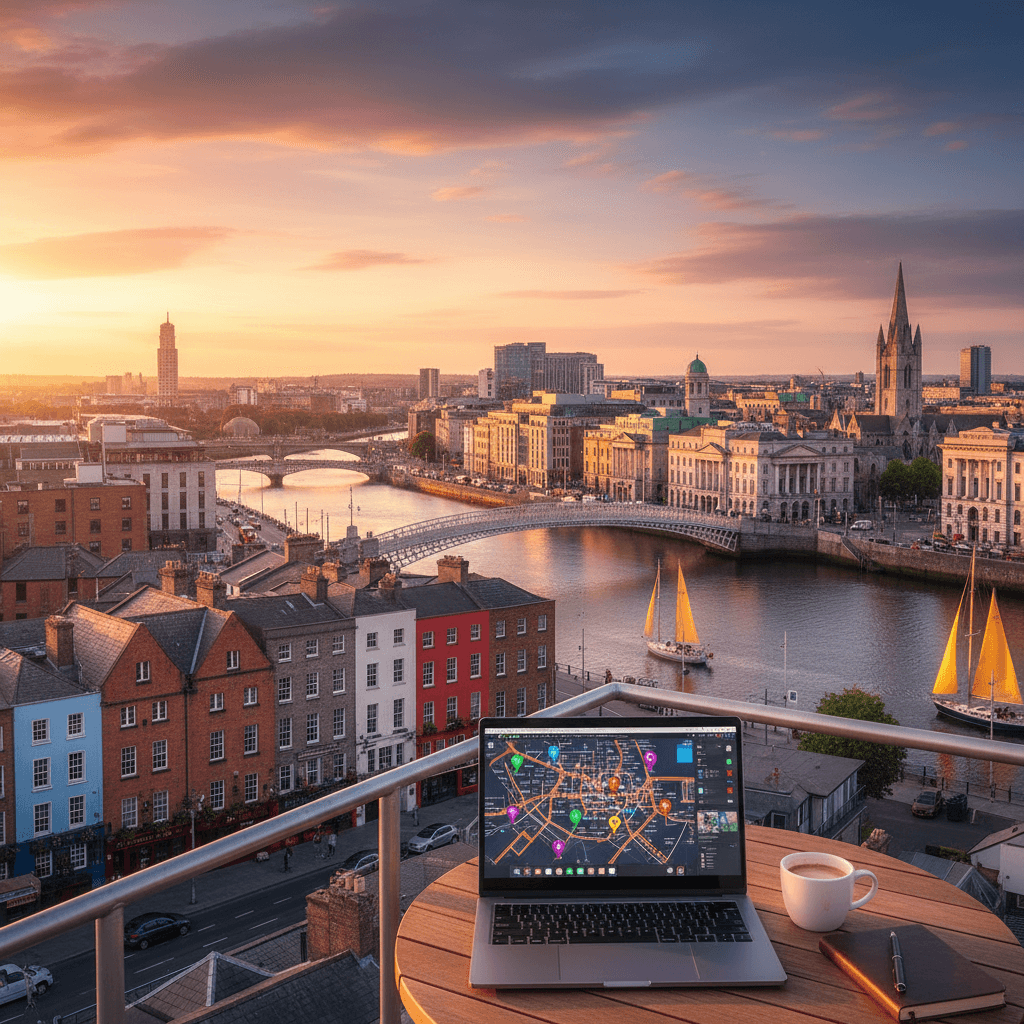
Dublin
🇮🇪 Ireland
Dublin feels small enough to learn fast and big enough to wear you out. The center is walkable, English is universal and the tech crowd gives the city a polished, work-friendly edge, but the place still runs on old pubs, wet pavement and the constant sound of buses hissing through narrow streets.
That mix is the charm. You can spend the morning in a coworking space on Harcourt Road, grab lunch in Ranelagh and be on the coast in Howth before dinner, yet the city can still feel stingy for the price, especially once rent enters the picture.
What it feels like day to day
Most nomads like Dublin for the easy rhythm, strong internet and friendly, chatty locals who’ll start talking to you at the bar before you’ve finished your first pint. It’s a social city, but not in a polished, glossy way. There’s rain in the air half the year, greasy-smelling chip shops near late-night crowds and a lot of life happening indoors because the weather pushes people there.
The downside is blunt. Dublin is expensive, housing is tight and some parts of the city look rougher than the glossy office districts suggest. A lot of travelers end up loving the walkability and safety, then getting annoyed by how much they’re paying for a fairly narrow range of nightlife and entertainment.
Best-fit areas for nomads
- Ranelagh: Best all-around base for cafes, restaurants and a walkable daily routine, but a 1BR usually starts around €2,300 ($2,510).
- Rathmines: More affordable and practical, with good pubs and shops, though traffic can be noisy and buses pack up fast.
- Ballsbridge: Clean, green and very safe, with easy access to tech offices, but it’s pricey at roughly €2,200 ($2,398) and up.
- Phibsborough and Smithfield: Good if you want a younger feel and slightly lower rents, though both can be loud and a bit unfinished around the edges.
Bottom line
Dublin works best for people who want a European base with strong career energy, decent transit and weekend escapes to the sea. It’s not cheap and it’s not trying to be slick. That’s part of the appeal, though, especially if you don’t mind gray skies, pub chatter and paying a premium to live in a city that’s easy to settle into fast.
Source 1 | Source 2
Dublin isn’t cheap and the first shock is usually rent. A single nomad can get by on about €1,053 ($1,223) a month without housing, but once you add a studio or one-bedroom, the bill jumps fast. In the center, expect around €2,500 ($2,730) for a one-bedroom, while places outside the core still run about €2,000 ($2,180).
Food and transport are manageable if you keep a lid on nightlife and taxis. A cheap meal is around €20 ($23), a mid-range dinner for two lands near €90 ($104) and a fast-food meal is roughly €12 ($14). A monthly transport pass is about €96 ($111) and utilities can hit €226 ($262), which stings in winter when the rain taps nonstop on windows and the heating runs more than you'd like.
Most nomads who stick around long term end up in one of three lanes:
- Budget: €2,500 to €3,000 a month, usually a shared room for €800 to €1,000, street food at €10 to €15 a meal and a bus pass.
- Mid-range: €3,500 to €4,500, with a one-bedroom outside the center around €1,800, meals in the €20 to €30 range and some coworking.
- Comfortable: €5,000 and up, with a central one-bedroom near €2,100, nicer dinners above €50 and plenty of taxis or ride-hails.
Ranelagh, Rathmines and Phibsborough are the neighborhoods that come up again and again for a reason. Ranelagh feels polished and walkable, with cafes that fill up with laptop bags and the smell of espresso; Rathmines is a little cheaper and still handy for daily life; Phibsborough and Smithfield are more affordable, though the noise and building work can wear on you.
Ballsbridge is the expensive, quiet choice, good if you want greenery and a smoother commute to tech offices. Temple Bar is central and lively, but many long-stay visitors skip it after a few nights because the prices are high and the area can feel like a pub crawl after dark.
Coworking isn’t cheap either. WeWork on Harcourt Road runs about €45 a day, Grafter Smyth House is closer to €30 for a hot desk and tcube sits around €112 a month. If you just need a strong connection, cafes and pubs with back rooms often work fine and Dublin’s average internet speeds are solid enough for video calls, usually around 44 Mbps and sometimes far higher.
For apartments, locals usually search on Daft.ie or MyHome.ie and move quickly. Good rentals disappear fast, so if you find a decent place in a neighborhood you like, don’t sit on it.
Dublin’s neighborhoods split pretty cleanly by budget and lifestyle. Rent is the real divider, not distance and a decent one-bed can still sting anywhere near the center. The upside is that the city’s compact, so you’re rarely far from a tram, a good coffee shop or a wet walk home with the smell of rain and exhaust hanging in the air.
Nomads
- Ranelagh: Best all-around pick for working from cafes, eating out and walking home late. It’s polished, though and a 1BR often runs about €2,300 ($2,510).
- Rathmines: Usually the smarter value, with 1BRs around €2,000 ($2,180). You get more everyday shops and pubs, plus decent bus links, but traffic can be noisy.
- Phibsborough and Smithfield: Good if you want a more social, less glossy base. You’ll find cheaper flats, hip cafes and a bit of edge, though some streets are still mid-gentrification and can feel rough at night.
Most nomads end up in one of those three because they balance internet, walkability and enough places to work without being trapped in Temple Bar tourist noise. For coworking, people bounce between Grafter Smyth House, tcube and WeWork on Harcourt Road, but the day rates aren’t friendly if you’re staying long.
Expats
- Ballsbridge: Clean, safe and close to tech offices. It feels calmer than central Dublin, with green streets and higher rents, often €2,500 ($2,730) and up for a 1BR.
- Ranelagh: Still the expat classic if you want restaurants, cafes and a more local feel than the hotel-heavy center.
- Smithfield: Better for younger expats who don’t mind some street noise and a neighborhood that’s still changing block by block.
Ballsbridge is the easiest sell if you’re arriving for work and want quiet nights, but it can feel a bit sterile. Ranelagh has more life after 6 p.m., with the clink of glasses, heavy pub doors and a steady dinner crowd spilling onto the pavement.
Families
- Blackrock: Strong schools, parks and DART access. It feels settled and practical.
- Dalkey: More expensive, but coastal and family-friendly, with space to breathe.
Families usually skip the inner city if they can, because parking is annoying, housing is tight and nightlife noise gets old fast. Blackrock and Dalkey give you cleaner air, better room for strollers and easy day trips to the coast.
Solo travelers
- Temple Bar: Best for a short stay if you want to stumble out into pubs and late bars. It’s loud, touristy and overpriced, but extremely central.
- Rathmines: Safer on the wallet, still social and easier to live in than Temple Bar.
Temple Bar makes sense for a weekend, not a month. If you’re staying longer, Rathmines is the better bet, with fewer hen parties, better everyday shops and a more normal Dublin rhythm.
Dublin’s internet is good enough for serious work and usually fast enough to stop you thinking about it. Typical speeds sit around 130 to 260 Mbps, which means Zoom calls, cloud apps and big uploads are rarely the problem. The real annoyance is finding a place to work that isn’t noisy, cramped or stuffed with people nursing one latte for three hours.
Cafes are generally welcoming, especially in Ranelagh, Rathmines and around Smithfield, but the better ones fill up fast. Pubs can be decent for a laptop session in the afternoon, then turn into a bad idea once the dinner crowd arrives and the room starts to hum with pints, clinking glasses and shouting over tinny music. If you need steady output, book a proper desk.
Best coworking spots
- Iconic Offices, Windmill Lane: around €38 an hour, good if you need a polished meeting-room setup near the city center.
- WeWork, Harcourt Road: about €45 a day, pricey but reliable, with the usual corporate polish and strong Wi-Fi.
- Grafter, Smyth House: roughly €30 for a hot desk, one of the better-value options if you’re working several days a week.
- tcube: about €112 a month, which is useful if you want a low-commitment base without signing your life away.
For short stays, expect coworking to sting a bit. Day passes usually run €30 to €60 and that’s before coffee, snacks or any meeting-room extras. If you’re budgeting tightly, a month in Dublin can feel brutal fast once you add rent, transport and office space.
Mobile data and backups
- Vodafone: easy to grab at Dublin Airport, with starter SIMs around €20 to €40.
- Three: good for prepaid data, also available at the airport and in town.
- Eir: another solid option if you need local coverage without much fuss.
- Roamless eSIM: handy if you want data before you even land.
Airport SIMs are the simplest fix if you’re arriving late and just want maps, WhatsApp and a ride into town. Signal is fine in most central neighborhoods, though you’ll still want a backup hotspot if you’re hopping between meetings or working from a noisy cafe on a wet afternoon while rain taps the window and buses hiss past outside.
If you’re staying longer, a hot desk in Ranelagh or around Harcourt Road makes life easier. You’ll pay for it, but you’ll also get fewer distractions, better chairs and a place where nobody minds if you’re there all day.
Dublin feels safe in the way a lot of people notice right away, you can walk through Grafton Street, the Docklands or most of the city center without that constant edge you get in bigger capitals. Violent crime is low, but petty theft does happen, especially around packed bars, late trains and outside Temple Bar after a few pints. Keep your phone zipped away on noisy nights, because the smash-and-grab stuff is more annoying than dramatic.
Most visitors are fine in the central areas. Still, late-night O'Connell Street can feel rough around the edges, Phoenix Park gets too quiet after dark and locals will tell you to be smart about parts of Tallaght, Ballymun and Finglas if you're new in town.
Areas that feel comfortable
- Temple Bar and Grafton Street: Fine by day and usually fine at night, though the crowd gets boozy, loud and sticky underfoot.
- Ranelagh and Ballsbridge: Calm, tidy and popular with expats. Good if you want quieter streets and less nonsense outside your door.
- Rathmines and Smithfield: Busy, walkable and generally workable for solo living, though traffic and weekend noise can be a pain.
Healthcare is decent, but the system moves slowly. Public care covers a lot, yet waits can drag on for ages, so many expats take private insurance and register with a GP as soon as they land. Pharmacies are everywhere, usually with helpful staff and they’re often the first stop for a sore throat, a rash or advice on what to do next.
If you do need medical help, Dublin’s emergency number is 999 or 112. For anything non-urgent, book a GP appointment early, because same-day slots aren’t the norm and you don’t want to be sick, tired and stuck listening to hold music while rain rattles the window.
Practical healthcare habits
- Register with a GP: Do it early, before you actually need one.
- Get private insurance: Common for expats, especially if you want faster specialist care.
- Use local pharmacies: They’re your quick fix for minor issues and straightforward advice.
- Carry emergency numbers: Save 999 and 112 in your phone on day one.
For day-to-day life, the usual rule in Dublin is simple, don’t leave valuables in sight, stay a bit sharper around nightlife spillover and trust your gut if a street feels off after midnight. The city’s friendly, but not magically crime-free and the healthcare system works better if you plan ahead instead of waiting until you’re already miserable.
Dublin’s center is compact enough that a lot of daily life happens on foot. You can cross from Grafton Street to Temple Bar, then up to the docklands, without feeling like you’ve committed to a whole transport project. The downside is the weather, because a steady drizzle and a sharp Atlantic wind can make even a short walk feel longer than it should.
For most nomads, the simplest setup is walking plus a Leap Card. A Leap Card cuts the sting out of Dublin Bus, Luas trams and DART trains, with trips around €2 or a monthly cap near €96. If you’re staying a while, it’s the cheapest way to keep moving without hailing taxis every time the rain starts tapping on the pavement.
- Bus: Dublin Bus reaches most neighborhoods, though delays and crowded rides are common at rush hour.
- Luas: Fast and tidy for crossing the city, especially if you’re based near a stop in areas like Smithfield or Ranelagh.
- DART: Best for coastal trips and commuting out to places like Howth or Blackrock.
- Dublin Bikes: Handy for short hops, with a day pass around €5. There’s no airport bike option, so don’t count on it for arrivals.
Rideshares are fine for late nights or wet afternoons, but they’re not cheap. Uber and Bolt usually run about €5 to €10 for short city trips, while a taxi from the airport often lands around €25 to €30 and takes about 20 minutes if traffic behaves. Bus transfers from the airport are the budget play at about €8, though luggage can make the ride a squeeze.
The airport bus is usually the move if you’re not carrying too much. Dublin Express services get you into town in about 30 minutes and they’re a lot easier on the wallet than jumping straight into a cab queue after a long flight.
Most expats stick to a mix of walking, public transit and the occasional taxi. If you’re based in Ranelagh, Rathmines, Smithfield or Ballsbridge, you’ll rarely need a car at all and that’s a relief because parking is a headache and city traffic can crawl along with ugly honking at peak hours.
English is the default in Dublin and you’ll get by without thinking about it. Airport staff, taxi drivers, baristas, landlords and your GP receptionist will all switch into it immediately, so day-to-day life feels easy even if you only know a few phrases of Irish.
Irish or Gaeilge, is official, but you won’t hear much of it outside school, signage and the odd polite exchange. If you want to sound like you’ve made some effort, “Go raibh maith agat” means thank you and “Dia duit” means hello. Most locals will smile if you try, then keep the conversation moving in English.
Practical tip: Google Translate is handy for the occasional sign, menu or property listing. You probably won’t need it often, but it helps when a rental ad is vague or a pharmacy notice is written in a hurry.
How people actually communicate
Dubliners are generally direct, friendly and not fussed about small mistakes in English. People speak fast, with plenty of slang and dry humour, so a few conversations can feel like everyone’s chatting over the clatter of glasses and the hiss of espresso machines. Ask someone to repeat themselves if you need to, because no one minds.
In pubs, the rhythm matters as much as the words. You’ll hear “grand,” “gas,” “what’s the story?” and “cheers” a lot, plus the usual pub talk about weather, buses and rent. If you’re working with locals, keep emails short and clear and don’t overdo formal language.
Useful phrases and habits
- Thanks: “Go raibh maith agat” if you want the Irish version or just “cheers.”
- Hello: “Dia duit,” though plain old “hi” is more common.
- Clarifying: “Sorry, can you say that again?” works fine in any setting.
- Phone calls: Speak a little slower than usual. Dublin accents can be quick, especially on the phone.
- Work chats: People usually appreciate plain language over polished corporate speak.
For nomads, the biggest communication win is simple: Dublin is one of the least stressful places in Europe for English speakers to land. The small friction points are more about accent, speed and local slang than language itself. Once you catch the cadence, the city gets a lot easier to live in.
Dublin’s weather is mild, damp and a little bossy. Winter rarely gets harsh, but it feels colder than the thermometer says because of the wind off the Irish Sea, the drizzle that sneaks in sideways and the kind of gray sky that hangs low over the Liffey for days.
January is usually the coldest month, around 5°C and it rains plenty. July is the warmest, but even then you’re usually looking at about 19°C, not beach weather. Pack a waterproof jacket, a real pair of shoes and something warm for evenings, because a sunny lunch break can turn into a cold, wet walk home fast.
The nicest window is usually May to June and September. Temps hover around 15°C to 18°C, there’s a better chance of dry spells and the city feels easier to use on foot, with less of that raw, wet chill that gets into your sleeves and stays there. Spring and early fall also make day trips to Howth or Wicklow much more pleasant.
July and August draw more visitors, but they’re not dramatically better weather-wise. You might get a few bright stretches, yet rain still shows up regularly and hotel prices climb. If you want Dublin with a little breathing room, go just before or after peak summer instead.
Best months at a glance
- May and June: Best overall mix of mild weather, longer days and lower rain risk.
- September: Still comfortable, with fewer crowds and decent light for wandering the city.
- July and August: Warmest stretch, but pricier and busier.
- January and December: Cold, wet and dark early, so they’re the least forgiving months.
If you’re working remotely, summer is easier for mood and daylight, but winter can actually suit people who plan to stay inside cafes or coworking spaces like Grafter or WeWork on Harcourt Road. Just don’t expect the rain to stop long enough to make a big deal out of your schedule. Dublin doesn’t do dramatic storms most of the time, it does frequent, annoying drizzle, the sort that taps on windows and leaves pavement shiny and slick.
Dublin is easy to live in if you plan for the annoyances. The city center is walkable, the people are generally warm and the internet is solid, but rent bites hard, rain shows up when it feels like it and good apartments get snapped up fast.
Money and day-to-day costs
Dublin isn't cheap. A single nomad can get by on about €1,053 ($1,223) a month before rent, but a decent one-bedroom apartment changes the math fast, especially in Temple Bar, Ranelagh or Ballsbridge.
- Budget month: €2,500 to €3,000 ($2,735 to $3,286), usually with a shared room, bus pass and cheap meals.
- Mid-range month: €3,500 to €4,500 ($3,829 to $4,922), with a one-bedroom outside the center and some coworking days.
- Comfortable month: €5,000+ ($5,469+), if you want central rent, taxis and nicer restaurants.
For groceries, coffee and a few pub meals, expect prices to climb quickly. A basic restaurant meal runs about €20 ($22), a mid-range dinner for two lands near €90 ($98) and coworking can cost €30 to €60 ($33 to $66) a day.
Where to base yourself
- Ranelagh: Best for cafes, restaurants and a strong expat crowd. Rent gets steep fast.
- Rathmines: More workable on a budget, with shops, pubs and decent bus links.
- Ballsbridge: Green, safe and polished, but expensive enough to make your eyes water.
- Phibsborough and Smithfield: Good if you want something a bit hipper and slightly cheaper, though it can get noisy.
If you’re apartment hunting, start early and move fast. Most people use Daft.ie or MyHome.ie and the good listings don’t hang around long. Housing shortages are real, not just a travel forum complaint.
Getting connected and getting around
Pick up a SIM at Dublin Airport from Vodafone, Three or Eir, usually for €20 to €40 ($22 to $44). Revolut and N26 are the easiest banking options for most newcomers and ATMs are everywhere, even if some cash points feel a little grim at night.
The center is small enough to walk, but the Leap Card makes buses, Luas trams and DART trains easier. A taxi from the airport usually costs €25 to €30 ($27 to $33), while the bus is about €8 ($9) and takes around 30 minutes.
Street habits that save hassle
- Pubs: Buy rounds, don’t disappear when it’s your turn.
- Restaurants: A 10% tip is normal, not mandatory.
- Weather: Carry a light rain jacket, because the drizzle can hit cold and sideways.
- Day trips: Use the DART to Howth for cliffs or head toward Wicklow when you need trees and a quieter air.
Dublin feels friendlier when you settle into local rhythm. Queue properly, say thanks and don’t expect the city to hand you cheap housing or sunshine. It won’t.
Frequently asked questions
How fast is the internet in Dublin for remote work?
Which neighborhoods are best for digital nomads in Dublin?
How much does a one-bedroom apartment cost in Dublin?
What does a monthly budget in Dublin look like for a digital nomad?
Is Dublin safe for solo travelers and remote workers?
Do I need private health insurance in Dublin?
Where can I work from in Dublin besides coworking spaces?
Need visa and immigration info for Ireland?
🇮🇪 View Ireland Country GuideEasy Landing
Settle in, no stress
Monthly Budget Estimates
More cities in Ireland
Waterford
🇮🇪 Ireland
Galway
🇮🇪 Ireland
Sligo
🇮🇪 Ireland