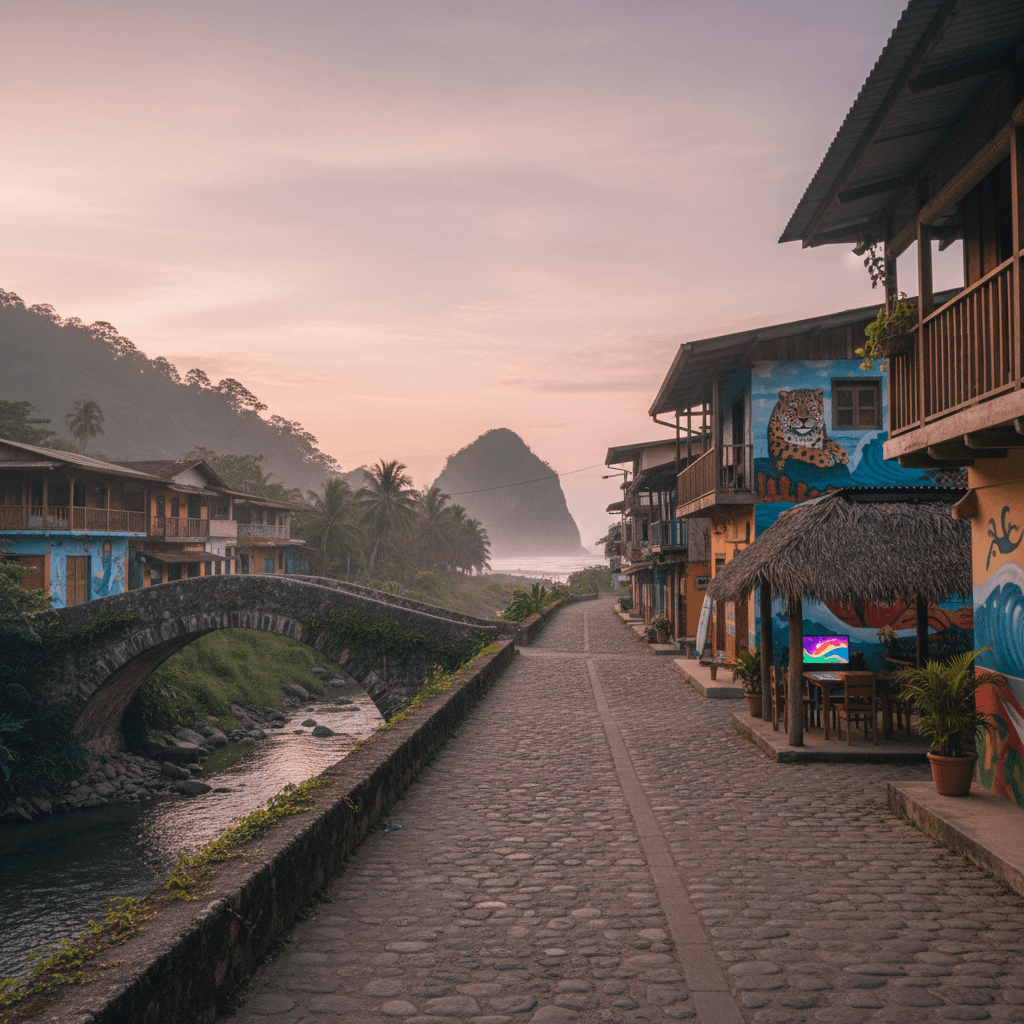
Dominical
🇨🇷 Costa Rica
The Vibe: Raw Power and Quiet Focus
Dominical isn't for the nomad looking to be seen at a high-end beach club or spend their nights at a rooftop lounge. It’s a place where the jungle literally meets the sea, and the humidity is as thick as the canopy. While Tamarindo and Santa Teresa have leaned into a more polished, tourist-heavy aesthetic, Dominical remains a bit wild. The streets are unpaved, the surf is powerful, and the pace of life follows the tide and the rainfall rather than a corporate calendar.
You’ll feel a sense of "quiet productivity" here. It’s a favorite for deep-work phases. Because there isn't a massive nightlife scene, you’ll find yourself waking up at 6:00 AM with the howler monkeys, getting three hours of work done before the heat peaks, and then hitting the water. It’s a destination for the self-sufficient nomad who values nature over convenience and doesn't mind a little mud on their boots.
Cost of Living Breakdown
Living here is more affordable than the Gold Coast to the north, but it isn't "cheap" by Central American standards. Expect to spend between $2,000 and $3,000 per month for a comfortable mid-range lifestyle. If you're on a budget, you can scrape by on $1,500 by sticking to local "sodas" (small family-run restaurants) and sharing a house.
- Housing: A decent one-bedroom near the beach runs $800 to $1,500. Mountain rentals with better views often cost more, starting around $1,200, and usually require a 4x4 vehicle to reach.
- Food: A traditional casado (rice, beans, protein, and salad) at a local spot costs $5 to $8. Dinner at a mid-range cafe like Cafe Mono Congo or a seafood spot will be $15 to $25.
- Coworking: Hona Wellness is the primary hub, with day passes around $20 to $30 and monthly memberships hitting $400 for those who want the full suite of amenities like the pool and high-speed fiber.
The Neighborhoods
The region is spread out, so where you plant your flag dictates your entire experience. Most nomads choose between the gritty charm of the town center or the isolation of the hills.
Dominical Beach (The Town)
- Best For: Surfers and solo nomads who want to walk to coffee.
- Pros: No car needed for daily life; easiest place to meet people; walk to the surf.
- Cons: Extremely humid; limited grocery options; can feel a bit small after a few weeks.
Dominical Mountains (Escaleras)
- Best For: Expats and nomads seeking privacy and cooler breezes.
- Pros: Incredible ocean views; wildlife everywhere; much quieter than town.
- Cons: A 4x4 vehicle is mandatory; very isolated; you'll spend a lot on gas.
Uvita (15 Minutes South)
- Best For: Families and those staying long-term.
- Pros: Better infrastructure; large supermarkets and banks; home to the Marino Ballena National Park.
- Cons: Lacks the raw, "surf-town" soul of Dominical.
Connectivity and Practicalities
Internet in town is surprisingly reliable. While the mountains can be hit-or-miss during heavy storms, the main town area and coworking spaces offer speeds between 50 and 200 Mbps. Most travelers grab a Kolbi or Claro SIM card for about $15 as a backup; the 4G coverage is decent along the main highway.
The weather is a major factor here. From December to April, it’s paradise. However, during the peak rainy season in September and October, the "green" becomes overwhelming. It rains hard, often for days, which can be great for focus but tough on the soul if you aren't prepared for the isolation. If you're planning a trip, aim for the shoulder months of May or June to get lower prices without the constant downpours.
Getting around is the biggest hurdle. While the beach town is walkable, you'll feel trapped without wheels. Most nomads recommend renting a scooter for $20 a day or a 4x4 if you're staying in the hills. For longer trips, the Interbus shuttle is the standard way to reach San Jose; prices vary but typically range from $40-$70 depending on booking timing and current promotions, as the local buses are infrequent and slow.
The Price of Pura Vida
Living in Dominical is a lesson in paying for what you value. You aren't paying for high speed infrastructure or urban convenience; you're paying for the privilege of waking up to howler monkeys and having world class surf breaks within walking distance. Most solo nomads find they can live comfortably on $2,000 to $2,800 per month, though you can certainly push that higher if you insist on a private villa with a Pacific view.
Rent is your biggest variable. If you want to stay in the heart of town where you can walk to the beach, expect to pay between $800 and $1,500 for a studio or one-bedroom. If you move into the mountains for more privacy and cooler air, prices for larger houses often start around $1,200. Just keep in mind that mountain living almost always requires a 4x4 vehicle, which adds a significant chunk to your monthly transport budget.
Monthly Budget Breakdowns
- The Budget Nomad ($1,500 to $2,000): This lifestyle involves a shared rental or a modest Tico-style house for about $600. You'll eat mostly at "sodas" (local diners), spend about $250 on groceries and street food, and use local buses or a bicycle to get around.
- The Mid-Range Professional ($2,000 to $2,800): This covers a private one-bedroom apartment for $1,000, regular meals at cafes like Mono Congo, a scooter rental for $150, and a dedicated desk at a coworking space for $200.
- The High-End Expat ($3,000+): For those wanting a private villa with a pool for $1,500, frequent upscale dining at seafood spots, and a 4x4 SUV rental at $300 to $500 per month to handle the steep jungle roads.
Neighborhood Vibes and Costs
Dominical is small, but where you plant your flag changes your daily expenses and experience significantly.
Dominical Beach Town
- Best For: Surfers and solo travelers who want to be social.
- Rent: $800 to $1,500 per month.
- The Trade-off: It’s walkable and close to the bars, but it gets humid and can feel a bit cramped during peak surf season.
Dominical Mountains (Escaleras)
- Best For: Remote workers who need absolute silence and cooler temperatures.
- Rent: $1,200 to $2,500 for larger homes.
- The Trade-off: You get incredible ocean views and wildlife, but you're isolated. You’ll spend more on gas and car maintenance because of the rugged terrain.
Uvita (15 minutes south)
- Best For: Families or nomads who need "real" amenities.
- Rent: $900 to $1,800.
- The Trade-off: It has the big supermarkets and pharmacies Dominical lacks, but it feels more spread out and less like a tight-knit surf community.
Daily Expenses and Practicalities
Eating out is a mix of affordable and "tourist priced." A local casado (a plate with rice, beans, salad, and protein) at a soda will run you $5 to $8. If you head to a mid-range cafe for a smoothie bowl or a sandwich, expect to pay $10 to $15. Dinner at a nicer seafood restaurant usually lands between $20 and $30 per person.
For work, most nomads gravitate toward Hona Wellness. It’s the local hub for "quiet productivity," offering high speed WiFi that actually holds up during Zoom calls. A day pass costs $20 to $30, while monthly packages range from $100 to $400 depending on how much access you need to their pool and lounge areas. If you're working from home, stick to the town center; mountain WiFi is notoriously spotty when the heavy rains hit between September and October.
Connectivity is easy to solve with a local SIM. Grab a Kolbi or Claro SIM card for about $2 USD (1,000 CRC), with data plans ranging from $5-$24 USD. This is a lifesaver when the power flickers during a jungle thunderstorm.
For Solo Nomads and Surfers: Dominical Beach (The Town Center)
If you want to be in the heart of the action, the main beach strip is where you'll spend your days. It's a small, walkable grid where the jungle literally meets the Pacific. You won't find high rises or paved boulevards here; instead, it's all about dirt roads, palm trees, and a tight knit community of remote workers and wave hunters.
Living in town means you can walk to your morning surf session and then head straight to Hona Wellness for a deep work block. Most nomads prefer this area because it eliminates the need for a car, though you'll pay for the convenience with slightly higher humidity and more dust during the dry season. It's the best spot for meeting people, as the few bars and cafes in town serve as the de facto social hubs for the community.
- The Vibe: Raw, social, and focused on the tide charts.
- Typical Rent: Expect to pay between $800 and $1,500 for a studio or one bedroom apartment.
- Coworking: Hona Wellness is the gold standard here, offering high speed WiFi and a pool for $20 to $30 per day.
- Pros: High walkability and easy access to the best surf breaks.
- Cons: Limited grocery options; you'll still need a shuttle or bus to Uvita for major supply runs.
For Long Term Expats and Privacy Seekers: Dominical Mountains
Just a few minutes behind the beach, the terrain rises sharply into the lush coastal range. This is where you'll find the "million dollar views" and a significantly cooler breeze. Expats and digital nomads who stay for six months or longer often migrate up here to find more spacious homes and total immersion in nature.
Life in the mountains is defined by the sounds of howler monkeys and toucans rather than crashing waves. While the peace is unparalleled, it comes with a logistical trade off. You absolutely must have a 4x4 vehicle to navigate the steep, unpaved ridge roads, especially when the rains hit between May and November. It's a more isolated lifestyle, so it's better suited for those who already have a social circle or a partner.
- The Vibe: Quiet, secluded, and heavy on the wildlife.
- Typical Rent: Private villas usually start at $1,200 and can go much higher for luxury builds.
- Connectivity: WiFi can be spotty in the clouds; always verify a Starlink setup or high speed fiber before signing a lease.
- Pros: Privacy, incredible views, and lower temperatures than the beach.
- Cons: Car dependency is 100% and social isolation is a real risk.
For Families and Practical Living: Uvita
Located about 15 minutes south of Dominical, Uvita is the "big sister" neighborhood. While Dominical is for the soul, Uvita is for the logistics. Families and expats who need more than just a surfboard and a laptop tend to settle here because it houses the region's main supermarkets, pharmacies, and banks.
The town is more spread out and feels less like a "surf camp" and more like a proper community. It's home to the famous Whale Tail beach and offers a wider variety of mid range housing that isn't perched on a cliffside. For families, the access to better services and flatter terrain makes daily life significantly easier than the rugged slopes of Dominical.
- The Vibe: Suburban jungle with more amenities and a family friendly atmosphere.
- Cost of Living: Slightly more expensive for dining, but better value for larger family homes.
- Services: This is where you'll find the BM Supermarket and local clinics.
- Pros: More housing variety and better infrastructure for kids.
- Cons: Lacks the raw, "edge of the world" charm found in Dominical.
Budget Breakdown by Lifestyle
Dominical isn't the cheapest corner of Costa Rica, but it's manageable if you know where to spend. Most solo nomads find that a monthly budget of $2,000 to $2,800 allows for a comfortable lifestyle with a private rental and regular cafe visits.
- Budget Tier ($1,500 to $2,000): Stick to shared rentals for around $600, eat at local "sodas" for $5 to $8 a meal, and use the local bus.
- Mid Range Tier ($2,000 to $2,800): Secure a 1BR for $1,000, rent a scooter for $150 a month, and budget $200 for a coworking membership.
- Comfortable Tier ($3,000+): Rent a luxury mountain villa for $1,500+, maintain a 4x4 rental for $300+, and enjoy upscale seafood dinners at $30 a plate.
Connectivity in the Jungle
Dominical is a place where you can watch toucans from your porch while finishing a Zoom call, but your experience with the internet depends entirely on where you plant your feet. In the main beach town, fiber optic cables have changed the game for remote workers. You can generally expect internet speeds typically range from 50-150 Mbps in the town center, though speeds can vary significantly, which is plenty for heavy video conferencing or uploading large files.
The situation changes as you head into the mountains. While the views are spectacular, the signal can get spotty during heavy tropical downpours. If you are renting a villa on a ridge, always ask the host for a speed test screenshot before booking. Most seasoned nomads keep a backup plan ready just in case the power flickers during a storm.
Best Coworking Spaces
If you need a professional environment or just want to escape the humidity of a beachfront cafe, Hona Wellness is the primary hub for the community. It is more than just a desk; it is a coliving and wellness center that feels like a boutique retreat. They offer air conditioned rooms, high speed WiFi, and a pool for those post meeting cool downs.
- Day Pass: Expect to pay between $20 and $30.
- Weekly/Monthly Rates: These typically range from $100 to $400, depending on how often you plan to use the space.
- Perks: They have dedicated treatment rooms for healers and bodyworkers, making it a favorite for the wellness nomad crowd.
The Cafe Office Scene
For those who prefer a more casual vibe, the beachfront cafes and bars along the main strip offer decent WiFi and world class views. Working with your toes in the sand sounds idyllic, but remember that the salt air and humidity can be tough on hardware. Most nomads rotate between a few local spots when they have lighter tasks that don't require a second monitor or total silence.
Mobile Data and SIM Cards
Do not rely on your home roaming plan; it is expensive and often throttled. As soon as you arrive, grab a local SIM card. Kolbi and Claro are the two main providers with the best coverage in the South Pacific region. You can find these at local pharmacies or small supermarkets in town.
- Cost: A SIM card with a generous data package of 20GB to 50GB costs roughly $10 to $20.
- Topping Up: You can add credit easily at almost any "pulperia" (small grocery store) or through the provider's app.
- Pro Tip: Buy your SIM card at the airport or in a larger town like Uvita if the local shops in Dominical are sold out, which happens occasionally during peak season.
Practical Workflow Tips
Power outages are a reality of life in rural Costa Rica, especially during the rainy season from May to November. A portable power bank for your phone and a laptop with a healthy battery are non negotiable. If your work is time sensitive, consider a portable travel router or using your phone as a hotspot with a Kolbi SIM, which often stays up even when the local landline WiFi dips.
Most nomads find the sweet spot for productivity is starting early. The sun rises around 5:30 AM, and the town is most active in the morning. By the time the afternoon rains arrive in October, you will want to be finished with your deep work so you can enjoy the sound of the jungle or head to a local yoga session.
A Peaceful State of Mind
Dominical is one of those rare spots where the jungle literally meets the tide. Because it lacks the massive resorts found further north, the town maintains a remarkably low-stress environment. Most nomads find it one of the safest pockets of Costa Rica, largely because the community is small and people tend to look out for one another. You won't find the aggressive street hawkers or late-night urban chaos here; the vibe is strictly surf, work, and sleep.
While violent crime is rare, petty theft can happen if you're careless. Expats recommend never leaving bags or laptops in a car, even for a quick five-minute surf check. If you're staying in the mountains, keep your electronics away from open windows at night. It's less about organized crime and more about "crimes of opportunity" that target distracted travelers. Stick to the main paved areas if you're walking after dinner, though most people just use a flashlight or a phone light since street lighting is minimal.
Ocean Safety and Nature
The biggest safety risk in Dominical isn't other people; it's the Pacific Ocean. The beach is famous for its powerful surf and heavy rip currents. Even if you're a strong swimmer, don't go out alone unless you're familiar with the breaks. Local surfers are usually happy to point out where the current is pulling hardest. If you're looking for a casual swim, many nomads take the 15-minute drive south to Uvita, where the waters at the Whale Tail are much calmer.
In the mountains, the wildlife is breathtaking but requires respect. Keep an eye out for snakes on hiking trails and always carry a charged phone. If you're driving a 4x4 on the steep dirt roads during the rainy season, take it slow. Mudslides aren't daily occurrences, but the terrain can get slick between May and November.
Healthcare and Medical Care
For day-to-day issues like surf rashes, stomach bugs, or ear infections, you'll find well-stocked pharmacies in Dominical and Uvita. Pharmacists in Costa Rica have more authority than those in the US or UK; they can often diagnose minor ailments and provide antibiotics or specialized creams without a doctor's script. Expect to pay $10 to $30 for most common medications.
If you need a doctor or a specialist, here is how the local landscape looks:
- Local Clinics: There are private clinics in Uvita that handle stitches, blood work, and general consultations. A visit usually costs between $60 and $100 out of pocket.
- Major Hospitals: For emergencies or serious imaging, the nearest major hospital is in San Isidro de El General. It's about a 45 to 60-minute drive up the mountain. The care there is high quality, but for anything life-threatening, most expats prefer the private hospitals in San Jose, which are about 3.5 hours away.
- Emergency Services: Dial 911 for any immediate crisis. Response times in the mountains can be slow, so having a neighbor's number or a local taxi contact is a smart backup plan.
Insurance and Logistics
Most nomads here use international providers like SafetyWing or Genki, which cover the basics and emergency evacuations. If you're applying for the Digital Nomad Visa, you'll need a policy that covers you for the duration of your stay. Since healthcare is a "pay-then-claim" system for foreigners at private clinics, keep $200 to $500 in a rainy-day fund to cover immediate costs before your insurance reimburses you. Travelers often say that while the local system is robust, having a car is the best "health insurance" you can have, as it ensures you aren't waiting on an infrequent bus during a medical pinch.
The 4x4 Reality
If you are planning to live in the hills above town, a 4x4 vehicle is not just a luxury; it is a requirement. Most of the mountain rentals and remote villas sit on steep, unpaved gravel roads that turn into mud slides during the rainy season from May to November. Renting a rugged SUV will cost you between $40 and $60 per day, but it is the price you pay for those panoramic ocean views and cooler mountain breezes.
For those sticking strictly to the beach town center, life is much simpler. The main strip is small enough to navigate entirely on foot. You can walk from your rental to the surf break, grab a coffee at a local cafe, and head to a yoga session without ever touching a steering wheel. However, keep in mind that the humidity is heavy, and even a ten minute walk can leave you soaked in sweat by noon.
Public Transit and Shuttles
The local bus system is reliable for the budget conscious traveler, but it requires patience. Buses run between San Jose and Uvita, stopping at Dominical along the way. Tickets are cheap, usually ranging from $5 to $15, but the schedules are infrequent and can be unpredictable. Most nomads find that the bus is fine for a one off trip to a neighboring town, but it is not a viable way to manage a daily routine.
For airport transfers from San Jose, skip the local bus and book a professional shuttle like Interbus. Interbus door-to-door services typically cost $40-$70 depending on the specific route and booking timing and take about 3 to 4 hours. It is a much more comfortable way to handle the journey, especially if you are carrying expensive camera gear or multiple laptops.
Two Wheels and Local Rides
Bicycles and scooters are popular for getting around the flat coastal areas. You can rent a bike for about $5 to $10 a day, which is perfect for cruising between the beach and the local organic markets. Scooters are a step up, costing around $20 to $40 per day, and they provide a bit more range if you want to explore the coastline without the high cost of a car rental.
Ride hailing apps like Uber haven't really taken hold here yet. You might find a stray driver in Uvita, but don't count on it. If you need a lift and don't have your own wheels, your best bet is to ask around at Hona Wellness or local bars for the number of a trusted private driver. This is a small community where word of mouth is the primary way things get done.
Practical Transport Breakdown
- Car Rental (4x4): $1,200 to $1,800 per month. Essential for mountain living and exploring Nauyaca Waterfalls.
- Scooter Rental: $150 to $300 per month. Great for local errands and coastal trips.
- Shared Shuttles: $20 to $50 per trip. Best for moving between cities or getting to the airport.
- Local Bus: $1 to $3 per trip. Cheap but slow and limited by a rigid schedule.
Most expats recommend a hybrid approach. Rent a 4x4 for your first week to scout locations and handle the heavy lifting, then settle into a bike or scooter once you know your daily patterns. If you choose a beachside coliving space, you might find you don't need a motorized vehicle at all until it is time for a weekend adventure.
The Pura Vida Lexicon
In Dominical, Spanish is the official language, but you'll hear the phrase Pura Vida more than almost any other. It literally translates to "pure life," but in this surf town, it’s used as a hello, a goodbye, a way to say everything is cool, or even a shrug when the power goes out during a tropical storm. Embracing this mindset is the first step to communicating effectively here.
While Spanish is the baseline, Dominical is a magnet for international surfers and remote workers. You'll find that staff at spots like Hona Wellness or the various beachside cafes speak excellent English. Most nomads find they can get by with English for daily transactions in the town center, but that convenience fades quickly once you head into the mountains or visit local pulperias (small grocery stores) for supplies.
Language Levels and Expectations
Broadly speaking, the communication landscape in the Costa Ballena region breaks down into three tiers:
- The Nomad Bubble: In coworking spaces and mid-range restaurants, English is often the default. You won't have trouble ordering a cold brew or discussing WiFi speeds.
- Daily Transactions: At the local pharmacies or when talking to a taxi driver, a mix of "Spanglish" usually works. Locals are patient and accustomed to travelers, but they appreciate the effort of a basic Spanish greeting.
- Rural and Mountain Areas: If you’re renting a villa in the hills, you’ll likely interact with property caretakers or maintenance crews who may speak only Spanish. This is where having a translation app becomes a lifesaver.
Digital Tools for the Jungle
Since data signals can be inconsistent when you're tucked away in the thick jungle canopy, nomads recommend downloading the Google Translate Spanish dictionary for offline use. It’s particularly helpful for reading labels at the supermarket in Uvita or translating lease agreements if you're looking for a long-term mountain rental.
For staying connected with the local community, WhatsApp is the undisputed king. Whether you're booking a surf lesson, ordering a shuttle through Interbus, or joining a local expat group for a weekend hike to Nauyaca Waterfalls, almost all business and social coordination happens through WhatsApp threads rather than email or phone calls.
Key Phrases to Know
Even if you aren't fluent, mastering a few local staples will change the way people treat you. It shows you’re not just passing through, but respecting the local pace of life. Use these frequently:
- ¿Cuánto cuesta?: How much does it cost? Use this at the farmers markets or when buying a SIM card, which costs around $2 USD (1,000 CRC), with data plans ranging from $5-$24 USD depending on data allowance.
- Con gusto: You're welcome. Ticos (Costa Ricans) use this more often than "de nada." It translates to "with pleasure."
- Tuanis: Cool or fine. It’s a very laid-back, local way to say something is good.
- ¿Dónde está el baño?: Where is the bathroom? A literal necessity when you're out exploring.
- Una cerveza, por favor: One beer, please. Essential for those post-surf sundowners at the beach bars.
Social Nuances
Communication in Dominical is rarely rushed. If you're at a cafe and the service seems slow, it’s usually just the local rhythm. Expats recommend leadings with a "Buenos días" or "Buenas tardes" before jumping straight into a request. It’s considered polite to acknowledge someone's presence before asking for the WiFi password or the bill. This small gesture goes a long way in a tight-knit community where everyone eventually knows everyone else.
The Tropical Rhythm
Living in Dominical means embracing a climate that is as lush as it is humid. You are in the heart of the South Pacific, where the jungle meets the sea, so expect temperatures to hover between 80 and 90°F year round. It is the kind of heat that dictates your schedule; most nomads get their deep work done in the early morning or late evening, leaving the midday sun for the water or an air conditioned seat at Hona Wellness.
The humidity is a constant companion here. While the ocean breeze helps on the main strip, those living in the mountains will find the air thicker. It is a trade off for the views, but it means you will want to keep an eye on your electronics and choose rentals with good ventilation or AC if you aren't used to the tropics.
Dry Season: December to April
This is the prime window for most travelers and the busiest time for the local community. The sun is out almost every day, the trails to Nauyaca Waterfalls are manageable, and the ocean is generally more predictable for surf lessons. You can expect about 5 to 10 rainy days per month, usually consisting of short, refreshing bursts rather than day long washouts.
Expats recommend this period if you are new to the area. The social scene is at its peak, and it is much easier to get around without a heavy duty 4x4. However, prices for short term rentals climb during these months, and the popular beach spots can feel a bit more crowded than usual.
Rainy Season: May to November
Locals call this the "Green Season," and for good reason. The landscape turns a neon shade of emerald, and the dust of the dry season disappears. From May through August, you will typically see sunny mornings followed by heavy afternoon downpours. It is actually a great rhythm for productivity; you surf or hike in the morning and settle into a coworking rhythm when the rain hits around 3:00 PM.
The "worst" of the weather hits in September and October. This is peak rainy season, where you might see 15 to 25 days of rain per month. Some businesses take their annual breaks during this time, and the mountain roads can become a muddy challenge. If you are staying in a mountain villa, a 4x4 is non negotiable during these months. On the plus side, rental prices drop significantly, and you will have the beaches almost entirely to yourself.
Best Time for Nomads
If you want the perfect balance of manageable weather and lower costs, aim for May, June, or November. These shoulder months offer enough sunshine to enjoy the outdoors but avoid the premium pricing of the Christmas and Easter rushes. November is particularly special as the rain begins to taper off, but the waterfalls are still at their most powerful and impressive.
- Peak Sun: January to March (Highs of 90°F)
- Best Value: May and June
- Surfing Peak: June to September (Larger swells)
- Whale Watching: August to October (Despite the rain)
Whale watching is a major draw in nearby Uvita, and the best sightings often happen during the rainier months of August and September. If you can handle a few wet afternoons, the reward is seeing humpback whales breaching in the Marino Ballena National Park, a sight most nomads say is worth the damp clothes.
Survival Basics
Dominical is a place where you'll trade high-rise office views for monkey sightings and salt spray. It's significantly quieter than Tamarindo; life here follows the rhythm of the waves and the rain. While the town center is small and walkable, the best views are tucked away in the mountains. If you choose a hillside villa, a 4x4 vehicle isn't just a suggestion, it's a requirement for getting up those steep, gravel tracks.
Most nomads settle in for the long haul between December and April. This is the dry season, providing the most reliable sun for morning surf sessions and sunset beers. If you arrive in September or October, expect heavy afternoon downpours that can turn mountain roads into muddy adventures and make laundry a multi-day project.
Cost of Living
While Costa Rica isn't the budget haven it once was, Dominical remains manageable if you eat like a local. A solo nomad can live comfortably on $2,000 to $2,800 per month. If you're looking for luxury, expect to pay $3,000+ for a private villa and frequent upscale dining.
- Housing: A studio or one-bedroom near the beach usually runs $800 to $1,500. Mountain rentals offer more privacy and better views but often start around $1,200 and require that car rental.
- Food: Local "casados" (plates of rice, beans, and protein) at small sodas cost $5 to $8. A dinner at a mid-range cafe will set you back about $15.
- Coworking: Dedicated desk space at Hona Wellness costs roughly $20 to $30 for a day pass or $100 to $400 for monthly access.
Connectivity and Work
The internet in town is surprisingly robust, with many rentals and cafes offering speeds between 50 and 200 Mbps. However, the further you climb into the jungle, the more "island time" the WiFi becomes. Always ask for a speed test screenshot before booking a mountain Airbnb if you have frequent Zoom calls.
For a reliable office setup, Hona Wellness is the primary hub. It’s a coliving and coworking space near the beach that stays cool with AC and offers a pool for post-work dips. If you prefer a more casual vibe, the beachfront bars and cafes are great for clearing emails, though the humidity can be tough on hardware. Pick up a Kolbi or Claro SIM card at a local pharmacy for about $2 USD (1,000 CRC), with data plans starting around $5 USD; it’s the best way to ensure you have a backup hotspot during afternoon thunderstorms.
Choosing Your Neighborhood
The region is split based on how much convenience you need versus how much solitude you crave.
Dominical Beach
- Best for: Surfers and solo travelers who want to be near the action.
- Pros: Totally walkable, easy access to surf breaks, and the main social hub.
- Cons: It gets incredibly humid and can feel a bit cramped during peak weeks.
The Mountains (Escaleras)
- Best for: Deep focus, writers, and couples seeking privacy.
- Pros: Cooler temperatures, incredible wildlife, and ocean views.
- Cons: You'll feel isolated without a car; grocery runs become a major chore.
Uvita
- Best for: Families and those who need "real world" amenities.
- Pros: Home to larger supermarkets, pharmacies, and the famous Whale Tail beach.
- Cons: Lacks the raw, dusty charm of Dominical; things are more spread out.
Safety and Health
Dominical is peaceful and generally very safe. The biggest risks aren't people; they're rip currents at the beach and driving on unlit roads at night. Use common sense by not leaving bags in your car or unattended on the sand while you're in the water. For medical needs, there are local clinics in town for basics, but the nearest major hospital is in San Isidro de General, about an hour's drive away. Most nomads use Wise or Revolut for daily spending, as ATMs are available but can occasionally run out of cash on busy weekends.
Need visa and immigration info for Costa Rica?
🇨🇷 View Costa Rica Country GuideHidden Gem
Worth the effort