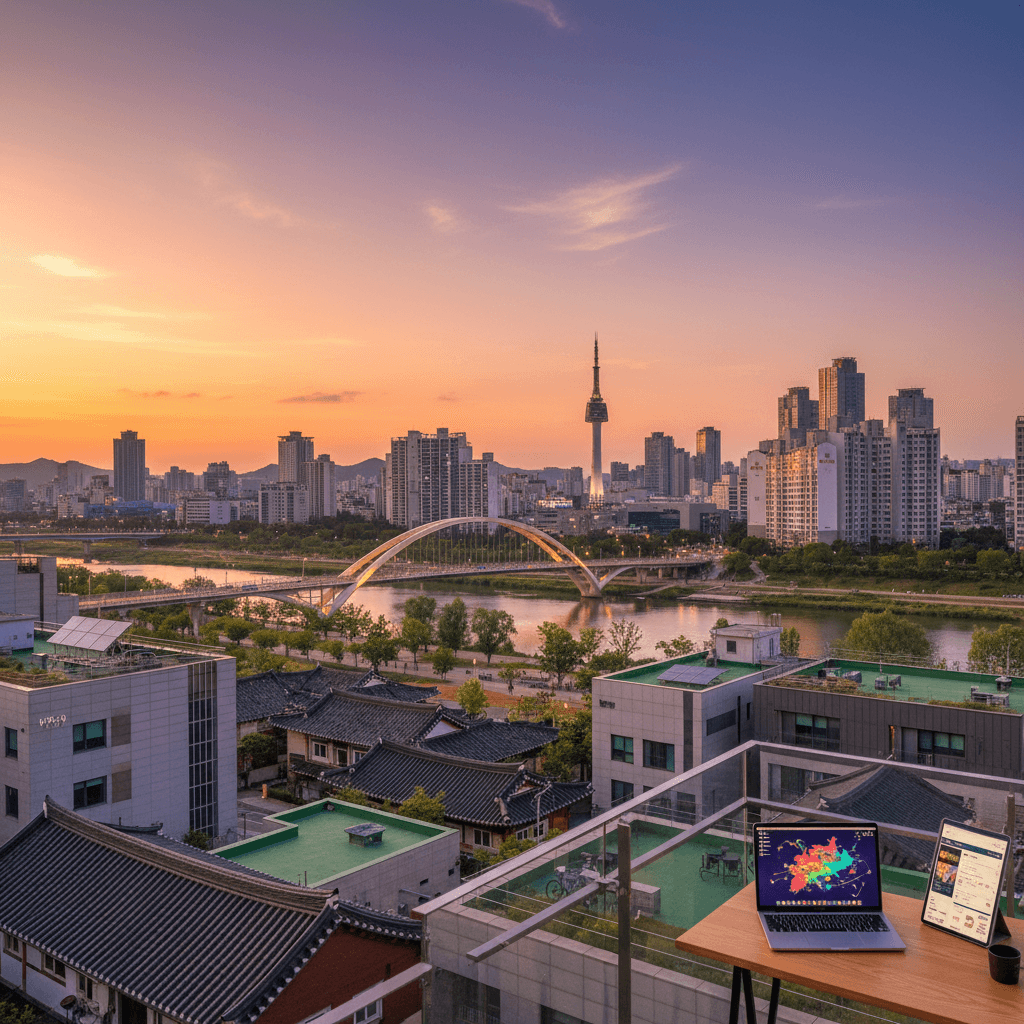
Daejeon
🇰🇷 South Korea
The Science City with a Human Pace
Daejeon isn't trying to be Seoul, and that's exactly why nomads are starting to flock here. While the capital city feels like a high speed chase, Daejeon operates at a manageable, mid-paced hum. It's known as the Silicon Valley of Korea because of the massive Daedeok Innopolis research cluster, which gives the city a distinct intellectual energy. You'll find yourself surrounded by scientists, researchers, and students, creating an atmosphere that's more about innovation than influencer culture.
The emotional experience of living here is one of balance. You get the ultra modern infrastructure of a top tier Korean city, think lightning fast internet and a spotless metro, without the crushing crowds of Myeongdong. It's a place where you can spend your morning coding in a high tech coworking space and your afternoon soaking your feet in the free public foot spas of Yuseong-gu. It feels grounded, safe, and surprisingly green for a city of 1.5 million people.
Cost of Living Breakdown
Your bank account will breathe a sigh of relief here. Daejeon is significantly more affordable than Seoul or Busan, making it a prime spot for those looking to extend their runway. Most nomads find they can live comfortably on $2,400 to $2,600 a month, while budget conscious travelers can get by on closer to $1,800.
- Housing: A modern studio in the city center typically runs between $350 and $560 per month. If you head to the outskirts, you can find clean, functional spots for as low as $280.
- Dining: You can grab a bowl of Gomtang for $8 or hit the street food stalls for Tteokbokki at $3. A proper Korean BBQ night with friends usually lands around $15 to $18 per person.
- Connectivity: A local SIM with plenty of data costs about $21 for 30 days. Coworking day passes at spots like WeSpace average $10, while a monthly desk goes for roughly $175.
Where to Plant Your Flag
Choosing a neighborhood in Daejeon depends entirely on whether you want "old city" charm or "new city" convenience. Unlike Seoul, the expat community is smaller and more spread out, so you'll want to pick a base that matches your workflow.
Jung-gu (The Heart)
- Best for: Walkability and transit access.
- The Vibe: This is the traditional center. It's packed with cafes, markets, and easy access to Daejeon Station for weekend trips to Seoul.
- Pros: Most affordable studios starting at $350; great street food.
- Cons: It gets noisy on weekends and feels a bit more "lived in" than the shiny tech districts.
Yuseong-gu (The Wellness Hub)
- Best for: Digital nomads who prioritize lifestyle.
- The Vibe: Famous for its natural hot springs, this area is relaxed and upscale. It's home to many university students, so the cafe culture is elite.
- Pros: Access to public foot spas; excellent remote work cafes; higher English proficiency.
- Cons: Short term rentals can be pricier during peak tourist seasons.
Seo-gu & Daedeok-gu (The Tech Zones)
- Best for: Serious focus and green space.
- The Vibe: This is where the "Silicon Valley" nickname comes to life. It's full of wide boulevards, Expo Park, and research institutes.
- Pros: Very quiet; close to Hanbat Arboretum; incredibly fast and reliable WiFi.
- Cons: Can feel a bit sterile or industrial; limited nightlife options.
The Nomad Reality Check
Living here requires a bit of an adventurous spirit when it comes to communication. English isn't as widely spoken as it is in Itaewon, so you'll want to have the Papago app downloaded and ready to go. Most locals are incredibly patient, but learning the basics like "Gamsahamnida" (thank you) goes a long way. Use the Kakao T app for taxis and a T-money card for the metro, and you'll find the city opens up to you effortlessly.
The real magic of Daejeon is the lack of "nomad fatigue." You aren't just another tourist in a sea of backpacks. You're part of a city that's busy building the future, and for a few months, you get to be a part of that rhythm.
The Bottom Line on Budgets
Daejeon is often called the Silicon Valley of Korea, but its price tag is far more manageable than its California counterpart. Most nomads find they can live comfortably here for a fraction of what they would spend in Seoul. If you are sticking to a tight budget, you can get by on $1,800 to $2,000 a month. Mid-range living usually sits around $2,500, while a high-end lifestyle with a luxury apartment and frequent nights out will push you past $3,600.
Housing and Neighborhoods
Rent is where you will save the most money compared to the capital. While "key money" (large deposits) is common in Korea, short-term rentals and "officetels" are easier for nomads to snag. Expect to use apps like Zigbang or Dabang to scout listings, though having a Korean speaker help you will save a lot of headaches.
- Jung-gu (City Center): This is the heartbeat for solo travelers. It is walkable, packed with cafes, and offers easy access to the KTX station. Studios here typically run between $350 and $560 per month.
- Seo-gu: Located near Expo Park, this area is greener and quieter. It is a favorite for expats who want a more residential feel. Prices are slightly lower, ranging from $280 to $420 for a standard apartment.
- Yuseong-gu: Known for its natural hot springs, this neighborhood has a relaxed, wellness-focused vibe. It is great for cafe-hopping, though short-term rentals can be pricier during peak tourist seasons.
- Daedeok-gu: The tech hub. If you want to be surrounded by researchers and innovation parks, this is the spot. It is affordable but lacks the social buzz found in Jung-gu.
Daily Expenses and Dining
Eating out is a highlight of life in Daejeon. You can grab street food like tteokbokki for $2 to $3.50 at local markets. A standard meal of Korean BBQ or a hearty bowl of Gomtang usually costs between $10 and $18. If you are looking for fusion spots or upscale dining, expect to pay $28 and up.
Getting around is cheap and efficient. A single ride on the metro or bus is only $1. Most residents use a T-money card, and a monthly pass averages about $38. For quick trips, Kakao T is the go-to ride-hailing app, with most city rides costing between $3.50 and $7.
Connectivity and Coworking
South Korea has some of the fastest internet on the planet. While older buildings might see speeds dip, most modern apartments and cafes offer reliable connections. For a dedicated desk, nomads recommend WeSpace Daejeon in Jung-gu, where a day pass is $10 and a monthly membership is around $175. Another solid option is Daejeon Digital Hub in the tech district for about $14 a day.
For mobile data, pick up an eSIM from KT or SK Telecom. You can get 20GB of data for 30 days for about $21. It is easiest to grab these at the airport or any CU or GS25 convenience store once you arrive.
Health and Safety
Safety is a non-issue here. Crime rates are incredibly low, and walking home alone at night is common practice. Health insurance is a must, and facilities like Chungnam National University Hospital provide high-quality care with English-speaking staff available for emergencies. For basic needs, Olive Young pharmacies are on almost every corner. If you ever need help, dial 119 for an ambulance or 112 for the police.
Jung-gu: The Pulse for Solo Nomads
If you're landing in Daejeon solo and want to be where the action is, Jung-gu is your best bet. It's the city's historic heart but feels modern thanks to a high density of coffee shops and the presence of WeSpace Daejeon. Most nomads gravitate here because it's walkable and puts you right next to Daejeon Station, making those one hour KTX runs to Seoul incredibly easy.
- The Vibe: Energetic and convenient. You'll find plenty of English menus in the cafes around Eunhaeng-dong, though it gets loud on Friday nights.
- Cost of Living: Expect to pay between $350 and $560 for a decent studio. Street food like tteokbokki will only set you back about $3 near the central markets.
- Top Pick: When you need a break, the nearby Uineungjeongi Cultural Street is great for people watching.
Seo-gu: Stability for Long-term Expats
Expats who plan on staying for six months or more often migrate toward Seo-gu. It's more polished and residential than the city center, offering a slower pace that mirrors the "mid-paced" reputation of the city. It's home to the government complex and large green spaces like Hanbat Arboretum, which helps if you're prone to city burnout.
- The Vibe: Manicured and professional. It's less about the "nomad buzz" and more about high quality of life.
- Cost of Living: Rent is slightly lower than the center, often ranging from $280 to $420 for older apartments, though "key money" deposits can be steep.
- Practical Tip: Use the Zigbang or Dabang apps to scout listings here. You'll get more space for your money, but you'll definitely need Papago to communicate with local realtors.
Yuseong-gu: Wellness for Slow Travelers
If your version of "remote work" involves a hot spring soak after a Zoom call, Yuseong-gu is the spot. This neighborhood is famous for its natural springs and has a more relaxed, resort-like atmosphere. It's also where you'll find Chungnam National University, which gives the area a youthful, academic energy without the frantic pace of a business district.
- The Vibe: Relaxed and health-oriented. It's a favorite for those who prioritize wellness and weekend hiking.
- Cost of Living: Short-term rentals can be pricier here because of the tourist draw, often hitting $600+ during peak seasons.
- Social Scene: The pubs around the hot springs area are some of the best places to meet other foreigners. Check the Daejeon Expats Facebook group for meetups that frequently happen in this neck of the woods.
Daedeok-gu: The Tech Nomad Hub
For those specifically in Korea for the "Silicon Valley" experience, Daedeok-gu is the innovation engine. It's home to Daedeok Innopolis and various research institutes. While it feels a bit industrial and lacks the nightlife of Jung-gu, the infrastructure is top-tier. You'll rarely find a dead zone for WiFi here.
- The Vibe: Specialized and quiet. It's perfect if you're a developer or researcher who needs deep focus and proximity to tech hubs.
- Connectivity: Internet speeds in this district are among the most reliable in the city, frequently hitting 35 Mbps even in older office blocks.
Daejeon for Families
Families usually stick to the northern parts of Seo-gu or areas near Expo Park. The city is incredibly safe, with a crime rate much lower than most Western hubs, and the abundance of science museums makes it an educational playground for kids. Most expat families recommend staying near the parks to take advantage of the Daejeon Public Bike system, which offers the first hour free, then 500 won (~$0.35) per 30 min and is a lifesaver for weekend outings.
Digital Speed and Connectivity
Daejeon lives up to its reputation as Korea's tech capital. While the national average speeds are blistering, you can expect reliable connections between 25 and 35 Mbps in most public spaces. It's plenty for heavy Zoom calls or pushing code to GitHub. Most nomads find the city's infrastructure more stable than Seoul's because the network isn't as congested, though speeds can dip slightly if you're working from an older walk-up apartment in the outskirts.
Free WiFi is practically a human right here. You'll find open networks in almost every cafe, subway station, and public park. If you need a more permanent setup, picking up a local SIM is straightforward. Stick with KT or SK Telecom for the best coverage. You can grab an eSIM for around $31 for 20GB of data for a month. Just make sure your phone is unlocked before you land. You can find these at any CU or GS25 convenience store if you miss the kiosks at the airport.
Top Coworking Spaces
The coworking scene in Daejeon is more functional than flashy. You won't find the massive global chains here, but the local spots are affordable and filled with serious tech professionals.
- Daejeon Digital Hub (Daedeok-gu): Located in the heart of the "Innopolis" research cluster, this spot feels very "Silicon Valley." It's great if you want to be around engineers and researchers. Day rates are slightly higher at ₩20,000 ($14).
- Work-Friendly Cafes: If you prefer a more relaxed vibe, Cafe Bene is a reliable chain with plenty of outlets and stable internet. In the Yuseong-gu area, many independent cafes are "study-friendly," meaning they won't mind if you camp out with a laptop for a few hours as long as you keep the coffee flowing.
Neighborhood Connectivity Profiles
Where you choose to sleep will dictate your daily workflow. Daejeon is spread out, so proximity to a metro line is your best friend.
Jung-gu (City Center)
- Best for: Solo nomads who want everything within walking distance.
- Rent: Studios start around ₩500,000 ($350) per month.
- WiFi: Excellent. This area has the highest density of cafes with high speed fiber.
Yuseong-gu (Hot Springs District)
- Best for: A slower pace and wellness seekers who work from cafes.
- Rent: Short term rentals can be pricier, often ₩700,000 ($490) and up.
- WiFi: Great in the tourist areas, but can be spotty in older spa hotels.
Daedeok-gu (Innopolis)
- Best for: Tech-heavy workers who don't care about nightlife.
- Rent: Mid range, usually ₩450,000 ($315) for a decent studio.
- WiFi: The fastest in the city, though the neighborhood feels more industrial and less social.
Practical Workflow Tips
Most expats recommend downloading Papago for translating WiFi passwords or talking to building managers. Google Translate often struggles with technical Korean terms. If you're planning to stay long term and want to set up home internet, you'll need your Alien Registration Card (ARC). Until then, a high-data SIM card or a portable "egg" router from KT is your best bet for staying connected on the move.
For navigating between your apartment and your workspace, Kakao T is the standard for ride-hailing. Most trips across town cost between ₩5,000 and ₩10,000 ($3.50 to $7). If you're on a budget, the T-money card works for both the metro and buses, with a single ride costing just ₩1,400 ($1).
A Safe Haven in the Science Capital
Daejeon is arguably one of the safest urban environments you'll encounter in East Asia. While Seoul has its frantic energy and Busan its coastal grit, Daejeon maintains a calm, research-oriented atmosphere that feels inherently secure. Crime rates are remarkably low, and it's common to see locals leaving laptops unattended in cafes like Cafe Bene while they take a phone call outside. Most nomads feel perfectly comfortable walking alone through the streets of Jung-gu or Yuseong-gu at 2:00 AM.
The city's layout is intuitive, but like any major hub, you should stick to well-lit main thoroughfares after dark. There aren't any "no-go" zones here, though the areas around the main train station can get a bit crowded and chaotic on weekends. If you're out late in the Yuseong-gu hot springs district, you'll mostly just run into groups of salarymen heading home after dinner. Just keep an eye out for delivery scooters; they are often the only real "danger" you'll face on a sidewalk.
Healthcare Infrastructure
As a hub for innovation, Daejeon's medical facilities are top-tier. You'll find high-tech equipment and specialized staff that rival anything in the West. If you need serious medical attention, Chungnam National University Hospital in the Yuseong district is the gold standard. They have international clinics designed to help foreigners navigate the system, and many of their specialists speak excellent English.
For more routine issues, the city is dotted with smaller clinics and "pharmacy" signs (look for the word Yak or a red cross). Olive Young is your go-to for basic over-the-counter supplies, but for actual medication, you'll need to visit a dedicated pharmacy. Most pharmacists in central areas can help you with basic ailments using a translation app if their English is limited.
- Emergency Services: Dial 119 for an ambulance or fire, and 112 for the police.
- English Support: Major hospitals usually have a coordinator for international patients, but it's smart to have Papago downloaded for smaller clinics.
- Pharmacies: Usually open until 9:00 PM or 10:00 PM, with some 24-hour spots near transit hubs.
Environmental Factors
Air quality is a topic of conversation among expats here. Daejeon generally enjoys better air than Seoul because it's tucked further inland and surrounded by mountains, but "yellow dust" from the Gobi Desert can still spike AQI levels to 120 or higher during the spring months. Most nomads check the AirVisual app before planning a hike in Gyeryongsan. If the numbers look high, locals will be wearing KF94 masks, and you should probably follow suit.
The water is technically potable, but almost no one drinks it straight from the tap. You'll find high-quality water purifiers in every coworking space like WeSpace and in most modern studio apartments. If your place doesn't have one, 2-liter bottles at CU or GS25 convenience stores are cheap, usually around ₩1,000 ($0.70).
Health Insurance for Nomads
If you're staying long-term on a digital nomad visa, you'll eventually be integrated into the National Health Insurance (NHI) system, which is fantastic and affordable. For shorter stays, make sure your travel insurance covers private hospital visits. A standard consultation without insurance might run you ₩30,000 to ₩50,000 ($21 to $35), which is surprisingly manageable compared to US prices, but costs for imaging or surgery climb quickly.
- Konyang University Hospital: Another excellent option for expats with a dedicated international center.
- Dental Care: Very high quality and affordable; a cleaning usually costs around ₩15,000 to ₩30,000 ($10 to $21) with insurance.
- Mental Health: English-speaking therapists are available but mostly concentrated in Seoul; many nomads in Daejeon use tele-therapy services for consistency.
Getting Around the Science Capital
Daejeon is one of those rare cities where the infrastructure actually keeps up with its reputation. As the Silicon Valley of Korea, it's designed with a level of logic and efficiency that makes getting from a morning deep-work session in Jung-gu to a sunset soak in the Yuseong-gu hot springs surprisingly painless.
The Public Transit Backbone
The city's transit system is built around a single, highly efficient subway line (Line 1) and a spiderweb of bus routes. You'll want to pick up a T-money card immediately at any GS25 or CU convenience store. It costs about $2.50 to buy the physical card, and you can load it with cash at the same counter. Most nomads find that a single ride costing ₩1,400 (about $1) is the best deal in town, though you can grab a monthly pass for ₩55,000 ($38) if you're commuting daily.
The subway is spotless and easy to navigate with English signage, connecting the main KTX station to the government complexes and university districts. If the metro doesn't reach your specific cafe or coworking spot, the buses will. Just be aware that bus drivers in Daejeon tend to have a "get there fast" mentality; hold on to the rails until you're safely seated.
Ride-Hailing and Taxis
While you can still hail a silver or orange taxi on the street, Kakao T is the gold standard here. It's the Korean equivalent of Uber, and it's much more reliable. You don't necessarily need a Korean credit card to use it; you can select "pay to driver" in the app and use your international card or cash at the end of the trip. A typical cross-city ride usually lands between ₩5,000 and ₩10,000 ($3.50 to $7).
Two Wheels and Walkability
For short hops, especially around the flat terrain of Seo-gu near Expo Park, the Daejeon Public Bike system (Tashu) is a lifesaver. It offers the first hour free, with an additional 500 won per 30 min. The city has invested heavily in bike lanes near the Gapcheon River, making it one of the more cycle-friendly spots in the country.
Walking is your best bet in Jung-gu. The city center is dense with pedestrian-only streets, underground shopping malls, and hidden alleys filled with galbi spots. It's safe, well-lit, and easy to navigate even if your Korean is limited to "hello" and "thank you."
Regional Connections
One of the biggest perks of living in Daejeon is its central location. You're at the crossroads of the country's high-speed rail network.
- KTX to Seoul: Takes about 1 hour and costs roughly ₩30,000 ($21). It’s perfect for a weekend blast in the capital.
- Cheongju International Airport: This is the closest hub for domestic and some regional flights. It's about 20 to 25 minutes away via KTX or a ₩20,000 ($14) taxi ride.
- SRT Trains: These run from Daejeon Station to Gangnam (Suseo Station), which is often more convenient than the KTX if you're heading to southern Seoul.
Pro Tips for the Road
- Download Naver Maps or KakaoMap: Google Maps is notoriously unreliable for walking directions in Korea. These local apps provide real-time bus arrivals and even show you which subway door is closest to your exit.
- The Transfer Rule: If you're using a T-money card, transfers between the bus and subway are free within 30 minutes. Just remember to tap your card on the reader when you get off the bus.
- Mind the Rush: Avoid the Daejeon Station area between 8:00 AM and 9:00 AM. It’s the primary transit hub for the entire region and can get incredibly hectic with commuters.
The Reality of Local Communication
Daejeon is often called the Silicon Valley of Korea, but that tech forward reputation doesn't always translate to high English proficiency on the street. While the research hubs in Daedeok-gu are filled with scientists who speak multiple languages, the average shopkeeper or bus driver in Jung-gu likely won't. Most nomads find that English proficiency levels hover around 20% to 30% in the city center and drop significantly as you head toward the suburbs.
You can get by in major hotels and corporate cafes like Cafe Bene, but expect to use a lot of pointing and smiling at local markets. If you're heading to a pharmacy like Olive Young or a hospital like Chungnam National University Hospital, you'll usually find someone who can manage basic medical English, but for daily life, a few Korean phrases go a long way.
Must-Have Digital Tools
Don't rely on Google Maps or Google Translate here; they often struggle with Korean geography and nuance. To navigate Daejeon like a pro, you'll need a specific digital toolkit downloaded before you leave the airport.
- Papago: This is the gold standard for translation in Korea. It handles honorifics better than its competitors and has a great image translation feature for reading menus at places like Gomtang House.
- Kakao T: Essential for hailing taxis. Even if you don't speak a word of Korean, you can set your destination in the app and the driver will get you there for a typical fare of $3.50 to $7.
- T-money: While it's a physical card rather than an app, you'll use it for every bus and metro ride. You can top it up at any CU or GS25 convenience store.
Key Phrases for the Road
Locals are generally patient with foreigners, but showing effort makes a massive difference in how you're treated. Start with these basics to break the ice:
- Annyeonghaseyo: Hello (polite). Use this when entering any shop or cafe.
- Gamsahamnida: Thank you.
- Wi-fi eodi issseumnikka?: Where is the WiFi? (A vital question when your $21 eSIM is acting up).
- Jeogiyo: Excuse me. Use this to get a server's attention in a restaurant, as tipping isn't a thing and they won't come to your table unless called.
Cultural Nuances in Conversation
Communication in Daejeon isn't just about the words you use; it's about the context. Body language is huge. A small bow when greeting someone or thanking them is standard practice. When you're paying for your $10 Korean BBQ or handing over your T-money card, try to use two hands. It's a small gesture of respect that locals definitely notice.
Expats recommend joining the Daejeon Expats Facebook group or checking Discord for Korea wide nomad meetups. Since the local English speaking community is smaller than Seoul's, these groups are tight knit and very active. They're your best bet for finding English speaking dental clinics or figuring out which cafes in Yuseong-gu have the most reliable 35 Mbps connections for your afternoon Zoom calls.
The Sweet Spots: Spring and Autumn
Daejeon is an inland city, which means it doesn't get those cooling sea breezes you'll find in Busan. To get the most out of the city's parks and the café culture in Jung-gu, aim for the shoulder seasons. April and May are the crowd favorites. You'll catch the cherry blossoms without the stifling humidity that hits later in the year. Temperatures usually hover between 15°C and 25°C, perfect for hauling your laptop to a terrace without breaking a sweat.
September and October offer a similar golden window. The air clears up, the humidity drops, and the hiking trails in Gyeryongsan National Park become much more manageable. Most nomads find this the best time for deep work, as the "mid-paced" vibe of the city feels particularly cozy when the leaves start turning. You can walk from a coworking space like WeSpace to a local market for makguksu noodles without needing a change of clothes afterward.
Survival Guide for Summer and Winter
If you're planning to stay during July or August, be prepared for the "Jangma" or rainy season. It's not just a light drizzle; the city can see over 200mm of rain in a month. It gets hot, peaking around 30°C, but it's the 90 percent humidity that really gets you. Expats usually spend these months hopping between air-conditioned spots like the Daejeon Digital Hub or the underground shopping malls to escape the "sauna" feel outside.
Winter is a different beast. January is the coldest month, with lows hitting -2°C. It's a dry, biting cold that makes the Yuseong-gu hot springs area incredibly popular. While it's less "vibrant" than the spring, the lower costs for short-term rentals in the winter make it a strategic choice for budget-conscious digital nomads who don't mind layering up.
Seasonal Breakdown
- Spring (April to June): Expect mild weather and blooming flowers. It's the peak time for outdoor events at Expo Park. Highs are around 18°C to 24°C.
- Summer (July to August): Hot, wet, and humid. Expect heavy rain and typhoon risks. This is the "indoor season" for most remote workers.
- Autumn (September to November): Crisp air and clear skies. Probably the most comfortable time for walking the city's tech corridors. Highs settle around 19°C.
- Winter (December to March): Cold and dry. You'll want a heavy parka, but you'll enjoy shorter lines at the famous Sungsimdang Bakery.
When to Book
If you're looking for a deal, avoid the July-August window when domestic tourism peaks around the spas. Instead, look at late February or early March. The weather is still chilly, but you'll beat the spring rush and find better availability in Seo-gu or Jung-gu studios. Most travelers suggest checking the Kakao Weather app for the most accurate local alerts, especially during the unpredictable typhoon window in late summer.
The Nomad’s Bottom Line
Daejeon is often called the Silicon Valley of Korea, but don't let the techie nickname fool you into thinking it's all glass towers and labs. It's a mid paced city that feels significantly more relaxed than Seoul while keeping the high speed infrastructure you need to actually get work done. Most nomads find they can live comfortably here on $2,400 to $2,600 a month, though you can definitely scrape by on $1,800 if you stick to local markets and neighborhood studios.
Where to Set Up Base
Choosing a neighborhood in Daejeon changes your experience entirely. Since there isn't a massive central expat bubble, your location dictates your social life and your commute.
- Jung-gu (City Center): This is the heart of the action. It's walkable, packed with cafes, and gives you immediate access to Daejeon Station. You can find studios here starting around $350 a month. It gets loud on weekends, but it's the best spot if you want to be near the markets.
- Yuseong-gu: If you're into wellness, this is the spot. It's famous for its natural hot springs and has a more relaxed, resort like vibe. It’s great for remote work because the cafes are spacious, though short term rentals can be pricier during peak seasons.
- Seo-gu: This area is greener and closer to Expo Park. It's popular with long term expats and families. It’s quieter and has great parks, but you'll find less English spoken here compared to the center.
- Daedeok-gu: This is the innovation hub. Professionals working in tech often land here for the proximity to research parks. It has a slightly industrial feel and fewer social spots, but the WiFi is consistently some of the fastest in the city.
Connectivity and Coworking
South Korea’s internet is legendary, and Daejeon holds its own with speeds averaging 25 to 35 Mbps in most public spots. For serious deep work, nomads usually head to WeSpace Daejeon in Jung-gu. A day pass costs about $10 (₩15,000), while a monthly desk runs around $175 (₩250,000). If you're up in the tech district, Daejeon Digital Hub is a solid alternative for about $14 a day.
For your phone, grab an eSIM from KT or SK Telecom. You can pick these up at the airport or any GS25 convenience store. A 30 day plan with 20GB of data usually costs around $21 (₩30,000). Just make sure your phone is unlocked before you land.
Getting Around
The city is highly walkable in the central districts, but you'll want a T-money card for everything else. You can buy one at any convenience store for a small fee and load it with cash. A single metro or bus ride is just $1 (₩1,400). If you're late for a meeting, use the Kakao T app to hail a taxi; most short rides across town will cost you between $3.50 and $7.
Daily Costs and Logistics
Eating out is one of the best parts of living here. You can grab tteokbokki or noodles at a street stall for $2 to $4. A proper Korean BBQ dinner with friends usually lands between $10 and $18 per person. If you're craving something upscale or fusion, expect to pay $28 and up.
When it comes to health, the standards are high. Chungnam National University Hospital in Yuseong-gu has English speaking staff for emergencies. For basic stuff like cold medicine or sunblock, look for an Olive Young pharmacy. They’re everywhere and easy to navigate.
Local Nuances
English isn't as common here as it is in Seoul, so download Papago for translations; it handles Korean much better than Google. Learning a few phrases like Gamsahamnida (thank you) goes a long way. Also, remember that tipping isn't a thing here. In fact, it can sometimes be seen as confusing or slightly rude. Just pay the price on the bill and you're good to go.
If you're looking for a social circle, join the Daejeon Expats Facebook group or check Discord. The community is smaller than what you'll find in the capital, but it's much tighter knit and very welcoming to newcomers.
Need visa and immigration info for South Korea?
🇰🇷 View South Korea Country GuideHidden Gem
Worth the effort