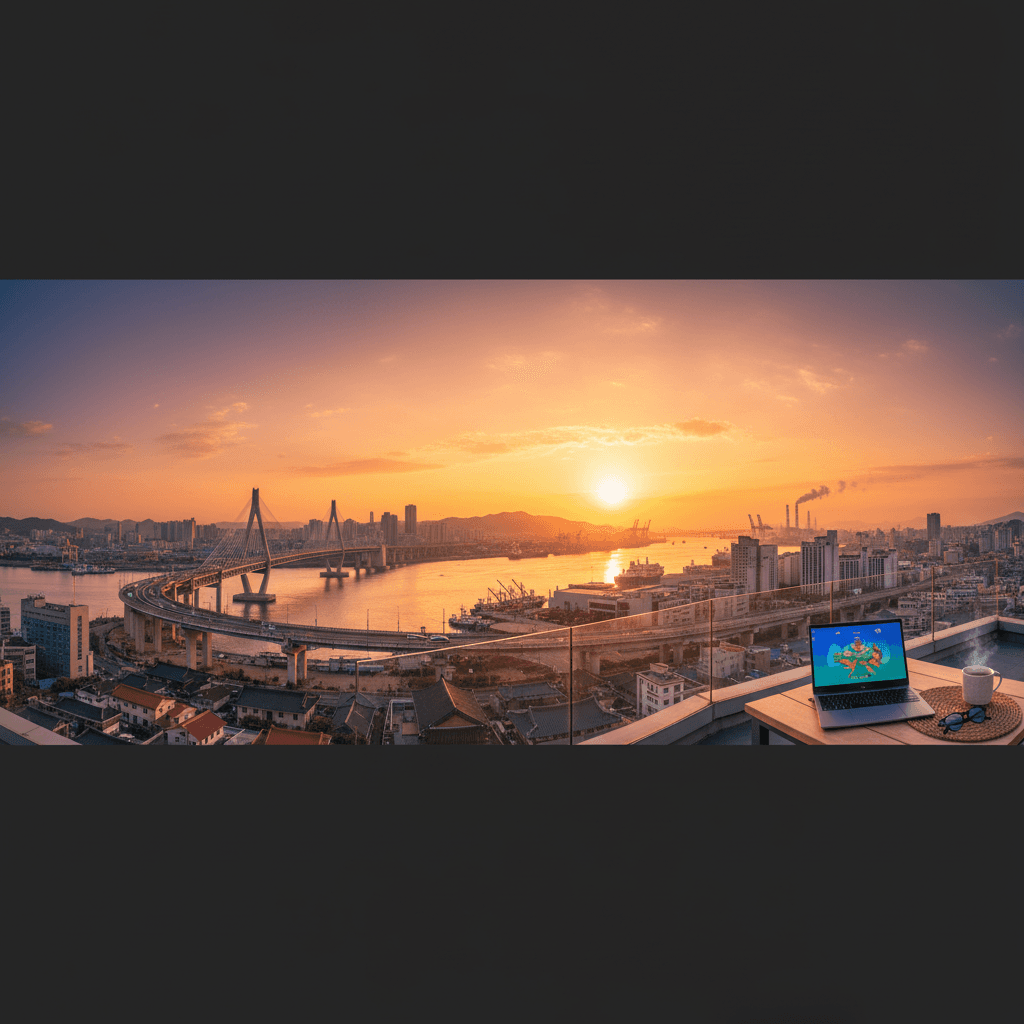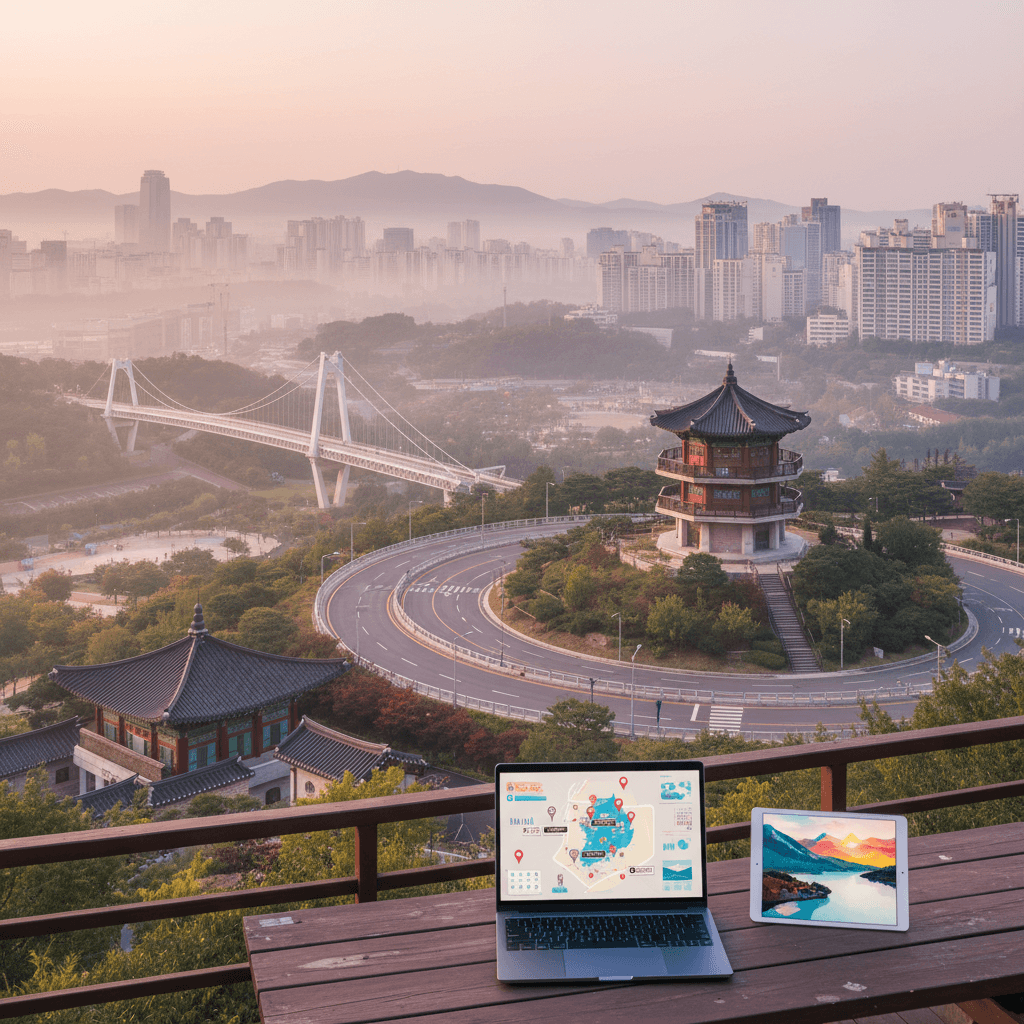
Daegu
🇰🇷 South Korea
The Mid-Speed Sweet Spot
If Seoul is a high-octane sprint and Busan is a coastal breeze, Daegu is the steady, rhythmic pulse of South Korea. It doesn't scream for your attention with neon skyscrapers or beach clubs. Instead, it invites you into a life that's remarkably efficient and surprisingly affordable. For digital nomads, the appeal lies in the balance. You get the world-class infrastructure of a major Korean metro, think ultra-fast 100 Mbps fiber and flawless subways, without the cutthroat "Pali-Pali" (hurry-hurry) stress of the capital.
The city has a distinct personality shaped by its geography. Tucked into a basin surrounded by mountains, Daegu is famous for being the hottest city in the country. This climate has bred a resilient, straightforward local character and a legendary coffee culture. You'll find a higher concentration of independent, multi-story cafes here than almost anywhere else, making it a dream for those who prefer "cafe hopping" over dedicated office desks.
The Daily Rhythm
Living here feels grounded. You'll likely spend your mornings working from a sleek spot in Downtown Daegu or a student-friendly haunt near Kyungpook National University. By afternoon, the vibe shifts from productive to social. The city isn't overrun by tourists, so your interactions feel authentic. You aren't just another visitor; you're part of the neighborhood fabric.
Expats often mention that while the English level is lower than in Seoul, the hospitality is higher. There's a genuine curiosity toward foreigners. You'll need Papago on your phone to navigate menus, but the effort usually earns you a smile and perhaps an extra side dish of "service" (free food) from a local restaurant owner.
Where to Plant Your Laptop
Your experience will change significantly depending on your home base. Most nomads gravitate toward two specific hubs:
- Downtown (Jung-gu): This is the urban heart. It's packed with coworking spaces like Daegu Coworking Space and endless shopping alleys. It's perfect if you want everything within a ten-minute walk.
- Kyungpook University Area: Located in Buk-gu, this area is defined by student energy. It's the place for cheap eats, late-night study cafes, and a more rebellious, youthful spirit.
The Bottom Line on Costs
Your money goes significantly further here than in East Asia's more famous hubs. You can maintain a high quality of life on a mid-range budget without constantly checking your banking app. Here is a look at what to expect for monthly expenses:
Budget Tier ($1,200 to $1,800)
- Housing: Shared housing or a small studio in university zones for $350 to $450.
- Dining: Heavy on street food and university cafeterias; meals for $4 to $7.
- Transport: Mostly subway and bus rides at roughly $1.10 per trip.
Mid-Range Tier ($2,000 to $3,000)
- Housing: A modern 1BR "officetel" in Downtown for $550 to $750.
- Dining: A mix of local BBQ joints and trendy brunch spots; $12 to $20 per meal.
- Work: A dedicated desk at a coworking space or a daily "cafe budget" of $15.
The Nomad Experience
What makes Daegu special is the lack of "nomad fatigue." In places like Chiang Mai or Lisbon, you're one of thousands. In Daegu, you're a bit of a pioneer. You'll find community at spots like Open Space, where the startup crowd is welcoming and eager to network. It's a city for the focused worker who wants to dive deep into Korean culture, save some cash, and enjoy a mountain hike on a Tuesday afternoon without fighting a crowd.
The Price of the "Apple City"
Daegu is often overshadowed by Seoul's neon lights and Busan's coastal charm, but for the budget-conscious nomad, that's exactly why it works. You're looking at a cost of living that sits roughly 20% to 30% lower than the capital. It’s the kind of place where your won stretches far enough to upgrade your lifestyle without draining your savings, all while keeping the high-tech infrastructure South Korea is famous for.
Most expats find that a monthly budget of $2,000 to $3,000 provides a very comfortable, mid-range existence. This covers a modern studio, daily cafe hopping, and plenty of weekend trips. If you're willing to live like a local student near the universities, you can easily scrape by on $1,200 to $1,800 without feeling like you're missing out.
Housing and Neighborhoods
Rent is your biggest win here. While Seoul’s "key money" deposits can be astronomical, Daegu is more approachable. Most nomads head for Downtown (Jung-gu) to be near the action, or the Kyungpook National University area for a younger, cheaper vibe.
- Downtown Studio: Expect to pay between ₩500,000 and ₩800,000 ($350 to $550) per month. These are usually "officetels" that come with basic appliances.
- University Areas: Smaller "one-rooms" near Kyungpook can drop as low as ₩350,000 ($250), though they might be a bit snug for a long-term setup.
- Utilities: High-speed home broadband is a steal at around $20, while electricity and heating usually hover around $60 to $100 depending on how hard you run the AC during those sweltering Daegu summers.
Eating and Drinking
The food scene in Daegu is legendary, especially if you like a bit of heat. You'll spend significantly less on dining out than you would in the West. Street food stalls and small "gimbap" shops are your best friends for a cheap lunch, while the city's famous Makchang (grilled intestines) is a must-try evening splurge that won't break the bank.
- Street Food: A quick bite of tteokbokki or a hotteok pancake will run you ₩5,000 to ₩10,000 ($3.50 to $7).
- Mid-range Dining: A solid dinner with a drink in a trendy Downtown spot usually lands between ₩15,000 and ₩25,000 ($10 to $18).
- Coffee Culture: Daegu has a massive cafe-to-person ratio. A latte in a laptop-friendly spot like those near Open Space costs about ₩5,000 ($3.50), which basically buys you an afternoon "office" rental.
Transport and Tech
You won't need a car here. The subway and bus systems are incredibly efficient and integrated. Most nomads use the Kakao T app for taxis and a T-Money card for everything else. A single ride on the subway or bus is usually between ₩1,200 and ₩2,000. Even a cross-town taxi ride rarely exceeds $15.
For your digital setup, a local SIM card is a priority. While many travelers grab a Holafly eSIM for immediate data, long-termers usually head to a KT or SK Telecom flagship store to get a local number. This is vital for using apps like Coupang (for 24-hour deliveries) or Kakao Pay, which make life in Korea significantly smoother.
Coworking and Community
While you can work from almost any cafe, dedicated spaces provide the community that solo nomads often crave. Daegu Coworking Space in the city center is the professional standard, offering hot desks and meeting rooms for those who need a break from their apartment walls. Open Space near the university is the go-to for startups and younger creators, often hosting events that help you network in a city where the expat community is tight-knit but smaller than what you'll find in Seoul.
Monthly Budget Tiers
- The Budget Traveler ($1,200 to $1,800): Shared housing or a small university "one-room," heavy reliance on street food and convenience stores, and using the extensive bus network.
- The Balanced Nomad ($2,000 to $3,000): A private downtown studio, mixing home cooking with trendy cafes, frequent nights out in Jung-gu, and occasional weekend trips to Gyeongju.
- The High-Flyer ($3,500+): A premium apartment in a new high-rise, upscale dining, regular taxi use, and a dedicated desk at a top-tier coworking space.
For Digital Nomads: Downtown (Jung-gu)
If your priority is proximity to high speed internet and a steady flow of caffeine, Downtown is the place to be. This is the city's heartbeat, where the grid of streets is packed with multi-story cafes that are perfectly comfortable with you camping out with a laptop for four hours. It has an urban energy that feels more approachable than Seoul's Gangnam district but keeps you right in the mix of the city's best infrastructure.
Most nomads gravitate toward Daegu Coworking Space in the city center. It is a professional hub where the WiFi is blistering and the community is surprisingly diverse for a smaller city. You'll find yourself within walking distance of Banwoldang Station, the main transit interchange, making it easy to zip across town for a meeting or a quick dinner.
- Rent: Studio apartments typically run between ₩600,000 and ₩800,000 per month.
- Vibe: Fast paced, convenient, and very modern.
- Best for: People who need to be near coworking hubs and transit lines.
For Solo Travelers and Startups: Kyungpook University Area (Buk-gu)
Solos on a tighter budget should head north toward the university district. This area is defined by student energy, which means the prices for everything from beer to bibimbap are noticeably lower. It is the best place to find a community if you are traveling alone, as the bars and cheap eats around the north gate are always full of young locals and international students.
For work, Open Space is the go-to spot here. It has a more grassroots, startup feel than the downtown offices and is much easier on the wallet. The downside is the noise; between the street food stalls and the late night karaoke rooms, it is rarely quiet. However, the trade off is a social scene that is much easier to break into than the more corporate downtown core.
- Rent: Budget studios can be found for ₩450,000 to ₩550,000.
- Vibe: Youthful, loud, and incredibly affordable.
- Best for: Early stage founders and travelers looking for a social spark.
For Expats and Long-Term Residents: Suseong-gu
Expats who plan on staying for a year or more often migrate toward Suseong-gu. It is widely considered the most affluent part of the city, known for its better air quality and the scenic Suseong Lake. While it lacks the dense concentration of coworking spaces found in Jung-gu, the residential streets are lined with high end cafes that offer a quieter environment for deep work.
Life here is a bit more polished. You'll find more international grocery options and slightly better English proficiency in the shops. It is the kind of neighborhood where you can go for a morning run around the water before settling into a local bakery to clear your inbox. It feels less like a temporary stop and more like a home.
- Rent: Expect to pay ₩900,000 or more for a modern one bedroom.
- Vibe: Upmarket, relaxed, and residential.
- Best for: Those who prefer a slower pace and have a higher monthly budget.
For Families: Near Daegu Grand Park
Families usually find the downtown core a bit too frantic. Areas near the larger parks offer a much better quality of life for those with kids. These neighborhoods provide easy access to green spaces and the Daegu National Museum, which is a lifesaver on rainy weekends. The streets are wider, the traffic is less chaotic, and you are still only a short subway ride away from the central business district.
While the expat community here is smaller than what you would find in Seoul, the safety is world class. Parents often mention that they feel comfortable letting older children navigate the local area alone. You'll want to use Kakao T for easy taxi hauls when the kids are tired, as the hills in these residential pockets can be a bit much for little legs.
- Rent: Larger multi-room apartments start around ₩1,200,000.
- Vibe: Quiet, safe, and family oriented.
- Best for: Families who need space and easy access to outdoor recreation.
Connectivity and Speed
South Korea is famous for having the fastest internet on the planet, and Daegu is no exception. You can expect average speeds of 100+ Mbps almost everywhere, from the tiniest basement studio to high rise apartments. Most nomads find that even the free public WiFi provided by the city is stable enough for a quick Zoom call if you're in a pinch downtown.
For your personal setup, getting an eSIM via Holafly is the easiest way to hit the ground running when you land. If you plan on staying longer than 90 days on a Hallyu Remote Work visa, you'll want a local SIM from KT or SK Telecom for better rates. These local providers usually require your Alien Registration Card, but they offer the most reliable 5G coverage, which is currently at nearly 100% across the city.
Top Coworking Spots
The coworking scene in Daegu is more intimate than Seoul's, which makes it easier to actually meet people rather than just sitting in a room full of strangers. The vibe is professional but leans into the city's focus on tech and innovation.
- Daegu Coworking Space: Located right in the city center, this is the primary hub for the local nomad community. It has a modern, open layout and attracts a mix of local entrepreneurs and international remote workers. It's the best place to find collaborative energy if you're tired of working from your kitchen table.
- Open Space: You'll find this one near Kyungpook National University. It’s significantly more affordable and has a younger, high energy atmosphere. Since it's in a student district, the surrounding area is packed with cheap eats and late night coffee shops.
The Cafe Working Culture
If you prefer the "laptop and a latte" lifestyle, Daegu is practically built for you. The city has a massive coffee culture, especially in the Downtown area. Unlike some European cities where staff might glare at you for staying too long, many Daegu cafes are designed with remote workers in mind. Look for places with large communal tables and plenty of power outlets.
Most nomads recommend sticking to the larger, multi story cafes in Jung-gu for long sessions. These spots usually have reliable, high speed WiFi and dedicated "quiet zones" where nobody will bother you. Just remember the local etiquette: buy a fresh drink every few hours and try to avoid the busiest lunch rush if you're taking up a large table.
Logistics and Apps
To stay productive, you'll need a few specific apps on your phone. Kakao T is the go to for ride hailing, while Papago is far superior to Google Translate for Korean. For finding your way to a new coworking spot, Naver Maps is much more accurate than Google Maps, which often struggles with Korean walking directions.
Most coworking spaces offer monthly memberships that are quite competitive compared to Seoul. Expect to pay between $150 and $250 USD per month for a hot desk, though daily rates are available at places like Open Space if you just need a desk for a few hours. This lower overhead is one of the main reasons expats are starting to choose Daegu over the more expensive coastal cities.
Personal Safety in the Apple City
Daegu is remarkably safe, even by South Korea's high standards. You'll often see locals leaving their expensive laptops unattended in a cafe while they grab a refill or use the restroom. While you shouldn't throw common sense out the window, the general level of public trust here is a massive perk for anyone working remotely.
Street crime and theft are extremely rare. You can comfortably walk through Downtown Daegu or the Kyungpook University area at 3:00 AM without looking over your shoulder. If you find yourself out late, stick to the well lit main drags simply because the side alleys can be dark and easy to get lost in, not because they're dangerous.
The biggest safety "risk" you'll likely face is the traffic. Delivery scooters are notorious for zooming onto sidewalks to save time. Keep your ears open and your eyes off your phone when you're walking near busy intersections. If you run into any trouble, the emergency numbers are 112 for police and 119 for fire or ambulance services.
World Class Healthcare
One of the best parts about basing yourself in Daegu is the access to top tier medical care. The city is a major regional hub for medicine, meaning you'll find facilities that rival those in Seoul but with slightly shorter wait times. Hospitals are modern, clean, and equipped with the latest tech.
Most expats and nomads head to university hospitals for anything serious, as these facilities are more likely to have English speaking staff and international clinics. Key spots include:
- Kyungpook National University Hospital: Located near the city center, it's a go to for specialized care.
- Keimyung University Dongsan Hospital: Known for its massive, modern campus and excellent international service center.
- Yeungnam University Medical Center: Another heavy hitter with a solid reputation for surgery and diagnostics.
For minor issues like a cold or a light sprain, look for neighborhood clinics. They're everywhere, usually tucked into the upper floors of commercial buildings marked with a green cross. You can typically walk in without an appointment, see a doctor within 20 minutes, and pay around ₩15,000 to ₩30,000 for the consultation if you don't have local insurance.
Pharmacies and Prescriptions
Pharmacies, or yak-guk, are easy to spot by their bright red or blue "Pharmacy" signs. They're on almost every corner in Jung-gu. While pharmacists often speak limited English, they're experts at using translation apps like Papago to help you find what you need.
Keep in mind that many medications that are over the counter in the West, like certain high strength painkillers or allergy meds, require a doctor's script here. On the flip side, basic meds for digestion or headaches are incredibly cheap, usually costing under ₩5,000 per box.
Health Insurance for Nomads
If you're here on the Hallyu Remote Work Visa, you'll eventually be required to enroll in the National Health Insurance Service (NHIS) after six months, which is a fantastic deal for long term stays. For shorter trips, private nomad insurance is a must. Most local hospitals will expect payment upfront, usually via credit card, and you'll then claim it back from your provider. Always keep your receipts and the "medical certificate" (uilyo-jungmyeongseo) provided by the doctor for your insurance claims.
Practical Health Tips
- Air Quality: Like much of East Asia, Daegu can have "yellow dust" or fine dust days, particularly in the spring. Download the AirVisual app to check daily levels and wear a KF94 mask when the numbers look high.
- Water: Tap water is technically safe to drink, but almost every local and expat uses a purifier or buys bottled water. Most coworking spaces and apartments come with a "Water Purifier" (jeongsugi) that provides instant hot and cold filtered water.
- Apps: Download Naver Maps. It shows the locations of nearby hospitals and pharmacies and often includes their holiday hours, which is vital since many smaller clinics close on Sundays.
The Daily Commute
Daegu is built on a grid that actually makes sense, which is a relief if you've ever felt lost in the winding alleys of Seoul. The city's public transit system is the backbone of life here. Most nomads rely on the three-line subway system. Line 3 is particularly cool; it's a monorail that zips above the city, giving you a great view of the skyline while you head to a meeting or a cafe. A single ride usually costs between ₩1,200 and ₩2,000, depending on the distance.
The bus network fills in every gap the subway misses. It can feel a bit intimidating at first because the routes are extensive, but the arrival screens at stops are surprisingly accurate. If you're staying in Downtown Daegu or near Kyungpook National University, you'll find that buses are often faster for short hops than walking to a subway station.
Essential Apps and Payments
Forget Google Maps here; it's notoriously unreliable for transit in Korea. You'll want to download Naver Maps or KakaoMap immediately. These apps give you real-time bus locations and tell you exactly which subway exit puts you closest to your destination. For payment, pick up a T-Money card at any convenience store. You can tap it for buses, subways, and even taxis. Just keep it topped up with cash at station kiosks.
When you're running late or it's raining, Kakao T is the go-to app for hailing taxis. It works just like Uber. You don't need to struggle with directions in Korean; just pin your destination in the app, and the driver follows the GPS. Most short trips across the city center will run you ₩5,000 to ₩10,000.
Two Wheels and Walking
Downtown Daegu is surprisingly walkable. If you're living near the Banwoldang or Jung-gu areas, you can reach most coworking spaces and coffee shops on foot. For those who want a bit more speed, electric scooter and bike sharing apps like Swing have popped up everywhere. They're great for "last mile" travel, though you'll need a local phone number or a verified ID to use some of them. Just watch out for the uneven pavement in older neighborhoods.
Getting In and Out
If you're arriving at Daegu International Airport, don't overthink the transfer. It's located quite close to the city center. A taxi to the downtown core takes about 30 to 45 minutes and costs roughly ₩15,000. There are also city buses that connect the airport to the subway lines if you're traveling light and want to save money.
For weekend trips, the Dongdaegu Station is your gateway to the rest of the country. It's a massive transport hub where you can catch the KTX high-speed train. You can be in Seoul in under two hours or Busan in about 45 minutes. It's one of the biggest perks of living in Daegu; you have the convenience of a major city with easy access to the entire peninsula.
Regional Travel Costs
- Subway/Bus Base Fare: ₩1,250 to ₩1,500
- Taxi Start Rate: ₩4,800
- KTX to Seoul: ₩60,000+
- KTX to Busan: ₩20,000-₩25,000
The Language Gap
If you're coming from Seoul or Busan, the first thing you'll notice in Daegu is that the English safety net gets a lot thinner. While the younger crowd near Kyungpook National University might catch a few words, the city operates almost entirely in Korean. You won't find English menus at every corner stall, and taxi drivers rarely speak a second language. Most nomads find that while people are incredibly patient, you'll hit a wall if you don't have a translation strategy.
The local dialect, known as Daegu-saturi, adds another layer to the mix. It's famous across Korea for sounding a bit more aggressive or "tougher" than the standard Seoul accent; it's faster, more rhythmic, and uses different pitch patterns. Don't be intimidated if a shopkeeper sounds like they're shouting; they're likely just being friendly in the local style.
Survival Tech Stack
Forget Google Translate. It struggles with Korean grammar and often misses the mark on polite speech levels. Expats recommend two specific apps for daily life:
- Papago: This is the gold standard. Its image translation feature is a lifesaver for reading menus at traditional spots in Downtown Daegu or deciphering bills.
- Naver Dictionary: Use this for more nuanced meanings or when you're trying to construct a specific sentence for a landlord or a doctor.
For getting around, Kakao T is your best friend. You can type your destination in English, and it sends the Korean address directly to the driver's GPS, bypassing the need for a complex verbal exchange.
The Essentials for Your Pocket
You don't need to be fluent, but memorizing a few phrases goes a long way in building rapport with the locals. Here are the heavy hitters:
- Annyeonghaseyo: Hello (Standard polite version).
- Gamsahamnida: Thank you.
- Jeogiyo: Excuse me (Used to get a server's attention in a cafe or restaurant).
- Olmayeyo?: How much is it?
- Ye/Aniyo: Yes/No.
Communication in the Workspace
If you're setting up shop at Daegu Coworking Space or Open Space, you'll find the environment much more linguistically flexible. The staff at these hubs usually speak enough English to help with WiFi issues or printing. However, if you're looking to network with local entrepreneurs, having a basic grasp of Korean etiquette, like handing over business cards or payments with two hands, communicates more than words ever will.
Most nomads find that within a week, they can manage the basics of ordering food and navigating the subway. If you're staying for more than a month, consider joining a language exchange meetup. These are often held in the cafes around Banwoldang and are a great way to meet locals who actually want to practice their English with you.
Connectivity and SIMs
Communication isn't just about what you say, it's about staying online. Korea has the fastest internet on the planet, and Daegu is no exception. For short stays, a Holafly eSIM is the easiest way to get data the second you land. If you're staying long term and have your Alien Registration Card, head to a KT or SK Telecom branch downtown. A local SIM is necessary for using apps like Kakao Pay or Naver Pay, which make life in the city significantly smoother.
The Daegu Heat and When to Time Your Arrival
Daegu has a reputation among Koreans for being the hottest city in the country. Surrounded by mountains that trap heat like a stone bowl, the city earns its nickname, Daefrica, during the peak of summer. If you are planning a stint here for 2025 or 2026, timing your arrival will make or break your experience with the city's outdoor cafes and mountain trails.
Spring: The Sweet Spot (April to June)
Most nomads aim for a spring arrival, and for good reason. Temperatures sit comfortably between 15°C and 25°C. This is the window when the city's parks, like Duryu Park, come alive with cherry blossoms and outdoor festivals. You can work from a cafe terrace in Downtown Daegu without needing the air conditioning cranked to the max. It is the best time for hiking Palgongsan Mountain before the humidity becomes a factor. Just keep an eye on the yellow dust levels, a seasonal weather quirk in Korea that might require a mask on certain days.
Summer: The Daefrica Challenge (July to August)
If you aren't a fan of humidity, July and August are tough. Temperatures frequently climb to 35°C and stay there. This period also brings the monsoon rains, meaning your walks to the Daegu Coworking Space will likely involve a sturdy umbrella and a lot of sweat. Most expats spend these months hopping between air-conditioned spots like the Shinsegae Department Store or local libraries. The upside? This is when the famous Daegu Chimac (Chicken and Beer) Festival happens, usually in July, which is the ultimate way to cool down after a work day.
Autumn: The Most Productive Season (September to November)
September starts to cool down, and by October, the city is arguably at its best. The air is crisp, the sky is a deep blue, and temperatures hover between 10°C and 20°C. It is perfect for those who like to walk between neighborhoods like Kyungpook University and the city center. The fall foliage on the surrounding mountains is world class, and the lack of rain makes it the most reliable season for travel and outdoor networking events.
Winter: Dry and Brisk (December to February)
Winter in Daegu is cold but generally much drier than the summers. You'll see temperatures ranging from -5°C to 5°C. While it doesn't get as much snow as Seoul, the wind chill between the downtown buildings can be sharp. You will want a heavy padded coat, which is the unofficial winter uniform here. On the bright side, indoor coworking spaces like Open Space are cozy, and the lower tourist numbers mean you can find better deals on monthly rentals through apps like Zigbang during this off-peak window.
Seasonal Planning Checklist
- Best for Outdoor Work: May and October offer the most "laptop on the patio" days.
- Peak Rain: July is the wettest month; expect frequent downpours and high humidity.
- Packing Tip: Bring layers for spring and autumn, but invest in high-quality "Cooltech" or "Heattech" clothing from local shops for the extreme seasons.
- Budget Tip: Utility bills for air conditioning in August or floor heating (Ondol) in January can add an extra ₩100,000 to ₩150,000 to your monthly costs.
Survival Basics
Daegu is famously the hottest city in South Korea, earning it the nickname Daefrica. If you are visiting between June and August, prepare for humidity that rivals Southeast Asia. Most nomads find the sweet spots are April to June or September to November when the air is crisp and the mountains surrounding the city turn bright green or deep orange. If you end up here in winter, it is dry and biting, so pack a heavy padded coat.
While Seoul is a bilingual bubble, Daegu is more old school. You will need Papago or Naver Dictionary installed on your phone before you land. Google Maps is notoriously unreliable for walking directions in Korea; download Naver Maps or Kakao Maps to find your way around the narrow alleys of the city center.
Money and Cost of Living
Your wallet will breathe a sigh of relief here compared to Seoul or Busan. A comfortable monthly budget for a nomad usually sits between $2,000 and $3,000, covering a nice studio and plenty of dining out. If you are on a "ramen budget," you can scrape by on $1,200 to $1,800 by staying near Kyungpook National University.
- Rent: A modern studio in Downtown Daegu typically runs ₩500,000 to ₩800,000 per month.
- Food: Street snacks like tteokbokki cost around ₩5,000, while a solid mid-range dinner with drinks will hit ₩15,000 to ₩25,000.
- Transport: A single subway or bus ride is roughly ₩1,200 to ₩2,000.
For payments, your international Visa or Mastercard will work at most established shops, but smaller stalls prefer cash or Kakao Pay. If you are staying long term, look into the Hallyu Remote Work Visa, requiring minimum annual income of ~₩85 million (double GNI per capita).
Connectivity and Workspace
The internet speed in Daegu is world class. You will rarely find a cafe with speeds below 100 Mbps. For a reliable setup, Daegu Coworking Space in the city center is the local favorite for its collaborative community. If you prefer a younger, more energetic vibe, Open Space near the university is affordable and packed with local entrepreneurs.
For mobile data, grab an eSIM from Holafly for immediate access when you land. If you have a residency card, switching to a local SIM from KT or SK Telecom will save you money over several months.
Getting Around
The subway system is clean, safe, and incredibly easy to use. To use any public transport, buy a T-Money card at any convenience store and keep it topped up with cash. For late nights when the trains stop running, Kakao T is the go to app for hailing taxis. It works just like Uber, and you can pay the driver directly with your card if you don't have a local bank account linked.
The city is surprisingly walkable, especially in the Jung-gu district. For longer trips, the KTX high speed train connects you to Seoul in under two hours, making weekend trips effortless.
Health and Safety
Safety is a non issue here. You can walk through downtown at 3:00 AM without a second thought. If you do run into trouble, dial 112 for police or 119 for medical emergencies. The hospitals in Daegu are top tier, though English speaking staff can be hit or miss. Keep your insurance details handy and use your translation app to explain symptoms.
Pharmacies are everywhere, marked by a green or red "Yak" sign. Most basic medications are available over the counter, but it helps to have the Korean name of the medicine written down on your phone.
Cultural Etiquette
Koreans value politeness and hierarchy. A small bow when greeting someone or saying "Gamsahamnida" (thank you) goes a long way. Always remove your shoes when entering someone's home or certain traditional restaurants. When paying or receiving a business card, use two hands as a sign of respect. It is a small gesture that locals really appreciate from expats.
Need visa and immigration info for South Korea?
🇰🇷 View South Korea Country GuideEasy Landing
Settle in, no stress
Monthly Budget Estimates
More cities in South Korea
Andong
🇰🇷 South Korea
Cheongju
🇰🇷 South Korea
Gangneung
🇰🇷 South Korea